The Great Wall of China near Beijing is the single most iconic attraction in all of China and one of the most awe-inspiring structures ever built by human hands. This comprehensive Great Wall of China Beijing guide covers every major section accessible from the capital, from the polished tourist-friendly stretches of Badaling to the rugged wild walls of Jinshanling. Whether you have half a day or a full weekend, understanding which section to visit, how to get there, and what to expect will transform your Great Wall experience from a rushed photo stop into a genuinely unforgettable adventure.
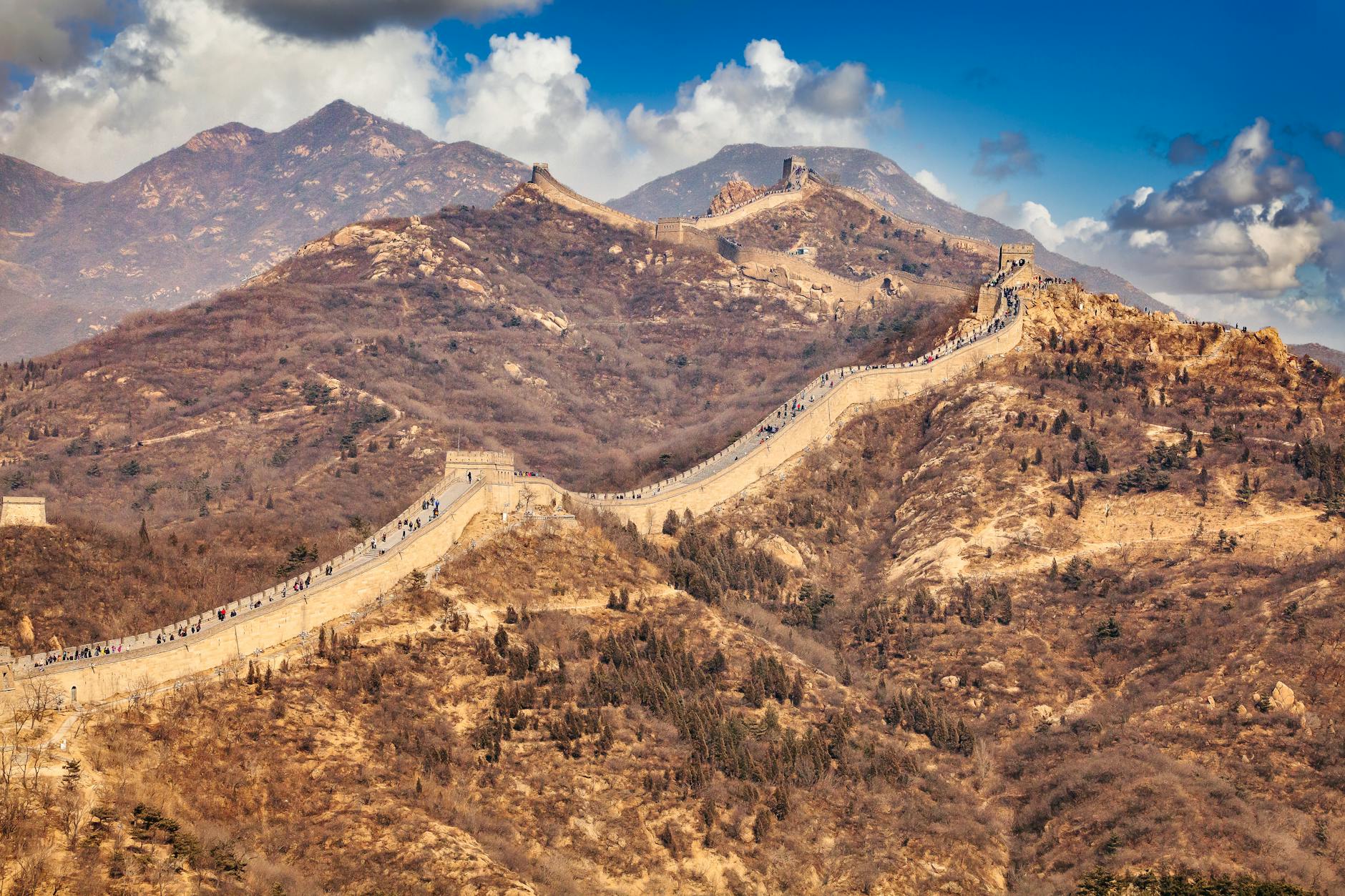
Great Wall of China Beijing: Understanding the Sections
The Great Wall is not a single continuous structure but a vast network of walls, watchtowers, and fortifications spanning over 20,000 kilometers across northern China. The sections near Beijing were primarily built and reinforced during the Ming Dynasty (1368–1644) and represent some of the best-preserved and most dramatic stretches of the entire wall. Within a two-hour radius of central Beijing, visitors can access at least six distinct sections, each offering a vastly different experience in terms of crowds, restoration level, hiking difficulty, and scenery.
The four most popular sections for tourists visiting from Beijing are Badaling, Mutianyu, Jinshanling, and Simatai. Additionally, adventurous travelers can explore the semi-wild sections at Gubeikou and Huanghuacheng. Your choice should depend on your fitness level, tolerance for crowds, available time, and whether you prioritize easy access or an authentic hiking experience. Below, we break down each section in detail to help you make the perfect choice.
Badaling Great Wall: The Most Accessible Section
Badaling is by far the most visited section of the Great Wall, attracting over 10 million visitors annually. Located just 70 kilometers northwest of central Beijing, it’s the closest major section to the city and the most accessible thanks to a dedicated high-speed train line. The wall here has been extensively restored with smooth pathways, safety railings, and wheelchair-accessible ramps on portions of the route, making it the best choice for visitors with mobility concerns, elderly travelers, and families with young children.
Getting there: The fastest option is the high-speed train from Beijing North Station or Qinghe Station to Badaling Great Wall Station, taking just 20–30 minutes and costing ¥18–31 ($2.50–$4.30 USD). Public bus 877 departs from Deshengmen (near Jishuitan subway station, Line 2) and takes about one hour, costing ¥12 ($1.70 USD). Taxis cost approximately ¥400–600 round trip.
Tickets and hours: Entrance costs ¥45 in peak season (April–October) and ¥35 in low season (November–March). The cable car costs ¥140 round trip. Peak season hours are 6:30 AM–7:00 PM; low season hours are 7:00 AM–6:00 PM. Pre-booking online via the official WeChat mini-program or Trip.com is strongly recommended during holidays and weekends to guarantee entry.
Best for: First-time visitors with limited time, families with children, elderly travelers, visitors with mobility issues, and anyone who wants the most convenient Great Wall experience. Drawback: Crowds can be overwhelming during Chinese national holidays and summer weekends — some sections become shoulder-to-shoulder. Visit early morning on weekdays for the best experience.
Mutianyu Great Wall: Best Overall Section for Most Visitors
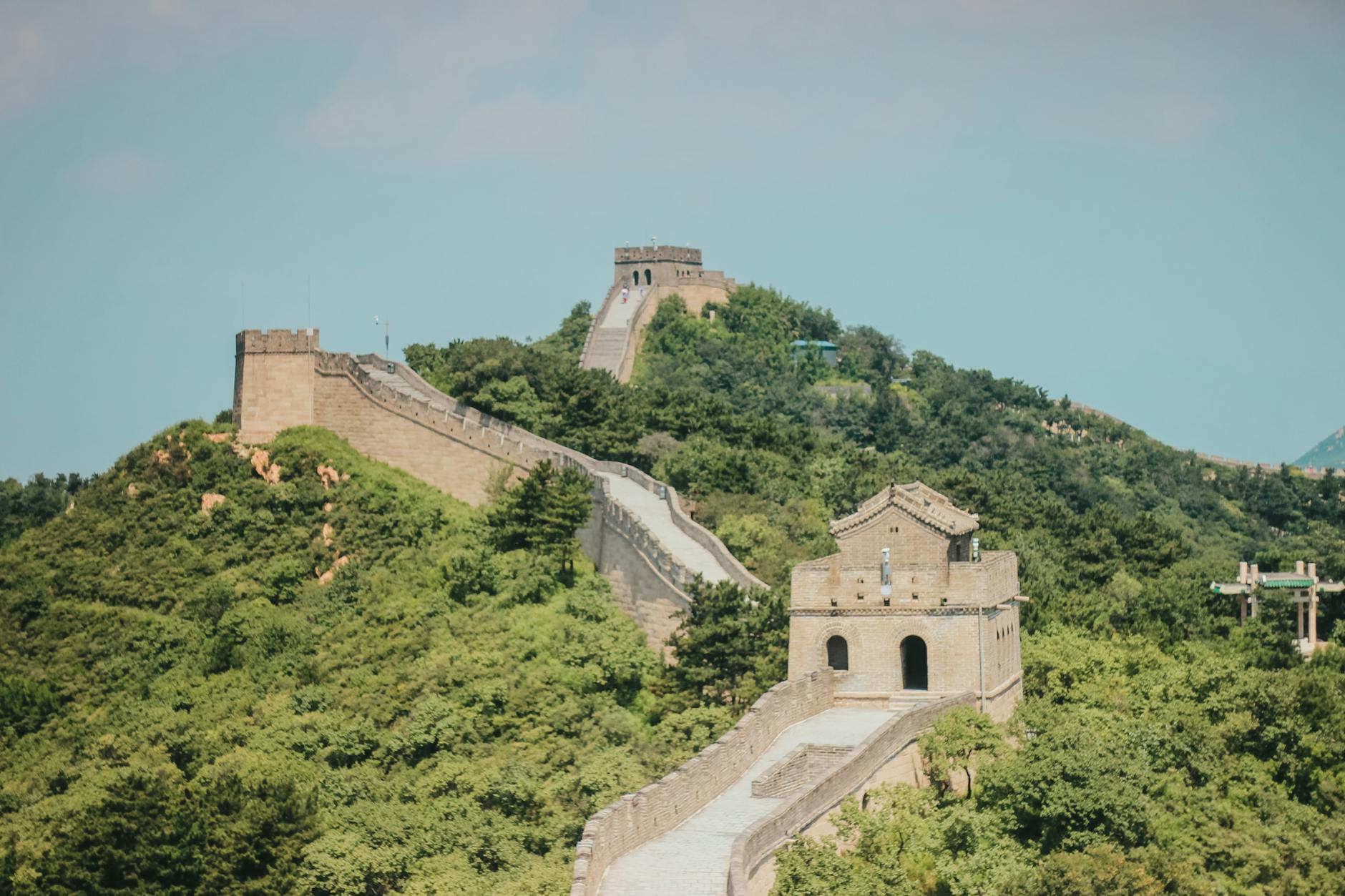
Mutianyu is widely considered the best all-around Great Wall section for international visitors, striking an ideal balance between accessibility, authenticity, scenery, and crowd levels. Located 73 kilometers northeast of Beijing (about 1.5 hours by car), Mutianyu features a beautifully restored 5.4-kilometer stretch of wall with 23 original-style watchtowers, a vegetation coverage rate of 96%, and significantly fewer visitors than Badaling — attracting roughly 3–4 million visitors annually compared to Badaling’s 10+ million.
The Mutianyu section is particularly famous for its dense concentration of watchtowers and guard towers, giving it a more dramatic and photogenic appearance than other restored sections. The surrounding mountains are blanketed in dense forest that turns brilliant shades of red and gold in autumn, making it arguably the most scenic section accessible from Beijing.
Getting there: Direct shuttle buses depart from the Beijing Tourist Distribution Center in Qianmen, costing ¥80 round trip. Buses run from 7:00 AM to 10:00 AM during peak season. Alternatively, take the Jingcheng Expressway by taxi (approximately ¥500–700 round trip) or book a private car through your hotel. Public bus options exist but require transfers and are less convenient.
Tickets and hours: Entrance is ¥40, with an optional cable car (¥120 round trip) or chairlift (¥120 round trip). The famous toboggan ride down costs ¥100 one-way and is hugely popular with families. Peak season (March 16–November 15) hours are 7:30 AM–6:00 PM; low season hours are 8:00 AM–5:00 PM.
Best for: Most international tourists, photographers, hikers wanting a moderate challenge, families (the toboggan is a highlight for kids), and anyone who wants an authentic Great Wall experience without extreme crowds. This is our top overall recommendation for first-time visitors to the Great Wall from Beijing.
Jinshanling Great Wall: Best for Hiking and Photography
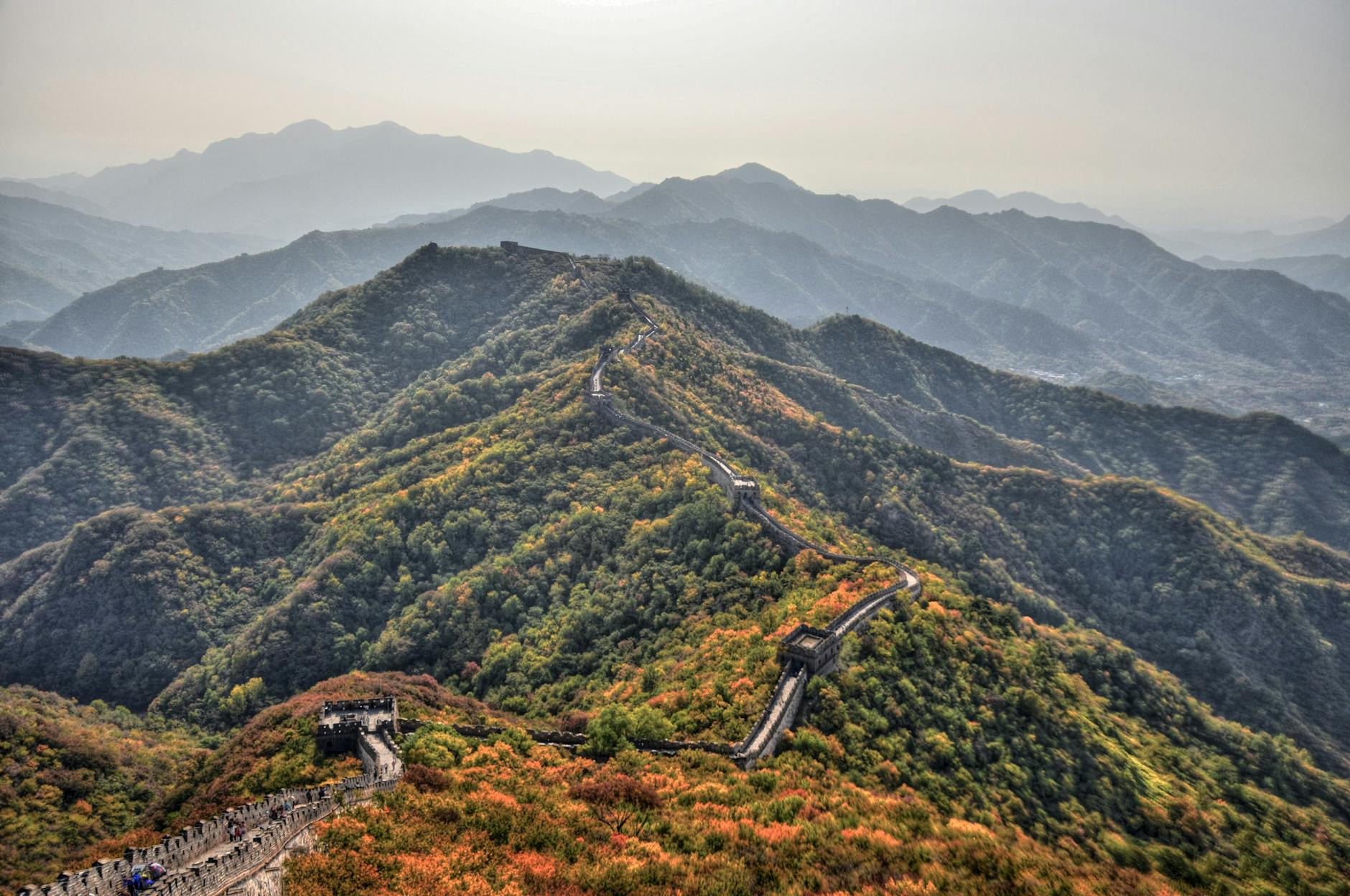
Jinshanling is the choice for serious hikers, photographers, and travelers who want to experience the Great Wall in its most dramatic and least commercialized form among the officially open sections. Located about 130 kilometers northeast of Beijing (approximately 2.5 hours by car) in Hebei Province, Jinshanling features a 10.5-kilometer stretch of wall originally built during the Ming Dynasty between 1368 and 1570 under the direction of General Qi Jiguang.
What makes Jinshanling exceptional is its mix of restored and partially unrestored sections. You can walk along well-maintained pathways near the main entrance, then venture further east into sections where the wall crumbles atmospherically into the mountainside. The wall features three unique architectural elements found nowhere else: barrier walls, horse-blocking walls, and brick walls with inscribed characters. With over 15 watchtowers along its length, the constantly changing perspectives and wide-open mountain views make this the premier photography destination on the entire Great Wall.
Getting there: Direct tourist buses run from Wangjing West subway station during peak season (weekends and holidays), costing around ¥50 one-way. On other days, the most reliable option is a private car or organized tour. Jinshanling is often combined with a visit to nearby Gubei Water Town, a reconstructed Ming-era village with excellent hotels and restaurants.
Tickets and hours: Entrance costs ¥65 in peak season and ¥55 in low season. Cable car tickets are ¥50 one-way or ¥80 round trip. Opening hours are 6:00 AM–5:30 PM in peak season. The most popular hiking route is approximately 6 kilometers and takes about 3 hours at a moderate pace.
Best for: Experienced hikers, photographers (especially sunrise and sunset shoots), travelers seeking solitude and authenticity, and anyone willing to travel further for a dramatically more rewarding experience. Not recommended for young children or visitors with mobility limitations due to steep, uneven terrain.
Simatai Great Wall and Gubei Water Town
Simatai is the only Great Wall section near Beijing that offers a dramatic nighttime experience. Located 120 kilometers northeast of Beijing adjacent to the charming Gubei Water Town resort village, Simatai features steep, rugged terrain and partially unrestored sections that showcase the wall in a more raw state. The western section has been closed for safety reasons due to extreme terrain, but the eastern portion offers a thrilling hike with some of the steepest gradients of any open section.
The real draw of Simatai is the night tour program, where portions of the wall are illuminated against the dark mountain backdrop. Combined with the atmospheric canal streets, traditional architecture, and lantern-lit restaurants of Gubei Water Town below, this makes for an unforgettable overnight experience. Many visitors spend a night at Gubei Water Town, hiking Simatai in the late afternoon and enjoying the illuminated wall after sunset.
Tickets: Daytime entrance costs ¥40; the night tour costs ¥120–160 depending on season. Gubei Water Town entrance is an additional ¥140. Combined packages are available. Advance reservation is required as daily visitor numbers are strictly limited to 3,000.
Best for: Couples seeking a romantic Great Wall experience, photographers wanting night shots, and travelers who want to combine wall hiking with a resort-town overnight stay. The Gubei Water Town area has excellent boutique hotels and restaurants.
Wild and Unrestored Sections: Gubeikou and Huanghuacheng
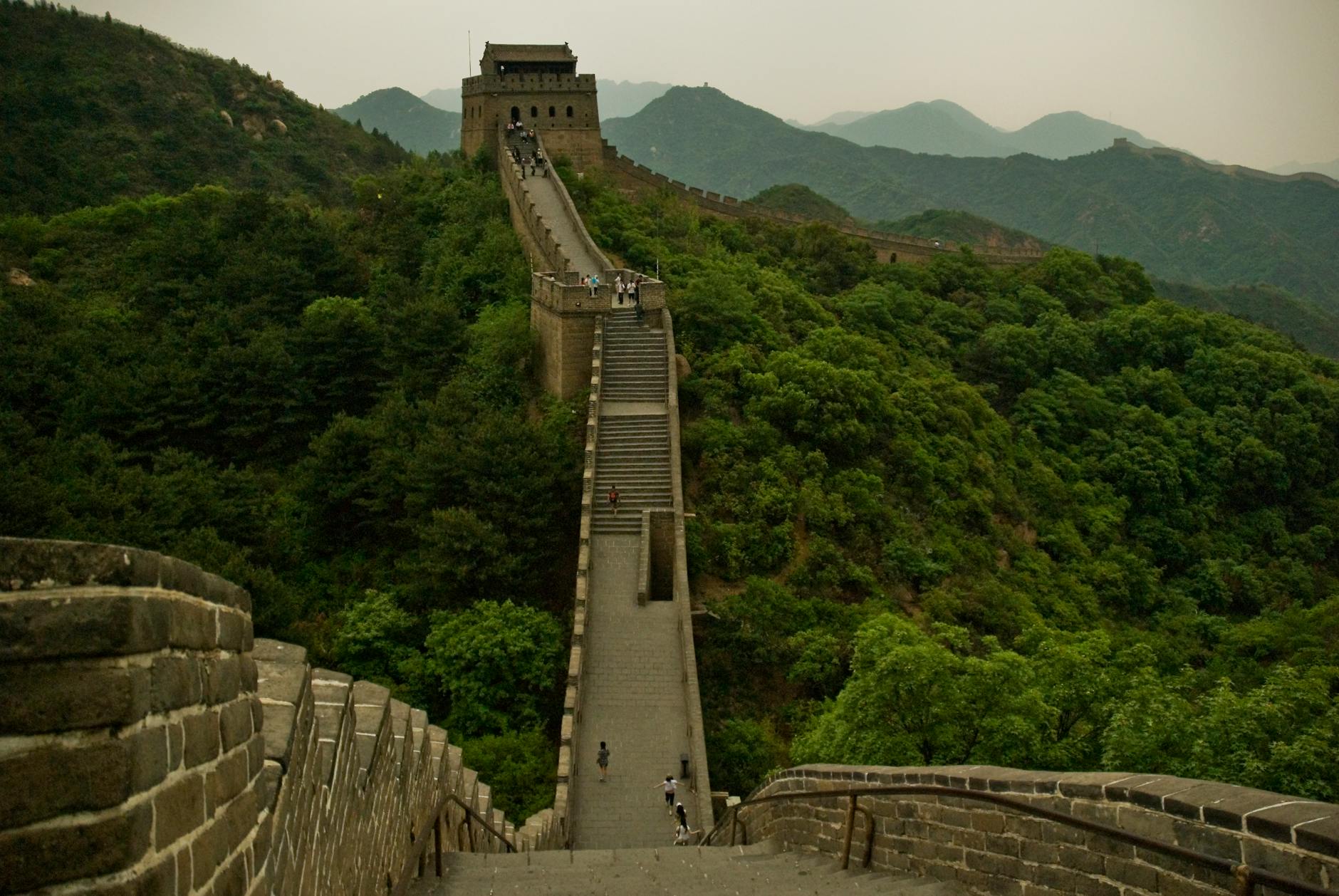
For adventurous travelers who want to experience the Great Wall in its most authentic, unrestored state, the wild sections offer something no restored section can match. These crumbling, vegetation-covered stretches of ancient wall feel like discovering a lost civilization, with trees growing through watchtowers and sections where you’ll likely have the wall entirely to yourself.
Gubeikou (130 km from Beijing) was one of the most strategically important passes in the Great Wall defense system. The wall here is largely unrestored, with crumbling battlements and watchtowers overgrown with wildflowers in summer. Hiking Gubeikou requires good fitness and sturdy footwear, as paths are uneven and sometimes unclear. A local guide is recommended. The area connects to Jinshanling, though the connecting section is officially closed.
Huanghuacheng (65 km from Beijing) is nicknamed the “Lakeside Great Wall” because a reservoir was built at its base in the 1970s, creating the striking sight of ancient wall sections disappearing into turquoise water. It’s particularly beautiful in summer when yellow wildflowers (huanghua) bloom along the wall. The section offers moderate hiking with some steep scrambles over unrestored portions. A dam walk connects the two sides of the valley for a varied hiking loop.
Important safety note: Wild wall sections have no safety railings, no lighting, and unstable surfaces. Hiking alone is not recommended. Inform someone of your planned route and expected return time. Bring a fully charged phone, adequate water (minimum 2 liters), snacks, and a basic first aid kit.
Which Great Wall Section Should You Visit?
Choosing the right section depends entirely on your priorities. Here is a quick decision guide based on what matters most to you:
Short on time (half day)? Badaling — the high-speed train gets you there in 30 minutes, and 2–3 hours on the wall is sufficient for a satisfying visit.
Best overall experience? Mutianyu — the perfect balance of scenery, authenticity, manageable crowds, and fun extras like the toboggan ride.
Serious hiking or photography? Jinshanling — unmatched views, dramatic lighting, and far fewer tourists than the more accessible sections.
Romantic overnight trip? Simatai + Gubei Water Town — the only nighttime Great Wall experience, combined with a charming resort village.
Adventure and solitude? Gubeikou or Huanghuacheng — wild, unrestored sections where you can have the wall to yourself.
Traveling with elderly family or small children? Badaling — the most wheelchair-friendly section with the smoothest paths and best facilities.
Best Time to Visit the Great Wall from Beijing
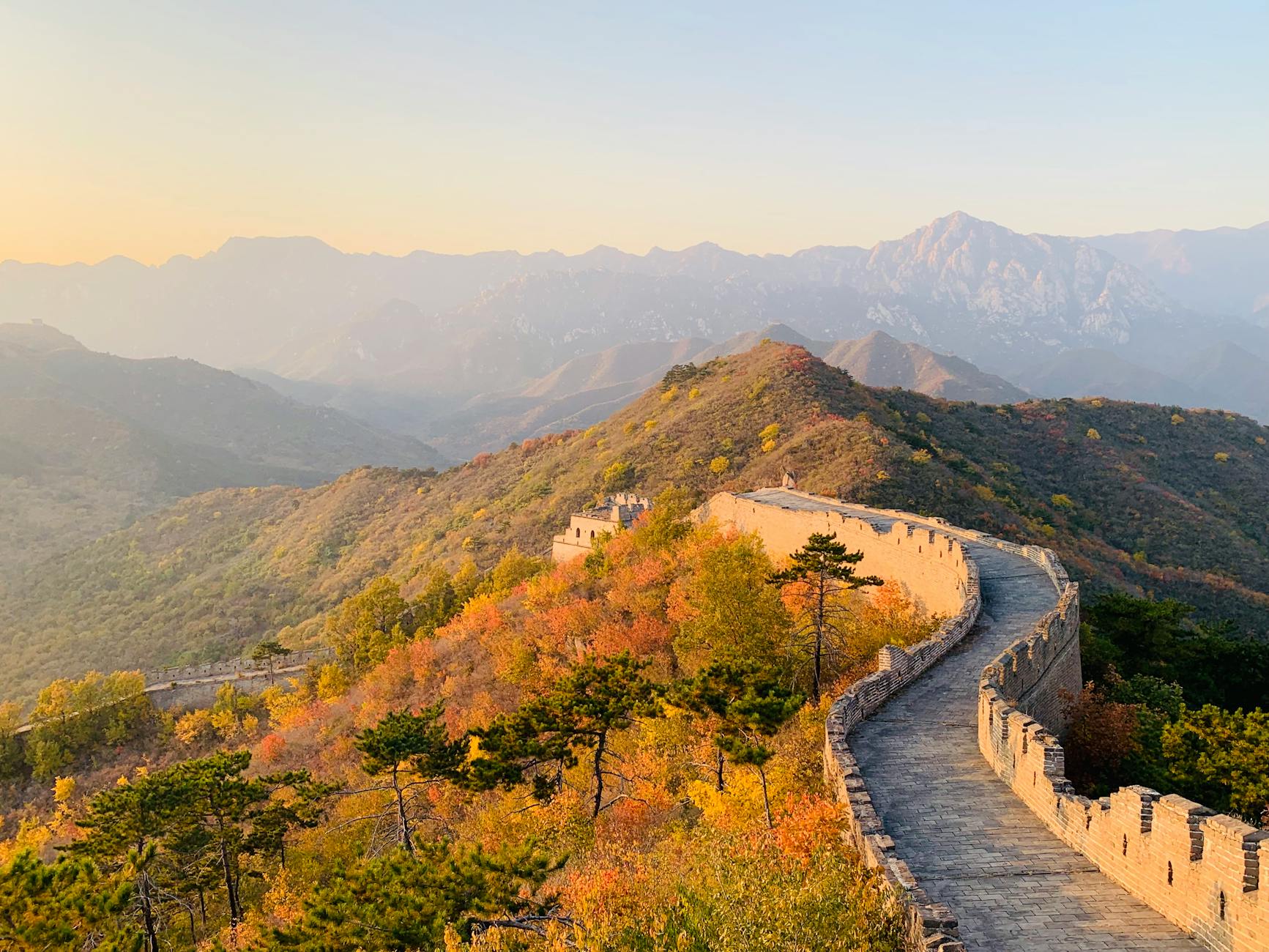
The Great Wall is open year-round, but the experience varies dramatically by season. The optimal visiting windows are spring (April–May) and autumn (September–November). Autumn is widely considered the absolute best time, with comfortable temperatures between 10–20°C (50–68°F), clear skies offering maximum visibility, and spectacular fall foliage that transforms the mountainsides into seas of red and gold — particularly stunning at Mutianyu and Jinshanling.
Spring offers pleasant temperatures and green mountain scenery with blooming wildflowers. Summer (June–August) brings hot, humid conditions with temperatures reaching 35°C (95°F) and afternoon thunderstorms, though early morning visits can still be enjoyable. Winter (December–February) offers a hauntingly beautiful experience with snow-dusted walls and virtually no crowds, but bitter cold (sometimes below -10°C / 14°F) and shorter daylight hours limit comfortable hiking time.
Dates to avoid: Chinese National Day Golden Week (October 1–7) and the Spring Festival/Chinese New Year holiday (January/February, dates vary) bring the heaviest crowds to all sections, particularly Badaling. May Day holiday (May 1–5) is also extremely busy. If you must visit during these periods, arrive before 7:30 AM or choose Jinshanling, which handles peak periods much better than Badaling or Mutianyu.
What to Wear and Bring to the Great Wall
Proper preparation makes the difference between an exhilarating Great Wall hike and a miserable one. The wall follows mountain ridgelines at elevations between 500 and 1,000 meters, and temperatures can be 5–10°C cooler than in Beijing city with significantly more wind exposure.
Footwear: This is the single most important item. Sturdy hiking boots or trail shoes with good ankle support and grip are essential, especially for Jinshanling and wild sections. The stone steps on the wall are often uneven, worn smooth, and can be slippery when wet. Avoid sandals, flip-flops, dress shoes, or any footwear without proper traction.
Clothing: Dress in breathable, moisture-wicking layers. A lightweight windproof and waterproof jacket is essential regardless of the forecast, as mountain weather changes rapidly. Athletic pants or hiking shorts are far better than jeans, which restrict movement on steep sections. In summer, lightweight long sleeves protect from sun exposure on the exposed wall top.
Essential items: Water (minimum 2 liters per person for a full-day hike), sunscreen (SPF 50+), a wide-brimmed hat, sunglasses, snacks or a packed lunch (food options at the wall are limited and overpriced), and a fully charged phone. A portable battery pack is highly recommended. For photography enthusiasts, a wide-angle lens captures the wall’s grandeur best.
Great Wall Photography Tips
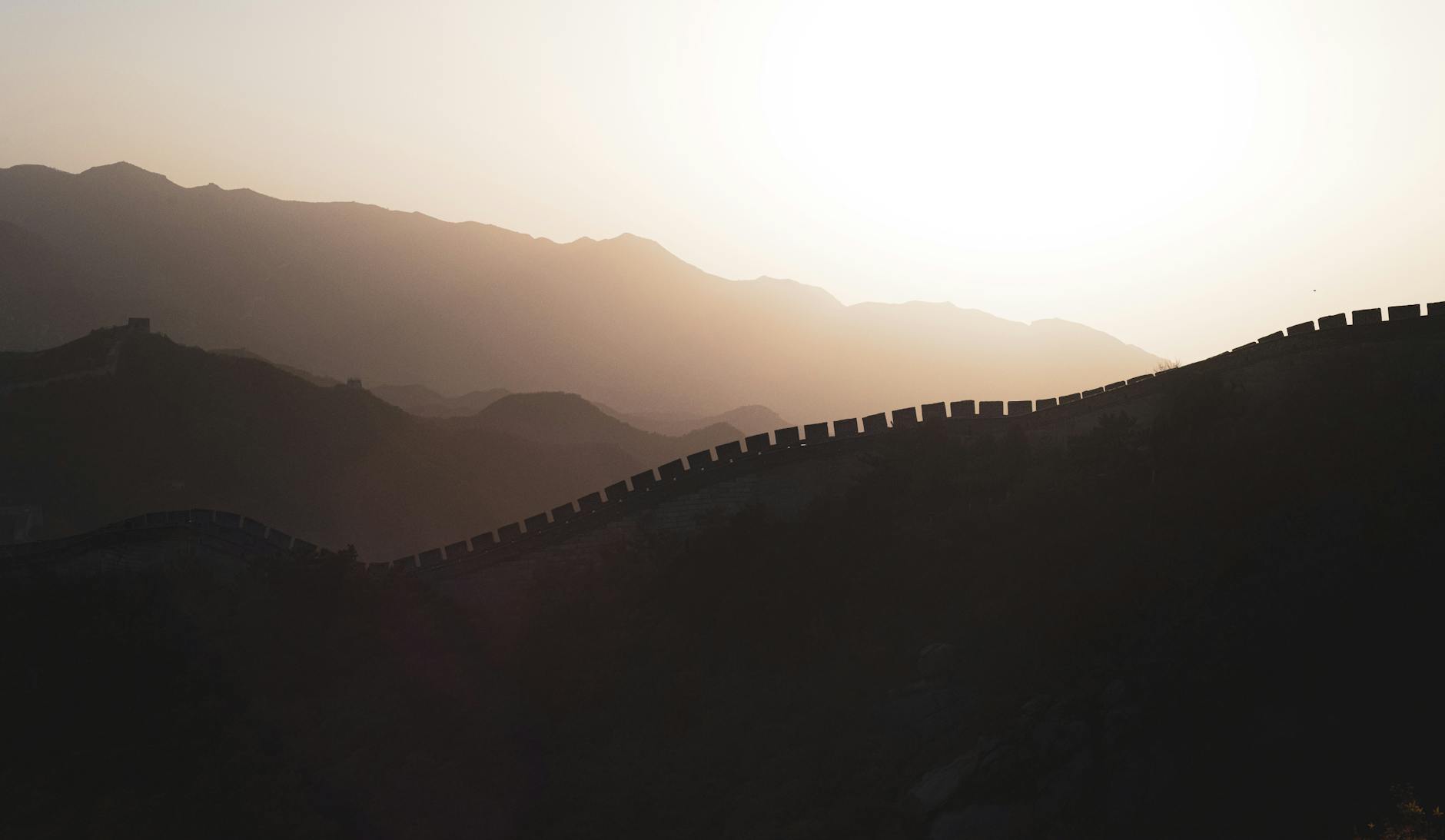
The Great Wall is one of the most photographed structures on Earth, and the right approach can elevate your shots from standard tourist snapshots to truly stunning images. The golden hours — the first hour after sunrise and the last hour before sunset — produce the most dramatic lighting, with warm tones illuminating the wall and long shadows emphasizing its undulating path across the mountains.
Best sections for photography: Jinshanling is the undisputed champion for serious photographers, offering unobstructed views, dramatic topography, and the ability to capture both restored and crumbling sections in a single frame. Mutianyu’s dense watchtowers create compelling compositions, and Simatai’s night illumination offers unique nightscape opportunities.
Composition tips: Use the wall itself as a leading line drawing the eye into the distance. Include watchtowers as anchor points. Frame shots through archways and window openings for depth. In misty conditions (common in spring and autumn mornings), the wall emerging from clouds creates ethereal images. A polarizing filter helps manage reflections and deepen sky colors.
Drone note: Drone flying near the Great Wall is technically prohibited in most sections and can result in confiscation and fines. Some sections are more relaxed about enforcement, but check current regulations before flying. Jinshanling has been known to be more tolerant than Badaling or Mutianyu.
Practical Tips for Your Great Wall Visit
Book tickets in advance: All major sections now require or strongly recommend advance booking, especially during weekends and holidays. Badaling limits daily visitors and often sells out during peak periods. Use Trip.com, the official WeChat mini-programs, or your hotel’s concierge to secure tickets. Keep your passport handy — you’ll need it for ticket verification at the entrance.
Start early: Arriving when the gates open gives you the best light for photos and the smallest crowds. By 10:00 AM, tour buses begin arriving in waves. At Badaling, the 6:30 AM opening in summer offers a magical hour of near-solitude before the masses arrive.
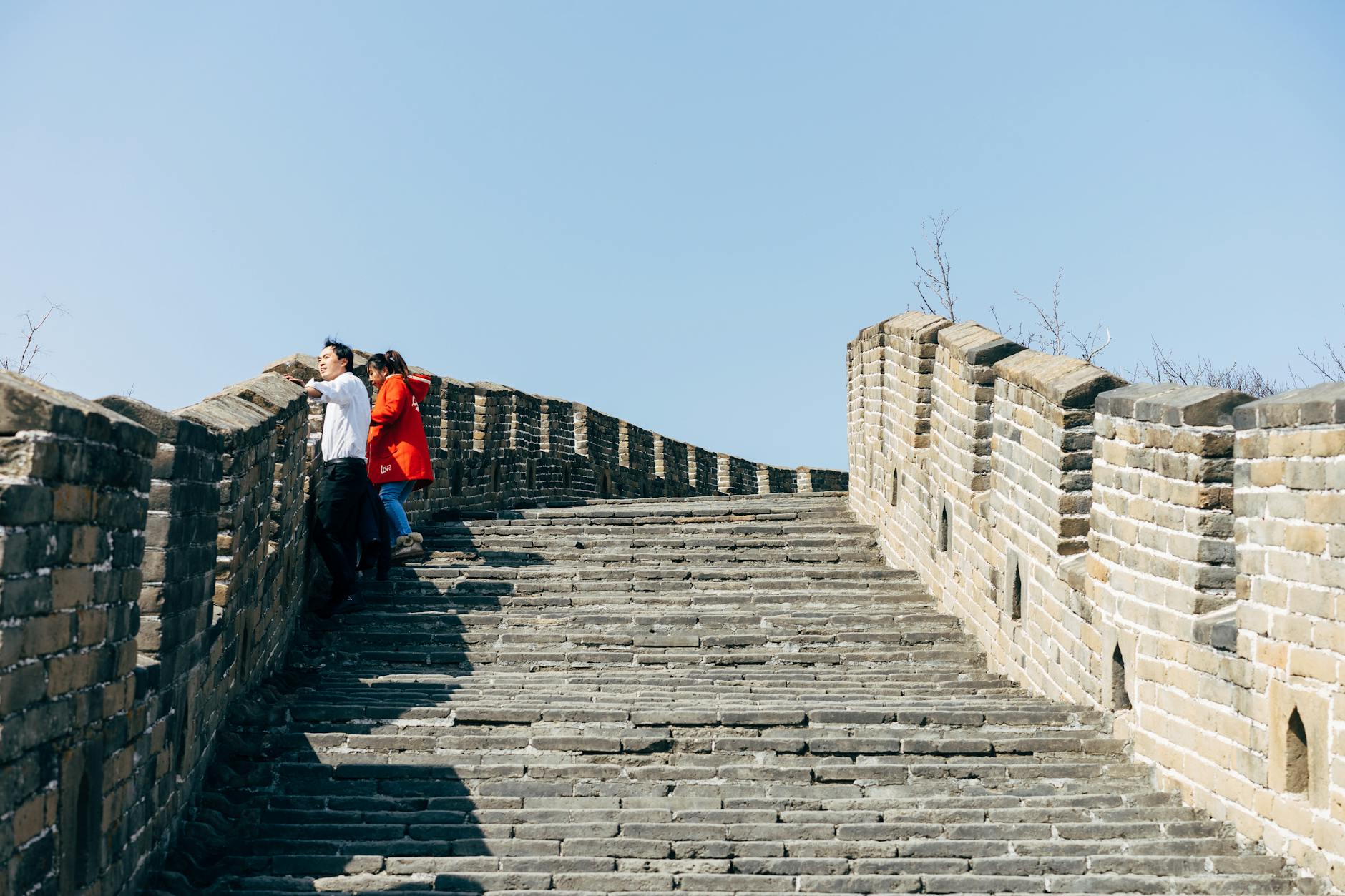
Physical fitness: Don’t underestimate the Great Wall. The inclines are severe — some sections have steps at 70-degree angles. Even fit travelers find themselves winded on the steeper stretches. Take your time, rest at watchtowers, and know your limits. The descent can be harder on your knees than the ascent; hiking poles are useful for Jinshanling and wild sections.
Avoid the tourist traps: Near Badaling and Mutianyu parking areas, aggressive vendors sell overpriced souvenirs and “authentic” Great Wall memorabilia. Politely decline and keep walking. Restaurants near the wall charge 3–5 times normal prices — eat before you go or bring your own food.
Cable cars and shortcuts: At both Badaling and Mutianyu, cable cars and chairlifts can take you directly to the wall, saving energy for walking along the top rather than climbing up. This is an excellent strategy if you want to maximize your time on the wall itself. At Mutianyu, the toboggan ride down is a thrilling experience and a fun way to end your visit.
For more information on getting to the Great Wall and navigating Beijing’s transportation system, see our Beijing Transportation Guide. Planning your overall trip? Start with our Complete Beijing Travel Guide for essential preparation advice, and find the perfect base in our Where to Stay in Beijing guide.