Beijing Visa Requirements
Beijing Visa Requirements: Complete 2026 Guide

China’s entry rules have shifted more in the past two years than in the previous two decades. The short version: Beijing is now far easier to reach than most travelers expect, and for citizens of 50 countries, you can fly in with nothing more than a valid passport. But easier does not mean simple — the rules have nuances, and getting them wrong means being turned away at the gate. This guide walks you through every Beijing visa requirement in force for 2026, from the 30-day visa-free window to the 240-hour transit program, the traditional tourist visa, specialized visa categories, and what actually happens when you step off the plane at Beijing Capital Airport or Daxing Airport.
Read this before you book your flights. Visa validity starts from the date of issue — not your travel date — and that catches people out every year. Get the paperwork right first, then worry about which hutong to explore. For the broader trip picture, our walkthrough of planning a first Beijing visit covers everything from neighborhoods to day trips.
Do You Need a Visa to Visit Beijing?
The fastest answer depends on your passport. Three distinct routes let you enter without a pre-arranged visa, and one route requires one regardless of how long you are staying.
No visa needed if: You hold a passport from one of the 50 countries covered by China’s unilateral 30-day visa-free policy and your trip is 30 days or under. You are also clear if you are transiting through Beijing to a third country and your nationality is among the 57 eligible for the 240-hour visa-free transit program. Citizens of countries with separate bilateral visa-exemption agreements — Singapore, Thailand, Malaysia, UAE, Qatar, Kazakhstan among them — enter freely under those arrangements.
Visa required if: Your country is not covered by any of the above, you need more than 30 days, or your purpose involves paid work (Z visa), long-term study (X1 visa), journalism (J visa), or other activities outside the tourist exemption. In those cases, you apply through a Chinese embassy or consulate before departing home.
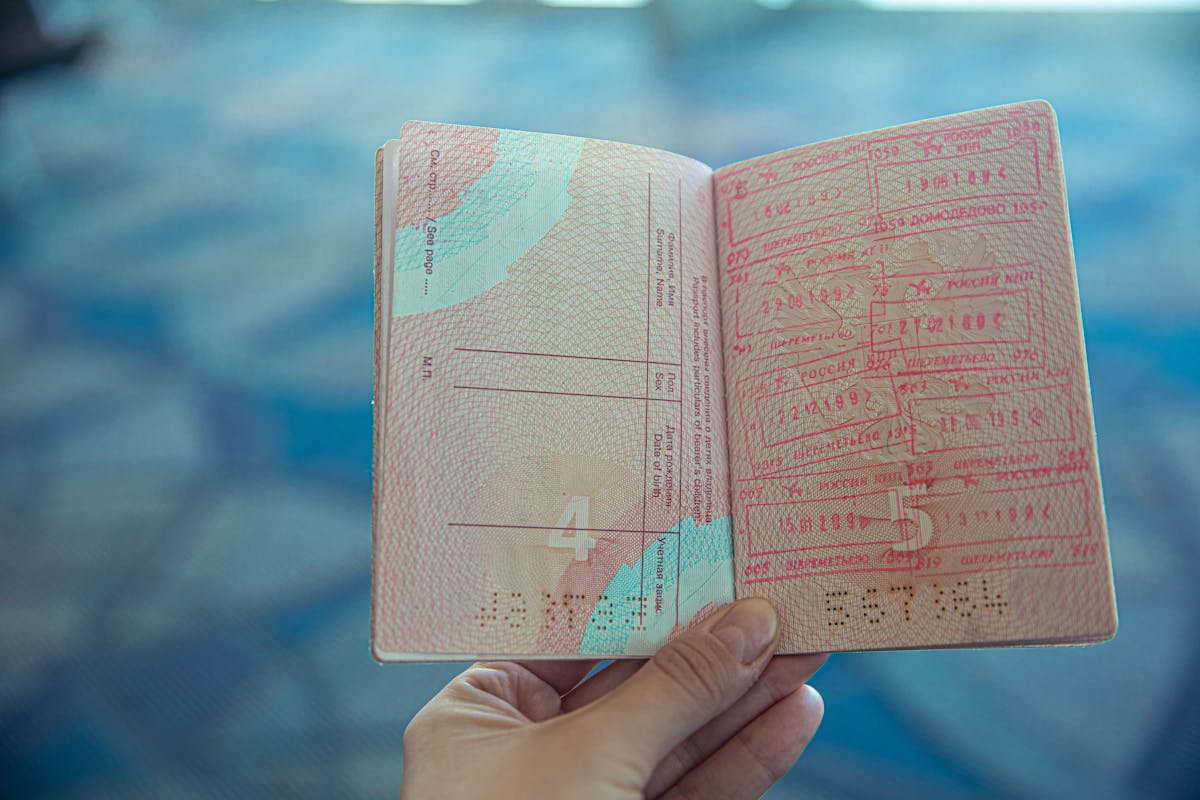
China’s 30-Day Visa-Free Entry Policy (2026)
This is the policy that changed everything. Launched with a small group of countries in late 2023 and steadily expanded since, the 30-day visa-free entry now covers 50 countries and runs through December 31, 2026. Citizens of eligible countries can fly in, explore freely anywhere in mainland China, and leave without ever visiting a consulate.
Countries Eligible for 30-Day Visa-Free Entry
Europe (29 countries): Austria, Belgium, Bulgaria, Czech Republic, Denmark, Estonia, Finland, France, Germany, Greece, Hungary, Iceland, Ireland, Italy, Latvia, Lithuania, Luxembourg, Malta, Netherlands, Norway, Poland, Portugal, Romania, Slovakia, Slovenia, Spain, Sweden, Switzerland, and the United Kingdom.
Asia-Pacific (9 countries): Australia, Brunei, Japan, Malaysia, New Zealand, Singapore, South Korea, Thailand, and the United Arab Emirates.
Americas (3 countries): Canada, Panama, and Suriname.
Other: Georgia, Kazakhstan, Russia (valid through September 14, 2026 under a separate bilateral arrangement), and several additional countries added through policy updates since the program launched.
The list keeps growing. Always cross-check the current roster on the Chinese National Immigration Administration website or with your nearest Chinese embassy — do not rely on information more than a few months old.
The Rules for 30-Day Visa-Free Entry
Permitted activities: Tourism, business meetings and consultations (not employment), visiting family and friends, transit. You cannot work for pay, enroll in long-term academic programs, or conduct journalism under this exemption.
Maximum stay: 30 consecutive days from the date of entry. There is no extension mechanism while in-country — if you need more time, you need a formal visa before you leave home.
Passport validity: Your passport must remain valid for at least six months beyond your planned entry date. You also need at least one blank page — even visa-free travelers receive an entry stamp.
Freedom of movement: Unlike the 240-hour transit program, 30-day visa-free entry lets you travel freely throughout all of mainland China. Fly into Beijing, take a bullet train to Xi’an, come back through Shanghai — all completely fine.
Multiple entries: You can re-enter China multiple times under this policy. Each new entry resets the 30-day clock. There is no formally published cap on annual entries, but immigration officers can question travelers who appear to be using the policy as a substitute for legal residency. If you visit four times in eight weeks, be ready to explain yourself clearly.
The 240-Hour Visa-Free Transit Policy
China’s 240-hour (10-day) transit program is the most generous of its kind in Asia. It started life as a 72-hour policy, grew to 144 hours, and was upgraded to 240 hours in late 2024. The basic premise: if you are traveling between two different countries and China is your layover, you can stay up to 10 days without a visa at all. For anyone routing through Beijing on a longer journey, that is a serious amount of sightseeing time. The full breakdown of the 240-hour transit policy covers exactly how to structure your trip around it.
Countries Eligible for 240-Hour Transit (57 Countries)
Europe (40 countries): Albania, Austria, Belarus, Belgium, Bosnia and Herzegovina, Bulgaria, Croatia, Cyprus, Czech Republic, Denmark, Estonia, Finland, France, Germany, Greece, Hungary, Iceland, Ireland, Italy, Latvia, Lithuania, Luxembourg, Malta, Monaco, Montenegro, Netherlands, North Macedonia, Norway, Poland, Portugal, Romania, Russia, Serbia, Slovakia, Slovenia, Spain, Sweden, Switzerland, Ukraine, and the United Kingdom.
Americas (6 countries): Argentina, Brazil, Canada, Chile, Mexico, and the United States.
Asia-Pacific (9 countries): Brunei, Indonesia, Japan, Kyrgyzstan, Qatar, Singapore, South Korea, the United Arab Emirates, and Vietnam.
Oceania (2 countries): Australia and New Zealand.
240-Hour Transit Requirements
Third-country rule: China must be a connecting stop, not a destination. You are flying from Country A through China to Country B — and B must differ from A. Tokyo to Beijing to London qualifies. Tokyo to Beijing back to Tokyo does not.
Confirmed onward ticket: You must hold a confirmed departure ticket out of China to your third-country destination within 240 hours of arrival. Book this before you travel — you cannot purchase it after entering China.
Approved entry ports: Both Beijing Capital International Airport (PEK) and Beijing Daxing International Airport (PKX) are approved ports for this program. There are now 65 approved ports across 24 provinces and municipalities nationwide.
Freedom to roam: Recent expansions removed the previous geographic restrictions. Transit travelers can now move freely throughout all of mainland China — not just the arrival city — for the duration of their 240 hours.
Exit flexibility: You can leave from a different port than where you entered. Fly into Beijing Capital (PEK) and depart from Shanghai Pudong (PVG) — both are approved, so that combination works fine.
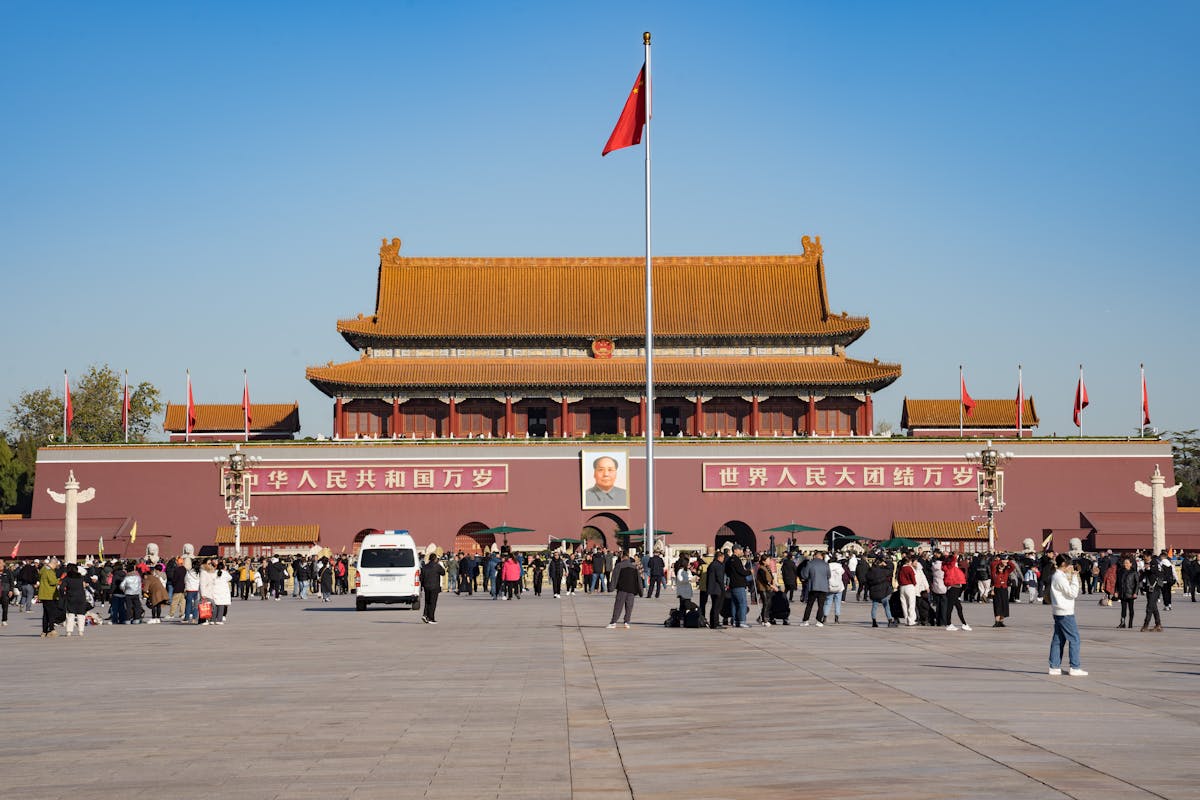
Applying for a China Tourist Visa (L Visa)
If your country is not covered by any visa-free arrangement, or if you need to stay beyond 30 days, the China L (tourist) visa is your route in. Despite the expansion of visa-free programs, the traditional tourist visa remains essential for a significant portion of the world’s travelers — and it offers the most flexibility for longer trips. The full tourist visa application guide goes deep on every step; here is the essential overview.
Required Documents
Requirements vary slightly by embassy or consulate, but the core documents required for a China visa are consistent:
Passport: Original passport plus a photocopy of the biographical data page. Minimum six months of remaining validity for single-entry visas, twelve months for multiple-entry. At least two blank visa pages required.
Visa application form: Completed online via the China Online Visa Application System at consular.mfa.gov.cn. The form covers personal details, travel history, employment, family members, and trip specifics. Block out 30-45 minutes — it is more detailed than most visa forms.
Passport photo: One recent color photograph, 48mm x 33mm, white background, taken within the last six months. Full front face, both ears visible, no head coverings except for religious reasons. Get this right — the wrong photo format is one of the most common reasons applications bounce back. The China visa photo requirements page has exact specs and the mistakes that trip people up most often.
Travel itinerary: A planned route through China showing cities, dates, and general activities. It does not need to be a minute-by-minute schedule, but it should show a coherent trip structure with a beginning and an end.
Proof of accommodation: Hotel booking confirmations for at least your first few nights. Staying with someone local? You need a letter of invitation plus a copy of their Chinese ID card or residence permit.
Round-trip flight itinerary: A confirmed or reserved booking showing your entry into and exit from China. Most embassies accept booking confirmations — fully paid tickets are not always required at application stage.
Financial proof: Not universally required, but worth having ready. Bank statements from the past three months showing sufficient funds for your planned trip duration.
Application Process Step by Step
Step 1 — Complete the online application: Visit the China Online Visa Application System, create an account, and fill in the form completely. Upload your photo and print the completed form with the barcode confirmation page.
Step 2 — Gather supporting documents: Assemble everything listed above. Photocopy the entire set and keep originals and copies in separate places.
Step 3 — Submit at the visa application center: In most countries you submit at a China Visa Application Service Center (CVASC), not the embassy itself. Find your nearest center at visaforchina.cn. Some require appointments; others take walk-ins. Your passport goes in with the application.
Step 4 — Biometric collection: First-time applicants aged 14-70 must provide fingerprint biometrics at the CVASC during your submission appointment. Takes a few minutes. Biometrics stay valid for five years, so repeat visitors skip this step entirely.
Step 5 — Wait for processing: Standard processing takes 4 working days. Express service (2-3 days) and rush service (1 day) are available at extra cost, subject to availability at your CVASC.
Step 6 — Collect your passport: Return to the CVASC to pick up your passport with the visa stamped inside, or arrange for courier delivery if that option is offered at your location.
Visa Costs and Duration
China visa fees vary significantly by nationality because of reciprocal pricing arrangements:
United States citizens: 85 for a 10-year multiple-entry visa (the standard issue). The CVASC service fee adds approximately 0, bringing the total to around 55.
United Kingdom citizens: £151 for a 2-year multiple-entry visa, plus a CVASC service fee of approximately £72.
Canadian citizens: CAD 85 for a 10-year multiple-entry visa, plus CVASC service fees on top.
Australian, EU, and other citizens: Typically 0-60 USD equivalent for single or double-entry visas, plus CVASC fees of 0-0.
U.S. and Canadian citizens get 10-year validity as standard; UK citizens get 2 years. Most other nationalities receive single or double-entry visas valid for 3-6 months, with each entry permitting stays of 30 or 60 days. Critically: validity starts from the date of issue. Book your trip to match — a visa issued in May for a September trip has been running down the clock all summer.
China E-Visa: Applying Online
China has been rolling out an electronic visa system that lets eligible travelers apply entirely online without visiting a CVASC in person. The China e-visa application process works like this: fill in the form online, upload your documents, pay the fee, and receive your visa electronically — no passport submission required. Availability varies by nationality and is expanding steadily, so check whether your country is currently eligible before assuming you need to visit a center. For those who qualify, it removes most of the friction from the application process.
Other China Visa Types for Beijing Visitors
Beyond the tourist L visa, China issues several specialized categories that may apply depending on your purpose of visit:
M Visa (Business): For commercial and trade activities — attending trade fairs, signing contracts, business negotiations. Validity ranges from 30 to 90 days. You cannot receive a Chinese salary on an M visa. A letter of invitation from a Chinese business partner is required.
F Visa (Non-Commercial Visits): For academic exchanges, scientific research, cultural events, sporting activities, and religious visits. Requires an invitation letter from a Chinese host organization.
X1/X2 Visa (Student): X1 covers long-term study programs over 180 days and requires an admission letter from a Chinese educational institution plus a JW201 or JW202 form from the Ministry of Education. X2 covers short-term study under 180 days. Beijing is home to Peking University and Tsinghua University, both consistently ranked among Asia’s leading institutions.
Z Visa (Work): Required for any paid employment in China. Your employer sponsors a work permit first, then you apply for the visa. China’s three-tier classification system — Category A (high-level talent, expedited processing), Category B (skilled professionals with a bachelor’s degree and 2+ years experience), Category C (other workers) — determines the application path. Salary thresholds of 4-6x the local average wage are strictly enforced as of 2026.
S1/S2 Visa (Family Reunion): For family members of foreigners currently working or studying in China. S1 is for stays over 180 days; S2 for shorter visits.
Q1/Q2 Visa (Family Visit): For family members of Chinese citizens or foreign permanent residents. Q1 covers long-term reunion stays; Q2 is for short visits of under 180 days.
Arriving at Beijing’s Airports: Immigration Step by Step
Beijing has two major international airports. Knowing what to expect at each makes the difference between breezing through and spending an unnecessary hour at the immigration counter. Once you are through, our rundown of the subway, buses, taxis and everything else that moves covers how to get from the airports into the city and around once you are there.
Beijing Capital International Airport (PEK)
Capital Airport is the older and higher-traffic of the two, located 25 kilometers northeast of the city center. It handles the majority of international arrivals. Terminal 3, designed by Norman Foster, is the main international terminal and one of the largest airport buildings on the planet by floor area. The Beijing Capital Airport guide has the full layout, lounge options, and transport links.
Getting into the city: the Airport Express subway takes approximately 30 minutes to Dongzhimen station in central Beijing and costs ¥25. A taxi runs ¥100-130 and takes 40-60 minutes depending on traffic — avoid the rush-hour corridors (7:30-9:30 AM and 5-8 PM) if your arrival time gives you a choice.
Beijing Daxing International Airport (PKX)
Daxing opened in 2019, 46 kilometers south of the city center. The Zaha Hadid-designed terminal — a sweeping starfish shape in glass and steel — has won architecture awards since the day it opened. Daxing primarily serves China Southern Airlines and SkyTeam alliance partners; Capital serves Air China and Star Alliance carriers. The complete Beijing Daxing Airport guide covers everything from check-in counters to connection logistics.
The Daxing Airport Express connects PKX to Caoqiao station in about 20 minutes, from where you transfer to Lines 10 and 19. Taxis to central Beijing run ¥150-200 and take 45-70 minutes depending on the time of day.
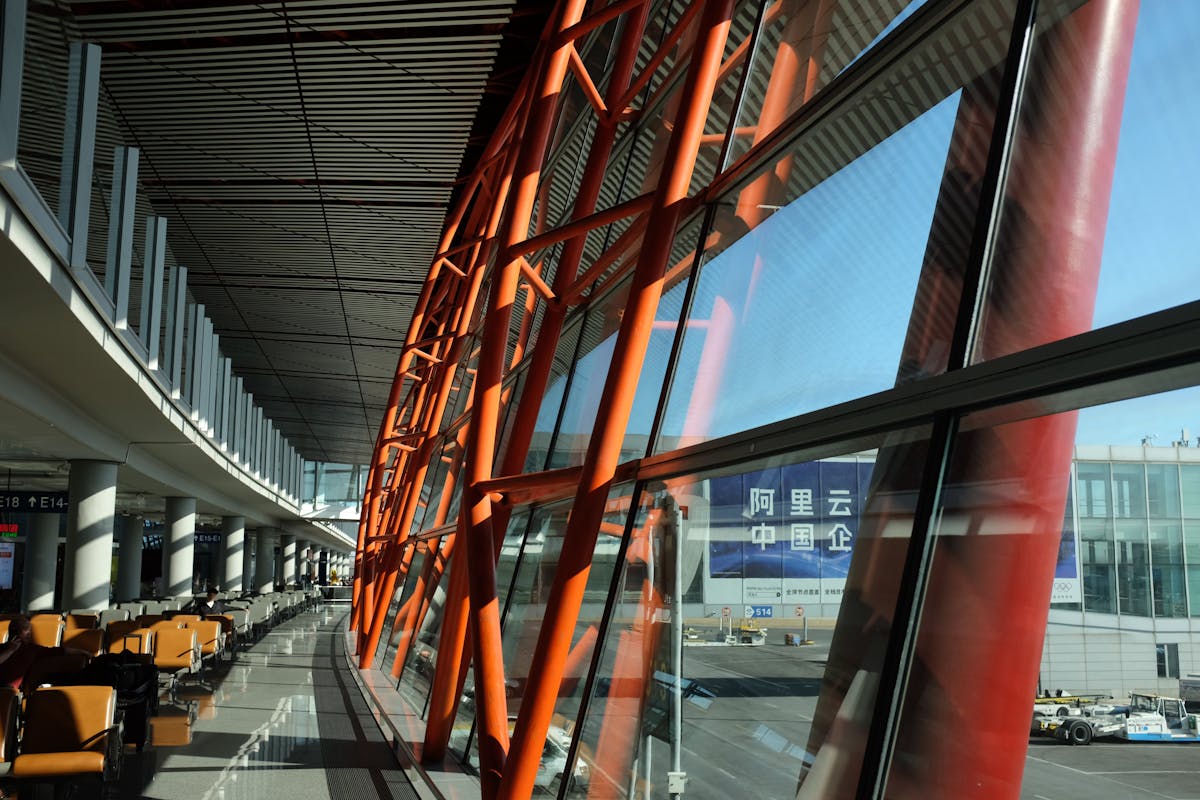
The Immigration Process
Both airports follow the same flow. Know what is coming and you will move through it confidently:
1. Complete the arrival card: Three options — fill it in digitally before you land via the China National Immigration Administration website or app; use self-service kiosks in the arrivals hall; or scan a QR code at the immigration area on arrival. Paper cards are available but the digital options are faster. The card asks for your name, passport number, flight number, purpose of visit, and accommodation address in China. Download the NIA app before you leave home and do this on the plane.
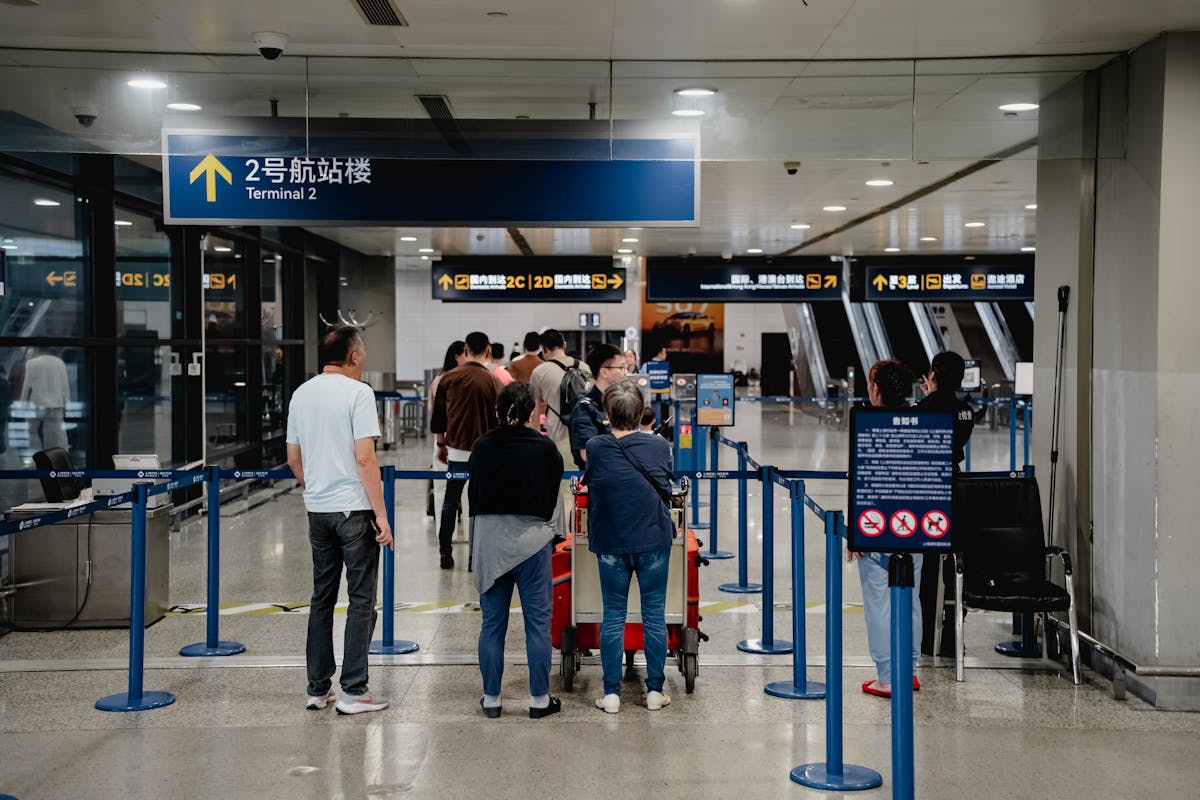
2. Join the correct immigration queue: Separate lanes exist for Chinese nationals, foreigners with visas, and visa-free transit passengers. If entering visa-free — either 30-day or 240-hour transit — look for the lane marked “Visa-Free Entry” or “临时入境外国人” (Temporary Entry Foreigners). Have your passport, completed arrival card, and onward ticket (if using transit visa-free) ready before you reach the counter.
3. Biometric collection: All foreign nationals provide fingerprints at the immigration counter via an electronic scanner. Takes seconds. Children under 14 and adults over 70 are exempt.
4. Immigration interview: The officer may ask brief questions — how long you are staying, where you will be, purpose of visit. Short answers work well: “Tourism, seven days, Hotel [name].” The entry stamp in your passport shows your permitted stay duration. Count from that date, not your flight booking date.
5. Collect baggage and clear customs: After immigration, proceed to the baggage carousel, then through customs. Green Channel if you have nothing to declare. Red Channel if you are carrying more than ,000 USD in foreign currency, goods valued over ¥2,000, more than 400 cigarettes or 1.5 liters of spirits, or anything else requiring declaration. Get this wrong and you are looking at fines and confiscation.
Plane to exit typically takes 45 minutes to 2 hours depending on flight volume and time of day. Early morning arrivals — before 8 AM — consistently have shorter queues. Do not book a tight domestic connection on your arrival day.
Accommodation Registration Requirement
This is one rule that catches a lot of first-time visitors off guard. Under Article 39 of China’s Exit and Entry Administration Law, every foreign national must register their accommodation with local authorities within 24 hours of arriving at each new city or address. The process differs depending on where you are staying.
Hotel guests: Registration is handled automatically. The hotel scans your passport at check-in and transmits your information to the local Public Security Bureau electronically. You hand over your passport, they copy it, you get it back.
Private accommodation (friends, family, Airbnb): You register in person at the nearest local police station (派出所, pàichūsuǒ) within 24 hours of arrival. Bring your passport and the full address where you are staying. The host should come with you, carrying their Chinese ID card and proof of residence. The process takes 15-30 minutes. As of 2026, several provinces have piloted online registration for private stays, but Beijing still primarily uses in-person registration.
After registration: You receive a Temporary Residence Registration Form (临时住宿登记表). Keep this form with your passport throughout your stay. It can be requested at train stations, hotels you check into mid-trip, or during police checks — particularly outside major tourist areas.
Penalties for skipping it: Failure to register can result in a warning and a fine of up to ¥2,000. More practically, not having the form creates complications if you need to extend your visa, change your status, or deal with any official matter during your stay.
China Customs: What You Can and Cannot Bring
Chinese customs regulations are specific and enforced. Know the limits before you pack — it saves time at the Red Channel and potentially saves you from having items seized at the border.
Duty-Free Allowances
Travelers entering China are permitted: up to 400 cigarettes (or 100 cigars or 500 grams of pipe tobacco); up to 1.5 liters of alcoholic beverages over 12% ABV; personal items with a total declared value no higher than ¥2,000; foreign currency cash up to ,000 USD equivalent; and up to ¥20,000 RMB in cash. Anything over these thresholds must be declared at the Red Channel.
Prohibited Items
Strictly prohibited: weapons, ammunition, and explosives; narcotics and controlled substances; counterfeit currency or securities; printed materials, films, or digital media deemed harmful to China’s political, economic, or cultural interests; fresh fruit, vegetables, raw meat, and dairy products (this catches travelers off guard regularly — do not bring food from home that could be considered agricultural produce); live animals without proper quarantine documentation; and certain traditional medicine ingredients including musk, tiger bone, and rhinoceros horn.
Medication Rules
Prescription medication requires extra attention. Keep everything in original packaging with the pharmacy label attached. Carry a letter from your doctor explaining the medication, dosage, and the medical reason for it. Some common Western medicines — notably codeine, found in certain cough syrups and painkillers — contain ingredients classified as controlled substances in China. If you are unsure about a specific medication, check with the Chinese embassy before you travel. Bring only a reasonable personal supply for the duration of your trip.
Extending Your Visa or Stay in Beijing
If your plans change and you need more time in Beijing, extensions are possible — but only for certain visa types, and the process takes longer than most people anticipate.
The Beijing Municipal Public Security Bureau Exit-Entry Administration is at No. 2 Xiaojie, Andingmen, Dongcheng District, open Monday to Saturday (excluding public holidays). This is the office for all visa extensions and status changes while in Beijing.
Tourist visa (L visa) extensions: Typically extended once for an additional 30 days. Bring your passport, a completed application form, your accommodation registration form, and proof of sufficient funds. The processing fee is ¥160 for most nationalities and the turnaround is approximately 7 working days. Apply before your current visa expires — do not wait until the final day.
Visa-free entry: Neither the 30-day visa-free stay nor the 240-hour transit stay can be extended from within China. Your options are to exit China and re-enter — which resets the clock on a new permitted stay period — or to apply for a formal visa from outside the country before your next trip.
Overstaying penalties: China enforces visa rules firmly. Fines run ¥500 per day of overstay up to a maximum of ¥10,000. Serious cases can result in detention for up to 15 days, deportation, and a multi-year ban on future entry. Track your permitted stay dates carefully and act at least a week before they expire.
Essential Travel Documents Checklist
Getting the paperwork in order before departure makes every subsequent step easier. Here is what to have sorted:
Before you fly: Valid passport with 6+ months remaining validity and 2+ blank pages. Visa (if required for your nationality). Printed or digital copies of your round-trip or onward flight itinerary. Hotel booking confirmations for at least the first few nights. Travel insurance documents — strongly recommended even though not a legal entry requirement. Photocopies of your passport biographical page and visa page, stored separately from your originals. Two spare passport-sized photos in case you encounter unexpected visa or registration needs on the road.
On your phone: Your hotel name and address in Chinese characters — essential for showing taxi drivers. Flight booking reference numbers. Emergency contact numbers for your country’s embassy or consulate in Beijing. Digital photos of every travel document as backup. The China National Immigration Administration app for completing your arrival card before landing.
During your stay: Your original passport — Chinese law requires foreigners to carry valid identification at all times. Your Temporary Residence Registration Form from your hotel or police station. Your departure ticket or itinerary if you entered under the 240-hour transit visa-free program.

Frequently Asked Questions
Can I visit Beijing without a visa?
Yes — citizens of 50 countries can visit Beijing visa-free for up to 30 days under China’s unilateral exemption policy, valid through December 31, 2026. Citizens of 57 countries can stay up to 240 hours (10 days) under the transit visa-free program when traveling through to a third country. Several additional countries have separate bilateral visa-exemption agreements with China covering 15-30 day stays.
How long can I stay in Beijing without a visa?
Up to 30 consecutive days under the main visa-free policy, or up to 240 hours (10 days) under the transit program. Mutual visa exemption agreement duration varies by country, typically 15-30 days. None of these periods can be extended from within China — exit and re-enter, or get a formal visa before your next trip.
Do US citizens need a visa for Beijing?
As of 2026, U.S. citizens can enter Beijing without a visa for stays of up to 30 days under the expanded visa-free policy. U.S. citizens also qualify for the 240-hour transit program. For longer stays, or for work, study, or journalism, a visa is required. U.S. citizens who apply for a tourist visa typically receive a 10-year multiple-entry visa as standard.
How long does a China visa take to process?
Standard processing at Chinese visa application centers takes 4 working days. Express processing (2-3 days) and rush processing (1 day) are available at additional cost, subject to CVASC availability. Apply 4-6 weeks before your trip to allow room for complications. Validity starts from the date of issue — not your departure date.
Can I extend my visa-free stay in Beijing?
No. Neither the 30-day visa-free stay nor the 240-hour transit stay can be extended while you are in China. If you need more time, exit and re-enter to start a new permitted stay period, or apply for a formal tourist visa from outside China before your next visit. L visa holders can apply for a single 30-day extension at the local PSB.
Is travel insurance required for Beijing?
Not a legal entry requirement, but genuinely important to have. Medical costs at Beijing’s international hospitals are substantial — a standard hospital visit can exceed ¥5,000-10,000, and medical evacuation to your home country can run 0,000 or more. Get a policy covering medical treatment, emergency evacuation, trip cancellation, and lost or stolen belongings before you board.
Important Embassy and Consulate Information
For visa applications, extensions, emergencies, or lost passports, here are the key contacts in Beijing:
Beijing Municipal PSB Exit-Entry Administration: No. 2 Xiaojie, Andingmen, Dongcheng District. Phone: +86-10-84015292. Open Monday-Saturday, 9:00-17:00. This is where you handle visa extensions, status changes, and accommodation registration issues.
National Immigration Administration hotline: 12367, available in both Chinese and English. Use this to ask policy questions, check current visa rules, or get directed to the right local office.
Major embassies are clustered in Beijing’s Chaoyang District: U.S. Embassy at No. 55 Anjialou Road (+86-10-8531-4000); British Embassy at No. 11 Guanghua Road (+86-10-5192-4000); Canadian Embassy at No. 19 Dongzhimenwai Dajie (+86-10-5139-4000); Australian Embassy at No. 21 Dongzhimenwai Dajie (+86-10-5140-4111). Save your embassy’s emergency number in your phone before boarding.
Tips for a Smooth Beijing Entry
Based on what consistently works at both Beijing airports, here is the practical advice that actually makes a difference on arrival day:
Pre-submit your arrival card digitally. The China National Immigration Administration app lets you do this before landing. It saves 10-15 minutes at the airport and reduces the chance of errors under pressure. Download it before you leave your home country.
Print your hotel confirmation with the Chinese address. Digital copies work fine, but having a printed version with the hotel name in Chinese characters speeds up the immigration interview. Ask your hotel to send a Chinese-language confirmation — most will send one if you request it.
Have your onward ticket ready if you are on the transit program. The immigration officer will want to see your confirmed departure flight out of China. Either have the booking visible on your phone or print it out — do not make them wait while you search your email inbox.
Give yourself time on arrival day. Immigration queues run from 20 minutes to 2+ hours. Early morning arrivals — before 8 AM — consistently have the shortest queues. If you are connecting to a domestic flight or train, build in at least 3 hours after scheduled landing before you need to be anywhere.
Keep your registration form with your passport throughout the trip. From the moment you check into your hotel or register at the police station, that Temporary Residence Registration Form belongs next to your passport. Losing it does not invalidate your stay, but it creates friction at every subsequent official interaction.
Set up Alipay or WeChat Pay before you fly. This is not a visa requirement, but it matters on arrival day. Both apps now link to international Visa and Mastercard credit cards and work immediately for taxis, subway fares, and purchases. Without one of them, paying for anything in Beijing requires finding an ATM first — and that wastes time you could spend at the Forbidden City instead.
China’s entry system has genuinely opened up. The paperwork that once required weeks of embassy appointments and document gathering now amounts to checking a list, booking hotels, and downloading an app. Nail the fundamentals and you will not spend another thought on visa logistics from the moment you land — leaving all of your mental energy for the city itself. For everything to do once you are through the airport doors, the Beijing travel guide is the place to start.