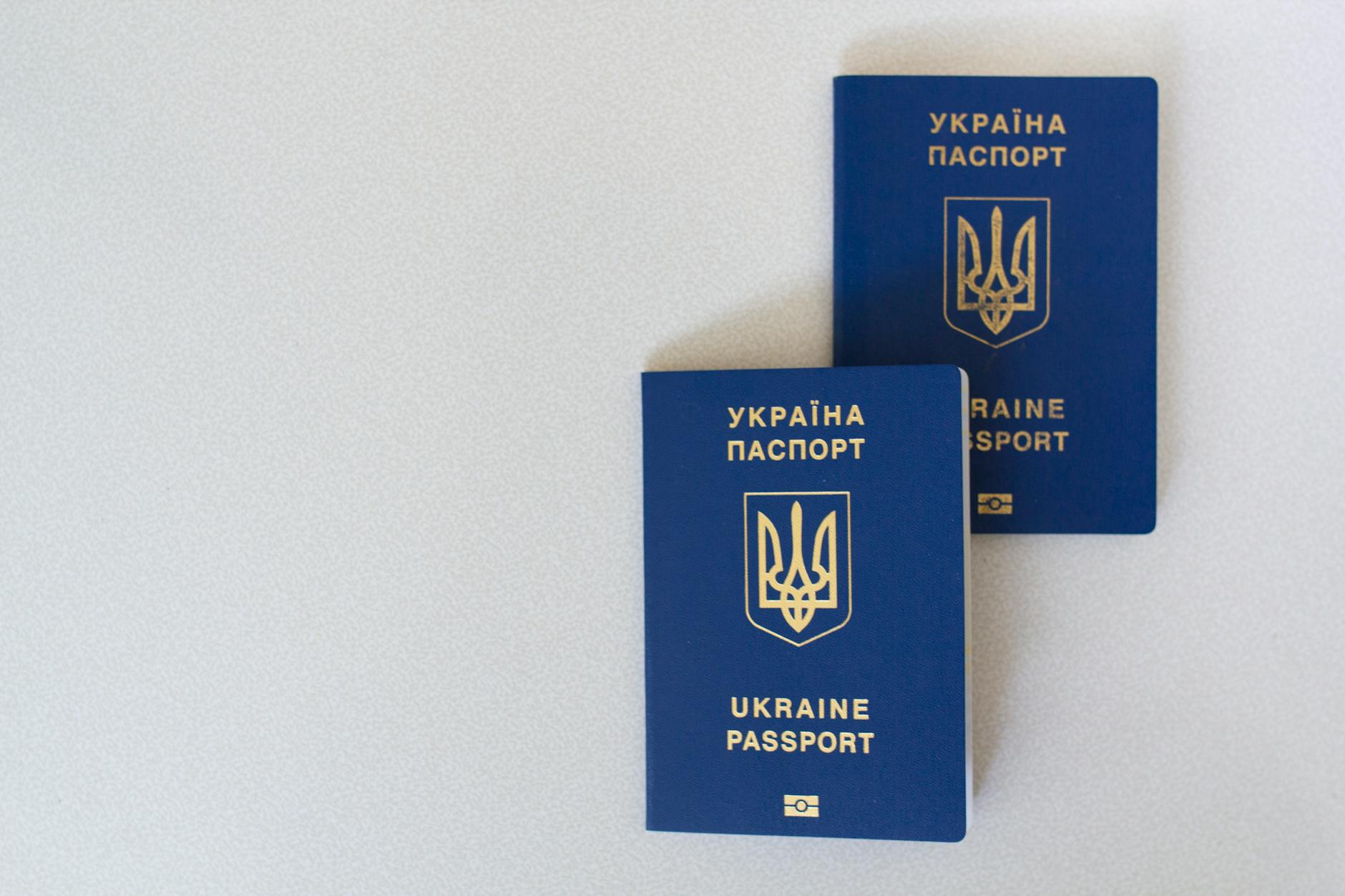
The Chinese consulate is not a forgiving institution. One missing document, a photo that’s 2mm too wide, or a passport that expires three days before the six-month threshold — and your application bounces back, often with a two-week delay and another round of courier fees attached. Getting the China visa documents required right on the first submission is the single most high-leverage thing you can do before a trip to Beijing.
This 2026 checklist covers every document the Chinese embassy and visa application service centres (CVASCs) ask for, why each item matters, and the small formatting details that catch experienced travellers off guard. Use it side-by-side with your packet before you submit. Start your research with the Beijing visa and entry requirements overview to confirm which visa type applies to you before gathering documents.
Important 2024–2026 simplification for US applicants: Since January 1, 2024, the Chinese Embassy and Consulates in the United States no longer require flight bookings, hotel reservations, or a detailed itinerary for standard L tourist visa applications — only passport, completed application form, and a compliant photo. This simplification has not yet been extended to consulates outside the US (Canadian, UK, Australian, and most European applicants still need the full document set). Standard processing time: 4 working days. Express processing (additional fee) brings that down to 2–3 working days.
The checklist below reflects the post-2024 regime and is updated for 2026. The core paperwork remains substantial even after the simplification, and many applicants still get caught out by the photo specs and the financial-proof expectations.
Quick Checklist: All China Visa Documents Required (2026)
Print this section and tick off each item before you walk into the visa centre. Every tourist applicant needs the following at minimum:
- Original passport — valid 6+ months beyond intended stay, with at least 2 blank visa pages
- Photocopy of passport bio-data page (the page with your photo and personal details)
- Completed COVA application form printed from consular.mfa.gov.cn/VISA
- Confirmation page barcode from the COVA system, signed and dated
- Recent colour photo — 48mm × 33mm, white background, taken within 6 months
- Proof of legal stay if you are not applying in your country of nationality (residence permit, work visa, or study visa)
- Photocopy of previous Chinese visas if you have visited China before
- Itinerary outline — a one-page summary of cities, dates, and planned accommodations (no longer required to be confirmed bookings for US applicants, but still recommended for all others)
- Visa fee in the form accepted by your local CVASC (cash, debit card, or money order — not personal cheques)
If you’re applying from a country where you don’t hold citizenship — say, a Brazilian national applying at the consulate in Tokyo — you must include a residence card or long-term visa proving you can legally remain at that address. Without it, the consulate will almost always require you to apply from your home country instead.
1. Passport Requirements: Validity, Pages, and Photocopies
Your passport is the foundation document, and the Chinese consulate enforces its rules without flexibility. The two non-negotiables: at least six months of validity remaining beyond your planned date of departure from China, and a minimum of two completely blank visa pages — not amendment or endorsement pages. If your passport has only one blank page, renew before you apply.
The CVASC keeps your physical passport for the full duration of processing — typically 4 to 7 business days for standard service — so make sure you don’t need it for any other travel in that window. If you do, expedited processing (2 or 3 business days) is available at most CVASCs for an additional fee, but you must request it at the time of submission, not afterwards.
Passport Photocopy Specs
Provide a single-sided photocopy of the bio-data page on standard A4 or US Letter paper. It must be in colour, sharp enough to read every line, and not cut off at the edges. Some applicants are also asked for a copy of the page showing their most recent China visa if they’re renewing. The photocopy stays with the consulate; they will not photocopy your passport for you.
2. The COVA Online Application Form

Since 2019, every China visa applicant must complete the China Online Visa Application (COVA) form at consular.mfa.gov.cn/VISA before visiting the visa centre. There is no paper-only version. The form takes 30–45 minutes to fill out the first time, so set aside a quiet hour, gather your travel dates, employer details, and past China travel history, and complete it in one sitting — the system times out after 30 minutes of inactivity.
Common COVA mistakes include leaving optional fields blank when they actually apply to you, entering employment dates in the wrong format (the system uses YYYY-MM-DD), and forgetting to list every country visited in the past five years — even short layovers count. The form asks for previous Chinese visas going back ten years; dig out old passports if you need to.
Submitting and Printing
After review, the COVA system generates a Confirmation Page with a barcode. Print it on a single sheet of A4 — do not shrink it to fit, as the barcode must scan cleanly. Sign and date the bottom, then bring it with the rest of your packet. You also print the full application form (typically 6–8 pages) and sign each numbered section where indicated. Both documents travel together as a set.
3. China Visa Photo: Exact Specifications
Photo rejections are the single most common reason a visa application bounces for resubmission. The Chinese consulate uses identical specs to the China resident ID card, and they enforce them precisely. Before you order photos, confirm the studio knows the China specifications — the US passport size (51mm × 51mm) is not acceptable and will get your application returned. For the complete breakdown with diagrams, see the China visa photo requirements guide.
| Specification | Required Value |
|---|---|
| Dimensions | 48mm × 33mm (about 1.9 × 1.3 inches) |
| Background | Plain white, no shadows, no patterns |
| Head size | 28–33mm from chin to crown |
| Distance from top | 3–5mm of clear space above head |
| Colour | Colour (not black & white) |
| Recency | Taken within the last 6 months |
| Glasses | Not allowed (even thin frames) |
| Headwear | Not allowed unless religiously required (face must be fully visible) |
| Expression | Neutral, mouth closed, eyes open |
| Quantity | 1 physical photo + 1 digital JPG uploaded to COVA |
The digital version uploaded to COVA must be 354–420 pixels wide by 472–560 pixels tall, saved as a JPG between 40KB and 120KB. Many CVASCs offer in-house photo services for $10–15 if you arrive without a compliant photo, but it’s far less stressful to handle this in advance.
4. Travel Itinerary and Financial Proof
Since January 2024, China no longer requires confirmed round-trip flight tickets or non-refundable hotel bookings as part of the standard tourist visa packet. Many applicants still attach them out of habit — there’s no harm in doing so — but a typed itinerary is now sufficient. Cover these elements on a single page:
- Entry and exit dates and which border crossings you will use
- Day-by-day list of cities you intend to visit
- Hotels or accommodation type for each city (named hotel preferred but not required)
- Return travel arrangement at a high level (e.g., ‘fly home from Shanghai Pudong on June 14’)
Financial proof is not on the official China visa documents required list for tourist applicants from low-risk countries (US, UK, EU, Australia, Canada, Japan), but a consular officer can request it on a case-by-case basis. If you’re unemployed, recently retired, a student, or applying with a thin travel history, attach a recent bank statement showing $3,000–$5,000 in available funds and a brief sponsor letter (if applicable). It’s a small addition that heads off the most common supplementary requests.
5. Supporting Documents by Applicant Type
Beyond the universal China visa documents required, certain applicant categories must add specific items. Match yours to the correct section below.
Employed Travellers
- Employer letter on company letterhead confirming your position, salary, leave dates, and purpose of trip — a single concise paragraph is enough
- Recent pay stub or proof of employment (optional but speeds review)
Retired Applicants
- Pension statement or social security letter showing monthly income
- Bank statement covering the last three months
Students
- Letter from your university confirming enrolment and term dates
- Sponsor letter from a parent or guardian if they are funding the trip
- Sponsor’s bank statement and proof of relationship (birth certificate)
Children Under 18
- Birth certificate naming both parents
- Photocopies of both parents’ passport bio-data pages
- Notarised parental consent letter if a child is travelling without one or both parents
Visiting Friends or Family in China
- Invitation letter from your host (handwritten or typed, signed)
- Photocopy of host’s Chinese ID card or passport bio page plus residence permit
- Note: an invitation letter alone does not change your visa from L (tourist) to Q (family) — see our guide on China tourist visa applications for the right category and process
6. Formatting Rules That Matter
The CVASC is unforgiving about presentation. Sloppy paperwork triggers delays even when every required item is present. Follow these conventions without exception:
- All forms printed single-sided on plain white A4 or US Letter paper
- No staples — paperclips are fine, or simply place the packet in a folder in the correct order
- Photocopies must be in colour, not greyscale
- Photos glued or paperclipped (not stapled) to the application form in the designated box
- All signatures in blue or black ballpoint ink
- Documents in English or Chinese — translations from other languages must be certified by a licensed translator
A common misstep: applicants print the COVA confirmation page slightly scaled down so the barcode doesn’t scan. Print at 100% with no margin scaling, and check the barcode is crisp before you leave the house.
7. Where to Submit Your China Visa Documents
China stopped accepting visa applications directly at most embassies and consulates years ago. Applications now go through the network of Chinese Visa Application Service Centres (CVASCs). In the United States there are CVASCs in Washington DC, New York, Chicago, San Francisco, Los Angeles, and Houston. Each centre handles applications from a specific consular district based on your state of residence — submitting at the wrong centre results in immediate rejection, so check which district covers your state before booking an appointment.
You can submit in person or by courier (FedEx, UPS, or DHL only). Walk-in service is faster if you live close to a centre. Couriered packets must include a prepaid return shipping label and a signed authorisation form — both are downloadable from the CVASC national website. Mail-in applications add 3–5 business days to processing time each way.
If you’re considering a fully digital route, some travellers now qualify for the China e-visa for short tourist visits — confirm your eligibility before deciding which process to follow.
China Visa Processing Timeline
| Service | Processing Time | Approximate Fee (US) |
|---|---|---|
| Standard | 4 business days | $140 |
| Express | 3 business days | $140 + $25 rush |
| Rush (same/next day) | 1–2 business days | $140 + $37 rush |
Apply at least three weeks before departure if possible, and never less than ten business days. Peak seasons — the weeks before Chinese New Year and around National Day in October — reliably push processing times out. If you’re travelling in those windows, add a week to your safety margin.
If you’re checking whether you even need to apply at all, see the 240-hour visa-free transit guide — eligible nationalities can enter without a visa for layovers up to 10 days.
FAQ: China Visa Documents Required
Do I really need an invitation letter for a tourist visa to China?
No, not for a standard L (tourist) visa as of January 2024. Invitation letters are now optional for tourists. They remain required for the F (business), Q (family), and S (visitor) visa categories. If a friend in China sends you a courtesy letter you can include it, but it doesn’t change which visa category you qualify for.
Can I submit flight bookings instead of a typed itinerary?
Yes. Confirmed flight bookings or even a screenshot of an unticketed reservation are still accepted — they’re just not required. If you’ve already booked, attach the confirmation. If you haven’t, a typed itinerary suffices. Either satisfies the travel plan requirement in the China visa documents required list.
How recent does my photo need to be?
Within the last six months and reflecting your current appearance. If you’ve grown a beard, changed hair colour significantly, or undergone any change that makes the photo not match how you look at submission, the consulate may ask for a new photo on the spot. Don’t submit a photo from three years ago just because it’s technically compliant.
What if my passport expires in less than six months?
Renew your passport first. The Chinese consulate rejects any application where the passport expires within six months of your planned departure from China, full stop. Renewal takes 5–8 weeks by mail through your home country’s passport agency, or 1–3 weeks via expedited service.
Can I e-mail my documents instead of mailing or visiting?
No. The COVA online form is digital, but the consulate requires the printed application, physical photo, original passport, and photocopies either in person or by courier. Some applicants qualify for the new China e-visa for short tourist visits, which is fully online — confirm eligibility before deciding which route to use.
How many copies of each document do I need?
One original of each item, except for the passport bio-data photocopy, which is a single photocopy. The CVASC does not need duplicates. Make personal copies for your own records before submitting, since the originals stay with the consulate until your passport is returned with the visa pasted in.
Does the 2024 simplification apply outside the US?
Not yet, as of mid-2026. Canadian, UK, Australian, and most European applicants still need the full document set including an itinerary, and some consulates continue to prefer flight and hotel confirmations even if not strictly mandatory. Check the specific requirements posted by the CVASC in your country before submitting a streamlined packet.
Final Pre-Submission Walkthrough
Before you walk into the CVASC or hand your packet to the courier, lay every document out on a table in order: passport on top, then bio-data photocopy, signed COVA confirmation page, full COVA form (signed at each section), photo paperclipped to the form, itinerary, and any supporting documents from the applicant-type list above. Read every page once for typos. Confirm your passport will still have six months of validity on the day you fly home from China. Verify the barcode on the confirmation page isn’t blurry. Then submit.
Assembling the full set of China visa documents required is the most tedious part of planning a China trip — but getting it right the first time means you can stop thinking about paperwork and start thinking about which stretch of the Great Wall you want to walk.
Continue Planning Your China Trip
- Beijing Visa & Entry Requirements: Complete Guide — pillar overview of every visa option for Beijing
- How to Apply for a China Tourist Visa: Step-by-Step
- China Visa Photo Requirements & Specifications
- China E-Visa Application: Online Process Explained
- 240-Hour Visa-Free Transit: Who Qualifies and How It Works