Where you sleep in Beijing shapes the whole trip. Stay in the wrong neighbourhood and you’ll spend half your sightseeing time on the subway. Stay in the right one and the Forbidden City is a ten-minute walk, the best Peking duck restaurant is two blocks away, and you arrive at Tiananmen before the tour groups. Beijing is enormous — 16,000 square kilometres, six concentric ring roads, 23 million people — and the accommodation choices are just as sprawling. This guide cuts through the noise.
Beijing divides neatly into a handful of distinct zones, and the honest answer to “where should I stay?” depends on one thing above everything else: what kind of trip are you on? For most first-timers, that means Dongcheng District or Wangfujing, walking distance to the imperial sites. For repeat visitors or those who came for modern China — the art, the food scene, the nightlife — Chaoyang District and Sanlitun are a better fit. Culture-seekers who want Beijing’s soul rather than its landmarks do best in the hutong neighbourhoods around Gulou and Nanluoguxiang. And if you’re arriving on a 5am flight from Seoul or catching a 6:30am connection to Tokyo, the airport hotel clusters near PEK and Daxing solve problems that no amount of good location in the city centre can fix.
Choosing Your Beijing Neighbourhood: The Honest Summary
Beijing operates on a ring-road system, with the Forbidden City at dead centre. The 2nd Ring Road traces the old city walls; everything inside it is dense, walkable, historically rich, and — yes — more expensive. Beyond the 3rd Ring Road, hotels are cheaper, neighbourhoods are newer, and the sightseeing commute gets real. The subway helps, but 45 minutes each way across a hot Beijing afternoon adds up fast.
Here are the six neighbourhoods that actually matter for tourists, with an honest take on each.
Dongcheng District: The Default Choice for First-Timers
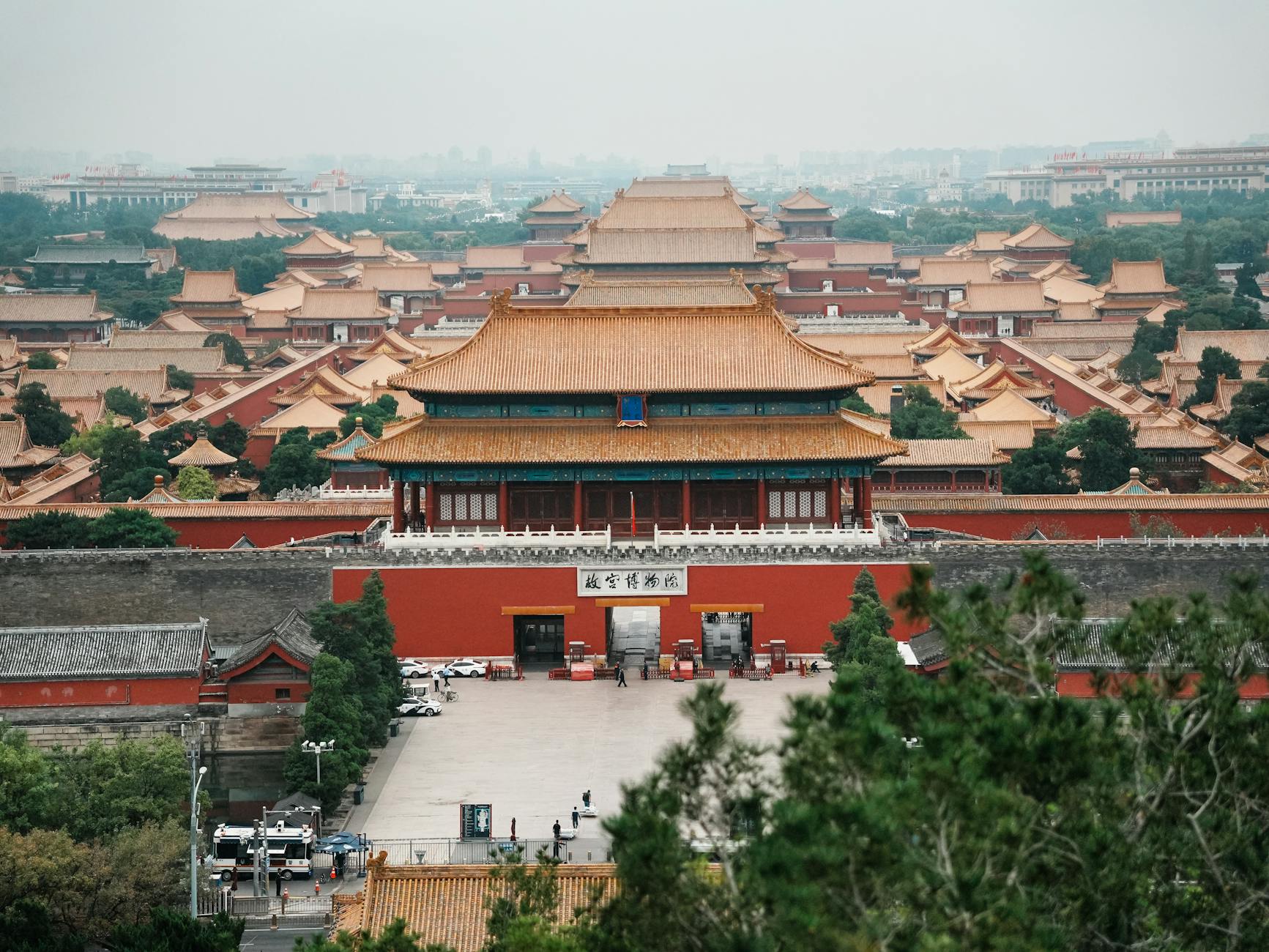
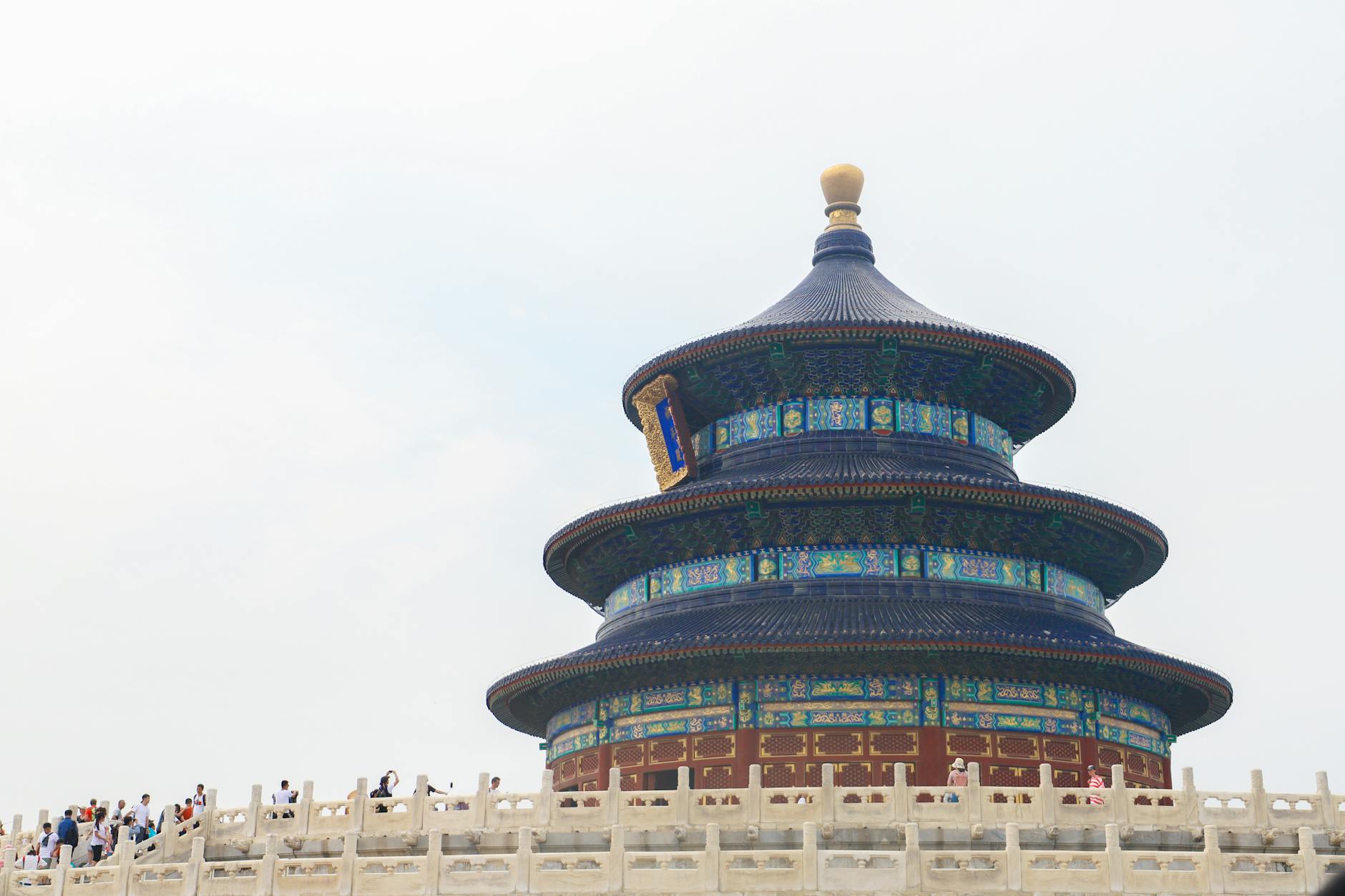
Dongcheng is Beijing’s historic imperial core, and for most tourists it’s the obvious answer. The Forbidden City, Tiananmen Square, the Temple of Heaven, the Drum and Bell Towers, and the Lama Temple all sit within its boundaries. So does Wangfujing, Beijing’s most famous shopping street. The concentration of things worth seeing here is unmatched anywhere in the city.
Hotels run the full range — from the Peninsula Beijing and Waldorf Astoria at the luxury end (think ¥3,000–¥9,000 per night) to mid-range international chains at ¥600–¥1,200 and budget hostels tucked into hutong alleys from ¥100 a dorm bed. Lines 1, 2, 5, 6, and 8 all pass through, giving you direct access to every corner of the city within 30 minutes.
The catch: Dongcheng commands a 15–30% premium over equivalent hotels in Chaoyang or Xicheng. For a short first trip, that premium is worth paying. For a longer stay or a return visit, you might reconsider. Read the full breakdown in our Dongcheng District hotels guide.
Wangfujing: The Most Convenient Spot in Beijing
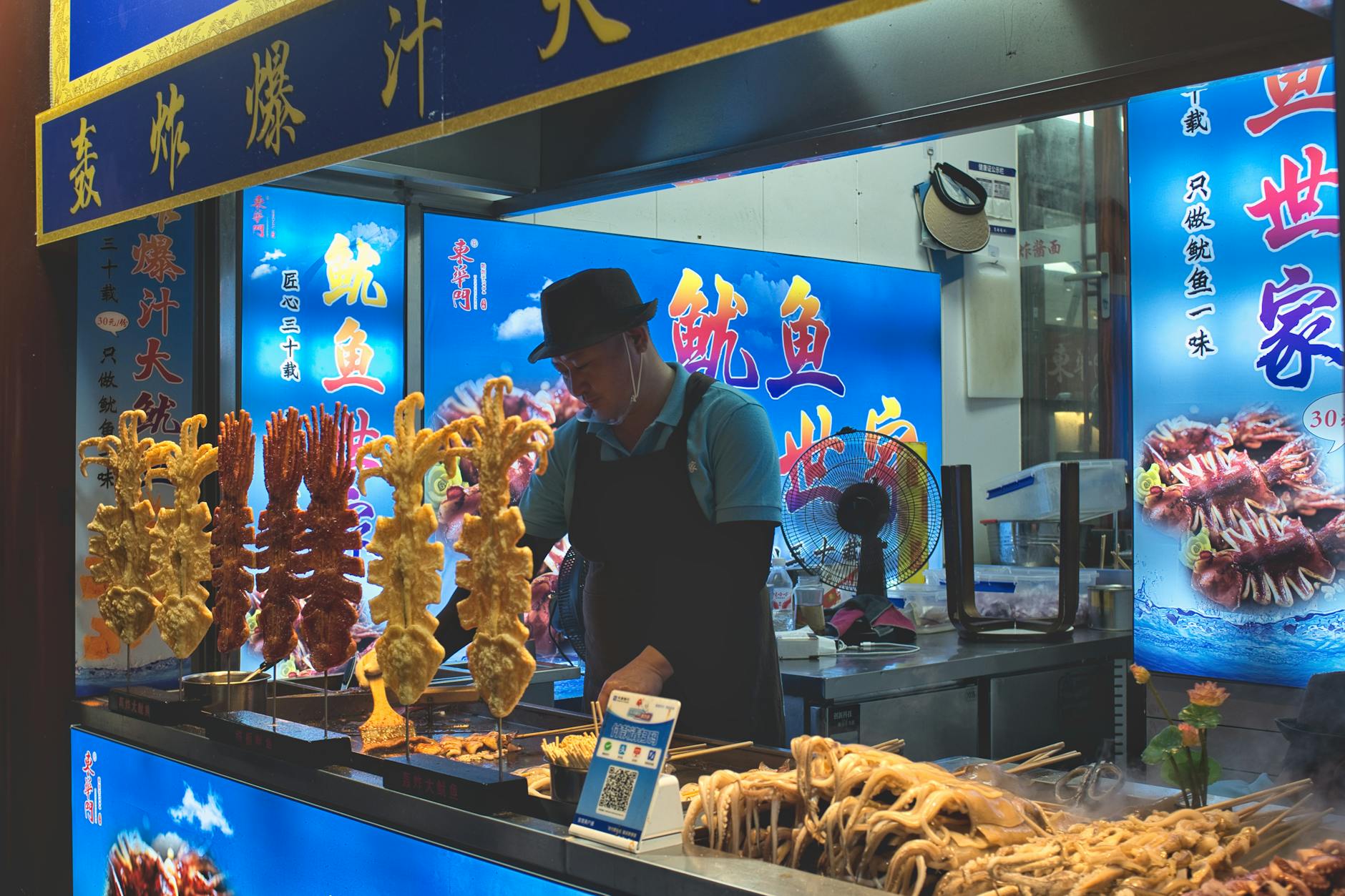
Wangfujing sits within Dongcheng but deserves its own entry because the hotel concentration here is unrivalled. This 800-metre pedestrian street is the closest high-density hotel zone to the Forbidden City’s east entrance — about a 15-minute walk, or two stops on the metro. The Grand Hyatt, Mandarin Oriental, Peninsula, Hilton, and Crowne Plaza all cluster within a few blocks. Mid-range chains (Holiday Inn, Park Plaza) and budget options (Hanting, Home Inn) fill the gaps.
It’s not the most atmospheric neighbourhood. Wangfujing can feel like a tourist-optimised bubble — international brands, English menus, sanitised snack streets. But it works, and “works” matters when you’ve got three days and twelve attractions on the list. See specific hotel picks in our Wangfujing hotels guide.
Beijing’s Hutong Neighbourhoods: Where to Stay for Cultural Depth
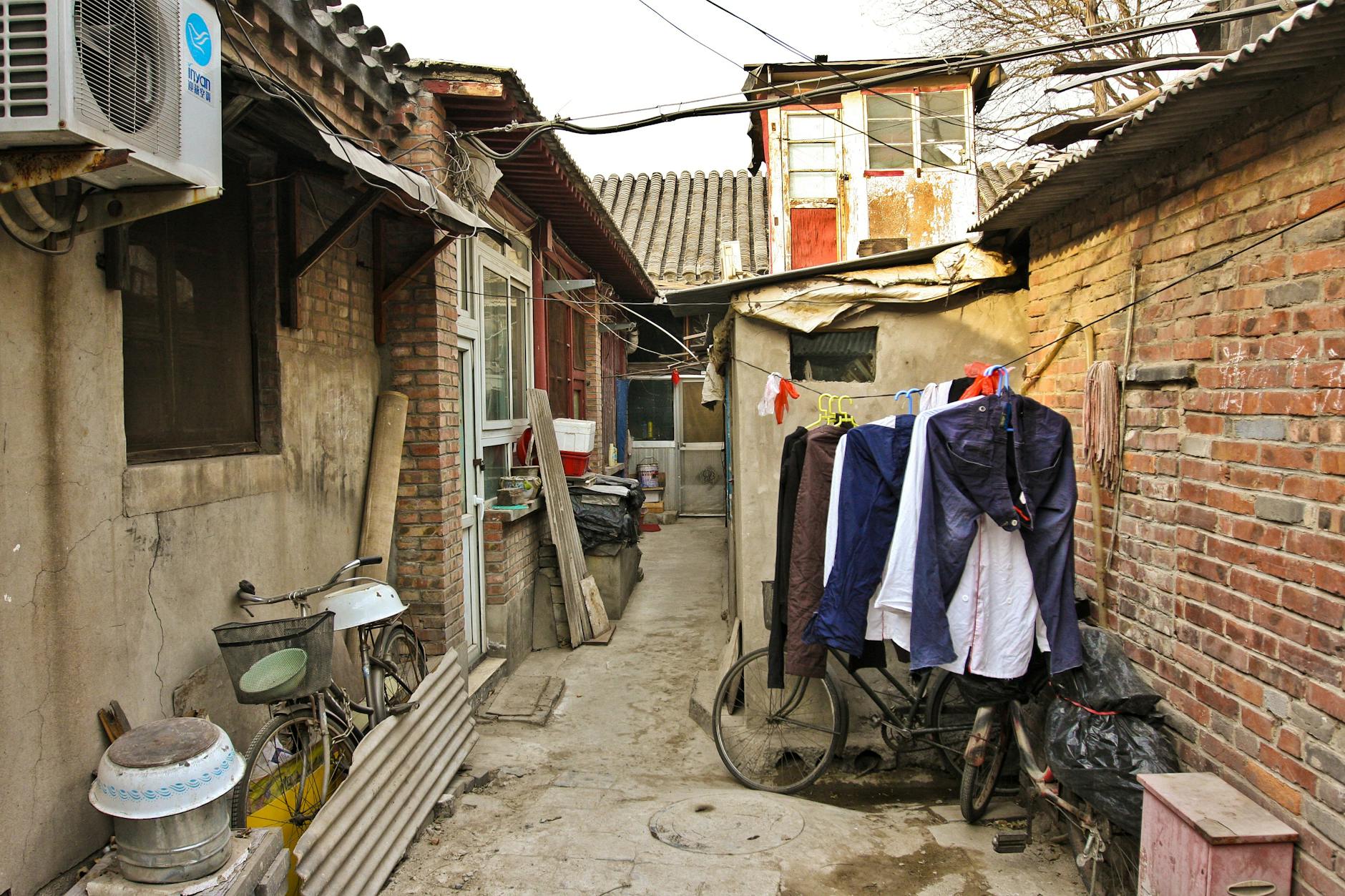
If the Forbidden City is Beijing’s face, the hutongs are its heartbeat. These centuries-old residential lane networks — grey brick walls, red-painted doors, cats on gateways, the smell of coal in winter — have been partially converted into a range of accommodation that modern hotels simply can’t replicate. A well-run courtyard hotel in Nanluoguxiang or the Gulou area gives you something the Peninsula can’t: the genuine feeling of sleeping inside old Beijing.
At the luxury end, the Mandarin Oriental Qianmen — a restored neighbourhood of 42 courtyard houses — ranked in the World’s 50 Best Hotels in 2025. Mid-range courtyard hotels in the ¥300–¥700 range (£42–£98) are plentiful around the Drum Tower area. Budget courtyard hostels go from ¥100 per dorm bed. The trade-off: rooms are smaller than modern hotels, narrow lanes make luggage awkward, and older properties can have inconsistent plumbing. Worth it? For the right traveller — a returning visitor, a culture-focused couple, a photographer — absolutely. See our Beijing hutong hotels guide for specific picks across all budgets.
Chaoyang District: Modern Beijing, Business Hotels, and the Best Nightlife
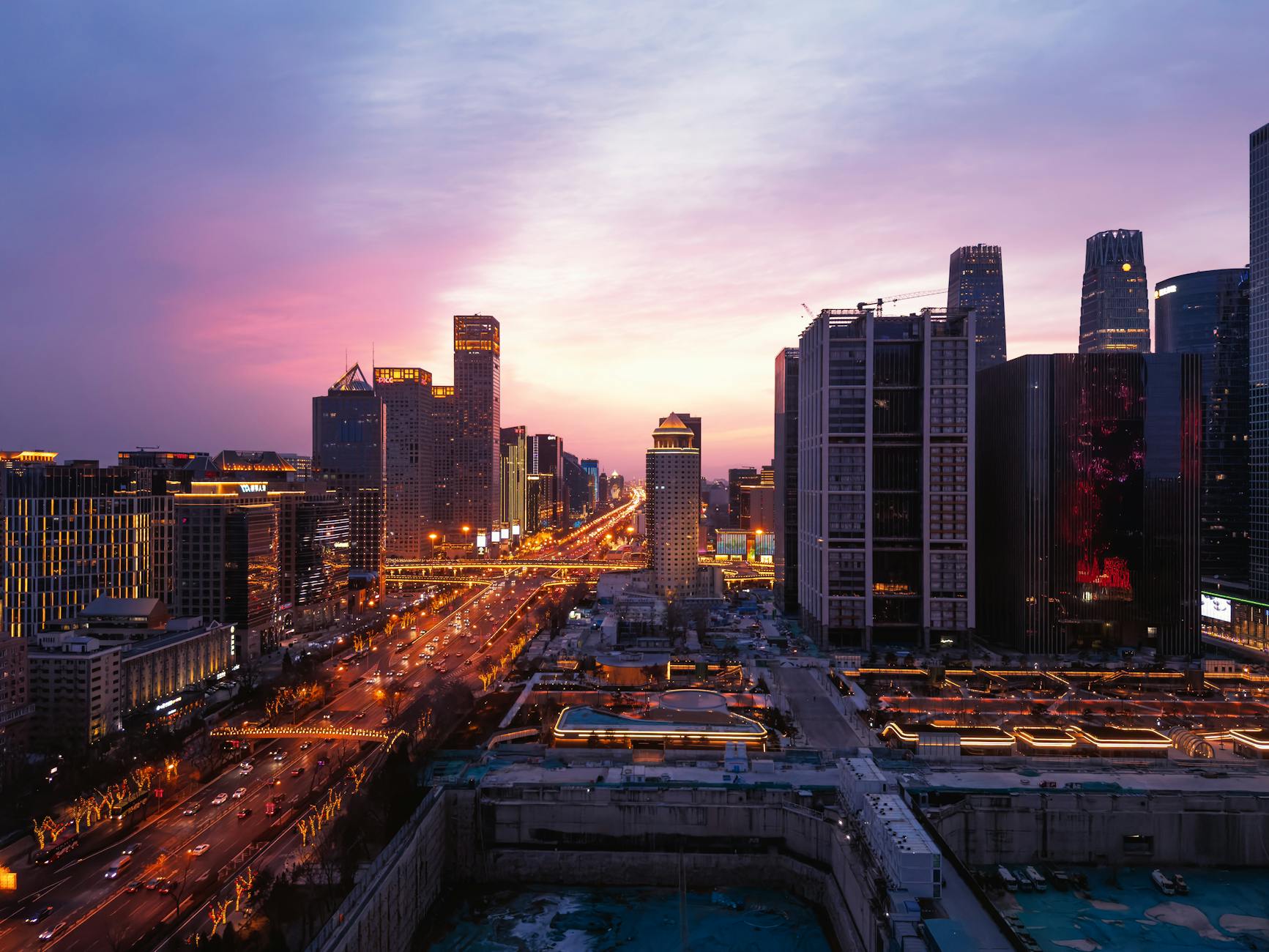
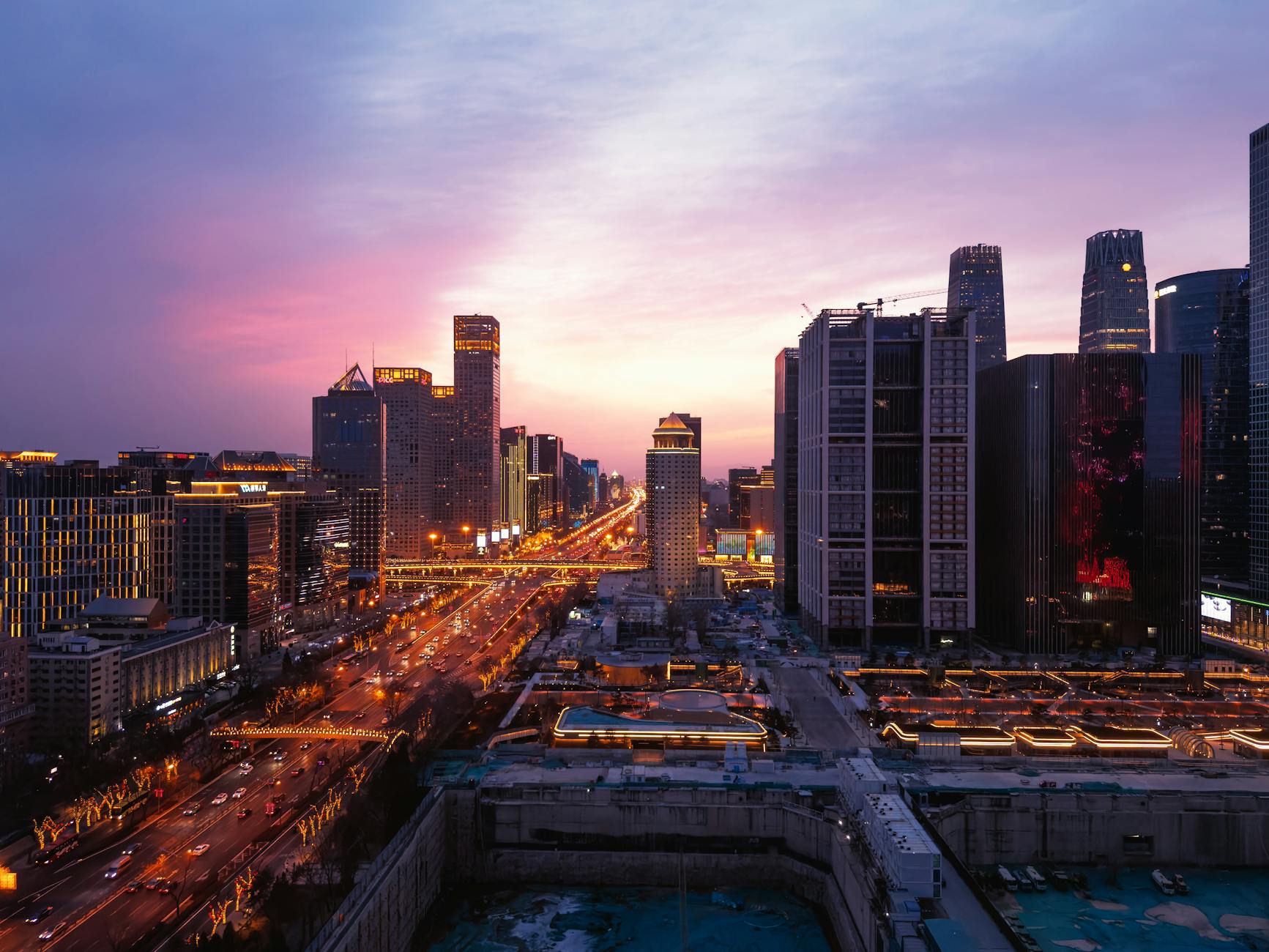
Chaoyang is Beijing for people who weren’t necessarily thinking about the Forbidden City. The district stretches east of Dongcheng and includes the CBD (Guomao), Sanlitun, the embassy quarter, the 798 Art District, and the Olympic Park. It feels more like Singapore or Hong Kong than imperial China — glass towers, international restaurants, English-speaking staff, designer boutiques. The CCTV Headquarters building looms over the skyline like a pair of gigantic trousers.
The hotel infrastructure in Chaoyang is outstanding. The China World Summit Wing (the tallest hotel in Beijing), the St. Regis, the Conrad, the Park Hyatt, and the Four Seasons all sit here. Rates are broadly comparable to Dongcheng, sometimes cheaper at the mid-range level. The subway — Lines 1, 6, 10, and 14 — connects to central Beijing in 20–35 minutes. That’s the honest downside: if the Forbidden City and Tiananmen are on your daily agenda, the Chaoyang commute starts to feel like work. But if you’re here for a second visit, for business, or because the plan is Sanlitun bars and 798 galleries and contemporary cuisine, Chaoyang is the right call. See our Chaoyang District hotels guide for the full breakdown.
Sanlitun: Best for Nightlife, International Food, and the Expat Scene
Sanlitun deserves its own mention because the question “Wangfujing or Sanlitun?” is the most common accommodation dilemma for visitors who already know Beijing a little. The answer is almost purely about priorities. Wangfujing puts you next to the Forbidden City. Sanlitun puts you inside Beijing’s best dining and bar scene — Migas Mercado, Slow Boat Brewery, Taikoo Li, dozens of Japanese and Spanish and Korean restaurants where the food is genuinely excellent and the bill won’t ruin your trip.
Hotels in Sanlitun include the design-forward Opposite House (Kengo Kuma, ¥2,000+), the InterContinental Sanlitun, CHAO Sanlitun, and solid mid-range options from ¥600 upward. The Forbidden City is 30 minutes by metro — entirely manageable, just not the same as walking there. For nightlife, dining-focused and second-time visitors, Sanlitun wins easily.
Xicheng and Houhai Lake: Best for Atmosphere on a Mid-Range Budget
Xicheng District sits west of the Forbidden City and is consistently underrated by first-time visitors. The Houhai Lake area — three interconnected lakes surrounded by willow trees, hutong lanes, bars, and cafes — offers some of Beijing’s most enjoyable evenings. Elderly locals play chess at dawn; the bars fill with a mixed local-and-tourist crowd by 9pm. In winter the lake freezes solid and an impromptu ice-skating scene materialises. It’s the kind of neighbourhood that makes you feel like you’ve actually found Beijing rather than just visited it.
Accommodation around Houhai runs from boutique lakeside guesthouses at ¥250–¥500 per night to small hotels at the mid-range. The Drum and Bell Towers are a ten-minute walk; Prince Gong’s Mansion is nearby. Subway connections are solid (Lines 2 and 8). For anyone who wants authentic Beijing character and doesn’t need to be in the middle of the Dongcheng tourist corridor, Houhai is one of the city’s genuine pleasures.
Near the Airports: When the City Can Wait
Beijing has two international airports: Capital (PEK) in the northeast and Daxing (PKX) in the south. For most visitors, a central Beijing hotel is the right choice — the Airport Express (¥25, 21 minutes) from PEK to Dongzhimen is fast, cheap, and reliable. But there are specific situations where an airport hotel makes more sense than heading into the city: pre-dawn departures before 6am (when the Express hasn’t started), late arrivals after 11pm (when it’s stopped), long-haul layovers of 8–14 hours, and weather delays that leave you stranded overnight.
Both airports have solid hotel clusters within 5–15 minutes by shuttle, ranging from the Capital Airport InterContinental (¥1,200+ per night, connected via walkway to Terminal 3) to budget chains at ¥350–¥450. Full details in our Beijing airport hotels guide.
Beijing Accommodation by Budget
Beijing is better value than you’d expect at every budget level compared to cities like London, Tokyo, or New York.
Budget (under ¥300 / ~$42 USD): Hostel dorms from ¥80–¥150, private rooms from ¥200–¥350. The Gulou area and Qianmen have the best budget options with good neighbourhood character. Budget chains like 7 Days Inn and Home Inn offer reliable private rooms from around ¥200. See our Beijing budget hotels and hostels guide for the best picks.
Mid-range (¥300–¥1,000 / $42–$140 USD): This is the sweet spot for most tourists. Three- and four-star chains, boutique hutong hotels, and mid-market international brands all operate in this range. You’ll get comfortable rooms, working Wi-Fi, breakfast options, and — if you pick right — a neighbourhood with character. International chains like Holiday Inn, Novotel, and Ibis cluster here.
Luxury (¥1,000–¥3,500+ / $140–$490+ USD): Beijing punches above its weight in the luxury category. The Aman at Summer Palace, the Peninsula Beijing, the Mandarin Oriental Qianmen, and the China World Summit Wing offer experiences that rival equivalent properties in London or New York — often at 30–50% lower rates. If a luxury stay is in the plan, Beijing is one of the best cities in the world for it.
Apartment Rentals and Extended Stays
For stays of a week or more, a serviced apartment or short-term rental is worth considering. The key regulatory caveat: all foreign visitors must register with local police within 24 hours of arrival. Hotels handle this automatically. Private rental hosts are required to register you too, but enforcement varies — if you’re staying in an unregistered apartment and a local police check happens, the consequences range from inconvenient to seriously disrupting. Use platforms that explicitly confirm registration support, or check with your host before booking. See our full Beijing apartment rentals guide for how this works in practice.
Booking Tips: Timing, Platforms, and the Pricing Quirks of Beijing
Peak season in Beijing is April–May (spring, ideal weather) and September–October (golden autumn, clearest skies). During China’s National Day Golden Week — the first week of October — hotel prices can double or triple overnight, and anything decent sells out weeks in advance. If your dates are flexible, avoid that window. Book at least 2–3 months out for peak periods; 3–4 weeks is usually fine the rest of the year.
The cheapest period is November through February outside of Chinese New Year (late January or early February). Winter rates at many Dongcheng mid-range hotels drop 30–50% from peak. You trade clear skies for grey, cold days — but the attractions are far less crowded, which has its own value.
On platforms: Booking.com and Agoda work fine for international hotels. Chinese platforms like Trip.com and Fliggy often have lower rates for domestic-brand hotels and sometimes for international chains too. Run both before committing. Many hotels also discount direct booking by 5–10%.
Practical Matters: Registration, VPNs, and Getting Paid
Police registration: By law, foreign visitors must register within 24 hours of arrival. Hotels do this automatically at check-in. If you’re staying in a private rental, confirm your host will register you — and if in doubt, go together to the nearest police station. Fines for non-registration can reach ¥500+, and it occasionally causes issues at border crossings on departure.
VPN: Google, Instagram, WhatsApp, and most Western social platforms are blocked in China. Set up a VPN before you leave — not in China, where downloading one is significantly harder. Most luxury hotels offer VPN-enabled networks, but don’t rely on it. Our Beijing travel guide covers this and other essential prep in detail.
Payment: International credit cards work at most mid-range and luxury hotels. Budget guesthouses and hutong hostels often prefer cash or Chinese mobile payment (WeChat Pay or Alipay). Since 2024, both apps allow international passport-linked accounts — set yours up before arriving. See our Beijing transportation guide for payment app setup specifics. For the full planning picture, including museums, restaurants, and navigating the subway system, the Beijing nightlife guide covers Chaoyang and Sanlitun evenings in depth.
Neighbourhoods Worth Skipping (and Why)
Beyond the 4th Ring Road, unless you’re next to a subway station with a short commute to the centre, the savings don’t offset the time cost. The areas around Beijing West Railway Station and Beijing South Railway Station are affordable but generic — useful for transit connections, not worth making your base. Fengtai and Tongzhou are developing but have nothing pulling tourists their way. The unsolicited guesthouses that approach you near major railway stations should be ignored entirely: they’re often unlicensed, won’t register foreign guests properly, and occasionally aren’t safe.
Detailed Accommodation Guides for This Cluster
Each of the major neighbourhoods and accommodation types has its own detailed guide with specific hotel picks across all budgets:
- Best neighbourhoods in Beijing for tourists — the full comparison, neighbourhood by neighbourhood
- Wangfujing hotels — the most central district, with 30+ hotels reviewed across all budgets
- Beijing hutong hotels — courtyard stays from budget hostels to the Mandarin Oriental Qianmen
- Beijing budget hotels and hostels — best stays under ¥500, with neighbourhood tips
- Luxury hotels in Beijing — the best five-star properties, honestly compared
- Dongcheng District hotels — the historic core, from budget hostels to the Peninsula
- Chaoyang District hotels — modern Beijing, Sanlitun, and the CBD
- Beijing apartment rentals — extended stays, serviced apartments, and registration rules
- Beijing airport hotels — PEK and Daxing airport options for early flights and late arrivals
Quick Recommendation Table
Still not sure? Here’s the shortcut:
First-time visitor, 3–7 days: Dongcheng or Wangfujing. Don’t overthink it.
Cultural immersion, authenticity over convenience: Hutong neighbourhood around Nanluoguxiang, Gulou, or Houhai. Book at least 2–3 nights in a courtyard hotel to make the most of it.
Business trip or modern-Beijing-first visit: Chaoyang CBD or Sanlitun. Upgrade when you can — Beijing’s luxury hotels in Chaoyang are genuinely world-class.
Budget under $40/night: Leo Hostel in Qianmen or Beijing Downtown Backpackers in Nanluoguxiang. Both are well-run, well-located, and properly sociable.
Luxury stay: Peninsula Beijing for the most prestigious address; Aman at Summer Palace if you want something genuinely unusual; Mandarin Oriental Qianmen if you want the hutong-luxury combination.
Early flight / late arrival: Capital Airport InterContinental for PEK; Hilton Beijing Daxing for PKX. Both run 24-hour shuttles and have 24-hour reception.
Beijing’s subway is excellent — modern, clean, cheap, and signed in English — so no neighbourhood choice is truly disqualifying. The city works from nearly anywhere. But the right neighbourhood makes it work better, and that early morning walk to the Forbidden City before the crowds arrive is one of the things you’ll remember about this trip for a long time.
Matching Your Base to Your Trip (Not Just the Map)
Here’s the mistake first-timers make: they pick the most central dot on the map and book it. But Beijing is enormous — the urban core alone dwarfs greater London — and “central” on a tourist map can still mean an hour from the sights you actually came for. What matters more than being central is being near a subway interchange, because the metro, not your hotel’s address, is what moves you around this city. Anchor yourself within a five-minute walk of a station on Line 1 or Line 2 and the whole place opens up.
Trip length changes the maths too. On a tight three-day visit, every minute counts, so pay up to sit inside the Dongcheng core near the Forbidden City and Wangfujing — you’ll claw back the premium in saved taxi time and early-morning access to the big sights before the tour buses roll in. With five days or more you can trade a little convenience for character: a courtyard hotel in the hutongs, or a room near Houhai, becomes part of the trip rather than just a place to crash.
Then there’s how you travel. Light sleepers should steer well clear of the Sanlitun bar strip and the louder stretches of Gulou. Families want space and a second bed over a fashionable address. Business travellers tied to the eastern CBD will lose less of their day to traffic from Chaoyang, even if the evening stroll is duller. And if you’re landing on a red-eye or leaving before dawn, don’t overthink it — one night by the airport at each end beats a white-knuckle 5am dash across town. Whatever you settle on, glance at the subway map and the season you’re visiting in before you lock a rate: a hutong courtyard is magic in October and bitter in January.