Getting the China visa photo requirements exactly right is the single biggest stumbling block in an otherwise straightforward application. Photos that look perfectly fine for any other country’s visa — or for your own passport — get rejected at the Chinese Visa Application Service Center (CVASC) because the size is off by a millimeter, the background leans cream instead of pure white, or the head sits just slightly too low. Before you even think about the rest of your paperwork, check the Beijing visa and entry requirements overview to confirm you actually need a visa. If you do, read on — every dimension, every print spec, every digital-upload rule, and the dozen most common rejection reasons are covered below.
Quick spec summary (2026): Print size 33 × 48 mm (1.3 × 1.9 in); head height (chin to crown) 28–33 mm; head width 15–22 mm; head to upper edge 3–5 mm. Pure white background. Color RGB photo only — black-and-white rejected. Digital file: JPEG, 354–420 px wide × 472–560 px tall, file size 40–120 KB. Both ears must be clearly visible; glasses (any kind, including prescription or tinted) are strictly prohibited — no exceptions. Neutral expression, mouth closed, eyes open.
China updated its visa photo guidelines several times since the COVA online system launched in 2019, and the rules tightened again in 2024. The standards below reflect requirements enforced by Chinese consulates worldwide as of 2026, including the strict pure-white background rule that trips up a surprising number of travelers.
China Visa Photo Requirements at a Glance
| Specification | Required Value |
|---|---|
| Photo size | 48mm × 33mm (1.89 × 1.30 inches) |
| Head height (chin to crown) | 28–33mm |
| Head width (ear to ear) | 15–22mm |
| Distance from top of head to top edge | 3–5mm |
| Background | Pure white (#FFFFFF), no patterns, no shadows |
| Color | Color photograph (not black-and-white) |
| Photo paper | Glossy finish, not matte |
| Recency | Taken within the last 6 months |
| Glasses | Not allowed (no exceptions for prescription) |
| Headwear | Not allowed (religious exemption requires letter) |
| Expression | Neutral, mouth closed, eyes open and visible |
| Ears | Must be visible (no hair or accessories covering ears) |
| Digital file format | JPEG (.jpg) |
| Digital pixel dimensions | 354–420 px wide × 472–560 px tall |
| Digital file size | 40 KB – 120 KB |
| Print quantity | 1 physical photo to staple/clip to printed COVA form |
| Digital quantity | 1 JPEG uploaded during COVA online application |
1. Physical Print Specifications
The Chinese consulate uses a slightly larger format than the U.S. or Canadian passport photo. At 48mm × 33mm, your China visa photo is a tall rectangle, not the square U.S.-style 51×51mm photo. Many drugstore photo machines have a ‘China’ preset; if yours does not, ask the operator to use the 33×48 mm template and verify the head size manually before you leave the store.
Head Size and Positioning
Within that 48×33 frame, your face must occupy a precise zone. The chin-to-crown measurement should land between 28 and 33 millimeters. There must be 3–5 millimeters of clear white space above the top of your head and the photo edge — not zero space (cropped scalp), not 10mm (tiny head). Eyes should fall about 60% of the way up from the bottom edge, meaning the eye line sits roughly 28–32mm from the bottom. These margins are tight enough that even a studio doing compliant U.S. visa work can produce a non-compliant China photo if they freelance the cropping.
Print Material
Print on glossy photo paper. Matte and satin finishes are explicitly not accepted, and neither is plain printer paper or self-printed inkjet output. CVASC inspectors feel the photo as part of the check — a flexible piece of plain paper goes straight back. Most one-hour photo printers (CVS, Walgreens, Boots, Costco) print on glossy stock by default. Self-service kiosks usually do too, but verify the output before you pay.
2. Background Rules
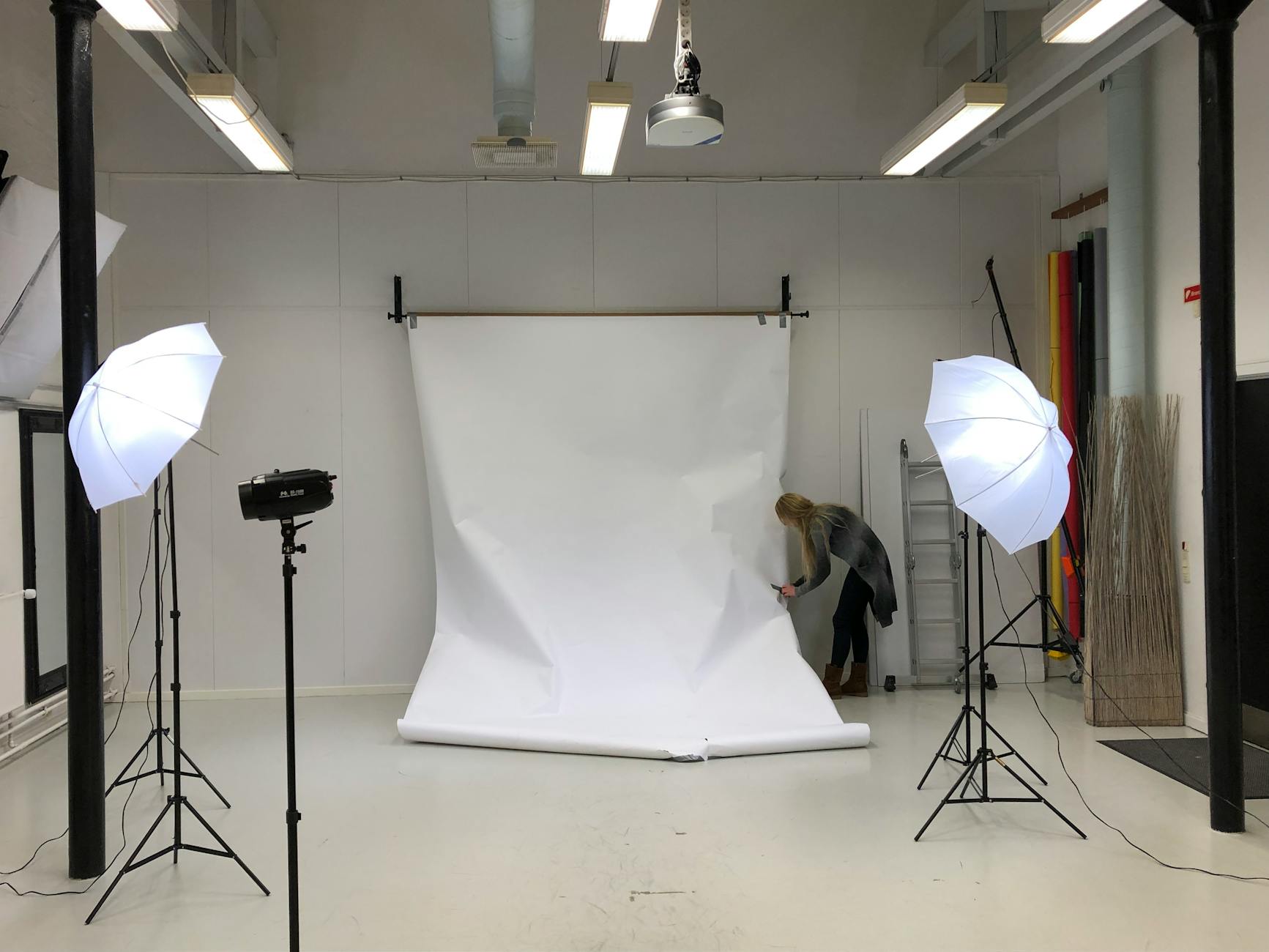
The China visa photo requirements call for a pure white background, written in the official spec as #FFFFFF or ‘close to white.’ In practice the inspectors are increasingly strict, especially since the 2024 update. Off-white, eggshell, cream, gray, blue, or any patterned wall behind you is grounds for rejection. The backdrop must be evenly lit so no shadow falls across the wall behind your shoulders or neck.
For a self-shot photo, hang a true-white seamless paper backdrop or even a clean white bedsheet pulled taut. Stand at least one meter in front of it so your shadow does not fall on the backdrop, and use diffused lighting from both sides of the camera. Do not rely on background-removal apps or AI tools that overlay a fake white background — image processing artifacts at the hairline are a frequent rejection reason. The same caution applies when you later submit your China tourist visa application: reviewers compare your uploaded photo against your passport image, so any obvious editing stands out.
3. Pose, Expression, and Appearance
China requires a neutral expression: mouth closed, no smile, no frown, no raised eyebrows. Smiling that shows teeth is one of the most common rejection reasons because applicants instinctively grin when the camera fires. Keep your head level (do not tilt up, down, or sideways), face the camera straight on, and look directly into the lens. Both eyes must be open and clearly visible — a partial blink will fail.
Hair and Ears
Both ears must be visible. Long hair tucked behind your ears is fine; hair hanging in front of either ear is not. Bangs that cross the eyebrows are also flagged. If you have long hair, pull it back; if you have heavy bangs, pin them to one side for the shot.
Glasses
Eyeglasses are not allowed under any circumstances — thin wire frames, transition lenses, prescription-only frames. This was a recent change (the rule used to permit non-tinted prescription glasses), and it now applies universally. If you cannot see well enough to keep your eyes open without glasses, take them off just for the photo and put them back on immediately after.
Headwear
No hats, caps, headbands, or scarves. The single exception is religious head coverings (hijab, turban, kippah). The covering must not cast shadows over your face, must not cover your forehead or ears in a way that prevents identification, and the consulate may ask for a brief letter confirming the religious basis.
4. Digital Upload Specifications for COVA
Even though you bring a printed photo to the visa center, the COVA online system also requires a digital JPEG uploaded during your application. The technical specs differ slightly from the print version:
- Pixel dimensions: at least 354 × 472 pixels and at most 420 × 560 pixels
- Aspect ratio: 3:4 (matching the 33:48 print ratio)
- File size: between 40 KB and 120 KB
- Format: JPEG only (.jpg) — PNG, BMP, HEIC, and TIFF are rejected
- Color depth: 24-bit color, no grayscale
- Resolution: 300 DPI recommended (not strictly enforced for digital)
The COVA upload form will silently reject files that fall outside those bands. If your image is too small, you will get a ‘photo does not meet specifications’ error and have to re-shoot or re-edit. The same digital spec applies if you submit via the China e-visa online portal — the pixel and file-size requirements are identical across both systems. Most photo studios that offer ‘China visa photo’ service will email or burn a compliant JPEG along with the printed copy at no extra charge.
5. DIY vs. Professional Photographer: What Actually Works
The honest answer is that both routes work — if you do them correctly. The traps are different for each.
Going professional is faster and almost always safer. A chain pharmacy (CVS, Walgreens, Boots, Snappy Snaps) with a ‘China visa photo’ preset takes about five minutes and costs $13–18 in the U.S., £8–12 in the U.K. The risk: some operators use a generic ‘passport photo’ setting rather than the China-specific 33×48 mm crop. Always say “China visa photo” explicitly, not just “passport photo,” and check the printout before you leave — specifically that your ears are visible and that there is white space above your crown, not a cropped scalp. Specialist visa-photo studios advertised on Google Maps as ‘China visa photo near me’ know the spec quirks cold and rarely make mistakes.
Doing it yourself saves money but requires three things to go right simultaneously: correct lighting, a genuinely white background, and accurate crop sizing. Use a smartphone on a tripod (or propped against books) set to portrait mode with the camera at eye level. Diffuse light from both sides — an overcast window works better than a single overhead bulb that shadows your chin. For sizing, the free tool Visafoto and the paid option Snap2Pass both offer China-specific templates that handle the 33×48 mm crop and the 354–420 px digital output automatically. Upload your shot, check the background in the preview at full size, and only download if there is no fringing around your hairline. For the physical print, take the output JPEG to a pharmacy kiosk and select the 33×48 mm print size — not 4×6 and not the U.S. passport square.
One pragmatic tip: shoot yourself at home to check lighting and expression, then take the clean shot to a pharmacy for the actual print. You get the control of a self-shoot without the gamble of printing from an unchecked phone photo. Budget about fifteen minutes and three dollars for that final pharmacy print.
6. Top Reasons China Visa Photos Get Rejected
Of the most-cited rejection reasons in CVASC notices, these are the ones that catch applicants completely off guard:
- Off-white background that looks white to the eye but tests as cream or gray on calibrated screens. Solution: print one extra copy and place it next to a known-white sheet of A4 paper to compare.
- Smile. A polite courtesy smile is automatic for most people in front of a camera. Practice a deliberately neutral ‘thinking’ face before the shutter clicks.
- Ear hidden behind hair, an earring, or a hijab that overlaps the ear line. Tuck or pin everything back.
- Glasses left on by habit. Take them off immediately before the photo.
- Head tilt — a 5° tilt looks fine in everyday life but is rejected.
- Photo too old. The 6-month rule is enforced to the day if the photo shows a visible appearance change.
- Wrong size. A U.S. passport photo (51×51 mm square) submitted by mistake fails immediately.
- Shadow on background from poor lighting.
- Digital JPEG too small or large in file size for the COVA upload field.
- Edited photo with smoothed skin, removed blemishes, or altered hairline. China rejects any post-processing beyond color balance.
If you want to cross-check which documents go alongside your photo, the China visa documents required checklist covers every item in the application packet.
7. Photos for Children
Children’s China visa photos follow the same dimensional rules — 48×33 mm, white background, neutral expression — but the consulate is forgiving about the ‘eyes open’ rule for infants under one. The child must be alone in the frame: no parent’s hands, no toys, no pacifier. Most photo studios use a small white box and have the parent stand behind a screen to keep the infant looking forward. For toddlers, expect to need 4–6 attempts before you get a neutral, eyes-open shot.
FAQ: China Visa Photo Requirements
Can I use the same photo as my passport?
Only if your passport is brand-new and the photo was taken within six months and the photo is the right size. Most passports use a different format than the China visa specs (U.S. 51×51 mm, U.K. 35×45 mm), so the photo will be the wrong dimensions even if the photo itself was recent. Order a dedicated China visa photo set.
Are digital photo apps reliable?
Reliable for size and format compliance, less reliable for background quality. The risk with any app that auto-removes the background is fringing artifacts at your hairline. Shoot against a true-white wall in soft daylight rather than relying on background-replacement, and inspect the result at full size before uploading.
Do I need to pay for a passport photo, or can I take it myself?
You can absolutely take it yourself if you have a smartphone, a tripod, soft lighting, and a white wall. The catch is that most home photos fail one of the background, sizing, or lighting checks. For a $13 photo at a chain, the time you save almost always justifies the cost.
What if my photo gets rejected at the CVASC?
Two options: re-shoot at the in-house photo booth ($10–15, takes 5–10 minutes plus queue) and resubmit the same day, or come back another day with a compliant photo. The application packet stays at the front desk; only the photo is the issue. You will not lose your queue ticket if you handle the photo on site.
Are these China visa photo requirements the same for the e-visa?
Functionally identical specs, but the China e-visa system only requires the digital JPEG (no printed photo). The pixel dimensions, file size, format, and content rules are unchanged.
Do the photo requirements change for diplomatic or work visas?
No. China uses a single photo specification across all visa categories — tourist (L), business (F), work (Z), student (X), family (Q), and journalist (J). Get one set of compliant photos and they cover any visa type. If you are applying as a tourist, the 240-hour visa-free transit or the 30-day visa-free entry may mean you need no photo at all.
Photo Submission Walkthrough
On the day you submit your application, your photo packet should consist of: one printed 48×33 mm glossy color photo, paperclipped (not stapled, not glued) to the top right of the first page of your COVA application; the same image as a JPEG already uploaded to your COVA submission online; and a backup printed copy in your folder in case the first is damaged in handling. Doing this turns the photo step from a stress point into a non-event — leaving you to focus on the substantive parts of your China visa documents packet.