The China 30-day visa-free entry policy lets passport holders from over 50 eligible countries visit China for up to 30 consecutive days without applying for a visa, paying a fee, or filling out advance paperwork. The list covers most EU members, the UK, Canada, Australia, New Zealand, Japan, South Korea, and more. Show up at Beijing Capital Airport or Daxing with a valid passport, a return ticket, and proof of accommodation — you are through immigration in minutes. For full context on all Beijing entry options, the Beijing visa requirements guide covers every policy side by side.
As of February 2026, the UK and Canada joined the eligible list, bringing coverage to most major Western and East Asian source markets. This page explains who qualifies, how the policy works at Beijing’s airports, key differences from the 240-hour transit option, what documents to carry, and the most common mistakes that trip people up at the immigration counter.
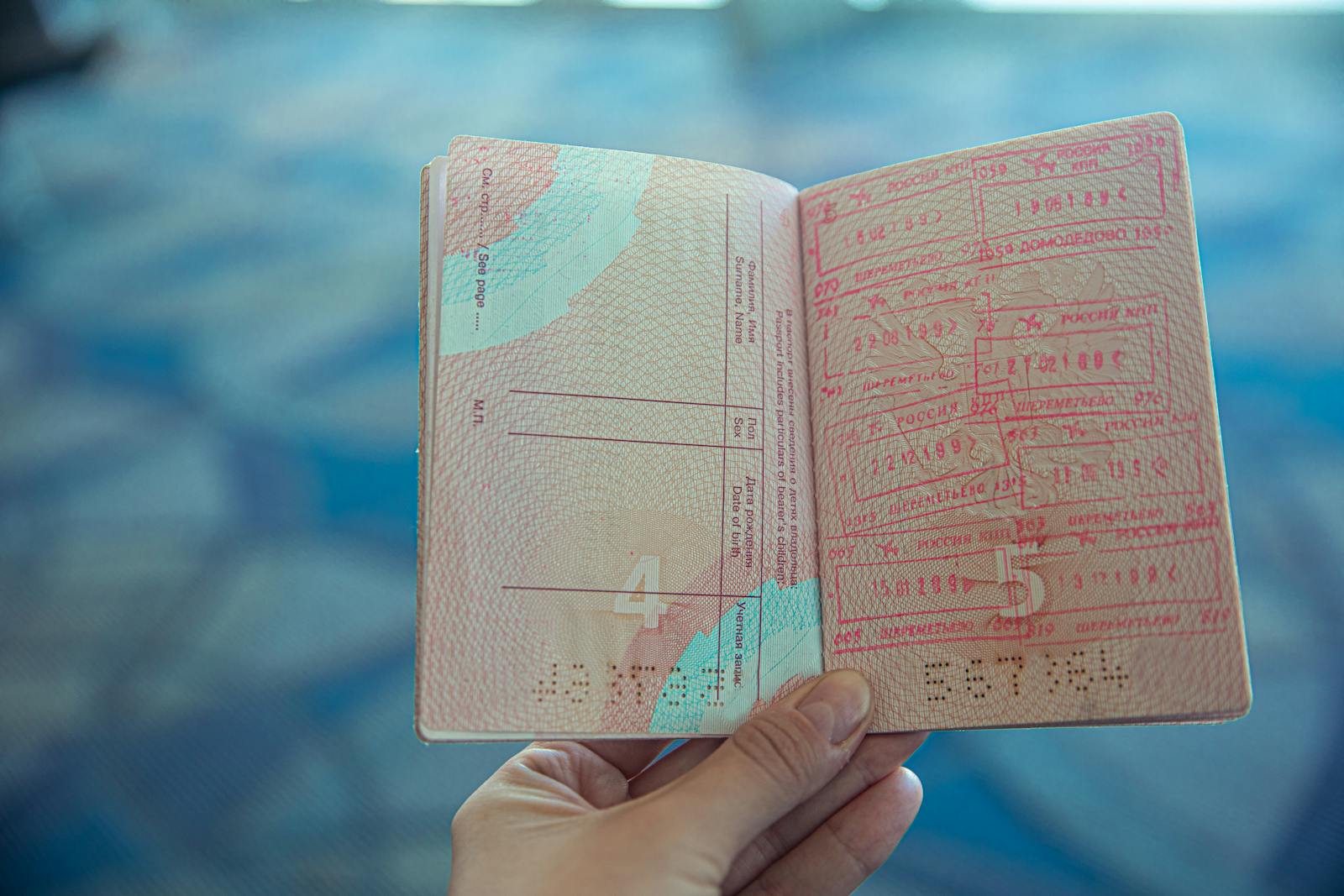
China 30-day visa-free entry at a glance
- Duration: Up to 30 consecutive days in mainland China
- Eligibility: 50+ countries (full list below)
- Trip type required: Any — tourism, business meetings, family visit, transit. No third-country routing needed.
- Cost: Free
- Application: No advance application — granted on arrival
- Travel zones: All of mainland China except Tibet (separate permit required)
- Validity: Through December 31, 2026 for most countries; Russia through September 14, 2026
- Restrictions: No paid work, long-term study, or journalism. Not extendable in-country.
Eligible countries for China 30-day visa-free entry
As of early 2026, over 50 countries qualify. The list has expanded steadily since the policy launched in late 2023, and further additions are possible before the end of 2026.
European countries (28+)
Austria, Belgium, Czech Republic, Cyprus, Denmark, Estonia, Finland, France, Germany, Greece, Hungary, Iceland, Ireland, Italy, Latvia, Lithuania, Luxembourg, Malta, Netherlands, Norway, Poland, Portugal, Romania, Slovakia, Slovenia, Spain, Sweden, Switzerland, Bulgaria, Croatia, plus the United Kingdom (added February 2026).
North America
Canada (added February 2026). The United States is not on the 30-day visa-free list as of June 2026 — Americans should use the China 240-hour visa-free transit policy or apply for a tourist visa.
Oceania
Australia, New Zealand.
Asia
Japan, South Korea, Singapore, Malaysia, Thailand, Brunei, United Arab Emirates, Qatar.
Other regions
Belarus, Serbia, Georgia, and a small number of others. Russia has a comparable bilateral arrangement with different terms.
Eligibility can change between now and December 2026. Verify your country’s current status before booking via the National Immigration Administration website (en.nia.gov.cn) or your nearest Chinese consulate.
How the China 30-day visa-free entry works
The policy is as close to frictionless as entry to any major country gets. No advance application, no fees, no in-country registration beyond standard hotel check-in. The 30-day clock starts at 00:00 on the day after arrival — so a flight landing at 6 PM on day zero gives you nearly 31 calendar days effective stay.
Present your passport at any qualifying Chinese international port of entry — both Beijing airports included — and receive a 30-day visa-free entry stamp. You can travel anywhere in mainland China during that window, except Tibet, which requires a separate Tibet Travel Permit applied for in advance.
You can technically leave and re-enter China during the 30 days as long as your stamp is still valid, but each re-entry consumes days from the original window. Most travellers use the 30 days as one uninterrupted trip.
Step-by-step: using the 30-day visa-free entry at Beijing airports
Before you fly
- Confirm eligibility. Your passport must be from one of the eligible countries. The policy applies to ordinary passports only — diplomatic and official passports may have different terms.
- Check passport validity. At least 6 months of validity beyond your planned exit date from China.
- Book accommodation. Print or save hotel confirmations digitally — immigration officers occasionally ask for a first-night address.
- Book a return or onward ticket. You need proof of departure within 30 days. A printed e-ticket is ideal.
- No advance visa application needed. Nothing to submit, no waiting, no fee. For a full document checklist, see the China visa documents required guide.
At Beijing Capital Airport (PEK) or Daxing (PKX)
- Fill in the Arrival Card on the plane. English versions are provided. Write your first night’s hotel address.
- Disembark and follow signs to Foreign Passports / Immigration.
- Look for a Visa-Free Entry lane. If not clearly marked, the regular foreign passports lane handles it.
- Present your passport and arrival card. Have your return ticket on hand in case you’re asked.
- You will be fingerprinted and photographed (over-14s). Under-14s are exempt.
- The officer stamps a 30-day visa-free entry into your passport, with the departure deadline printed on the stamp.
- Proceed to baggage claim and customs.
For full airport navigation details — transport connections to central Beijing, terminal maps, SIM card options at arrivals — see the Beijing Capital Airport guide.

Common mistakes at immigration
The 30-day visa-free entry is one of the simpler immigration processes you will encounter anywhere. But a handful of avoidable errors account for nearly every refusal. Know these before you board.
1. No proof of departure
The most common sticking point. Officers want to see that you plan to leave within 30 days. A printed return ticket or clearly visible onward booking is enough. Do not arrive expecting to argue the policy verbally — show the document.
2. Passport expiring within 6 months
If your passport’s expiry falls within 6 months of your planned China exit date, you may be refused entry. Check this before you book. Renewing a passport after booking but before travel is straightforward in most countries and preferable to a refused boarding or deportation.
3. Planning a Tibet itinerary without a permit
The 30-day visa-free entry does not cover Tibet. A Tibet Travel Permit must be applied for separately, typically through a licensed Tibetan travel agency, and takes several weeks. Do not book flights to Lhasa assuming your visa-free stamp will get you through — it will not.
4. Assuming the stamp is extendable
It is not. The 30-day visa-free entry cannot be extended in-country. If you need more than 30 days, apply for a regular L tourist visa before travel. See the China tourist visa application guide for that process.
5. Overstaying by miscounting days
The 30-day clock starts at 00:00 the day after arrival, not at the moment you land. Write the deadline date on a piece of paper and put it in your wallet the moment you clear immigration. The penalty for overstaying is up to 10,000 yuan per day, plus a ban on re-entry of 1 to 10 years. Carry your passport and check the stamp date, not your flight date.
6. Staying in private accommodation without registering
Chinese law requires foreigners to register their address with local police within 24 hours of arrival. Hotels handle this automatically. If you are staying in a private apartment via a rental platform, your host must accompany you to the local police station to register. Most experienced hosts know this, but confirm at check-in — failure to register is a fineable offence for both you and your host.
30-day visa-free vs. 240-hour transit: how to choose
If your passport qualifies for both policies, the 30-day visa-free entry wins almost every time — same simplicity, longer stay, no third-country routing required. The only scenario where the 240-hour transit makes more sense is if you are already on a multi-country Asia trip and want to add a China leg to an itinerary that already routes you through a third country.
| Feature | 30-day visa-free entry | 240-hour visa-free transit |
|---|---|---|
| Duration | 30 days | 10 days |
| Trip type | Any (round-trip, one-way, transit) | Transit to third country only |
| Travel zones | All mainland China except Tibet | 24 provincial regions |
| Application required | No | No |
| Cost | Free | Free |
| Best for | Pure China trips, longer stays, direct-return itineraries | Multi-country trips with a China stop |
US passport holders do not qualify for the 30-day policy. For Americans, the China 240-hour visa-free transit guide explains how to spend 10 days in Beijing with a third-country routing.
2026 policy status
The China 30-day visa-free policy rolled out in stages from late 2023 onward, with the key milestones:
- December 2023: Policy introduced for 9 European countries.
- 2024: Expanded to 38 countries including most of Western Europe. Duration extended from 15 to 30 days.
- November 2024: Further expansion to 46 countries.
- February 2026: UK and Canada added, bringing total to 50+ countries.
- December 31, 2026: Current expiry date for most countries unless renewed. Russia expires September 14, 2026.
The policy has expanded at every revision cycle. Renewal beyond 2026 is widely expected, though not yet formally announced. Check en.nia.gov.cn for the latest country list before booking.
30 days in China: what you can actually do
Thirty days covers a substantial China trip. More than enough time for Beijing plus several other major cities, or a deep single-region exploration. Two sample itineraries that work cleanly within the 30-day window:
30-day China classics
- Days 1-7: Beijing (Forbidden City, Great Wall, Summer Palace, hutong neighbourhoods)
- Days 8-10: Xi’an (Terracotta Warriors, ancient city wall, Muslim Quarter)
- Days 11-14: Chengdu (giant pandas, Sichuan food, day trip to Leshan Giant Buddha)
- Days 15-18: Yunnan (Kunming, Dali, Lijiang, Tiger Leaping Gorge)
- Days 19-22: Guilin and Yangshuo (Li River, karst landscape)
- Days 23-26: Hong Kong (separate entry — fly or train from mainland)
- Days 27-30: Shanghai (Bund, French Concession, day trip to Suzhou)
30-day Northern China focus
- Days 1-7: Beijing (with Great Wall, Forbidden City, Temple of Heaven)
- Days 8-10: Datong (Yungang Grottoes, Hanging Temple)
- Days 11-13: Pingyao (ancient walled city, preserved Ming-Qing architecture)
- Days 14-18: Xi’an plus Mount Hua
- Days 19-25: Silk Road corridor (Lanzhou, Zhangye Danxia, Dunhuang)
- Days 26-30: Return via Shanghai or Beijing for the outbound flight
At Beijing’s airports

Beijing Capital International Airport (PEK)
Terminal 3 handles the bulk of international arrivals. The Visa-Free Entry lane is clearly signposted in English. Allow 30 to 45 minutes from disembarkation to exit during normal hours; peak season (Golden Week in October, Chinese New Year period) can stretch to 60 to 90 minutes. Airport Wi-Fi works but requires an SMS verification code, so an active eSIM or roaming plan is useful from the moment you land.
Beijing Daxing International Airport (PKX)
Newer and generally faster through immigration. The starfish-shaped terminal has wide corridors and clear signage. Check which terminal your airline uses before arriving — Daxing serves a growing number of international carriers but not all. For full details on both airports, see the Beijing Capital Airport guide and Beijing Daxing Airport guide.
Frequently asked questions
Is the 30-day visa-free entry permanent?
The current policy runs through December 31, 2026 for most countries. Based on the pattern of extensions and expansions since 2023, renewal is widely expected — but has not been formally announced. Book assuming it will be in place, but check the NIA website close to your travel date.
Are American citizens eligible?
No, not as of June 2026. US citizens should use the 240-hour visa-free transit policy (10 days, requires third-country routing) or apply for a regular tourist visa.
Can I apply in advance online?
No advance application is needed or available. The status is granted on arrival. If you prefer to have a visa in advance, apply for an L tourist visa through your nearest Chinese embassy or consulate.
What is the difference between 30-day visa-free and a regular tourist visa?
The 30-day visa-free entry is free, instant, and requires no advance application — but it is limited to 30 days and cannot be extended. A regular L tourist visa requires advance application (typically 5 to 10 working days), costs USD 80 to 185 depending on nationality, allows up to 60 days per entry, and typically comes as a multi-entry visa valid for 6 to 10 years. See the China tourist visa application guide for the full comparison.
Does eligibility depend on residency or passport nationality?
Passport nationality only. Residency in an eligible country does not help if your passport is from a non-eligible country. If your passport is not on the list, you need a regular visa regardless of where you live.
Does the 30-day visa-free entry cover Hong Kong, Macau, and Taiwan?
No. Hong Kong, Macau, and Taiwan have entirely separate entry systems. The China 30-day visa-free entry covers mainland China only. Hong Kong in particular operates under its own generous visa-free regime for most passports — no connection to the mainland policy.
Can I extend my stay beyond 30 days inside China?
Generally no. The 30-day visa-free entry cannot be extended in-country. If you need longer, apply for a regular tourist visa before travelling. Some travellers exit to a neighbouring country or Hong Kong and re-enter, but re-entry on another visa-free stamp may face scrutiny if done repeatedly.
What about remote work and digital nomad activities?
Remote work for an overseas employer while on a visa-free entry occupies a legal grey area in China. Many travellers do it without incident, but it is technically not permitted under tourism entry terms. Avoid public-facing commercial activity that is clearly China-targeted, and keep a low profile on the work angle.
Can children travel on the 30-day visa-free entry?
Yes. Each family member needs their own valid passport from an eligible country. Under-14s are exempt from fingerprinting and photography at immigration.
The bottom line
If your passport is on the eligible list, the China 30-day visa-free entry is the simplest, cheapest, most flexible way to visit Beijing in 2026. No fee, no application, no third-country routing requirement, and 30 days across all of mainland China except Tibet. For UK, EU, Australian, Japanese, Canadian, and most other major source-market passport holders, the visa hassle has effectively been eliminated.
US passport holders do not qualify, but the 240-hour visa-free transit guide covers the route that still works for Americans. For travellers who need longer than 30 days or come from non-eligible countries, the China tourist visa application guide walks through the L-visa process in full.
Once your entry is sorted, get into the planning with our full Beijing visa requirements guide for the complete picture of all options, and check what to expect when you actually land in the Beijing Capital Airport guide.