Beijing has been a center of organized spiritual practice for nearly a thousand years. As the imperial capital, it attracted the finest temples from every major tradition — Tibetan Buddhist lamaseries funded by the Qing court, Taoist monasteries that served as administrative headquarters for China’s state religion, Confucian temples where emperors performed rites and scholars were venerated, and one of China’s oldest mosques, built when the city’s Muslim community was already centuries old. These are not museum pieces. Most are active places of worship today, and the best visits happen when you arrive early enough to find monks at their routines rather than tour groups at theirs.
This guide covers every major temple worth visiting in Beijing — what each tradition means, which temple to choose for your interests, practical visiting details, etiquette done properly, and how to plan your time across them.
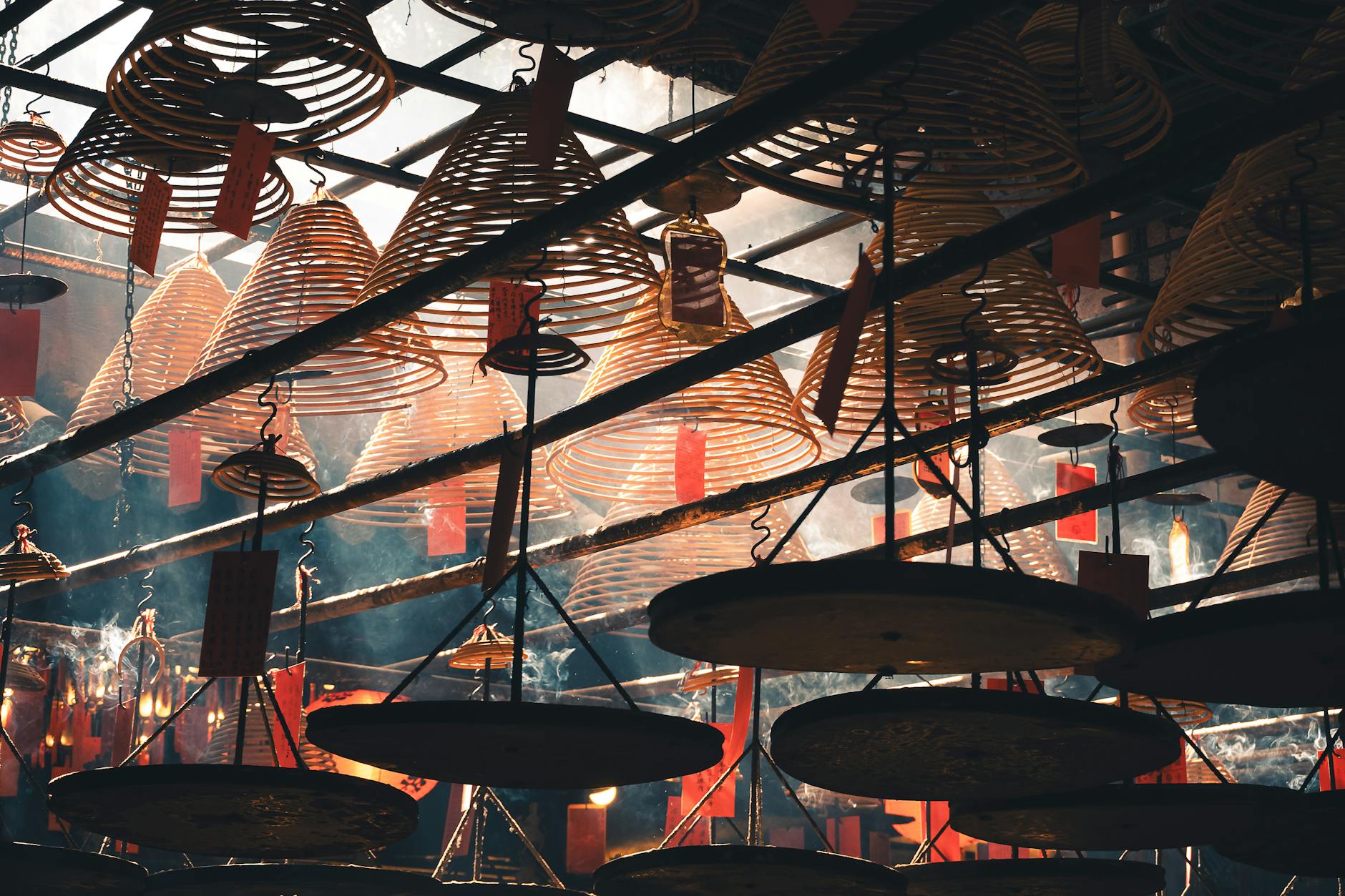
Beijing’s Three Spiritual Traditions: Buddhism, Taoism, and Confucianism
Most visitors arrive at Beijing’s temples without a clear sense of which tradition they’re entering. That matters — the architecture, the rituals, and the atmosphere are fundamentally different depending on whether you’re in a Buddhist monastery, a Taoist temple, or a Confucian shrine.
Buddhism — introduced to China from India around the 1st century CE — teaches that suffering arises from desire and attachment, and that enlightenment is achieved through ethical conduct, meditation, and wisdom. Buddhist temples are primarily places of active worship and monastic practice. You’ll see worshippers burning incense and bowing before gilded statues of Buddhas and bodhisattvas. In Beijing, most Buddhism is Tibetan (Vajrayana) or Chinese (Mahayana), which differ significantly in iconography and ritual. Identify a Buddhist temple by its prominent statues, pagoda architecture if present, and yellow-robed monks (Tibetan) or grey-robed monks (Chinese Mahayana).
Taoism is a Chinese philosophical and religious tradition rooted in harmony with the Tao — the natural way of the universe. Where Buddhism focuses on liberation from suffering, Taoism emphasizes living in alignment with nature, balance, and spontaneity. Taoist temples tend to have a more mystical, ritual-heavy atmosphere — priests in black robes perform ceremonies, fortune-telling is common, and the iconography features gods and immortals rather than enlightened beings. Identify a Taoist temple by the eight-trigram (bagua) symbol, statues of Taoist deities (often fierce-looking, elaborately robed), and the characteristic yellow-tiled roofs of major halls.
Confucianism is less a religion than a philosophical tradition centered on ethics, social harmony, and veneration of teachers and ancestors. Confucian temples aren’t places of daily devotional worship — they’re sites of ritual commemoration, scholarship, and reverence for learning. The atmosphere is formal and scholarly. You won’t see incense-holding worshippers here; you’ll see stone stelae, ancient examination records, and ritual music performances honoring the sage.
In practice, Chinese spiritual life has always blended elements of all three traditions. Many Beijing residents don’t identify as strictly Buddhist or Taoist; they visit whichever temple suits their need on a given day. You’ll sometimes see the same person bow before a Buddha statue in the morning and consult a Taoist fortune-teller in the afternoon.
Which Temple for What: An Honest Guide
With dozens of temples across the city, the question isn’t whether Beijing has good temples — it’s which one to actually spend your time at. Here’s the direct answer:
For Tibetan Buddhist atmosphere and sheer spectacle: Lama Temple. The most visually impressive, the most spiritually active, and the easiest to reach. Go before 9:30 AM to catch morning rituals.
For active Taoist practice: White Cloud Temple. This is where Taoism in China is actually governed and practiced. Resident monks in traditional robes, daily ceremonies, and a genuine sense that you’ve walked into something centuries-old and uninterrupted.
For scholarly and imperial history: Confucius Temple and Imperial Academy. The examination stelae alone — 51,624 names carved in stone over seven centuries — are worth an hour. The adjacent Guozijian Street is one of Beijing’s finest surviving historic streetscapes.
For quiet authenticity away from tour groups: Fayuan Temple. Beijing’s oldest surviving urban temple, still run as an active Buddhist academy. Admission ¥5. You’ll largely have it to yourself.
For mountain scenery and ancient trees: Tanzhe Temple, an hour west of the city, older than Beijing itself. Combine it with Jietai Temple a few kilometers away for a full day in the western hills.
For Islamic heritage in Beijing: Niujie Mosque in the Xuanwu district — over 1,000 years old, architecturally unique, and a living center of Beijing’s Hui Muslim community.
Buddhist Beijing Temples
Lama Temple (雍和宫 Yonghegong)
The Lama Temple is Beijing’s most magnificent temple — a Tibetan Buddhist masterpiece that began as an imperial residence before Emperor Yongzheng converted it into a lamasery in 1744. The five main halls progress south to north with increasingly dramatic statuary, culminating in the 18-meter Maitreya Buddha carved from a single trunk of Tibetan sandalwood — Guinness-verified as the world’s largest wooden Buddha. The incense smoke, the sound of chanting monks, and the Tibetan-Mongolian-Han architectural fusion create an atmosphere unlike anything else in Beijing.
Arrive before 9 AM for morning rituals in the main halls, when the temple feels genuinely alive rather than a tourist circuit. Buy incense at the temple entrance — one bundle is included with admission. The sticks sold by outside vendors are lower quality and significantly overpriced. Hours: 9:00 AM – 4:00 PM (last entry 3:30 PM). Admission: ¥25. Subway: Line 2 or 5, Yonghegong Lama Temple Station. Time needed: 1.5–2 hours. Full visiting details in the Lama Temple guide.
Tanzhe Temple (潭柘寺)
Tanzhe Temple is older than Beijing. Founded in the Jin Dynasty (265–420 AD), the temple predates the city that would eventually grow around it by over a millennium. Forty kilometers west of central Beijing in the mountains, this sprawling complex spreads across a forested hillside: over 600 buildings, ancient ginkgo and pine trees some over 1,000 years old, mountain streams, and bamboo groves. The atmosphere here is profoundly calm in a way the city-center temples simply cannot match — no street noise, no delivery bikes, no 10-lane intersections outside the gate.
The autumn foliage surrounding the temple, particularly the imperial ginkgo trees in the main courtyard, is spectacular in late October. Spring brings lilac in bloom throughout the grounds. Admission: ¥55. Getting there: Subway Line 1 to Pingguoyuan, then bus 931. A taxi from Pingguoyuan takes about 40 minutes. Time needed: 2–3 hours. See the full Tanzhe Temple guide for combining with Jietai.
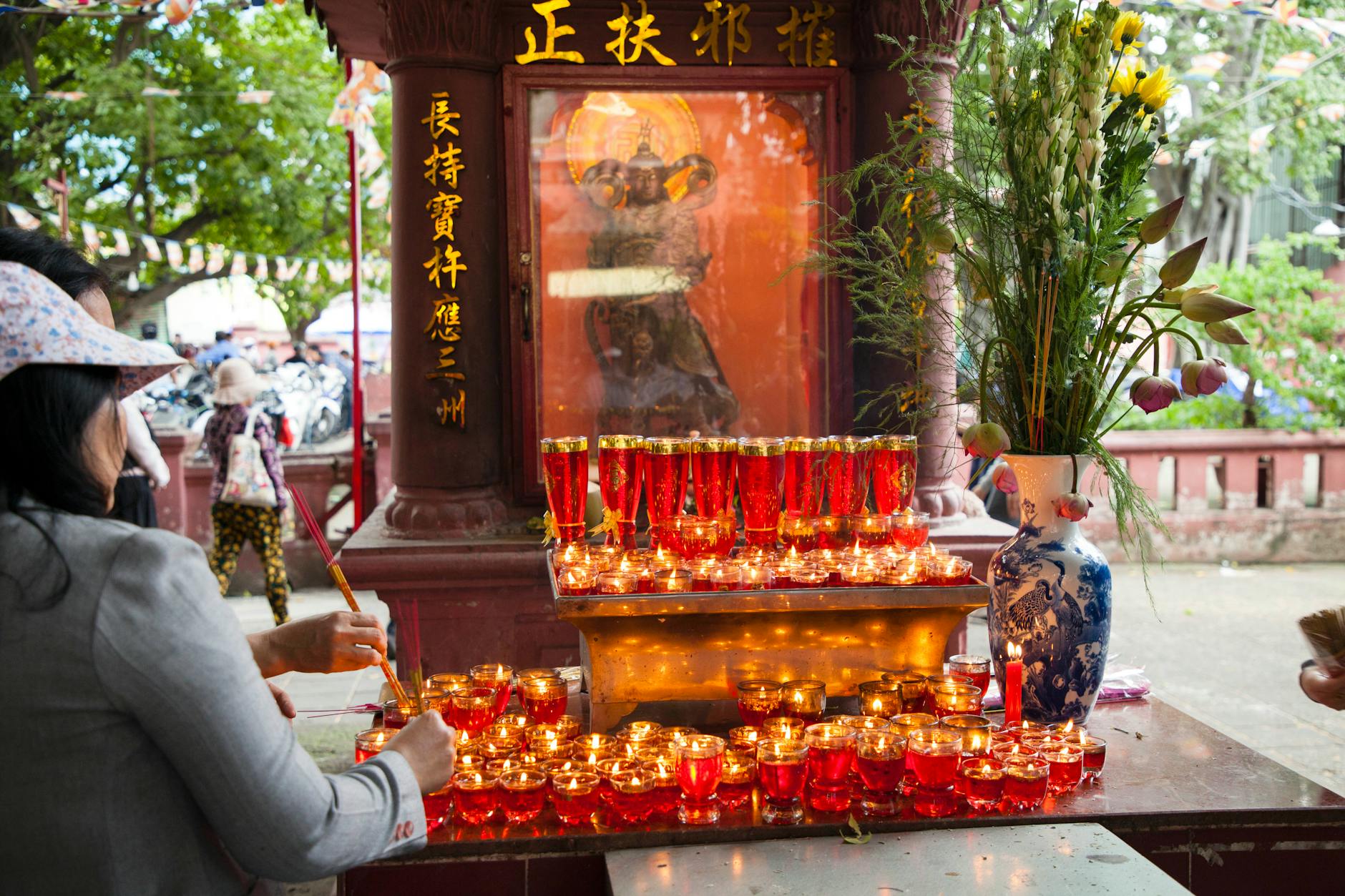
Fayuan Temple (法源寺)
Fayuan Temple is Beijing’s oldest surviving temple within the city proper, founded in 645 AD during the Tang Dynasty — a time when the city was still called Youzhou. As home to the China Buddhist Academy, it functions as an active monastic school; the resident monks and students give it an authenticity that more prominent temples sometimes sacrifice to visitor volume. The temple holds an extensive collection of Buddhist art spanning Tang through Qing periods, and its white lilac trees bloom magnificently in April.
Admission: ¥5 — the cheapest of any significant Beijing temple. Getting there: Near Caishikou Station (Line 4 or 7). Time needed: 45–60 minutes. The surrounding Xuanwu district has good hutong streets for a post-temple walk. See the Fayuan Temple guide for what to do in the neighborhood after your visit.
Confucian Beijing Temples
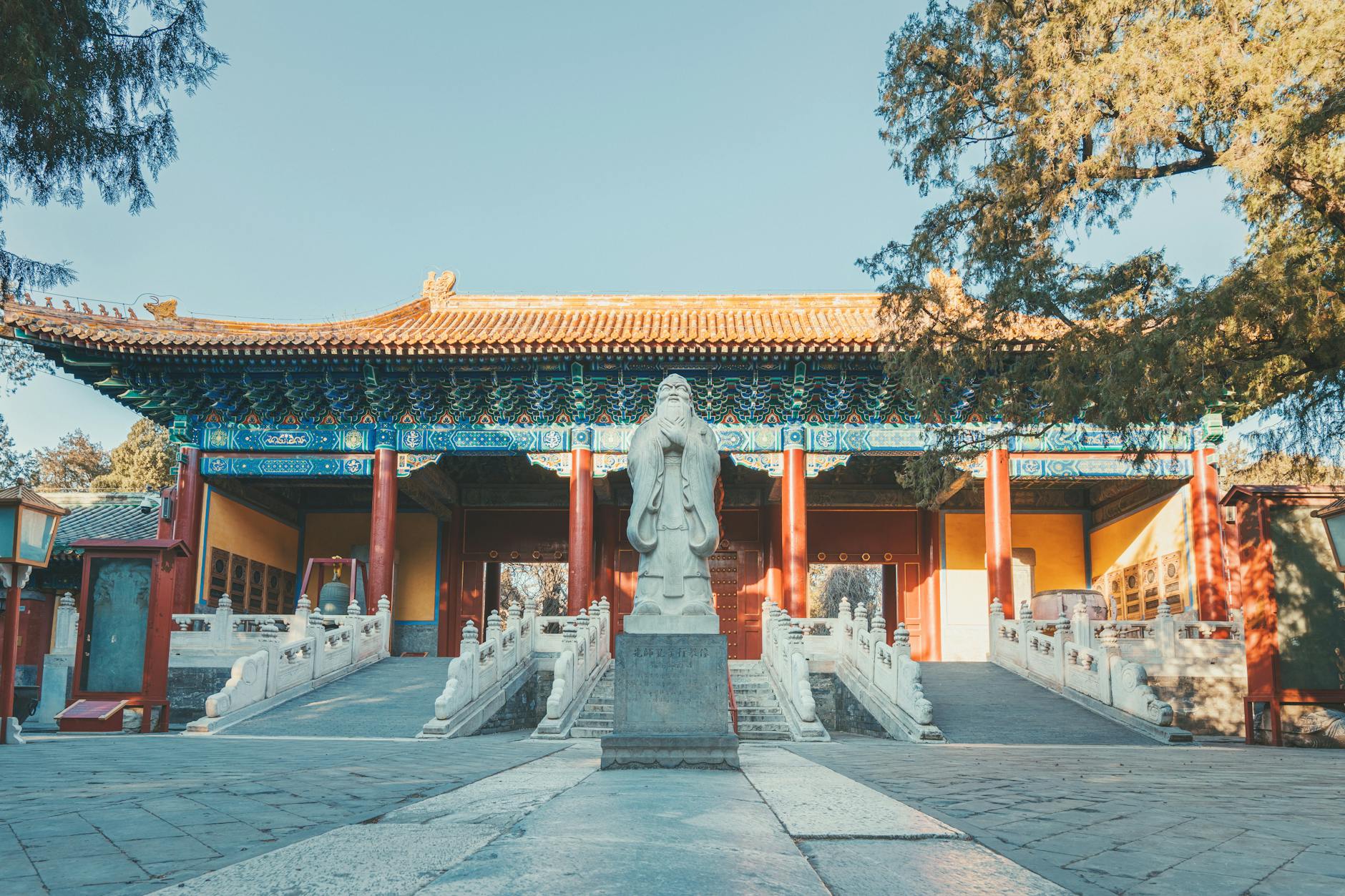
Confucius Temple and Imperial Academy (孔庙和国子监)
The Beijing Confucius Temple, China’s second-largest (after Qufu in Shandong), has anchored scholarly culture in this part of the city since 1302. The temple grounds hold 198 stone stelae inscribed with 51,624 names — every scholar who passed the imperial civil service examinations during the Yuan, Ming, and Qing dynasties. Seven centuries of China’s meritocratic elite, carved in stone. The adjacent Imperial Academy (Guozijian) was the country’s highest educational institution for those same seven centuries; its Biyong pavilion, surrounded by a circular moat, is one of the most architecturally refined spaces in Beijing.
Don’t miss the hourly Confucian ritual music performance (dacheng 大成) in the Chong-Sheng Memorial Hall — free, 15 minutes, a performance of ancient ceremonial music on instruments you won’t encounter anywhere else. Guozijian Street connecting the temple to the Lama Temple is one of Beijing’s few surviving pailou (ceremonial archway) streets. Hours: 8:30 AM – 5:00 PM. Admission: ¥30. Subway: Yonghegong Lama Temple Station (Line 2/5), walk west. Full visiting guide: Confucius Temple Beijing.
Taoist Beijing Temples
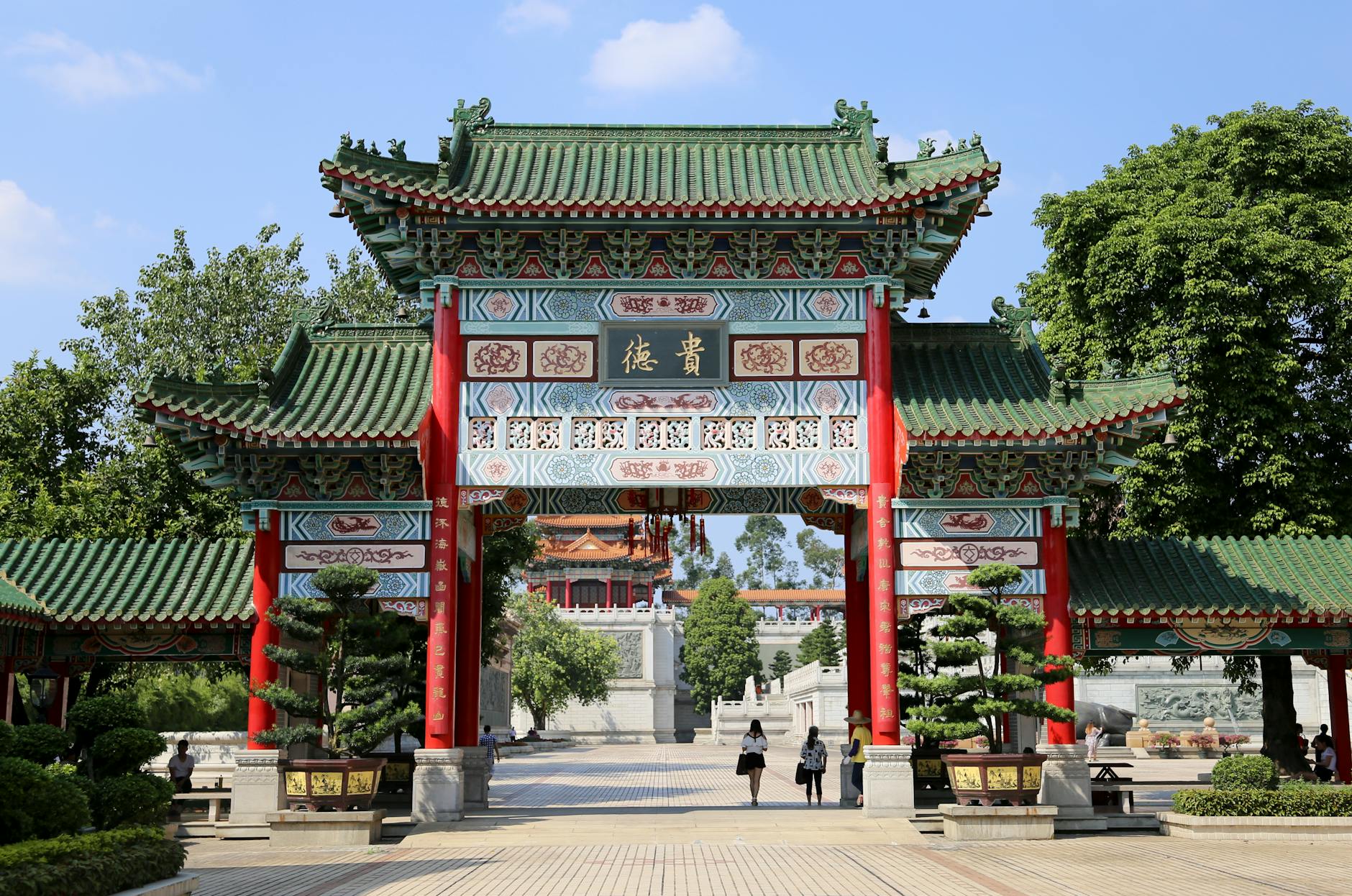
White Cloud Temple (白云观 Baiyun Guan)
White Cloud Temple is the Vatican of Chinese Taoism — the headquarters of the China Taoist Association and the administrative center of the Quanzhen school, the dominant Taoist order in northern China. Founded in 739 AD during the Tang Dynasty, the temple has functioned continuously as a center of Taoist practice and governance for over 1,200 years, interrupted only briefly during the Cultural Revolution.
The complex holds over 50 buildings arranged in a sequence of courtyards where resident monks in traditional black robes maintain daily rituals: morning and evening chanting, tai chi in the outer courtyards, and ceremonies tied to the Taoist calendar. This is one of the few Beijing temples where you’ll reliably observe authentic religious practice rather than a tourist performance. The Spring Festival temple fair here draws enormous crowds — hundreds of thousands over the holiday period — but the temple’s mid-year calm is the better visiting window. Hours: 8:30 AM – 4:30 PM. Admission: ¥10. Subway: Nanzhimen Station (Line 7). Full details: White Cloud Temple guide.
Jietai Temple: China’s Great Ordination Platform
Jietai Temple (戒台寺) is one of Beijing’s most underappreciated sacred sites. Founded in 622 AD during the Tang Dynasty, it holds China’s largest and most historically significant Buddhist ordination platform (jietai) — a three-tiered marble structure where monks have taken vows for over 1,400 years. The platform is still in ceremonial use; ordination ceremonies periodically draw monks from across China to receive vows here.
The temple is also celebrated for its ancient pine trees, shaped into extraordinary forms over centuries. One leans dramatically over the courtyard at an angle that seems structurally improbable; another, so gnarled it has been nicknamed the “Reclining Dragon,” grows horizontally along the terrace wall. The setting in the western hills — forested slopes, mountain silence, views over the valley — gives the complex a contemplative atmosphere no inner-city temple can replicate. In autumn, surrounding maple and ginkgo trees turn brilliant gold and red.
Jietai sits 5 kilometers from Tanzhe Temple on the same mountain road, making a combined Tanzhe-Jietai day trip genuinely efficient. Visit Tanzhe in the morning (larger, needs more time), then Jietai in the early afternoon before returning to central Beijing. Admission: ¥45. Getting there: Same route as Tanzhe — Pingguoyuan (Line 1) then bus 931 or taxi. Full planning details: Jietai Temple guide.
Niujie Mosque: Islam in Beijing
Islam arrived in China with Arab and Persian traders during the Tang Dynasty, and Beijing’s Muslim community — the Hui people — has maintained a continuous presence in the Niujie neighborhood for over a thousand years. The Niujie Mosque (牛街清真寺), founded in 996 AD during the Liao Dynasty, is the oldest and largest mosque in Beijing, a remarkable architectural hybrid: it looks nothing like a Middle Eastern mosque from the outside — pagoda-style minarets, curved roof tiles, red-painted woodwork — but functions entirely as a Muslim house of worship.
The interior incorporates traditional Islamic geometric decoration and Arabic calligraphy within a distinctly Chinese architectural framework. The main prayer hall faces west toward Mecca and can accommodate 1,000 worshippers. Friday midday prayers draw large congregations from across Beijing’s Muslim community — the mosque feels most alive during this time, but non-Muslim visitors should be particularly mindful of space and quiet on Fridays.
The surrounding Niujie neighborhood is worth exploring on its own terms: lamb skewer vendors, Xinjiang-style bread bakeries, halal restaurants, and Arabic-script shop signs create a pocket of the city that feels genuinely distinct from Han Chinese neighborhoods elsewhere. The area connects well with a visit to Beijing’s hutong districts further north. Admission: ¥10. Subway: Caishikou Station (Line 4 or 7), 10-minute walk south. Dress code details and timing advice: Niujie Mosque guide.
Imperial Ceremonial Temples
Temple of Heaven (天坛 Tiāntan)
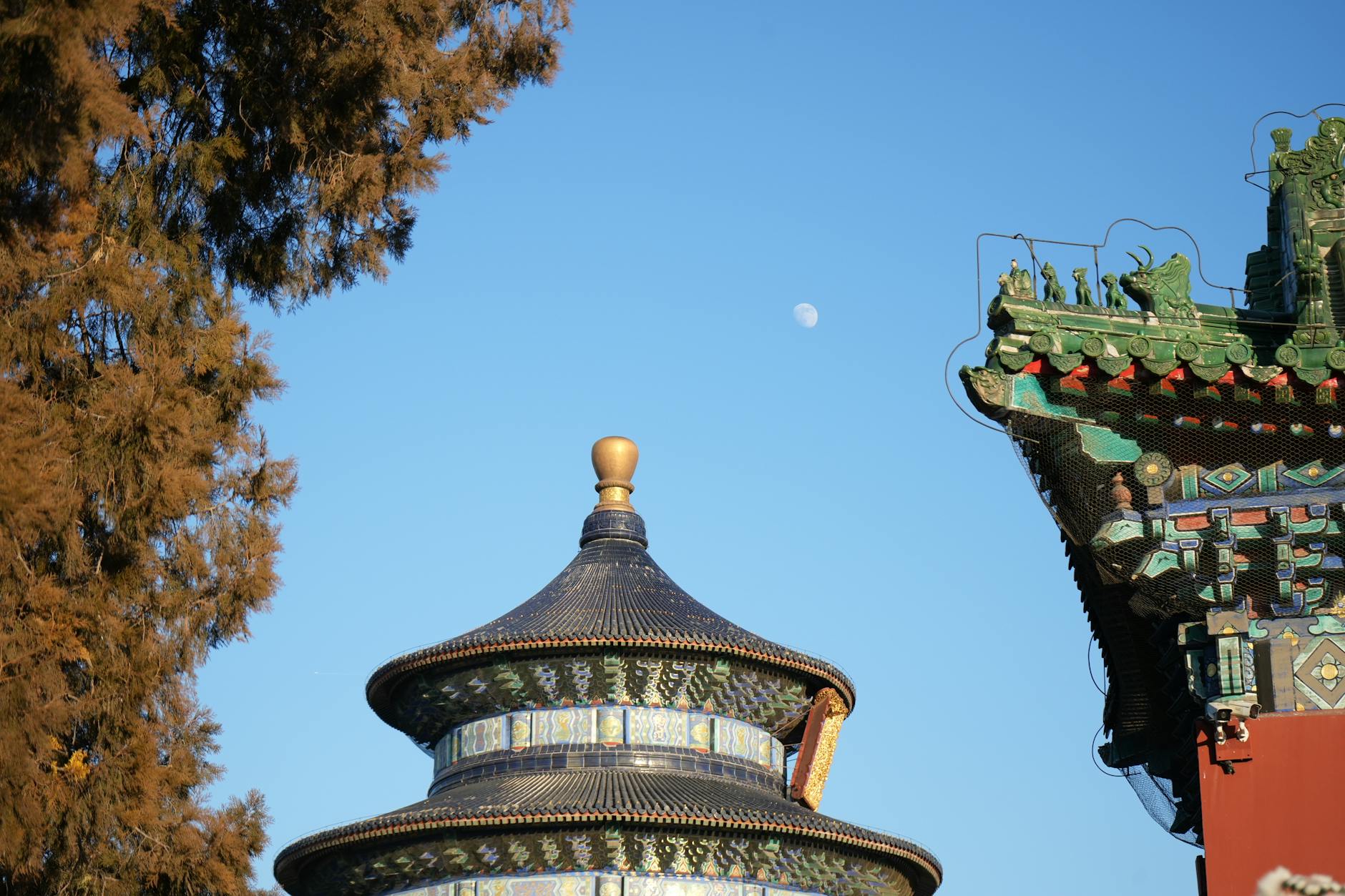
The Temple of Heaven is technically a ceremonial ritual site rather than a conventional place of worship, but it belongs in any serious Beijing temples guide. The Hall of Prayer for Good Harvests (祈年殿) — triple-tiered circular roof, deep blue glazed tiles, the original structure built without a single nail — is one of the most refined pieces of architecture in Chinese history. The emperors who came here annually to pray for good harvests were performing state ritual, not personal devotion; the site’s power is architectural and cosmological rather than devotional.
The park surrounding the complex (273 hectares, nearly four times the Forbidden City) is where you’ll find Beijing’s most vivid morning park culture: elderly residents singing Beijing opera, playing erhu, doing fan dances, practicing tai chi in groups, engaged in competitive badminton. Arrive at 6 AM on a weekday to see this at full force. Hours: Park 6:00 AM – 9:00 PM; buildings 8:00 AM – 5:30 PM. Admission: ¥15 park only / ¥34 all buildings. Subway: Tiantan Dongmen Station (Line 5). More context: Beijing historical attractions guide.
Temple Etiquette: Done Properly
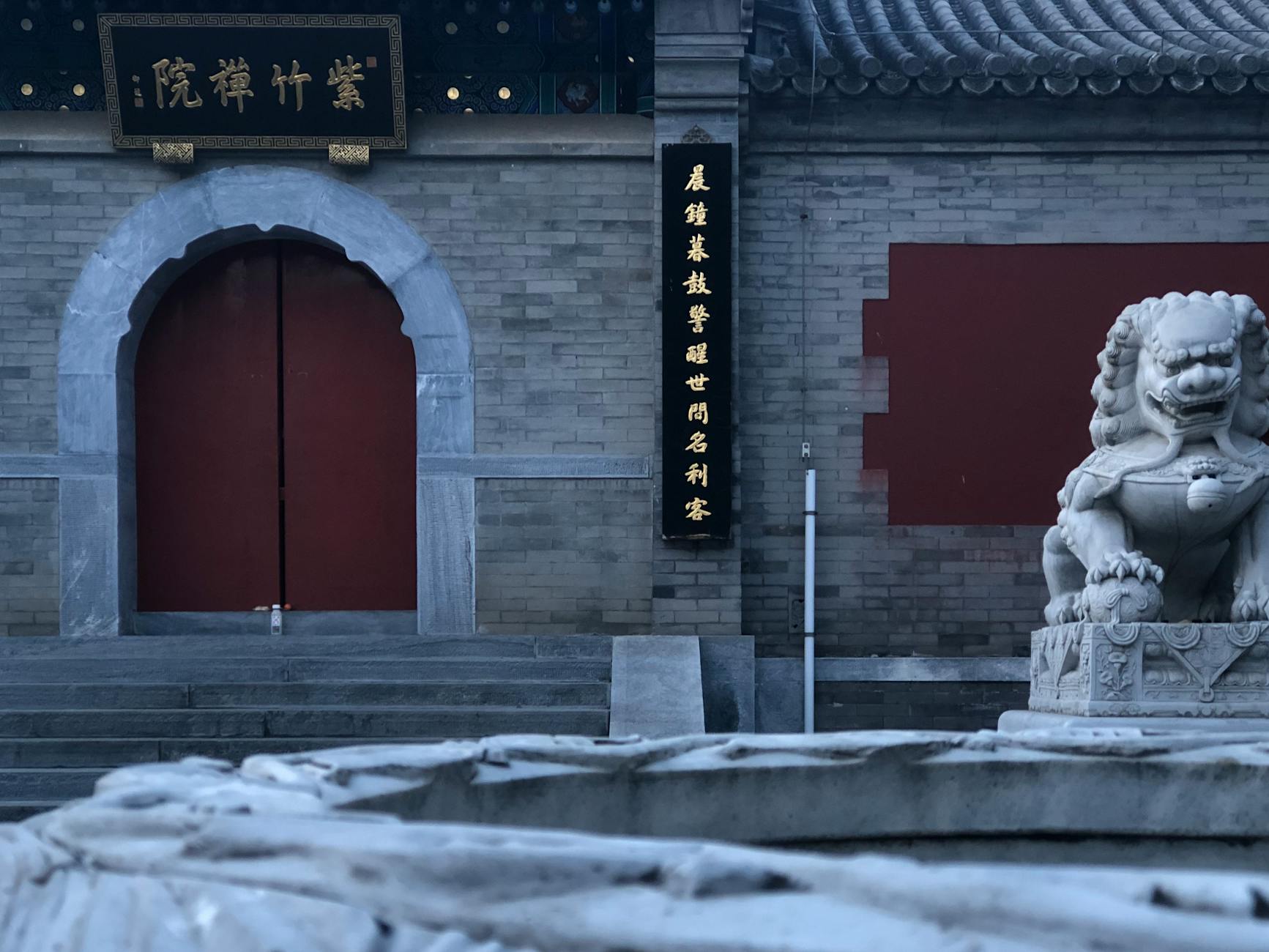
The full guide to temple etiquette in Beijing covers all of this in depth, but here’s what you need to know before you walk through any gate:
The threshold: The raised wooden threshold at temple doorways is never stepped on — always step over it. This applies at Buddhist, Taoist, and Confucian sites. The threshold is a symbolic boundary between secular and sacred space; stepping on it is considered disrespectful in the same way stepping on a gravestone would be elsewhere.
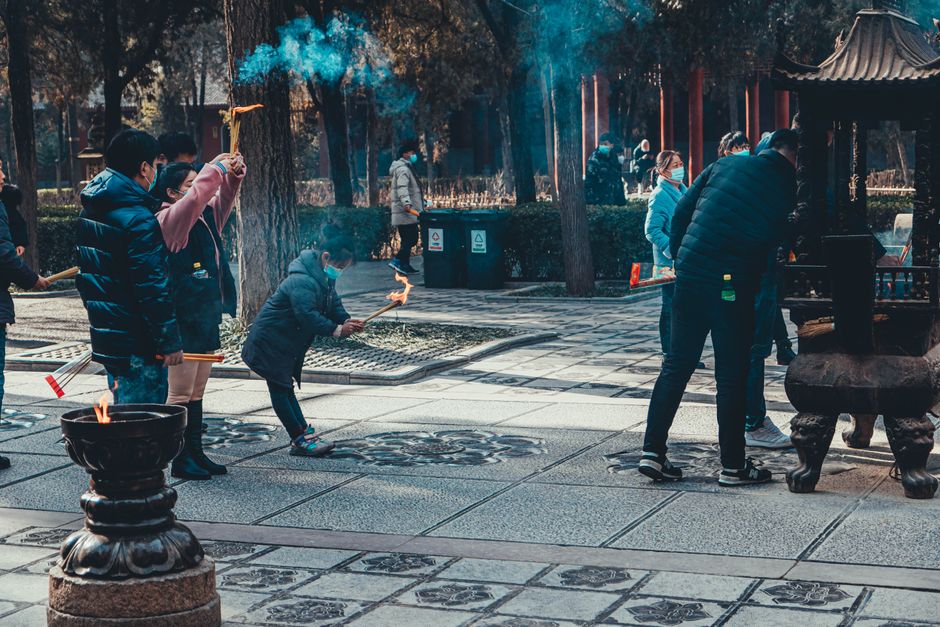
Incense: Not decorative — incense is prayer in material form. Hold the bundle with both hands, bow three times facing each cardinal direction (starting with the main hall), then place the sticks in the designated bronze burner. Don’t wave the incense to put it out; let it burn. One bundle is sufficient — the practice of buying armloads from outside vendors is a commercial habit, not a religious one.
Bowing: Hands pressed together (anjali mudra) is appropriate in Buddhist temples. Deeper bows or full prostrations are for devotees, not curious visitors — observe but don’t imitate unless you’re personally practicing. At Taoist temples, the gesture is similar. The Confucius Temple has no particular bowing protocol for visitors.
Photography: Generally permitted in courtyards and grounds. Usually prohibited inside main halls — look for signs with camera icons, or ask before raising your phone. Never photograph monks, priests, or worshippers in the act of prayer without explicit permission. Turning a private religious moment into a travel photo is precisely the behavior that has prompted multiple Beijing temples to restrict photography altogether.
Dress: Shoulders and knees covered at a minimum. Most important at active prayer sites — the Lama Temple has staff who will ask you to cover up, and the Niujie Mosque has stricter requirements (women should bring a headscarf, available to borrow at the entrance). The Confucius Temple and Temple of Heaven are more relaxed, but dressing respectfully costs nothing.
Shoes: Remove them when entering certain inner sanctums — look for shoe racks at hall entrances. Not universally required, but follow cues from other visitors.
Noise level: Keep your voice low inside prayer halls. This seems obvious, but active temples where monks are chanting deserve the same consideration you’d give a church during a service. The moment most clearly distinguishes a respectful visitor from a tourist.
Seasonal Temple Events and Festivals
Beijing’s temples follow the lunar calendar, which means major events shift each year relative to the Gregorian calendar. Here’s when each tradition is most atmospheric:
Spring Festival (Chinese New Year, January/February): White Cloud Temple and the Temple of Heaven both host major temple fairs (miaohui) — traditional festival markets with folk performances, street food, and lanterns. White Cloud Temple’s fair is the most traditionally Taoist in character; the Temple of Heaven’s draws the largest crowds. The Lama Temple holds special Buddhist ceremonies on New Year’s Day and during the Lantern Festival (15th day after New Year).
Qingming Festival (early April): The traditional day for ancestor veneration brings increased activity at Buddhist and folk temples. Fayuan Temple’s white lilac trees are typically in full bloom during this period — a secondary reason to visit that the temple’s regular reputation doesn’t capture.
Buddha’s Birthday (late April or May, lunar 4th month 8th day): The Lama Temple holds its most significant ceremony of the year — the ritual bathing of baby Buddha statues draws large crowds of devoted worshippers. The temple is significantly more crowded than usual on this day, but witnessing the ceremony is worth the press.
Mid-autumn (October): Peak season for the western hill temples. Tanzhe Temple’s ginkgo trees turn gold, Jietai Temple’s maples go red, and the mountain light on clear October mornings is exceptional. This is the best window for the Tanzhe-Jietai day trip — though weekend crowds know it too.
Winter Solstice: The Temple of Heaven carries historical significance at this time — it was the date of the emperor’s most important annual sacrifice. No special events today, but December crowds are minimal and the atmosphere is contemplative.
Planning Your Temple Itinerary
Half a day and a full day call for different approaches. Here’s how to spend your time efficiently:
Half-day: Northeast cluster — Lama Temple (1.5 hours) + Guozijian Street walk (30 min) + Confucius Temple (1 hour). All within walking distance of Yonghegong Station. Start at 8:30 AM, finish by 12:30 PM. Aim for Tuesday through Thursday — weekends bring noticeably heavier crowds at both sites. This is the best single half-day temple itinerary in Beijing.
Half-day: South-west cluster — Fayuan Temple (1 hour) + Niujie Mosque (45 min) + hutong walk in Xuanwu (30 min). Both near Caishikou Station. Plan around Friday midday if you want to see the mosque at full activity; avoid it if you want quiet. This pairing suits travelers interested in Beijing’s historic neighborhoods.
Full day: Cross-city temples — Start at Lama Temple (8:30 AM), walk to Confucius Temple (10:30 AM), take the subway south to White Cloud Temple (early afternoon, Line 2 to Fuchengmen then taxi or Line 6), finish at Temple of Heaven park for the afternoon. Four traditions in one day. Budget ¥100–130 in admissions and ¥50 for food.
Full day: Western hills — Tanzhe Temple (morning, 2–3 hours) + Jietai Temple (early afternoon, 1.5 hours), return to central Beijing by 6 PM. Requires a private car, taxi, or bus 931 from Pingguoyuan. The mountain setting makes this a genuine escape from the city — a different kind of temple day than the central-city circuit. Logistics in both dedicated guides: Tanzhe and Jietai.
For subway routes and transport options between sites, the Beijing travel guide covers navigation across the city from arrival onward.
Detailed Guides to Every Beijing Temple
- Lama Temple Beijing (Yonghegong) — Tibetan Buddhist masterpiece, 18-meter sandalwood Buddha, morning rituals
- Confucius Temple Beijing — 700 years of imperial examination stelae, ritual music, Guozijian Street
- White Cloud Temple — Taoist headquarters, resident monks, Spring Festival temple fair
- Tanzhe Temple — older than Beijing itself, ancient trees, mountain scenery, autumn foliage
- Jietai Temple — China’s great Buddhist ordination platform, ancient pines, western hills day trip
- Fayuan Temple — Beijing’s oldest urban temple, Buddhist Academy, April lilacs, ¥5 admission
- Niujie Mosque — 1,000 years of Islamic history, Chinese-Islamic architecture, Hui Muslim neighborhood
- Temple Etiquette in Beijing — complete guide to customs, dress, incense, photography, and respectful visiting