Beijing Temples & Spiritual Sites
Jietai Temple: The Ordination Terrace Temple
Guide to Jietai Temple near Beijing: China's largest ordination terrace, the legendary ancient pines, how to get there, and combining with Tanzhe.

A few kilometres from its more famous neighbour Tanzhe Temple, on a pine-clad slope of the Western Hills, stands one of the most historically important — and quietly beautiful — Buddhist sites near the capital: Jietai Temple (Jietaisi), the “Ordination Terrace Temple.” Founded in the Tang dynasty around 622 AD, it is home to the largest Buddhist ordination platform in China, a magnificent three-tiered marble altar where monks were formally ordained for over a thousand years — one of only three great ordination temples in the whole country. But Jietai is just as celebrated for something living: its astonishing collection of ancient, fantastically twisted pine trees, gnarled veterans of many centuries that lean, coil and sprawl across the courtyards, each with its own name and legend. Set in tranquil mountain surroundings and easily combined with Tanzhe, it makes a superb temple day trip from Beijing. This guide covers the temple’s history, the great ordination terrace, the famous pines, opening hours, tickets, how to get there, and how to pair it with Tanzhe.
Jietai is the temple that surprises people: they come for Tanzhe and leave raving about Jietai’s incredible old pines and serene ordination hall. It’s atmospheric, deeply historic and blissfully peaceful. This guide covers the highlights and the practicalities. Let’s climb up among the pines.
Jietai Temple at a glance
- What
- an ancient Tang-dynasty Buddhist temple in Mentougou District, famous for the largest ordination terrace in China and its ancient pines.
- Highlights
- the three-tiered marble Ordination Altar; the legendary “Five Pines of Jietai”; over 100 ancient trees; serene mountain setting.
- Hours
- 8:30–17:00 (spring/summer) / 8:30–16:30 (autumn/winter).
- Ticket
- around ¥45.
- Getting there
- subway Line S1 to Shichang, then bus 948 or M44; or Line 1 to Pingguoyuan then bus 948; or drive/taxi.
- Time needed
- 2 hours; very commonly combined with Tanzhe Temple nearby.
- Best for
- history and nature lovers, photographers, anyone wanting a peaceful temple escape.
A thousand years of ordinations
Jietai Temple was founded in the Tang dynasty, around 622 AD, originally as Huiju Temple, and rose to national importance in the Liao dynasty when, in 1069, the eminent monk Fajun built its great ordination terrace — the platform on which novices took the vows that formally made them monks. This made Jietai one of just three major ordination temples in all of China (the others being in Hangzhou and Quanzhou), and for the better part of a thousand years monks travelled here from across the north to be ordained. The temple was repeatedly restored and enlarged under the Ming and Qing, enjoying imperial patronage, and like Tanzhe it became a favoured retreat for emperors and officials escaping the city. Its formal name, Jietai — “Ordination Terrace” — reflects this defining role. To stand in the great hall today, before the altar where a millennium of monks knelt to take their vows, is to feel the weight of that continuous religious purpose; few temples near Beijing carry such a specific and venerable function in the history of Chinese Buddhism.
The great Ordination Terrace
The temple’s centrepiece, and the reason for its name and fame, is the Ordination Altar (Jietai), housed in its own grand hall. It is the largest ordination platform in China: a square, three-tiered terrace built of white bluestone (marble), rising about 3.5 metres, its tiers carved with row upon row of small niches containing 113 statues of the “Precept Deities” (jieshen) — guardian figures who witnessed the ordination vows. At the top sits a statue of the Buddha. On this platform, in elaborate ceremonies, novices received the monastic precepts that admitted them to the Buddhist order. The altar’s scale, age and exquisite carving make it genuinely impressive, and its survival — through dynastic change, war and the upheavals of the 20th century — is remarkable. Even visitors with no special interest in Buddhist practice find the hall powerful: the sense of a sacred, purpose-built space where a thousand years of monks crossed the threshold into religious life is palpable. It’s the single most important feature of the temple and not to be rushed.
The famous ancient pines
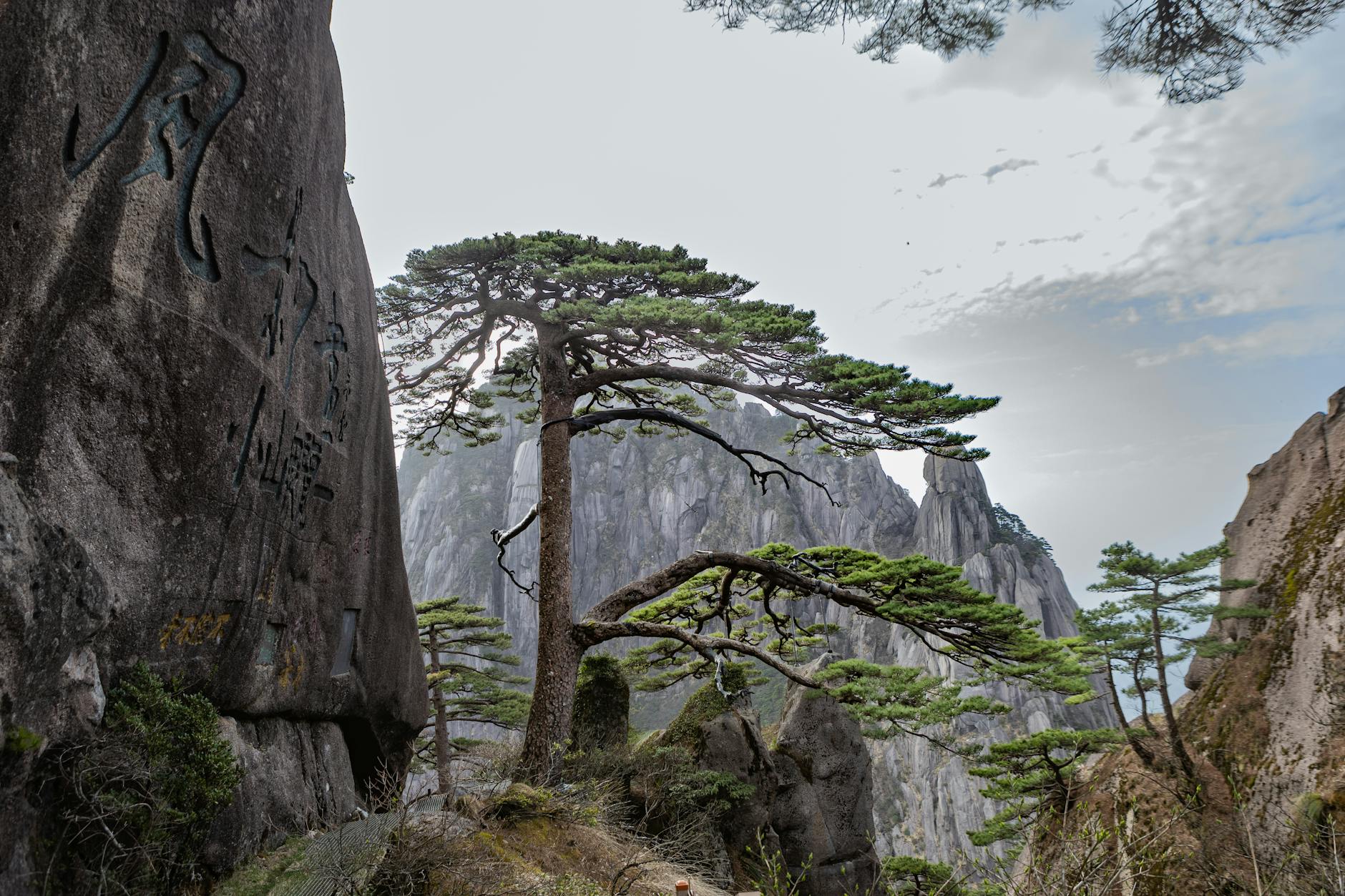
If the ordination terrace is Jietai’s historical glory, its ancient pine trees are its living one — and for many visitors they’re the most magical thing about the place. The temple grounds hold over 100 ancient trees, of which dozens are classified as first- or second-grade protected veterans, and the most extraordinary are the legendary “Five Pines of Jietai,” each named for its remarkable shape and character. There’s the “Reclining Dragon Pine” (Wolong Song), an immense, low-sprawling tree whose serpentine trunk and branches, propped on supports, writhe across the ground like a resting dragon; the “Nine Dragons Pine” (Jiulong Song), said to be over 1,300 years old, its nine great limbs twisting skyward; the “Active Pine” (Huo Song), which legend says trembles in every branch when you tug a single twig; the “Embracing Pagoda Pine” (Baota Song), curling around a small stupa; and the “Free/Unrestrained Pine.” Centuries old, fantastically gnarled, and lovingly tended, these trees turn a stroll through the temple into something between a garden and a gallery of natural sculpture. They have drawn poets, painters and emperors for centuries, and they remain Jietai’s unforgettable signature.
The halls and grounds
Beyond the ordination hall and the pines, Jietai is a satisfying temple to explore, climbing the hillside through a series of courtyards and halls. The main axis includes the Mountain Gate Hall, the Hall of the Heavenly Kings, and the Mahavira Hall with its principal Buddha images, while side courts hold smaller shrines, steles, ornamental rocks and the former imperial lodging used by visiting emperors. Scattered through the grounds are ancient cypresses, ginkgos and the celebrated pines, along with peony beds that bloom in late spring. The temple’s elevated position gives lovely views over the wooded hills and valley below, and the whole place has a serene, slightly wild atmosphere — less manicured than the city temples, shaped by its mountain setting and its great old trees. It’s a place to wander unhurriedly, settling on a bench beneath a pine to take in the quiet. Compared with the grander Tanzhe nearby, Jietai feels more intimate and arguably more atmospheric, which is exactly why so many visitors fall for it. The ridges behind it carry proper walking routes, set out in our guide to hiking near Beijing.
The Western Hills setting
Jietai’s location in the Western Hills (Xishan) is part of its charm. This forested range on Beijing’s western fringe has drawn temple-builders, emperors and city-dwellers seeking cool air and quiet for over a thousand years, and it remains dotted with monasteries, imperial retreats and scenic spots. The hills around Jietai are wooded and gently dramatic, with walking paths and viewpoints, and the air is noticeably fresher than in the city below. Combined with nearby Tanzhe, the preserved old village of Cuandixia deeper in the hills, and the famous autumn slopes of Fragrant Hills a little further north, Jietai forms part of a whole landscape of escapes that reward travellers willing to head west out of the centre. Treat your visit as much as a day in the hills as a temple stop — pause at the overlooks, breathe the pine-scented air, and you’ll understand why this corner of Beijing has been prized as a retreat for so many centuries.
Hours, tickets and how to get there
Jietai Temple is open 8:30–17:00 in spring and summer and 8:30–16:30 in autumn and winter, with admission around ¥45. Like Tanzhe, it sits in Mentougou District in the Western Hills, west of central Beijing. The handiest public-transport route uses the S1 maglev/suburban line to Shichang station, from where you transfer to bus 948 or M44 to the Jietaisi (Jietai Temple) stop; alternatively, take subway Line 1 to Pingguoyuan and then bus 948. A taxi or DiDi from the city, or hired for the day, is the most comfortable option and makes combining Jietai with Tanzhe effortless (the two are only 10–15 minutes apart by car). Allow about two hours at the temple, plus an hour or more of travel each way. Wear comfortable shoes for the hillside steps, bring water and a layer, and set up mobile payment for buses and tickets. For more options, see our guide to what else lies within a day’s reach.
Best time to visit and the seasons
Jietai is rewarding in every season, each lending the ancient pines a different mood. Late spring is a particular highlight: the temple is known for its peony and lilac displays, and the fresh green of the hills sets off the dark, sculptural pines beautifully. Autumn brings golden ginkgo and cypress colour, crisp air and the clearest views over the valley — arguably the loveliest time overall. Summer is green, shady and cooler than the city, a fine escape from the heat though sometimes hazy. Winter strips the scene to its essentials: snow on the pines and tiled roofs, deep quiet, and almost no other visitors. Whenever you come, a weekday morning gives you the temple at its most peaceful, with soft light filtering through the trees and time to appreciate the pines without crowds. Because Jietai sees fewer visitors than many city temples, even weekends are manageable, but mornings remain best — and pairing an early Jietai visit with an afternoon at Tanzhe makes for a wonderfully unhurried day in the Western Hills. For the broader seasonal picture, see our guide to picking the right month for a Beijing trip.
Tips for your visit
A few practical notes make the trip easier. Set out early, since the journey takes an hour or more each way and you’ll likely want to fit in Tanzhe too. Wear comfortable, grippy shoes — the temple climbs the hillside on stone steps and paths that can be uneven — and bring water and a warm layer, as the hills are cooler and breezier than the city. The most efficient way to do Jietai and Tanzhe together is to hire a car or taxi for the day, which removes the slow bus transfers between the mountain temples and the city; agree a price in advance and have your destinations written in Chinese. Set up a mobile-payment app for tickets and snacks, and carry a few of your own, as on-site food is limited. Take your time with the ordination hall and the named pines — they’re the soul of the place — and seek out the viewpoints over the valley. Treat the halls with quiet respect, follow any photography signs, and Jietai rewards you with one of the most serene and memorable temple visits near Beijing. A little temple etiquette helps everywhere you go.
Combining with Tanzhe Temple
Jietai and Tanzhe Temple are the classic Western Hills temple pairing, lying only a few kilometres apart and almost always visited together on a single day out. With your own car or a taxi the hop between them takes just 10–15 minutes, so a relaxed day lets you take in both: Tanzhe’s grandeur, terraced halls and 1,300-year-old “Emperor Tree” ginkgo, and Jietai’s great ordination altar and incredible ancient pines. They complement each other beautifully — two of the oldest, most atmospheric Buddhist temples near Beijing, set among the same forested hills. If you only have time for one, choose by taste: Tanzhe for scale, history and autumn ginkgo; Jietai for intimacy, the ordination terrace and the magical pines. But if you can, do both. See our Tanzhe Temple guide to plan the pairing, the very different atmosphere of Beijing’s leading Taoist temple, and our overview of temples across the city.
Why Jietai is worth the journey
With so many temples in and around Beijing — from the incense-filled halls of the Tibetan lamasery at Yonghegong to the scholarly courtyards of the Confucius Temple — why make the trip out to Jietai? Because it offers a combination you can’t get elsewhere. Few temples in China — and none nearer the capital — can show you a thousand-year-old ordination terrace of this scale and craftsmanship, a place with a specific, hallowed function in the history of Chinese Buddhism. Fewer still pair that with a living collection of ancient pines so remarkable that individual trees have been named, celebrated in poetry and painting, and protected for centuries. Add a tranquil mountain setting, refreshingly small crowds, and the ease of combining it with Tanzhe, and Jietai becomes one of those places that exceeds expectations. It rewards slow looking and a little knowledge: understand what the ordination altar meant to the monks who knelt before it, and notice how each great pine has grown into its own extraordinary form, and a visit becomes genuinely moving rather than just scenic. For travellers willing to venture beyond the city centre, it’s among the most distinctive and memorable temples the Beijing area has to offer — and a perfect example of why the Western Hills reward exploration.
Pairing this with Tanzhe makes a full day out in Mentougou and needs a car or some careful bus planning, since the two are not conveniently linked. That day is the last of a seven-day Beijing itinerary, where there is finally room for it.
Jietai Temple FAQ
What is Jietai Temple famous for?
It’s famous for housing the largest Buddhist ordination terrace in China — a three-tiered marble altar where monks were ordained for nearly a thousand years — and for its extraordinary collection of ancient, fantastically twisted pine trees, especially the legendary “Five Pines of Jietai.”
What is the ordination terrace?
It’s a square, three-tiered marble platform about 3.5 metres high, carved with niches holding 113 “Precept Deity” statues, on which novices formally took the vows that made them monks. It’s the largest such altar in China and made Jietai one of only three great ordination temples in the country.
How do I get to Jietai Temple?
Take the S1 line to Shichang, then bus 948 or M44 to the Jietaisi stop; or subway Line 1 to Pingguoyuan then bus 948; or a taxi/DiDi. It’s in Mentougou District in the Western Hills, and is only 10–15 minutes by car from Tanzhe Temple.
How much is admission and how long should I allow?
Admission is around ¥45, and the temple is open 8:30–17:00 in spring/summer and 8:30–16:30 in autumn/winter. Allow about two hours at the temple, plus travel time of an hour or more each way.
Should I visit Jietai or Tanzhe?
If you can, visit both — they’re only a few kilometres apart and make an ideal full-day pairing. If choosing one: Tanzhe for its scale, grandeur and famous golden ginkgo; Jietai for its intimate atmosphere, the great ordination terrace and the magical ancient pines.
When is the best time to visit?
Spring is lovely for the peonies and fresh green; autumn for golden foliage and clear mountain views; summer for cool, shady forest air; and winter for stark, quiet beauty. A weekday in spring or autumn offers the best mix of pleasant weather and few crowds.
The bottom line on Jietai Temple
Jietai Temple is one of the least-visited old temples in the Western Hills — an ancient Tang-dynasty monastery home to the largest ordination terrace in China and an unforgettable garden of fantastically twisted, centuries-old pines. Quieter and more intimate than grand Tanzhe nearby, it rewards visitors with deep history, serene mountain surroundings and natural beauty you won’t find at the city temples. Pair it with Tanzhe for a perfect full-day temple excursion, allow a relaxed couple of hours, wear good shoes for the slopes, and let the great pines and the thousand-year-old altar work their quiet magic.
Plan the pairing with our Tanzhe Temple guide, find more escapes in our day trips from Beijing guide, and see the full Beijing temples guide. First time in the city? Start with our end-to-end guide to planning the trip.