Beijing historical attractions span over 3,000 years of civilization, from ancient imperial palaces to sacred temples and UNESCO World Heritage Sites that tell the story of China’s greatest dynasties. This comprehensive guide to Beijing’s imperial landmarks covers every major historical site you should visit, with practical information on tickets, opening hours, and insider tips to help you experience the city’s extraordinary heritage without the hassle. Whether you have two days or two weeks, understanding Beijing’s historical attractions will deepen your appreciation of one of the world’s oldest continuously inhabited capital cities.
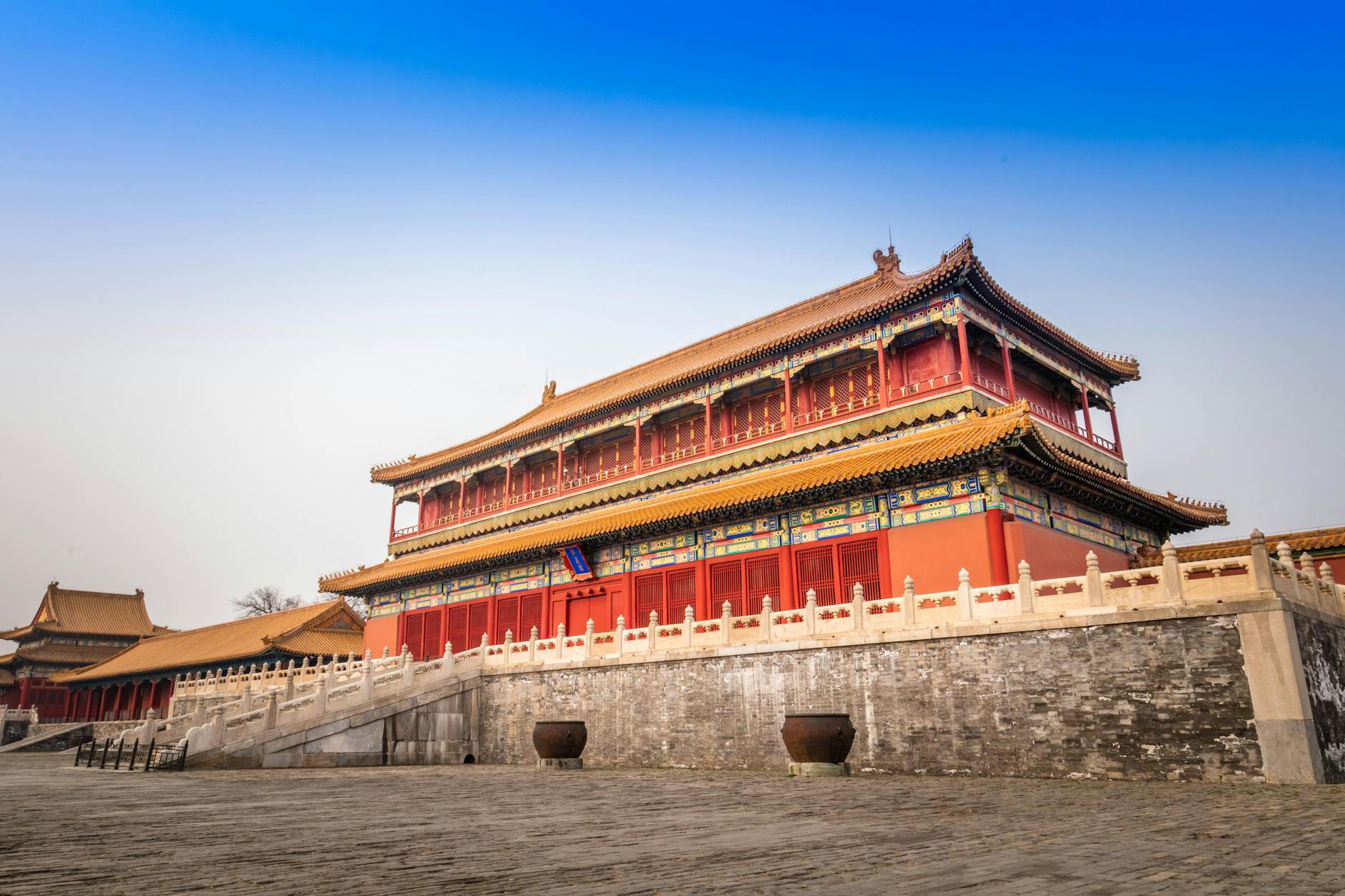
Beijing Historical Attractions: An Overview of Imperial Heritage
Beijing served as China’s imperial capital for over 800 years under the Yuan, Ming, and Qing dynasties, and this extraordinary history is written into every corner of the city. The Chinese capital boasts seven UNESCO World Heritage Sites — more than almost any other city on Earth — including the Forbidden City, the Temple of Heaven, the Summer Palace, the Ming Tombs, the Great Wall, the Grand Canal, and the newly inscribed Beijing Central Axis (added in 2024). Together, these sites represent an unparalleled concentration of imperial Chinese architecture, landscape design, and cultural heritage.
Most of Beijing’s major historical attractions are concentrated within or near the 2nd Ring Road, following the ancient city walls that once enclosed the imperial capital. The city’s layout is organized along a north-south Central Axis — a 7.8-kilometer ceremonial spine that runs from the Yongding Gate in the south through Tiananmen Square and the Forbidden City to the Drum and Bell Towers in the north. Understanding this axis is key to understanding Beijing’s imperial geography and planning an efficient sightseeing itinerary.
The Forbidden City (Palace Museum): Beijing’s Crown Jewel
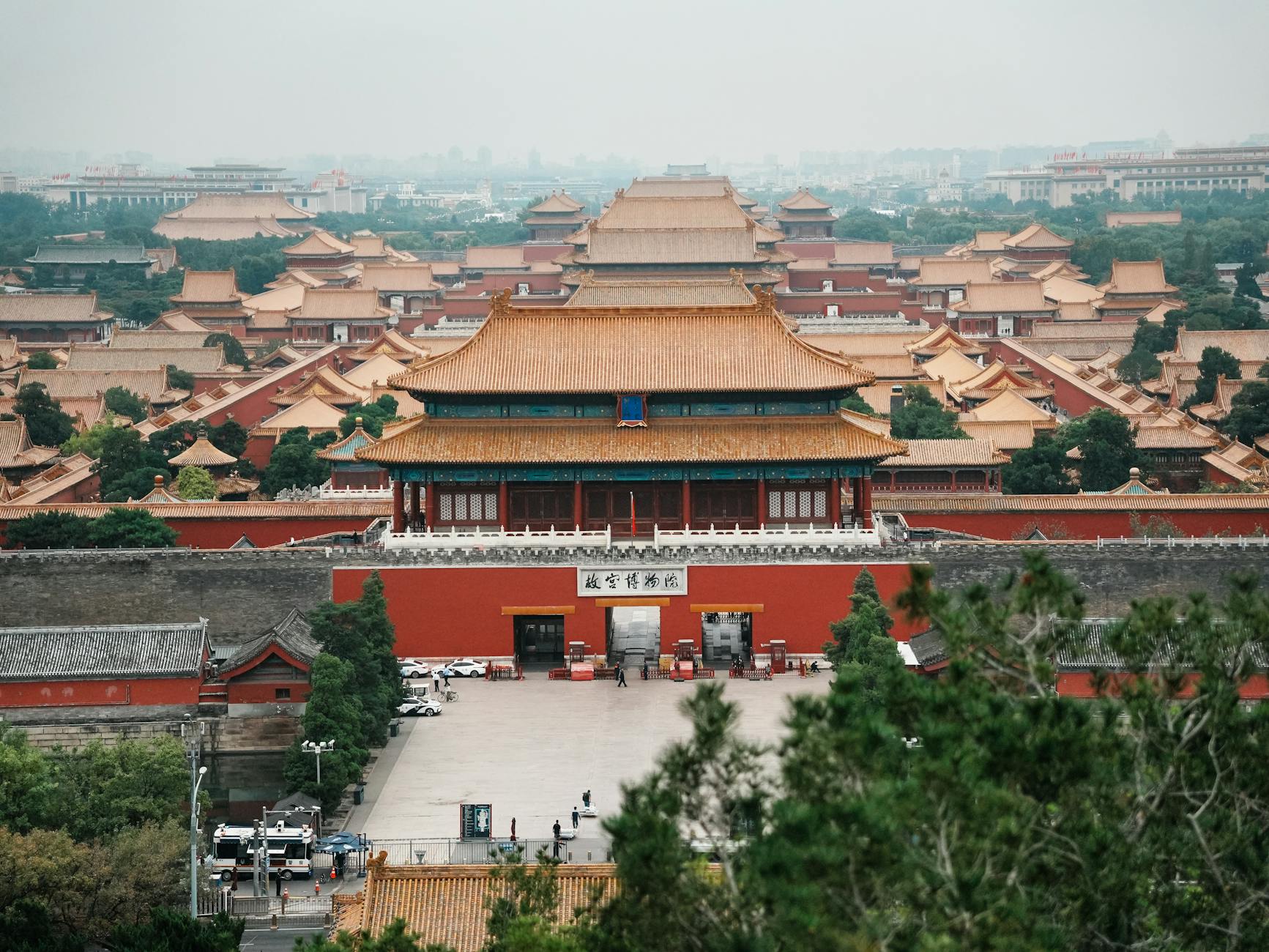
The Forbidden City is the single most important historical attraction in Beijing and arguably in all of China. This vast imperial palace complex served as the home of 24 emperors across the Ming and Qing dynasties (1420–1912) and is the world’s largest collection of preserved ancient wooden structures. Covering 72 hectares with 980 surviving buildings and over 8,700 rooms, the Forbidden City (officially known as the Palace Museum) is a breathtaking testament to the power and sophistication of imperial China.
The complex is divided into the Outer Court (where emperors conducted state affairs) and the Inner Court (the private imperial living quarters). Highlights include the Hall of Supreme Harmony — the largest wooden structure in China, used for coronations and major ceremonies — the Palace of Heavenly Purity, and the Imperial Garden with its ancient cypress trees and rockeries. The Palace Museum’s collections include over 1.8 million artworks, ceramics, paintings, and imperial treasures, many displayed in rotating exhibitions throughout the complex.
Tickets: ¥60 in peak season (April–October), ¥40 in low season (November–March). Tickets are limited to 40,000 per day and must be booked at least one day in advance through the official Palace Museum website or Trip.com. Tickets go on sale seven days ahead at 8:00 PM Beijing time and sell out quickly during holidays. Your passport is required for entry.
Hours: 8:30 AM–5:00 PM (last entry 4:00 PM) in peak season; 8:30 AM–4:30 PM (last entry 3:30 PM) in low season. Closed every Monday except during public holidays.
Tips: Allow at least 3 hours for a thorough visit, more if you want to explore the special exhibitions. Arrive at 7:30 AM or after 2:00 PM to avoid the worst crowds. Tuesday and Wednesday mornings are typically the quietest. Enter through the Meridian Gate (south) and exit through the Gate of Divine Prowess (north), continuing directly into Jingshan Park for the best panoramic view of the entire complex.
Tiananmen Square: The Heart of Modern Beijing
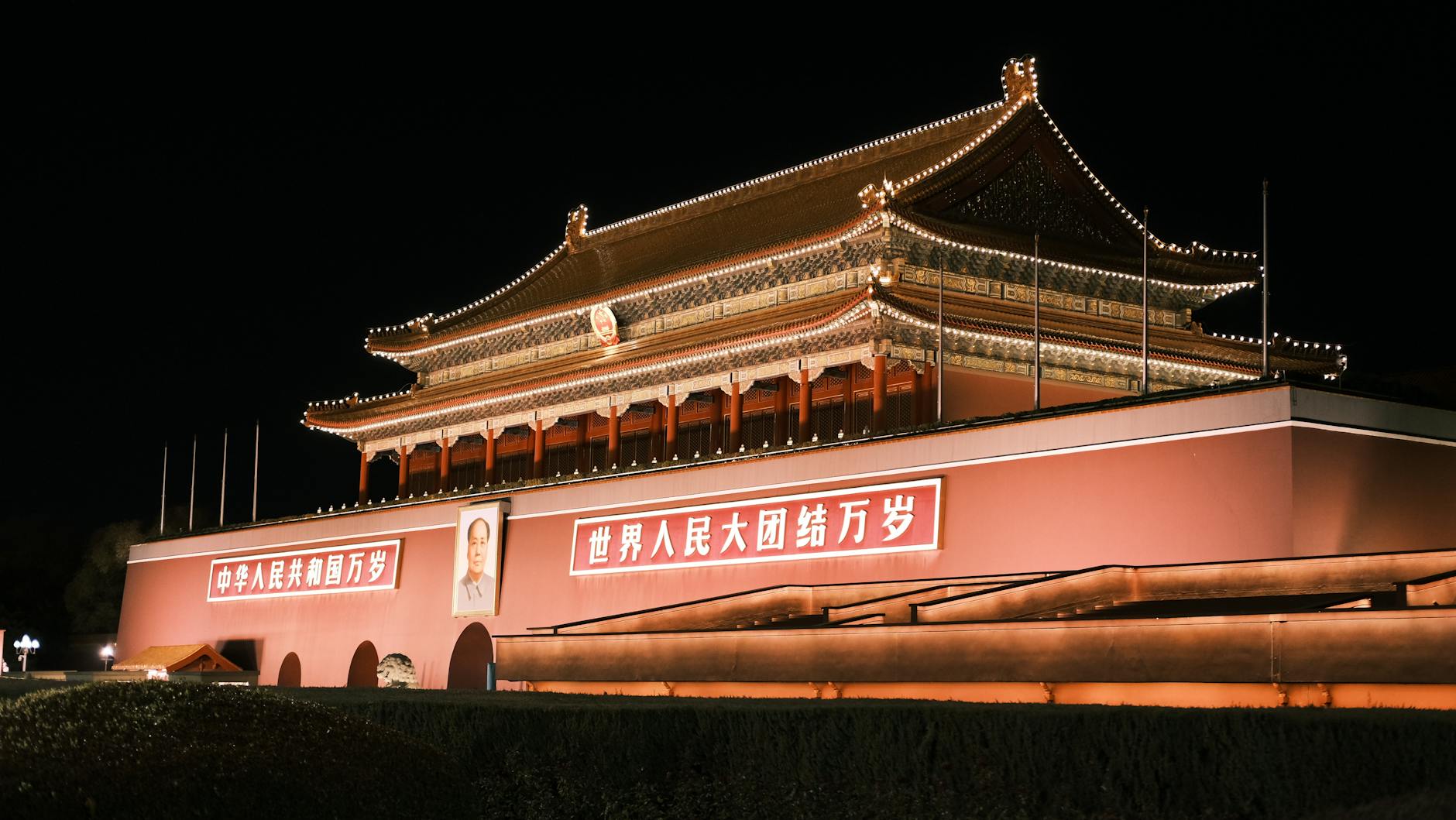
Tiananmen Square is the world’s largest public square, spanning 44 hectares in the heart of Beijing directly south of the Forbidden City. The square has been the symbolic center of the Chinese state for centuries and serves as the ceremonial gateway to the imperial palace through the iconic Tiananmen Gate, adorned with the portrait of Mao Zedong. The square is flanked by the National Museum of China (one of the world’s largest museums, with free admission), the Great Hall of the People, and the Monument to the People’s Heroes.
Visiting: Free admission but advance reservation required via the “Tiananmen Square Reservation” WeChat mini-program. Reservations open 9 days in advance, divided into four time slots: flag-raising ceremony, morning, afternoon, and flag-lowering ceremony. The daily flag-raising and lowering ceremonies at sunrise and sunset are conducted with full military honors and are a powerful spectacle worth witnessing — check exact times online as they change daily with the sunrise/sunset schedule.
Tips: Security screening is thorough, so arrive early and carry minimal bags. Photography is freely allowed. The square pairs naturally with a Forbidden City visit — see Tiananmen Square first thing in the morning, then walk north through the Tiananmen Gate to enter the palace complex.
Temple of Heaven: Sacred Imperial Architecture
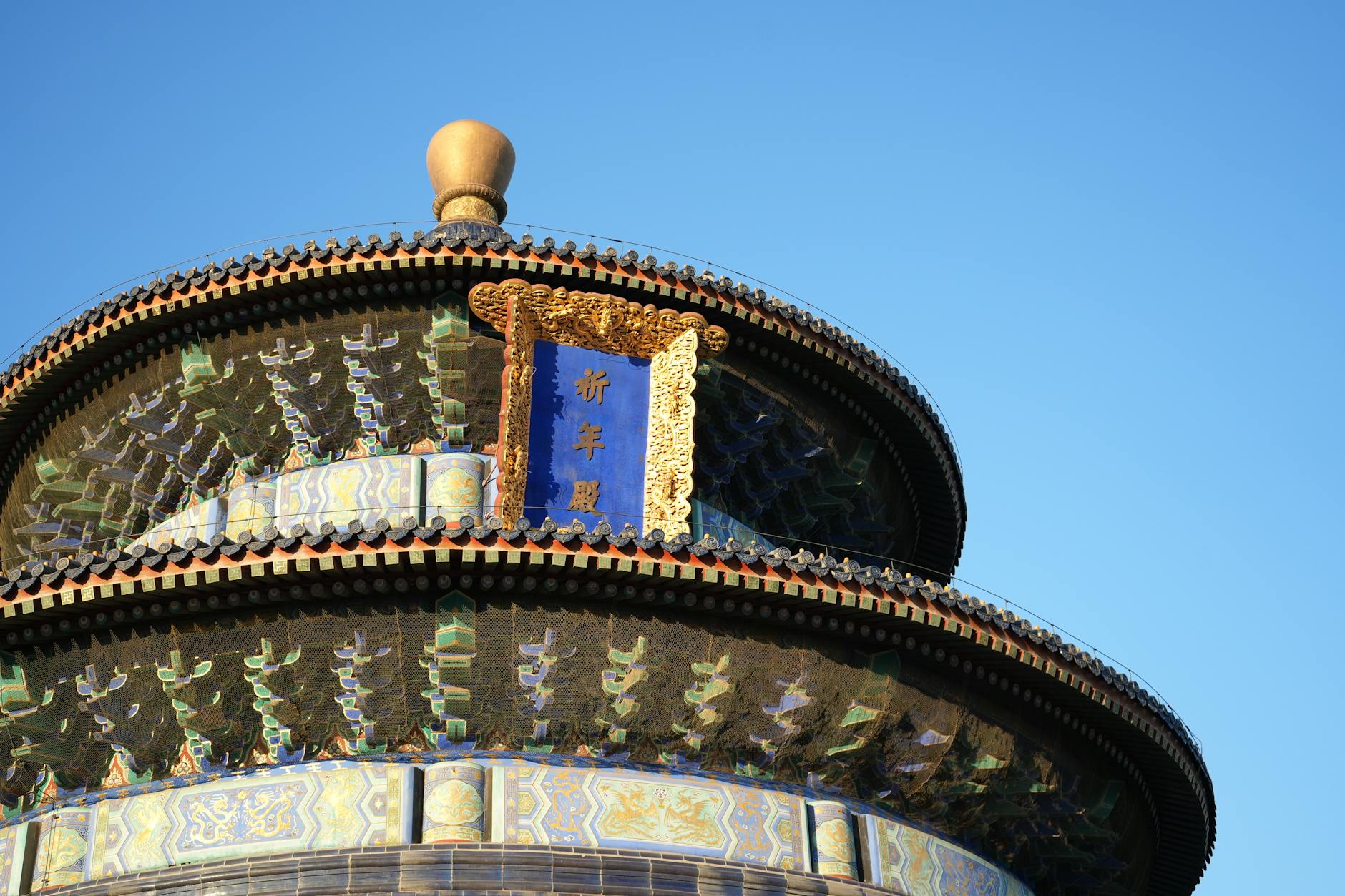
The Temple of Heaven is a masterpiece of Ming Dynasty architecture and one of the most visually stunning historical sites in all of Asia. Built in 1420, this UNESCO World Heritage complex was where Ming and Qing emperors performed elaborate annual ceremonies to pray for good harvests and communicate with heaven. The site covers an enormous 273 hectares — nearly four times the size of the Forbidden City — set within a beautiful park of ancient cypress trees, some over 600 years old.
The architectural centerpiece is the Hall of Prayer for Good Harvests, a magnificent triple-gabled circular building constructed entirely of wood without a single nail. Its perfect proportions, deep blue glazed tile roof, and symbolic numerology make it one of China’s most recognizable structures. Other highlights include the Imperial Vault of Heaven (surrounded by the famous Echo Wall that carries whispers along its curved surface), the Circular Mound Altar (where acoustic effects amplify the emperor’s voice), and the 360-meter Red Stairway Bridge connecting the ceremonial buildings.
Tickets: ¥15 for the park only, ¥34 for the combined ticket including all buildings (peak season). Low season prices are ¥10 and ¥28 respectively. No advance booking required for the park, but recommended during holidays.
Hours: Park opens at 6:00 AM (buildings open at 8:00 AM). Closing times vary seasonally from 5:00 PM to 6:00 PM.
Tips: Arrive before 10:00 AM to experience the park at its most authentic — you’ll find local retirees practicing tai chi, performing traditional opera, playing erhu music, and kicking shuttlecocks. The morning atmosphere in the cypress groves is magical and gives you a genuine glimpse into everyday Beijing life. Allow 2–3 hours for a complete visit.
Summer Palace: The Imperial Garden Retreat
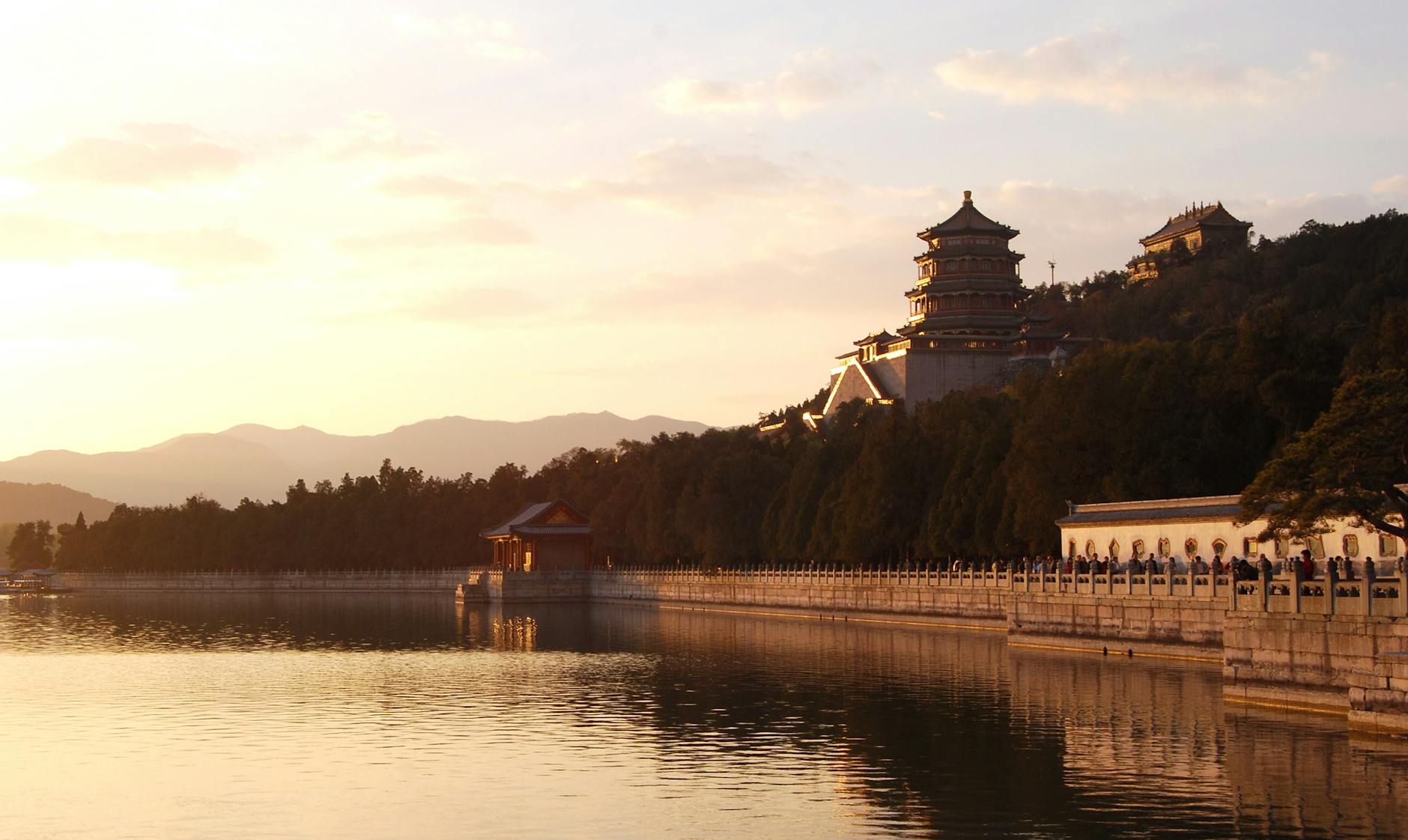
The Summer Palace is the largest and best-preserved imperial garden in China, sprawling across 297 hectares in Beijing’s northwestern Haidian District. This UNESCO World Heritage Site served as the summer retreat for Qing Dynasty emperors and the Empress Dowager Cixi, who famously diverted naval funds to restore it in the late 19th century. The complex is dominated by Kunming Lake (which covers three-quarters of the total area) and the Longevity Hill rising from its northern shore.
The most celebrated feature is the Long Corridor, a 728-meter covered walkway that holds the Guinness World Record as the longest painted corridor in the world, with over 14,000 individual paintings depicting scenes from Chinese history, literature, and mythology. Other highlights include the Marble Boat (a 36-meter stone structure built for lakeside banquets), the Seventeen-Arch Bridge connecting the shore to South Lake Island, and the Tower of Buddhist Incense perched atop Longevity Hill with commanding views across the lake to the distant Western Hills.
Tickets: ¥30 for general admission, ¥60 for the comprehensive ticket including all exhibition halls (peak season). Low season prices are ¥20 and ¥50. Kunming Lake boat rides cost an additional ¥10–20.
Hours: 6:30 AM–6:00 PM (buildings 8:30 AM–5:00 PM) in peak season; 7:00 AM–5:00 PM (buildings 9:00 AM–4:00 PM) in low season.
Tips: The Summer Palace requires at least half a day. Take the boat across Kunming Lake for the best photography angles. In winter, the frozen lake sometimes opens for ice skating — a magical experience. The palace is easily combined with a visit to the nearby Old Summer Palace (Yuanmingyuan) ruins, a poignant reminder of the destruction during the Second Opium War.
Jingshan Park: The Best View of the Forbidden City
Jingshan Park sits directly behind (north of) the Forbidden City and offers the single best panoramic view of the palace complex and Beijing’s Central Axis. The park’s central hill was artificially created from soil excavated during the construction of the Forbidden City’s moat, and from the Wanchun Pavilion at the summit, you can see the entire layout of the Forbidden City spread below like a living map — the symmetry, the golden roofs, and the scale of imperial architecture laid bare in a single sweeping view.
Beyond the famous viewpoint, Jingshan Park is historically significant as the site where the last Ming Dynasty emperor, Chongzhen, hanged himself in 1644 when peasant rebels breached the city walls. A locust tree (a replacement of the original) marks the spot on the park’s eastern slope. The park is also a beloved gathering spot for locals, particularly in the mornings when choral groups, dancers, and musicians fill the pathways with song.
Tickets: ¥10 (¥5 in low season). Hours: 6:00 AM–9:00 PM (summer), 6:30 AM–8:00 PM (winter). Tips: Visit immediately after exiting the Forbidden City’s north gate — the climb takes about 15 minutes and the sunset views are spectacular. This is one of the best photography spots in all of Beijing.
The Beijing Central Axis: UNESCO’s Newest Heritage Route
In July 2024, the Beijing Central Axis was inscribed as a UNESCO World Heritage Site, recognizing this 7.8-kilometer ceremonial spine as one of the most remarkable examples of ancient urban planning in the world. Established during the Yuan Dynasty (1271–1368) and refined over subsequent centuries, the axis runs from the Yongding Gate in the south through Tiananmen Square and the Forbidden City to the Drum Tower and Bell Tower in the north, aligning the entire city along a perfect north-south meridian.
The inscription includes 15 key heritage components: the Yongding Gate, the Temple of Heaven, Qianmen Gate and Arrow Tower, Zhengyang Bridge ruins, Qianmen commercial streets, Tiananmen Square, Tiananmen Gate, the Imperial Ancestral Temple (now the Working People’s Cultural Palace), the Altar of Land and Grain (Zhongshan Park), the Forbidden City, Jingshan Park, Wanning Bridge, the Drum Tower, and the Bell Tower. A dedicated Central Axis sightseeing bus now runs the full route, making it easy to visit all components in sequence.
Tips: Walking the full Central Axis from south to north takes a full day and covers approximately 10 kilometers on foot. The most rewarding approach is to start at the Temple of Heaven in the early morning, walk north through Qianmen to Tiananmen Square, explore the Forbidden City, climb Jingshan Park for sunset views, then finish at the Drum and Bell Towers for the evening atmosphere in the surrounding hutong neighborhood.
Drum Tower and Bell Tower: Ancient Timekeepers
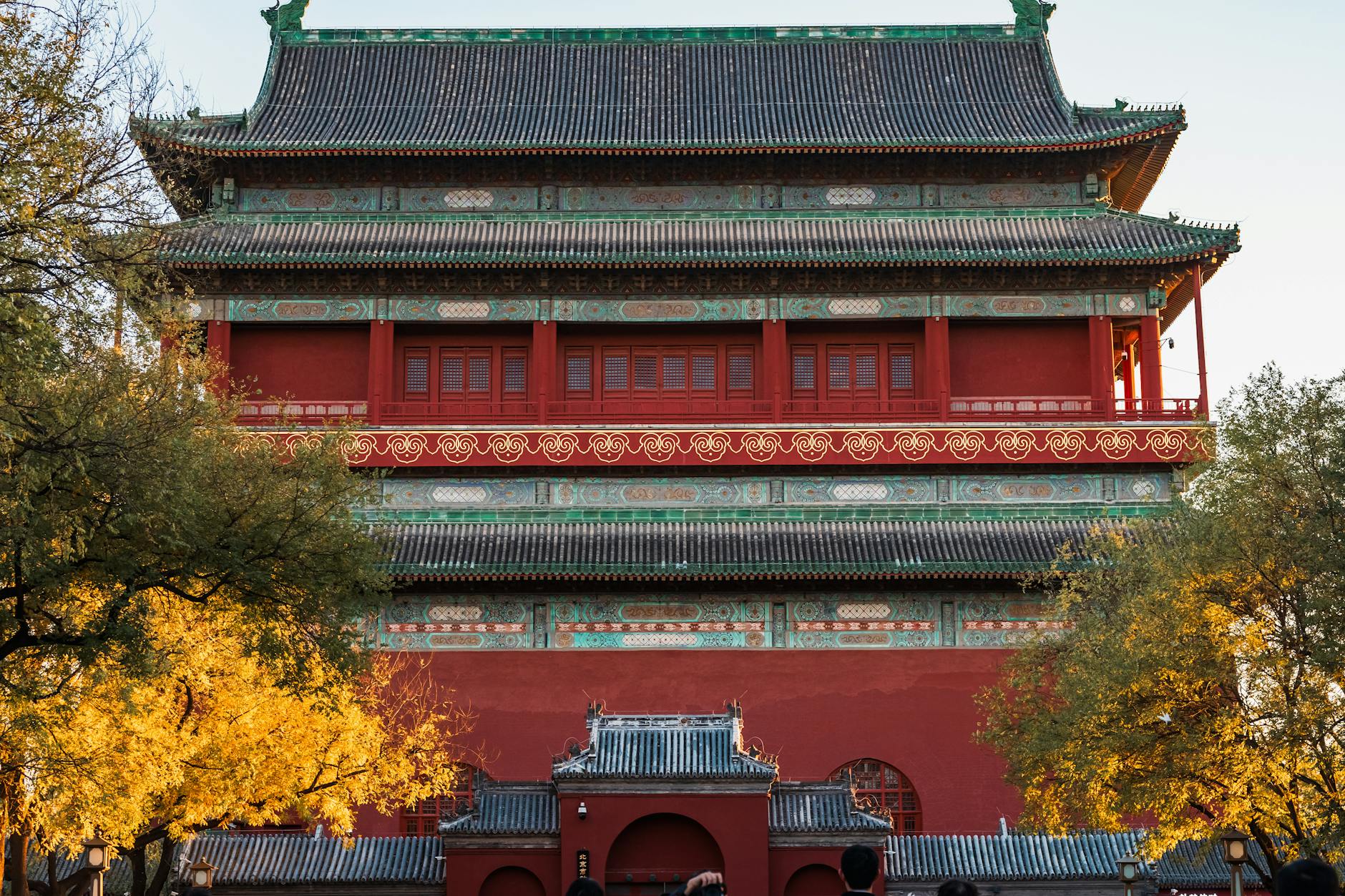
The Drum Tower and Bell Tower stand at the northern terminus of Beijing’s Central Axis and once served as the city’s official timekeeping instruments. The Drum Tower, a 47-meter-tall wooden structure originally built in 1272, held 25 enormous drums that were beaten to mark the hours. Today, regular drumming performances recreate this ancient tradition for visitors. The Bell Tower, standing just behind it, housed a 63-ton bronze bell — one of the largest ancient bells in China — whose reverberations could be heard across the entire imperial city.
The surrounding neighborhood is one of Beijing’s most atmospheric hutong areas, with narrow alleyways, traditional courtyard homes, and small shops selling everything from calligraphy brushes to hand-pulled noodles. Climbing both towers provides excellent elevated views over the hutong rooftops and south along the Central Axis toward the Forbidden City.
Tickets: ¥20 for the Drum Tower, ¥15 for the Bell Tower (combined tickets available). Hours: 9:00 AM–5:00 PM. Tips: Time your visit to catch a drumming performance (typically on the hour). The area around the towers is perfect for an evening stroll, with food stalls, craft beer bars, and the atmospheric Nanluoguxiang hutong nearby. See our Beijing Hutongs & Traditional Culture guide for more on exploring these neighborhoods.
Ming Tombs: Imperial Resting Place
The Ming Tombs (Shisanling) comprise an imperial cemetery complex where 13 of the 17 Ming Dynasty emperors are buried, located about 50 kilometers northwest of central Beijing in the Changping District. Covering approximately 80 square kilometers against a backdrop of mountains, the site is one of the best-preserved groups of ancient royal tombs in the world and a UNESCO World Heritage Site.
Three tombs are open to visitors: Dingling (the only excavated underground palace, where you can walk into the burial chamber of Emperor Wanli and his two empresses), Changling (the largest and most impressive above-ground complex, housing the tomb of the Yongle Emperor who built the Forbidden City), and Zhaoling (a smaller but beautifully restored tomb). The Sacred Way, a 7-kilometer processional avenue lined with stone statues of animals and officials, is one of the most photogenic approaches to any historical site in China.
Tickets: Dingling ¥60, Changling ¥45, Zhaoling ¥30, Sacred Way ¥30 (peak season). Combined tickets available. No advance booking required. Hours: 8:00 AM–5:30 PM (peak), 8:30 AM–5:00 PM (low). Tips: The Ming Tombs are often combined with a Great Wall day trip, as Badaling is on the same road. See our Great Wall of China Beijing guide for transport details. Allow 2–3 hours for two tombs and the Sacred Way.
Beihai Park: Ancient Imperial Garden
Beihai Park is one of China’s oldest and best-preserved imperial gardens, located immediately west of the Forbidden City. Dating back over 1,000 years to the Liao Dynasty (907–1125), it is older than the Forbidden City itself. The park centers on a large lake with Qionghua Island in the middle, crowned by the iconic White Dagoba — a 36-meter Tibetan-style stupa built in 1651 that has become one of Beijing’s most recognizable skyline features.
The park is a peaceful retreat from the intensity of sightseeing at the nearby Forbidden City and Jingshan Park. Highlights include the Nine Dragon Screen (one of only three remaining in China), the Painted Boat Fang hall, and the Five Dragon Pavilions along the northern shore. In summer, paddleboats glide across the lake, while in winter, locals come for ice skating on the frozen surface — a tradition dating back to the Qing Dynasty.
Tickets: ¥10 (park only), ¥20 (combined with Qionghua Island). Hours: 6:00 AM–9:00 PM (summer), 6:30 AM–8:00 PM (winter). Tips: Beihai Park pairs perfectly with Jingshan Park and the Forbidden City for a full day of imperial Beijing. The park’s east gate is a 5-minute walk from Jingshan Park’s west gate.
Practical Tips for Beijing Historical Sightseeing
Book ahead: The Forbidden City and Tiananmen Square require advance reservations. Other sites can generally be visited without pre-booking, but holidays are unpredictable. Keep your passport with you at all times — it’s required for ticket verification at most major historical sites.
Best time to visit: Spring (April–May) and autumn (September–October) offer the most comfortable weather for outdoor sightseeing. Summer is hot and humid but the parks are beautifully green. Winter brings clear skies (often the best visibility for photography) but biting cold — dress warmly and take advantage of the smaller crowds.
Suggested itineraries: For a comprehensive 3-day historical tour, spend Day 1 on the Central Axis (Temple of Heaven, Tiananmen Square, Forbidden City, Jingshan Park), Day 2 at the Summer Palace and Old Summer Palace, and Day 3 at the Ming Tombs combined with a Great Wall section. For more planning advice, see our Complete Beijing Travel Guide and Transportation Guide.
Comfort essentials: Comfortable walking shoes are non-negotiable — you’ll cover 15,000–25,000 steps on a full sightseeing day. Bring water, sunscreen, and a hat in summer. A portable battery pack keeps your phone charged for maps and translation apps. Most sites have basic food options, but bringing snacks allows you to maximize your time on-site rather than hunting for restaurants.
Beijing’s historical attractions represent some of humanity’s greatest architectural and cultural achievements. From the overwhelming grandeur of the Forbidden City to the quiet spiritual beauty of the Temple of Heaven, these sites reward careful exploration and repeat visits. Plan your accommodation in the nearby Dongcheng or Wangfujing districts to minimize travel time between these imperial landmarks and make the most of every day in this extraordinary city.