Beijing Temples & Spiritual Sites
Lama Temple (Yonghegong): Tibetan Buddhism in Beijing Guide
A complete guide to Beijing's Lama Temple (Yonghegong): the giant sandalwood Buddha, Tibetan Buddhist art, history, hours, tickets and tips.
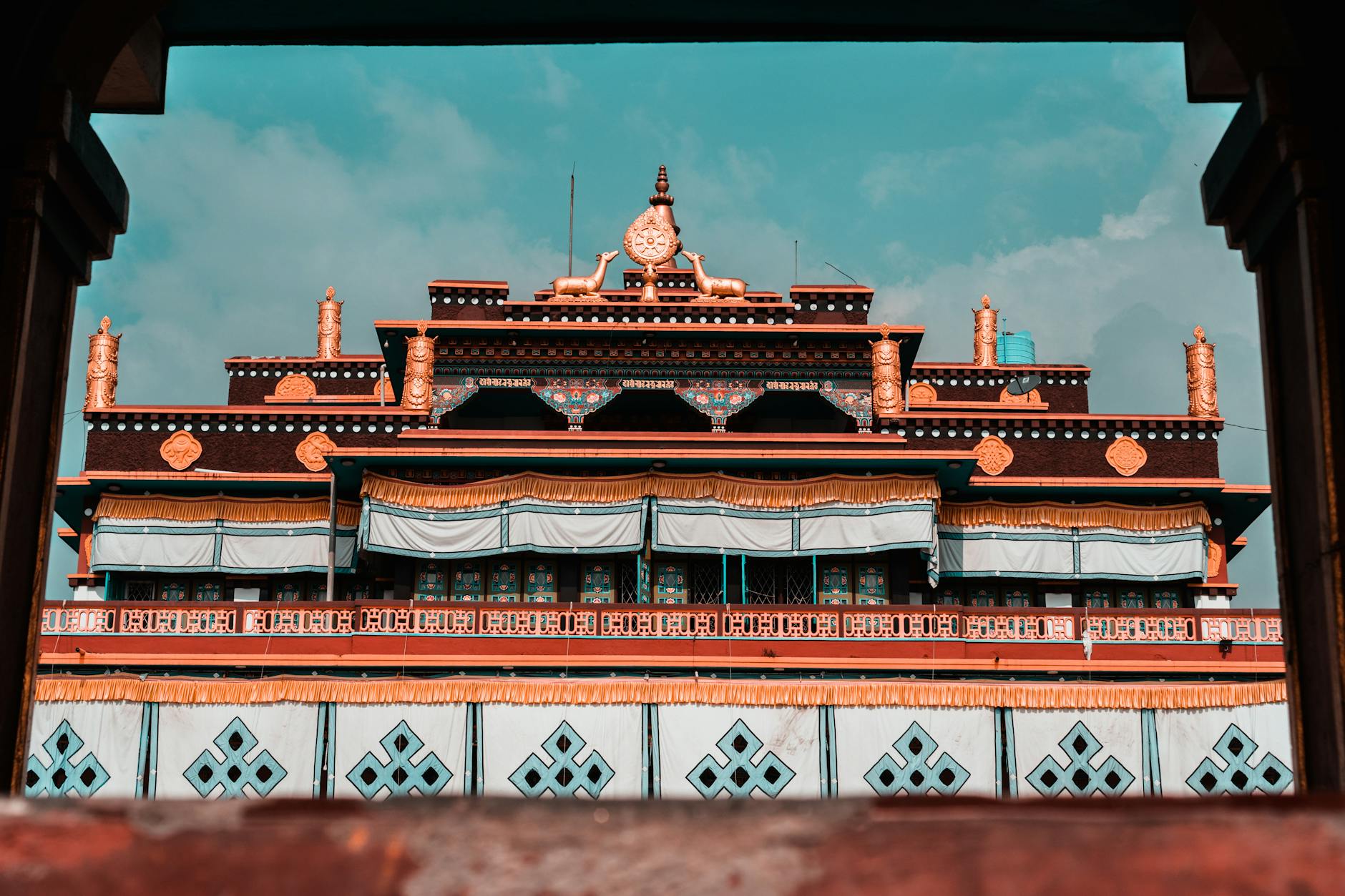
The Lama Temple — Yonghegong, the “Palace of Peace and Harmony” — is the most magnificent and most-visited temple in Beijing, and for many travellers the single most atmospheric religious site in the city. A working Tibetan Buddhist monastery wrapped in clouds of fragrant incense, it began life as a Qing prince’s residence, became the home of an emperor, and was converted into a lamasery in 1744. Today its five great halls climb northward through a sequence of golden-roofed courtyards, culminating in the breathtaking 26-metre Maitreya Buddha carved from a single sandalwood trunk — a Guinness World Record and one of the wonders of Beijing. Easy to reach by subway, alive with genuine worship rather than museum hush, and packed with extraordinary art, the Lama Temple is an essential stop. This guide covers its history, what to see hall by hall, the famous Buddha, opening hours, tickets, how to get there, etiquette, the best time to visit, and how to combine it with the nearby Confucius Temple for a perfect cultural day.
The Lama Temple is the temple I send every first-time visitor to — it’s beautiful, it’s living, and it rewards you whether you come for the art, the history or the sheer sensory experience of the incense and chanting. This guide walks you through the whole site, the practicalities, and how to get the most from your visit. Let’s step through the gate.
The Lama Temple at a glance
- What
- Beijing’s largest and most important Tibetan Buddhist temple (Yonghegong), a living monastery and major attraction.
- Highlight
- the 26-metre Maitreya Buddha carved from a single white sandalwood tree — a Guinness World Record.
- Hours
- 9:00–17:00 (Apr–Oct, last entry 16:30); 9:00–16:30 (Nov–Mar, last entry 16:00).
- Ticket
- ¥25; free incense is provided at the entrance.
- Getting there
- subway Lines 2 & 5 to Yonghegong (Lama Temple) station — the entrance is a short walk south.
- Time needed
- 1.5–2 hours; combine with the Confucius Temple and Imperial Academy nearby.
- Best for
- first-time visitors, culture and art lovers, anyone wanting a living temple rather than a museum.
From princely palace to imperial lamasery
The Lama Temple’s story is unusually grand even by Beijing standards. The complex was built in 1694 as the official residence of Prince Yong, the fourth son of the Kangxi Emperor. When the prince ascended the throne in 1722 as the Yongzheng Emperor, half of the compound was converted into a lamasery while the other half remained an imperial palace — which is why, uniquely, its halls wear the yellow-glazed roof tiles otherwise reserved for emperors. After Yongzheng’s death his coffin lay in state here, and in 1744 his successor, the Qianlong Emperor, formally converted the entire palace into a monastery of the Gelug (Yellow Hat) school of Tibetan Buddhism. This was a deeply political act as well as a religious one: by patronising Tibetan Buddhism, the Qing court strengthened its ties with Tibet and Mongolia, and the Lama Temple became the empire’s premier centre for Tibetan Buddhist administration and learning. Remarkably, it survived the upheavals of the 20th century — including the Cultural Revolution, when Premier Zhou Enlai is credited with protecting it — and reopened to the public in 1981. Today it is once again a functioning monastery with resident monks, while also welcoming millions of visitors a year. That dual identity, palace and temple, imperial and sacred, is the key to understanding why it feels so different from anywhere else in the city.
The layout: five halls rising north
The Lama Temple is laid out along a single north–south axis, with five main halls rising in sequence through a series of courtyards, growing taller and more sacred as you go. You enter from the south through a tree-lined approach and the Zhaotai Gate, passing the drum and bell towers and a pair of stelae pavilions. The genius of the design is the way it builds: each courtyard is a pause, each hall a step deeper into the monastery, and the architecture shifts subtly from Chinese imperial toward Tibetan as you progress, with the final halls showing strong Tibetan and Mongolian influence. Smoke from thousands of incense sticks drifts across every courtyard — visitors are given a free bundle at the entrance — and you’ll see genuine worshippers bowing and praying alongside sightseers. Take it slowly, hall by hall; the rhythm of courtyards and halls is part of the experience, and rushing straight to the giant Buddha misses half the magic.
The great halls and what to see
The Hall of the Heavenly Kings (Tianwangdian), the first hall, holds a laughing Maitreya (Budai) Buddha flanked by the fierce Four Heavenly Kings, with a statue of the protector Weituo behind. Next, the Hall of Harmony and Peace (Yonghegong), the temple’s main hall, enshrines the Buddhas of the Three Ages — past, present and future — with the Eighteen Arhats lining the walls. The Hall of Everlasting Protection (Yongyoudian), once Yongzheng’s living quarters and where his coffin lay, contains a Buddha of Longevity. The Hall of the Wheel of the Law (Falundian) is one of the most impressive: a large hall topped with Tibetan-style gilded cupolas, containing a magnificent six-metre bronze statue of Tsongkhapa, founder of the Gelug school, and the intricate “Five Hundred Arhats Hill,” a sculpted mountain of gold, silver, copper, iron and tin studded with tiny luohan figures. This hall is the monastery’s teaching centre, where monks still gather to chant. Throughout, look for the superb thangka paintings, butter sculptures, sutras and ritual objects — the Lama Temple holds one of the finest collections of Tibetan Buddhist art outside Tibet itself.
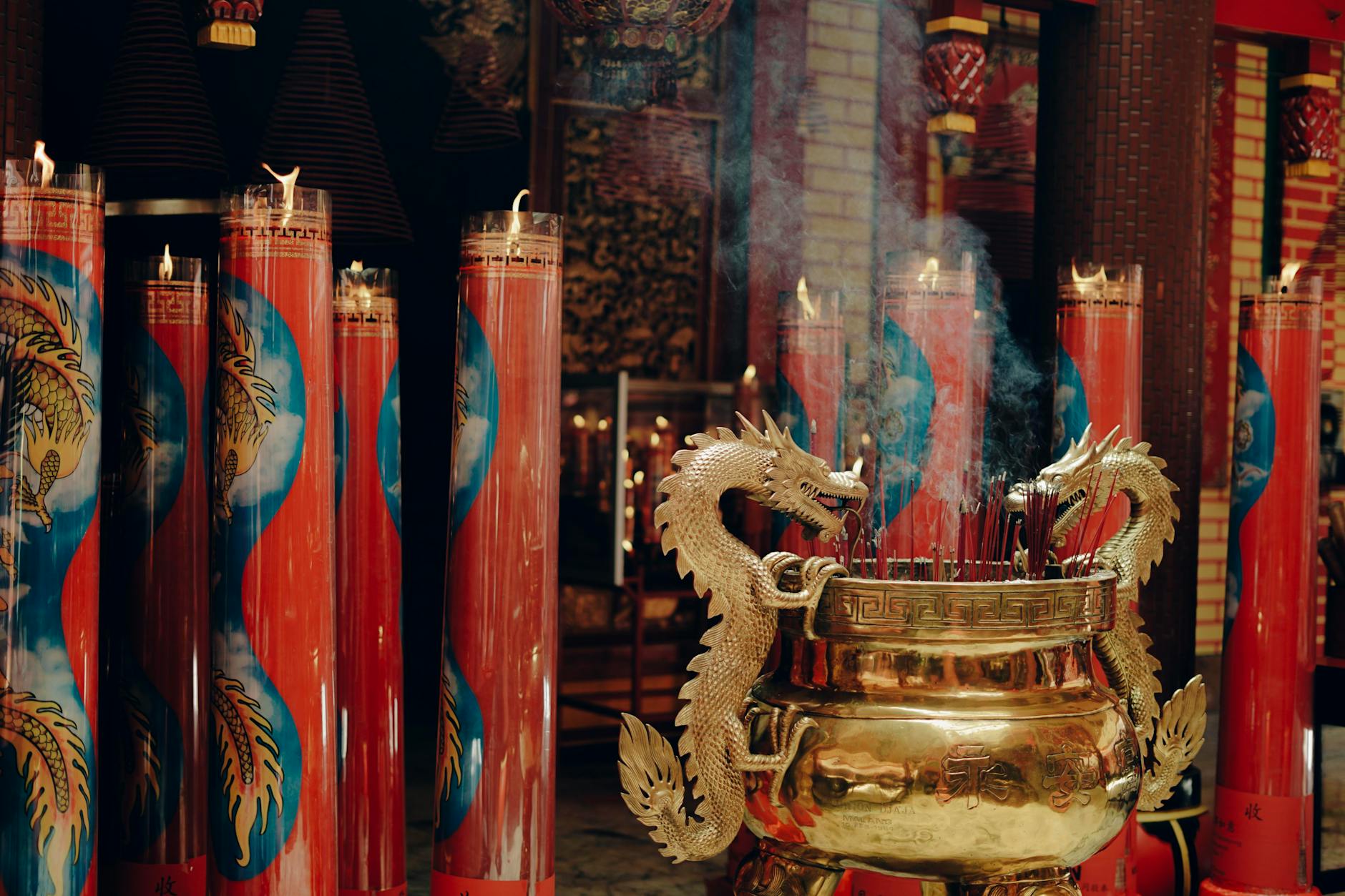
The giant sandalwood Buddha
The climax of any visit is the final and tallest hall, the Pavilion of Ten Thousand Happinesses (Wanfuge), which houses the temple’s most astonishing treasure: a colossal statue of the Maitreya (future) Buddha standing 26 metres tall — 18 metres above ground and a further 8 metres below — carved from a single trunk of white Tibetan sandalwood. The timber was a gift from the seventh Dalai Lama to the Qianlong Emperor, transported overland from Tibet over three years, and the finished statue earned a place in the Guinness Book of World Records as the largest Buddha carved from a single piece of wood. Standing at its feet, craning up through the multi-storey pavilion to the serene golden face far above, is genuinely awe-inspiring and a moment most visitors never forget. The surrounding galleries let you appreciate the statue’s scale from different levels. It’s the perfect, soaring finale to the procession of halls — and a reminder of the wealth and devotion the Qing emperors poured into this place.
What makes the Lama Temple so special
Beijing has many temples and sacred sites, including the call to prayer at the Niujie Mosque in the city’s historic Islamic quarter, so what lifts the Lama Temple above the rest? Three things, I’d say. First, it is genuinely alive: where some historic temples feel like preserved relics, here the incense is real, the chanting is real, and the streams of worshippers pressing their foreheads to the flagstones give the place an emotional charge that no museum can match. Second, the art and craftsmanship are exceptional — this is arguably the greatest collection of Tibetan Buddhist art in China outside Tibet, from the thangkas and butter sculptures to the gilded bronzes and that record-breaking sandalwood Buddha. Third, the imperial backstory gives it a grandeur few monasteries can claim: those yellow roofs, the scale of the halls, the gifts of emperors and Dalai Lamas, all speak of a temple that sat at the very heart of Qing power. Add the ease of access and the lovely setting beside Guozijian Street, and you have a site that satisfies on every level — spiritual, artistic, historical and simply visual. It’s the temple that most often surprises visitors, who arrive expecting “just another temple” and leave moved.
A window onto Tibetan Buddhism
For many visitors the Lama Temple is also their first encounter with Tibetan Buddhism, and it makes a wonderful introduction. The monastery follows the Gelug or “Yellow Hat” school, the tradition of the Dalai and Panchen Lamas, and you’ll see its hallmarks everywhere: the towering image of Tsongkhapa, the school’s 14th-century founder; prayer wheels you can spin clockwise as you pass; vividly coloured thangka scroll-paintings depicting Buddhas, bodhisattvas and protective deities; and the distinctive Tibetan architectural touches — gilded cupolas, ornate canopies and richly painted beams — that intensify as you move north through the halls. Informational plaques in English explain the main figures and symbols, but even without studying the detail, the sensory richness tells its own story. If the temple sparks your curiosity, the nearby temples guide can point you toward Beijing’s Buddhist, Taoist and Confucian sites — including the Han Chinese Buddhism of Fayuan Temple, a world away from this Tibetan tradition — so you can compare the city’s living spiritual traditions side by side.
Hours, tickets and how to get there
The Lama Temple is open 9:00–17:00 from April to October (last admission 16:30) and 9:00–16:30 from November to March (last admission 16:00). Admission is a bargain ¥25, and a free bundle of incense is handed out at the entrance for offerings. Getting there could hardly be easier: take the subway to Yonghegong (Lama Temple) station, served by both Line 2 and Line 5, and follow the clear signs — the entrance is a few minutes’ walk south down Yonghegong Street. Buses 13, 62, 44, 116 and others also stop nearby. The temple is at No. 12 Yonghegong Street in Dongcheng District, in the northeast of the old city. Allow 1.5 to 2 hours for a proper visit. It can get busy, especially on weekends, Chinese holidays and the first and fifteenth days of the lunar month (popular for worship), so an early morning visit on a weekday is best for atmosphere and photographs. For getting around the city, see our guide to fares, lines and ticketing on the metro.
Best time to visit and seasons
The Lama Temple rewards a visit year-round, but timing affects the experience. Spring and autumn bring the most comfortable weather and the prettiest courtyards, with clear skies setting off the golden roofs. Winter is cold but atmospheric — the incense smoke hangs thick in the freezing air, and crowds are thinner outside holidays. Summer is hot and busy, so come at opening time. Whatever the season, aim to arrive when the gates open at 9am: the light is beautiful, the air is calm, and you’ll have the halls to yourself before the tour groups arrive. Avoid the first and fifteenth days of the lunar month and major festivals such as Chinese New Year, when devout locals flock to pray and the temple becomes extremely crowded (though that fervour is a sight in itself, if you don’t mind the crush). A weekday morning, off-festival, is the sweet spot — see our guide to how Beijing’s seasons compare for the wider picture.
Etiquette and respectful visiting
Because the Lama Temple is a living place of worship, not just a tourist attraction, it’s worth visiting with care and respect. Dress modestly (cover shoulders and knees), keep your voice low, and switch your phone to silent. Photography is generally permitted in the courtyards but not inside the halls, where signs prohibit it to protect the artworks and respect worshippers — always look for and obey these signs, and never use flash. If you’d like to offer incense, watch how locals do it: light your sticks, hold them between your palms and bow toward each hall, then place them in the large bronze burners — and never blow out the flame, but wave it gently to extinguish. Don’t point your feet or your camera directly at the statues, don’t touch the artworks, and step over (not on) the raised wooden thresholds. For a fuller rundown of customs across Beijing’s temples, see our dedicated temple etiquette guide — a few minutes’ reading makes any temple visit smoother and more rewarding.
Combining with the Confucius Temple
One of the best things about the Lama Temple is what sits just around the corner. A two-minute walk west brings you to Guozijian Street, one of the few remaining streets in Beijing still graced with ceremonial paifang archways, and home to the tranquil Confucius Temple and the Imperial Academy (Guozijian) — the spiritual and scholarly counterpoint to the Lama Temple’s Buddhist exuberance. Pairing the two makes a perfect half-day: the incense and gilded Buddhas of the lamasery, then the ancient cypresses, stone stelae and quiet courtyards of the Confucian quarter, all within a few hundred metres. The street itself is lovely, with cafés, teahouses and the old grey-walled atmosphere of imperial Beijing. See our full Confucius Temple and Imperial Academy guide to plan that side of the visit, and our Beijing temples guide for the wider picture of the city’s spiritual sites.
Lama Temple FAQ
What is the Lama Temple famous for?
It’s Beijing’s largest and most important Tibetan Buddhist temple, famous for its imperial origins (it was a Qing prince’s palace), its golden imperial roofs, its clouds of incense and living worship, and above all the 26-metre Maitreya Buddha carved from a single sandalwood trunk — a Guinness World Record.
How much does it cost and what are the hours?
Admission is ¥25, with free incense provided. It’s open 9:00–17:00 from April to October (last entry 16:30) and 9:00–16:30 from November to March (last entry 16:00). Allow 1.5–2 hours for a full visit.
How do I get to the Lama Temple?
Take the subway to Yonghegong (Lama Temple) station, served by both Line 2 and Line 5 — the entrance is a short walk south. Several bus routes also stop nearby. It’s at No. 12 Yonghegong Street, Dongcheng District, in the northeast of the old city.
Is the Lama Temple still a working monastery?
Yes. It’s a functioning Gelug-school Tibetan Buddhist monastery with resident monks, and you’ll see genuine worship alongside sightseeing. Because it’s an active religious site, dress modestly, keep quiet, and follow the no-photography rules inside the halls.
Can I take photos inside?
Photography is generally allowed in the open courtyards but not inside the halls, where it’s prohibited to protect the art and respect worshippers. Always follow the posted signs, and never use flash. See our temple etiquette guide for more.
When is the best time to visit?
Early morning on a weekday is best, for thinner crowds and beautiful light through the incense smoke. Avoid weekends, Chinese public holidays, and the first and fifteenth days of the lunar month, when local worshippers come in large numbers.
The bottom line on the Lama Temple
The Lama Temple is Beijing’s most rewarding temple visit — a place where imperial grandeur, living Tibetan Buddhism and world-class art come together in clouds of incense. Walk its five rising halls slowly, take in the thangkas, the Tsongkhapa bronze and the Five Hundred Arhats Hill, and save the colossal sandalwood Buddha for the soaring finale. Come early, dress respectfully, follow the etiquette, and pair it with the nearby Confucius Temple for one of the finest cultural half-days in the city. Of all Beijing’s spiritual sites, this is the one I’d never skip.
Plan the rest of your temple-going with our Beijing temples guide, the adjacent Confucius Temple guide, and the Taoist counterpart across town, Baiyunguan and its resident priests. First time in the city? Start with our run-through of everything a first Beijing trip involves.