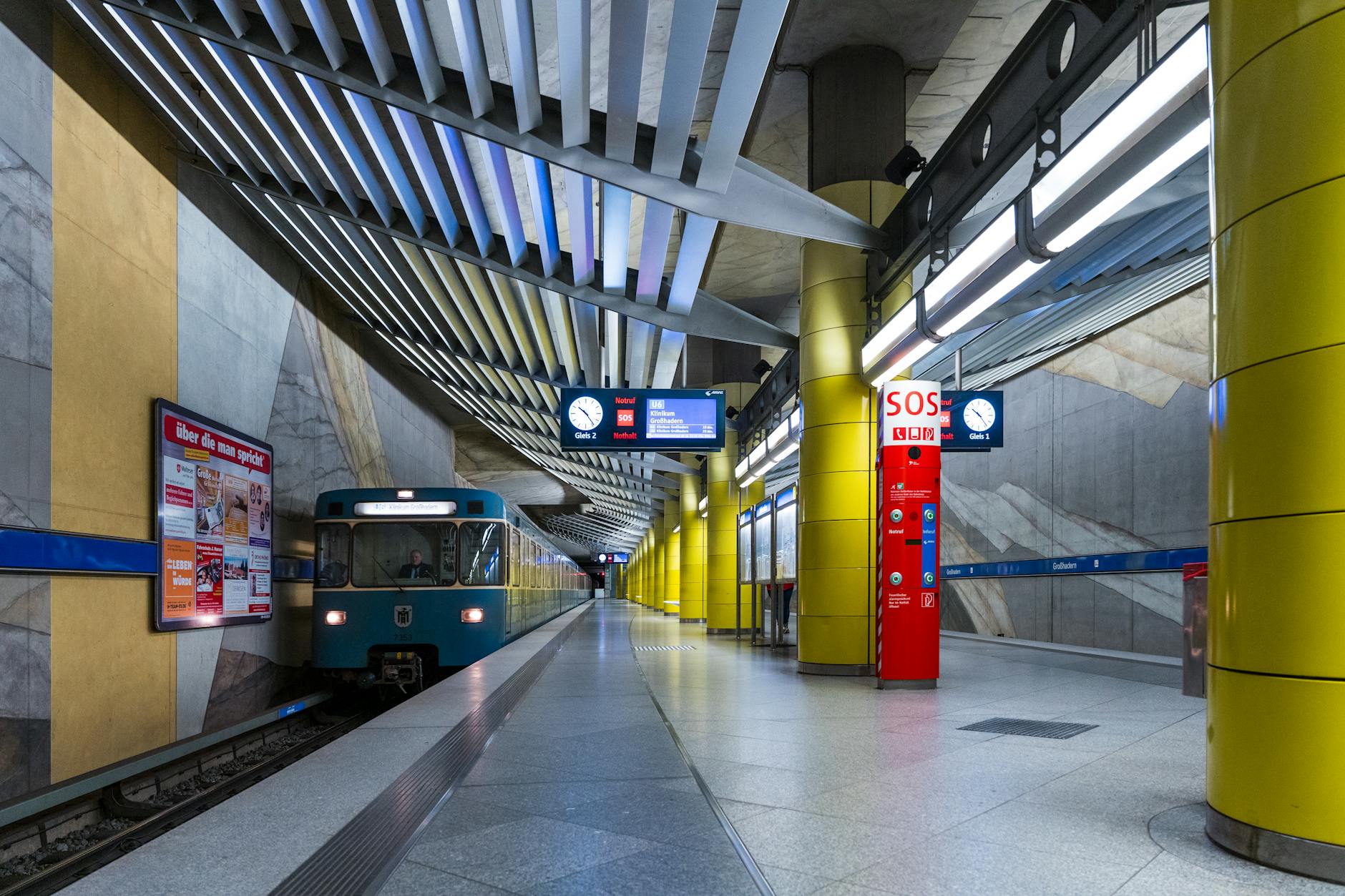
This Beijing subway guide covers everything a first-time visitor needs to ride one of the world’s largest, cheapest, and most foreigner-friendly metro systems with confidence. Beijing’s network spans 30 lines and well over 500 stations, reaches every major tourist attraction including the Forbidden City, Temple of Heaven, Summer Palace, and the high-speed rail links to the Great Wall, and charges roughly $0.50–$1.50 per trip — about a tenth of what taxis cost. If you only learn one piece of Beijing infrastructure during your trip, make it the subway.
Beijing Subway 2026 quick stats: 27 lines, 490 stations — the world’s busiest network by daily ridership. Foreign Visa, Mastercard, JCB, American Express, and UnionPay cards work directly at the gate via contactless tap (no setup required). Best apps for foreigners: Yitongxing (the official Beijing transit app — cumulative fare discounts when linked to a card or Alipay/WeChat) and MetroMan (English navigation with real-time updates). All station signs and announcements are bilingual.
The system can look intimidating on a wall map, but the on-the-ground experience is remarkably straightforward in 2026. Every station, every train, every platform has signs and announcements in both Chinese and English. Tickets cost cents. Trains run every two to five minutes during the day. The walk-up barrier most tourists hit isn’t language or maps — it’s knowing how to pay (foreign credit cards now work, but you need to know the trick) and how to use the security screening at every station entrance. We cover both below.
Quick Facts: Beijing Subway at a Glance
| Metric | Value |
|---|---|
| Total lines | 30 (numbered 1–17 plus named lines like Airport Express, Yizhuang, Daxing) |
| Stations | 500+ across the network |
| System length | 836 km (one of the world’s longest) |
| Daily ridership | ~10 million passenger trips |
| Operating hours | ~05:00 to 23:30 (line-dependent) |
| Train frequency (peak) | Every 2–3 minutes |
| Train frequency (off-peak) | Every 5–7 minutes |
| Single ride fare | ¥3–10 ($0.40–$1.40 USD) |
| Airport Express fare | ¥25 flat ($3.50) |
| Languages | Chinese + English on every sign and announcement |
Beijing Subway Lines You’ll Actually Use
Of the 30 lines, tourists realistically use only six or seven. Memorize these and you can reach 90% of Beijing’s must-see sights:
Line 1 (Red) — The Tourist Spine
Runs east-west through the historic core along Chang’an Avenue. Stations include Tiananmen East and Tiananmen West for the Forbidden City and Tiananmen Square, Wangfujing for shopping, and Dongdan for connections. Line 1 is the single most useful subway line in the city for sightseeing.
Line 2 (Blue) — The Old City Loop
A circular line tracing the path of Beijing’s old Ming Dynasty city wall. Hits Beijing Railway Station for trains, Qianmen for the famous shopping street, Jianguomen for the Ancient Observatory, and Yonghegong for Lama Temple and the Hutong districts. Loops you back to where you started, which is forgiving for first-time riders.
Line 4 (Green) — North-South Through Tourist Sights
Connects Beijing South Railway Station (high-speed trains to Tianjin and beyond) up through Xidan, Xizhimen, and on to the Summer Palace at the Beigongmen and Yuanmingyuan stations. Critical for any day trip to the Summer Palace or northwest Beijing’s universities.
Line 5 (Purple) — Hutong Heaven
North-south through east-central Beijing. Yonghegong for Lama Temple, Beixinqiao for the trendy hutong neighborhoods around Wudaoying, Tiantandongmen for the Temple of Heaven east gate. Excellent for hutong exploration.
Line 6 (Brown) — East-West Modern Beijing
Useful for Chaoyang District, the SoHo and Sanlitun neighborhoods (Dongdaqiao or Hujialou), and the underrated Beihai North station for Beihai Park and Jingshan.
Line 10 (Light Blue) — Outer Loop
A second ring line outside Line 2. Good for Chaoyang District nightlife (Tuanjiehu for Sanlitun), Sanyuanqiao for the Airport Express transfer, and connecting between the other lines without going through the crowded central core.
Airport Express — PEK to City
Not numbered, just called the Airport Express. Connects Beijing Capital Airport’s Terminals 2 and 3 to Dongzhimen and Sanyuanqiao stations downtown for ¥25 flat. Twenty minutes from Terminal 3 to Sanyuanqiao. Detailed coverage in our Beijing airport to city center transfer guide.
Daxing Airport Express — PKX to City
A separate Airport Express for Beijing Daxing International Airport (PKX), running into Caoqiao on Line 19. ¥35 flat fare, 19-minute non-stop ride. Slightly faster than the PEK Express because of the high-speed train design.
Beijing Subway Fares Explained
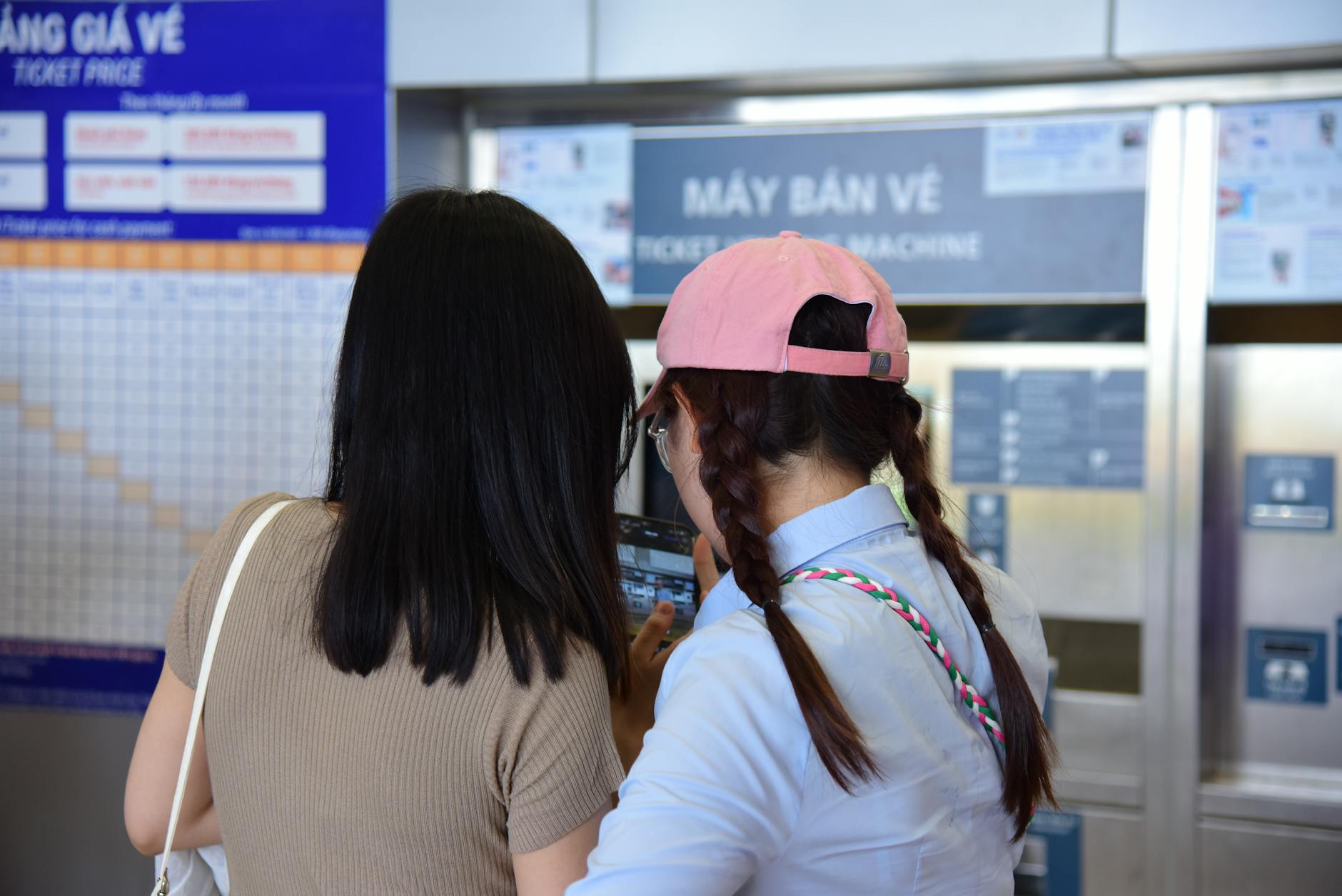
Beijing uses a distance-based fare system on all numbered lines. Inside the city, a typical ride costs ¥3–6 ($0.40–$0.85). Specifically:
| Distance | Fare (CNY) | USD Approx |
|---|---|---|
| 0–6 km | ¥3 | $0.42 |
| 6–12 km | ¥4 | $0.56 |
| 12–22 km | ¥5 | $0.70 |
| 22–32 km | ¥6 | $0.85 |
| 32+ km (per additional 20 km) | +¥1 | +$0.14 |
| Maximum fare (one-way) | ¥10 | $1.40 |
The Airport Express lines (PEK and PKX) use flat fares of ¥25 and ¥35 respectively. The system is calculated automatically when you tap in and tap out — never lose your ticket or you’ll pay the maximum exit fare on the way out.
How to Pay for Beijing Subway in 2026
Foreign tourists have three good payment options in 2026 — choose based on how long you’ll be in Beijing:
Option 1: Foreign Credit Card Tap (Easiest)
Since 2024, every subway gate accepts contactless Visa, Mastercard, JCB, and American Express with the international tap symbol. Tap your card on the yellow scanner area of any gate to enter, tap again on exit. The fare is charged in CNY and shows up as a foreign transaction on your statement. This is the simplest option for short visits. Caveat: only physical contactless cards work — Apple Pay and Google Pay using a foreign card occasionally fail. Bring a physical card.
Option 2: Yitongxing App (Best Discount)
The official Beijing Subway app, called Yitongxing (亿通行 / ‘Easy Travel’), works on any smartphone in any country. Download from the App Store or Google Play. Register with your passport, link a credit card or bind to Alipay/WeChat Pay, and use the in-app QR code at the gate. Cumulative ride discounts kick in after ¥100/month (roughly the 20th ride), shaving 20–50% off subsequent rides. Best for visitors staying 5+ days who’ll ride often.
Option 3: Single-Journey Ticket
Buy a paper ticket from any station’s ticket vending machines. Touchscreens have an English toggle in the upper-right corner. Select your destination from the list or by tapping it on the map view, pay in cash (¥1, ¥5, ¥10, ¥20, or ¥50 notes accepted) or by Alipay/WeChat QR. The machine spits out a plastic token; tap it on the gate sensor to enter, drop it in the slot at the destination gate to exit. Fine for occasional rides but slower than card-tap.
What About the Yikatong Travel Card?
Beijing’s traditional plastic transit card. Available from any subway station service window with a ¥20 deposit and any top-up amount. Works on subways, buses, and some taxis. Convenient but a bit redundant in 2026 now that foreign credit cards and Yitongxing both work directly. Get a Yikatong only if you specifically want to ride city buses (where foreign credit card tap is less reliable) or if you’re staying long enough to want a tactile card you can hand to a confused friend.
Step-by-Step: Riding the Beijing Subway
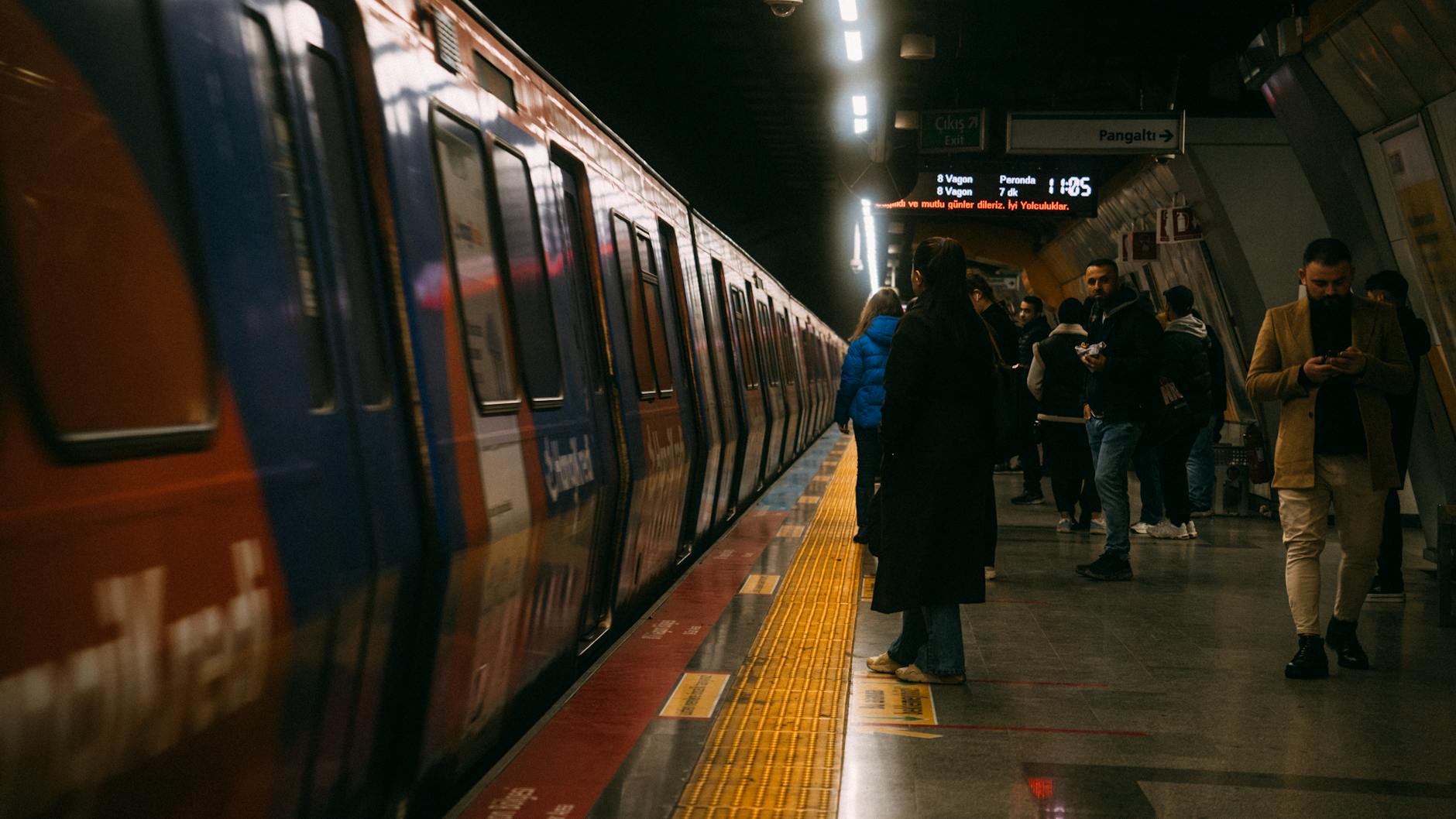
Every Beijing subway station follows the same flow. Once you’ve done it twice, it becomes automatic:
- Find the entrance. Beijing subway entrances are marked above-ground with a blue circle containing a white ‘B’ (for 北京地铁, Beijing Metro). Most large stations have multiple lettered entrances (A, B, C, D) at different street corners.
- Pass through security. Every entrance has an X-ray scanner — put your bag on the belt, walk through the metal detector, take your bag back. Liquids over 100ml may be tested with a sample stick. Two minutes max.
- Choose your line. Color-coded signs above the gates indicate which line is served. Multi-line stations have separate gate banks for each line in many cases.
- Tap or insert. Tap your credit card / Yitongxing QR / Yikatong on the yellow scanner, or insert your single-journey token in the slot. Gates are tall plastic flaps.
- Find the right platform. Platform direction signs name the terminal stations of each direction in both languages. If you’re going to Tiananmen East from Wangfujing on Line 1, you want the platform marked ‘Pingguoyuan’ (the western terminus).
- Wait behind the line. Yellow safety lines on the platform; arrows show where to stand to let exiting passengers off first.
- Board. Trains stop at every station. Wait for the chime, doors open, people exit, you enter.
- Listen for your stop. Announcements name the upcoming station and any transfers in Mandarin and English. The dot map above the doors shows your progress.
- Exit and tap out. Tap your card again on the way out (or drop your token in the slot) and follow signs to your numbered exit (A1, B2, etc.).
Beijing Subway Stations for Major Tourist Sites
| Attraction | Best Subway Station | Line |
|---|---|---|
| Forbidden City (south entrance) | Tiananmen East or Tiananmen West | Line 1 |
| Forbidden City (north exit) | Tian’anmen East then walk, or Beihai North | Line 1 / Line 6 |
| Tiananmen Square | Tiananmen East or Tiananmen West | Line 1 |
| Temple of Heaven | Tiantandongmen | Line 5 |
| Summer Palace | Beigongmen | Line 4 |
| Lama Temple (Yonghegong) | Yonghegong | Lines 2 and 5 |
| Confucius Temple | Yonghegong | Lines 2 and 5 |
| Wangfujing shopping | Wangfujing | Line 1 |
| Sanlitun nightlife | Tuanjiehu or Dongdaqiao | Lines 10 and 6 |
| Beijing Zoo / Pandas | Beijing Zoo | Line 4 |
| Olympic Park / Bird’s Nest | Olympic Sports Center / Olympic Park | Line 8 |
| 798 Art District | Wangjing then taxi/bus | Line 14/15 |
| Hutongs (Nanluoguxiang) | Nanluoguxiang | Lines 6 and 8 |
| Hutongs (Wudaoying) | Yonghegong | Lines 2 and 5 |
| Beijing Railway Station | Beijing Railway Station | Line 2 |
| Beijing West Railway Station | Beijing West Railway Station | Lines 7 and 9 |
| Beijing South Railway Station | Beijing South Railway Station | Lines 4 and 14 |
| PEK Capital Airport | Capital Airport Terminal 2 / 3 | Airport Express |
| PKX Daxing Airport | Daxing Airport | Line 19 / Daxing Express |
Pro Tips for the Beijing Subway
- Avoid rush hour. Peak commute is 07:30–09:00 and 17:30–19:30 weekdays. Trains are not just crowded — they are pressed-against-the-glass crowded. Sightsee in the late morning or early afternoon when carriages are half empty.
- Save offline maps. Download a copy of the Beijing subway map (Apple Maps, Google Maps, or the Yitongxing app) before you travel. Cell service in tunnels is spotty and Google Maps is unreliable in mainland China generally — Apple Maps works fine.
- Use the right exit. Each station has lettered exits (A, B, C, D, E …) leading to different street corners. Pulling up your destination in Apple Maps or Baidu Maps tells you which exit is closest. Wrong exit = an extra five minutes walking around the block above ground.
- Mind the gap on Line 1. The original Line 1 trains have a noticeable platform gap. Step over deliberately.
- Know the security rules. No knives, no aerosols, no fireworks. A small Swiss Army knife in a backpack is occasionally flagged.
- Last train caveat. The official close-out time is 23:00–23:30 line by line. After that, trust nothing — switch to taxi, DiDi, or our Beijing taxi guide options.
- Strollers and large luggage. Most stations have elevators, but they are often slow. If you have a wheelchair or stroller, allow extra time and use the lift signs at each station entrance.
Safety on the Beijing Subway
The Beijing subway is one of the safest urban transit systems in the world. Petty crime is low, security cameras and uniformed staff are everywhere, and pickpockets that plague some European metros are rare. Standard precautions apply: keep your phone in a zipped pocket (more for protection from accidental drops at crowded transfers than theft), wear backpacks on your front in dense rush-hour cars, and be aware of the ‘no lying down or eating’ rule that staff occasionally enforce.
FAQ: Beijing Subway Guide
Is the Beijing subway in English?
Yes, comprehensively. Every station name, line indicator, exit marker, and emergency sign is bilingual Chinese + English. Audio announcements on every train cover the upcoming station, transfers, and which side the doors will open on, in both languages. Ticket machines have an English toggle in the upper-right corner. You don’t need any Chinese to ride the system.
How do I transfer between Beijing subway lines?
At interchange stations, follow the colored signs for the line you want to switch to. Transfers don’t cost extra and don’t require leaving the paid area. Some transfers involve a long walk (e.g., Wangfujing’s Line 1 to Line 8 transfer is about a 5-minute walk through underground corridors) — budget extra time at busy interchanges.
Can I bring luggage on the Beijing subway?
Yes. Standard suitcases, backpacks, and even oversized bags are allowed as long as they fit through the X-ray scanner. The maximum dimensions are roughly 1.6m × 0.6m × 0.4m and 30kg, which covers any normal checked-bag scenario. Avoid rolling a hard-sided suitcase into a packed rush-hour train if you can — it’s awkward more than illegal.
Are there day passes for the Beijing subway?
There used to be a 1-day and 3-day pass, but they were discontinued in 2018. The current best ‘pass’ equivalent is the Yitongxing app’s accumulated discount — after about ¥100 of rides in a calendar month you start getting 20% off, scaling up to 50% off on heavy use. For a typical 7-day Beijing visit averaging 4 rides per day, expect to spend ¥80–120 total on the subway.
Does the Beijing subway run all night?
No. Operating hours run roughly 05:00 to 23:30 depending on the line and direction. The Airport Express stays open longer to align with international flights. After-hours travel is by DiDi or taxi (see our Beijing taxi guide) or by night bus on a few major routes.
What if I take the wrong subway?
Get off at the next station, walk to the opposite platform via the underground walkway (which always exists, sometimes requiring stairs), and ride back. Beijing subway gates do not charge you for re-entering at the same station within 15 minutes, so you won’t pay double. Lines that have separate platforms for each direction (most do) make this trivial.
Putting It All Together: A Tourist’s First Day
A reasonable first-day Beijing subway plan: tap into Line 1 at your hotel’s nearest station, ride to Tiananmen East for the Forbidden City, exit, spend three hours, re-enter at Tiananmen West, switch at Xidan to Line 4, two stops to Xidan Beidajie or back into the Wangfujing food street area for dinner. Total subway cost: about ¥9 per person. Total walking navigation effort once you’ve grasped the basics above: minimal. Enjoy the ride.