This Beijing taxi guide walks foreign visitors through every aspect of catching a cab in the Chinese capital — fare structure, official taxi colors, payment options that now include foreign credit cards, communication tips for travelers without Mandarin, and the small handful of scams to avoid. Compared with Tokyo, London, or New York, Beijing taxis are remarkably cheap (¥13 base fare, less than $2), drivers are mostly honest, and the official cab fleet is well regulated. The friction point for foreigners isn’t trust or cost; it’s language. Get a few tools in place before you raise your hand at the curb and Beijing taxis become a perfectly comfortable backup to the metro for crosstown trips, late nights, and luggage runs.
Beijing taxi fare structure (2026): base fare ¥13 covers the first 3 km, then ¥2.30 per km after. A 20% night surcharge applies between 11 PM and 5 AM. Worked example: a typical 10 km daytime trip costs ~¥36; the same trip at night costs ~¥43. Always insist on a working meter — the Chinese phrase is “dǎ biǎo” (打表) meaning “use the meter.” If a driver refuses to start the meter, exit and find another taxi.
First the headline: in 2026, your two best options for getting in a Beijing cab are (1) open the DiDi app and book one (the local Uber, with English support, fixed prices, and in-app translation) or (2) flag down an official metered taxi and pay with a contactless Visa/Mastercard. Either way, total ride cost across the central city is typically ¥30–60. Read on for everything you need to know to do it confidently.
Beijing taxi scams to avoid in 2026
Beyond the broad scam list, three specific patterns target foreigners:
- Broken or tampered meters — driver claims meter is “broken” at start of trip and proposes a flat fee 2–3× the real fare. Some meters are deliberately “hot” (running fast). Fix: insist on a working meter or get out.
- Cash switching — you hand a ¥100 note, driver flashes a ¥10 note claiming that’s what you gave. Fix: announce the bill amount aloud as you hand it over; pay by Alipay/WeChat where possible.
- DiDi GPS spoofing — rare but documented: some drivers run software that artificially inflates the recorded route. Fix: screenshot the trip start screen showing route and price; dispute via DiDi customer service if needed.
Beijing Taxi Quick Facts
| Metric | Value |
|---|---|
| Base fare (first 3 km) | ¥13 |
| Per km after 3 km | ¥2.30 |
| Per km after 15 km | ¥3.45 (50% surcharge for return-trip empty) |
| Night surcharge (23:00–05:00) | +20% |
| Fuel surcharge | ¥1 per ride |
| Idle/waiting fee | ¥4.60 per 5 minutes stuck in traffic |
| Tipping | Not customary, not expected |
| Average ride within central Beijing | ¥30–60 |
| Languages | Mandarin only (drivers rarely speak English) |
| Hailing methods | Curbside flag, DiDi app, hotel concierge call |
Recognizing an Official Beijing Taxi
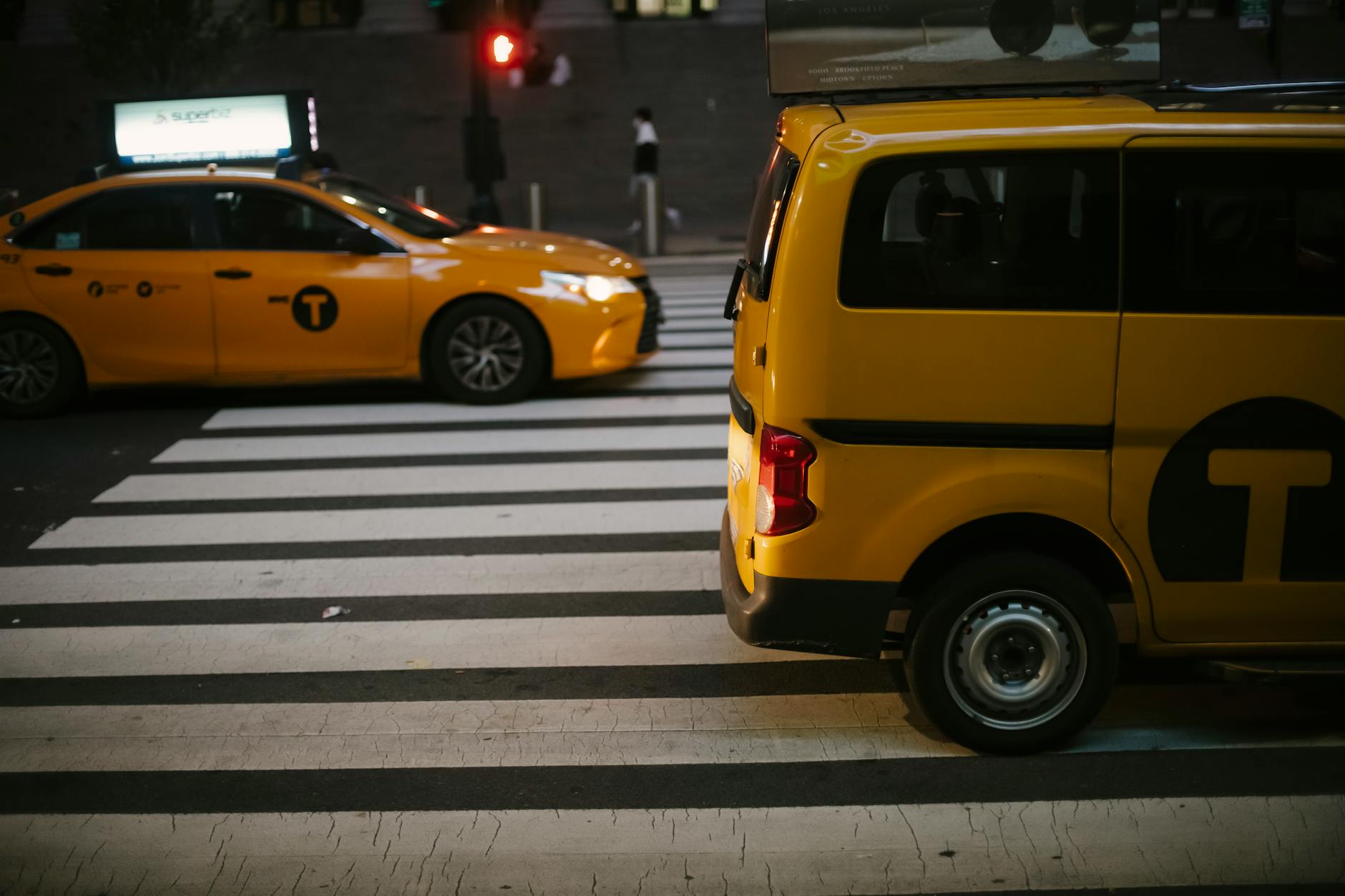
Beijing’s official taxi fleet runs through several authorized companies — Beijing Taxi, Capital Airport Taxi, and a few others — but all licensed cabs share a recognizable look. Use this checklist before you climb in:
- Color schemes: the city’s standard official colors are pale yellow with a colored stripe (red, blue, white, or green identifying the company). Newer hybrid and EV cabs are often two-tone in pale blue or grass green.
- Roof sign: a lit ‘Taxi’ sign or 出租 (chū zū) sign on the roof. The light is on when the cab is available; off when occupied.
- License plate: standard yellow plates with black characters and a ‘B’ designating Beijing.
- Dashboard meter: a digital meter mounted on the dashboard or center console, with the company’s contact and complaint number printed on a sticker on the passenger window.
- Driver’s ID card: displayed on the dashboard or front partition, with the driver’s photo, name, and license number.
If a ‘taxi’ is missing the meter, has no driver ID displayed, or has a hand-painted sign instead of a real roof light, walk away. These are hēichē (black cars) — illegal unmetered cabs. They are the source of nearly every Beijing taxi horror story, and avoiding them is the single most important habit in this guide.
Beijing Taxi Fares Explained
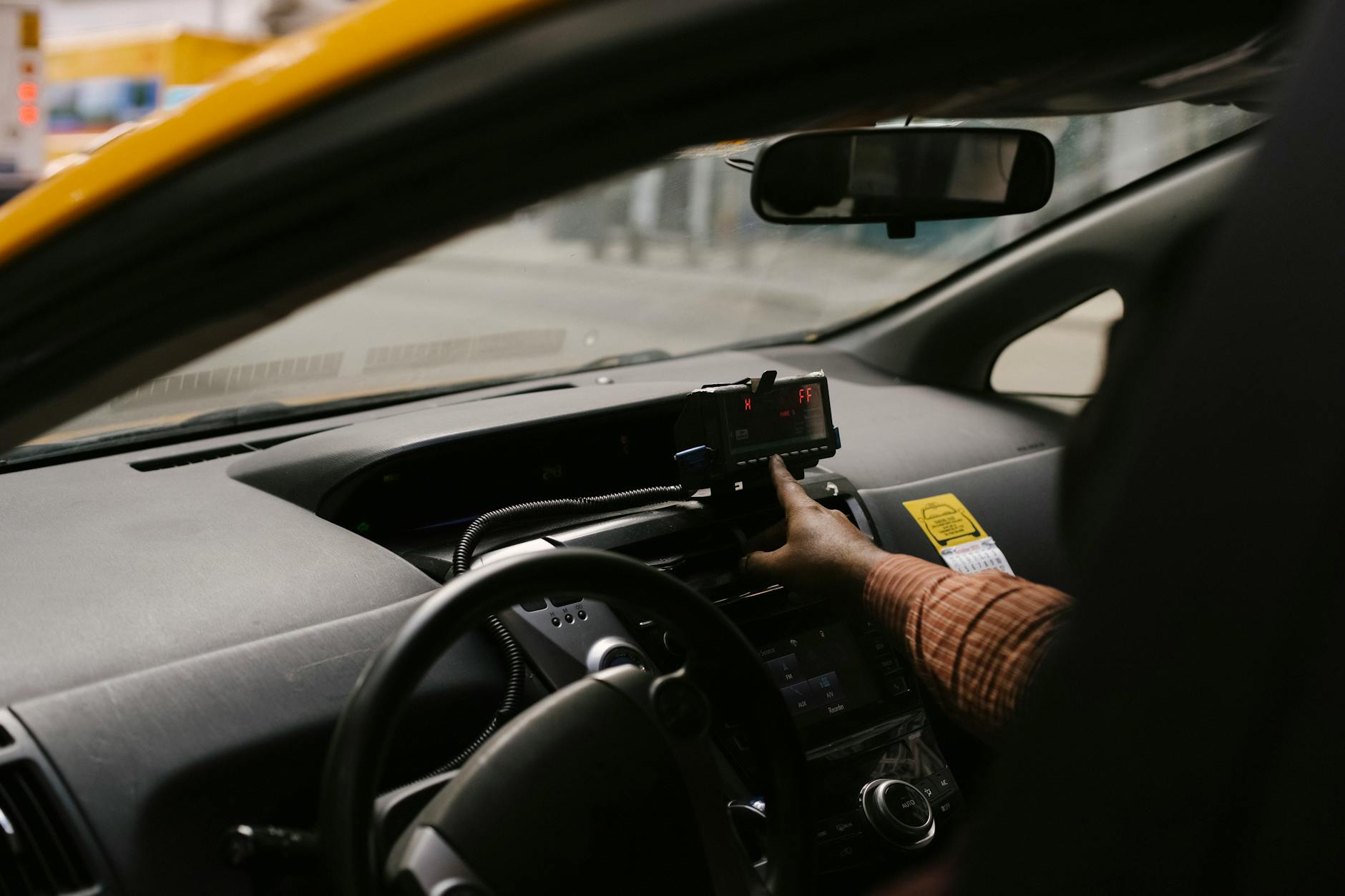
Beijing fares follow a tiered structure set by the Municipal Transportation Commission. The meter automatically calculates everything; you don’t negotiate. Here is exactly how a typical fare builds up:
- ¥13 base fare covers the first 3 kilometers from when the meter is started.
- ¥2.30 per kilometer for distances 3–15 km.
- ¥3.45 per kilometer for distances over 15 km (50% surcharge for the empty return ride home).
- ¥1 fuel surcharge added to every trip.
- ¥4.60 per 5 minutes if the cab is sitting in traffic at less than 12 km/h.
- 20% night surcharge on the metered fare between 23:00 and 05:00.
- Tolls on highways and expressways billed at cost.
Practical examples: a 5 km ride from Wangfujing to Sanlitun runs about ¥30; a 15 km run from Tiananmen Square to the Olympic Park is ¥45–55; a 25 km airport run is ¥130–160 depending on traffic. By any major-city standard, those numbers are tiny.
How to Pay for a Beijing Taxi (Foreign Cards Included)
Payment methods evolved fast since 2023. As of 2026 your options, in rough order of convenience:
1. Foreign Contactless Credit Card
Tap a Visa, Mastercard, JCB, or Amex on the dashboard NFC reader. About 80% of Beijing’s cab fleet had this terminal installed by 2024 and the rest are catching up. A simple way to check before you flag a cab: look for the green ‘unionpay’ or ‘tap-to-pay’ sticker on the rear-side window. If absent, the driver may want cash.
2. Alipay or WeChat Pay QR Code
The driver displays a printed QR code on the dashboard. You open Alipay or WeChat, scan, and enter the metered fare. Both apps support foreign credit cards in 2026 via their ‘International’ or ‘Tour Card’ setups (set this up before you fly). The driver can verify your payment receipt on his app instantly.
3. Cash (CNY)
Always works. Beijing drivers are used to cash, and they keep change for ¥100 notes. The downside: ATMs in China dispense ¥100 notes by default, and a small ride may not have enough breakdown for change. Carry a mix of ¥10s, ¥20s, and ¥50s. Foreign currency is not accepted — only Chinese Yuan.
4. Beijing Yikatong Card
The same plastic transit card that works on the subway also pays taxi fares in cabs that have Yikatong readers (about 60% of the fleet). Tap the card on the meter’s reader pad. Less universal than the contactless credit card method, but useful if you’ve already loaded money on a Yikatong for the metro.
Hailing a Taxi: Three Reliable Methods
Method 1: DiDi App (Most Foreigner-Friendly)

DiDi (滴滴) is China’s dominant ride-hailing app with 70%+ market share. It dispatches both official taxis (the basic ‘DiDi Express’ service) and private cars (DiDi Premier and Luxe). The 2026 version of the app supports English language, foreign credit cards, in-app Chinese-English translation chat with drivers, and an SOS button. It is functionally identical to Uber for any traveler who has used Uber elsewhere. Set it up before your flight to skip activation hassles. Full setup walkthrough in our DiDi Beijing guide.
Method 2: Curbside Flag-Down
Stand at the curb and raise your hand when you see an empty cab approaching. Available cabs have their roof light on; occupied cabs have it off. After about 22:00 in residential neighborhoods, empty cabs become scarcer — switch to DiDi or walk to a hotel taxi rank.
Once the cab stops, climb in the back seat (Chinese taxi etiquette puts foreigners in the rear), say or show the driver your destination, and the meter starts automatically. If the driver doesn’t start the meter or quotes a flat fare, get out — that’s the textbook scam setup.
Method 3: Hotel or Restaurant Concierge
Almost every hotel front desk and many mid-range restaurants will call a cab for you. Hand the concierge your destination address and they relay it to the driver before the cab arrives. Useful for late-night returns or when you have specific destination pronunciation you don’t trust to a translation app.
Communication Tips for Foreigners
Beijing taxi drivers almost universally speak no English — not even basic words. Three tools eliminate the language barrier:
- Show the destination in Chinese characters. Hotels print their address in both languages on a business card; carry a few. For attractions or restaurants, screenshot the Chinese name from Apple Maps or Baidu Maps. Drivers can read characters even if they can’t read pinyin.
- Use Apple Maps’ destination share. Drop a pin on your destination, tap the share icon, and pick ‘Show on Driver’s Map’ to send a Chinese-formatted location card the driver can read.
- Translate live. Google Translate or DeepL with the camera-input feature lets you photograph a sign or write a query in English, and shows the Chinese translation to the driver. Both work offline if you download Chinese-English packs before you fly.
Useful Mandarin phrases that are easier to pronounce than they look:
- Nǐ hǎo (你好) — hello
- Qǐng dào ___ (请到 ___) — please take me to ___
- Dǎ biǎo (打表) — turn on the meter
- Tíng yīxià (停一下) — stop here
- Xièxie (谢谢) — thank you
- Bù yòng zhǎo le (不用找了) — keep the change
Common Beijing Taxi Scams (and How to Spot Them)
Genuine taxi scams are rare in Beijing compared with cities like Bangkok or Rome, but they do exist — almost always at airports, train stations, and the most-touristed spots like Tiananmen, the Forbidden City exits, and the Great Wall sites. The patterns to recognize:
- ‘Meter is broken’ fixed-fare scam. The driver claims his meter is broken and offers a flat fare 2–3× higher than meter rate. Fix: get out and find another cab.
- Hot meter. A tampered meter clocks up charges 2× faster than normal. Hard to spot in real time but the running total looks wildly wrong on a known route. Counter: use Apple Maps to follow the route and the displayed estimated fare; report discrepancies to 12328 (Beijing transport hotline) with a photo of the cab plate.
- Long routing. An unscrupulous driver takes you on a deliberately scenic detour. Counter: have the destination pulled up in Apple Maps with a route preview, and speak up if the driver wanders off it.
- Black-cab pickup. An unmarked car parked outside a station offers a cheap flat fare. The ‘cheap’ fare always becomes expensive once you’re inside, and you have no recourse. Counter: only get into clearly marked, painted, official cabs from the designated taxi rank.
- Tourist-site overcharging. Drivers parked at the Mutianyu and Badaling Great Wall lots quoting ¥600–800 for the round trip back to Beijing — at least double the metered fare. Counter: book DiDi from a few hundred meters away, where they pick up metered as normal.
Beijing Taxi Etiquette
- Sit in the back. Foreigners almost always ride in the back seat unless the cab is full.
- Don’t tip. Tipping is not expected; round up to the nearest ¥1 or ¥5 if you want, but no more.
- No food in the cab. Drinks in lidded containers are okay; messy food is a polite no.
- Smoking ban. All Beijing taxis are non-smoking. Drivers sometimes smoke between fares; politely ask them to put it out before you climb in.
- Buckle up. Front-seat seatbelts are mandatory; rear-seat belts often tucked away — pull them out and use them.
When Taxis Beat Other Beijing Transport (and When They Don’t)
Use a taxi when:
- You have heavy luggage (suitcases, bicycles, oversized shopping)
- You are traveling with kids who are exhausted
- It’s late and the metro has closed
- You’re going somewhere off the metro grid (specific hutongs, far suburbs)
- It’s pouring rain and walking to the metro is unappealing
Stick with the metro when:
- It’s rush hour — taxis sit in the same traffic for 3–4× the metro time
- You’re on a tight budget — the metro is roughly 1/10 the cost
- Your destination has a metro station within 500m
- There is heavy rain or snow combined with rush hour — Beijing taxis are nearly impossible to flag down in those conditions, but the metro keeps running
FAQ: Beijing Taxi Guide
Do Beijing taxis accept foreign credit cards?
Yes, increasingly. By 2026 about 80% of the official Beijing taxi fleet accepts contactless Visa, Mastercard, JCB, or Amex via dashboard NFC readers. Look for the small ‘unionpay’ or ‘tap-to-pay’ sticker on the side window. If absent, pay by Alipay/WeChat with foreign card backing or by cash.
Is DiDi cheaper than a flagged taxi in Beijing?
Roughly equivalent for the basic ‘DiDi Express’ service, which dispatches official taxis at metered rates with no surcharge. DiDi Premier and Luxe are 30–80% pricier (better cars, English-friendly drivers, fixed fares). The DiDi convenience — destination pre-entered, in-app payment, ride tracking — usually outweighs the small price differences.
Are Beijing taxis safe for solo female travelers?
Generally yes, especially in DiDi where rides are tracked, drivers are vetted, and the in-app emergency button summons immediate response. Standard precautions apply: take an official taxi (never a black car), share your trip with a friend via DiDi or text, and trust your instincts if anything feels off — request to stop and exit at a populated spot like a hotel or 7-Eleven.
What’s the minimum Beijing taxi fare?
¥13 base fare plus the ¥1 fuel surcharge — ¥14 minimum. Most short city rides settle around ¥18–25.
Can I take a taxi to the Great Wall from Beijing?
Yes, but pre-arrange. Flagging a cab in central Beijing for a one-way Great Wall ride often ends with the driver refusing because of the empty return run. Better to book a fixed-fare DiDi premium with a wait-and-return option (¥800–1,200 for a half day) or use the dedicated tourist buses described in our Beijing to Great Wall transport guide.
What number do I call to report a Beijing taxi issue?
12328 is Beijing’s official transportation complaint hotline (Mandarin and limited English). Have the cab’s plate number, time, route, and fare details ready. For DiDi issues, use the in-app ‘Help & Customer Service’ button — they respond fast in English.
Final Word: Use Cabs Strategically
Beijing taxis are cheap, abundant, and reliable for the 80% of foreign visitors using either DiDi or flag-downs with a contactless credit card. Treat them as the natural complement to the metro: subway for routine sightseeing, taxi for late nights, awkward destinations, or anything involving real luggage. With this Beijing taxi guide in your pocket and a translation app on your phone, you have all the friction-removers you need.