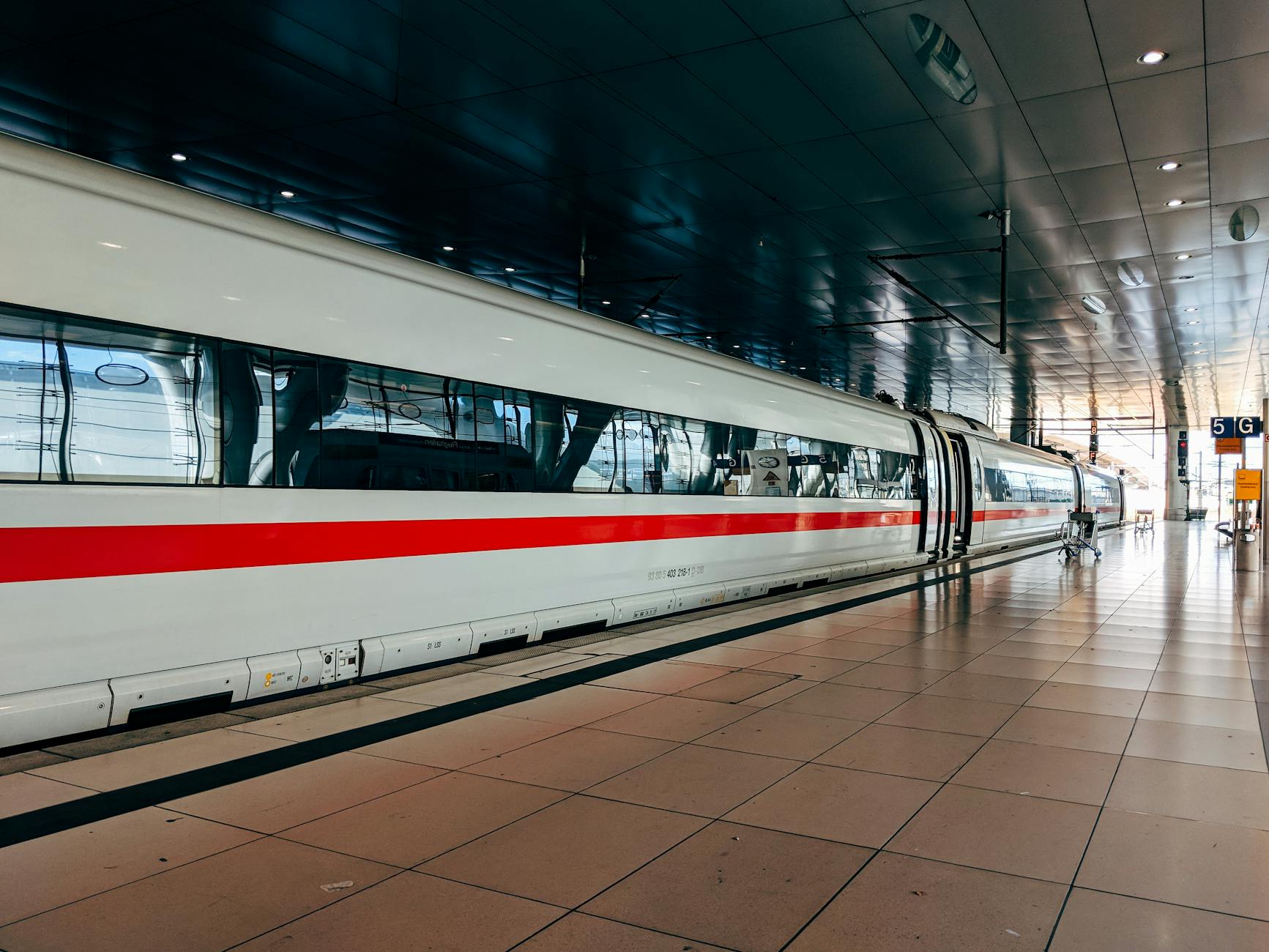
Beijing’s high-speed train network is the fastest, most reliable, and least-hassle way to extend a Beijing trip into a proper multi-city China itinerary — and it’s more accessible to foreign visitors than most people realise. From six bullet-train stations across the capital you can reach Shanghai in 4.5 hours, Xi’an in 4, Tianjin in 30 minutes, Chengdu in 7, Hong Kong in under 9, and Harbin in 4–5. Trains run at up to 350 km/h, hit their scheduled minute 99% of the time, and cost a fraction of equivalent flights once you factor in airport transfers and check-in time. The complete Beijing transportation guide covers all your in-city options; this page drills into everything that matters specifically for intercity high-speed rail — which station serves which route, how to buy tickets on 12306 without a Chinese ID, what G-trains versus D-trains actually mean, and the practical details that turn a potentially confusing system into a smooth experience.
If you take only one thing from this guide: book through 12306.cn/en (China Railway’s official English site, fully relaunched in 2024) up to 15 days before travel, choose a G-series train, and buy Second Class. That handles 95% of journeys. Everything below covers the other 5% — the edge cases, the station-selection decisions, and the peak-period survival tactics.
Key routes at a glance (2026 fares):
- Beijing → Shanghai: 1,318 km, 4h 18min–6h, ~40 daily G-trains. Second Class ¥553–¥673 (~$81–$99).
- Beijing → Xi’an: 1,134 km, 4–6h, ~17–25 daily G-trains. Second Class ~¥515.
- Beijing → Guangzhou: 2,300 km, 8–10h. Second Class ~¥862.
- Beijing → Tianjin: 117 km, 30 min. ¥55.
- Beijing → Datong: ~1¾h. ¥184.
Tickets open 15 days before departure at 06:00 Beijing time. Book the moment the window opens for Labour Day (early May), summer holidays (July–August), and Golden Week (early October) — popular routes sell out within hours.
The Network at a Glance
| Destination | Distance | Fastest Time | Daily Departures | Second Class (CNY) |
|---|---|---|---|---|
| Tianjin | 117 km | 30 min | 70+ | ¥55 |
| Shanghai (Hongqiao) | 1,318 km | 4 h 18 min | 40+ | ¥553–663 |
| Xi’an (North) | 1,134 km | 4 h | 17–25 | ¥515–565 |
| Hangzhou | 1,279 km | 4 h 30 min | 10+ | ¥538 |
| Nanjing (South) | 1,023 km | 3 h 18 min | 50+ | ¥443 |
| Hong Kong (West Kowloon) | 2,440 km | 8 h 50 min | 1–2 | ¥1,077 |
| Chengdu (East) | 1,810 km | 7 h 30 min | 5+ | ¥757 |
| Harbin (West) | 1,250 km | 4 h 30 min | 10+ | ¥541 |
| Qingdao | 770 km | 3 h | 20+ | ¥315 |
| Wuhan | 1,229 km | 4 h 30 min | 20+ | ¥520 |
Beijing’s Six High-Speed Stations — and Which One You Need
This is where most first-time visitors lose time: showing up at the wrong station. Beijing has six rail terminals, each locked to specific route corridors. Get this right upfront and you’ll avoid a frantic 45-minute cross-city taxi ride on departure morning. And once you’ve arrived at your destination, the Beijing subway connects every one of these stations to the city centre.
Beijing South Railway Station (北京南站)
The flagship high-speed terminal, in Fengtai District. This is your station for Shanghai, Tianjin, Qingdao, Hangzhou, Nanjing, and Hong Kong — all trains on the Jinghu (Beijing–Shanghai) high-speed line originate here. Subway Lines 4 and 14 serve the station directly. English signage is the best of any Beijing station, bilingual staff are easy to find, and there’s decent food before you board. Allow 30 minutes between subway arrival and platform entry.
Beijing West Railway Station (北京西站)
The second major hub — and the one that handles the routes most tourists forget about. Xi’an, Chengdu, Chongqing, Wuhan, Changsha, and Guangzhou all depart from here, via the Jingguang high-speed corridor. Subway Lines 7 and 9. Beijing West is the highest-volume passenger station in the city, which means the security queue is serious. Build in 45 minutes from subway exit to platform, more during peak travel periods.
Beijing North Railway Station (北京北站)
Smaller, quieter, and the one you want for the S2 suburban line to Badaling Great Wall (27 minutes, ¥6) and the Jingzhang high-speed line to Zhangjiakou and Inner Mongolia. Subway Lines 2, 4, and 13. Easy to navigate — a welcome contrast to Beijing West.
Beijing Railway Station (北京站)
The historic central station. Most foreigners only pass through here for the Z21 overnight to Lhasa (40 hours) or the Trans-Manchurian to Moscow. Not a high-speed rail station in the modern sense. Subway Line 2.
Beijing Chaoyang Railway Station (北京朝阳站)
Opened 2021 in northeast Beijing. Handles the Jingha line northeast to Harbin and Shenyang. Subway Line 14. Convenient if you’re staying in Chaoyang or Sanlitun — it cuts out a long cross-city commute to Beijing South.
Beijing Fengtai Railway Station (北京丰台站)
Asia’s largest passenger station by footprint, reopened in 2022. It handles overflow traffic from Beijing South and West — some Shanghai and Guangzhou-direction trains are routed here as the other two fill up. Subway Lines 10 and 16. Worth checking if your 12306 search shows no availability at Beijing South; the same route may have slots here.
G-Train, D-Train, C-Train: What the Prefix Actually Means
The letter prefix on your train number isn’t just a label — it tells you your top speed, number of stops, and roughly your comfort level. Choose wrong and a 4-hour G-train trip becomes a 6-hour D-train journey.
- G-series (高速): 300–350 km/h, fewest stops. The fastest option between major cities. Always pick G when it’s available — the price difference over D is modest, the time saving is not.
- D-series (动车): 200–250 km/h, more intermediate stops. Useful for routes where G-trains don’t run, or where a slightly cheaper fare matters. Still comfortable.
- C-series (城际): Short-haul intercity, e.g. Beijing–Tianjin. High-frequency, fast, cheap. Functionally similar to D-trains.
- Z-, T-, K-series: Non-high-speed express and sleeper trains. Much slower (120–160 km/h), but with berths for overnight travel. Relevant for Beijing–Lhasa, Beijing–Ürümqi, and the international routes.
Seat Classes Inside the Train
| Class | Layout | Legroom | Power Outlet | Cost vs Second Class |
|---|---|---|---|---|
| Second Class (二等座) | 3+2 across | ~1 m pitch | Yes | Baseline |
| First Class (一等座) | 2+2 across | ~1.16 m pitch | Yes | +50%–80% |
| Business Class (商务座) | 1+2, full recline | ~1.6 m pitch | Yes + meal | +200%–250% |
| VIP Premium (特等) | 1+2 pods | Flat-bed recline | Yes + meal | +300%+ |
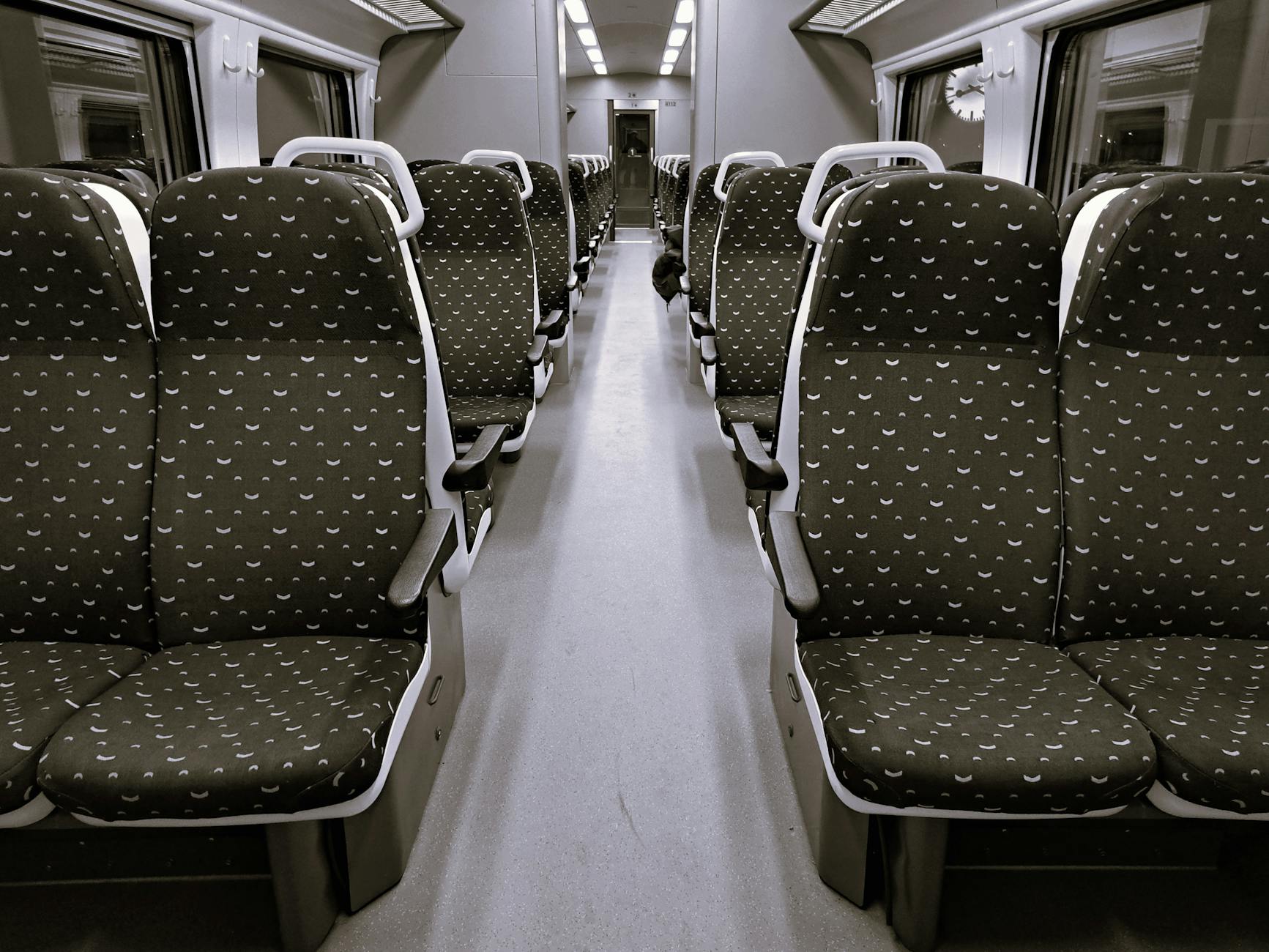
Second Class is genuinely comfortable for a 4–5 hour run — wider seats than most European trains, power at every berth, a fold-out tray big enough for a laptop. First Class is worth the premium if you’re tall (six feet or over) or need to work. Business Class is a real luxury experience on par with short-haul international business; worth splurging on the Beijing–Shanghai run if it’s a special occasion, but overkill otherwise.
How to Book Beijing High-Speed Train Tickets in 2026

Foreign visitors now have three reliable options. The choice comes down to whether you want to save money, save effort, or save yourself from any Chinese at all. For the last of those, see our guide to navigating Beijing without Chinese — which covers train booking as part of a broader language-barrier toolkit.
Method 1: 12306.cn (Official, No Markup)
China Railway’s official platform at 12306.cn/en sells tickets at face value — no service fee, no middleman. Register with your passport number and a foreign mobile number (country code accepted), verify your account, then book under the exact name in your passport. The English interface has handled foreign passport entries cleanly since the 2024 relaunch. You receive a digital booking confirmation; at the station, your passport is the ticket — tap it on the gate’s RFID reader and walk through.
Method 2: Trip.com or Klook (English Support, Small Fee)
Trip.com and Klook mirror 12306 inventory in real time, adding a ¥10–25 service fee per ticket. Worth paying for the English customer service, better refund handling, and tighter integration with hotel and airport bookings. Trip.com in particular has become the dominant booking channel for international tourists — its interface is faster and the app reliably shows seat availability even during peak windows.
Method 3: Walk-Up Ticket Counter
Every Beijing station has staffed ticket windows that accept passports and international credit cards. Useful for same-day bookings, itinerary changes, or if the online systems are giving you grief. Counter staff at Beijing South and West speak functional English. For less-common destinations, write your route in Chinese characters (or show the screen on your phone) — staff are accustomed to pointing, nodding, and making it work.
When to Book — and When You’ll Miss Out
Tickets release at 06:00 Beijing time, 15 days before departure. Outside peak season, 3–5 days ahead is fine. For Beijing→Shanghai on a Friday evening, Labour Day, National Day, or Chinese New Year — set an alarm and move fast. G2 and G4 peak-season seats go in under 20 minutes. Miss the wave? Cancellations re-enter inventory daily.
A Typical Beijing-to-Shanghai Day, Minute by Minute
Abstract systems become much clearer with a concrete example. Here is the timeline of a typical G2 departure from Beijing South to Shanghai Hongqiao:
- 09:00 — Arrive Beijing South via Line 4. Allow 30+ minutes station-to-platform.
- 09:00–09:20 — Security: X-ray, passport scan, water bottle test. Head to departure concourse.
- 09:20–09:30 — Find your gate on the departure board. Most G-trains use gates 1–10.
- 09:35 — Gates open. Tap passport on the RFID reader.
- 09:45 — Platform. Car numbers are painted on the floor — stand next to yours.
- 10:00 — Board, find your seat (row + letter, e.g. 7A).
- 10:05 — Doors close. Departs within 60 seconds of schedule. 350 km/h inside 15 minutes.
- 14:23 — Shanghai Hongqiao. Tap out with passport, subway Lines 2/10/17 to the city.
Door to door, central Beijing to central Shanghai, roughly six hours including buffers. A flight does the air leg in 2 hours but adds pre-flight faff and airport transfers on both ends — net wash at best. The train wins on comfort, scenery, and arriving at a city-centre station rather than an airport 40 km out.
What’s on Board
G-class trains on the Beijing high-speed network are newer and better-equipped than many visitors expect:
- Power outlets at every seat, universal sockets (U.S., EU, and Chinese plugs all fit).
- Bilingual PA announcements in Mandarin and English for each station stop, dining car hours, and emergencies.
- Wi-Fi on Fuxing-class trains (the newest rolling stock). Free but intermittent through tunnels.
- Dining car with hot meals ¥40–80 and instant noodles. Meal carts pass through carriages every 1–2 hours.
- Hot water dispensers at each car end — fill your empty bottle, make instant noodles.
- Clean restrooms at each car end, squat and Western options.
- No smoking — strictly enforced, no exceptions.
- Luggage racks overhead and at car ends for larger bags.
The Routes That Matter for Tourists
Beijing to Shanghai (4 h 18 min)
China’s flagship rail corridor. 40+ daily G-class from Beijing South to Shanghai Hongqiao, 06:00 through evening. Second Class ¥553, First Class ¥933, Business ¥1,748. Book Friday and Sunday evenings early — those fill fastest.
Beijing to Xi’an (4 h)
The natural extension of any “first China trip” — Beijing’s imperial heritage plus Xi’an’s Terracotta Warriors, connected in 4 hours. About 17 G-class trains daily from Beijing West to Xi’an North. Second Class ¥515. The route crosses the North China Plain and climbs into Shaanxi’s Loess Plateau — dramatic landscape if you’re in a window seat. Xi’an’s city walls, Muslim Quarter, and Warriors make a 2-night stopover easy to justify.
Beijing to Tianjin (30 min)
The world’s first commercial 350 km/h line, opened 2008. C-class trains every 10–15 minutes from Beijing South, ¥55 each way. Tianjin’s Italian Concession, Five Avenues, and Hai River waterfront make it a real half-day escape from Beijing.
Beijing to Hong Kong (8 h 50 min)
One direct G-class train per day, Beijing West to Hong Kong West Kowloon, 2,440 km nonstop. Second Class ¥1,077. Border formalities are handled mid-route by officials who board the train — no station change required. You pass through eight provinces and arrive in a city that genuinely feels like a different country.
Beijing to Harbin (4–5 h)
10+ G-class daily from Beijing Chaoyang to Harbin West. Second Class ¥541. Most compelling in winter, when Harbin’s Ice and Snow Festival turns the Songhua River banks into a lit-up ice sculpture city — but the northeast is genuinely worth visiting year-round.
Beijing to Chengdu (7 h 30 min)
5+ G-class daily from Beijing West, ¥757 Second Class. Leave Beijing at 07:00, arrive in Chengdu by mid-afternoon with enough time for a hotpot dinner before your head hits the pillow. Gateway to the panda base, Sichuan food, and Jiuzhaigou.
Boarding Tips and Practical Notes
Here’s what the booking guides don’t tell you:
- Arrive 45 minutes early. Beijing West’s security queue alone can swallow 20 minutes. Don’t cut it.
- Passport is your ticket. Tap it at every gate — entering, boarding, and exiting. Keep it accessible.
- Bring an empty water bottle. Sealed bottles clear security; opened ones don’t. Fill at the hot-water dispenser on each car.
- Screenshot your booking confirmation before leaving Wi-Fi. 12306 and Trip.com can be unreliable through China’s internet filters mid-journey.
- No formal luggage weight limit, but oversized cargo triggers a fee. Standard airline-sized cases go through fine.
- Conductors check mid-journey. Passport ready.
- Seats are assigned and fixed. If someone’s in yours, show your ticket — they’ll move.
Once you arrive and need to get around, both taxis from the station and Didi ride-hailing work well — though Didi pickup zones at major stations are sometimes a 5-minute walk from the main exit. Signs point the way.
Getting to the Station: Airport Arrivals
If you’re flying into Beijing Capital (PEK) or Daxing (PKX) and heading straight to a high-speed train departure, the logistics matter. The Beijing airport to city centre guide covers this in detail — including which subway lines connect the airports to which rail stations, and how long each connection realistically takes with luggage.
FAQ: Beijing High-Speed Trains
Can I book without a Chinese phone number?
Yes. The 12306 English site since 2024 accepts foreign mobile numbers with country codes for SMS verification. Trip.com and Klook work entirely with foreign accounts and international payment cards — Visa and Mastercard both accepted.
Do I need to print my ticket?
No. Foreign passport holders use their passport directly at every gate — no paper ticket required. Keep a screenshot of your booking confirmation as a backup, but the passport alone gets you through. This has been the system since 2020 and it works smoothly.
What if I miss my train?
Same-day rebooking at the ticket office is possible at no extra charge if a later train has available seats — this is called a “reschedule” (改签, gǎiqiān). After the travel day, the ticket is forfeited. For cancellations: more than 8 days ahead, 5% fee. Within 24 hours of departure, 20% fee. No-show with no cancellation = 100% forfeiture.
Is the high-speed train safer than flying?
Statistically, yes. The Chinese high-speed network has had one fatal accident (Wenzhou, 2011) across well over a billion passenger journeys. Both high-speed rail and domestic aviation in China are extraordinarily safe by any global measure — but the train’s safety record is marginally cleaner.
Can I bring food and drinks?
Yes. Outside food and sealed drinks are fine. Hot water dispensers mean instant noodles are a practical option. Alcohol is permitted but consuming it conspicuously is frowned upon. Don’t bring strong-smelling hot food into Second Class — your carriage-mates will notice.
Is there a sleeper option for overnight routes?
Not on G-class, which are daytime trains. For very long routes — Beijing to Lhasa (Z21, ~40 hours) or Trans-Manchurian to Moscow — Z-class trains offer hard-sleeper and soft-sleeper berths. The single daily Beijing–Hong Kong G-class departs in the morning, not overnight.
High-Speed Rail as a Travel Strategy
Here’s the thing about China’s bullet train network: it changes what a 10–14 day itinerary looks like. Without it, multi-city China means flights, airports, and the overhead that comes with them. With it, you can realistically build an itinerary that covers Beijing, Xi’an, Shanghai, and Hangzhou — four genuinely different cities, four genuinely different experiences — using nothing but trains. Add a Chengdu leg and you’ve touched five of China’s most compelling destinations in two weeks, with a total flight count of two (in and out of the country).
The technology is impressive; the more useful truth is that it’s just the most practical way to move between China’s major cities once you know the system.
For everything else you need to get around once you’re in the capital — subway maps, taxi apps, airport transfers — the Beijing transportation guide covers it. And if you’re planning the broader trip beyond transportation, the Beijing travel guide is the place to start.