Cycling in Beijing is one of the great rediscovered pleasures of visiting the Chinese capital. The city was famously the bicycle kingdom of the 1980s — five million bikes flowing through the boulevards every morning — and after a decades-long lull as cars took over, the dockless bike-sharing revolution since 2017 has put pedaling back at the center of how locals get around. For tourists, the upside is irresistible: you can unlock a rugged commuter bike on any street corner with two taps in an app, ride for ¥1.50 per fifteen minutes, weave through hutongs that no taxi can fit into, glide past the Forbidden City moat at sunset, and drop the bike anywhere a parking line is painted. This guide covers how to set up the apps, the best routes for different fitness levels, what Beijing traffic is actually like on two wheels in 2026, seasonal realities, and the safety details worth knowing before your first ride. For the full picture of getting around the city, start with the Beijing transportation guide.
2024 update: no security deposit is required for any of Beijing’s shared-bike services as of 2024 — historically a hassle for foreigners, this is now resolved. The top three Beijing bike-share brands by colour: Meituan Bike (yellow), DiDi Bike (green), Hello Bike (blue). All three work via Alipay mini-program — no separate app installation needed. Typical pay-per-minute model: ~¥1.5 per 15-minute unlock + ¥1 per 15 minutes after. Bikes can be picked up and dropped off at any white-painted bike-parking zone (look for the QR code on the seat post).
Why Cycle in Beijing?
Cycling in Beijing makes practical sense for distances the subway is overkill for and a taxi is overpriced for — anything from 500m to 5km. It’s especially good for hutong exploration around Houhai, Nanluoguxiang, Wudaoying, and the Drum and Bell Tower area, where many lanes are pedestrian-and-bike only. Beyond utility, there is a more emotional reason: there’s nothing like coasting along Chang’an Avenue at golden hour with the Forbidden City’s red walls on one side, or threading the leafy lanes north of Beihai Park while elderly Beijingers play xiangqi on park benches. Cycling lets you cover ground at the pace your eyes want, not at the pace the metro forces.
And cycling complements the subway rather than competing with it. The practical Beijing visitor uses a bike for the first and last kilometre of a sightseeing day — subway for the long hauls, bike for the door-to-gate detail. See the Beijing subway guide for how to plan that combination effectively.
Bike-Sharing Apps in 2026: Three Choices
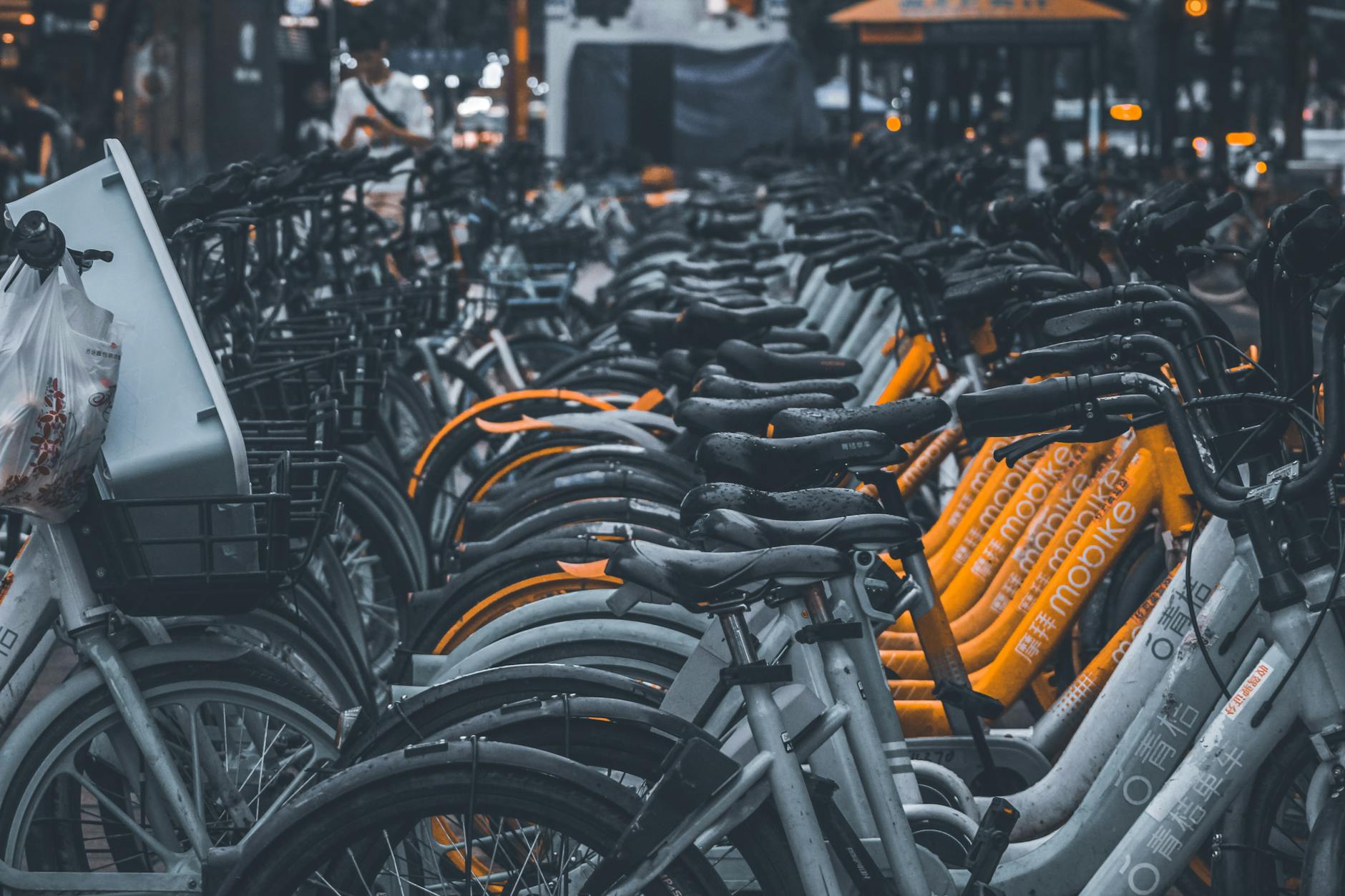
Beijing has 300,000+ dockless shared bikes from three brands — they look different but function nearly identically. You’ll see all three within a block of any major attraction:
| App | Color | Pricing (2026) | Foreign Card Support |
|---|---|---|---|
| Meituan Bike (美团单车) | Yellow | ¥1.50/15 min | Yes via Meituan app or Alipay/WeChat |
| Hellobike (哈啰单车) | Blue | ¥1.50/15 min | Yes via Alipay or international card |
| DiDi Bike (青桔单车) | Green | ¥1.50/15 min | Yes via DiDi app or Alipay |
Setting Up: The Easiest 2026 Path
For most foreign tourists, the simplest bike-sharing setup is to use the existing Alipay or WeChat Pay account you set up for general China spending. Both Alipay and WeChat have Mini-Programs for all three bike brands — you don’t need to download the Meituan or Hellobike app separately. Just open Alipay, search ‘bike’ (in English or Chinese), pick the closest brand, and the mini-program handles QR scanning, payment, and ride tracking using your already-loaded card.
If you prefer a dedicated app, Meituan Bike’s standalone app has the cleanest English interface and accepts foreign Visa/Mastercard directly. Hellobike’s app works similarly. DiDi Bike is bundled inside the regular DiDi app you may already have for taxis — and if you’re already using DiDi for rides around the city, adding the bike function takes about 30 seconds. Read more about DiDi in the DiDi Beijing guide, which covers the taxi side of the same app. If the app interface is giving you trouble in Chinese, the navigating Beijing without Chinese guide covers exactly this situation.
Step-by-Step: Unlocking Your First Beijing Shared Bike
- Find any parked shared bike on the street (you’ll see them lined up near subway exits, park gates, and major intersections, in clusters of 10–30)
- Open Alipay’s bike mini-program or your bike app of choice
- Tap ‘Scan to Unlock’ — this opens the camera
- Point the camera at the QR code on the bike’s handlebar or under the seat
- Within 2–3 seconds, the lock clicks open with a beep
- The app starts a timer; ride away
- Keep the bike for as long as you want — pricing is per 15-minute increment
- When done, walk the bike to any white-painted parking zone (you’ll see them everywhere — rectangles painted on sidewalks marked with ‘共享单车’ meaning ‘shared bike’)
- Click the manual lock arm down behind the rear wheel; the app pings, the ride ends, the fare is auto-deducted
Common first-ride hiccups: scanning the wrong bike (each bike has its own QR code; double-check the lock unlocks before riding), or parking outside a marked zone (the app charges a ¥5–20 misparking fee). Both are easily avoided.
Bike-Sharing Pricing in Detail
All three apps use the same basic pricing model: ¥1.50 for the first 15 minutes, then either ¥1 or ¥1.50 per additional 15 minutes depending on the app and time of day. A typical 30-minute ride costs ¥3 (about $0.40), and an hour costs ¥6. The largest charges you’ll see are usually misparking penalties or what’s called ‘out-of-range’ fees if you ride beyond the city service zone.
| Ride Length | Approximate Cost |
|---|---|
| 10 minutes | ¥1.50 |
| 30 minutes | ¥3.00 |
| 60 minutes | ¥6.00 |
| Half-day (4 hours) | ¥24.00 |
| Full day (8 hours) | ¥48.00 |
For tourists planning more than a couple of hours, the apps offer monthly passes (¥15–25 for unlimited 2-hour rides) but those require Chinese resident verification and aren’t easy for short-term visitors. Pay-as-you-go is fine for ride totals under 4 hours per day.
Best Cycling Routes in Beijing for Tourists
Route 1: The Hutong Loop (8 km, 90 minutes)
The classic introduction to cycling in Beijing. Start at Nanluoguxiang subway exit, ride north into Mao’er Hutong, west to the Bell and Drum Towers, south on Yandai Xiejie (the Pipe Stem Lane) into the Houhai lake area. Loop the lake counterclockwise past Prince Gong’s Mansion, then south through the leafy Liuyin Hutong back to Nanluoguxiang. Easy, mostly flat, almost entirely on bike-friendly hutong lanes with minimal car traffic. Best in the morning (08:00–10:00) before tourist crowds fill the lakes.
Route 2: Forbidden City Moat Circuit (5 km, 45 minutes)
Park your bike at Tiananmen East subway, walk to the moat-side bike path, unlock a fresh bike, and ride the entire 3.4 km perimeter of the Forbidden City moat. The route hugs the red palace walls, passes the four corner watchtowers, and gives you views you’ll never see on a guided tour. Continue north through Jingshan Park and Beihai Park for an extended version. Best at sunset for golden-hour photos.
Route 3: Olympic Park Forest Park (12 km, 90 minutes)
For something flatter and greener, ride the dedicated bike paths through Beijing’s Olympic Park and the connecting Olympic Forest Park. The Bird’s Nest Stadium, Water Cube, and the giant Olympic Tower all sit along the route. The forest park itself adds 6 km of tree-lined paths with no cars. Park your bike at any of the marked zones near subway Olympic Sports Center exit.
Route 4: Tiananmen to Temple of Heaven (4 km, 30 minutes)
The historic ceremonial route emperors used to ride to the Temple of Heaven for annual sacrifices. From Tiananmen Square cycle south on Qianmen Street, through Dashilan’s old shopping lanes, and continue south to the Temple of Heaven north gate. Mostly flat, mostly bike-laned, with a great pause point at Qianmen for street food.
Route 5: 798 Art District Wander (6 km, 60 minutes)
Pick up a bike near Wangjing subway and ride 4 km east into 798’s industrial-chic alley system. The art district itself is best explored by bike — galleries spread across many streets, and walking burns through hours that cycling makes effortless.
Routes to Avoid (or Approach Carefully)
Not every Beijing road is bike-friendly. The inner sections of the 2nd Ring Road (二环路) and 3rd Ring Road (三环路) are express-style city roads with heavy, fast-moving traffic — avoid cycling on the ring roads themselves even where a painted lane exists. The stretch of Chang’an Avenue immediately in front of Tiananmen is wide and has a separated lane, but the sheer volume of buses and turning vehicles makes it uncomfortable for nervous cyclists. The highways connecting to the airport or out to the Great Wall are outright illegal for bikes. Save those distances for the bus network or the metro.
Hutong Cycling: The Real Beijing Experience
Here’s the thing about Beijing’s hutongs: they were designed for bikes. The lanes are 3–5 metres wide, cars are rare or banned entirely, and the whole neighbourhood grid runs at a walking-to-cycling pace. On two wheels you can cover four times as much ground as on foot while still being slow enough to notice the compound gates, the potted chrysanthemums outside doorways, the old men walking their caged songbirds.
The best hutong cycling neighbourhoods cluster north of the Forbidden City. Gulou (Drum Tower area) gives you the tightest, most residential lanes — few tourists, lots of locals, a genuine sense of the city’s pre-modern fabric. Houhai is busier but beautiful, especially the lake-edge paths. Wudaoying Hutong off Lama Temple is cafe-lined and cyclist-friendly. Beiluoguxiang and Mao’er Hutong are the most photogenic — high grey courtyard walls, red gate doors, the occasional glimpse into still-occupied siheyuan compounds.
But ride slowly through hutongs. Pedestrians step out from doorways without looking, children dart across, delivery riders coming the opposite direction think they own the lane. Ring your bell often. Dismount and walk if a lane narrows to single-file or if there’s a crowd around a food stall. Hutong cycling is a pleasure, not a race.
Seasonal Cycling in Beijing
Beijing has four very distinct seasons and cycling conditions vary sharply between them.
Spring (March–May): Best Season
Spring is the finest cycling season. Temperatures sit between 10°C and 22°C, the cherry and magnolia trees bloom in April, and air quality is generally good. Jingshan Park at blossom time, ridden to on a clear April morning, is as good as Beijing gets. Wind can be a factor in March — north winds off the Mongolian steppe whip through the city — but it passes quickly.
Summer (June–August): Manageable with Caveats
Summer heat is serious. July averages 31°C, humidity rises, and midday cycling is genuinely uncomfortable. Add the risk of summer air pollution events and cycling in late June through August requires planning: ride early (before 09:00) or in the evening (after 19:00), carry water, and skip any day when the AQI exceeds 150. The good news is that shared bikes are always available and the hutongs provide shade that the open boulevards don’t. Summer rain comes in short, heavy bursts — the Meituan and DiDi apps have rough weather warnings built in.
Autumn (September–November): Best Season
Autumn rivals spring. September and October bring crisp air, deep blue skies, and the best air quality of the year. Temperatures drop from around 25°C in September to 8°C in November — comfortable cycling weather for most people. The ginkgo and maple trees turn gold in late October, making the routes through Ditan Park, Tiantan Park, and the hutong streets genuinely beautiful. This is peak tourist season for good reason, but the early mornings are quiet enough to feel like you have the city to yourself.
Winter (December–February): For the Committed
Winter cycling in Beijing is cold — January temperatures drop to -5°C or below — but Beijingers cycle through it year-round, and shared bikes remain available. If you do ride in winter, layer up properly, check the bike’s brakes before setting off (cold weather makes the rear drum brakes sluggish), and avoid cycling on any morning after snow or ice. The heating inside subway carriages makes the metro the sensible default in January and February.
Cycling Safety in Beijing
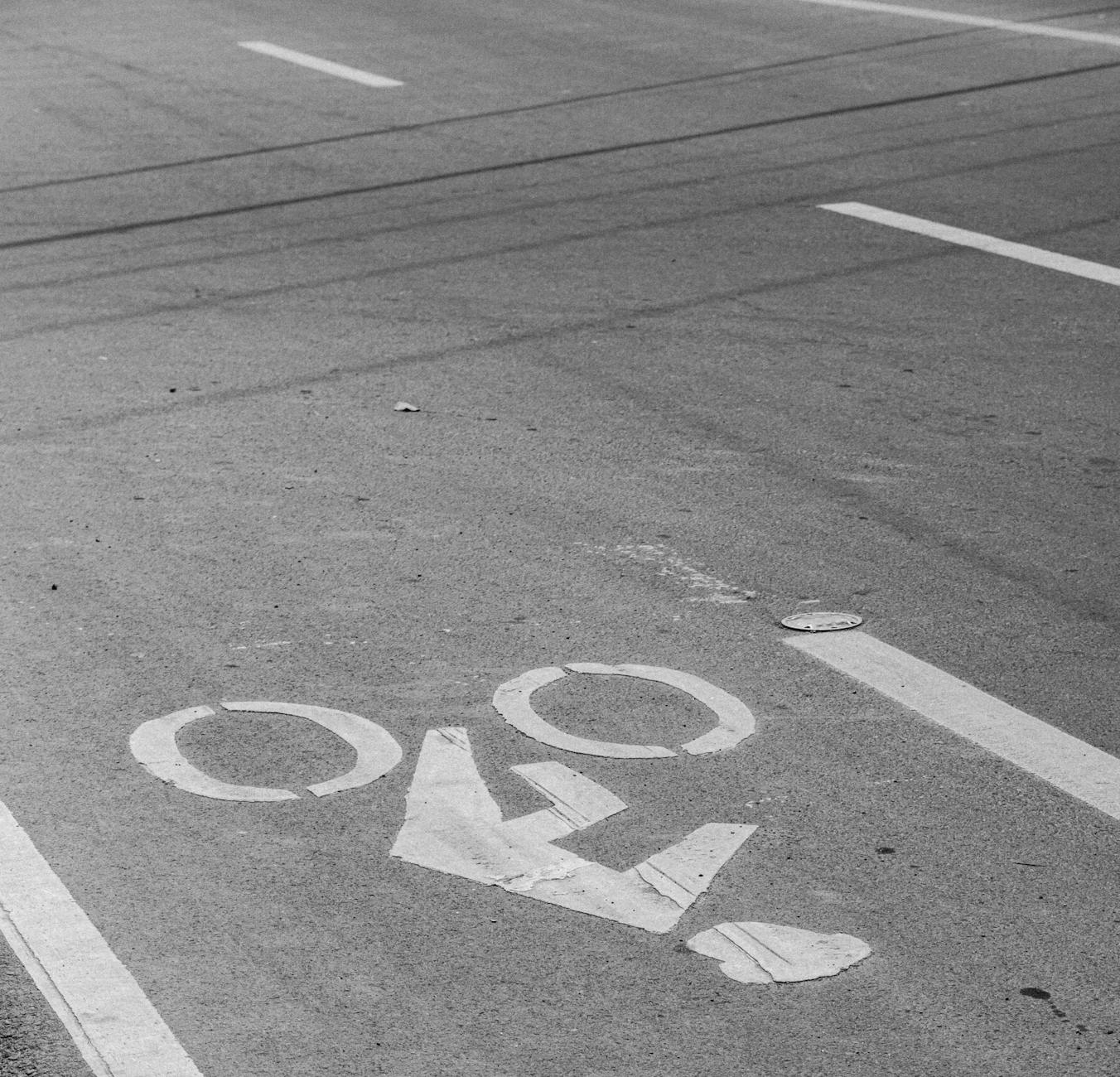
Beijing’s cycling environment improved dramatically with the post-2017 bike-sharing boom. Most major arteries now have dedicated bike lanes (often physically separated from car traffic by curbs or planters). The hutong neighbourhoods are slow-traffic by design. The danger spots:
- Right turns at intersections. Cars turning right cross the bike lane without yielding. Slow before every intersection.
- Electric scooters and food-delivery riders using the bike lane as their personal raceway. They go fast and rarely use bells.
- Pedestrians crossing the bike lane obliviously, often while looking at phones. Ride defensively.
- Wrong-way riders. Beijing’s bike lanes are nominally one-way but wrong-way cycling is endemic. Watch for oncoming bikes in your lane.
- Parked cars opening doors into the bike lane. Stay 1m from parked cars.
- Pollution days when AQI tops 200 — switch to subway and skip the ride. Beijing’s air is dramatically better than a decade ago, but bad days still happen.
Helmets, Reflectors, and Insurance
Helmets are not legally required for adult cyclists in Beijing and are not provided with shared bikes. If you want one, bring it from home or buy a basic helmet at any Decathlon store (¥80–150). Shared bikes have rear reflectors and night lights, but the lights are often dim — avoid riding at night on busy main roads if you can. Travel medical insurance should cover bike accidents; confirm before your trip via our Beijing travel insurance guide.
What to Do If the Bike Breaks Down
It happens. Shared bikes are maintained on a rolling schedule and occasionally you’ll unlock one with a flat tyre, a stuck lock mechanism, or brakes that barely work. Here’s what to do:
- Check before you ride. Spin the pedals, squeeze both brakes, check the tyre pressure by pressing down — takes ten seconds and saves you the problem. If anything feels wrong, lock the bike, report it in the app (there’s a ‘Report Problem’ button on the active ride screen), and find another one nearby.
- If the lock won’t open after scanning, the most common cause is a dead battery in the lock mechanism. Report it in the app and try a different bike. You won’t be charged for a failed unlock.
- If the bike breaks mid-ride — flat tyre, snapped chain, etc. — open the app, tap the active ride, and select ‘Report Breakdown’. This ends the ride without charge and flags the bike for collection. Don’t try to continue riding a broken bike.
- If you can’t end the ride (the app won’t confirm the ride has stopped), call the in-app customer service. Meituan and DiDi both have 24-hour phone lines with limited English support. Alternatively, take a screenshot of the bike’s ID number (printed on the frame) and your active ride screen — it’s enough for a refund if the app charges you incorrectly.
- Never leave a broken shared bike blocking traffic or a doorway. Move it to the side of the path, report it, and walk to the next available bike cluster.
Broken bikes are genuinely uncommon — the operators have incentive to keep them working — but repair response times can be slow. Don’t wait more than five minutes; just grab a different bike.
Premium Bike Rentals (Road Bikes, Touring Bikes, E-Bikes)
Shared bikes are commuter clunkers — fine for 5 km hops, terrible for serious distance rides. Beijing has a small but excellent premium bike-rental scene for cyclists who want a real ride:
- Serk Cycling in Sanlitun rents quality road bikes (Specialized, Cannondale, Trek) at ¥250–600/day with helmet, water bottle, and route notes for nearby loops
- Bike Beijing near Nanluoguxiang offers touring bikes (¥120/day) and runs guided multi-day rides into the surrounding mountains
- Decathlon the French sporting-goods chain has Beijing locations renting basic city bikes for ¥30–60/day
All three accept foreign credit cards and English bookings. Worth using if you’re a serious cyclist or planning a long ride out to the Great Wall foothills. Note that the Great Wall itself is well outside any bike-sharing service zone — you’ll need a rental or private transport to get there. And if you’re combining a cycling day with onward travel across China, the Beijing high-speed trains guide covers departure logistics from all three Beijing HSR stations, which have solid bike-parking zones right at the entrance.
When Cycling Isn’t Practical
Be realistic about when to put the bike down. Heavy rain makes Beijing’s roads slippery and the shared bikes have no mudguards — you’ll arrive soaked. Extreme heat in July and August, bad air quality days, and dark winter evenings all push the balance toward the metro or a taxi. For cross-city journeys over 10 km, the subway wins on time every time. And for airport runs, late-night trips, or neighbourhoods without good bike infrastructure, DiDi is the sensible call — see the DiDi Beijing guide for how it works with a foreign phone. Bus lines cover gaps the subway misses; the Beijing bus guide explains the routes and payment options.
Beijing Cycling Etiquette
- Stay in the bike lane on roads that have one — don’t ride on car lanes
- Use the bell liberally to alert pedestrians and slower cyclists
- Park in marked zones. Random sidewalk parking generates a misparking fee and frustrates locals
- Don’t ride drunk. Cycling under the influence is illegal and the police do enforce it on weekend nights
- Yield to elderly and children — the unwritten Beijing rule
- Walk the bike through pedestrian-only sections of major hutongs and tourist plazas
FAQ: Cycling in Beijing
Can I use Meituan Bike or Hellobike with a foreign credit card?
Yes. The simplest setup is to add your Visa/Mastercard to Alipay or WeChat Pay (both accept foreign cards as of 2024–2025), then use the in-app bike mini-programs. The Meituan Bike standalone app also accepts foreign cards directly through its English-language signup.
Is cycling in Beijing safe for tourists?
Yes, with attention. Hutong cycling is essentially traffic-free; main-road cycling has physical barriers and dedicated lanes on most arteries. The risks are minor compared to cycling in New York or London. Keep your speed reasonable, watch for right-turning cars, stay alert at intersections, and you’ll be fine.
Where can I park a shared bike?
In any white-painted parking line marked ‘共享单车’ (shared bike). These zones cluster every few hundred metres around subway stations, parks, and tourist sights. The app shows you the nearest one when you’re ending a ride, and warns you with a ¥5–20 fee if you try to lock the bike outside a zone.
Are there bike-sharing helmets included?
No. Shared bikes don’t come with helmets. Bring your own from home, buy one at Decathlon, or skip — adult cyclists in Beijing are not legally required to wear helmets. Children under 12 should always wear one.
Can I take a shared bike to the Great Wall?
No. The bike-sharing service zone covers only urban Beijing within roughly the 5th Ring Road. Bikes won’t unlock outside the zone, and ending a ride outside generates a punitive out-of-range fee (¥30–100). For Great Wall trips use the routes covered in our Beijing to Great Wall transport guide.
Are e-bikes available for sharing in Beijing?
Yes, all three major brands now operate e-bike fleets at slightly higher per-15-minute rates (¥3–4 per quarter hour). They use a separate QR code and are color-coded with a battery icon on the basket. Useful for longer rides or hills around Yuanmingyuan and the Olympic Park.
Why Cycling in Beijing Is Worth a Few Hours of Your Trip
If you only have a week in Beijing, dedicate at least one morning to cycling — preferably the hutong loop above. The combination of low cost, near-zero language friction, and perspective on the city you literally cannot get from any other mode of transport makes this one of the best uses of three hours in the entire Beijing playbook. The bikes are everywhere, the apps are easier than they look, and the city’s bike infrastructure has quietly become world-class. Pair a cycling morning with an afternoon arriving at your next destination by high-speed train, and you’ve covered two of the best things about travelling in modern China in a single day. For the bigger picture of how Beijing fits into any China trip, the Beijing travel guide is the place to start planning.