This Beijing bus guide covers the city’s massive public bus network — 1,000+ routes, 70,000+ stops, fares as low as ¥1, and exactly the level of complexity that scares off most foreign visitors. The reality in 2026 is friendlier than the network’s size suggests: every stop now displays bus arrival times in English, payment is as simple as tapping a foreign credit card, and Apple Maps gives clean bus directions in English. Buses aren’t the first tool we’d recommend for first-time tourists (the subway wins for major sights), but they fill three useful gaps: reaching destinations the metro doesn’t cover, riding scenic surface routes through hutong districts, and saving real money on longer trips. Everything you need to ride Beijing buses confidently is below. And if you want the full picture of how buses fit alongside taxis, trains, and bikes, start with the Beijing transportation guide first.
Beijing bus fares (2026): within 10 km a flat ¥2 per ride; each additional 5 km adds ¥1. Yikatong cardholders get a 50% discount on bus fares — typical city rides drop to ¥1 per ride. For foreigners the simplest setup is the Beijing Pass via the SilkPass App, designed specifically for foreign passport holders — no Chinese phone number or bank account required. The app creates a virtual NFC card that works at all bus and metro gates and tops up via Alipay or WeChat Pay.
Beijing Bus Network: The Numbers
| Metric | Value |
|---|---|
| Total bus routes | 1,000+ city routes plus 700+ suburban |
| Bus stops | 70,000+ |
| Daily ridership | ~9 million passenger trips |
| Operating hours | Mostly 05:00–22:30, varies by route |
| Standard city fare | ¥2 (cash or app); ¥1 with Yikatong |
| Long-distance suburban fare | ¥1.50–6 distance-based |
| Express bus fare | ¥3–5 (e.g., 877, 916) |
| Languages on board | Chinese + English (announcements + LED display) |
| English bus route info | Apple Maps, Baidu Maps, Citymapper Beijing |
How to Pay for a Beijing Bus
Payment is where most tourists hesitate. Here’s the thing: you have four options, and at least two of them work without any preparation at all.
Option 1: Foreign Contactless Credit Card
Since 2024, Beijing buses have rolled out NFC readers that accept Visa, Mastercard, JCB, and Amex contactless cards. Tap on entry; for distance-based suburban routes, tap again on exit. Fares are charged in CNY with your card’s standard foreign-transaction conversion. Look for the tap-to-pay sticker near the driver’s farebox to confirm — roughly 90% of buses had this capability by mid-2025. This is the easiest option if you’re arriving without preparation time.
Option 2: Yikatong Card — The 50% Discount Option
The Yikatong stored-value card halves your bus fare (¥1 instead of ¥2 per city ride). It also works on the subway and select taxis. Buy one at any subway station service counter for a ¥20 refundable deposit plus whatever top-up amount you want. For a tourist staying five days or more who plans to mix buses and metro regularly, the maths work out clearly in favour of getting the card.
Some major stations now offer a mobile e-Yikatong through the Beijing Yikatong app, which loads to your phone’s NFC chip — no plastic card needed. Refund the deposit at any station service counter when you leave. If you’re undecided between the card and mobile options, read how the Yikatong interacts with the metro network in the Beijing subway guide.
Option 3: Alipay or WeChat Pay QR Code
Open the bus payment mini-program inside Alipay or WeChat (search ‘Beijing bus’ or ‘北京公交’), generate a dynamic QR code, and hold your screen up to the reader. Same fare as cash — ¥2 for city standard, no Yikatong discount. Both apps accepted foreign-issued credit cards as the underlying payment method in 2026, which makes this surprisingly accessible even for first-time China visitors.
One important detail: you need an internet connection to generate the QR code. On very crowded buses where you’re jostling with a coat on, the foreign contactless card is quicker.
Option 4: Cash — The Backup
Drop the exact fare in the coin/bill box at the front of the bus as you board. Drivers give no change — bring ¥1 or ¥2 coins or small notes. Cash works, but Beijing has gone almost entirely cashless and the manual process slows the queue behind you. Use it as a fallback, not a plan.
How to Read Beijing Bus Stops Without Chinese
Bus stop signs look daunting at first. But once you know what to look for, they give you everything you need. Each stop has a panel listing every route number that stops there, alongside Chinese characters. The route number is always in digits — that’s your anchor. Match it to the number in your navigation app.
Below the route number you’ll see two columns of Chinese characters — those are the terminal stations at each end of the route. Ignore them for now. What matters is the direction arrow next to the route number, pointing left or right along the road. That tells you which side of the street serves which direction.
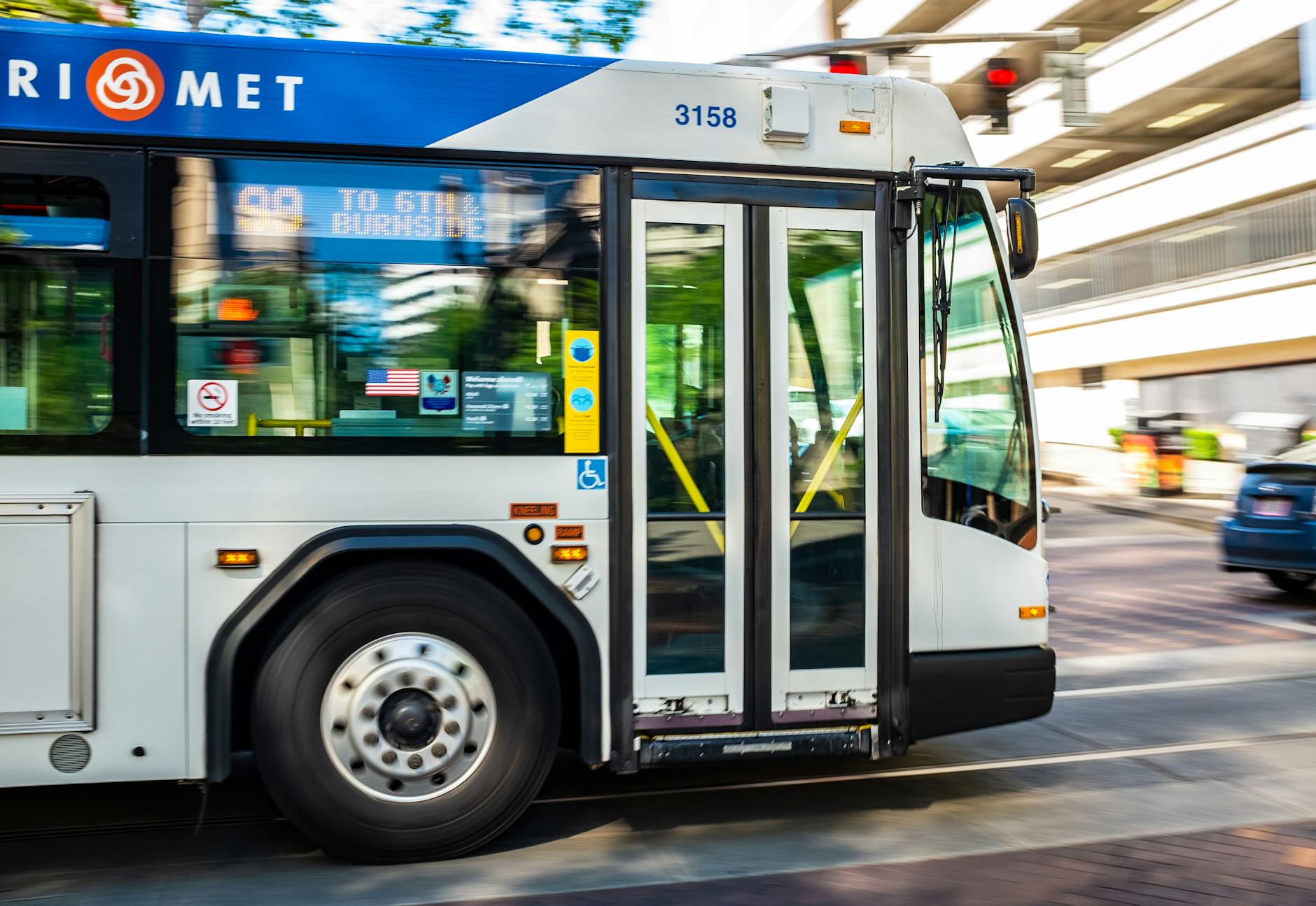
Most stops now have digital arrival boards showing the next one or two buses on each route, with countdowns in both Chinese and English (e.g., “Bus 5: 2 stops away”). The bus’s front-window LED also shows the route number and the terminal destination — in digits and, on newer buses, in English below the Chinese.
Still unsure? Open Apple Maps, enter your destination, tap the transit option, and it will name the exact bus number, which side of the street to stand on, and how many stops to ride. Combine that with our guide to navigating Beijing without Chinese for a complete picture of getting around language barriers across all transport types.
When Beijing Buses Beat the Subway
If you’re going somewhere directly served by a metro line, take the metro — buses crawl through traffic that subways pass under. But the bus is genuinely the better choice in several situations:
- Off-grid destinations. Many hutong neighborhoods, residential pockets, and outer suburbs are 20+ minutes’ walk from a subway station. A bus drops you closer.
- Sightseeing on the surface. Routes like Bus 1 along Chang’an Avenue — past Tiananmen, Wangfujing, and the National Museum — double as cheap sightseeing tours for ¥2.
- Late-night returns. Beijing’s metro shuts at 23:00–23:30. Night buses run past midnight on key corridors.
- Reaching Great Wall sections not served by the S2 or G-trains — buses 877 (Badaling) and 916 (Mutianyu via Huairou) are the public-transit lifelines to the wall.
- Scenic routes through historic areas. Some of the most interesting surface streets in Beijing — the hutong alleys north of the Drum Tower, the lake road around Houhai — aren’t on any metro line.
And the subway still wins for speed across the city. For a clear head-to-head comparison of Beijing’s two main transit modes, the subway guide lays out exactly which situations favour each.
Useful Beijing Bus Routes for Tourists
Bus 1 — Chang’an Avenue Sightseer
Runs east-west along Chang’an Avenue past Tiananmen Square, the National Museum, the Great Hall of the People, and Wangfujing. ¥2 per ride. The cheapest sightseeing tour in the city — get a window seat on the upper deck of one of the double-deckers and you’ve effectively bought a tour for $0.30.
Bus 5 — Drum Tower and the Historic Core
Connects Deshengmen via Houhai and the Drum and Bell Towers down to Tiananmen and Qianmen. A useful surface alternative to the metro for the historic core — and the street-level view of the hutong lanes from a bus window is something the metro can’t replicate. ¥2.
Bus 877 — Badaling Great Wall Express
Beijing’s primary public-transit route to Badaling Great Wall. Departs Deshengmen Bus Station every 10–15 minutes from 06:00 to 12:30 in peak season. ¥12 each way, 90–120 minutes depending on traffic. Budget travellers and independent visitors use this route regularly — it’s slower than the S2 train but cheaper and more flexible on departure times.
Bus 916 Express — Mutianyu Connection
Runs from Dongzhimen Long-Distance Bus Station to Huairou Beidajie in roughly 60 minutes for ¥12. Transfer there to local bus H23 for Mutianyu. This is the DIY budget route for Mutianyu Great Wall — total cost under ¥30 return, compared to ¥180+ for a group tour. For faster point-to-point travel to Beijing’s outer ring and beyond, check the Beijing high-speed train guide.
Bus 332 — Beijing Zoo to Summer Palace
Connects metro Line 4’s Beijing Zoo station to the Summer Palace’s east gate. ¥2, 20–30 minutes. A straightforward option if Line 4 is running slow or you want a surface view of the Haidian district en route.
Bus 300 / 300快 — 3rd Ring Road Loop
A long looped route around the entire 3rd Ring Road. Useful for hopping between distant neighborhoods — Sanlitun to Zhongguancun, say — without changing metro lines. The 300快 (express) skips several stops. ¥2.
BRT Lines 1–6 — Bus Rapid Transit
Beijing has six dedicated Bus Rapid Transit corridors with their own bus lanes, raised platform stations, and pre-boarding payment — essentially an above-ground metro. BRT 1 runs from Qianmen south to Daxing; BRT 4 covers Chaoyang. All run ¥2 fare, and they’re meaningfully faster than standard city buses on congested routes.
Night Buses in Beijing
The subway closes between 23:00 and 23:30 depending on the line and direction. If you’re out late, you have three options: night bus, taxi/DiDi, or waiting until 05:00 when trains restart. Night buses are the cheapest.
Beijing runs four named night bus routes — Night Bus 1, 2, 3, and 4 — on hourly schedules between roughly 23:30 and 04:50. Each covers a different major corridor:
- Night Bus 1: east-west along Chang’an Avenue, linking the city centre with eastern and western districts
- Night Bus 2: north-south axis through Dongdan and Qianmen down to the southern suburbs
- Night Bus 3: covers the Sanlitun bar district and Chaoyang residential areas
- Night Bus 4: serves Haidian university district and the northwest
Fare is ¥3 flat. Night buses are less frequent than daytime routes and stop only at main stops. The app will show them — search by time of journey and they appear in the transit options. But be honest with yourself: if you’re leaving a bar in Sanlitun at 02:00, a DiDi is more practical. Night buses make more sense for longer planned trips home — say, from a late dinner in Wangfujing back to a hotel in Wudaokou.
Bus vs Subway: When Each Makes More Sense
This is the question every visitor eventually faces. Here’s a direct answer.
Take the subway when: you’re crossing more than one district in rush hour; you have a strict arrival time; you’re carrying luggage; or your destination is within 500m of a metro station. The subway is faster, air-conditioned, entirely predictable, and now well-signed in English.
Take the bus when: your destination isn’t on any metro line; you want to see the city at street level; you’re travelling off-peak and not in a hurry; or the fare savings matter (¥1 vs ¥4–7 subway). Also take it when the metro would involve two or three transfers but a single bus goes point-to-point — which happens more than you’d expect in the outer ring roads.
The real answer for most tourists: start with the subway for your main tourist site visits, then try the bus for one or two local trips where you have time to navigate. There’s also a third option worth knowing — cycling via Beijing’s dockless bike-share system — which beats both bus and subway for short trips under 3 km in non-rush-hour conditions.
How to Catch and Ride a Beijing Bus: Step-by-Step
- 1. Find the stop. Bus stops are marked with rectangular signs listing every route that stops there. Most have LED displays showing the next two arrivals in real time, in both English and Chinese.
- 2. Identify the right route. Match the bus number from your navigation app with the LED on the bus’s front window. If uncertain, ask the driver — most recognise major destination names like ‘Tiananmen’ and ‘Summer Palace’ in English.
- 3. Board at the front door. Most Beijing buses are now front-boarding only.
- 4. Pay. Tap your card, phone, or Yikatong on the reader, or drop exact-change cash. The reader beeps green for success, red for failure (try once more; if it fails, use cash).
- 5. Move toward the back. Make space for new boarders — this is a clear social expectation in Beijing.
- 6. Listen for your stop. Onboard announcements name the upcoming stop in Mandarin and English. The front LED displays each stop name in both languages on newer buses.
- 7. Tap out on suburban routes. For longer-distance routes with distance-based fares, tap your card on exit at the rear door reader. City routes: press the stop button and walk off through the rear door.
Apps That Make Beijing Buses Easy
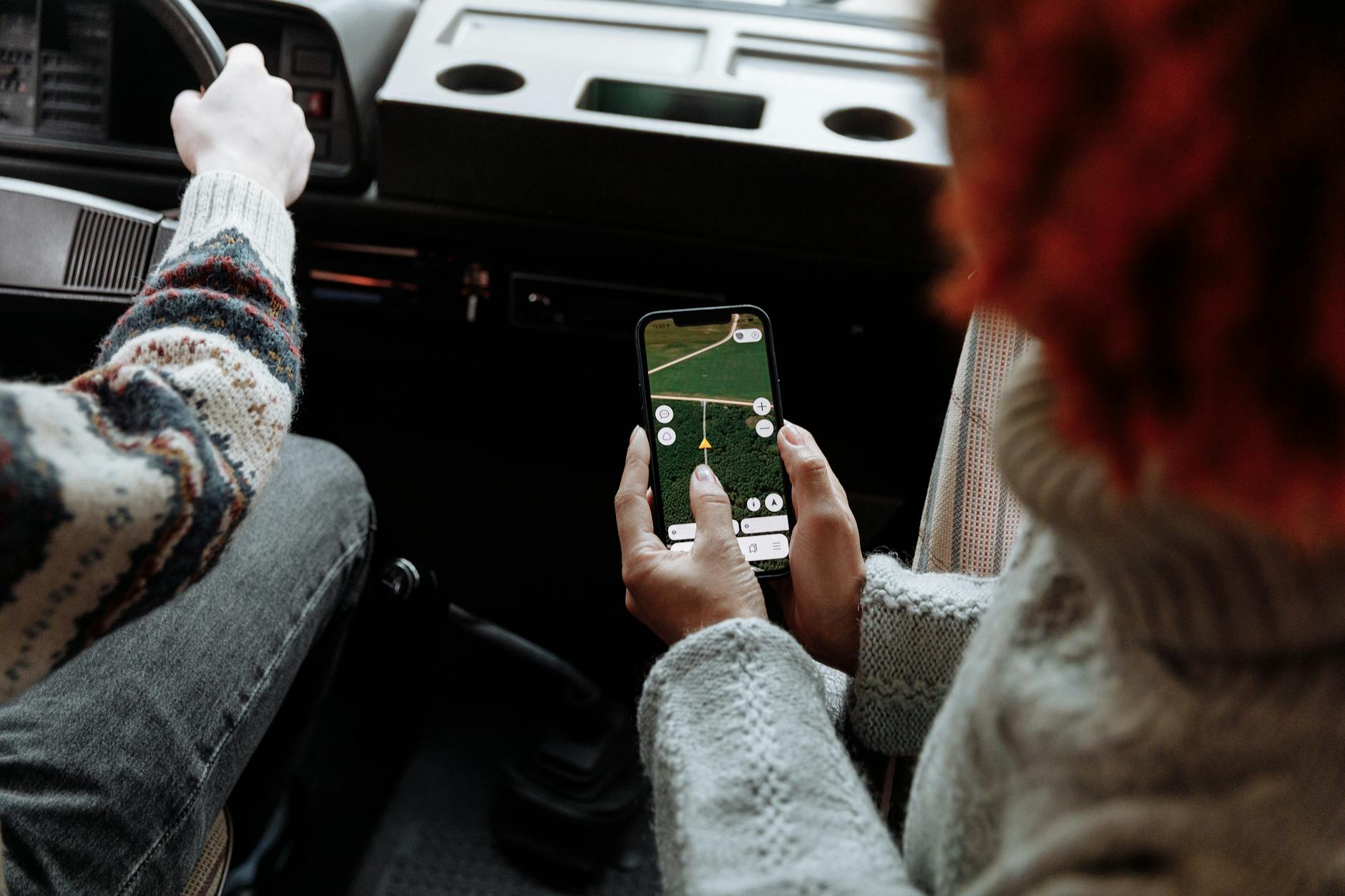
- Apple Maps: reliable in mainland China, gives bus directions in English with route numbers, walking transfers, and real-time arrivals at major stops — the best default for most foreign tourists
- Baidu Maps: gold-standard local navigation; the English version is improving and real-time bus tracking is best-in-class
- AMap (Gaode): Alibaba-owned, similar quality to Baidu, slightly better UI for non-Chinese readers
- Citymapper Beijing: cleanest English bus interface; weaker on live data but excellent for route planning in advance
- Official Beijing Bus app (北京公交): bus arrival predictions stop-by-stop; Chinese-only interface but the visual layout is intuitive once you know what each button does
Google Maps does not work for buses in mainland China. It shows routes but cannot give real-time transit directions — it lacks the live data feeds that Baidu and Apple Maps tap into. Use Apple Maps as your default.
Common Mistakes on Beijing Buses
Most bus problems are avoidable. Here are the ones that catch tourists most often:
- Boarding the wrong direction. Bus stops opposite each other serve different directions of the same route — check Apple Maps for which side of the street you need before walking to the stop.
- Not tapping out on distance-based routes. On suburban express buses (877, 916), you must tap out at the rear door reader when you exit. Failing to do so may result in the maximum fare being charged to your card.
- Waiting at a stop not served by your route. Beijing has many stops that look similar but serve different route sets. Confirm your route number appears on the sign at the specific stop you’re standing at.
- Trying to pay with a ¥100 note. The cash box accepts notes, but drivers give no change. A ¥100 note goes in and ¥98 does not come back out. Use coins or ¥1–¥5 notes for cash, or just tap.
- Assuming the last metro time is also the last bus time. They differ. Some buses run an hour later than the metro; night buses run all night. Check the individual route’s schedule in Apple Maps if you’re cutting it close.
- Panicking at crowded stops. Rush-hour bus stops at major hubs can have 50+ people waiting. The bus will come — frequencies are every 2–4 minutes on major routes during peak hours. If one bus is full, the next is two minutes behind.
Tourist Bus and Hop-On Hop-Off Options
If navigating the regular bus network sounds like more work than you want on a first day, Beijing’s tourist-oriented hop-on hop-off service is worth knowing about. The Beijing City Tour Bus runs distinctive red double-deckers on two main loops:
- Royal Tour route: Tiananmen, the Forbidden City area, Drum Tower, Houhai, Temple of Heaven — the classic sightseeing circuit
- Cultural Tour route: National Museum, Wangfujing, Silk Market, Yonghe Temple
Day pass is ¥120. Buses run every 20–30 minutes and include English audio commentary. You can board and alight at any marked stop on the loop. It’s more expensive than using the regular network, but you’re paying for the commentary and the one-ticket convenience. Worth considering for a first day in Beijing before you’ve found your feet, less worthwhile once you’re comfortable with the transit system.
But Bus 1 along Chang’an Avenue is still a better deal for anyone who just wants a cheap surface view of the main sights — ¥2 flat, no commentary, but you see the same streets for a fraction of the price.
Beijing Bus Etiquette
- Give up your seat for elderly, pregnant, or disabled passengers — Beijing social expectation enforces this clearly, and you’ll see it happening constantly
- Don’t eat hot food on board (drinks in lidded containers are fine)
- Watch your bag in dense crowds — pickpocketing is rare but not zero
- Move toward the rear after boarding to make space for new passengers
- Press the stop button in advance — drivers won’t stop unprompted at less-trafficked stops late at night
- No smoking — universally enforced, no exceptions
- Use your phone to communicate — point at your destination on Google Translate or Apple Maps if you need to check with the driver
Common Issues and Solutions
Not sure if this is the right bus
Show the driver your destination on Apple Maps or a written Chinese address before you pay. They’ll give a clear thumbs-up or thumbs-down. If it’s the wrong bus, step off — you haven’t committed yet.
Missed your stop
Get off at the next stop, cross the street, and catch the same-numbered bus back. Every route has a return service at the same stops in the opposite direction. Cost: another ¥2.
The bus is too crowded
Wait for the next one. Frequencies during peak hours are 2–4 minutes on major routes. If the second bus is also packed and you have a time-sensitive appointment, switch to a taxi or DiDi — they’re predictable when buses aren’t.
Foreign card not working on the reader
Switch to Alipay/WeChat QR or cash. Some older non-NFC cards and cards from smaller foreign banks don’t register on the bus readers. One attempt, then move on to the backup method — don’t try multiple times and hold up the queue behind you.
FAQ: Beijing Bus Guide
Are Beijing buses safe at night?
Yes, with caveats. Late-night routes (post-22:00) are quieter and generally fine in central districts. Outer-suburban routes after dark are very thin on other passengers — use a taxi or DiDi for those situations.
Do Beijing buses run on weekends and holidays?
Yes. Service runs daily including all public holidays, with reduced frequency on Sundays and during Spring Festival. Most routes drop from 4-minute peak headway to 8–10 minutes on those days.
Can I travel between Beijing’s two airports by bus?
Yes — a dedicated PEK to PKX shuttle bus runs every 30–60 minutes for ¥50, taking around 75 minutes between the two airports. Useful when your inbound and outbound flights use different terminals.
Are Beijing buses wheelchair accessible?
About 60% of the fleet is low-floor accessible, with priority spots and deployable ramps. Major BRT routes have fully accessible stations. See the Beijing accessibility guide for the full picture.
How does the Yikatong card compare to mobile payment?
Yikatong gives 50% off bus fares (¥1 vs ¥2) and works on the subway and select taxis. Worth the ¥20 deposit if you ride 10+ buses during your trip; otherwise foreign credit card or Alipay QR is simpler and nearly as fast. Refund the deposit at any station service counter when you leave Beijing.
What about long-distance trips out of Beijing?
For cities beyond the Greater Beijing area — Tianjin, Xi’an, Shanghai — the bus network ends where the high-speed rail begins. The Beijing high-speed train guide covers all the main intercity rail connections, which are dramatically faster and often not much more expensive than long-distance coaches.
When to Choose the Bus, When to Skip It
Take the bus when your destination isn’t on the metro grid; when you want a surface view through historic neighborhoods; when the metro has closed for the night; or when you want the cheapest possible fare. Skip the bus during rush hour if you’re crossing the city (the metro is faster and more reliable); when you have heavy luggage; or when you have a fixed arrival time and can’t absorb a 10-minute traffic delay.
With this Beijing bus guide, the city’s largest and most under-appreciated transit network goes from intimidating to practical. Pair it with the metro and the bike-share app, and you have full coverage of every Beijing district at a transport cost of well under ¥30 per day. For a broader view of how buses interact with every other option — taxis, trains, bikes, and everything else — the Beijing transportation guide pulls it all together. And if you’re planning the trip more broadly, the Beijing travel guide is the place to start.