Beijing Money & Internet
Money and the Internet in Beijing: Paying and Getting Online
Setting up Alipay and WeChat Pay with a foreign card, what cash is still for, what things cost, and the eSIM decision that determines whether your phone works in China.

A visitor who lands in Beijing with a wallet full of euros and no apps on their phone will spend the first afternoon of the trip solving problems that could have been solved at home in twenty minutes. The single most useful thing to understand about how to pay in Beijing is that the city runs on two phone apps, that both of them now accept foreign bank cards, and that you should install and verify them before you get on the plane.
This guide covers the whole of that: setting up Alipay and WeChat Pay from abroad, what cash is still good for, where a foreign card works directly, what things actually cost, the scams that target visitors, and then the other half of the problem — getting online in a country where most of the services on your phone are blocked, which SIM strategy works, and what to install before you cross the border. Prices and rules were checked in September 2026; treat the numbers as the right order of magnitude and re-check anything that decides a booking.
The short version
| Question | Answer |
|---|---|
| What do I pay with? | Alipay, with WeChat Pay as backup. Both take a foreign Visa or Mastercard. |
| Do I need a Chinese bank account? | No. |
| Do I need cash? | Carry ¥200–500. You will barely use it. |
| Will my own card work directly? | At subway gates, most hotels and some big shops. Not at street level. |
| What is the currency? | The renminbi, counted in yuan (¥, CNY, sometimes RMB). |
| Do I tip? | No. Exceptions are private guides and drivers. |
| Will my phone work? | Only with a roaming eSIM or a local SIM. Public WiFi usually needs a Chinese number. |
| Is Google blocked? | Yes, along with WhatsApp, Instagram and most Western services. |
| What gets round that? | A roaming eSIM routed through a foreign carrier, generally. A local SIM does not. |
| What must I install before I fly? | Alipay, WeChat, a map that works in China, DiDi, Pleco. |
Money
The currency, and what to call it
China’s currency is the renminbi — literally “the people’s currency” — and the unit you count in is the yuan, written ¥ or CNY and often spoken as kuai. RMB and CNY mean the same thing in practice. One yuan divides into ten jiao (spoken mao), and into a hundred fen, which no longer buys anything.
Notes come in ¥1, ¥5, ¥10, ¥20, ¥50 and ¥100. The ¥100 note is the largest and is what an ATM will mostly give you, which is inconvenient for a ¥6 subway fare — break large notes in a supermarket rather than at a street stall. Coins exist for ¥1 and for jiao and are used mainly in vending machines and on buses.
How payment actually works now
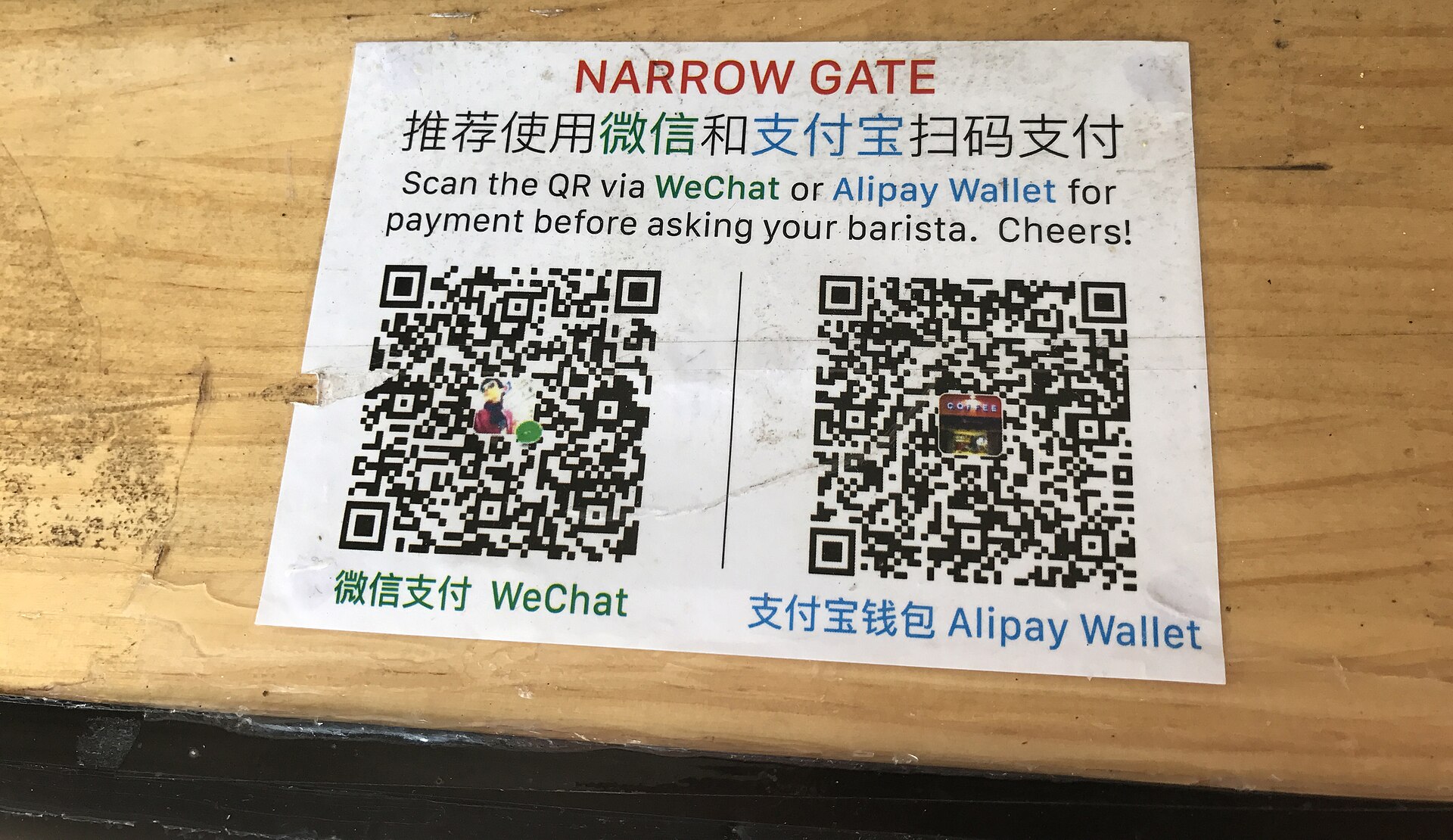
Beijing is close to a cashless city, and it did not get there via contactless cards the way London or Stockholm did. It got there via QR codes. Nearly every transaction in the country — a bowl of noodles, a taxi, a museum ticket, a hutong shop selling one melon — is made by opening Alipay or WeChat and either scanning the merchant’s code or showing your own for them to scan.
Until a few years ago this locked foreign visitors out, because both apps required a Chinese bank account. That has changed and the change is complete rather than partial: both Alipay and WeChat Pay now accept foreign Visa and Mastercard, and Alipay also accepts American Express, after an in-app verification step that requires your passport. No Chinese bank account, no local phone number for the card itself, no intermediary.
Alipay’s single-transaction limit for verified foreign users was raised to about US$5,000 — roughly ¥35,000 — in early 2026, with an annual cap around US$50,000. Nothing on a normal trip will come close to either.
Setting up Alipay, before you fly
Do this at home, on your own connection, with your passport in front of you. It takes about fifteen minutes and it is close to impossible to do calmly in an arrivals hall.
- Download Alipay from your usual app store. Register with your home mobile number — this works fine and does not need to be a Chinese number.
- Set the app language to English in settings. Alipay’s English interface is considerably better than WeChat’s, which is the main reason to install it first.
- Add a bank card: Visa, Mastercard, American Express, JCB or Diners are all supported. You will be asked to complete identity verification with your passport — name, number, expiry, and usually a photograph of the document and of your face.
- Wait for verification to clear. It is normally quick but it is not always instant, which is another argument for doing it days rather than hours before departure.
- Tell your bank you are travelling. A first transaction in China from a card that has never left home is exactly the kind of thing fraud systems block.
Once it is working, Alipay is also a lot more than a payment app: it holds mini-programs for booking trains, hailing DiDi cars, buying attraction tickets and translating menus with the camera. Many visitors end up using it more than any other app on the trip.
WeChat Pay, and why you still need WeChat
WeChat is the messaging app that everyone in China uses for everything, and WeChat Pay is the other half of the payment duopoly. The card-binding process is the same in shape: add a foreign card, verify with your passport.
Even if Alipay is doing all your paying, install WeChat anyway, because a large amount of Beijing’s booking infrastructure lives inside it as mini-programs. The Forbidden City’s ticketing, the free real-name reservation for Tiananmen Square, the National Museum’s booking system and a great many smaller sites are all WeChat mini-programs first and websites second, or only. Trying to book them without WeChat is possible in some cases and painful in most.
What cash is still for
Refusing cash is illegal in China and the People’s Bank has said so repeatedly, which tells you how common it had become. In practice you will find that most places take notes if you insist, that many staff will look mildly put out, and that some small vendors genuinely have no float to give you change from a ¥100.
Carry ¥200 to ¥500 and keep it for:
- Rural stalls near the Great Wall and at other sites outside the city.
- Some temple donation boxes and incense.
- Older taxis whose driver would rather have notes.
- Emergencies — a dead phone battery in a country where your phone is your wallet is a genuinely bad afternoon. This is the real argument for carrying cash.
Where a foreign card works on its own
More places than in 2019 and fewer than you would like.
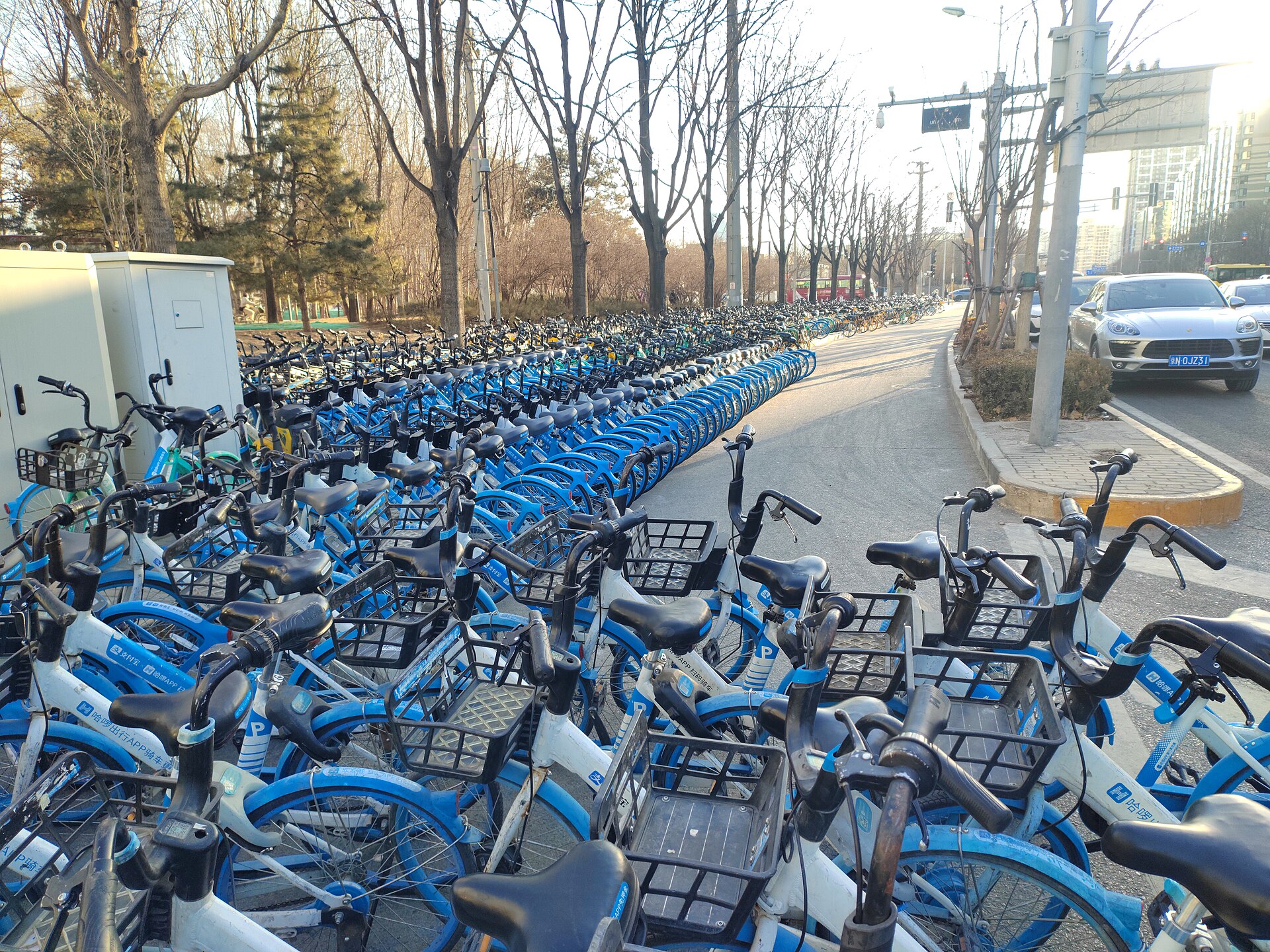
- The subway. Foreign contactless Visa, Mastercard, JCB and American Express tap in directly at every gate on the network — no app, no ticket machine, no transport card to buy. This is the single most useful piece of card acceptance in the city.
- The Airport Express. Ticket machines take foreign contactless as well as Alipay and WeChat QR.
- International hotels. Reliably.
- Large department stores and international chains. Usually.
- Restaurants, street food, markets, small shops, taxis. Generally not. This is why you need the apps.
UnionPay is China’s own card network, and if your home bank happens to issue a UnionPay card it will be accepted much more widely than a Visa or Mastercard. Most visitors will not have one and do not need one.
ATMs and getting cash out
ATMs are everywhere and most of the large banks’ machines accept foreign cards — Bank of China, ICBC and China Construction Bank are the safest bets, and airport machines are reliable. Expect a withdrawal limit of around ¥2,000 to ¥3,000 per transaction, a fee from the Chinese bank, and another from your own. Choose to be charged in yuan rather than in your home currency when the machine offers; dynamic currency conversion is always a worse rate.
Changing money at home before you travel is usually a poor deal for renminbi. Bank branches in Beijing will exchange cash for you with a passport, and airport exchange desks will do it at a worse rate. Given how little cash you actually need, an ATM withdrawal on arrival is normally the simplest answer.
What things cost
| Item | Typical price |
|---|---|
| Subway single ride | ¥3–10; most tourist trips ¥3–6 |
| Airport Express, Capital | ¥25 flat |
| Airport Express, Daxing | ¥35 to Caoqiao |
| Typical 8 km DiDi ride | ¥35–45 |
| Bowl of beef noodles, chain shop | ¥18–25 |
| The same in a tourist restaurant | ¥40–60 |
| Street breakfast — jianbing, baozi | ¥8–15 |
| Whole Peking duck | ¥160–400, serves 2–4 |
| Bottle of local beer in a bar | ¥25–45 |
| Forbidden City | ¥60 April–October, ¥40 November–March |
| Temple of Heaven through ticket | ¥34 peak, ¥28 off-season |
| Summer Palace through ticket | ¥60 peak, ¥50 off-season |
| Mutianyu Great Wall entry | ¥45, plus ¥20 shuttle and ¥100 cable car |
| Peking opera ticket | ¥120–380 |
| Comfortable daily transport budget | ¥40–60, or ¥100–150 leaning on cars |
| Mid-range couple’s daily spend, all in | ¥800–1,200 per person |
For a fuller breakdown by trip style, see the Beijing travel budget guide.
Tipping
Tipping is not customary in China and can be actively unwelcome. Taxi drivers may refuse it, restaurant staff will often chase you down the street to return money you left on the table, and hotel staff outside the international chains generally do not expect it.
The exceptions are narrow and worth observing: private guides and drivers hired for a day expect ¥50–100 per day, and some high-end hotels aimed at Western travellers have quietly imported the practice. Service charges appear on bills at upmarket restaurants and are not the same thing.
The scams that target visitors
Beijing is a very safe city and violent crime against tourists is rare. What exists is a small set of well-rehearsed confidence tricks, all of which are decades old and all of which still work because they rely on politeness rather than force.
- The tea house. A friendly, English-speaking person approaches near Tiananmen, Wangfujing or the Silk Market, chats, and suggests a traditional tea ceremony nearby. The bill arrives at several thousand yuan and the exit is blocked until it is paid. The tell is always the same: a stranger who initiates a conversation and then proposes a venue.
- The art student. The same pattern with a gallery of “student work” at the end of it, priced in the hundreds or thousands.
- The unmetered taxi. Insist on the meter, or use DiDi, where the price is agreed in the app before the car moves. Never take a ride from someone touting at an airport arrivals hall.
- Fake notes. Much rarer now that almost nobody uses cash, but check any ¥100 handed to you as change.
- Ticket touts at the Forbidden City. There are no gate sales, at any price, in any circumstance. Anyone offering you a ticket outside is selling you nothing.
The defence for all of them is the same and it is not rudeness: a polite, unembarrassed “no thank you” while continuing to walk. More on staying safe in Beijing, and bargaining for the markets where haggling is expected rather than predatory.
Tax refunds on the way out
China operates a departure tax refund scheme for overseas visitors on qualifying purchases from participating stores — you need to have spent above a threshold at a single participating shop on one day, ask for the refund form at the till, and present the goods, the form and your passport at the airport refund counter before checking the items in. Refunds are given in yuan or back to a card. It is worth doing for a genuinely large purchase and not worth the queue for a souvenir.
Getting online
What is blocked
The practical list, for a visitor: Google in all its forms — search, Maps, Gmail, Drive, Docs, Photos, Translate — plus WhatsApp, Instagram, Facebook, X, YouTube, and a large number of Western news sites. Apple services generally work. Microsoft services mostly work. Signal and Telegram do not.
The consequence that catches people out is not entertainment, it is logistics. If your hotel booking is in Gmail, your boarding pass is in Google Wallet, your maps are Google Maps and your group chat is WhatsApp, you can arrive in Beijing and find that your entire trip is inaccessible. Take screenshots and download offline copies of anything you will need, before you fly.
The one decision that matters: eSIM or local SIM
This is the most important paragraph on this page, and it is widely misunderstood.
A roaming eSIM routes your data through a foreign carrier’s network, and generally reaches the open internet without a VPN. Google, WhatsApp and the rest usually work normally. You buy it online before you travel, install it in minutes, and it costs a few dollars a day.
A local Chinese SIM does not. It gives you a Chinese mobile number — which is genuinely useful, because it unlocks public WiFi and some app registrations — but it puts you inside the domestic network, where the same restrictions apply as to any resident.
For most short visits, a roaming eSIM is the right answer and the local SIM is unnecessary. For a longer stay, or if you need a Chinese number for SMS verification, buy a local SIM as well and run both. Buying a local SIM requires your passport for real-name registration and can be done at China Mobile, China Unicom or China Telecom shops and at the airports; take the passport rather than a copy.
Public WiFi and the SMS problem
Cafés, hotels, airports and many public spaces all have WiFi, and a large proportion of it demands a Chinese mobile number and an SMS code before it will let you on. A foreign number will frequently not receive the code. This is the single most common connectivity frustration visitors report, and it is another reason not to rely on public WiFi as your plan.
Hotel WiFi generally works without the SMS step, and hotel WiFi is inside the domestic network, so expect the same blocks there as anywhere else in China.
VPNs — an honest note
Many visitors and residents use VPN software to reach blocked services. The legal position is that only state-approved VPNs are authorised in China, that the rules are aimed primarily at providers and at domestic use, and that enforcement against foreign tourists checking their email is not something that happens in any routine way. That is a description of the situation rather than advice.
What we would say practically is this: if you want reliable access to your normal services, a roaming eSIM achieves it more simply, more legally and with fewer moving parts than a VPN does. If you do install VPN software, install and test it before you arrive — most providers’ websites are themselves blocked from inside China, so you cannot download one after you land.
What to install before you cross the border
| App | What for | Essential? |
|---|---|---|
| Alipay | Paying for everything; also trains, taxis, tickets, translation | Yes |
| Payment backup; booking mini-programs for museums and sites | Yes | |
| Amap or Baidu Maps | Maps and navigation that actually work | Yes |
| DiDi | Ride-hailing, with an English interface | Yes |
| Pleco | Offline Chinese dictionary with camera lookup | Yes |
| Trip.com | Trains, flights, hotels, attraction tickets in English | Recommended |
| 12306 | The official rail booking app; cheaper than resellers | For rail travel |
| Dianping | Restaurant reviews — the local equivalent of Yelp | Useful |
| Meituan | Food delivery and almost everything else | Optional |
| Your airline’s app | Boarding passes, offline | Yes |
Two notes on maps. First, Chinese mapping uses a coordinate system offset from the international standard, which is why foreign map apps sometimes place you in the wrong street even when they work. Amap has an English mode and is the most usable for visitors; Apple Maps works in China and is better than nothing. Second, download an offline map of central Beijing as a fallback, because the moment you most need a map is the moment your data has stopped.
For a fuller treatment of managing the language barrier, see navigating Beijing without Chinese.
Real-name booking, and why your passport lives in your pocket
This is the piece of modern Chinese travel that surprises returning visitors most. A real-name reservation system now covers nearly every state museum, many parks and all of the major sights, and it links each ticket to a passport number.
- The Forbidden City. ¥60 April to October, ¥40 November to March. Released seven days ahead through bookingticket.dpm.org.cn or the WeChat mini-program, one passport number per visitor, five people maximum per booking. No gate sales in any circumstance. Closed Mondays. Popular dates go within minutes.
- Tiananmen Square. Free, but a real-name passport reservation is compulsory and slot-specific — dawn, morning, afternoon or evening — booked one to nine days ahead through the official WeChat mini-program.
- The National Museum of China. Free, mandatory reservation released seven days ahead at 17:00 Beijing time. You must arrive with the same physical passport you booked with; photographs and digital copies are refused.
Two rules follow from this. Carry your actual passport every day rather than a copy — hotels will also need it at check-in, since they are required to register foreign guests. And do your bookings the week before you travel rather than the night before, because a seven-day release window means the night before is always too late.
Power and plugs
China runs on 220V at 50Hz. Sockets commonly take the flat two-pin Type A, the angled three-pin Type I used in Australia, and sometimes the European Type C — most hotel sockets are multi-standard and will swallow several plug shapes. Bring a universal adapter and check that anything with a heating element is rated for 220V.
Power banks are worth carrying and are subject to airline rules: they must go in your hand luggage, not the hold, and Chinese carriers enforce watt-hour limits and require visible certification markings on the battery. A power bank without a legible rating label can be confiscated at security. Given that your phone is simultaneously your wallet, your map, your ticket and your translator, running out of battery in Beijing is a genuine problem rather than an inconvenience — this is the one accessory worth being careful about.
Hotels, deposits and booking sites
Two things about paying for accommodation in China surprise first-time visitors.
The first is the deposit. Most Chinese hotels take a refundable incidentals deposit at check-in — often a few hundred yuan, sometimes more at the upper end — either as a card pre-authorisation or in cash. It is normal, it is returned at check-out, and if it is taken in cash you will be given a receipt that you must produce to get the money back. Do not lose it. A card pre-authorisation can take several days to fall off your statement after you leave, which is worth knowing before you assume you have been double-charged.
The second is registration. Hotels are legally required to register foreign guests with the local police, which is done at check-in from your passport and takes a few minutes. The practical consequence is that not every small guesthouse or hostel is set up to accept foreign nationals — some simply do not have the system — so book somewhere that explicitly says it takes overseas guests rather than turning up hopefully. If you are on a visa-free transit, they may also want to see your entry stamp.
On booking platforms: Trip.com is the largest with a full English interface and is the most reliable for Chinese hotels, trains and attraction tickets. The international booking sites work but carry a thinner selection of domestic properties. Booking direct is often no cheaper. Our accommodation guide covers the choice, with separate pages on hostels and budget beds and on apartment rentals.
Where the money goes, and how to spend less
The expensive parts of a Beijing trip are, in order: accommodation, getting out to the Great Wall, and restaurants aimed at visitors. Entry tickets are not the problem — the Forbidden City at ¥60 and the Temple of Heaven at ¥34 are cheap by any international comparison, and Jingshan at ¥2 is close to free.
- Take the subway. ¥3–6 a ride against ¥35–45 for a typical DiDi. A tourist day on the subway costs ¥15–30 all in.
- Go to the Wall independently. The Dongzhimen tourist bus to Mutianyu is ¥80 return; a group tour is ¥350–500 per person and includes a shopping stop you did not ask for.
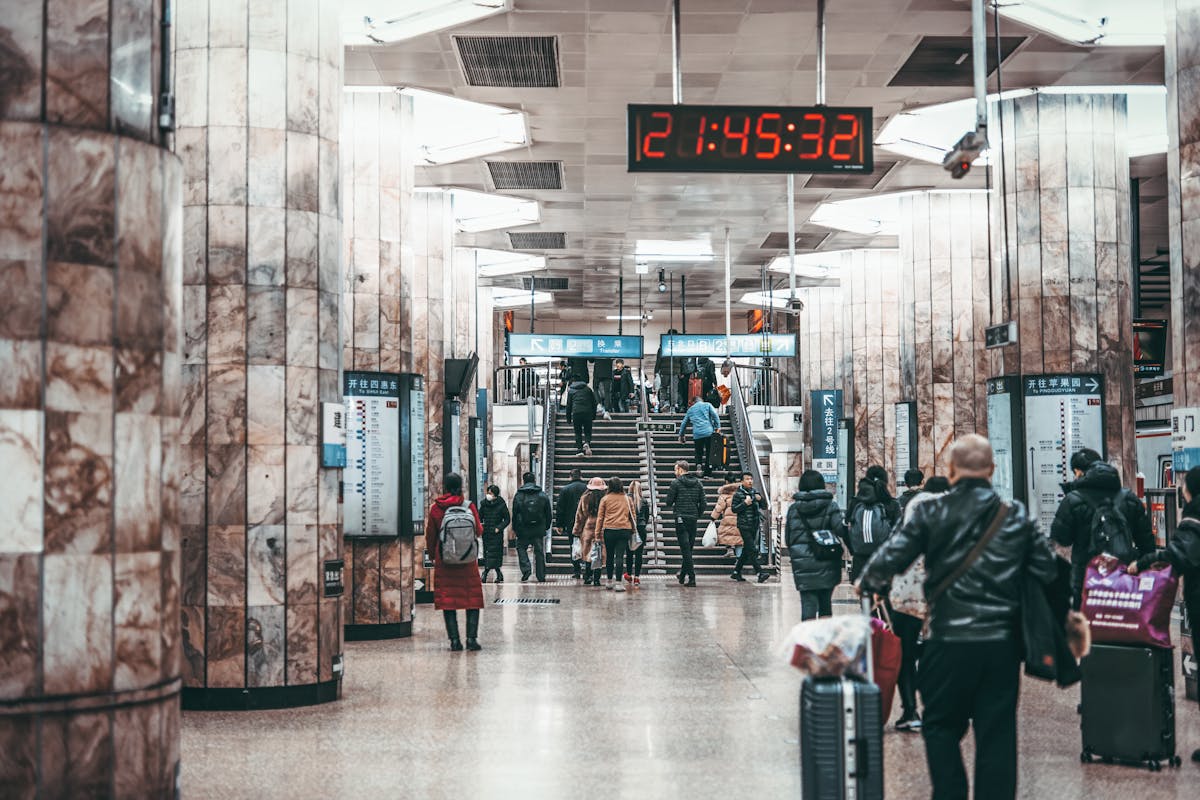
- Eat where the queue is Chinese. A bowl of beef noodles is ¥18–25 in a chain shop and ¥40–60 in a tourist restaurant a hundred metres away.
- Use the free things. The hutongs, Tiananmen Square, the Olympic Park grounds, 798, Panjiayuan and Shichahai all cost nothing. So does the Temple of Heaven park’s dawn tai chi if you take the ¥15 park ticket rather than the through ticket — you just do not get inside the Hall of Prayer.
- Book museums rather than paying for them. The National Museum of China is free with an advance passport reservation and is one of the largest museums in the world.
- Avoid Golden Week. 1 to 7 October roughly doubles hotel prices. So does the Spring Festival period in a different way.
A budget-conscious visitor can run a comfortable Beijing day on ¥250–350 excluding accommodation. A mid-range one lands around ¥800–1,200 per person per day all in.
If something goes wrong
Lose a card and the first call is to your own bank, which you can make over the internet with a roaming eSIM. Alipay and WeChat can both be locked from another device. If your phone is lost or stolen, the problem compounds fast, because it holds your payment, your maps and your tickets at once — which is the argument for both the cash reserve and for writing your hotel’s name and address in Chinese characters on paper.
The police emergency number in China is 110; ambulance is 120. Keep your embassy’s Beijing number saved offline. And check what your travel insurance covers before you go — decent cover for a week in China is typically in the ¥600–800 range and worth having for medical costs rather than for lost cameras.
A pre-departure checklist
- Install Alipay, add a card, complete passport verification, confirm it says verified.
- Install WeChat and bind a card as a backup.
- Tell your bank you are travelling to China.
- Buy and install a roaming eSIM; test that it activates.
- Install Amap or Baidu Maps, DiDi, Pleco, Trip.com and your airline’s app.
- Download offline maps of central Beijing.
- Screenshot every booking confirmation, boarding pass and address, including the hotel address in Chinese characters.
- Book the Forbidden City seven days out, and Tiananmen Square one to nine days out.
- Pack a universal adapter and a power bank with a legible rating label.
- Plan to withdraw ¥200–500 at an airport ATM on arrival.
Every step of that Alipay setup has a way to go wrong, most of them small: a passport photo with glare across it, a name typed in the wrong order, a bank that blocks the first Chinese transaction it sees. Our step-by-step Alipay guide for visitors walks through each screen, explains the 3% fee on payments over ¥200, and has a troubleshooting table for the moment a payment fails at the counter.
If you take one piece of connectivity advice from this page, make it the eSIM, and make it before you fly: the profile has to be downloaded on a connection you do not yet have once you land. Our China eSIM guide compares what the main providers charge, how much data a Beijing trip really uses, which phones are compatible, and what to try when it will not connect.
If you do decide a VPN is worth having, for a laptop on hotel WiFi, say, or a long stay on a local SIM, the details matter more in China than anywhere else: plain protocols are blocked within minutes, provider websites are unreachable once you land, and a VPN left running can upset Alipay and WeChat. What still works for VPNs in China covers the choice, the setup and the legal position in more detail.
Frequently asked questions
How do I pay for things in Beijing as a foreigner?
With Alipay or WeChat Pay on your phone, both of which now accept foreign Visa and Mastercard — Alipay also takes American Express — after an in-app verification step using your passport. No Chinese bank account is required. Set both up before you travel; Alipay first, because its English interface is better.
Can I use cash in Beijing?
Yes. Refusing cash is illegal and businesses are supposed to take it. In practice the city is close to cashless, some small vendors will not have change for a ¥100 note, and you will occasionally get a sigh. Carry ¥200–500, mostly as insurance against a flat phone battery.
Will my Visa or Mastercard work in Beijing?
Directly, at subway gates, the Airport Express, international hotels, department stores and international chains. Not at restaurants, markets, street food stalls, small shops or taxis. The way to make your card useful everywhere is to bind it inside Alipay or WeChat Pay rather than to present it.
Do I need a Chinese bank account or phone number to use Alipay?
No to both for payment purposes. You can register Alipay with your home mobile number and bind a foreign card after passport verification. A Chinese number is useful separately — it unlocks public WiFi that requires SMS verification — but it is not needed to pay for things.
What is the spending limit for foreign users on Alipay?
Around US$5,000 per transaction — roughly ¥35,000 — for verified foreign users since early 2026, with an annual cap near US$50,000. Nothing on an ordinary trip approaches either figure.
Should I exchange money before I travel to China?
Generally not. Renminbi rates outside China are usually poor, and you need very little cash. An ATM withdrawal on arrival at the airport, choosing to be charged in yuan rather than your home currency, is normally the best combination of rate and convenience.
Do I tip in Beijing?
No. Tipping is not customary and taxi drivers may refuse it outright. The exceptions are private guides and drivers, who expect ¥50–100 per day, and some high-end hotels aimed at Western travellers.
Is the internet blocked in Beijing?
A substantial part of it, yes. Google in all its forms, WhatsApp, Instagram, Facebook, X, YouTube and many Western news sites are inaccessible from within the domestic network. Apple and most Microsoft services work. The practical risk is that your bookings, boarding passes and maps live in blocked services — download offline copies before you go.
Does an eSIM work in China?
A roaming eSIM bought before you travel routes your data through a foreign carrier and generally reaches the open internet without a VPN, which makes it the simplest solution for a short visit. A local Chinese SIM puts you inside the domestic network and does not. If you need a Chinese number as well, buy a local SIM with your passport and run both.
Do I need a VPN in Beijing?
Not if you use a roaming eSIM, which is the simpler route to your usual services. Only state-approved VPNs are authorised in China, the rules are aimed mainly at providers and domestic use, and enforcement against tourists is not a routine occurrence — but if you do want VPN software, install and test it before you arrive, because most providers’ sites are blocked from inside the country.
How do I get a SIM card in Beijing?
At China Mobile, China Unicom or China Telecom shops in the city, or at counters in both airports. Real-name registration is required, so bring your physical passport rather than a copy. Expect it to take a little time and expect the process to be conducted mostly in Chinese outside the airport branches.
Why does public WiFi ask for a Chinese phone number?
Because real-name verification applies to network access as well as to tickets, and the standard mechanism is an SMS code to a Chinese number. A foreign number frequently will not receive it. Hotel WiFi usually skips this step; café and public networks often do not.
Which maps app works in China?
Amap has an English mode and is the most usable for visitors; Baidu Maps is the other major option and is largely in Chinese. Apple Maps works. Google Maps does not, from inside the domestic network. Chinese mapping also uses an offset coordinate system, which is why foreign apps sometimes misplace you by a street even when they load. Download an offline map as a fallback.
Do I need my passport with me every day in Beijing?
Yes. Real-name reservations at the Forbidden City, Tiananmen Square and most state museums are tied to your passport number and checked against the physical document at the gate — photographs and photocopies are refused. Hotels also need it at check-in to register you.
How much money should I budget for a day in Beijing?
Transport ¥40–60 if you use the subway with the odd DiDi, or ¥100–150 leaning on cars. Attractions ¥0–200 depending on the day. Food ¥100–250 eating well but not extravagantly. A comfortable mid-range couple’s trip runs about ¥800–1,200 per person per day all in, including accommodation.
Do Beijing hotels take a deposit?
Usually, yes — a refundable incidentals deposit at check-in, often a few hundred yuan, taken either as a card pre-authorisation or in cash with a receipt you must keep. It is returned at check-out. A card pre-authorisation may take several days to clear from your statement after you leave.
Can I stay anywhere in Beijing as a foreigner?
Not quite. Hotels must register foreign guests with the local police, and some smaller guesthouses and hostels are not set up to do it. Book somewhere that states it accepts overseas guests, and have your passport ready at check-in along with your entry stamp if you are on a visa-free transit.
What is the cheapest way to get around Beijing?
The subway, at ¥3–6 for most tourist journeys and ¥15–30 for a whole day. A foreign contactless card taps in directly at the gate. Buses are cheaper still and much harder to use without Chinese. A typical 8 km DiDi ride is ¥35–45.
Are there ATMs in Beijing that take foreign cards?
Yes, widely — Bank of China, ICBC and China Construction Bank machines are the most reliable, and airport ATMs work. Expect a per-transaction limit around ¥2,000–3,000, a fee from the Chinese bank and another from your own, and always decline the machine’s offer to convert to your home currency.
What is the tea house scam?
A stranger who speaks good English strikes up a friendly conversation near a tourist site, then proposes a traditional tea ceremony at a place they know. The bill runs to thousands of yuan and leaving is made difficult. The same script exists with an art gallery instead of a tea house. The tell is always that the stranger approached you and then proposed the venue.
Can I get a tax refund on shopping in Beijing?
On qualifying purchases from participating stores, yes. Spend above the threshold in a single participating shop on one day, ask for the refund form at the till, and present the goods, the form and your passport at the airport refund counter before you check the items in. Worth doing for a large purchase, not for a souvenir.
What happens if my phone dies in Beijing?
You lose your wallet, your map, your tickets and your translator at the same time, which is why cash and a power bank both matter more here than in most cities. Carry ¥200–500 in notes, carry a power bank with a legible rating label, and write your hotel’s name and address in Chinese characters on a piece of paper.