Beijing Itineraries
Beijing on a Layover: How Much City a Connection Buys
The honest arithmetic of a Beijing layover — what four, five and nine usable hours actually buy, the visa-free transit rules, and why the Temple of Heaven beats the palace.

The maths of a Beijing layover is unforgiving and almost nobody does it before booking. A ten-hour connection is not ten hours in Beijing — it is about four and a half, once immigration, the train, the return journey and international check-in have taken their cut. A Beijing layover itinerary that works starts by subtracting honestly, then spends what is left on one thing rather than three.
Below: the arithmetic, the visa rules that make leaving the airport possible at all, what each length of layover realistically buys, two hour-by-hour routes, an honest verdict on whether the Great Wall is ever on, and what to do if you decide to stay airside. Prices were checked in September 2026 and are the right order of magnitude rather than a quote.
First, the subtraction
| Stage | Capital (PEK) | Daxing (PKX) |
|---|---|---|
| Landing to immigration hall | 15–25 min | 15–25 min |
| Immigration queue | 30–60 min | 20–40 min |
| Bag storage or reclaim | 15–30 min | 15–30 min |
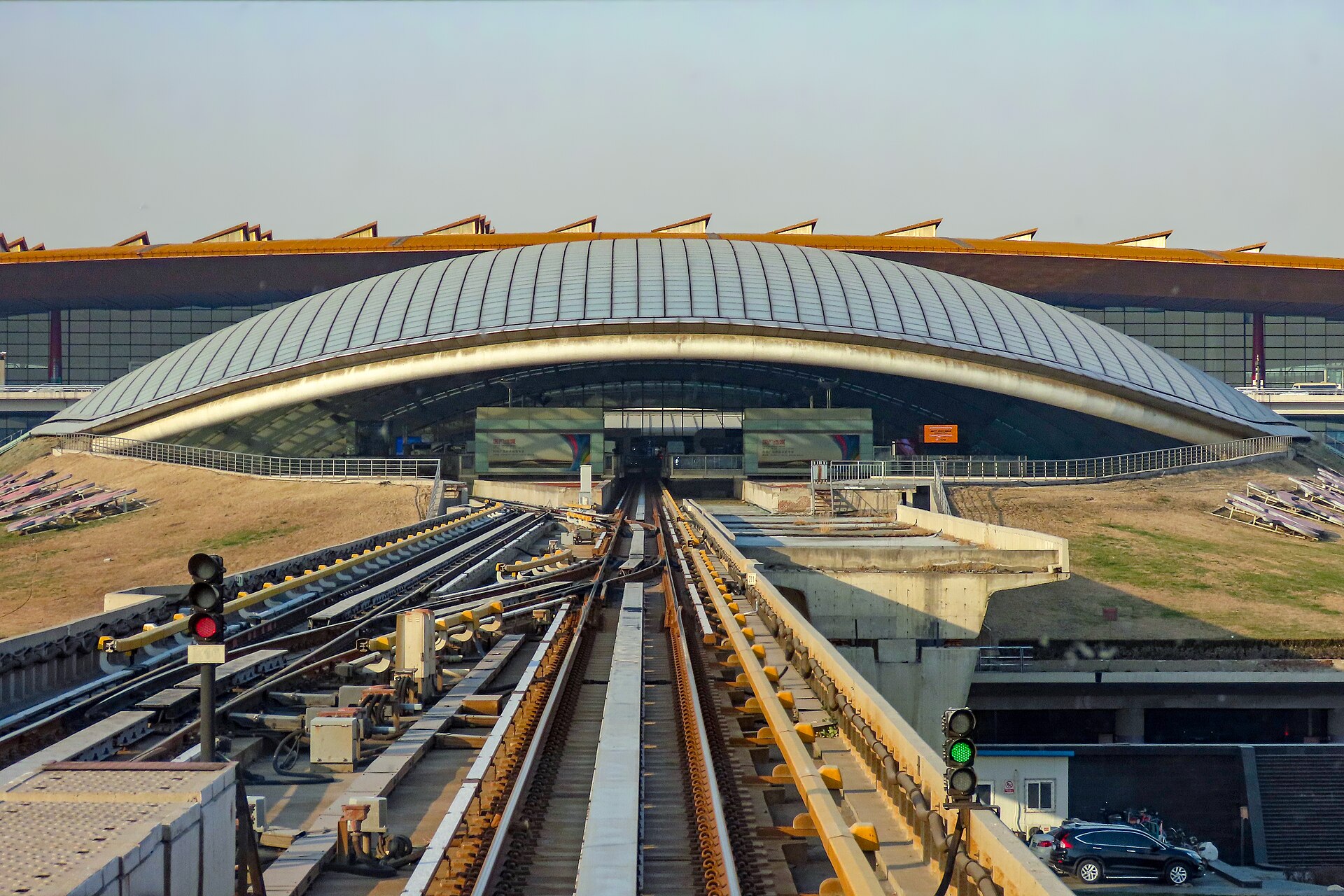
| To the city centre | 30 min, ¥25 Airport Express | 19 min, ¥35 Airport Express |
| Back to the airport | 30 min plus buffer | 19 min plus buffer |
| Security and international check-in | 90–120 min before departure | 90–120 min before departure |
| Total overhead | 4.5–5.5 hours | 4–5 hours |
So a ten-hour layover gives you four to five hours in the city, and an eight-hour layover gives you three at best. That is the number to plan against. Add an hour of margin on top if your onward flight is the last one of the night, or if you are travelling with anyone who does not walk quickly.
Can you actually leave the airport?
Three routes out, and which applies depends on your passport and your flight pattern.
- 24-hour visa-free transit. Open to all nationalities at any Chinese airport, provided your onward flight goes to a different country from the one you arrived from. Beijing to a third country: fine. Out and back to the same country: not eligible. This is the one that covers most short layovers.
- Longer visa-free transit. The 240-hour transit policy covers a much longer stay for eligible nationalities and is the right instrument for an overnight or a two-day stop. Eligibility lists change; check before you rely on it. 240-hour transit.
- 30-day visa-free entry. Many nationalities can now simply enter China without a visa for thirty days, which removes the onward-flight condition entirely. If you qualify, this is the simplest option and you are not really on a transit at all. 30-day visa-free entry.
Whichever applies, you will be asked at the counter for your onward ticket and often for a Beijing address — write your hotel if you have one, or the airport if you are not staying. The arrival card asks for full name, passport details, flight number, address, purpose and visa type; write “24-hour visa-free transit” or “30-day visa-free” in that field if applicable. Queue for “Foreign Passports / Visa-Free Entry”, or the dedicated transit counter if one is signed. Fingerprinting and photographing are standard. Visa requirements in full.
If none of the three fits — most commonly, an out-and-back to the same country on a 24-hour transit — you stay airside, and the last section of this page is for you.
What each layover length buys
| Layover | Usable time | Realistic plan |
|---|---|---|
| Under 6 hours | None | Stay airside. Do not attempt it. |
| 6–8 hours | 1.5–3 hours | Tiananmen exterior and Qianmen, or nothing |
| 8–10 hours | 3–5 hours | One major site: the Temple of Heaven or the palace |
| 10–14 hours | 5–9 hours | The central axis, properly |
| 14–20 hours | 9–15 hours | Axis plus an evening, or a very tight Wall run |
| Overnight, 20+ hours | A full day | Hotel, sleep, and a real day out |
One structural warning before the routes: the Forbidden City is a trap on a layover. It needs a ticket booked online seven days ahead against a passport number, it sells nothing at the gate at any price, and it is closed on Mondays. If your flights shift and you land on a Monday, or if you did not book a week out, the palace is simply not available. The Temple of Heaven, by contrast, sells tickets on the day and opens at dawn — which makes it the better layover site for almost everyone. If the stopover is long enough to become an actual stay, the itinerary index starts at one day and works upwards.
The three-hour route: Qianmen and the square
For a 6 to 8 hour layover, if you decide to go at all.
Airport Express to Dongzhimen, Line 2 to Qianmen. You come up at the south end of Tiananmen Square, in front of Zhengyangmen — the surviving gate tower of the old city wall — with Qianmen Street running south from it: restored shopfronts, red lanterns, a tram, and the Dashilar alleys running west off it, which are older and better than the main drag.
Walk north into the square if you have a reservation. If you do not, you cannot enter — access requires a free real-name passport booking made one to nine days ahead through the official WeChat mini-program, with a specific time slot, and people are turned away at the security perimeter every day. Without one, walk Qianmen and Dashilar instead, eat something, and go back. That is an honest ninety minutes and it is enough to have been somewhere. Tiananmen Square, Dashilar.
The five-hour route: one great site
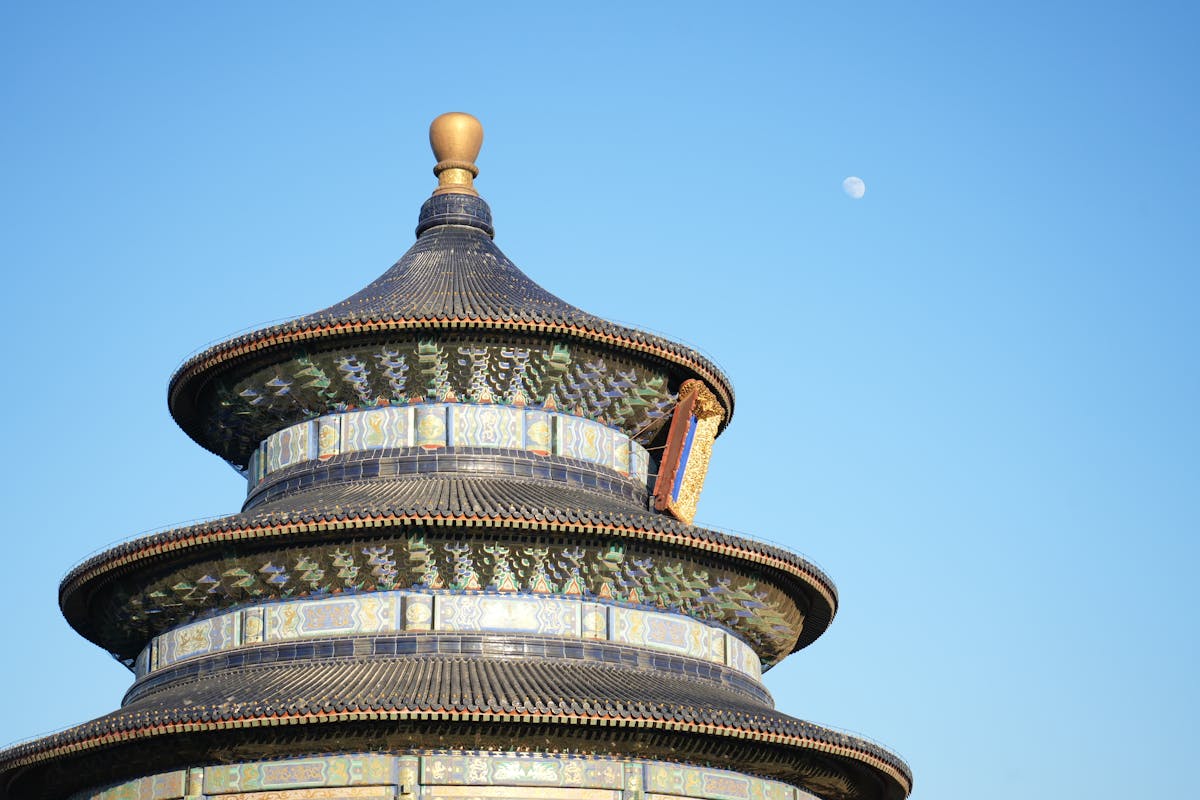
For an 8 to 10 hour layover. Pick one site and do it properly rather than three and do none of them.
Option A — the Temple of Heaven
Airport Express to Dongzhimen, Line 2 to Chongwenmen, Line 5 one stop to Tiantandongmen. Buy the through ticket at ¥34 in peak season from 1 April to 31 October, ¥28 off-season — the ¥15 park-only ticket does not include the Hall of Prayer for Good Harvests, which is the building you came for.
Two and a half hours covers the Hall of Prayer, the Echo Wall, the Circular Mound Altar and the walk between them. If you land early enough to be there before nine, you also get the park at its best: several thousand retired Beijingers doing tai chi, ballroom dancing, choral singing and water calligraphy on the paving. That hour is the single most memorable thing a short layover can deliver. Temple of Heaven.
Option B — the Forbidden City, if and only if you booked
¥60 from April to October, ¥40 from November to March, released seven days ahead, real-name, online only, closed Mondays. Line 1 to Tiananmen East, in at the Meridian Gate, out at the north — the route runs one way, which suits a clock-watching visit. Two and a half hours is enough for the three great halls and the imperial garden if you keep moving. Then straight across the road to Jingshan for ¥2 and ten minutes up the hill for the view back over the roofs, which is the shot that makes the whole detour worth it. Forbidden City, Jingshan.
Option C — the hutongs, if you would rather feel a city than see a monument
Line 2 to Gulou Dajie or Shichahai, and walk. The lakes at Shichahai and Houhai and the alleys behind them cost nothing, need no reservation, and are open at every hour. On a short layover with no bookings, this is the least frustrating option on the list — nothing can be sold out, nothing closes, and you can turn round whenever the clock says so. Shichahai and Houhai, the Dongsi alleys.
The nine-hour route: the axis

For a 10 to 14 hour layover, with the Forbidden City booked in advance.
| Time from landing | Where |
|---|---|
| +1h30 | Through immigration, bags stored, on the Airport Express |
| +2h15 | Tiananmen Square, booked slot, 30 minutes |
| +2h45 | Forbidden City, Meridian Gate |
| +5h30 | Out at the north gate; lunch off Jingshanqian Street |
| +6h15 | Jingshan, ¥2, forty minutes |
| +7h00 | Walk north to Shichahai and the Drum Tower |
| +8h15 | Subway back to the Airport Express |
| +9h30 | At the terminal, three hours before departure |
That is genuinely a good day and it is also tight. Two things break it: an immigration queue at the long end of 30 to 60 minutes, and a bag you cannot store. Do not add Beihai, do not add the Summer Palace, do not add duck at a restaurant that takes an hour to seat you. Eat noodles at ¥18–25 a bowl and keep walking. The same route with no clock is set out in our full one-day plan.
Is the Great Wall ever possible on a layover?
Only in one configuration, and even then it is a stretch.
The public options are out. The tourist bus from Dongzhimen to Mutianyu leaves at 08:00 and 10:00 and returns at 17:00, or 16:00 in winter, which means your layover has to bracket a fixed nine-hour window that you do not control. The 916 Express plus local bus route is slower still.
What can work is a private car — ¥800–1,500 for the vehicle for the day — collecting you at the terminal and returning you to it. That makes the arithmetic roughly: 90 minutes out, 2 to 3 hours at Mutianyu including the cable car up at ¥100 and the toboggan down at ¥100, 90 minutes back. Call it six hours door to door on a good day, plus your immigration and check-in overhead. So you need a layover of about fourteen hours, in daylight, with the car booked in advance and a driver who understands that you have a flight.
Badaling is the faster alternative on paper — the G-train from Beijing North does it in 27 minutes for ¥30–80 — but it puts you on the busiest section of the Wall and adds a transfer at each end. If you have fourteen hours and want the Wall, take the car to Mutianyu. If you have twelve, take the Temple of Heaven and come back another time. Getting to the Wall, Mutianyu.
The overnight layover
Past about twenty hours, stop treating it as a layover. Book a hotel, sleep properly, and run a compressed version of a normal Beijing day.
Where to sleep depends on what you want from the morning. An airport hotel means a shuttle, a shower and no city; a hotel in Dongcheng around Wangfujing means you wake up ten minutes’ walk from the square and can be at the Temple of Heaven by seven. On an overnight transit the second is almost always the better trade, because the Airport Express is quick at both ends and a night near the runway buys you nothing but proximity. Our airport hotel guide covers the exception, and Dongcheng and budget beds cover the alternative.
Note that hotels must register foreign guests, so you need your passport and, if you are on a visa-free transit, they may want to see the entry stamp. Not every small guesthouse is set up to take foreign nationals; book somewhere that says it does.
The practical business
Luggage
Both airports have left-luggage counters and lockers, and using one is worth the ¥50 or so it costs. Dragging a case round the Forbidden City is unpleasant and it will not fit through some of the turnstiles. If your bags are checked through to your final destination, you have nothing to do and this is one fewer thing to go wrong — but confirm it at your originating airport rather than assuming.
Payment and connectivity
Set up Alipay before you fly and add WeChat as a backup. Both accept a foreign Visa or Mastercard after in-app passport verification, with no Chinese bank account needed. Almost nothing takes cash comfortably any more, and public WiFi generally wants a Chinese mobile number for SMS verification, so a roaming eSIM arranged before departure is the difference between a smooth transit and standing in an arrivals hall with no map. Google, WhatsApp and Instagram are blocked; a roaming eSIM routing through a foreign carrier usually gets around that, a local SIM does not. Getting around without Chinese.
Getting in and out
From Capital, the Airport Express is ¥25 flat and about 30 minutes from Terminals 2 and 3 to Dongzhimen, calling at Sanyuanqiao for Line 10. From Daxing, the Airport Express departs from Level B1 inside the terminal and takes about 19 minutes to Caoqiao, stopping at Daxing Xincheng on the way; the fare is ¥35 from the airport to Caoqiao in ordinary class and varies by station pair. At Caoqiao you can change to Metro Lines 10 and 19. Pay at the ticket machines, with an Alipay or WeChat QR, or with a foreign contactless card. On the subway proper, foreign contactless Visa, Mastercard, JCB and Amex tap in directly at every gate. The terminal detail is in our Capital guide and our Daxing guide, and the routes into town are compared in the transfer guide.
A DiDi or taxi is 30 to 60 minutes from Capital and 45 to 75 from Daxing, and both are at the mercy of traffic in a way the train is not. On a layover, take the train in both directions. Using DiDi.
Check which airport
Beijing has two large international airports about 65 kilometres apart, and a connection that moves you between them is not a layover you can leave. Check the three-letter code on both boarding passes before you plan anything: PEK is Capital, PKX is Daxing.
If you are staying airside
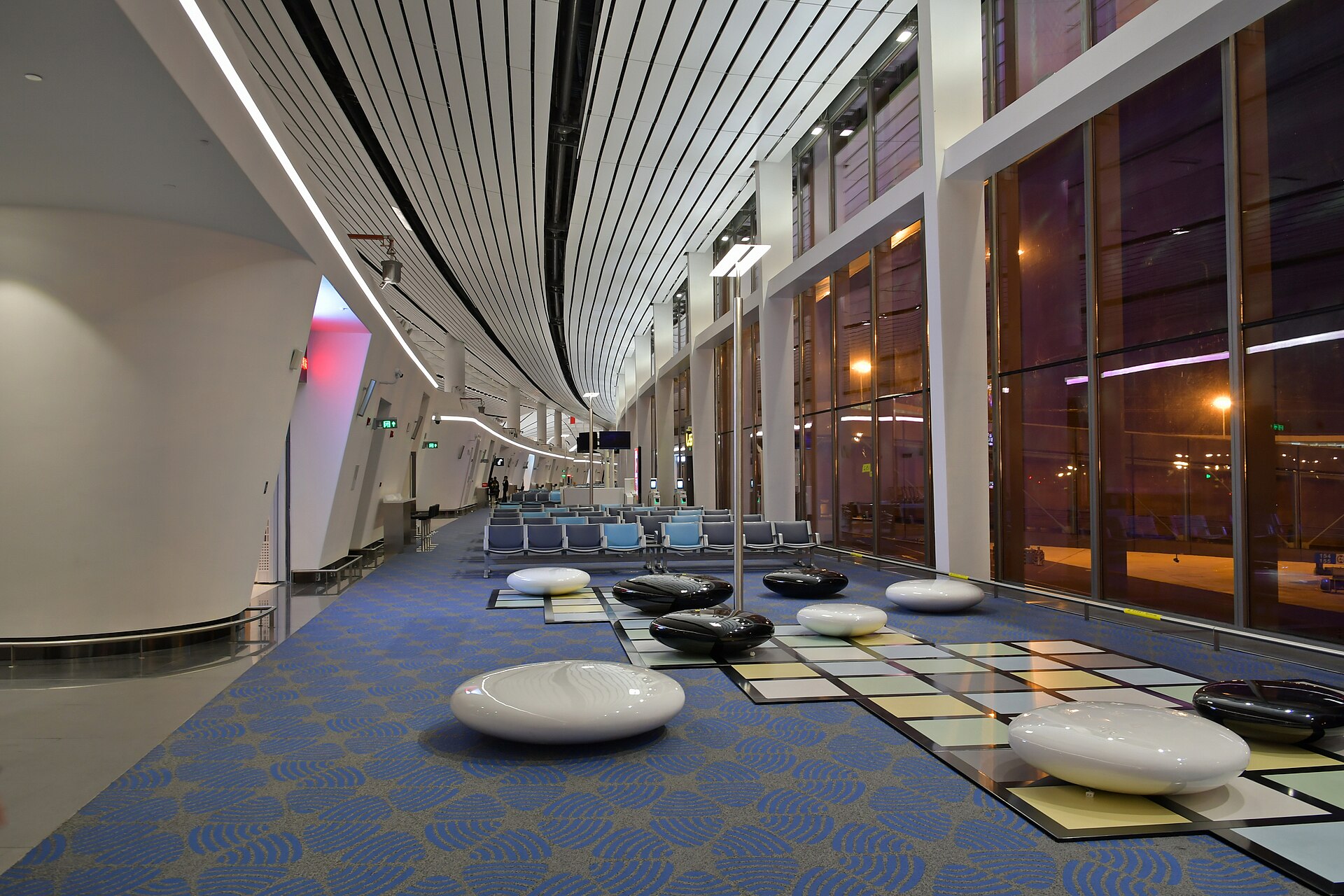
Sometimes the answer is not to go, and that is a legitimate outcome rather than a failure. Under six hours, or on a same-country turnaround with no visa-free route, stay put.
Capital’s Terminal 3 has the larger range of shops and restaurants and a prayer room in the international departures lounge with separate male and female areas, ablution facilities and the qibla marked. Daxing has a smaller retail selection, less halal food and a building that is worth walking around for its own sake. Both have paid lounges bookable in advance, and both have transit hotels or rest cabins where you can pay for a few hours’ sleep — book these before you land rather than hunting for them at two in the morning. Muslim travellers in Beijing.
What a layover costs
| Item | Cost |
|---|---|
| Airport Express, return | ¥50 (PEK) / ¥70 (PKX) |
| Left luggage | ¥40–80 |
| Subway in the city | ¥10–20 |
| Temple of Heaven through ticket | ¥34 / ¥28 |
| Forbidden City | ¥60 / ¥40 |
| Jingshan | ¥2 |
| A meal | ¥25–60 |
| Private car to Mutianyu and back | ¥800–1,500 for the vehicle |
| Typical city layover, all in | ¥170–280 (about US$25–40) |
What goes wrong, and how to insure against it
- The immigration queue. Budget 60 minutes at Capital and 40 at Daxing rather than the optimistic figure, and treat anything better as a bonus.
- No Forbidden City ticket. Seven days ahead or not at all. Build the plan around the Temple of Heaven instead, which sells on the day.
- A Monday. The palace closes. If your layover is on a Monday, do not plan around it.
- No Tiananmen reservation. The square itself is not walk-up. Qianmen and Dashilar, immediately south, are.
- No payment app. The single most common thing that turns a layover into an ordeal. Set Alipay up at home.
- A short connection on one ticket versus two. If your flights are on separate tickets, a missed onward flight is your problem and your cost. Leave more margin than you would on a through-ticketed connection, and check that your your cover covers it.
If the connection turns into a stopover proper, the calculation changes: two days is the point at which the Great Wall becomes possible, a weekend adds the markets, and three days is enough for the city to stop feeling like a transit stop. Five days is the length most people wish they had booked.
Frequently asked questions
Can I leave the airport during a layover in Beijing?
Usually yes. The 24-hour visa-free transit is open to all nationalities at any Chinese airport provided your onward flight goes to a different country from the one you arrived from. Longer transit policies and 30-day visa-free entry cover many nationalities for longer stays. An out-and-back to the same country on a short transit does not qualify.
How long a layover do I need to see something in Beijing?
Eight hours is the practical minimum and it buys you about three hours in the city — one site, not two. Ten hours buys four to five. Under six hours, stay airside: the overhead of immigration, the train in both directions and international check-in is four to five hours on its own.
What is the best thing to do on a Beijing layover?
The Temple of Heaven, because it sells tickets on the day, opens at dawn and takes two and a half hours. The Forbidden City is the more famous answer and the worse one on a layover — it needs a ticket booked seven days ahead against a passport, has no gate sales at all, and closes on Mondays.
Can I see the Great Wall on a layover?
Only with about fourteen daylight hours and a private car booked in advance at ¥800–1,500 for the vehicle, collecting you at the terminal. The public tourist bus runs to a fixed 08:00 or 10:00 departure and a 17:00 return, which you cannot bend around a flight. Below fourteen hours, do not attempt it.
Where do I leave my luggage?
Both Capital and Daxing have left-luggage counters and lockers, at roughly ¥40–80 for the day. If your bags are checked through to your final destination you have nothing to do — but confirm that at your originating airport rather than assuming it.
How do I get from the airport to the city centre?
From Capital, the Airport Express at ¥25 flat, about 30 minutes to Dongzhimen. From Daxing, the Airport Express from Level B1, about 19 minutes to Caoqiao for ¥35 in ordinary class. Both are faster and far more predictable than a taxi, which takes 30–60 minutes from Capital and 45–75 from Daxing depending on traffic.
Do I need cash for a layover?
Barely, but set up a payment app before you fly. Alipay and WeChat Pay both take a foreign Visa or Mastercard after in-app passport verification. Subway gates accept foreign contactless cards directly. Carry ¥100–200 in notes as a fallback.
What do I write on the arrival card?
Full name, passport details, flight number, a Beijing address, purpose of visit and visa type. If you are transiting, write “24-hour visa-free transit” or whichever policy applies in the visa field, and give your hotel address if you have one or the airport if you do not. Have your onward ticket ready to show.
Is a layover in Beijing worth leaving the airport for?
With eight hours or more and a payment app already working, yes. Two and a half hours at the Temple of Heaven or a walk up the axis is a real experience rather than a box ticked. With less than six hours, or with no way to pay for anything, it is not — and Terminal 3 is a perfectly comfortable place to wait.
Which is the better airport for a layover, Capital or Daxing?
Capital, slightly. Immigration is a little slower at 30–60 minutes against Daxing’s 20–40, but the Airport Express drops you at Dongzhimen in the north-east of the centre, which is closer to most things worth seeing. Daxing’s express is faster but starts from further out. Check which one your flights actually use — they are 65 kilometres apart.
Can I sleep at Beijing airport?
Both airports have transit hotels and rest cabins where you can pay for a few hours, and both have paid lounges. Book before you land rather than searching at two in the morning. If your layover is over twenty hours, a hotel in Dongcheng and the Airport Express in both directions is a better use of the time than a night beside the runway.
What if my layover is on a Monday?
The Forbidden City is closed and there is no workaround. Use the Temple of Heaven, which is open, sells on the day, and is the better layover site regardless. The hutongs around Shichahai are also open at all hours and need no booking at all.