Where to Stay in Beijing
Best Dongcheng District Hotels: Ideal Location for Beijing Sightseeing (2026)

Book a hotel in Dongcheng and you’re staying in the city’s imperial core — the Forbidden City’s east flank, Tiananmen Square, Wangfujing’s famous pedestrian street, the Drum and Bell Towers, Nanluoguxiang, and the Lama Temple are all within two metro stops or a reasonable walk. For a first-time visitor doing the classic Beijing sightseeing circuit, Dongcheng district hotels consistently beat every other neighbourhood on pure location value. The district runs from budget dorm beds at ¥90 per night to Peninsula suites at ¥3,200+, which means there’s a legitimate Dongcheng option at every price point.
This guide covers five distinct sub-areas within Dongcheng, hotel picks across four price tiers, metro access logistics, where to eat, booking strategy, and an honest FAQ covering the questions that actually matter. One up-front point worth making: Dongcheng is not one neighbourhood. Where you stay within the district shapes your experience significantly — Wangfujing feels very different from Houhai, and Andingmen is quieter than either.
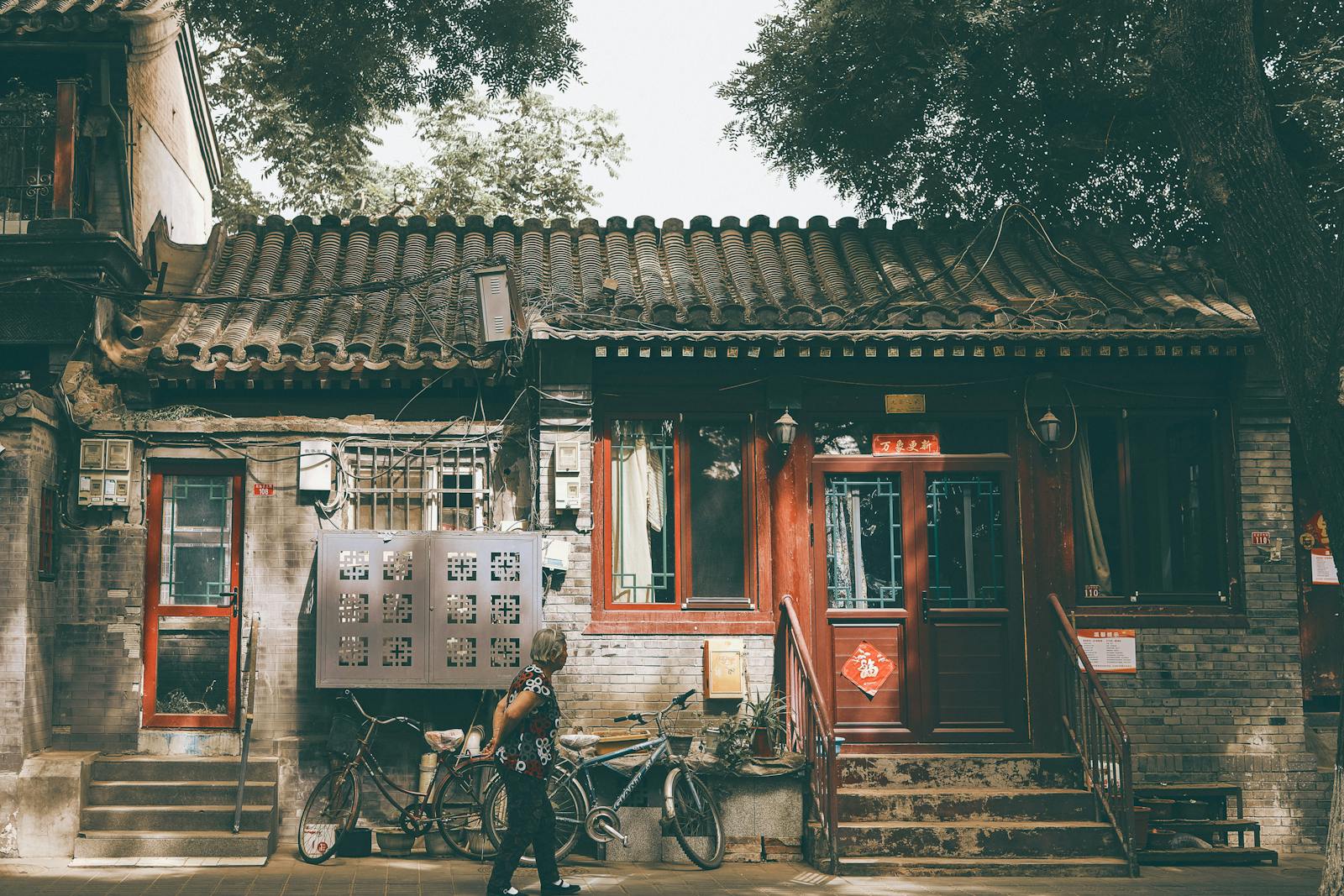
Why choose Dongcheng
Dongcheng’s core advantage is density of attractions. The Forbidden City’s east entrance, the National Museum, Tiananmen Square, Wangfujing, the Temple of Heaven (technically Chongwen but walkable from south Dongcheng), the Lama Temple, the Drum Tower, Nanluoguxiang, and Houhai lake — all fall within the district or immediately adjacent to it. You can plan a full week of sightseeing without ever taking more than a 20-minute metro ride.
The trade-off: Dongcheng hotels often cost 10–20% more than equivalent rooms in Xicheng or Haidian. And for travellers prioritising nightlife over sightseeing — particularly the Sanlitun bar district — Chaoyang’s hotel scene is the better fit. For everyone else doing a standard tourist itinerary, Dongcheng is hard to beat.
Dongcheng sub-areas compared
Dongcheng’s five main hotel sub-areas each have a distinct character. Here’s what you need to know before committing to one:
Wangfujing
The most central position in Beijing — Wangfujing station puts you one stop from Tiananmen East on Line 1, and the shopping street itself runs north from Chang’an Avenue. Hotels here command a premium for that centrality. Expect noise from the shopping district until around 10pm, and busy streets on weekends. The upside: you can walk to the Forbidden City’s east gate in 15 minutes. Best for travellers who want maximum sightseeing access and don’t mind paying for it.
Qianmen
South of Tiananmen Square, Qianmen is one of Beijing’s most atmospheric commercial streets — restored Qing-era shopfronts, roast duck restaurants, old snack vendors. Hotels here are slightly cheaper than Wangfujing, and you’re still within walking distance of Tiananmen. The south orientation means a slightly longer walk to the Drum Tower area, but the trade-off is access to Dashilar hutong, the historic fabric market, and some of Beijing’s oldest restaurants.
Andingmen and Lama Temple
The north end of Dongcheng, anchored by Andingmen station (Lines 2 and 5) and the Lama Temple — Beijing’s most impressive working Buddhist temple. Hotels here are quieter and generally cheaper than the Wangfujing core. The trade-off is a longer metro ride to Tiananmen (about 20 minutes). Good choice for travellers who specifically want the Lama Temple, Confucius Temple, or the Ditan Park area, or who are on a moderate budget but want to stay in Dongcheng.
Houhai and Gulou
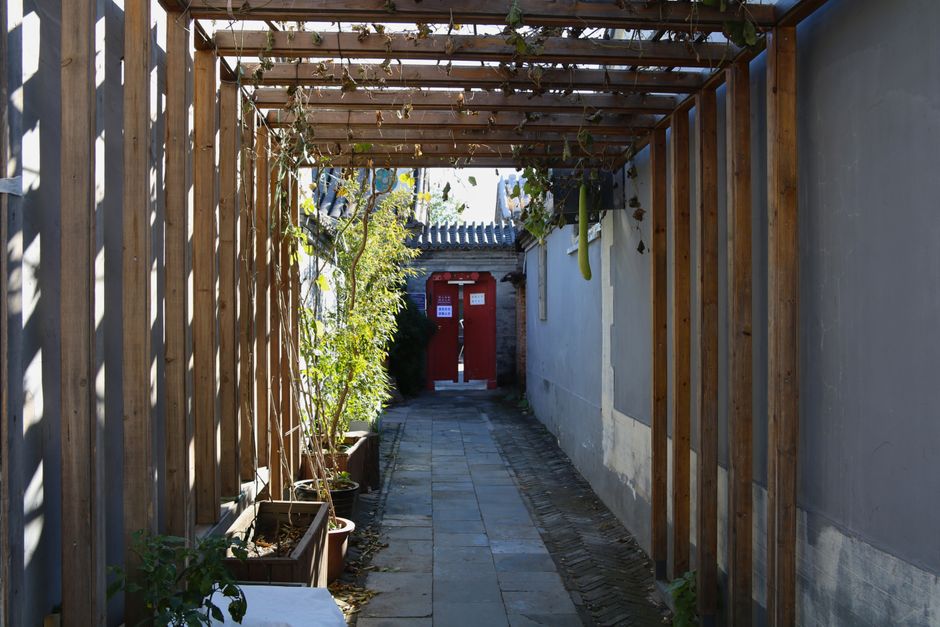
The northwest pocket of Dongcheng — technically shared with Xicheng at points — centred on Houhai lake and the Drum and Bell Towers. The vibe shifts here: more bars, cafes, courtyard restaurants, and a younger crowd than Wangfujing. Several Beijing hutong hotels and boutique courtyard guesthouses cluster in this area. It’s romantic, atmospheric, and quieter during the day. The bar scene around the lake means weekend nights can be noisy if you’re lakeside. Lines 2 and 8 give metro access (about 20 minutes to Tiananmen).
Nanluoguxiang
Beijing’s most famous hutong tourist strip — a north-south alley packed with snack vendors, indie boutiques, coffee shops, and guesthouses. Our Nanluoguxiang guide covers the strip’s shops and cafés in detail. The strip itself is touristy and crowded midday, but the surrounding hutong grid is genuinely residential and quieter. Hotels here tend toward the boutique-courtyard style rather than international chains. Lines 6 and 8 serve the area (about 15 minutes to Tiananmen). Good fit for travellers who want the hutong texture in their daily life rather than just as a half-day excursion.
Luxury Dongcheng hotels (¥2,000+)
Dongcheng has some of Beijing’s finest hotels. If budget isn’t the constraint, this tier delivers serious value — most of these properties have been renovated recently and compete at a global standard.
- The Peninsula Beijing (Jinyu Hutong, Wangfujing) — ¥3,200+ per night. One of the best hotels in China by most measures: the service is exceptional, rooms are large and beautifully maintained, and the Wangfujing location means you’re 15 minutes’ walk from the Forbidden City. The spa, pool, and in-house restaurants all justify the price point. Best choice if you’re spending significant money and want zero compromises.
- Mandarin Oriental Wangfujing (Wangfujing) — ¥3,500+ per night. New compared to the Peninsula and very polished. The rooms are among the largest in central Beijing, and the rooftop bar has excellent Forbidden City views. Service can occasionally lag behind the Peninsula but the rooms are genuinely excellent.
- Waldorf Astoria Beijing (Financial Street edge of Dongcheng/Xicheng) — ¥2,800+. Art deco interiors, a famous spa, and one of Beijing’s best hotel breakfast spreads. Location sits between Dongcheng and Xicheng — metro is required for most sightseeing, but the hotel experience itself is very strong.
- Han’s Royal Garden Hotel (Andingmen area) — ¥1,500+. Traditional courtyard hotel north of the Drum Tower. Not quite luxury by international standards but delivers an authentic Beijing atmosphere that the big international brands can’t replicate. Six courtyard buildings, period-appropriate furnishings, very quiet setting.
- Beijing Hotel NUO (Wangfujing, historic building) — ¥1,800+. The old Beijing Hotel in a new guise — the building dates to 1900 and has hosted visiting heads of state. Rooms are large and the history is real. Location directly on Chang’an Avenue is hard to beat.
Upscale Dongcheng hotels (¥1,200–2,000)
This tier offers the best value in Dongcheng — international standard rooms at prices that don’t require explaining to your accountant. Most of these properties were built or renovated in the last decade.
- Hilton Wangfujing (Wangfujing) — ¥1,200+. Reliable Hilton standard, excellent Wangfujing location, and a rooftop bar that’s worth the price of admission alone. Good choice for loyalty members who want Dongcheng centrality with Hilton points.
- Crowne Plaza Beijing Wangfujing (Wangfujing) — ¥900+. Solid international standard at slightly lower prices than the Hilton. The hotel’s age shows in the rooms if you look closely, but the beds are comfortable, the staff professional, and the location unbeatable.
- Hotel Éclat Beijing (East Third Ring Road, Chaoyang-adjacent) — ¥1,400+. Boutique design hotel with genuinely interesting art collection. Technically on the Dongcheng/Chaoyang border. Rooms are distinctive and well-designed — not the safe international-brand aesthetic. Best for design-oriented travellers who want something that feels like a gallery more than a hotel.
- The Orchid (Gulou/Drum Tower area) — ¥1,400+. Boutique courtyard hotel with 15 rooms, a rooftop terrace, and a genuinely individual design sensibility. One of Beijing’s most atmospheric places to stay if you want hutong immersion at a mid-upscale price. Not for travellers who need gym facilities or a spa — this is about atmosphere and personality.
- Layered Courtyard Hotel (Houhai area) — ¥1,800+. New-build property that interprets traditional courtyard architecture in a contemporary way. The interior design is exceptional — much photographed on Instagram, but the rooms also function well. Very quiet setting. Lake views from upper rooms.
Mid-range Dongcheng hotels (¥600–1,200)
Mid-range is where Dongcheng has the most competition — the tighter budget forces more specific trade-offs between location, room quality, and atmosphere.
- The Emperor Hotel (near Tiananmen) — ¥1,100+. Boutique property with a strong sense of design and a rooftop with Forbidden City views. Small rooms but excellent atmosphere. Has a loyal following among design-conscious travellers and is frequently booked up months in advance for peak season.
- Park Plaza Beijing Wangfujing (Wangfujing) — ¥800+. Good value at this location. Rooms are functional and well-maintained, with the standard Park Plaza aesthetic — comfortable without being exciting. The Wangfujing position more than compensates for the slightly corporate feel.
- Holiday Inn Express Wangfujing (Wangfujing) — ¥700+. The most affordable way to get a new, clean, reliable room in central Wangfujing. Breakfast is mediocre but functional; the room beds are genuinely good. Best for travellers who want a specific location and need to control costs.
- Penta Hotel Beijing (near Dongzhimen) — ¥600+. Design-forward chain that tends to deliver rooms that look more expensive than they are. The Dongzhimen location is good for airport access (Line 2 to the Airport Express) and decent for sightseeing.
Budget Dongcheng hotels and hostels (under ¥600)
Budget options in Dongcheng are genuinely limited — the premium location means that budget chains here cost more than equivalent rooms in outer districts. But the options that exist are worth knowing.
- Hanting Hotel Wangfujing — ¥350+. Chinese budget chain, rooms are small but clean and recently renovated. No frills whatsoever, but the beds are fine and the location is central. The standard Hanting franchise formula works here.
- Atour Hotel Wangfujing — ¥450+. One step above Hanting in finish and design — the Atour brand targets young business travellers and has raised the bar for mid-budget Chinese chain hotels. The Wangfujing branch is one of the better Atour locations in Beijing.
- Home Inn Dongcheng — ¥280+. The most affordable private-room option in central Dongcheng. Rooms are basic — very basic — but clean. If your Dongcheng budget is genuinely tight, Home Inn works for a bed and a shower.
- Beijing Downtown Backpackers (Nanluoguxiang area) — Dorms ¥100–180, private rooms ¥280–450. Beijing’s best-known hostel for backpackers and solo travellers. Excellent social atmosphere, bar on-site, good location right inside the hutong district. The private rooms are small but the value proposition is solid. Book well ahead for summer.
- Drum Tower Youth Hostel (Gulou/Houhai area) — Dorms ¥90–140. Very well-positioned hostel near the Drum Tower and Houhai. Quieter than Downtown Backpackers, slightly better community feel. The dorm beds are comfortable for the price and the common area is welcoming.
For a broader review of Beijing’s budget hotels and hostels, including options in Xicheng and Haidian where prices drop further.
Metro access from Dongcheng sub-areas
Beijing’s metro is reliable, frequent (every 3–5 minutes on major lines), air-conditioned, and the best way to move around the city. Here’s how each Dongcheng sub-area connects:
| Sub-area | Metro lines | Walk to station | To Tiananmen |
|---|---|---|---|
| Wangfujing | Lines 1, 5 | 5–10 min | 1 stop (3 min) |
| Qianmen | Line 2 | 10 min | 10 min walk direct |
| Andingmen/Lama Temple | Lines 2, 5 | 10–15 min | 20 min metro |
| Houhai/Gulou | Lines 2, 8 | 15 min | 20 min metro |
| Nanluoguxiang | Lines 6, 8 | 5–10 min | 15 min metro |
For comprehensive transit planning, see our transport primer for the city. The Airport Express runs from Dongzhimen (Lines 2 and 13) to PEK in 20 minutes — a useful fact if you’re staying in north Dongcheng. See also our guide to Beijing airport hotels if you need a pre-flight stay closer to PEK.
Where to eat near Dongcheng hotels
Location shapes eating options significantly. A quick breakdown by sub-area:
Wangfujing and Qianmen area
Quanjude (Qianmen branch) is Beijing’s most famous Peking duck restaurant — the queue is long and the experience slightly touristy, but the duck is genuinely excellent and it’s a landmark meal worth doing once. Siji Minfu on Wangfujing is a better, less touristy alternative duck option. Da Dong (multiple locations, nearest on Tuanjiehu) is the top-end Peking duck option and widely considered the best in the city — book well in advance, and see how it compares in our ranking of the city’s duck houses. For casual eating, the Wangfujing Snack Street is worth a single wander for the atmosphere alone, though the food quality varies widely.
Qianmen area specifically
Goubuli is the old-school steamed bun restaurant on Qianmen Street — a century-old brand that’s been franchised heavily but still delivers solid traditional baozi. Liubiju pickles shop nearby is genuinely historic and worth a visit even if you don’t eat — it’s been operating since the Ming dynasty.
Houhai and Gulou area
Mr. Shi’s Dumplings (near Nanluoguxiang) is consistently excellent — a small courtyard restaurant that makes dumplings with fresh-ground flour. Queues at lunch. Susu (Nanluo area) is a good Vietnamese-influenced modern Beijing restaurant with a leafy courtyard. Mei Mansion (near Houhai) is a Cantonese and imperial Beijing cuisine restaurant set in a restored historic residence — expensive but special occasion-worthy.
Booking tips for Dongcheng hotels
A few practical points that affect whether you get the room you want at the price you expect:
- Peak seasons: April–May (spring, cherry blossom and mild weather) and September–October (autumn, clear skies) are the busiest periods. Expect prices 20–40% above shoulder season rates and availability tightening from about four weeks out.
- Golden Week: The first week of October is extreme. Book two months ahead for any established hotel. Prices can double or triple for the October 1–7 period specifically. The same applies to the first week of May (May Day Golden Week).
- CNY (Chinese New Year): Late January or February, depending on the lunar calendar. The city empties, which means prices drop and tourist sites are less crowded — but many local restaurants close and some hotel services are reduced. Counterintuitively, this can be an excellent time to visit if you don’t mind adjusted operating hours.
- Booking platforms: For budget options, Ctrip (Trip.com) often has Chinese hotel rates lower than international booking platforms. For international chains, book direct or through the hotel’s loyalty programme for best rates and upgrade eligibility.
- Hutong and boutique hotels: The smaller courtyard properties fill up fast and don’t always appear on major international booking platforms. Check the hotel’s direct website or call directly. The Orchid and similar properties regularly sell out months ahead for peak season.
Dongcheng vs. other Beijing districts
Dongcheng is not automatically the right answer for every traveller. Here’s when to consider alternatives:
- Choose Chaoyang if you’re primarily here for business, nightlife, international dining, or the 798 Art District. Chaoyang’s hotel ecosystem is larger and in many ways more polished — particularly in the CBD and Sanlitun areas.
- Choose Xicheng if your budget is tight and you’re willing to trade 10 minutes of extra metro travel for lower prices. Beihai Park, Shichahai, and the west section of the hutong grid are in Xicheng.
- Choose Dongcheng if you’re doing a standard tourist itinerary: Forbidden City, Tiananmen, Temple of Heaven, Drum Tower, hutong walk. You’ll be glad every morning that your hotel is close to what you came to see.
For a full neighbourhood comparison across all Beijing districts, see our side-by-side look at every visitor district. For the master accommodation overview, see our guide to choosing the right area for your stay.
Frequently asked questions: Dongcheng district hotels
Which part of Dongcheng should I stay in?
For first-time visitors focused on sightseeing: Wangfujing. The location is unmatched and the hotel supply across all budgets is the best in the district. For hutong atmosphere and a slightly more local feel: Nanluoguxiang or Houhai. For a quieter base with good transport: Andingmen. For the south sightseeing cluster (Temple of Heaven, Dashilar): Qianmen.
Are Dongcheng hotels expensive compared to other Beijing districts?
Generally yes, particularly in the Wangfujing core. A mid-range room in Wangfujing costs roughly 10–25% more than a comparable room in Xicheng or Chaoyang Lido. The premium reflects location. Whether it’s worth paying depends on how much you value walking to the Forbidden City versus taking a 20-minute metro ride.
Is Dongcheng good for families?
Yes, very well suited. The Forbidden City, the National Museum, the Natural History Museum, and Tiananmen Square are all family-friendly in the sense of having enormous open spaces. The metro is easy to navigate with children. Most mid-range and upscale hotels can provide extra beds. The main challenge is noise — Wangfujing is busy, and Houhai on a summer weekend evening can be loud. Choose a hotel one street back from the main commercial strips for a quieter base.
Is it safe to stay in Dongcheng?
Dongcheng is very safe by global standards. Beijing in general has a very low rate of street crime. The main practical safety considerations are traffic (pedestrian crossings are less deferential than in Europe or North America) and air quality (pollution can spike in winter and some spring days — check the AQI before outdoor plans). Petty theft exists but is not prevalent in tourist areas.
Should I choose a hutong courtyard hotel or a regular hotel in Dongcheng?
Depends on what you want from your accommodation. Courtyard hotels — see our Beijing hutong hotels guide for specifics — offer exceptional atmosphere but generally smaller rooms, fewer facilities (no gym, sometimes no elevator), and occasional quirks in plumbing or heating in older buildings. Standard hotels offer predictable comfort and more space. The best courtyard hotels (The Orchid, Layered Courtyard, Han’s Royal Garden) compete at a genuine upscale standard. Budget courtyard guesthouses are atmospheric but facilities are basic.
What’s the cheapest option in Dongcheng?
Dorm beds at Drum Tower Youth Hostel or Beijing Downtown Backpackers from ¥90–140 per night. Private room budget: Home Inn Dongcheng from ¥280. If you need a private room with en suite bathroom for under ¥300 in central Dongcheng, expect very basic facilities. Dropping the budget requirement slightly to ¥400–450 (Atour or similar) substantially improves the room quality.
Which Dongcheng hotels are accessible for travellers with mobility limitations?
The large international hotels (Peninsula, Hilton Wangfujing, Park Plaza, Holiday Inn Express) all have lift access and accessible room configurations — call ahead to confirm specific requirements. The traditional courtyard hotels are generally poor for accessibility — multiple threshold steps, uneven stone floors, no lifts. Beijing’s metro stations have lifts but the coverage isn’t universal; check station accessibility before planning a route. The main sightseeing sites (Forbidden City, Tiananmen) have wheelchair-accessible paths but the ground is uneven in places.
When do Dongcheng hotel prices peak?
Peak pricing hits during Golden Week (October 1–7 and approximately May 1–5), April and May generally, and September–October. Lowest prices are typically January and February outside the Chinese New Year period (when the city empties and many locals travel home for CNY). December is also reasonably priced. If your travel dates are flexible, late February or early March gives good prices and the first signs of spring — crowds are thin and the city feels very local.
The Dongcheng verdict
Dongcheng is the right base for the vast majority of first-time and sightseeing-focused Beijing visitors. The concentration of major attractions, the quality of hotel options across all tiers, and the metro connectivity make it a reliable choice that’s hard to regret. Within Dongcheng, Wangfujing gives the best pure sightseeing access; Houhai and Nanluoguxiang give the best atmosphere; Andingmen gives the best value.
Best picks by tier: Peninsula Beijing for luxury; The Orchid or Hilton Wangfujing for upscale; Holiday Inn Express Wangfujing for mid-range; Hanting for budget reliability; Beijing Downtown Backpackers for hostels.
For more area-specific guides, see our Wangfujing hotels, Beijing hutong hotels, budget hotels and hostels, and luxury hotels Beijing. For neighbourhood comparison, see best neighbourhoods Beijing. For a comparison with the east, see our Chaoyang district hotels guide. For the broader pillar guide, see where to stay in Beijing. For full trip planning, head to our rundown of what a Beijing trip involves.