Where to Stay in Beijing
Best Neighborhoods in Beijing for Tourists: Complete Area Guide (2026)
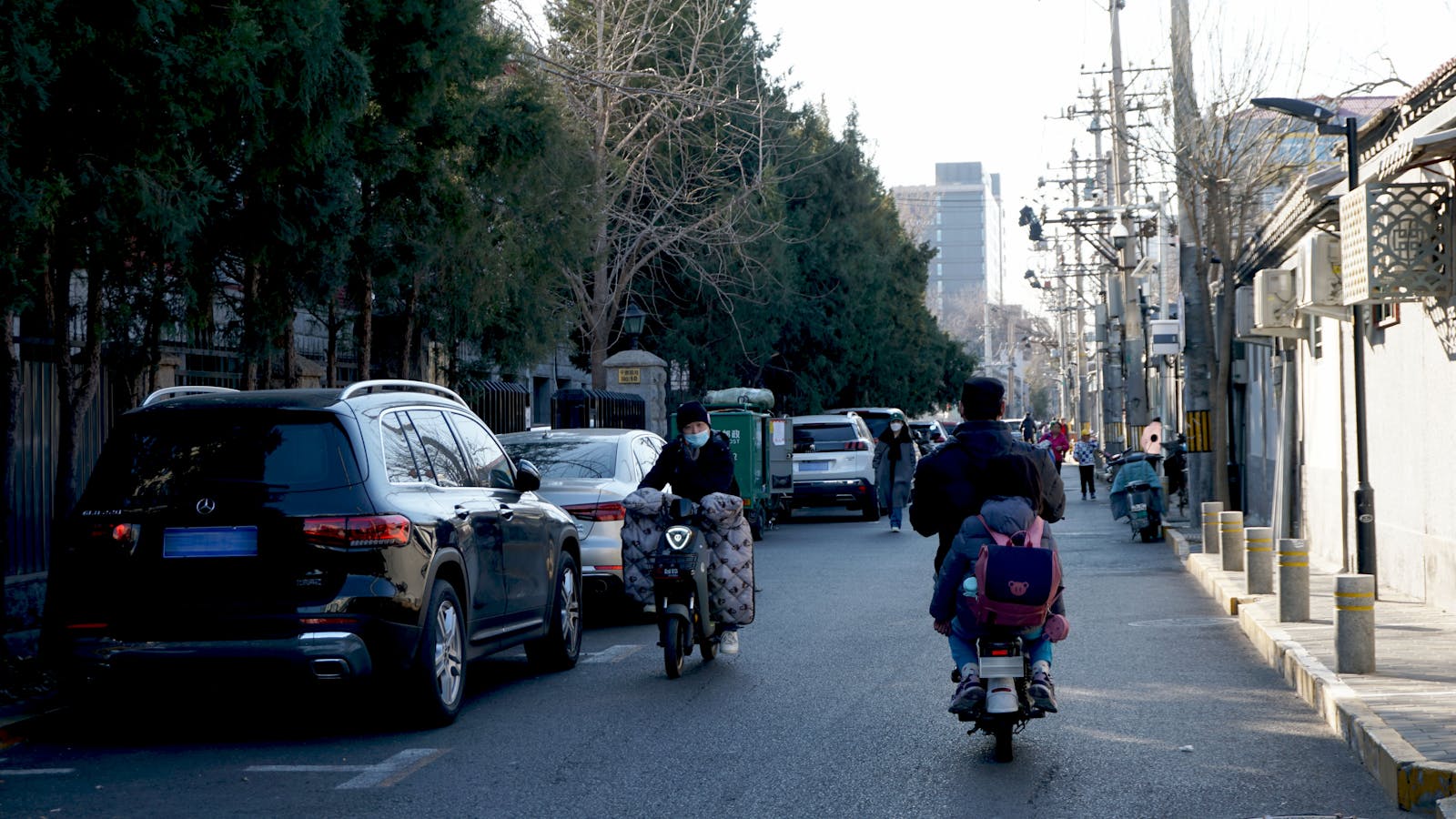
Your Beijing neighbourhood choice shapes the whole trip. Get it wrong and you’re losing 45 minutes a day in transit; get it right and the Forbidden City is a 15-minute walk. Here’s the direct verdict: first-timers book Dongcheng or Wangfujing — full stop. Return visitors, culture-seekers, and atmosphere-hunters should look at the hutong areas around Gulou, Nanluoguxiang, and Houhai. Anyone after modern Beijing — nightlife, international dining, the bar scene — belongs in Sanlitun/Chaoyang. The rest of this guide explains the tradeoffs in honest detail.
Planning where to sleep in Beijing? Start with our top-level guide to Beijing accommodation for the overall picture, then come back here for the neighbourhood breakdown. And for getting between these areas efficiently, see our guide to travelling between Beijing’s districts.
Which neighbourhood are you? Quick picks
- First trip, 3-7 days, want major sights easily: Dongcheng / Wangfujing
- Return visitor, want atmosphere and character: Gulou, Nanluoguxiang, or Houhai hutong areas
- Nightlife, modern Beijing, international dining: Sanlitun (Chaoyang)
- Couples wanting lakeside evenings and charm: Xicheng/Houhai
- Business, embassy district, CBD access: Chaoyang CBD or Sanlitun
- Budget but still central: Qianmen or Xicheng
- Specifically visiting Summer Palace / Olympic Park: Haidian (only justified if these are your primary focus)
Dongcheng District: the first-timer’s default
Dongcheng is the imperial east of Beijing — the side with the Forbidden City and its palace halls, Tiananmen Square, Wangfujing pedestrian street, Lama Temple, Drum and Bell Towers, and Nanluoguxiang. For a first trip, the case for basing here is simple: you won’t waste half your holiday on the metro.
The location premium is real — hotels here run 20-40% more than equivalent properties in Chaoyang or Xicheng. On a short first trip (4-6 days), you earn that back in saved commute time and the low-key pleasure of walking to the Forbidden City at 8am before the crowds hit. On a longer trip, it matters less.
What’s walkable from Dongcheng
- Forbidden City: 5-20 min walk depending on your hotel’s position
- Tiananmen Square: 10-25 min walk
- Wangfujing pedestrian street: within or adjacent to most Dongcheng hotels
- Lama Temple: 15-25 min walk or one metro stop (Line 5)
- Drum Tower and Bell Tower: 25-35 min walk or short metro ride
- Nanluoguxiang hutong street: 20-30 min walk or one stop
Hotel range in Dongcheng
Budget: from ¥400 (Hanting chain, Home Inn). Mid-range: ¥600-1,200 (Crowne Plaza, Holiday Inn, Penta, boutique hutong hotels). Upper mid: ¥1,200-2,000 (Hilton Wangfujing, Waldorf Astoria). Luxury: ¥2,500-3,500+ (Peninsula Beijing, Mandarin Oriental Wangfujing). See the Dongcheng district hotels guide for specifics.
Metro access
Dongcheng has the best metro access in Beijing. Line 1 (east-west spine), Line 2 (loop line), Lines 5, 6, 8, and 14 all cross or terminate here. Most Beijing destinations are under 30 minutes.
Honest drawbacks
You’re paying a premium for proximity. Wangfujing pedestrian street is unambiguously touristy — the snack street is overpriced, and the main drag feels like a Chinese version of Leicester Square on a weekend. Step two blocks off it and you’re in another city. If “authentic local Beijing” is your main goal, you’d do better in the hutong areas or Chaoyang side streets. But for a first-timer maximising sights per day, Dongcheng earns its price.
Wangfujing: the commercial core within Dongcheng
Wangfujing is a sub-area of Dongcheng rather than a separate district — Beijing’s most central hotel zone, a pedestrianised shopping street that’s been here for 700 years, and the place most international visitors end up on their first trip. The hotel density is unmatched: over 30 properties in 1km, from the Peninsula Beijing (¥3,200+) down to Hanting chain hotels (¥350+).
The metro station (Line 1) is right there. The Forbidden City is a 15-minute walk. Tiananmen is 20 minutes. If you’re only in Beijing for 3-4 days and want the most efficient possible base, Wangfujing is the answer. See our Wangfujing hotels guide for a full breakdown by tier.
Hutong neighbourhoods: Nanluoguxiang, Gulou, and Houhai
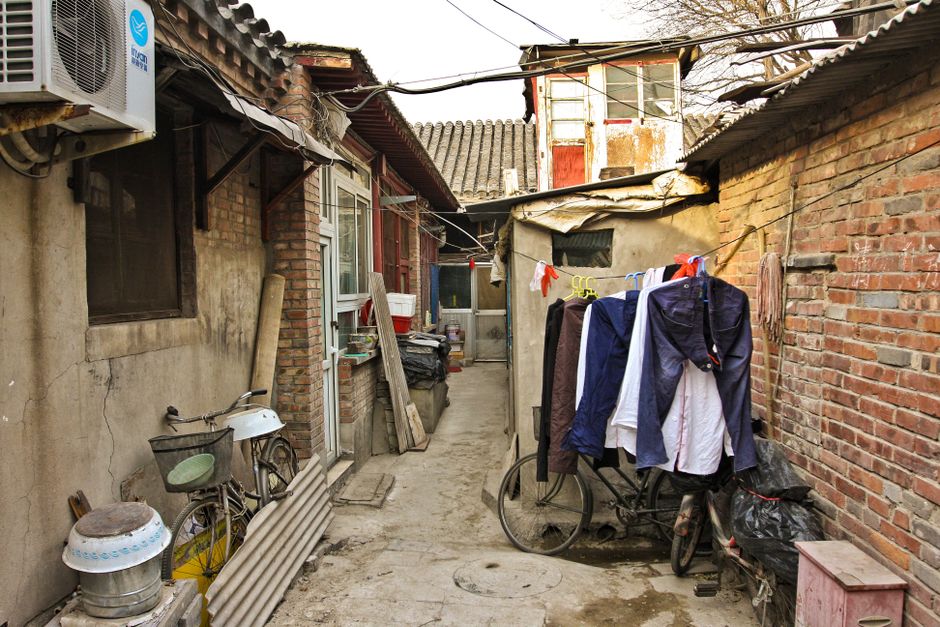
The hutong areas — those networks of grey-brick narrow lanes that date back to the Yuan Dynasty — are genuinely special, and if you’re a return visitor, a culture-seeker, or a photographer, they’re probably the right base. But go in with honest expectations.
Who hutong hotels suit: people who want to wake up inside Beijing’s historic fabric, who value atmosphere over amenities, who don’t need a pool or a 24-hour restaurant, and who can handle rolling a suitcase down a 90cm-wide alley. Return visitors who’ve already done the imperial circuit. Couples who’ll enjoy the evening lakeside bars at Houhai. Photographers who want to be out at 6am in the lanes.
Who they don’t suit: families with lots of luggage, light sleepers in the livelier hutong sections (Nanluoguxiang on a Saturday night), anyone who expects 24hr room service, and first-timers who’ll end up frustrated by slower taxi access on narrow lanes.
The trade-offs are real. Rooms are smaller than equivalent-price Western hotels. Bathrooms in older conversions are often compact. Some lanes flood briefly in summer storms. Noise from the hutong outside can carry.
Nanluoguxiang
Beijing’s most famous hutong street — heavily visited, lined with cafés and boutiques, lively on weekends. Great for first encounters with hutong culture but can feel overrun in peak season. Hotels here range ¥300-1,500+. Better for short stays than a 10-day base.
Gulou (Drum Tower area)
Slightly quieter than Nanluoguxiang, with a more neighbourhood feel. Good café scene, proximity to the Drum Tower (worth climbing), and easy access to Houhai lake. Mid-range hotels and boutique courtyard properties from ¥250-1,500+. This is the sweet spot for most hutong-seekers.
Houhai / Shichahai
Lakeside setting, willow trees, evening bar strip around the lake. More expensive than Gulou but with a mood that’s genuinely hard to replicate. Budget guesthouses from ¥250, boutique lakeside properties from ¥600-1,500+. Best for couples, best in spring and autumn.
For full hutong accommodation reviews: Beijing hutong hotels guide.

Chaoyang District (Sanlitun + CBD + embassy quarter): modern Beijing
Chaoyang is where modern Beijing actually lives. Sanlitun’s bar district, the CBD tower cluster, the embassy quarter, the 798 Art District, SKP luxury mall — all Chaoyang. The international restaurants here are better than anything in Dongcheng. The nightlife is the city’s best.
The honest caveat: you’re 25-35 minutes from the Forbidden City. Every sightseeing day starts with a metro ride. On a 3-day first trip, that’s a grind. On a 7-day second trip where you’ve already done the imperial circuit, it doesn’t matter — you’re using Chaoyang as your base for food, bars, and the galleries and studios of 798, and doing a couple of day trips to the old city.
Hotel range in Chaoyang/Sanlitun: budget from ¥400 (Holiday Inn Express, ibis), mid-range ¥800-1,500 (Renaissance, Hilton, Conrad), luxury ¥2,000-3,500+ (NUO Hotel, Mandarin Oriental Sanlitun, Opposite House). See our Chaoyang district hotels guide for full reviews.
Xicheng/Houhai: local atmosphere, lakeside guesthouses
Xicheng is Dongcheng’s quieter, cheaper western neighbour. Beihai Park is here (genuinely one of Beijing’s best parks, less visited than it deserves). Financial Street and Xidan shopping are here. The Houhai lakeside area straddles the Xicheng/Dongcheng boundary and has some of Beijing’s most atmospheric guesthouses.
Hotel range: ¥250-1,500, roughly 15-25% cheaper than equivalent Dongcheng properties. Walking distance to the Forbidden City west entrance. Good metro on Lines 1, 2, and 4. Best choice if you want a central location without paying Wangfujing prices. Good for couples who want the lakeside evening atmosphere without committing to a full hutong hotel.
Olympic Park area: only for a specific reason
The Olympic Park area (Chaoyang/north) is worth considering only if the Bird’s Nest, Water Cube, and Olympic heritage are a specific focus of your trip. It’s 40+ minutes from the Forbidden City by metro and 30+ minutes from Sanlitun. The hotels nearby are functional rather than distinctive. Unless you’re a sports architecture enthusiast or have a specific Olympic-related purpose, it’s not a smart tourist base.
Areas to avoid and common booking mistakes
- Beyond the 4th Ring Road without subway access: You’ll spend ¥80-120 on taxis every time you want to see anything. Check that your hotel is within 15 minutes’ walk of a metro station before booking.
- Unsolicited guesthouses near Beijing Railway Station or Beijing West: Touts near major railway stations offer “cheap rooms” — avoid. These properties are often unlicensed, cannot register you with police (legally required), and are frequently scams.
- Booking in Haidian for a standard tourist trip: The Summer Palace is wonderful but doesn’t justify basing an entire trip in a district with 40+ minute commutes to central sights.
- Prioritising hotel size over location: A smaller room in Wangfujing beats a sprawling room in Wangjing for a first trip, every time.
Seasonal booking advice
Peak seasons (book 2-3 months ahead, prices 30-50% higher): April-May (cherry blossoms, pleasant weather, Chinese and international tourists both), September-October (best weather, Golden Week — first week of October is extremely busy).
Golden Week (1-7 October): Tiananmen Square and Forbidden City hit their annual visitor cap fast. Hotels in Dongcheng and Wangfujing sell out by July for Golden Week. If you’re travelling at this time, book early or consider Chaoyang as your base — slightly less tourist-dense.
Winter (November-February, excluding Chinese New Year): Prices drop 30-50%. Cold but manageable with layers. Far fewer crowds. Chinese New Year (late January/early February) is busy again — many locals travel home but many domestic tourists visit Beijing, so hotels spike for a week.
Budget guide by accommodation tier
| Tier | Price range | Best areas | What to expect |
|---|---|---|---|
| Budget | Under ¥300/night | Qianmen, Xicheng, Gulou | Hostel dorms, budget chain hotels (Hanting, Home Inn, 7 Days). Clean, functional, basic English. |
| Mid-range | ¥300-1,000/night | Dongcheng, Wangfujing, Sanlitun | 4-star chains (Crowne Plaza, Holiday Inn), boutique hutong hotels, Atour/Hanting Plus. Breakfast often included. |
| Upper mid | ¥1,000-2,000/night | Wangfujing, Chaoyang | Hilton, Waldorf Astoria, NUO Hotel. Pools, spas, reliable English-language service. |
| Luxury | ¥2,000-3,500+/night | Wangfujing, CBD, Houhai | Peninsula, Mandarin Oriental, Aman Summer Palace, Bvlgari. Some of the best-value luxury in Asia relative to Western equivalents. |
For budget options, see our Beijing budget hotels and hostels guide. For luxury, see our luxury hotels Beijing guide.
Metro access by neighbourhood
| Neighbourhood | Key lines | Time to Forbidden City |
|---|---|---|
| Wangfujing | Line 1 (Wangfujing station) | 5 min walk |
| Qianmen | Line 2 (Qianmen station) | 10 min walk |
| Gulou / Houhai | Line 2 (Gulou Dajie), Line 8 (Shichahai) | 20-25 min |
| Sanlitun / Chaoyang | Line 10 (Tuanjiehu/Sanlitun) | 30-35 min |
| Xicheng (Beihai) | Line 6 (Beihai North), Line 1 | 10-15 min walk |
| Haidian | Lines 4, 16 | 40+ min |
The Beijing transportation guide covers metro lines, airport access, and day-trip logistics in full detail, and our line-by-line look at the metro fills in fares and interchanges. Use it alongside this neighbourhood guide when planning your base.
Beijing neighbourhood FAQ
What’s the best area for first-time visitors to Beijing?
Dongcheng or Wangfujing. You’re within 15-20 minutes’ walk of the Forbidden City, Tiananmen Square, Wangfujing street, and easy metro access to every other attraction. The premium over other areas is worth it on a short first trip.
Hutong hotel vs. regular hotel — which is better?
Neither is objectively better — it’s about what you prioritise. Hutong hotels give you atmosphere, character, and the genuine Beijing residential experience. Regular hotels give you reliable amenities, larger rooms, and easier logistics. If you’ve never stayed in a courtyard hotel and love the idea, do it — you won’t regret it. If you need a pool, 24hr room service, or a large bathroom, stick with a regular hotel. See the hutong hotels guide for honest tradeoffs.
Which area of Beijing is safest?
All central Beijing areas covered here are safe by international standards. Beijing has low violent crime. The main risks for tourists are petty theft in crowded tourist areas (Wangfujing, Tiananmen) and tea house scams (usually near Wangfujing — a stranger invites you to a “student calligraphy show” and you end up with a large bill). Sanlitun’s embassy area is especially well-policed.
What’s the best area for families with children?
Wangfujing is the most practical family base: walkable to major sights, large hotels with family rooms and pools (Hilton, Peninsula), good restaurant variety, and safe pedestrian streets. Sanlitun works well for families with older children who’ll enjoy the shopping and food scene. Avoid deep hutong areas with young children and lots of luggage.
Where are the best budget accommodation options?
Qianmen and Gulou for budget-friendly areas with character. Xicheng for the cheapest central options. For detailed hostel and budget hotel picks, see our Beijing budget hotels and hostels guide.
Chaoyang vs Dongcheng — what’s the real debate?
Location vs lifestyle. Dongcheng puts you next to the imperial sights — right for a first trip or culture-focused visit. Chaoyang/Sanlitun puts you in the middle of modern Beijing’s food and bar scene — right for a second trip, a longer stay, or a business trip. You’re looking at 25-35 minutes of added commute per sightseeing day if you base in Chaoyang. On a 3-day trip, that’s meaningful. On a 10-day trip, it matters less.
Should I stay near Beijing Capital Airport?
Only if you have an early morning flight or a very late arrival. The Airport Express connects Capital Airport to Dongzhimen (central Beijing) in 30 minutes and costs ¥25 — it’s efficient enough that staying near the airport purely for convenience adds transit time in the wrong direction. For flight connections, Beijing Daxing Airport has hotels on-site. See our Beijing airport hotels guide.
Where do most expats in Beijing live?
Chaoyang (Sanlitun, CBD, Lido), Shunyi (further east, with international schools), and Wangjing. These are residential areas with limited tourist accommodation — but Sanlitun has plenty of hotels serving the same international crowd, and our rundown of serviced apartments and Airbnb options covers staying in them for longer.
The bottom line
For a first Beijing trip: book Dongcheng or Wangfujing and don’t second-guess it. The location premium pays for itself in time and convenience. For a return trip or longer stay: consider the hutong areas for atmosphere, or Chaoyang for lifestyle. The neighbourhood genuinely matters more than the specific hotel within it — pick the right area and any decent property works.
Start with our where to stay in Beijing pillar guide for the full accommodation picture. For specific hotel picks: Dongcheng hotels, Chaoyang hotels, Wangfujing hotels, hutong hotels, luxury hotels, and budget hotels and hostels. For airport proximity, see Beijing airport hotels. For full trip context, see our main Beijing planning guide.