Skip to content

Independent guide · Updated weekly from Beijing

The Great Wall Near Beijing

Simatai Great Wall: Night Tours, Wild Sections & Visitor Guide (2026)

The Simatai Great Wall is the only Great Wall section in China officially open for night-time visits — and that single fact makes it one of the most distinctive Wall experiences available. Located 120 km northeast of Beijing adjacent to the historic Gubei Water Town, Simatai offers dramatic ridgeline wall, fewer crowds than Mutianyu or Badaling, and the unique opportunity to walk the illuminated Wall after dark. The 5.4 km of restored Wall climbs steeply over knife-edge ridges with 35 watchtowers and some of the most dangerous-looking Wall sections in China.

This guide covers everything for visiting Simatai Great Wall — the famous night tour, hiking the wild sections, tickets, transport, and combining Simatai with the spectacular Gubei Water Town for an overnight experience. Simatai is best for travellers wanting something different from typical Great Wall day trips — repeat visitors, photographers, and anyone with an extra day to explore beyond the Mutianyu/Badaling defaults.
Simatai Great Wall illuminated at night
Simatai is the only Great Wall section officially open at night.

Simatai Great Wall at a glance

Distance from Beijing
120 km northeast (2 hours by car).
Entry ticket
¥40 ($5.70) day; ¥40 night supplement.
Cable car
¥120 round trip — to East Watchtower 8.
Wall length
5.4 km open with 35 watchtowers.
Distinctive features
only Wall officially open at night; adjacent to Gubei Water Town; dramatic ridgeline.
Operating hours
Day 8am–5:30pm; Night April–November 5:30pm–10pm.
Best for
night photography, repeat visitors, Gubei Water Town overnight stays.

Is Simatai worth the trip from Beijing?

Honest answer: it depends entirely on what you plan to do there. Two hours each way is a significant commitment, and if you’re doing a pure day visit with no night tour, you’ll probably leave feeling slightly underwhelmed. Jinshanling’s open hiking stretches sit closer to the city and deliver a better experience for the travel time if the night tour isn’t your goal.

But if you’re doing the night tour — or better yet, staying overnight at Gubei Water Town — Simatai is worth every minute of that journey. There is nothing else like it. Warm lights illuminate ancient stones against the dark mountain silhouette. The Gubei Water Town lanterns glow below. The ridgeline fades into mist and darkness. It’s the Wall transformed into something genuinely atmospheric rather than a daytime tourist attraction.

The rule is simple. Night tour or overnight stay: go to Simatai. Day visit only: choose Mutianyu’s cable-car section or Jinshanling and save yourself the extra hour of driving.

The Simatai night tour — why it’s unique

From April through November, Simatai’s east section is illuminated by warm-toned lights from 5:30pm to 10pm. Visitors can walk the Wall under string lights, climb watchtowers as the sun sets, and experience the Wall in moonlight. It’s the only legal night-time Great Wall experience in China, and a very different thing from the illuminated-landmark tours back in the city.

What to expect on the night tour

  • Entry timing: 5:30–7pm last entry depending on sunset.
  • Cable car operates until 9pm for night visitors.
  • Illuminated section: ONLY between East Watchtowers 5 and 6 (a single watchtower-to-watchtower segment). Other towers are visible from the lit section but not walkable at night. This is a recent restriction — older guidebooks still list 1–8 as walkable, but as of 2026 only 5–6 is open.
  • Atmosphere: dramatically different from day — quieter, romantic, photogenic.
  • Best timing: arrive 6pm in summer, walk to East Watchtower 5 by sunset, photograph from there until 9pm.
Simatai Great Wall illuminated at night with Gubei Water Town below
Simatai’s night illumination looking toward Gubei Water Town (Photo: Eclipse Chasers / Pexels)

Night photography tips

  • Tripod essential
  • Wide aperture (f/2.8 or wider) for low light
  • ISO 400–1600 depending on conditions
  • Long exposures (10–30 sec) for blue hour
  • Bring spare camera batteries — cold drains them fast
  • Dress warmly — temperatures drop sharply at altitude after dark

Simatai Great Wall difficulty and what to expect

People underestimate Simatai because the cable car takes some of the effort away. Don’t. The east section is steep — genuinely steep — with stone steps at gradients that will have your thighs burning on the descent. Handrails are present on the main section and they’re useful, not just decorative.

The famous Heaven Stairs section (East Watchtower 16, the far eastern end) is a different matter entirely. Near-vertical at roughly 85 degrees, it requires real confidence with heights and genuine upper-body effort to climb. People with any vertigo, weak knees, or uncertain footing should skip East 16 entirely and stay on the main cable-car section. The views from the main section are dramatic enough — you don’t need to prove anything by doing the Heaven Stairs.

The western section is closed for safety reasons and has been for years. Don’t try it.

Even on the “easy” cable-car approach, you’ll encounter steep stone stairs between watchtowers. The night tour specifically means descending those stairs in the dark. Bring a headlamp, wear shoes with grip, and don’t rush. This isn’t Badaling.

Simatai tickets and pricing 2026

Ticket Price
Day entry ¥40
Night entry ¥80 (combined day + night supplement)
Cable car round trip (night tour) ¥160
Cable car round trip (day) ¥120
Gubei Water Town entry ¥150
Combo (Simatai + Gubei Water Town) ¥190

Important ticket rule: Simatai night tour tickets are not sold separately. You must buy a package combining Gubei Water Town entry + Simatai entrance + round-trip cable car. Total package roughly ¥190–¥240. Hotel guests staying inside Gubei Water Town get a special price of ¥120 for the Wall + cable car (and free Gubei Water Town entry). Pre-book at least one day in advance via the Gubei Water Town WeChat official account or a third-party travel agency — night tours have visitor caps and sell out during peak season.

Transport from Beijing to Simatai

Getting to Simatai takes planning. It’s further than most Wall sections — budget your travel time accordingly. Full transport options are covered in our rundown of the journey out from the city.

Option 1: Tourist bus from Beijing (¥48 each way)

Direct tourist bus from Dongzhimen to Gubei Water Town runs from Wukesong, Sanyuanqiao and Dongzhimen at multiple times daily. ¥48–¥80 each way; allow 2.5 hours. Tickets at the bus station or via Trip.com.

Option 2: Group tour (¥800–¥1,200)

Combined Simatai-Gubei Water Town tours include hotel pickup, both attractions, and return drop-off. Most include lunch and the night-time return.

Option 3: Private car/driver (¥1,200–¥1,800/day)

For 2–4 travellers. Allows day-and-night flexibility.

Option 4: Stay overnight at Gubei Water Town

The recommended approach for serious Simatai visitors. Day at Simatai, evening at Gubei Water Town with night-time wall return. ¥600–¥1,500/night for hotels in the town.
Gubei Water Town canal evening with lanterns
Gubei Water Town is the perfect overnight pairing for Simatai night-wall visits.

Best route on Simatai

East section (recommended for night tour)

  • Take cable car up to East Watchtower 8
  • Walk west toward East Watchtower 1
  • Stop at Watchtower 5 (best photo angle)
  • Return via cable car or descend by walking
  • Total: 1.5–2 hours

Full east-to-west traverse (advanced)

  • Cable car up to East 8
  • Walk east to East 16 (steepest section, the famous “Heaven Stairs”)
  • Return to East 8
  • Cable car down
  • Total: 4–5 hours, advanced fitness required

What to eat at Simatai and Gubei Water Town

On the wall itself, options are thin. There’s a canteen near the cable car base serving basic noodles and rice dishes for ¥30–50. It does the job but nothing more. Don’t plan your lunch around it.

Gubei Water Town is a completely different story and well worth saving your appetite for. Yucai Restaurant is the standout choice for traditional Chinese food — expect to pay ¥60–120 per person for a proper sit-down meal with local dishes. The canal-side cafes are good for lighter bites and coffee with water views. And the lamb skewer vendors scattered through the town are genuinely excellent — ¥5–10 per stick, as good as anything on the city’s street-food circuit, best eaten while walking the lantern-lit alleys.

The recommendation is straightforward: grab a quick snack at the Wall base, do your hiking, then come down and eat properly in Gubei Water Town. The food scene there is far better than anything at the Wall.

Simatai vs Jinshanling — which should you choose?

This is the most common choice people face when planning a Wall trip beyond Mutianyu and Badaling. Here’s how it actually breaks down.

Choose Simatai if: the night tour is the point of your visit, you’re pairing with a Gubei Water Town overnight, you want dramatic knife-edge ridge scenery, or you’re happy with a shorter but more intense hiking section.

Choose Jinshanling if: maximum hiking distance is your priority, you want multiple hours of uninterrupted wall walking, photography in natural light is the goal, or you’re combining with a Gubeikou visit. Jinshanling is also about 30 minutes closer to Beijing, which matters when you’re adding up the day.

The walkable section at Simatai is genuinely limited — the illuminated night section is just one segment between East 5 and 6. For pure hiking satisfaction, Jinshanling wins. For the unique atmosphere of the night tour paired with Gubei Water Town, nothing comes close to Simatai. If you have time for both on a longer Beijing trip, they complement each other well — both are on the same general northeastern route. Also consider Gubeikou if you want a wilder, less commercial option in the same area.

Best time to visit Simatai

The night tour is only available April–November. Best months for the experience:

  • May to early June: warm enough for late evenings, manageable crowds.
  • September to October: pleasant temperatures, autumn colors. Avoid Oct 1–7.
  • Mid-October to early November: peak autumn foliage during night-tour season.

Avoid: heavy rain or fog days; the dramatic ridgeline views and night photography depend on visibility.

Money-saving tips for Simatai

Simatai is one of the more expensive Wall sections once you factor in the full package. These are the legitimate ways to reduce the cost.

The biggest saving: stay inside Gubei Water Town. Hotel guests get Wall access and cable car for ¥120 combined (versus ¥190–240 for external visitors), plus free Gubei Water Town entry. Depending on how you book, this can save ¥60–100 on the attraction fees alone — and that’s before you account for not needing a separate taxi from outside. It doesn’t turn the overnight stay cheap, but it takes the sting out of it.

Book early. Night tours cap at 3,000 visitors and do sell out during peak weeks. Aim for at least 2 days ahead in normal season; a full week ahead for October weekends when autumn tourism is at its peak.

Time your visit strategically. Weekdays in May and June, or mid-October (avoiding the first week national holiday), combine the lowest ticket prices with shortest queues and the best conditions for photography. These off-peak windows deliver a genuinely better experience, not just a cheaper one.

Combining Simatai with Gubei Water Town

Gubei Water Town is the perfect Simatai pairing — a recreated traditional canal town at the foot of the wall. Hotels, restaurants, shops, lantern-lit alleys, and a dedicated cable car connecting the town to Simatai make for a magical overnight experience. For planning this alongside other trips out of the capital, it fits neatly into a two-day circuit.

Recommended itinerary:

  • Afternoon: arrive at Gubei Water Town, lunch, explore the canals.
  • Late afternoon: take cable car up to Simatai for sunset.
  • Evening: stay on the wall through golden hour and into night photography.
  • Night: return to town for dinner and lantern-lit walks.
  • Next morning: optional sunrise visit to Simatai or Wall hike.

Accessibility at Simatai

The cable car itself is wheelchair-accessible, and staff are generally helpful with mobility-impaired visitors. The platform area at the top gives reasonable views without requiring any wall walking. For visitors with limited mobility who still want to say they’ve been on the Great Wall, Simatai’s cable car solution works.

The wall itself is not accessible. Steep stone stairs between watchtowers make movement beyond the cable car landing difficult for anyone with limited knee or hip mobility. This is true for both the day and night tours — perhaps especially the night tour, where descending steep stairs in low light adds another layer of difficulty. Be realistic about physical requirements before committing to Simatai’s wall sections. Mutianyu has a toboggan descent and better infrastructure for limited-mobility visitors.

What to bring to Simatai

  • Sturdy hiking shoes (trails are steep and uneven)
  • Tripod (essential for night photography)
  • Camera with low-light capability
  • Headlamp or flashlight for darker watchtowers
  • Warm layered clothing — even summer nights can be cool at altitude
  • Water (1L+ per person)
  • Snacks (limited food at base)
  • Cash for vendor purchases
  • Spare batteries

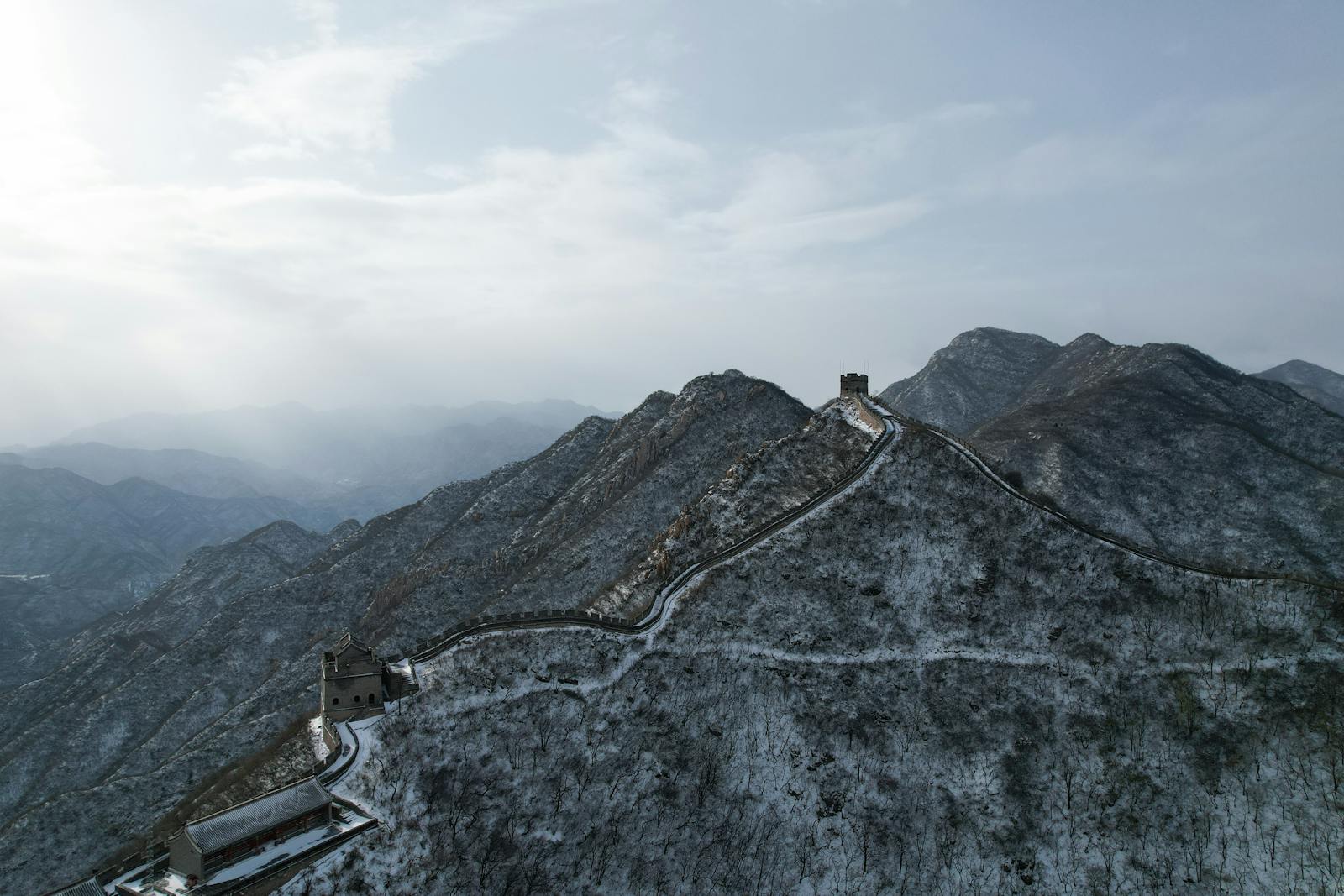
Simatai has one distinction no other section can offer: it is the only stretch of the Wall near Beijing that is illuminated after dark. The shot is taken from below, in the water town, during the twenty usable minutes of blue hour about forty minutes after sunset. Our guide to photographing the Great Wall through the day and the seasons sets out that window alongside the sunrise sections, and explains the current drone rules before you pack one.

Simatai Great Wall FAQ

Is Simatai the only Wall open at night?

Yes — officially. Some other Wall sections allow sunset entry but only Simatai has nightly illumination from April–November.

How does Simatai compare to Mutianyu?

Simatai is more dramatic and steeper but much further from Beijing (2 hours vs. 75 min). The night tour is unique. Mutianyu is more convenient and family-friendly. Pick Simatai if night photography or a Gubei Water Town overnight matters; Mutianyu otherwise.

Can I do Simatai as a day trip from Beijing?

Yes but it’s tight — 4 hours of round trip travel + 3 hours on the wall = full day. The day tour misses the night experience. For best value, plan an overnight at Gubei Water Town.

Is the East 16 (Heaven Stairs) section safe?

It’s the steepest restored section of the Great Wall — gradient up to 85 degrees with handrails. Not for those with vertigo or weak knees. Closed during heavy rain or ice.

Are children allowed on Simatai night tours?

Yes, kids 6+ are usually fine with adult supervision. The combination of darkness and steep paths makes it less suitable for very young children.

Is photography allowed?

Yes, including tripods. Drones are not permitted.

Is Simatai accessible for wheelchair users?

The cable car landing is accessible. The wall itself has steep stairs that limit wheelchair movement beyond the immediate area.

How early should I book Simatai night tickets?

At least 2–3 days ahead during normal season is the safe minimum. For October weekends — especially the first two weekends of the month when autumn foliage peaks — book a full week ahead. The 3,000-visitor nightly cap fills faster than most people expect, and you don’t want to make the two-hour drive only to find tickets gone.

Can I combine Simatai with Jinshanling in one day?

Technically possible — they’re about 40 km apart and you could drive between them. But doing both Wall sections properly in a single day is genuinely exhausting and you’d shortchange both experiences. Far better to split them across two days. Check our notes on multi-day Wall treks for itinerary options that combine the northeastern sections sensibly.

What if it rains during the night tour?

Light rain: the tour runs. Bring waterproofs and expect wet stone stairs — take your time descending. Interestingly, the mood in a light drizzle can be genuinely atmospheric, with the lights reflecting on wet stone and mist moving through the valleys. Heavy rain or thunderstorm: the cable car closes and the tour may be cancelled. Check the forecast before you go and contact Gubei Water Town if severe weather is expected — they can advise on rescheduling.

The bottom line on Simatai Great Wall

Simatai delivers two unique experiences unavailable elsewhere: the only legal Great Wall night tour and the dramatic Heaven Stairs section. Best paired with an overnight at Gubei Water Town. Plan a 24-hour trip from Beijing with afternoon arrival, sunset wall walk, dinner in the canal town, and morning return.

For other Great Wall sections, see Mutianyu, Jinshanling, Jiankou’s ruined towers, and our Great Wall hiking guide. Nearby options include Gubeikou for a wilder alternative in the same area. For trip logistics, see our Beijing to Great Wall transport guide and day trips from Beijing.

© 2026 Beijing Tourism Guide

北京 · 39.9042° N, 116.4074° E