The Great Wall Near Beijing
Great Wall Photography: Sections, Light and the Drone Rules
Where to shoot the Great Wall and when, which lens actually matters, how to arrange sunrise access, and why you should leave the drone at home in 2026.
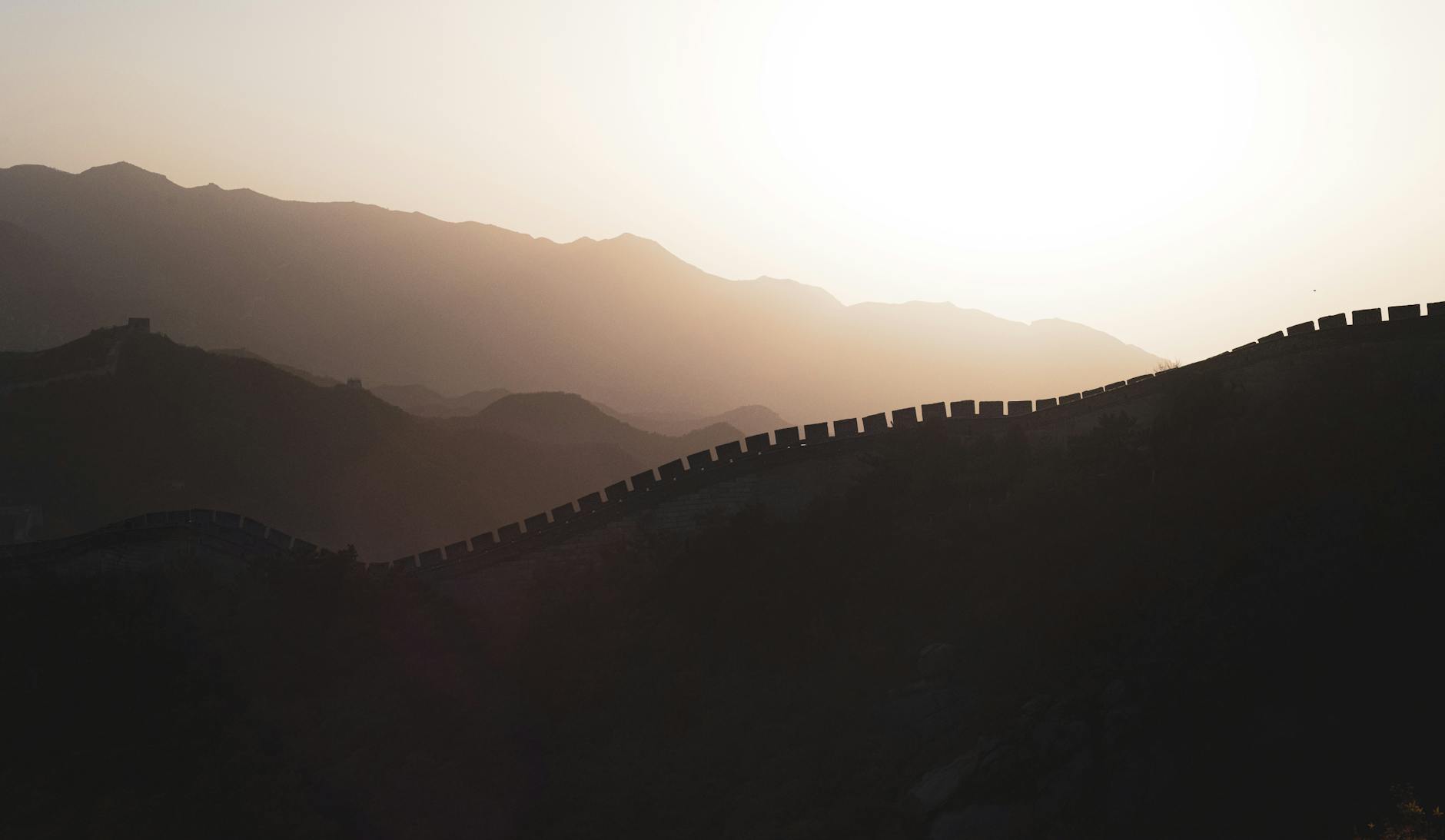
At twenty past four on an October morning the car park at Jinshanling is silent, cold and full of headtorches. Nobody is talking much. Everyone is doing the same mental calculation — forty minutes of climbing in the dark, then a tower to yourself if you get there first, and about eleven minutes of light that will actually be worth the alarm. Serious Great Wall photography is mostly logistics: being on the right section, facing the right way, at an hour when almost nobody else has bothered. The camera settings are the easy part.
This guide covers which sections give you which shots, how the light behaves through the day and across the seasons, what kit is worth carrying up a mountain, the compositions that work on a subject this repetitive, the current legal position on drones, and how to arrange sunrise access without breaking any rules. Prices were checked in September 2026; treat them as indicative rather than a quotation.
The short answer
Shoot Jinshanling at sunrise if you want the classic layered-ridgeline image, Jiankou from the Zhengbeilou tower at sunset if you want drama and ruin, and Mutianyu on a weekday morning in late October if you want a beautiful restored wall in autumn colour without a two-hour scramble in the dark. Everything else is a variation on those three.
Avoid Badaling entirely unless documenting crowds is the point. It is the most photographed section and the least photogenic, because you cannot get a clean frame and the light is nearly always wrong by the time you reach anything worth pointing a camera at.
Sections, ranked for the camera
| Section | Signature shot | Best light | Difficulty |
|---|---|---|---|
| Jinshanling | Layered towers receding to the horizon | Sunrise, east-facing | Moderate — 40 min climb |
| Jiankou | Ruined wall on knife-edge ridges | Sunset from Zhengbeilou | Hard and genuinely risky |
| Mutianyu | Restored wall in autumn colour | First light, or late afternoon | Easy — cable car |
| Gubeikou | Wild wall, no restoration, no people | Golden hour either end | Moderate |
| Huanghuacheng | Wall running into a reservoir | Late afternoon | Easy to moderate |
| Simatai | The wall lit at night from below | Blue hour | Easy from the town |
| Badaling | Crowds | — | Easy, and not worth it |
Jinshanling
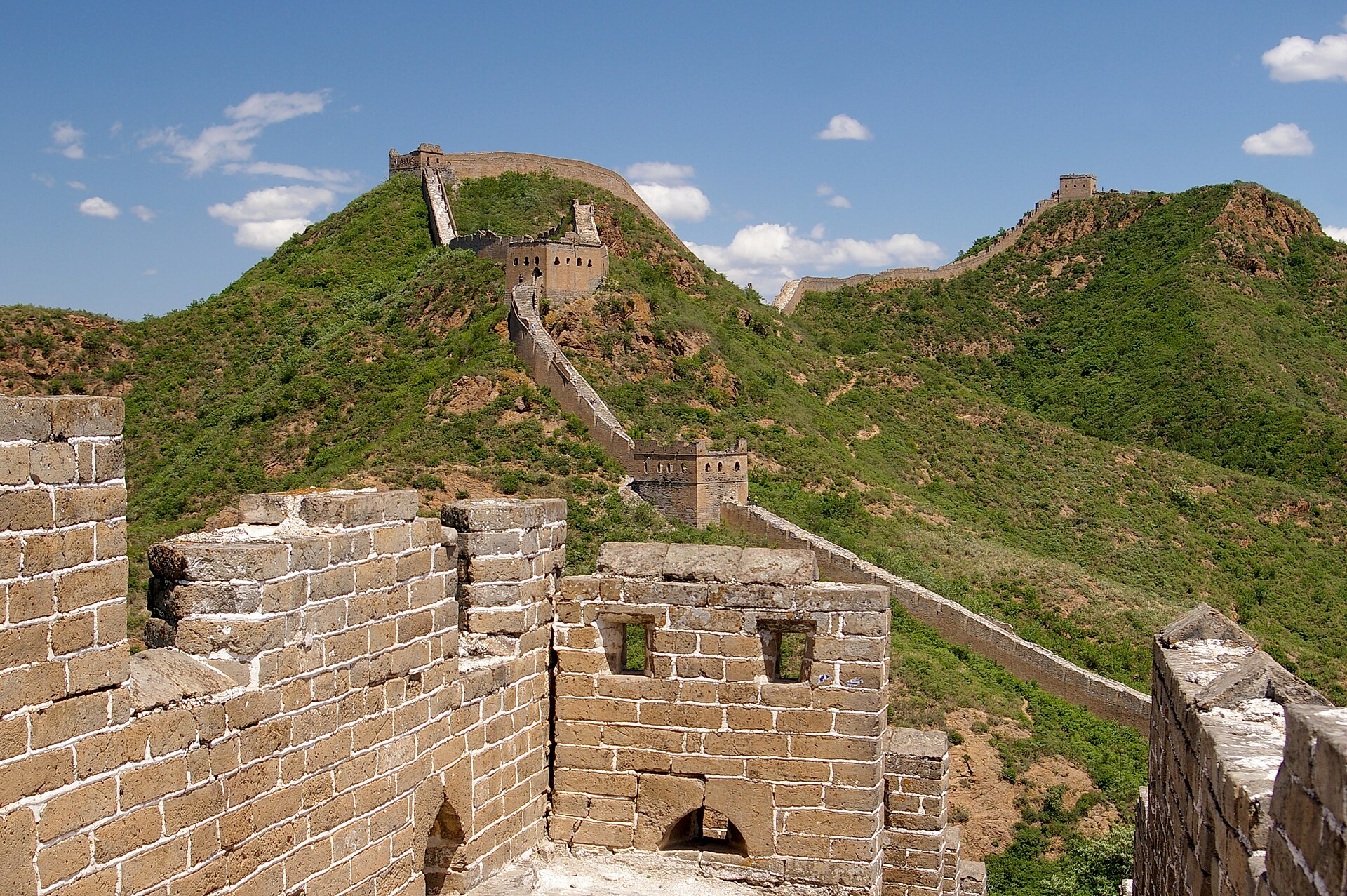
Jinshanling is the photographer’s section and everyone there knows it. Roughly ten kilometres of partly restored, partly wild wall running east–west along a ridge, with towers close enough together to stack into a telephoto compression that produces the image most people have in their heads when they think of the Great Wall.
Shoot east from around the East Five-Window Tower at sunrise. The gate opens early enough for sunrise in most seasons — confirm on the day rather than assuming, because the hours shift seasonally — and it is roughly a two-and-a-half-hour drive from central Beijing, which means leaving the city at about 2am for an autumn sunrise. Most photographers stay in a guesthouse in Jinshanling village the night before, which costs ¥200–400 and turns an impossible morning into a manageable one.
Jiankou
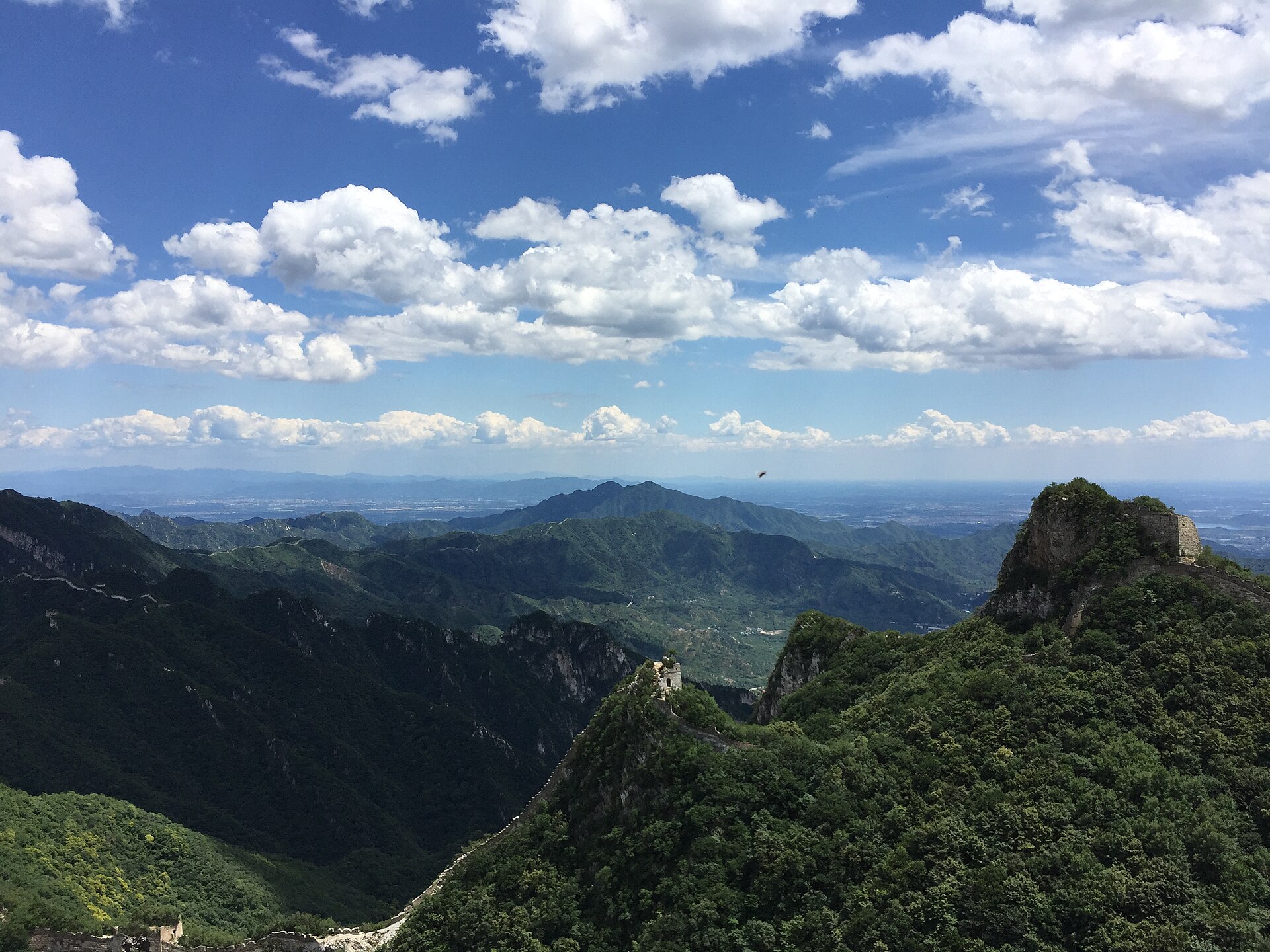
Jiankou is the most dramatic wall within reach of Beijing and the most dangerous. Completely unrestored: loose brick, no parapet in places, vertical drops, and a well-documented history of serious accidents. The Zhengbeilou tower gives you the view down the ridge towards the section known as the Sky Stairs, and it is spectacular at sunset with cloud.
Go with a guide who knows the route, go in dry conditions, and be honest with yourself about scrambling in fading light with a tripod on your back. Start early enough to be off the ridge before dark; retracing ruined masonry at night is the plan to avoid.
Mutianyu
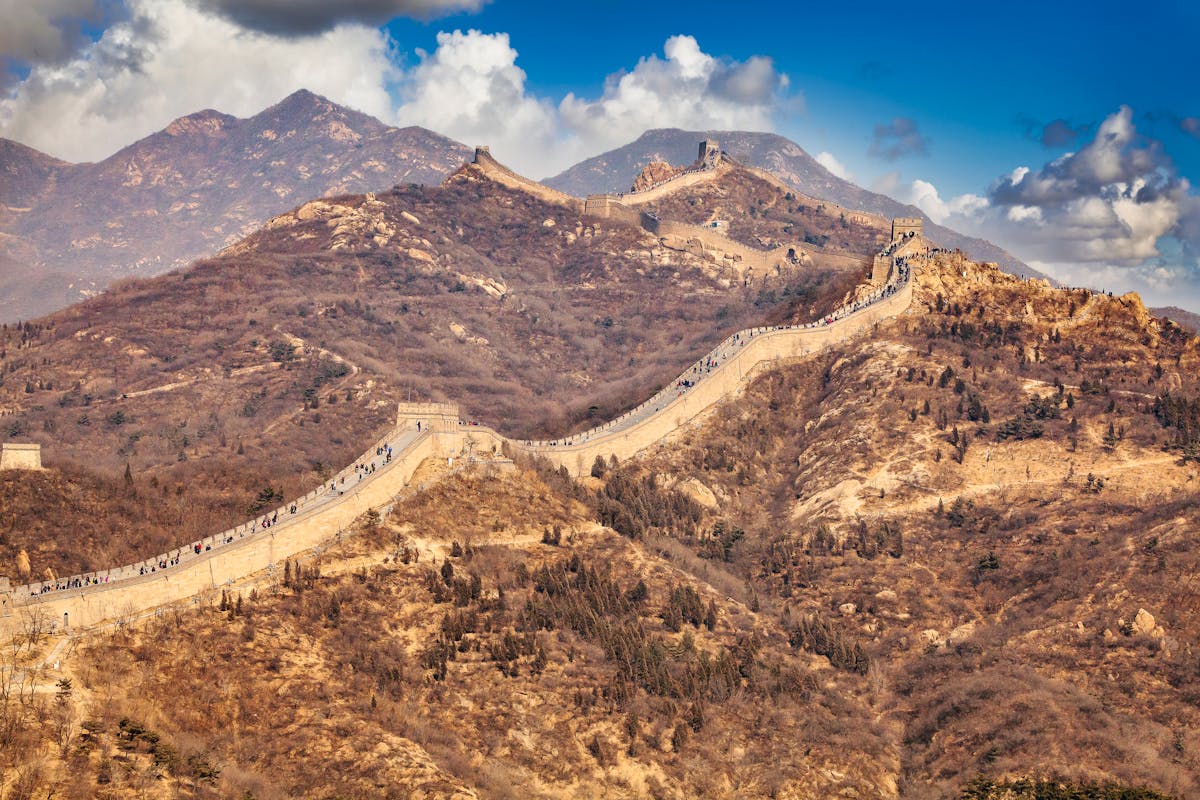
Mutianyu is not a wild-wall shot and does not pretend to be, but it is the best restored section to photograph and the easiest to work. Entry ¥40 (¥45 with a postcard), cable car ¥140 return, shuttle ¥15. Take the first gondola of the day, walk east towards towers 20 to 23, and you will have long stretches to yourself for the first hour. The chestnut and maple slopes below the wall turn properly in the second half of October.
Gubeikou and Huanghuacheng
Gubeikou is unrestored, quiet and much less known, which makes it a good choice if you want images that do not look like everyone else’s. Huanghuacheng gives you the one composition nowhere else offers: the wall descending into a reservoir and continuing under the water. Late afternoon, from the western shore.
Simatai after dark
Simatai is the classic night-time subject, and the shot is from below, in Gubei Water Town, during blue hour — the lit wall on the ridge above the village lanterns. Twenty minutes of usable light about forty minutes after sunset. Staying in the town removes all the timing problems.
Light through the day
Sunrise
The best light on the Wall, and not only because of the colour. Morning mist pools in the valleys between ridges in autumn, which is what separates a good layered image from a flat one — the haze gives you tonal separation between successive ridgelines that midday light destroys. You get perhaps twenty minutes of it.
Practically, sunrise means either sleeping near the section or leaving Beijing at an unreasonable hour. Jinshanling village and the Gubei area both have guesthouses. Mutianyu’s base village does too.
Golden hour and sunset
Easier to arrange and nearly as good. The last hour before sunset gives you long shadows raking across the brickwork, which shows the texture of the wall itself in a way that nothing else does. The catch is that most managed sections close well before sunset — typically around 17:00 to 18:00 depending on the season — so the late light is only available at unmanaged sections like Jiankou and Gubeikou, or from outside the gates.
The midday problem
Between about 10am and 3pm the light is flat, contrasty and unflattering, the ridgelines lose separation, and the wall goes the colour of concrete. This is also when almost every visitor is there. If midday is all you have, work close instead of wide: brickwork, arrow slits, the geometry inside a tower doorway, the pattern of crenellations. Save the sweeping landscape for another day.
Blue hour and night
Only realistic at Simatai from Gubei Water Town, or from outside a section’s gates. On a clear moonless night away from the city the Milky Way is visible over the ridges in summer, though light pollution from Beijing washes the southern sky. To be on the Wall itself after dark you need an authorised night visit, such as Simatai’s night ticket from Gubei Water Town, or a legal camping trip with an operator — the camping guide covers who runs it and what it costs.
Seasons
- Late September to early November — the best window by a distance. Clear air, low humidity, morning valley mist, and autumn colour from mid-October. Avoid 1–7 October, which is Golden Week.
- December to February — snow on the Wall is the shot everyone wants and almost nobody gets, because Beijing’s winters are cold and dry rather than snowy. When it does fall, go the next morning; it is gone within days. Bare hillsides otherwise, and the low sun angle is genuinely useful.
- March to May — green returns and the light is decent, but spring dust storms can wipe out visibility for days at a time and the haze between events is worse than autumn’s.
- June to August — humid, hazy and hot, with the compensation of dramatic afternoon cumulus and occasional thunderstorm light. Rain also brings the clearest air of the summer for a day or two afterwards.
Check the air before committing to a long-view section. Haze flattens ridgelines into a single grey mass and no amount of dehaze slider recovers it — the air quality guide explains what readings to react to.
Kit
You are carrying everything up a mountain in the dark, so the honest advice is to take less than you want to.
- A telephoto is the essential lens, not the wide. 70–200mm does most of the work; anything up to 400mm lets you compress five ridges into one frame, which is the signature Great Wall image. A wide-angle makes the Wall look small and the mountains flat.
- One wide or standard zoom for towers, doorways and the occasional environmental shot. 24–70mm is plenty.
- A tripod if you are shooting sunrise, blue hour or brackets. Carbon fibre, and accept that you will resent it on the climb. Note that some managed sections restrict large tripods — ask at the gate.
- Spare batteries, kept warm. A winter sunrise at −10°C halves your battery life and the cold is worse on the ridge than in the car park.
- A headtorch with a red mode, which you will need for the walk in and which keeps you popular with everyone else in the tower.
- A polariser for cutting haze in daylight and deepening a blue sky. A graduated ND is useful at sunrise; a 10-stop is mostly dead weight.
- Gloves you can shoot in. October mornings on a ridge are colder than the forecast for Beijing suggests.
What to leave: a second body, a macro, a heavy fluid head, and anything you would be upset to drop on stone steps. Phone photography on the Wall is genuinely good now, particularly for the wide establishing shots, and a phone plus one telephoto covers most of what a visitor actually wants.
Composition on a repetitive subject
The Great Wall’s difficulty is that it looks the same for hundreds of metres at a time. Four things reliably rescue a frame:
Layering. Find a position where three or more ridges stack behind each other and compress them with a long lens. Mist or haze between the layers gives you the tonal separation that makes the image read as depth rather than clutter. This is the whole reason Jinshanling at dawn is the standard destination.
Leading lines. The wall is a line. Put it entering the frame at a corner and let it curve away — this is the composition that makes the walkway shots at Mutianyu work, especially from just below a tower where the path bends out of sight.
Scale. A single human figure on the wall, small in frame, transforms it. Wait for a walker to reach the next tower, or place your companion deliberately. Without a figure, viewers cannot read the size and the picture flattens.
Frames. Every tower has arched doorways and windows. Shooting the next stretch of wall through a doorway gives you a dark border, an implied interior, and a much stronger sense of place than the same view taken from outside.
Settings that hold up
Nothing exotic is required. A few things that repeatedly matter:
- Expose for the highlights at sunrise. The sky goes first and the brickwork holds far more shadow detail than you expect. Shoot raw and lift.
- Bracket when the sun is in frame. Three stops either side is usually enough; you rarely need a full HDR stack.
- Stop down to f/8–f/11 for layered telephoto shots — you need the far ridges sharp, and diffraction beyond f/11 costs more than the depth of field gains.
- Watch your shutter speed on the tripod in wind. The ridge is exposed and a long lens on a light tripod at 1/15s will show it. Weight the centre column with your bag.
- Focus a third into the scene, not on the nearest brick. Most Great Wall images are effectively at infinity anyway.
- Turn off in-body stabilisation on a tripod if your body requires it.
Drones: the honest answer
Do not bring one. This is not caution, it is the current legal position.
The whole of Beijing’s administrative area is controlled airspace and any outdoor flight requires prior approval that a visiting tourist will not obtain. Everything inside the Sixth Ring Road is effectively a no-fly zone without a specific permit. Every drone, regardless of weight, must be registered under the operator’s real name with the Civil Aviation Administration of China and, since May 2026, activated through the UOM app before it will take off at all. Drones must be declared to Customs on arrival at a Beijing airport, and rules introduced on 1 May 2026 restrict bringing them into the city in the first place.
Badaling and Mutianyu run security checks specifically looking for drones. Unauthorised flight can mean confiscation of the equipment plus a fine of ¥500 to ¥10,000. Those spectacular aerial Great Wall videos were shot with permits by production companies, or before the current rules, or by people who got away with it.
The practical substitute is a long walk to higher ground. Jiankou’s ridge positions and the upper towers at Jinshanling give you elevation a drone would struggle to improve on.
Getting sunrise access
Three workable approaches:
Stay nearby the night before. Guesthouses at Jinshanling village, in Gubeikou, and in Mutianyu’s base village run ¥200–450 a night and are used to photographers leaving at 4am. This is the standard solution and by far the least painful.
Hire a driver. ¥1,000–1,600 for a full day with a 2am start from central Beijing. Expensive but it removes the accommodation booking and lets you return to your Beijing hotel. Agree the departure time in writing; some drivers will quietly try to renegotiate an overnight start.
Camp legally with an operator. ¥600–1,200 a head at Gubeikou or Jiankou, including transport, food and kit. You are already on the Wall when the light arrives, which is the only way to be certain of it.
Whichever you choose, confirm the section’s opening hours for your dates. Managed sections do not all open before dawn, and the hours change seasonally. The transport guide covers the public options, none of which run early enough for sunrise.
People and etiquette
Ask before photographing individuals, particularly the vendors who work the sections and the older Chinese visitors who may not want to be in a foreign stranger’s photographs. A gesture at the camera and a nod is enough; almost everyone says yes.
At popular sunrise spots there will be other photographers in the same tower. The convention is straightforward: do not walk through someone’s frame, do not set up in front of a tripod that was there first, keep white light off, and if you find a good position, share it. Nobody owns a tower.
Do not climb on unrestored masonry to get a better angle. Beyond the obvious risk to you, the wild sections are genuinely deteriorating and there is now active enforcement at several of them. For transport, tickets and opening times at each of these sections, the main Wall guide has the practical detail this page assumes.
What a photography day costs
| Item | Cost | Notes |
|---|---|---|
| Jinshanling entry | ¥65–90 | Plus optional cable car, around ¥40–80 |
| Mutianyu entry + cable car | ¥180 | Entry ¥40, cable car ¥140 return, shuttle ¥15 extra |
| Guesthouse near the Wall | ¥200–450 | Jinshanling village, Gubeikou, Mutianyu base |
| Private driver, full day | ¥1,000–1,600 | More for a 2am start; agree it up front |
| Jiankou guide | ¥400–800 | Strongly recommended and effectively mandatory in poor conditions |
| Wall camping with operator | ¥600–1,200 per head | Transport, food and kit included |
| Gubei Water Town hotel | ¥500–1,200 | For the night shot of lit Simatai |
What not to bother with
- Badaling for photographs. Crowded to the point that a clean frame is not available, and the restoration is the least sympathetic of any section.
- A 10-stop ND. There is no water to smooth and the cloud rarely moves fast enough to be worth a two-minute exposure.
- Carrying two bodies. The climb punishes it and you will use one.
- Chasing snow. Beijing winters are dry. Plan a trip around autumn light instead and treat snow as a bonus if it happens.
- Group tours that arrive at 11am. The light is at its worst and the section at its busiest. If a tour cannot start before dawn, it is not a photography tour.
- Editing the haze out. A hazy long-view frame does not recover. Shoot close-ups that day and come back.
Frequently asked questions
Which Great Wall section is best for photography?
Jinshanling, for the layered ridgeline shot at sunrise. Jiankou for dramatic ruined wall, though it is difficult and hazardous. Mutianyu for a beautiful restored section with easy access and autumn colour. Badaling is the one to avoid — too crowded for a clean frame.
What time should I arrive?
Be in position forty minutes before sunrise, which at Jinshanling means starting the climb about an hour before that. Staying in a guesthouse near the section the night before is the standard way to make this possible; driving from central Beijing means leaving at around 2am.
Can I fly a drone at the Great Wall?
No. The whole of Beijing municipality is controlled airspace requiring prior approval, drones must be registered with CAAC under your real name and activated through the UOM app, and rules from May 2026 restrict bringing one into the city at all. Mutianyu and Badaling check for them at the gate, and penalties include confiscation and fines up to ¥10,000.
What lens do I need?
A telephoto. 70–200mm covers most of it and up to 400mm gives you the ridge compression that defines the classic image. A wide-angle makes the Wall look small — bring one for towers and doorways, but do not expect it to carry the day.
When is the best season?
Late September to early November: clear air, valley mist at dawn, and autumn colour from mid-October. Avoid Golden Week, 1–7 October. Winter offers a low sun angle and, occasionally, snow. Spring is dusty and summer is hazy, though summer afternoons bring good cloud.
Do I need a tripod?
For sunrise, blue hour or bracketed work, yes. For a daytime visit, no — and it is a real burden on the climb. Check restrictions at managed sections, some of which limit large tripods.
Can I photograph the Wall at night?
At sections that run authorised night visits. Simatai is lit and best shot at blue hour from Gubei Water Town below, and Badaling and Juyongguan also ran official seasonal night tours in 2026. Other managed sections close before dark, so check each section’s own notice before you plan a night shoot.
Is Jiankou safe with camera gear?
It is the least safe section near Beijing, and a tripod on your back on loose masonry makes it worse. Go with a guide, go in dry conditions, allow far more time than you think, and start early enough to be off the ridge before dark rather than retracing it at night.
How do I avoid other people in my shots?
Be there at opening, walk further than most people are willing to, and choose a weekday. At Mutianyu, walk east to towers 20–23. At Jinshanling the crowd thins after the first kilometre. Or simply include a figure deliberately — a single walker gives the frame scale it otherwise lacks.
Is a photography tour worth booking?
Only if it starts before dawn and the guide knows specific towers rather than the general route. A tour that arrives mid-morning is a sightseeing trip with a camera. For Jiankou a local guide is worth paying for on safety grounds regardless of the light.