The Great Wall Near Beijing
How to Avoid the Crowds on the Great Wall Near Beijing
Which sections are genuinely busy, the hours and days that matter, the holiday weeks to plan around, and the exact towers where the crowd stops.
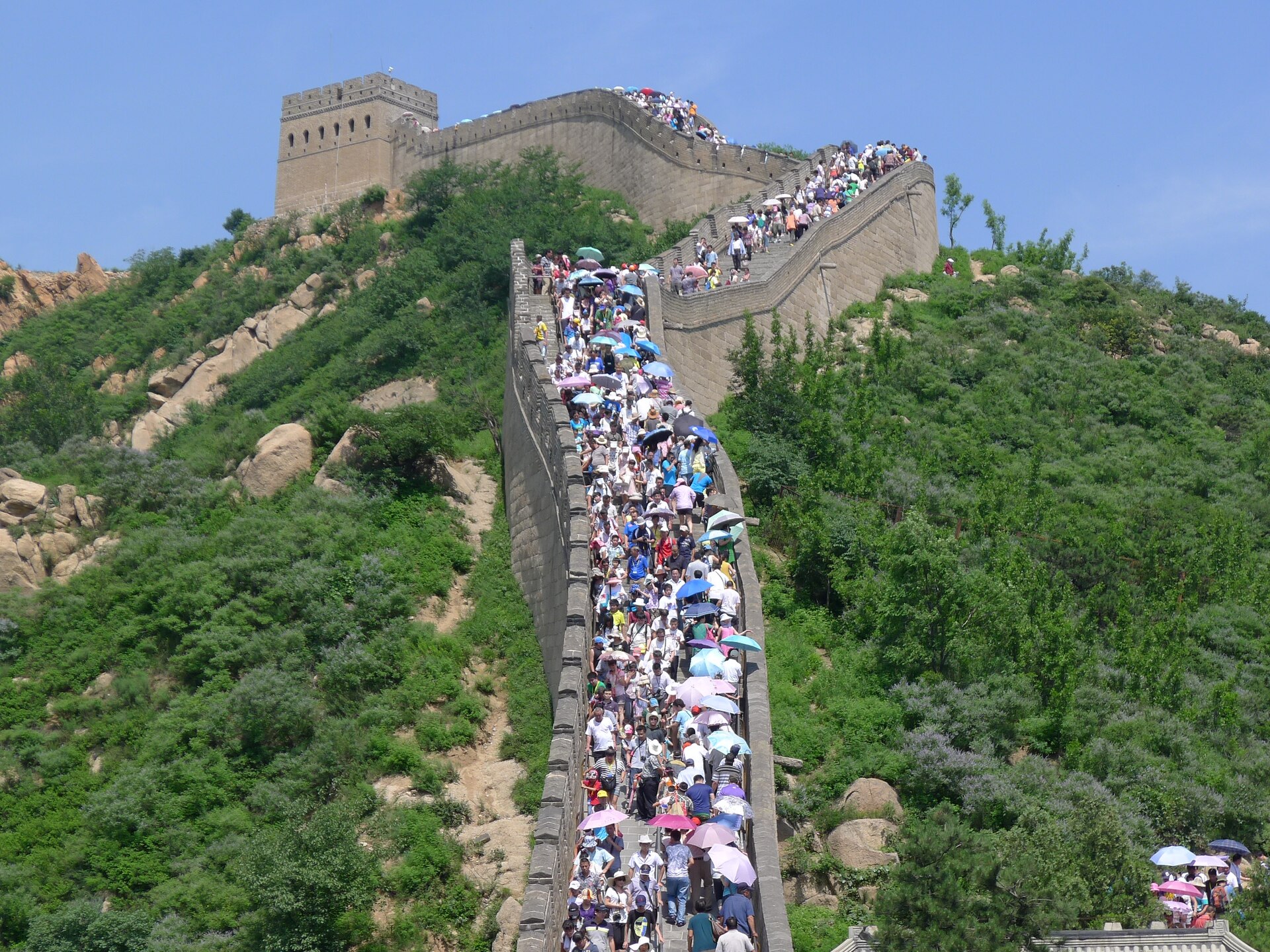
There is a photograph that circulates every October of the Great Wall at Badaling during Golden Week: a stone staircase filled edge to edge with people and parasols, nobody moving in either direction, a queue disappearing over the ridge. It is not exaggerated and it is not rare. It is also completely avoidable — three or four decisions taken before you leave your hotel are the difference between that and a tower to yourself. Learning to avoid crowds Great Wall visitors complain about is less about secret locations than about arithmetic: where the coaches go, when they arrive, and how far most people are willing to walk.
This guide sets out the crowd mechanics section by section, the hours that matter, the holiday dates to plan around, and the specific towers and directions where the crowd stops. Prices were checked in September 2026; treat them as the right order of magnitude rather than a quotation.
The three rules that do most of the work
One: go early. The coach tours leave central Beijing between 8 and 9am and reach the Wall between 10 and 11. If you are on the Wall at opening, you have between ninety minutes and two hours of genuine quiet, and you are walking down as everyone else walks up.
Two: walk further than the coach parties. The overwhelming majority of visitors go about five hundred metres from wherever the cable car or the main gate puts them, take photographs, and turn round. Twenty minutes of additional walking removes ninety per cent of them. This is true at every single section, including Badaling.
Three: avoid the Chinese holiday calendar. Golden Week is not a busy period in the ordinary sense — it is the largest annual movement of people in the world, and the Wall receives its share. Nothing else you do will compensate.
Which sections are actually busy
| Section | Crowd level | Why | Quiet if you… |
|---|---|---|---|
| Badaling | Severe | Direct train, every coach tour, best facilities | Arrive at opening on a weekday and turn away from the cable car |
| Mutianyu | Moderate | Second on every itinerary, cable car and toboggan | Take the first gondola and walk east past tower 17 |
| Juyongguan | Moderate | Closest to the city, popular with domestic day trips | Go on a weekday; the far loop is usually empty |
| Simatai | Low, but capped | Timed tickets limit numbers by design | Book ahead — the constraint is availability, not crowding |
| Jinshanling | Low | Two and a half hours away, no coach circuit | Walk east from the main gate |
| Huanghuacheng | Low | Partly unrestored, no cable car | Weekday, any time of day |
| Gubeikou | Very low | Wild wall, no facilities, no tour buses | Just turn up |
| Jiankou | Very low | Genuinely dangerous, guide effectively required | Not a crowd problem; a safety one |
Timing, in order of importance
The hour you arrive
This matters more than the section, the season or the day. Sections typically open between 07:00 and 08:00 depending on the time of year — confirm for your dates, because the hours shift seasonally — and the first ninety minutes belong to a handful of independent travellers and photographers.
The corollary is that late afternoon works too. Most coach tours have left by 3pm because they have a two-hour drive and a jade showroom to fit in. From about 3.30 until closing, the sections empty out again and the light improves. The disadvantage is that closing time is earlier than you expect, often 17:00 to 18:00, so the window is short.
The worst possible arrival time is 11am, which is when every tour bus in Beijing has unloaded simultaneously.
The day of the week
Tuesday, Wednesday and Thursday are consistently the quietest. Monday and Friday are moderately busy. Saturday and Sunday bring Beijing’s own population out — several million people with cars and a day off — and the effect at Badaling and Juyongguan is dramatic. A weekday at Badaling is a different experience from a Saturday at Badaling, more so than moving to a different section.
The time of year
Beijing’s peak is May, September and October, driven by good weather. July and August are busy with Chinese domestic family travel despite the heat. The genuinely quiet months are November through March, when it is cold, the hillsides are bare and hotel prices are at their lowest. A clear, windless day in late November on the Wall is among the best-value experiences in China.
Within the peak months, the last two weeks of October are busier than the first two weeks of September, because of autumn colour. If flexibility exists, aim for the second week of September or the first week of November.
The holidays to avoid
Three Golden Weeks dominate the Chinese calendar and all three are worth planning around:
- National Day, 1–7 October. The single busiest week of the year. Hotel prices roughly double, every section is packed, and the road to Badaling can be gridlocked for hours.
- Labour Day, 1–5 May. Almost as bad, with better weather, which makes it worse.
- Spring Festival. Chinese New Year falls on 6 February in 2027, with the holiday running roughly 5–11 February. The Wall itself is less affected than the cities and the transport network, but travel around it becomes very difficult.
Also note Qingming in early April, Dragon Boat in June and Mid-Autumn in September, each of which produces a long weekend. Chinese holiday dates are confirmed by the State Council in a notice published late in the preceding year, and make-up working days shift the exact pattern, so check the official schedule rather than assuming. The festivals calendar covers what is happening in the city on those dates.
Section by section: where the crowd stops
Badaling
Badaling is the busiest and it is not close. It has a direct train from Beijing North, it is on every coach itinerary, and it receives an enormous domestic day-trip volume. Tickets are booked online in advance and capacity is capped, which prevents the worst of it but does not make it pleasant on a weekend.
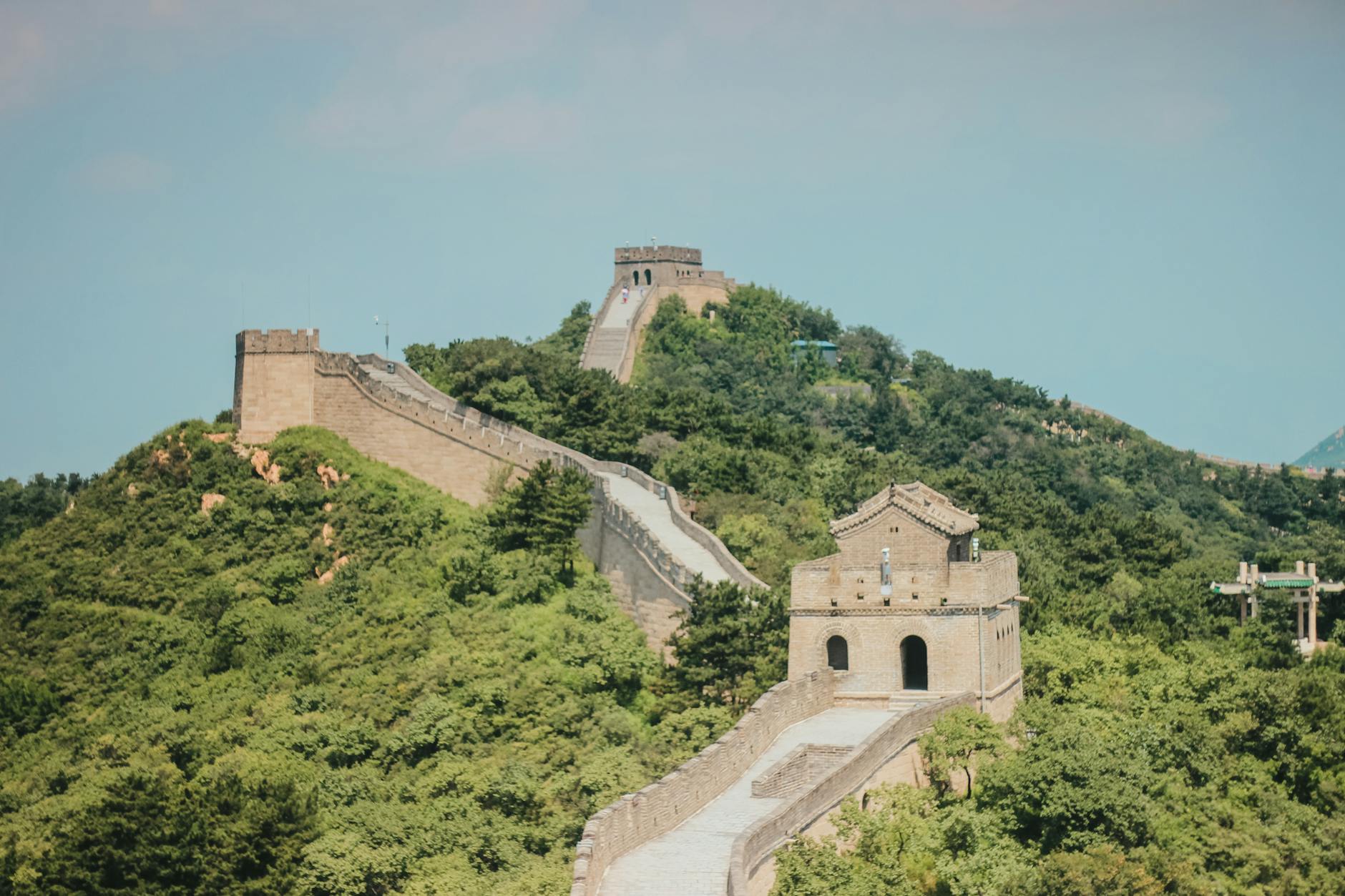
If you must go — and there are reasons to, including genuinely good accessibility and the easiest access of any section — the trick is direction. Almost everyone turns towards the north section and the cable car. The south section is steeper, has fewer facilities, and is comparatively empty. Take the south, walk to the far towers, and you will find long stretches with nobody on them at all, half a kilometre from the crush in the photographs.
Mutianyu
Mutianyu handles its volume better than Badaling because the restored stretch is longer and the entry points are spread out. Entry ¥45, shuttle ¥20, cable car ¥140 return.
The crowd concentrates between towers 6 and 14, which is the span between the chairlift and the gondola. Walk east from tower 14 towards towers 17 to 23 and the density drops off sharply after tower 17. Tower 20 onwards is often empty even at midday in October. Going west from tower 14 towards tower 1 is steeper and also quieter, though it is hard work.
Juyongguan
Closest to Beijing and consequently popular with domestic visitors on a half-day trip. It is a fortress pass with a wall loop rather than a linear ridge walk, and the loop is steep. Most people do the first climb and come back down; completing the full circuit takes two to three hours and puts you almost alone for the second half.
Jinshanling, Gubeikou and Huanghuacheng
Jinshanling is two and a half hours from Beijing, which is exactly far enough to be off the standard coach circuit. Walking east from the main entrance, the crowd — such as it is — thins within a kilometre and you can walk for hours in near solitude.
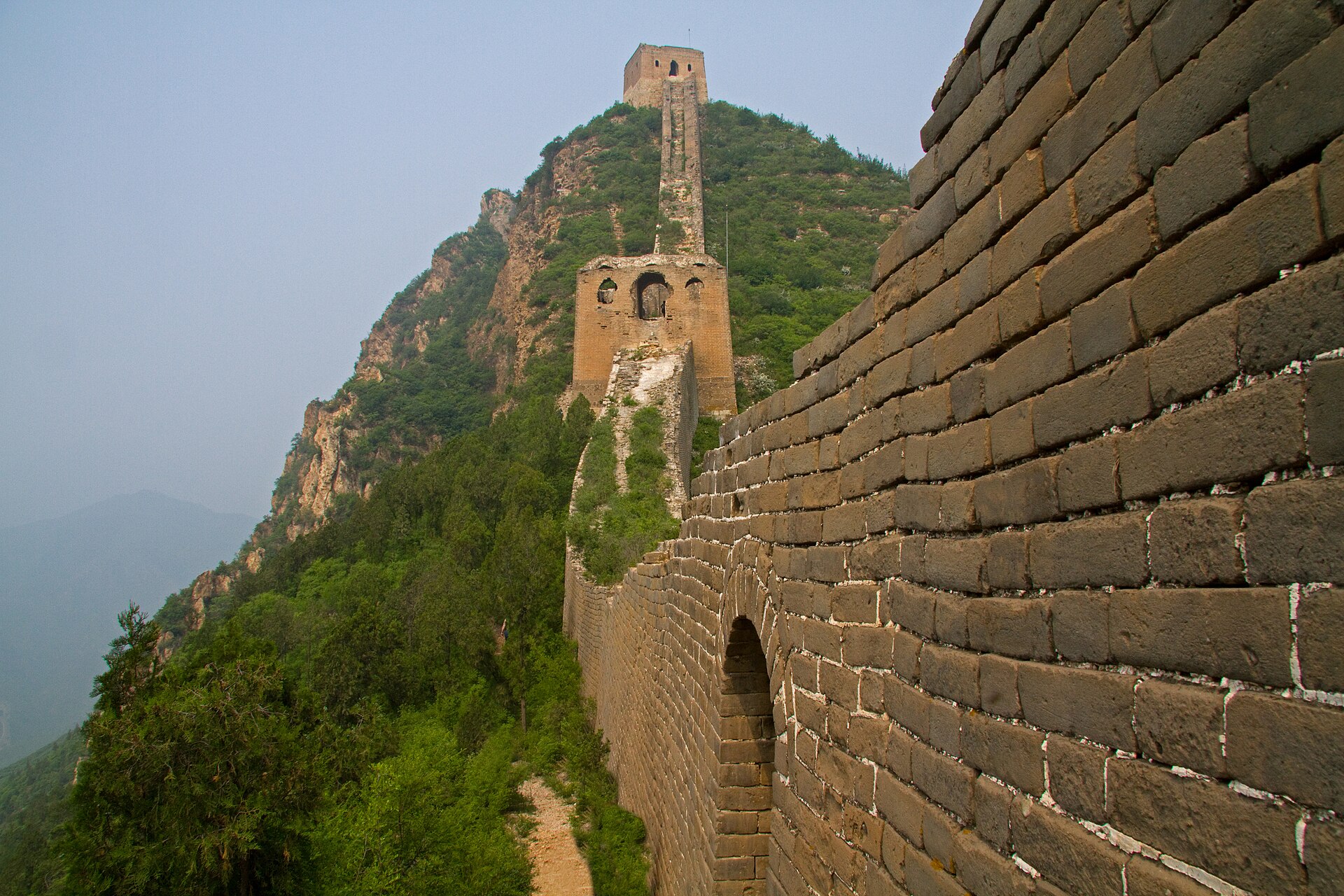
Gubeikou is the quietest accessible section near Beijing. Wild wall, no cable car, no restoration, no coach parties, and on a weekday you may see nobody at all for an hour. It is also the section with the fewest facilities, so bring water and expect no toilets.
Huanghuacheng sits between the two: partly restored, easy enough for competent walkers, and quiet on any weekday. The reservoir setting is the draw.
Simatai
Simatai works differently: it operates timed entry with a limited number of tickets, which means it is never crowded but is frequently sold out. Book several days ahead, particularly for the evening slots, and treat availability rather than crowding as the constraint. It is reached through Gubei Water Town, which is itself busy at weekends, though the Wall above is not.
Getting there without the tour bus
The transport you choose largely determines when you arrive, which is why it matters here.
- Private car and driver. ¥900–1,400 for the day and the only reliable way to be at the gate for opening. Agree the departure time explicitly — 6am, not “early” — and confirm there are no shopping stops.
- Public bus. The 916快 from Dongzhimen to Huairou, then a local bus or taxi to Mutianyu. Cheap at ¥12–20 a leg, but the first buses do not get you there before 9am, which surrenders the early window.
- Train to Badaling. Fast and inexpensive from Beijing North, and the early departures do arrive before the coaches. This is the one case where public transport competes with a car.
- Sleeping near the Wall. Guesthouses at Jinshanling village, Gubeikou and the Mutianyu base village cost ¥200–450 and let you walk to the gate at opening. For anyone serious about avoiding people, this is the answer.
The transport comparison covers routes, times and costs in detail, and DiDi works for the local legs from Huairou.
Tours: which ones make it worse
Group coach tours are the main mechanism by which the Wall becomes crowded, and joining one puts you inside the problem. If a tour is the only practical option, ask three questions before booking:
- What time does it leave the city? Anything after 8am arrives into the peak.
- Does it include a jade, silk, tea or cloisonné “factory”? If yes, that is forty to ninety minutes of your day in a commission showroom, and it usually explains the late start.
- Which section, and does it include the Ming Tombs? Badaling plus Ming Tombs is the standard bundle and the least good use of a day.
Small-group tours to Mutianyu or Jinshanling with a 6am departure exist and are worth the premium. So are private guides for Jiankou, where the reason is safety rather than crowds — the hiking guide is clear about the difference.
The hiking option
The most reliable way to have the Wall to yourself is to walk between sections rather than around one. Two routes are established and well known to local guides:
Gubeikou to Jinshanling — about four hours across wild and then partly restored wall, with a detour off the wall through a valley where a section remains under military control. Moderate difficulty and very quiet.
Jiankou to Mutianyu — the classic. Unrestored, steep and genuinely hazardous in places, joining the restored section at Mutianyu’s western end where you can take the cable car down. Go with a guide, in dry weather, and treat the Jiankou warnings as real rather than decorative.
Both put you on stretches where you may not see another person for an hour, and both take four to six hours plus travel, which is why they filter out almost everyone.

A crowd-free day, step by step
- Pick a Tuesday, Wednesday or Thursday outside 1–7 October, 1–5 May and Spring Festival.
- Check the air quality the evening before; a hazy day is worth swapping regardless.
- Book a private car for a 6am departure, or sleep at the Wall the night before.
- Arrive at the gate ten minutes before opening. Buy tickets online in advance where the section requires it.
- Take the first cable car or start walking immediately. Do not stop at the first viewpoint.
- Walk in the less obvious direction — east at Mutianyu, south at Badaling, east at Jinshanling.
- Keep going past the point where the density drops. It is usually about twenty minutes.
- Turn round by 10.30 and walk back through the arriving crowd, which is a great deal more pleasant than walking with it.
- Be back in the car by noon and in Beijing for a late lunch.
What does not work
- Going in the rain. It does thin the crowds, but the stone becomes genuinely slippery, the views disappear, and the toboggan at Mutianyu closes.
- Turning up at Badaling on a Saturday and hoping. No amount of walking compensates for a weekend there.
- Booking the cheapest coach tour and asking to skip the shopping stop. The stop is the business model, not an oversight.
- “Secret” or “unknown” sections sold by operators. The genuinely wild sections are Gubeikou, Jiankou and stretches of Huanghuacheng, all of which are documented and none of which is a secret.
- Climbing over barriers to reach a closed stretch. The masonry beyond is unstable, enforcement has increased, and it is not a crowd strategy.
- Visiting during Golden Week and going earlier. Everyone else has read the same advice. During 1–7 October the early window closes too.
Booking, caps and why they help
Several sections now sell tickets online only, under China’s real-name reservation system, and this is quietly the most useful development for anyone trying to avoid a crush. A cap on daily numbers is enforced at the point of sale rather than at the gate, which means the worst days are now busy rather than dangerous.
The practical consequences are worth knowing before you plan around them. Each visitor’s passport number goes on the booking, so you cannot buy four tickets and decide who uses them later. Popular dates — weekends, the whole of Golden Week, the last fortnight of October — sell out days ahead, and Simatai’s timed evening slots go faster than anything else. Booking platforms are largely Chinese-language, which in practice means using Trip.com, a hotel concierge or your driver rather than the official site, and paying a small mark-up for the convenience.
The upshot is that the constraint has shifted. Ten years ago the risk was arriving to find the Wall unbearable; now the more common failure is arriving to find you cannot get in at all. Book the moment your dates are fixed, and carry the actual passports rather than photographs of them, because the gate scanners read the document.
What crowds actually cost you
It is worth being specific about why this is worth planning around, because “it gets busy” undersells it.
You cannot stop. On a packed staircase the flow decides your pace. The experience of standing in a tower doorway looking out over the ridgelines — which is the reason people come — is simply not available when there is a queue behind you.
The photographs are unusable. Not merely spoiled by people in frame, but flattened: you cannot get low, cannot wait for the light, cannot step back for a wider view.
The queues compound. Forty minutes for a cable car up, thirty for the toboggan, twenty for a toilet and another forty for the cable car down turns a three-hour visit into a six-hour one, most of it standing still.
It is hotter. The Wall has no shade and a dense crowd on stone radiates. Summer weekends at Badaling produce a genuine number of heat-related incidents.
And it is avoidable. That is the point. The same section, on a Wednesday at 7.30am, is a different place entirely — which is why the timing advice above is worth more than any list of alternative destinations.
On a short trip the crowd-avoidance question folds into the itinerary question, since the 08:00 bus from Dongzhimen is both the quietest arrival and the only departure that leaves you room for an evening back in the city. That is exactly how the two-day Beijing route builds its second day. For the sections themselves — access, tickets and what each one is actually like — start with the main Great Wall guide.
Frequently asked questions
What is the least crowded Great Wall section near Beijing?
Gubeikou, by a clear margin — wild wall with no cable car, no restoration and no coach tours, where you can walk for an hour on a weekday without seeing anyone. Jinshanling and Huanghuacheng are the next quietest while still being straightforward to visit. Jiankou is emptier still but is genuinely hazardous.
What time should I arrive to avoid crowds?
At opening, typically between 07:00 and 08:00 depending on the season. That gives you ninety minutes to two hours before the coach tours arrive around 10 to 11. Late afternoon from about 3.30pm is the second-best window, though closing times are early.
Is Badaling always crowded?
On weekends and holidays, yes. On a weekday at opening it is manageable, and the south section — away from the cable car, where nearly everyone turns — has long empty stretches. The direct train from Beijing North and the good accessibility are real advantages if you need them.
Which days of the week are quietest?
Tuesday, Wednesday and Thursday. Saturday and Sunday are much busier because Beijing’s own residents visit, which is felt most at Badaling and Juyongguan.
When is Golden Week and how bad is it?
National Day, 1–7 October, is the busiest travel week of the Chinese year: every section packed, hotel prices roughly doubled and the roads congested. Labour Day, 1–5 May, is nearly as severe. Spring Festival — 6 February in 2027, with the holiday around 5–11 February — affects transport more than the Wall itself. Check the State Council’s official notice, as exact arrangements shift.
How far do I need to walk to escape the crowds?
About twenty minutes past the main access point at any section. Most visitors travel roughly five hundred metres from the cable car or gate and turn back. Walking to the third or fourth tower beyond that removes almost everyone.
Is a private driver worth it just for the timing?
Yes, if avoiding people is the priority. ¥900–1,400 for the day buys a 6am departure that no bus or tour offers, and split between two or more people it is not much more than the alternatives once taxi legs are counted.
Are the quiet sections harder?
Generally, yes — that is why they are quiet. Gubeikou and Huanghuacheng have uneven, partly unrestored surfaces and no cable cars. Jinshanling has a cable car but the good walking is beyond it. If someone in the party needs an easy surface, Mutianyu early is the compromise.
Is winter a good way to avoid crowds?
Very much so. November to March is cold, the hills are bare and hotel prices are at their lowest, and the sections are close to empty. Clear windless winter days offer some of the best visibility of the year. Take proper layers and watch for ice on the steps.
Can I visit the Great Wall at sunrise?
Only if the section is open — most are not before dawn, and the hours vary seasonally. The practical routes are staying at a guesthouse near the gate to be first in at opening, or camping legally on the Wall with a licensed operator, which puts you there before the gates open at all.