The Great Wall Near Beijing
Great Wall Hiking Guide: Best Trails, Multi-Day Treks & Gear Tips (2026)

Most people who visit the Great Wall spend two hours at Badaling, take a photo, and leave. They come back to Beijing having seen a famous wall. The people who do a full-day hike along Jinshanling’s long east ridge or scramble through the collapsing towers at Jiankou come back with something different — a physical relationship with the thing, sore legs, a few moments of genuine exposure, and the particular satisfaction of having moved through a landscape rather than just stood in front of it. That difference is what Great Wall hiking is actually about. This guide is for the second group.
The Great Wall north of Beijing spans 600+ km across eight major sections — from gently restored paths at Mutianyu, the easiest section to walk to extreme wild-wall scrambles at Jiankou that require climbing experience and a guide who knows which sections will drop you off a cliff. Multi-day Great Wall hiking connects sections like Gubeikou-to-Jinshanling-to-Simatai, sleeping in mountain villages, and produces the kind of immersive experience that turns a Beijing trip into something more meaningful than typical tourism. This guide covers all of it — from beginner day hikes to advanced multi-day treks — with difficulty ratings, gear lists, fitness preparation, and honest safety advice. For transport options, see our breakdown of every way to reach the wall from the city.

Great Wall hiking at a glance
- Best beginner hike
- Mutianyu (well-restored, cable car, 2–3 hours)
- Best photographer hike
- Jinshanling (dramatic ridges, 3–4 hours)
- Best authentic hike
- Gubeikou (unrestored, 4–5 hours)
- Best wild adventure
- Jiankou-to-Mutianyu (extreme exposure, 4–5 hours)
- Best multi-day trek
- Gubeikou → Jinshanling → Simatai (2–3 days)
- Best night hike
- Simatai (one of the sections with authorised night visits, 2 hours)
- Total Great Wall length accessible from Beijing
- 600+ km across 8 main sections
Before you go: realistic expectations
The Great Wall is not flat. That sounds obvious but it consistently surprises people. Watchtower stairs run at 45–70 degrees — not metaphorically steep, actually steep, with uneven stone risers worn smooth over six centuries. Sections rated “moderate” by Chinese tourism authorities would qualify as “strenuous” by UK or US national park grading standards. A full day at Jinshanling involves 400–600m of cumulative elevation gain. Gubeikou is similar. Jiankou is harder than both.
If you haven’t done any hill walking in the weeks before your Beijing trip, even Mutianyu’s “easy” section will leave your calves aching the next day. The watchtower stair sections are the real test — you can be reasonably fit from running or cycling and still find those stairs brutal because they use muscles most cardio doesn’t train. The fix is straightforward: train specifically. Stair-climbing at home for three to four weeks before your trip. Not flat walking — stairs, ideally with a pack. Twenty minutes of stair climbs every other day is enough to make a real difference.
One more thing: the Wall is in the mountains, not beside them. The surrounding terrain means access hikes, exposure to weather, and genuine remoteness once you leave the restored sections. That’s also what makes it worth it.
Great Wall hike difficulty ratings
| Section / Route | Difficulty | Time | Length |
|---|---|---|---|
| Mutianyu standard route | Easy | 2–3 hrs | 3–4 km |
| Badaling north section | Easy | 2–3 hrs | 3 km |
| Huanghuacheng lakeside | Easy-Moderate | 3 hrs | 4 km |
| Jinshanling east loop | Moderate | 3–4 hrs | 5 km |
| Gubeikou loop | Moderate-Hard | 4–5 hrs | 6–8 km |
| Gubeikou-to-Jinshanling | Hard | 5–7 hrs | 8–10 km |
| Jinshanling-to-Simatai | Hard | 5–7 hrs | 10 km |
| Jiankou-to-Mutianyu | Hard-Extreme | 4–5 hrs | 10 km |
| Jiankou main loop | Extreme | 6–8 hrs | 12–15 km |
Guided vs. self-guided — the honest breakdown
For restored sections — Mutianyu, Badaling, Jinshanling — self-guided is fine and cheaper. You can get there independently, buy a ticket, and walk without anyone’s help. The paths are marked, the exits are signed, and the worst that happens is you retrace your steps.
For unrestored and wild sections — Jiankou, parts of Gubeikou, connecting hikes between sections — hire a guide. This isn’t about being capable of the physical hiking. It’s about navigation. The wild wall has no trail markers. GPS tracks on Google Maps are often wrong or outdated. Jiankou has sections where the wrong turn means a 10-metre drop. The military zone between Gubeikou and Jinshanling is genuinely problematic without someone who knows the Spider Valley detour — first-timers have spent hours finding their way around it.
Beijing Hikers (beijinghikers.com) runs weekly scheduled hikes at ¥400–800 per person including guide, transport, and lunch. For solo travellers or small groups, that’s cheaper and safer than self-organising the same trip. Great Wall Adventure Club offers similar group and private options. For multi-day treks, Great Wall Hiking specialises in the Gubeikou-Jinshanling-Simatai corridor with farmhouse accommodation arranged.
The best single-day Great Wall hikes — ranked
1. Jinshanling east loop (best for most people)
5km, 3–4 hours, moderate. Take the cable car up to save your legs for the ridge walk, then head east along some of the most dramatic watchtower-to-watchtower terrain accessible from Beijing. The density of intact towers here is unmatched — you’re moving through actual wall history, not a reconstruction. The ridge views west across forested valleys are the ones you’ve seen in photographs. Manageable terrain: steep in places, but nothing exposed or technically demanding. This is the best “proper hike” for someone who wants to do more than a tourist stroll but doesn’t want to risk Jiankou. See our full Jinshanling guide for tickets and logistics. ¥230 total including cable car.
2. Jiankou-to-Mutianyu (best adventure)
10km, 4–5 hours, hard to extreme. This is the hike. Wild wall scrambling on unrestored Ming masonry, sections with genuine exposure, the Sky Stairs and Eagle Flies sections that require using your hands. You start at Jiankou — remote, crumbling, utterly spectacular — and exit at Mutianyu’s cable car, which means you finish on a restored section and can descend comfortably. The contrast between the two sections alone is worth doing it. Requires a guide: Jiankou without one is genuinely risky. See our Jiankou guide.
3. Gubeikou loop (best authenticity)
6–8km, 4–5 hours, moderate-hard. Original Ming Dynasty masonry, virtually no other tourists on weekdays, and an atmosphere you won’t find at any restored section. More accessible than Jiankou but equally authentic — the wall here hasn’t been touched since it was built. The connecting hike to Jinshanling is one of the best full-day options available. ¥25 base entry. See our Gubeikou guide.
4. Huanghuacheng lakeside walk (most unusual)
4km, 3 hours, easy-moderate. Wall sections running along and partially into a reservoir — some sections are genuinely submerged, visible below the waterline on clear days. Boat access is optional and adds something. Not a typical “hiking” experience in the cardio sense, but unique in a way that none of the other sections are. See our Huanghuacheng guide.
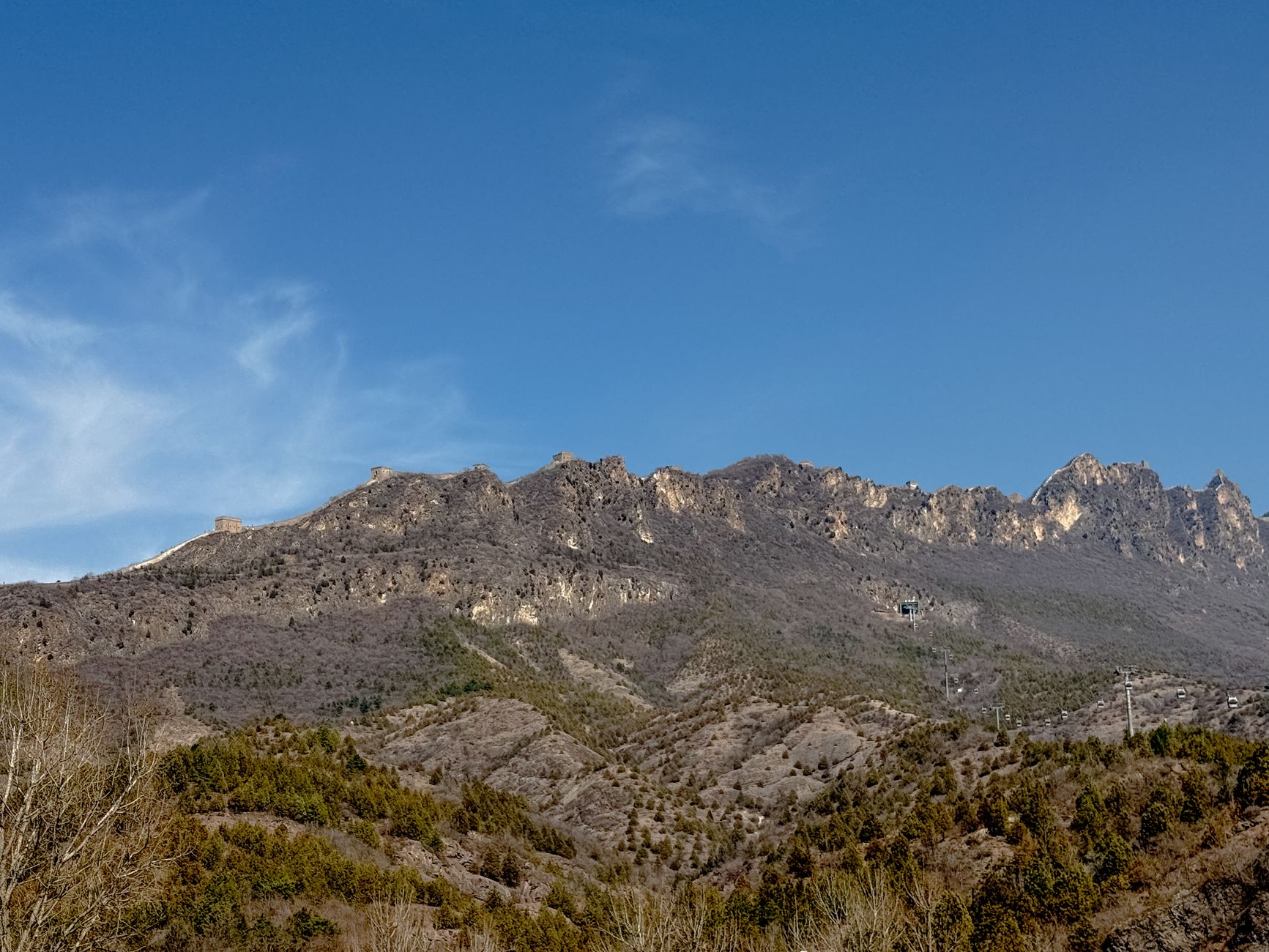
Multi-day Great Wall trekking
The Classic 3-Day Gubeikou-to-Simatai Trek
The most popular multi-day Great Wall trek combines three sections:
- Day 1: Beijing → Gubeikou village. Half-day Gubeikou hike. Overnight at local farmhouse.
- Day 2: Full-day hike Gubeikou → Jinshanling → camp at Jinshanling base or stay at Gubei Water Town.
- Day 3: Half-day Jinshanling → Simatai (when fully open). Visit Simatai for sunset and night-wall experience.
Total: 25 km of wall, 2 nights, ¥3,000–¥6,000 per person via experienced operators.
The 5-Day “Wild Wall” Eastern Trek
For dedicated wall enthusiasts. Routes vary by operator but typically include Huangyaguan → Gubeikou → Jinshanling → Shixiaguan → Chenjiapu with 3–5 hours of hiking per day and overnight stays in farmhouses or guesthouses. ¥6,000–¥12,000 per person. Best run by Great Wall Adventure Club or Great Wall Hiking.
The 6-Day “Eight Sections” Comprehensive Trek
For wall completionists. A 6-day itinerary covers the most important sections around Beijing including Badaling, Jiankou, Jinshanling, and Simatai with multiple hiking days and travel between sections. ¥8,000–¥15,000 per person.
The 2-Day Mutianyu-to-Gubeikou Long Hike
For very fit hikers wanting maximum coverage:
- Day 1: Mutianyu day hike (warm-up, 3 hours).
- Day 2: Jiankou-to-Mutianyu wild wall + Gubeikou (full day, 8+ hours hiking).
Total: 18 km of varied wall in 2 days. ¥2,000–¥4,000 with operator.
Multi-day logistics: the practical details
Where to sleep on multi-day hikes: Gubeikou farmhouses run ¥150–300/night and include dinner and breakfast cooked by the family. Jinshanling area guesthouses are ¥200–400/night. Gubei Water Town hotels range from ¥600 at budget end to ¥3,000+ for nicer properties. Simatai area guesthouses sit around ¥200–500/night. Book farmhouses through your guide or operator — they don’t appear on booking platforms and require a phone call in Chinese.
Water resupply: there is none on the wall itself. None. Carry everything you need from your last village stop. 2L per person per day is the absolute minimum; 3L in summer or on any hike over 5 hours. Don’t gamble on this one.
Food resupply: farmhouses can cook dinner and pack a simple lunch if you arrange it the night before. Otherwise carry all meals. There are no shops on wild wall sections.
Weather exits: have one planned before you start. Wild wall hiking during a lightning storm is dangerous — exposed ridgeline, stone walls, nowhere to shelter. Know which watchtowers have interior space and which valleys lead back to road access. Your guide should know this; ask before you set off.
Altitude, climate, and when to go
Wall elevations range from around 500m to roughly 1,000m above sea level — not Himalayan, but enough to matter on a long hot day. Beijing’s summer (June–August) is genuinely brutal, as our month-by-month weather breakdown spells out: temperatures hit 35°C with humidity at 70%, which means sweat isn’t evaporating properly and overheating risk is real. Start before 7am in summer. Not 8am — 7am. The difference in heat by mid-morning is substantial.
Thunderstorms form fast in July–August afternoons. The rule is simple: be off exposed ridges by 2pm. Mountain weather in this region can turn from clear to lightning in under an hour. If you’re hiking Jiankou or Jinshanling and it’s 1pm and you can see clouds building to the west, start descending.
Winter hiking (December–February) requires ice awareness. The uneven wall stones ice over in January–February, and a slip on Jiankou at altitude is potentially fatal — there’s nothing to stop you on some of the exposure sections. Stick to restored sections in winter unless you have crampons and experience.
- Best: April to early June. Spring greenery, manageable temperatures, blooming wildflowers.
- Best: late September to early November. Autumn foliage, dry weather, cool but comfortable.
- OK: June to early September. Hot, humid, summer storms. Earliest morning starts essential.
- Avoid: December to early March. Ice on stones makes Jiankou and similar wild sections genuinely dangerous.
Photography on the hike — balancing gear and weight
For photographers who hike: a mirrorless body with two lenses — something in the 16–35mm range and a 70–200mm equivalent — covers 90% of what you’ll want. The wide gets the wall sweeping into mountains; the telephoto compresses watchtowers into dramatic stacks. A tripod is worth carrying only if you’re specifically doing a sunrise or sunset shoot at a fixed location. On a full Jinshanling day, the extra kilo of a tripod adds noticeably to fatigue by the time you’re on your fourth watchtower stair climb of the afternoon.
Drone: leave it at home. Prohibited at every official section. The fines are real, confiscation is possible, and the enforcement has increased. Not worth it.
For general hiking photography, a good phone camera and one compact lens kit is often the better call. You’ll have more energy left for actually looking at the wall.
Best Great Wall hiking operators
- Beijing Hikers: established operator with weekly group hikes at ¥400–800/person including guide, transport, and lunch. Good for solo hikers and first-timers.
- Great Wall Hiking: specialised operator with multi-day trek packages along the Gubeikou-Jinshanling-Simatai corridor.
- China Highlights: international travel company with Great Wall hike packages including transport from Beijing.
- Wild Great Wall Adventure: dedicated wild-wall hiking operator for experienced hikers.
- Great Wall Adventure Club: strong for multi-day treks and wild sections with local guide relationships.
Essential Great Wall hiking gear
Footwear
- Hiking boots with ankle support: non-negotiable for wall stones. Trail runners or sneakers are insufficient — the stone edges are hard on your feet and the steps are uneven.
- Hiking socks: merino or synthetic, no cotton. Cotton holds moisture and causes blisters.
- Spare socks: for multi-day trips.
Clothing
- Layered system: base layer + insulating mid layer + outer shell.
- Rain jacket: weather changes fast in mountain sections.
- Sun hat with brim: exposed ridges offer no shade.
- Buff or scarf
- Lightweight gloves: protect hands during scrambles on Jiankou sections.
Equipment
- Hiking poles: significantly help with stability on uneven stone and reduce knee impact on descents.
- 30L+ backpack: for day hikes.
- 50L+ pack: for multi-day treks.
- 2–3L water capacity: hydration bladder or bottles. Carry more than you think you’ll need.
- Headlamp: in case the hike runs late or you’re doing a sunrise start.
- First-aid kit: blisters, cuts, sprains — all happen on wall hikes.
- GPS or smartphone with offline maps: download before you lose signal.
- Power bank: signal is weak; having maps and emergency contact capability matters.
For multi-day trips
- Sleeping bag rated to expected low temperatures (see climate section above).
- Sleeping pad
- Cooking system (if camping rather than farmhouse)
- Multi-day food supply
- Tent (if camping — see our Great Wall camping guide for legal options)
Return transport after hiking
Planning your return is as important as planning the hike. After Jiankou-to-Mutianyu, you exit at Mutianyu — arrange your driver to wait at the cable car exit rather than the main gate. After Gubeikou-to-Jinshanling, you exit at Jinshanling’s west entrance; book a taxi in advance from Luanping town (¥50–80 to the bus station) as they don’t queue there — how fares and taxi apps work applies out here too. After Simatai, Gubei Water Town shuttle buses run to several Beijing stops including Dongzhimen hub.
For all wild wall hikes, pre-arrange your return before you go in. Public bus options from remote sections are limited, infrequent, and may stop running in late afternoon. Your guide should have a driver contact; if self-guiding, sort this the night before from your farmhouse. See our Great Wall transport guide for full options from Beijing.
Fitness preparation
Great Wall hiking is harder than most travellers expect. Watchtower stairs can be 200+ steps in a single climb. Preparation:
- 3–4 weeks before: daily stair-climbing specifically — 15–20 minutes, not flat walking.
- 2 weeks before: 1–2 hour walks with elevation; carry your day pack to break it in.
- 1 week before: taper. Shorter activity, more rest.
- Day of: hydrate well; eat a substantial breakfast 2 hours before starting.
Permits and safety
Most wall sections require basic entry tickets only. Specific permits needed for:
- Sunrise/early morning entry at Jinshanling (the main gate opens at 04:00 in peak season).
- Drone operation: prohibited at all sections, no permit available.
- Camping: see our Great Wall camping guide for legal options.
10 rules for safe Great Wall hiking
- Tell someone your route and expected return time before you leave Beijing. Not your hotel — someone who will actually notice if you don’t check in.
- Carry 2L water per person minimum — there is no water on the wall. On any hike over 5 hours or in summer, carry 3L.
- Start before 8am for any hike over 3 hours. In summer, before 7am. Heat on exposed ridges in the afternoon is the main reason people have to turn back early.
- Check the weather forecast and know the rule: thunderstorms mean descend now. Not “let’s see if it passes.” Descend immediately from exposed sections.
- Wear actual hiking boots, not trainers. Wall stones are hard, uneven, and ice up in winter. Ankle support is not optional on unrestored sections.
- Have your guide’s mobile number saved in your phone, not just in an email. On wild sections, you need to reach them fast if something goes wrong.
- Know your exit route before you start — not when you’re lost at 3pm. Ask your guide to walk you through the exit options at the briefing. Wild sections can have multiple valleys leading in different directions.
- Get travel insurance that covers hiking and emergency evacuation. Not optional — our Beijing travel insurance guide explains what to check for before you book a policy. Emergency services take 1–2 hours to reach remote sections. Medical evacuation from a mountain wall is expensive without coverage.
- Carry cash — no card readers on the wall or in village shops. Farmhouses, taxis from remote sections, and village convenience stops are all cash-only. ¥300–500 in small bills per person per day.
- For wild sections, go with at least one other person. A twisted ankle on Jiankou with no signal and no partner is a serious situation. The buddy system exists for good reasons.
Worth knowing, too, that the Wall is not the only walking near Beijing — merely the best known. The Yan and Taihang ranges rise straight out of the western and northern suburbs, with alpine meadow above 2,000 metres at Baihua, granite waterfalls at Yunmeng and limestone gorges at Shidu reachable by suburban train. Our guide to the wider hiking options around the city sets these beside the Wall traverses by difficulty and season.
Great Wall hiking FAQ
What’s the easiest Great Wall hike?
Mutianyu standard route — cable car up, walk a few watchtowers, cable car down. 2–3 hours, accessible to all fitness levels. See our Mutianyu guide.
What’s the most photogenic Great Wall hike?
Jinshanling east loop or the Jinshanling-to-Simatai connecting hike. Both offer dramatic ridge views and dense watchtower compositions that photograph well in both morning and afternoon light.
How long should I plan for Great Wall hiking?
1 day for a casual visit (Mutianyu or Jinshanling); 2 days for a moderate hiking experience (Mutianyu + Jinshanling or Gubeikou); 3+ days for a multi-section trek. Plan more time than you think you need — wall hiking is slower than it looks on a map.
Do I need a guide?
For Mutianyu and Badaling: no. For Jinshanling and Gubeikou: recommended. For Jiankou and any multi-day wild wall trek: essential. The difference is navigation, not physical capability.
How fit do I need to be?
Basic fitness for restored sections; moderate hiker fitness for unrestored; advanced fitness for wild wall sections. Build stair-climbing fitness specifically — that’s the movement that actually matters on the wall.
Can I hike the Great Wall in winter?
Yes for restored sections (Mutianyu, Badaling). Avoid wild sections (Jiankou, Gubeikou) in January–February due to ice. Winter actually produces some of the most dramatic wall photographs — cold, clear skies and snow on the battlements. Just stay on managed sections.
What if I get hurt while hiking?
Restored sections have rangers and emergency contact capability. Wild sections require self-reliance — carry first aid and have travel insurance with emergency evacuation coverage before you set off.
Day trips and planning resources
If you’re combining Great Wall hiking with other Beijing activities, see our day trips from Beijing guide for how the wall fits alongside other day excursions from the city. For the complete Great Wall overview — section comparisons, crowds, and planning — start at our full guide to the Wall near Beijing.
The bottom line on Great Wall hiking
Great Wall hiking ranges from gentle 2-hour cable-car-supported walks to extreme multi-day treks across wild unrestored sections. For most international travellers, a single Jinshanling day hike is the right level — more than a tourist visit, achievable with modest fitness, and genuinely memorable. For dedicated hikers, multi-section experiences (Gubeikou-to-Jinshanling, Jiankou-to-Mutianyu) are among the best day hikes in Northeast Asia. Pick your difficulty honestly, train for it specifically, hire guides for wild sections, and the Great Wall delivers experiences that nothing else in Beijing comes close to.
For specific section guides, see our Mutianyu, Badaling, Jinshanling, Jiankou, Gubeikou, Simatai, and Huanghuacheng. For overnight options, see Great Wall camping. For getting there, see our Beijing to Great Wall transport guide.