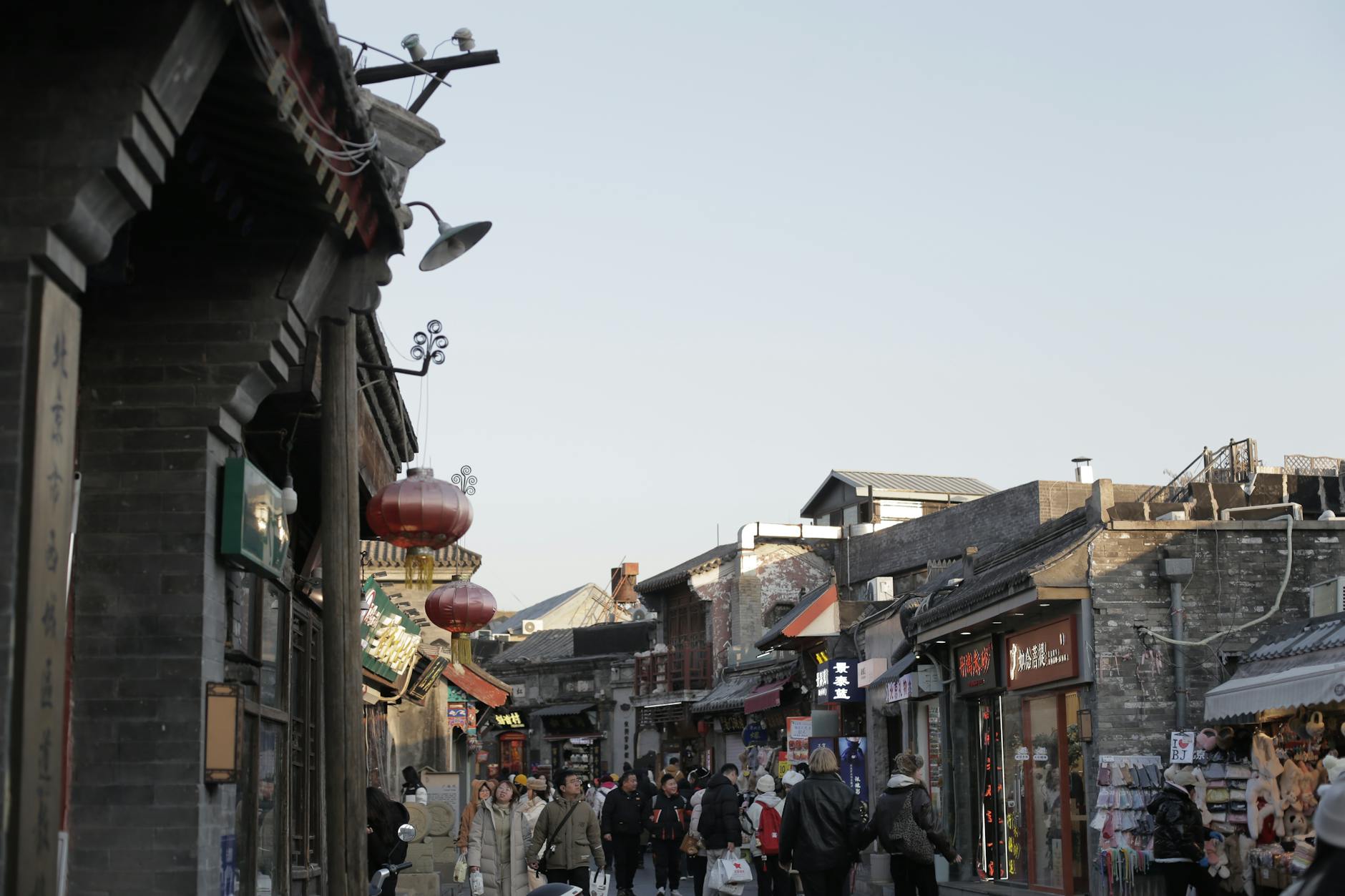
Nanluoguxiang (South Gong and Drum Lane) is Beijing’s most famous hutong — an 800-metre, roughly 740-year-old alley dating back to the Yuan dynasty, now lined end to end with boutiques, cafés, snack stalls and art shops. It’s the easiest introduction to old Beijing’s alley culture, walkable in an afternoon and packed with character, though it’s also one of the city’s most popular and crowded spots. The secret that separates a so-so visit from a great one is knowing to step off the main drag into the side alleys — the quieter lanes like Mao’er, Ju’er and Qianyuan’en Hutong, where you find courtyard cafés, genuine local life and the Yuan-dynasty street grid at its best-preserved. This guide covers what to eat, where to shop, the side alleys most tourists miss, the best times to go, and how to combine it with the surrounding sights.
I have a slightly complicated relationship with Nanluoguxiang — it can feel touristy and commercial on the main lane, yet it’s genuinely historic, brilliantly located, and a joy once you know how to work it. This guide gives you the honest version: the snacks worth queuing for, the shops worth browsing, the hidden side hutongs that reward a wander, and the timing that lets you enjoy it without the worst of the crush. Used well, it’s a perfect half-day in the heart of old Beijing — and a springboard to the towers, lakes and quieter lanes all around it.
Nanluoguxiang at a glance
- What: Beijing’s most famous hutong, an 800m pedestrian lane dating to the Yuan dynasty (13th century).
- Cost: free to walk; snacks ¥10–30, shopping varies.
- Best for: a first taste of hutong culture, shopping, snacking, people-watching.
- Don’t miss: the side alleys (Mao’er, Ju’er, Qianyuan’en Hutong) — quieter and more authentic.
- Best time: weekday mornings (9–11am) or late afternoon; avoid weekends, when it’s packed.
- Nearest metro: Nanluoguxiang station (Lines 6 & 8), Exit B for the south entrance.
- Time needed: 2–3 hours, or half a day with the side alleys and nearby sights.
A little history
Nanluoguxiang is one of the oldest residential blocks in Beijing, laid out more than 740 years ago when the Mongols built their capital of Dadu. It preserves the classic “fishbone” street pattern of the Yuan dynasty — a central spine with eight symmetrical hutongs branching off each side — and that grid alone makes it historically significant. Over the centuries it was home to officials, artists and celebrities, and many of the courtyards down its side alleys belonged to notable historical figures. By the early 2000s the main lane had transformed into the commercial, café-and-boutique strip you see today, which is why it can feel more shopping street than living neighbourhood. But the bones are genuinely ancient, and the side alleys still hold the residential soul of the place. For the broader story of Beijing’s alleys, see our pillar Beijing hutongs guide.
What to eat on Nanluoguxiang
Nanluoguxiang is a snacking street, and grazing as you stroll is the way to do it. The classics line the lane: jianbing (savoury crepes), tanghulu (candied hawthorn skewers), roujiamo (the “Chinese hamburger”), grilled squid, and ice cream of every flavour. A few specific spots stand out. Wenyu Cheese Shop (文宇奶酪) is famous for its traditional Beijing double-skin milk dessert and old-style set yogurt — usually a queue, and worth it. Fangzhuanchang 69 Zhajiangmian serves Michelin-listed Beijing noodles with rich fermented-bean sauce. You’ll also find sugar-coated snacks, fresh fruit, bubble tea and plenty of trendy treats. It’s not fine dining — it’s walk-and-eat street food — but it’s a fun, tasty and very affordable way to sample a whole range of Beijing classics in one place without committing to a sit-down meal. For a deeper food experience, pair it with our hutong food tour or browse the street food guide.
Shopping: what to look for
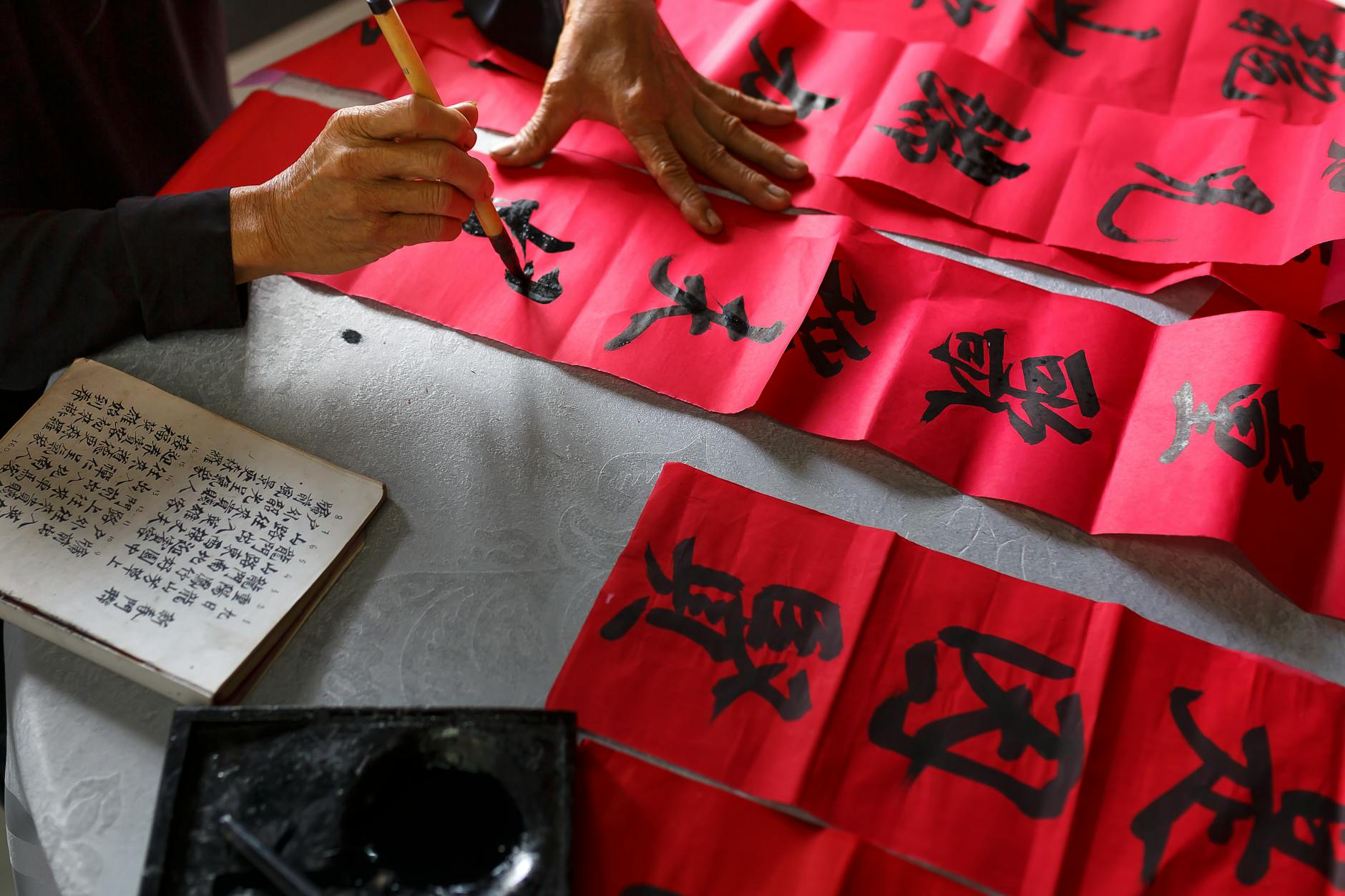
The lane is lined with hundreds of small shops, and the quality ranges from genuinely lovely to mass-produced tat — so browse selectively. The best buys are from independent designers and craft shops: handmade jewellery, calligraphy and ink art, silk scarves, Beijing Opera face masks, clay figurines, paper-cuts, and quirky China-themed souvenirs you won’t find in malls. Several stores sell traditional crafts like folding fans, cloth shoes and qipao dresses. Many are run by young local designers, so it’s a good place for one-of-a-kind gifts. As with any tourist street, prices can be inflated and some goods are generic, so compare, and don’t be shy about gentle bargaining at the smaller stalls. The side-alley shops and courtyard boutiques tend to be more interesting than the main-drag chains.
The side alleys: where the magic is
Here’s the single most important tip: the main lane is only half the story. Branching off Nanluoguxiang are the eight historic side hutongs, and they are quieter, more atmospheric, and far more rewarding than the crowded spine. Wander into Mao’er Hutong (帽儿胡同), home to grand old courtyards (including one linked to China’s last empress); Ju’er Hutong (菊儿胡同), with its award-winning courtyard-housing redevelopment; and Qianyuan’en, Yu’er and Qin Lao Hutong, where daily life still plays out — residents chatting in doorways, bikes parked along the walls, caged songbirds hung out for an airing, and laundry strung between trees. Here you’ll find hidden courtyard cafés, small galleries, and the slow, unhurried rhythm of real old Beijing that the commercialised main street has largely lost. Spend at least half your time in these side lanes; it’s the difference between a tourist photo-op and a genuine encounter with the hutongs.
Best time to visit
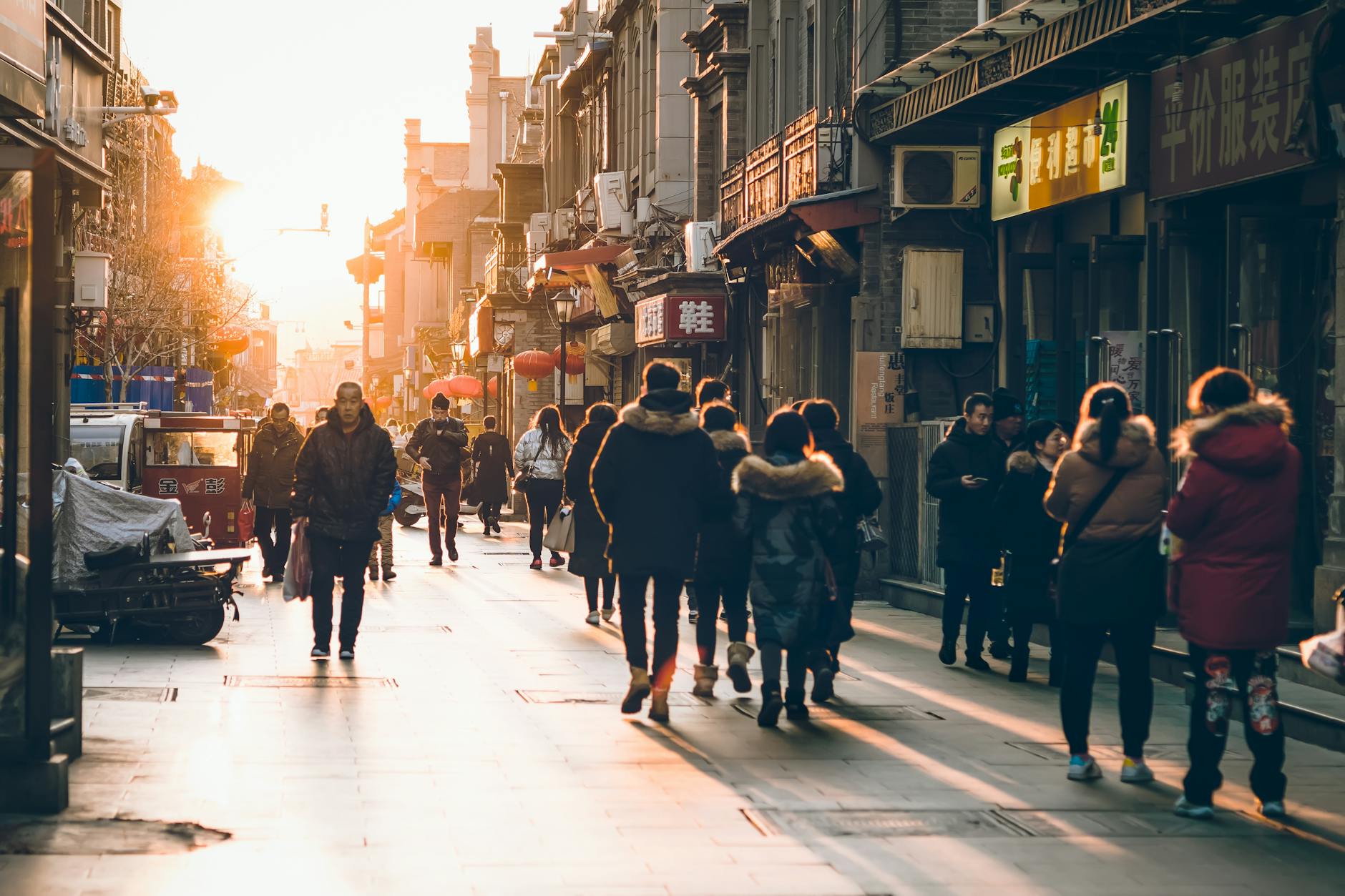
Timing is everything at Nanluoguxiang, because crowds can make or break it. Avoid weekends and public holidays, when the main lane becomes shoulder-to-shoulder. The sweet spots are weekday mornings (around 9–11am), when shops are opening and the lane is calm, and late afternoon into early evening, when the light is golden, the lanterns come on, and the atmosphere peaks without the midday crush. Early morning also lets you see the side alleys at their most peaceful and residential. Spring and autumn are the loveliest seasons; in autumn the ginkgo and scholar trees in the hutongs turn brilliant gold, and the side alleys are especially photogenic under the turning leaves. For more on timing, see the best time to visit Beijing.
Getting there and combining your visit
Take Line 6 or Line 8 to Nanluoguxiang station; Exit B brings you to the southern entrance. The lane runs north to south, so you can walk its length and exit at the north end near the Drum and Bell Towers — a perfect next stop. To the west lie the Shichahai and Houhai lakes, an easy and beautiful walk away, and to the east the quieter Dongsi hutongs. A classic old-Beijing day strings together Nanluoguxiang, the towers, and a Houhai lakeside finish. The full network is in our Beijing subway guide.
The fishbone grid and the architecture
One of the things that makes Nanluoguxiang special — and worth understanding before you walk it — is its layout. The lane is the central spine of a perfectly symmetrical “fishbone” (or “centipede”) street pattern: eight hutongs branch off to the east and eight to the west, mirroring each other in a grid that has survived essentially intact since the Yuan dynasty. This is one of the best-preserved examples of Yuan-era urban planning anywhere in Beijing, and it’s why the area carries protected heritage status. As you walk the spine, glance down each side alley and you’ll see the rhythm of the grid; turn into them and you’re walking streets laid out by Kublai Khan’s planners more than seven centuries ago.
The architecture rewards a closer look, too. Behind the shopfronts and down the side lanes are classic siheyuan courtyard houses, and their gateways tell a story: the size and decoration of a doorway, the carved door piers (mendun) flanking it, and the number of mendang (the wooden or stone ornaments above the gate) all signalled the rank and wealth of the family within. Look for the grander gates along Mao’er and Ju’er Hutong, some belonging to former officials and aristocrats. To really appreciate what you’re seeing, our guide to siheyuan courtyard houses decodes the symbolism of these gates and layouts.
A self-guided side-alley route
To experience the best of Nanluoguxiang without just trudging the crowded spine, try this loop. Enter from the south (Exit B) and walk a short way up the main lane to get your bearings and grab a snack. Then turn west into Mao’er Hutong, admiring the grand courtyards and the former residence associated with the last Qing empress, and continue toward the lakes. Loop back and cross to the east side into Ju’er Hutong to see the celebrated courtyard-housing redevelopment, then wind through Yu’er and Qin Lao Hutong, where local life carries on. Rejoin the main lane near the north end and finish at the Drum Tower. This route spends most of its time in the quiet, atmospheric alleys and treats the busy spine as a connecting thread rather than the main event — exactly how a local would do it. Allow about two hours, more if you stop for coffee in a courtyard café.
If you’d rather have the side alleys explained as you go, the area is a highlight of several guided hutong walking tours, and it’s also prime rickshaw territory — though the nearby Shichahai area is the better-regulated place to take a hutong rickshaw ride.
Shopping smart and avoiding traps
Because Nanluoguxiang is so popular, it attracts its share of overpriced and generic merchandise, so a little savvy helps. A few pointers: compare before you buy — the same mass-produced souvenirs appear in many shops at different prices; favour the independent designer and craft stores over the chain outlets for genuinely original pieces; gently bargain at the smaller stalls (though not in fixed-price boutiques); and be wary of “antiques”, which are almost always reproductions. For food, the same rule as everywhere in Beijing applies — the stalls with local queues are the good ones. None of this should put you off; there are lovely, authentic things to buy here, especially handmade crafts, ink art and designer pieces. Just shop with your eyes open, and remember that the experience of wandering is the real souvenir.
Photography tips
Nanluoguxiang is wonderfully photogenic if you avoid the midday crowds. The side alleys offer the best shots — grey-brick walls, carved red gates with golden studs, bicycles, and the play of light through the trees. Early morning gives you empty lanes and soft light; late afternoon and dusk bring warm tones and the glow of lanterns and shop signs along the spine. Look for details: a cat on a doorstep, an old door knocker, laundry strung overhead, the geometry of the grey-tiled rooftops. Be respectful when photographing residents and their homes in the residential alleys — these are people’s front doors, not a film set. With a little patience and an early start, this is one of the most rewarding spots in Beijing for atmospheric street and architecture photography.
Nearby sights and a full-day plan
Nanluoguxiang’s location is one of its greatest assets: it sits right in the middle of old Beijing’s most rewarding cluster of sights, so it’s easy to build a full, varied day around it. Here’s how I’d do it. Morning: arrive early and walk the lane and its side alleys while they’re quiet, grabbing breakfast snacks as you go. Late morning: exit the north end and climb the Drum and Bell Towers for panoramic views over the hutong rooftops and a drum performance. Lunch: eat in the Gulou hutongs — this is prime territory for noodle joints, dumpling houses and craft-beer taprooms. Afternoon: stroll west to the Shichahai and Houhai lakes, perhaps taking a rickshaw or a boat. Evening: linger at a Houhai lakeside bar as the sun sets and the lanterns reflect on the water. It’s a near-perfect day that blends shopping, snacking, history, views and nightlife, all within a compact, walkable area.
Just a little further afield, the Lama Temple, the Confucius Temple and the atmospheric Guozijian Street lie to the northeast, and the quieter Dongsi hutongs are a short walk east — a good antidote if Nanluoguxiang’s crowds leave you craving somewhere more residential. Because everything here is so close together and so walkable, this corner of Beijing rewards an unhurried, wandering approach more than a tick-box itinerary. Give yourself time to get pleasantly lost; that’s when the old city truly reveals itself.
Nanluoguxiang FAQ
Is Nanluoguxiang worth visiting?
Yes, especially as a first taste of hutong culture — it’s historic, central and full of character. Just be prepared for crowds on the main lane, and make sure to explore the quieter, more authentic side alleys, which are the real highlight.
How long should I spend there?
Two to three hours covers the main lane and a few side alleys at a relaxed pace. Combined with the Drum Tower and Houhai nearby, it easily fills a half day.
When is the best time to go?
Weekday mornings (9–11am) or late afternoon/early evening. Avoid weekends and holidays, when the lane gets extremely crowded.
What should I eat there?
Graze the street snacks — jianbing, tanghulu, roujiamo — and seek out Wenyu Cheese Shop for traditional Beijing yogurt and double-skin milk, and Fangzhuanchang 69 for Michelin-listed zhajiang noodles.
Is it too touristy?
The main lane is commercial and can feel touristy, but the side alleys remain genuinely atmospheric. For an even less touristy experience, pair it with the nearby Dongsi hutongs.
How do I get to Nanluoguxiang?
Take Line 6 or Line 8 to Nanluoguxiang station and use Exit B for the southern entrance. The lane runs north to south and ends near the Drum and Bell Towers, so you can walk straight through and continue to the towers or the Houhai lakes. It’s also an easy walk or short ride from the Lama Temple area.
The bottom line on Nanluoguxiang
Nanluoguxiang is the easiest and most famous introduction to Beijing’s hutongs — historic, central and full of snacks and shops. The key to loving it rather than just tolerating it is to go at a quiet time, graze the good street food, browse the independent shops, and above all duck into the side alleys, where 740 years of old Beijing still quietly live. Pair it with the Drum Tower and Houhai for a perfect half-day in the heart of the old city.
Continue to the lakeside Shichahai and Houhai hutongs, escape the crowds in the Dongsi hutongs, or plan a full walk with our hutong walking tours. For the full picture, see the Beijing hutongs guide.