If Nanluoguxiang is where tourists go to see a hutong, the Dongsi hutongs are where you go to feel one. This grid of parallel east-west lanes — numbered Dongsi Santiao (Third Alley) through Batiao (Eighth) — is one of the best-preserved and least-touristy residential hutong clusters in Beijing, with almost no souvenir shops or cafés, just the unhurried rhythm of real old-Beijing life: laundry strung between trees, neighbours playing chess on the kerb, children pedalling past on bikes, and the carved gates and spirit walls of centuries-old courtyard houses. For travellers who want authenticity over amenities — the genuine article rather than the tidied-up, souvenir-shop version — Dongsi is the answer, and the best part is that it’s all completely free to wander. This guide covers what to see, the standout courtyards and the free Shijia Hutong Museum, a self-guided route, and how to explore respectfully.
Dongsi is my go-to recommendation for anyone who’s found Nanluoguxiang too commercial and wants the real thing. This guide covers why it’s special, the best lanes and architectural survivors, the excellent little Shijia Hutong Museum, a self-guided walking route, and the etiquette of exploring a living residential neighbourhood. Come for old Beijing exactly as it is, lived in and unhurried, not as it’s packaged and sold to visitors.
Dongsi hutongs at a glance
- What: a grid of parallel residential hutongs (Santiao to Batiao) east of the Forbidden City — authentic, lived-in old Beijing.
- Cost: free to wander; Shijia Hutong Museum free.
- Vibe: residential and genuine — almost no shops or tourist infrastructure.
- Don’t miss: the carved gates and spirit walls, the Shijia Hutong Museum, and several former residences of notable figures.
- Nearest metro: Dongsi station (Lines 5 & 6); end at Chaoyangmen (Line 2/6).
- Time needed: 1–2 hours for a leisurely walk.
- Best time: early morning or late afternoon for the best light and most local life.
Why Dongsi is special
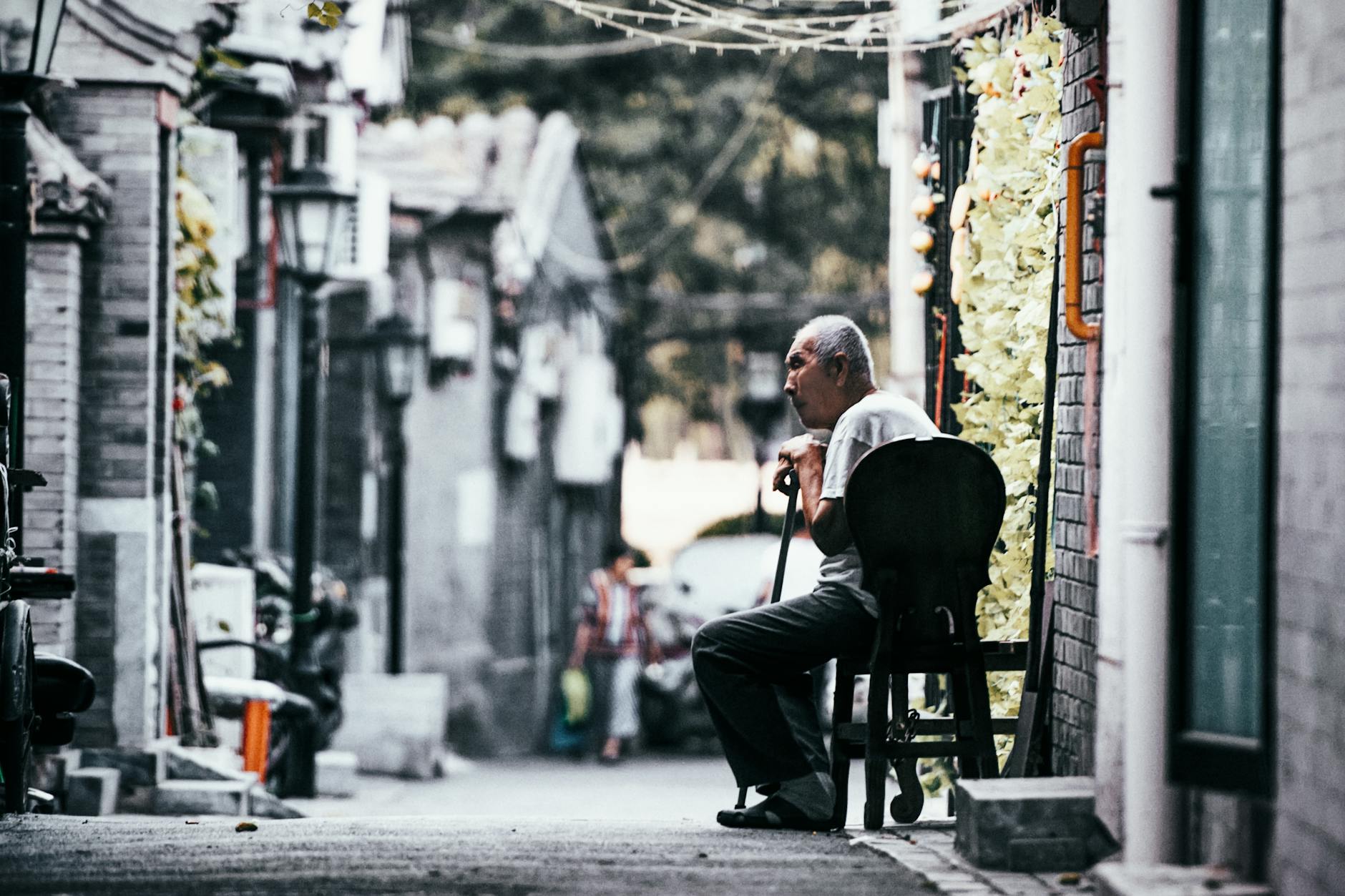
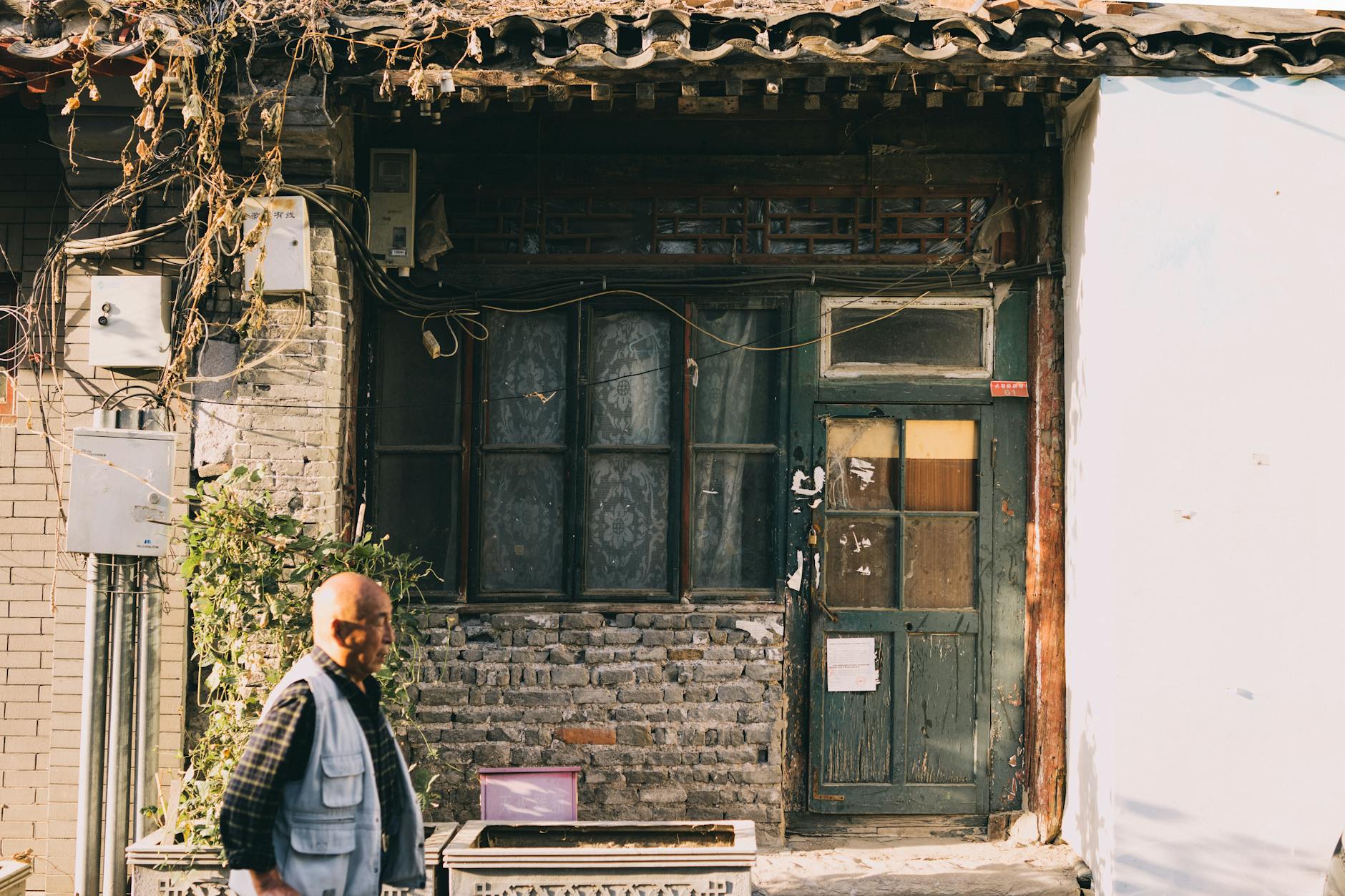
What sets Dongsi apart is precisely what it lacks: the commercialisation that has transformed Beijing’s famous hutongs into shopping streets. There are no boutiques hawking souvenirs, no cafés with English menus, no crowds shuffling for photos — just genuine neighbourhood life carrying on as it has for generations. The parallel lanes of Dongsi Santiao through Batiao form one of the best-preserved residential hutong clusters in the entire city, and is officially designated a historical and cultural conservation area. Walking here, you see the hutongs as they are actually lived in: residents chatting in doorways, elderly neighbours gathering for morning exercise, the steam curling up from a breakfast vendor’s cart, and bicycles and potted plants lining the grey-brick walls. It’s quieter, calmer and far more real than the tourist lanes — the difference, essentially, between visiting a living neighbourhood and visiting a shopping attraction dressed up as one. For the broader context, see our Beijing hutongs guide.
What to see in Dongsi
The chief pleasure here is simply wandering and observing at your own pace, but there’s real architectural substance to spot as you go. The lanes hold some remarkable architectural survivors — well-preserved Qing-dynasty siheyuan with original carved gates, ornate door piers, and spirit walls (yingbi), the decorative screens placed just inside an entrance to block evil spirits and prying eyes. Dongsi Liutiao (Sixth Alley) is particularly atmospheric and rich in fine old gateways. The area is dotted with the former residences of notable figures — officials, scholars and cultural figures — several marked as protected cultural relics, including courtyards once home to figures such as the writer and educator Ye Shengtao (in Dongsi Batiao) and other officials and scholars of the past. You won’t necessarily go inside these, but spotting the plaques and admiring the gates as you pass turns the walk into a quiet treasure hunt through layers of Beijing history. Learning to read the gates and spirit walls (see our siheyuan guide) makes it richer still.
The Shijia Hutong Museum
The one “sight” you shouldn’t miss is the Shijia Hutong Museum (史家胡同博物馆), a free, beautifully restored siheyuan that’s the city’s first museum dedicated to hutong life. Set in a former courtyard residence, it documents the history and culture of the hutongs through photographs, scale models, household objects, oral histories and reconstructed rooms. Its most charming exhibit is the “sounds of the hutong” audio installation — recordings of the sing-song calls of old street vendors, birdsong, cicadas and the everyday noises that once filled these lanes, a poignant evocation of a vanishing way of life. It’s small, free and genuinely moving, and it gives invaluable context to everything you see in the surrounding alleys — visit it early in your walk and the rest of the lanes come alive. A perfect 30–45 minute stop on a Dongsi walk.
A self-guided Dongsi walk
Here’s a simple route. Start at Dongsi station (Lines 5/6) and walk east into the numbered alleys. Zigzag between Santiao and Batiao (Third through Eighth), wandering up one lane and down the next, pausing to admire the carved gates, door piers and spirit walls of the best-preserved courtyards. Make time for Dongsi Liutiao, the most atmospheric of the lanes, and seek out the Shijia Hutong Museum. Continue east and you can finish at Chaoyangmen station (Lines 2/6) for an easy connection. The whole walk takes 1–2 hours at a leisurely pace, longer if you linger over the gateways and the museum. There’s little in the way of food or cafés within the residential core itself, so plan to eat before or after your walk — or duck out to nearby Dongsi Beidajie, where there are restaurants and snack shops. Combine it with our hutong walking tours for more routes.
Exploring respectfully
Because Dongsi is a genuine residential neighbourhood with little tourist infrastructure, a little courtesy goes a long way. Remember that the courtyards are people’s homes, not exhibits — don’t wander into private courtyards uninvited, and ask before photographing residents up close. Keep your voice down, especially early in the morning, and be mindful that you’re a guest in a working community. None of this is onerous; locals are generally friendly and quite used to the occasional respectful visitor wandering through. Approached in this spirit, Dongsi rewards you with something the polished tourist lanes simply can’t offer: a quiet, deeply authentic encounter with old Beijing as it is actually lived, day to day, behind the famous facades.
The history of Dongsi
The name “Dongsi” comes from “Dongsi Pailou” — the four (si) decorative archways that once stood at the eastern (dong) crossroads here, a counterpart to the “Xisi” archways in the west of the city. The numbered hutongs were laid out on the Yuan-dynasty grid more than 700 years ago and developed through the Ming and Qing as a desirable, well-to-do residential district close to the imperial city. Because of that proximity and prestige, the area attracted officials, scholars, merchants and, later, cultural figures, who built the fine courtyard homes whose gates you still admire today. Unlike some hutong districts that were heavily redeveloped or commercialised, the Dongsi conservation area has retained much of its original fabric and residential character, which is precisely why it still feels so authentic today. Walking it, you’re moving through a neighbourhood that has housed Beijingers continuously for seven centuries — a living, unbroken thread of the city’s history that the commercialised tourist lanes, for all their charm, can’t quite match.
That continuity is also fragile. Like all of Beijing’s hutongs, Dongsi has faced the pressures of modernisation, overcrowding and redevelopment, and its protected status reflects a hard-won recognition that these neighbourhoods are irreplaceable heritage. Visiting respectfully — and genuinely appreciating what makes the place special — is one small way of valuing what still survives.
Reading the gates and spirit walls
Dongsi is the perfect place to practise “reading” a hutong, because its gates are both numerous and well-preserved. As you walk, look at the gateways: their size and style signalled the rank of the family within, from grand, elaborately roofed gates to modest commoner entrances. Note the door piers (mendun) flanking each gate — drum-shaped piers traditionally indicated a military family, rectangular box-shaped ones a civil-official or scholarly household. Above many gates sit the mendang, short carved ornaments whose number again denoted status. Just inside the entrance you’ll frequently glimpse a spirit wall (yingbi), the free-standing screen believed to block evil spirits (thought to travel only in straight lines) while also shielding the courtyard from the eyes of passers-by. Some are plain grey brick; the grander ones carry intricate carved or glazed decoration. Spotting and decoding these features turns a quiet stroll into an absorbing read of old Beijing’s social hierarchy — and Dongsi, with its dense concentration of well-preserved, intact gates, is one of the very best places in the whole city to do it.
Keep an eye out, too, for the smaller textures of daily life that make these lanes feel so real: caged songbirds hung out in the morning sun, ornate old door knockers, potted plants and grapevines, communal notice boards, and the occasional breakfast vendor. These everyday details, as much as the grand gates, are what give Dongsi its quietly captivating character.
Dongsi through the seasons
The lanes change beautifully with the year. Spring brings blossom and fresh leaves softening the grey walls. Summer sees residents out in the cooler mornings and evenings, grapevines and gourds trained over courtyard gates, and cicadas humming loudly in the old trees — though midday heat is best avoided. Autumn is the most photogenic season, when the scholar trees and persimmons turn gold and the crisp light rakes across the carved gateways. Winter is stark and quiet, the bare branches and grey brick under a pale winter sky lending the lanes a still, contemplative beauty, with far fewer people about. For walking comfort and the loveliest light, spring and autumn are ideal; early morning and late afternoon are the best times of day in any season, both for soft light and for catching the lanes at their most alive. See the best time to visit Beijing for more.
Combining Dongsi with nearby sights
Dongsi’s central location makes it easy to fold into a wider day. Just to the northwest lies the famous and far busier Nanluoguxiang — pairing the two makes a fascinating, eye-opening contrast between the polished, commercial hutong and the genuine, residential one just minutes away. A little further north sit the Lama Temple, the Confucius Temple and atmospheric Guozijian Street, an easy add-on. The Drum and Bell Towers and the Shichahai lakes are within reach to the northwest, and the Forbidden City lies to the west. A rewarding plan is to spend a quiet early morning wandering Dongsi and its little museum, then move on to the busier sights once you’ve had your fill of the calm — the contrast makes you appreciate both all the more. Because Dongsi has little food within its core, plan to eat on the surrounding main streets or in the livelier neighbouring hutongs, where our hutong food tour guide can point you to good local eateries.
Who Dongsi is (and isn’t) for
It’s worth being honest about expectations. Dongsi is not for travellers looking to shop, snack their way down a lane of food stalls, or tick off big-ticket photo spots — for that, Nanluoguxiang or the Houhai bar street will serve you better. Dongsi is for travellers who find deep satisfaction in atmosphere, architecture and authentic everyday life: people who like to wander slowly, notice details, and feel a place rather than consume it. If you’ve already seen the famous hutongs and found them too commercial, or if you simply prefer your travel quiet and real, Dongsi will likely be a highlight. It’s also wonderful for photographers seeking unstaged, authentic street and architecture shots, and for anyone interested in the social history written into the gates and walls. In short: come for the feeling, not the shopping — and you’ll leave with a far truer sense of what a Beijing hutong actually is.
That said, you needn’t choose only one kind of hutong. The richest approach is to experience the range: the buzz of Nanluoguxiang, the lakeside romance of Shichahai, and the quiet authenticity of Dongsi each reveal a different face of old Beijing. Taken together, they tell the full story — and Dongsi is the chapter that reminds you these are, above all, real neighbourhoods where ordinary people still live their daily lives.
Dongsi hutongs FAQ
What are the Dongsi hutongs?
A grid of parallel residential alleys (Dongsi Santiao through Batiao) east of the Forbidden City — one of Beijing’s best-preserved and least-touristy hutong clusters, full of authentic old-Beijing life and historic courtyard houses.
How is Dongsi different from Nanluoguxiang?
Nanluoguxiang is a commercialised, crowded shopping-and-snack lane; Dongsi is a quiet, genuine residential neighbourhood with almost no shops or tourists. Dongsi is the place to go for authenticity over amenities.
Is there anything to “do” in Dongsi?
The main activity is wandering and observing the architecture and daily life. The standout sight is the free Shijia Hutong Museum, and there are several former residences of notable figures to spot along the lanes.
How long should I spend there?
One to two hours for a leisurely walk through the lanes and the museum. It pairs well with nearby Nanluoguxiang or the Lama Temple area for a fuller day.
Is it safe and okay to walk around?
Yes — it’s very safe and you’re welcome to walk the public lanes. Just respect that the courtyards are private homes: don’t enter uninvited, ask before photographing people, and keep noise down out of courtesy.
What is the Shijia Hutong Museum?
It’s a free museum in a restored Dongsi-area courtyard — Beijing’s first dedicated to hutong life. Through photos, models, objects, oral histories and a famous “sounds of the hutong” audio installation, it captures the history and atmosphere of the lanes. It’s small, moving and the perfect 30–45 minute companion to a Dongsi walk.
The bottom line on the Dongsi hutongs
The Dongsi hutongs are old Beijing without the gloss — a quiet, lived-in grid of historic lanes where the carved gates, spirit walls and unhurried daily life tell the real story of the city’s courtyard culture. Wander Santiao through Batiao, read the gateways like a local, visit the lovely free Shijia Hutong Museum, and explore with respect for the residents whose homes line the lanes. For travellers who want authenticity over souvenirs, it’s quietly the most rewarding hutong experience in all of Beijing — and it costs nothing but your time and attention.
Contrast it with touristy Nanluoguxiang, learn to read the gates in our siheyuan guide, and find more routes in our hutong walking tours. For the full picture, see the Beijing hutongs guide.