Beijing Itineraries
Beijing on a Second Visit: Five Days Past the Obvious
A five-day return trip: the unrestored Wall at Jinshanling or Jiankou, Yuanmingyuan and 798, the working temples, the western hills, and the two-thirds of the palace you missed.
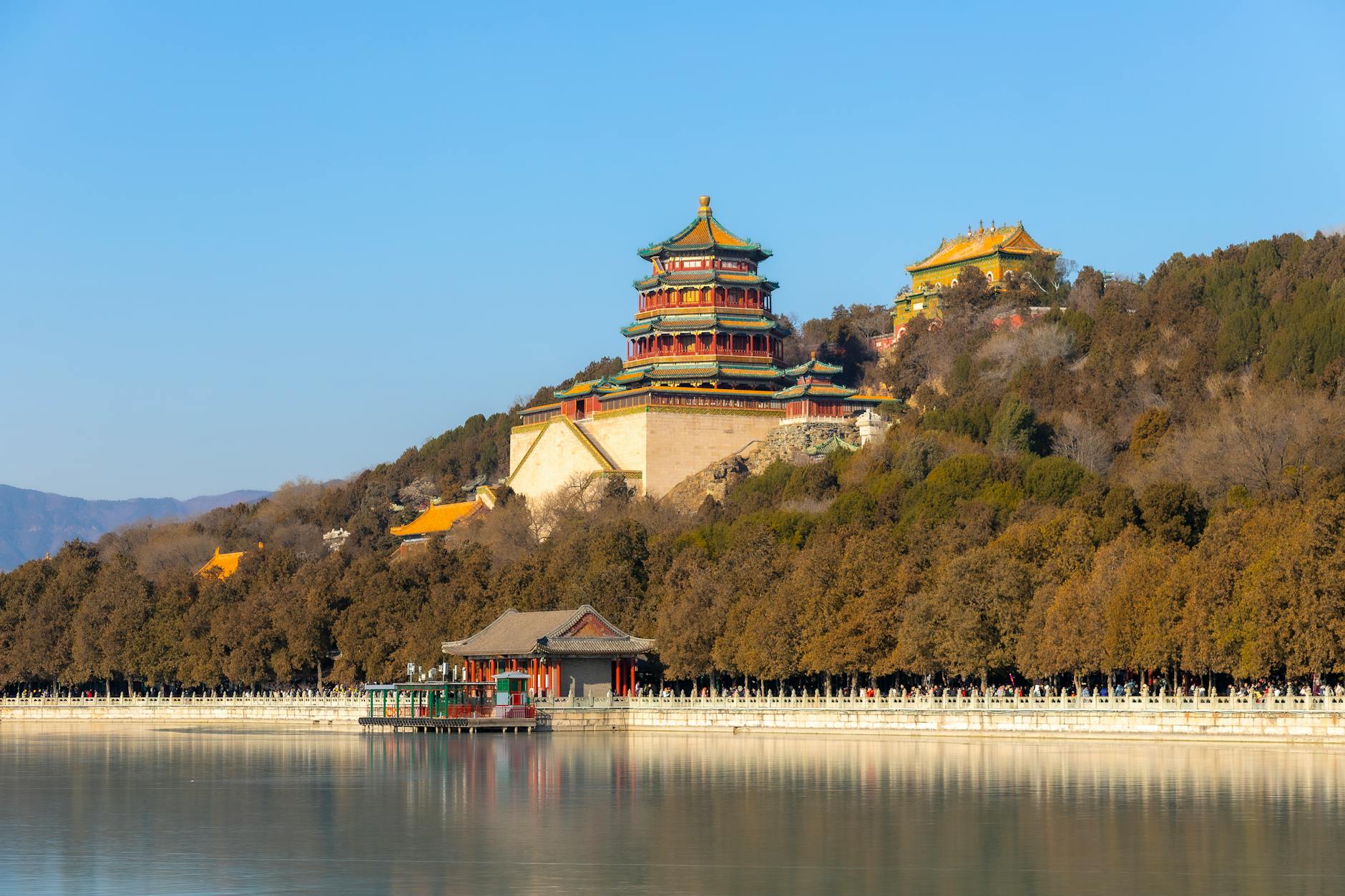
Almost everyone’s first trip to Beijing is the same trip: the square, the palace, Badaling or Mutianyu, the Temple of Heaven, a duck dinner, a rickshaw down a hutong. It is a good trip and there is no point repeating it. A Beijing second visit itinerary should assume all of that is done and go after what the first one had no room for — the wild Wall, the working temples, the western hills, and the parts of the city that are not four hundred years old.
This is a five-day plan for a return trip, with a shorter three-day version, notes on which first-visit sights genuinely reward a second look and which do not, and the seasonal case for timing a return around something specific. Prices were checked in September 2026 and are the right order of magnitude rather than a quote.
What to leave out this time
Being blunt about this first saves five days of dithering.
| First-visit sight | Second visit? | Why |
|---|---|---|
| Tiananmen Square | No | You have crossed it. The reservation friction is not worth repeating. |
| Forbidden City | Yes, differently | The western palaces and the galleries are a different building |
| Badaling or Mutianyu | No | Jiankou and Jinshanling exist |
| Temple of Heaven | Yes, at 07:00 | The park before nine is not the site you saw |
| Summer Palace | Only in winter or blossom | Seasonal, or skip |
| Nanluoguxiang | No | Use the alleys off it instead |
| Wangfujing snack street | No | It is a set piece, and you have seen it |
The five days
| Day | Plan | Roughly |
|---|---|---|
| One | Yuanmingyuan, then 798 for the afternoon | ¥25–145 |
| Two | Jiankou or Jinshanling — the unrestored Wall | ¥400–800 |
| Three | The temple circuit: Baiyunguan, Fayuan, Niujie, Guozijian | ¥60–90 |
| Four | Mentougou: Tanzhe, Jietai, Cuandixia | ¥150–800 with a car |
| Five | The Forbidden City’s other half, or a Gubei overnight | ¥80 or ¥400+ |
Day one — the nineteenth century and the twenty-first
Start with the two centuries the imperial circuit skips entirely.
Yuanmingyuan — the Old Summer Palace — is one stop past the intact Summer Palace on Line 4, Yuanmingyuan Park station, Exit B. Entry is ¥25 for adults, ¥10 for children over 1.2 metres and free below; open 08:00 to 19:00 April to October, 08:00 to 17:30 in winter. Most of it is lakes and causeways and planting, and at the eastern end is a field of carved white marble: the Western Mansions, a set of baroque pavilions built for the Qianlong emperor by Jesuits at his court, looted and burned by British and French troops in 1860, burned again in 1900, and quarried for building stone for decades after. Three hours, and it is the quietest major site in the city.
Then east to 798 in Dashanzi for the afternoon: an old East German-designed electronics plant turned into several dozen galleries, the original Maoist slogans still painted along the concrete vaults. Free to walk; individual shows ¥30–120, and most galleries close around six. 798.
Day two — the Wall without the handrails
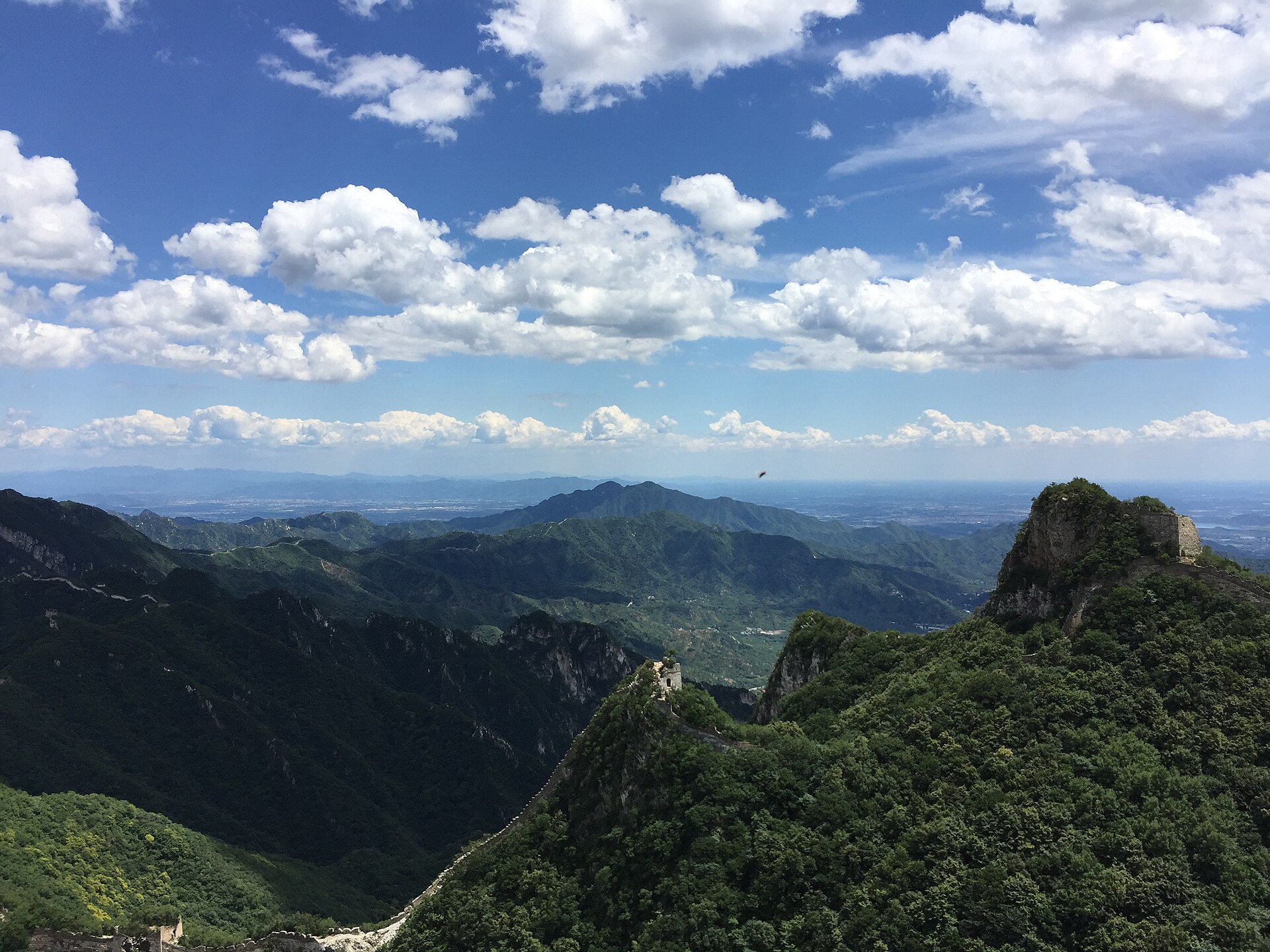
If your first Wall day was Badaling or Mutianyu, you have seen a restored rampart with a cable car and a parapet on each side. This is the day to see the other kind.
Jinshanling — the sensible choice
Two and a half hours north-east, roughly ten kilometres of wall running from restored at the western end to weathered and partly collapsed as you go east, with brick towers close enough together that you are always walking towards one. Four to five hours on the Wall, ten to eleven door to door, ¥400–700 depending on transport. A private car at ¥800–1,500 for the vehicle beats a tour bus for three or four people and lets you leave when you want. Take the cable car up; it saves a stiff forty minutes. Jinshanling.
Jiankou — the serious one
Jiankou is unrestored Ming wall on knife-edge ridges north of Huairou, with sections that are genuinely dangerous — loose brick, crumbling parapets, drops on both sides, and stretches where you are scrambling rather than walking. People are injured there every year and a few are killed. It is also, without much argument, the most spectacular stretch of the Wall within reach of Beijing.
Go with a guide who knows the route, go in dry weather, wear proper boots, and do not go alone. The usual approach is up from Xizhazi village and along towards Mutianyu, which lets you finish on restored wall and take the cable car down. If any part of that sentence sounds like more than you want, take Jinshanling instead — that is the right answer for most second-time visitors, not a consolation prize. Jiankou, the hiking guide.
Or sleep on it
Camping on or beside the Wall is a real, organised thing rather than a stunt, and a night on an unrestored section with the towers going dark down the ridge is the single best Great Wall experience available. Camping on the Great Wall, and for the quieter restored options Gubeikou and Huanghuacheng, which has a stretch running into a reservoir.
Day three — the temples nobody queues for
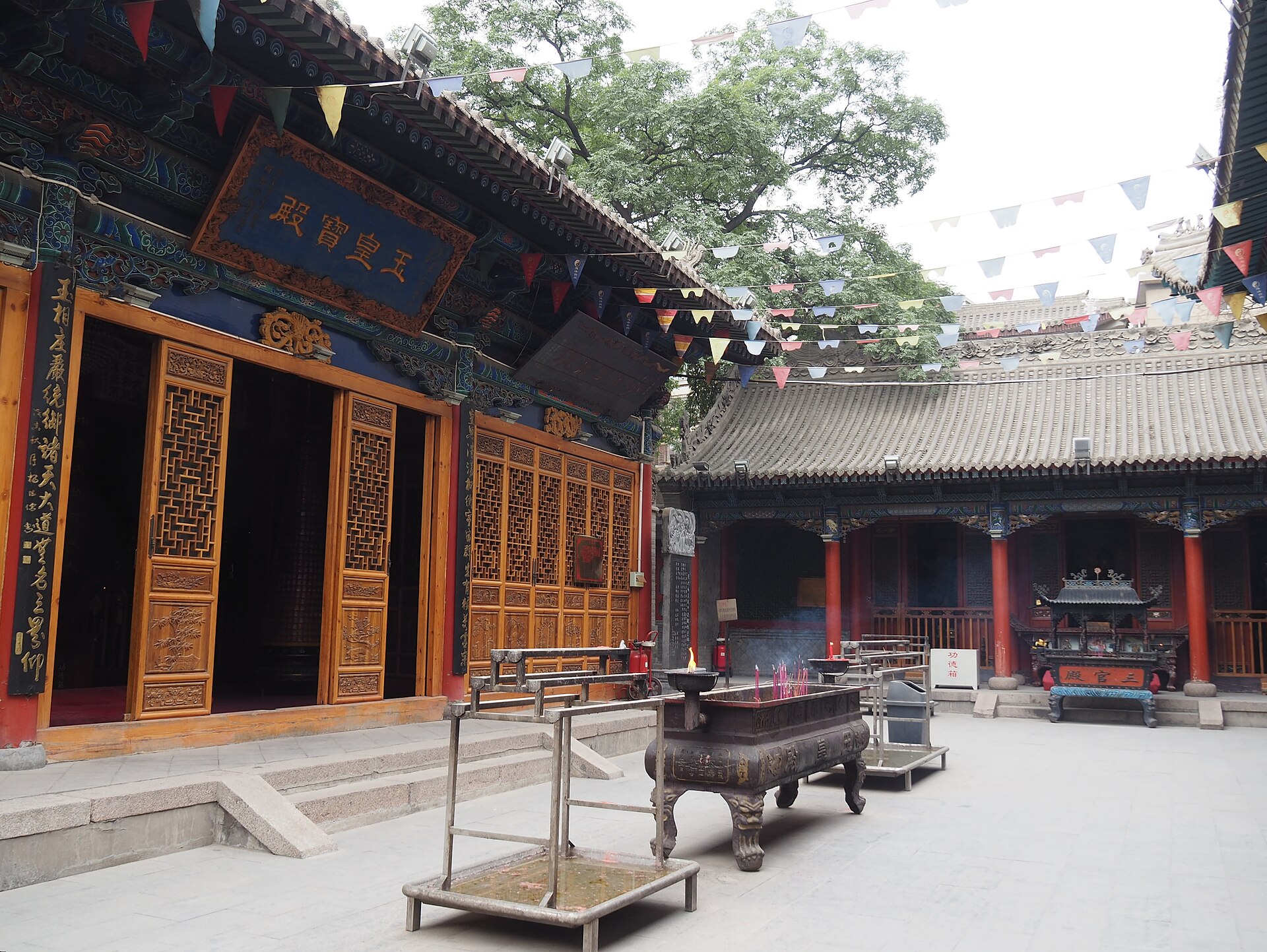
The Lama Temple is on every first-visit list and deserves to be. The rest of Beijing’s religious architecture is not, and it is where the city keeps some of its best rooms.
- Baiyunguan, the White Cloud Temple. The largest Taoist temple in northern China and a working monastery — priests in blue robes, worshippers rubbing the stone monkeys for luck, incense going in the courtyards. Nothing about it is arranged for visitors, which is the point. White Cloud Temple.
- Fayuan Temple. Founded in the seventh century, the oldest temple site in the city, now a Buddhist academy with monks studying in it. Famous for its lilacs in late spring. Very quiet. Fayuan Temple.
- Niujie Mosque. Founded in 996 CE and built in Chinese temple style rather than in any Middle Eastern idiom, which makes it architecturally unlike anything else you will see. Note that it has been under major conservation works, with services suspended and parts including the prayer hall potentially closed — check before going, and remember the prayer hall is for worshippers. Niujie Mosque.
- The Confucius Temple and Guozijian. Fifty metres from the Lama Temple and about a tenth as busy: stone stelae carrying the names of every successful imperial examination candidate for centuries, and the old Imperial College next door. Confucius Temple.
Niujie is also where to eat. It is the densest concentration of halal restaurants in Beijing — look for the green 清真 sign — and Jubaoyuan’s instant-boiled mutton, Man Heng Ji and Qingzhen Turpan for Xinjiang food are all within a short walk. Bear in mind that China has no national halal certification body for restaurants, so the qingzhen sign is a working marker rather than a certificate, and some qingzhen places still serve alcohol. Our guide for Muslim travellers explains the system properly, and temple etiquette and the temples themselves cover the religious sites.
Day four — Mentougou and the western hills
West of the sixth ring road the city stops fairly abruptly and the hills start. This is the day that makes a second visit feel like a different country from the first.
Tanzhe Temple is the oldest thing in the municipality — the local saying is that it predates the city — terraced up a wooded hillside with gingko trees older than most of the buildings on the central axis. Jietai Temple is half an hour away, built around an ordination platform, with a famous set of contorted ancient pines. Neither is easy to reach on public transport and the two are not well linked to each other, so hire a car for the day at ¥600–1,200 or work out the bus connections in advance. Tanzhe, Jietai.
Add Cuandixia if you have the car and the appetite — a Ming stone village terraced up a hillside about two hours west, small enough to walk in an hour, and as close to rural China as a day trip from Beijing gets. Cuandixia.
The alternative western day, if actual walking is what you want: the mountains proper. Lingshan is the highest point in the municipality at 2,303 metres, about 120 kilometres west; Haituo in Yanqing is 2,241 metres; Mount Wuling on the Miyun border is 2,118 metres. Fragrant Hills, for the avoidance of doubt, is a paved stepped path with a chairlift at about ¥80 one way — pleasant, popular in the late-October leaf season, and not a hike. Hiking near Beijing, Fragrant Hills.
Day five — the palace you did not see
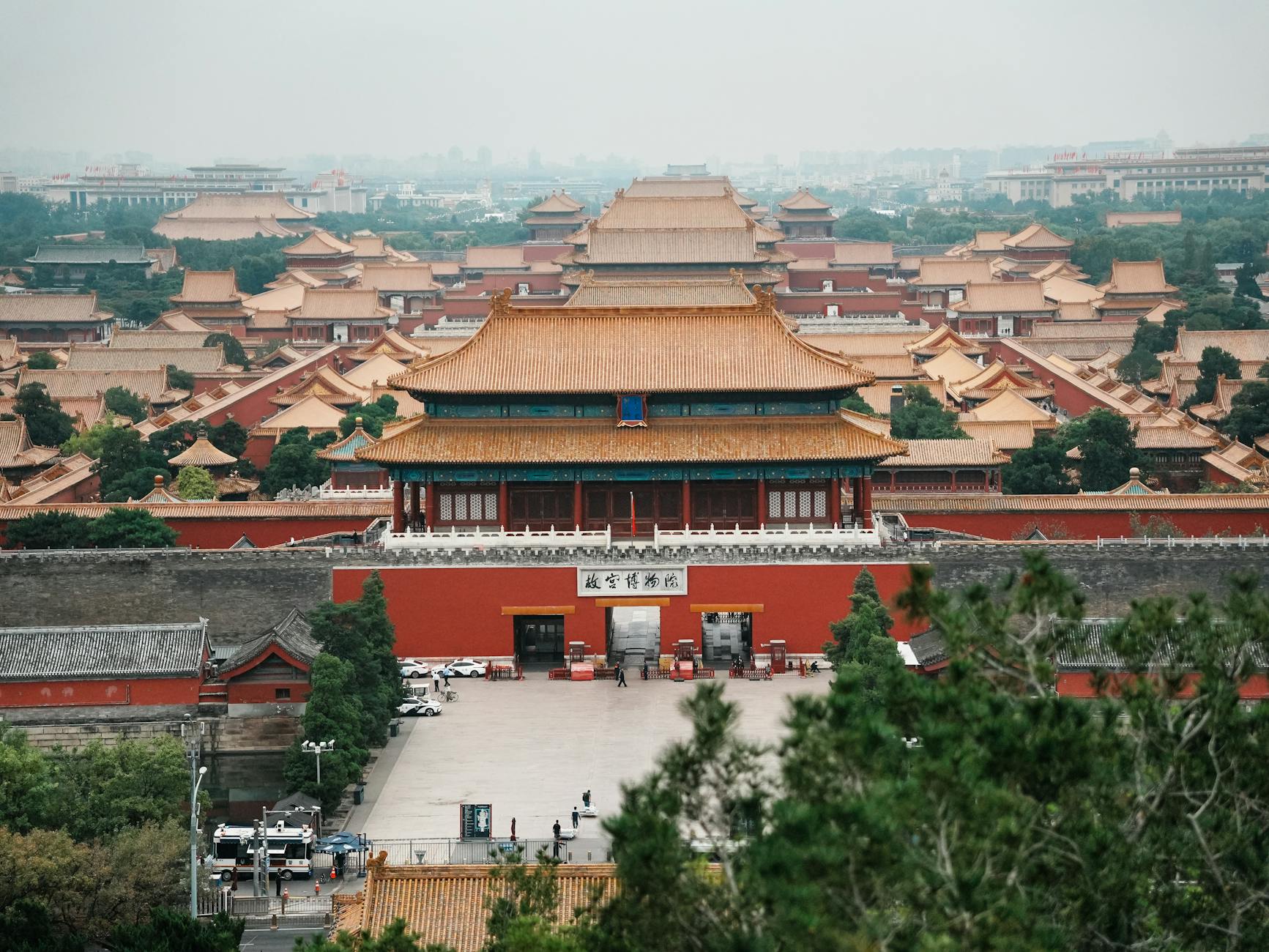
Most first visits walk the central spine — the Meridian Gate, the three great halls, the imperial garden, out at the north — in about three hours and see perhaps a third of what is open. A second visit can do the other two-thirds, and it is a genuinely different building.
Book the same way: ¥60 April to October, ¥40 November to March, released seven days ahead online only, real-name against a passport number, closed Mondays, no gate sales. Then ignore the spine. Go east into the palaces of the retired emperors and the consorts, where the courtyards are domestic in scale. Pay the ¥10 for the Treasure Gallery and the ¥10 for the Clock Gallery, which almost nobody does on a first visit and which are the two best collections in the complex. Then go west, where the crowd thins to almost nothing.
Give it a full four hours and take a guide or a proper audio guide this time. On a first visit you are looking at the scale of the place; on a second, you can afford to look at objects. Forbidden City guide, the galleries ranked.
Or leave town for the night
Gubei Water Town below the Simatai section is a modern reconstruction that reads as one in daylight and is genuinely striking after dark, and Simatai is one of the Great Wall sections with authorised night visits. Town entry around ¥150; the night Wall is a separate capped package at about ¥160 including the return cable car and must be booked at least a day ahead. A car is ¥800–1,200 and about two hours each way. Guesthouses from about ¥500 a night. It is a poor day trip and a good overnight. Gubei Water Town, Simatai.
The three-day version
If the return trip is short, this is the order that loses least.
- Day one — Jinshanling. The wild Wall is the strongest single reason to come back.
- Day two — Yuanmingyuan in the morning, 798 in the afternoon.
- Day three — the temple circuit, ending with lunch on Niujie.
That drops the western hills, which is the hardest cut, and the Forbidden City, which you have already seen once and which will still be there.
What has changed since you were last here
If your first visit was more than a few years ago, several practical things now work differently, and two of them will stop you at the gate if you have not prepared.
- Cash is close to obsolete. Alipay and WeChat Pay both take a foreign Visa or Mastercard — Alipay also Amex — after in-app passport verification, with no Chinese bank account needed. Alipay’s single-transaction limit for verified foreign users was raised to about US$5,000 in early 2026, with an annual cap near US$50,000. Install Alipay first for the better English interface; install WeChat too, because the booking mini-programs live inside it. Notes still work and increasingly draw a sigh.
- Real-name reservation is everywhere. Nearly every state museum and a good many parks now require a passport-linked booking, and most museums are free but still need one. The National Museum of China releases seven days ahead at 17:00 Beijing time and refuses walk-ins; you must arrive with the same physical passport you booked with, not a photo of it.
- The Forbidden City sells nothing at the gate. Not on the day, not at any price, not through a tout. Seven days ahead, online, real name, five people maximum per booking.
- Subway gates take foreign cards. Contactless Visa, Mastercard, JCB and Amex tap in directly at every gate — no ticket machine, no transport card, no app. Most tourist journeys are ¥3–6.
- The air is genuinely better. 2025 averaged 27 µg/m³ of PM2.5, a record low and the first year under 30, with 311 days of good or moderate air and one heavy-pollution day in the whole year. Against 89.5 µg/m³ in 2013 that is roughly a 70% fall. It now meets China’s own Grade II annual standard of 35 and is still several times the WHO guideline of 5. Compare µg/m³ rather than AQI numbers, since the Chinese and US scales read the same particulate very differently. Air quality.
- Visa-free entry has widened. Many nationalities can now enter for 30 days without a visa, and the longer visa-free transit policies have expanded — but the eligibility lists move, so check rather than assume. Visa requirements, 30-day visa-free entry.
- Leave the drone at home. The whole Beijing administrative area is controlled airspace and everything inside the sixth ring is effectively a no-fly zone without a permit a visitor cannot obtain. Every drone must be registered with CAAC in the operator’s real name and activated in the UOM app, drones must be declared to Customs on arrival, and Badaling and Mutianyu run security checks that look for them. Unauthorised flight means confiscation plus a fine of ¥500–10,000.
The modern city, which the first visit skipped
A first trip to Beijing is almost entirely a trip to the fifteenth century. The city that twenty-two million people actually live in is a separate destination and it is largely undocumented in guidebooks.
Sanlitun and the embassy district is the obvious entry point — bars, restaurants, a lot of glass, and the closest thing Beijing has to a nightlife district that runs on visitors and residents in equal measure. Gulou, around the Drum Tower, is where the independent music venues and small bars are, and it is a different and better evening than Sanlitun for most people. Wudaokou is the university quarter — cheap food, students, and the least self-conscious part of the city. The CBD around Guomao is the skyline, including the building everyone photographs and nobody can name. There are fuller accounts of Sanlitun and the craft beer and coffee scene if you want to plan an evening properly, and the nightlife guide covers the rest of it.
The Olympic Park is worth an evening on a return trip in a way it rarely is on a first: 30 minutes from Tiananmen on Line 8, grounds free to walk, the Bird’s Nest and Water Cube charging separately, and a lot of open space lit up after dark. In winter the Water Cube becomes the Ice Cube.
Doing rather than seeing
The other way to structure a return trip is to stop visiting things altogether. A second visit is when this starts making sense, because the pressure to tick anything off is gone.
- Cook. A three-hour cooking class with a market visit and lunch is the most useful thing you can bring home.
- Cycle. Beijing is flat, the bike lanes are wide and separated, and shared bikes cost almost nothing. The ring of parks and the hutongs are much better on two wheels. Cycling in Beijing.
- Eat past the duck. Hotpot, Xinjiang lamb, Yunnan food, Sichuan, and the whole northern breakfast repertoire. There are separate guides to hot pot, to breakfast, and to the rest of it.
- Stay in a courtyard. A siheyuan hotel for four or five nights is a different relationship with the city than a tower block on the third ring. Courtyard hotels, how they work.
- Go to something. Live music, cultural events, or Peking opera at a small venue on a Sunday afternoon at roughly ¥150–380, which is a very different thing from the 70-minute tourist highlights show.

Timing a return around something
A second visit does not have to happen in the same season as the first, and picking the season deliberately is one of the better reasons to come back.
| When | What for |
|---|---|
| Late March to mid-April | Cherry blossom at Yuyuantan; lilacs at Fayuan |
| Late April to May | Peonies at Jingshan (entry rises to ¥10) |
| Mid to late October | Autumn colour; Fragrant Hills at its most crowded |
| January | Houhai freezes into an ice rink; Water Cube becomes the Ice Cube |
| Spring Festival | Temple fairs, and a city that empties of migrants and fills with families |
Two dates to avoid unless you have no choice: 1 to 7 October, when Golden Week roughly doubles hotel prices and fills every site, and the Spring Festival travel period itself, when tickets across the country are close to impossible. The three Golden Weeks are Spring Festival, Labour Day from 1 to 5 May, and National Day from 1 to 7 October. Make-up workdays move around, so check the State Council’s final notice rather than trusting a list. Our guide to timing a trip covers the calendar, and there are separate pages on the autumn colour, cherry blossom, Spring Festival and winter.
What it costs
| Line | Per person |
|---|---|
| Yuanmingyuan and 798 | ¥25–145 |
| Jinshanling day | ¥400–700 |
| Jiankou with a guide instead | ¥600–1,000 |
| Temple circuit, four sites | ¥60–90 |
| Mentougou with a shared car | ¥200–350 |
| Forbidden City with both galleries | ¥80 / ¥60 |
| Local transport, five days | ¥90–250 |
| Food, five days | ¥500–1,200 |
| Total excluding hotels | ¥1,400–3,000 (US$200–430) |
A second visit is usually cheaper than a first per day, because the expensive part of Beijing is the transport out to things and you already know which ones are worth it. The budget guide breaks the numbers down, and the first-visit itineraries covers the first-visit versions if you are travelling with someone who has never been. For a shorter return, three days or even two will carry most of this if you pick one Wall day and one temple day.
If you are travelling with someone for whom this is a first visit, the standard routes are the better starting point: five days and a week both cover the imperial city properly, and four days is the shortest version that does not feel rushed.
Frequently asked questions
What should I do on a second trip to Beijing?
An unrestored stretch of Wall at Jinshanling or Jiankou; Yuanmingyuan and 798; the working temples — Baiyunguan, Fayuan, Niujie, the Confucius Temple; and a day out west at Tanzhe and Jietai. Then the two-thirds of the Forbidden City that a first visit walks straight past.
Is the Forbidden City worth visiting twice?
Yes, if you go differently. A first visit does the central spine in three hours and sees about a third of what is open. A second can spend four hours in the eastern and western palaces and pay the ¥10 each for the Treasure and Clock Galleries, which very few first-time visitors do and which are the two best collections in the complex.
Which Great Wall section should I do on a second visit?
Jinshanling for most people — ten kilometres of wall running from restored to collapsed, four to five hours of walking, and very few people on it. Jiankou if you are a confident hiker with a guide: it is unrestored, unfenced, genuinely dangerous in places, and the most spectacular section near Beijing.
Is Jiankou safe?
Not in the way Mutianyu is. It is unrestored Ming wall with loose brick, missing parapets and drops on both sides, and there are injuries and occasional deaths every year. Go with a guide who knows the route, in dry weather, in proper boots, and never alone. If that gives you pause, Jinshanling is the better trip rather than the lesser one.
How many days do I need for a second visit to Beijing?
Five is comfortable and three is workable. Three days covers the wild Wall, Yuanmingyuan with 798, and the temple circuit. Five adds the western hills and either a second look at the palace or an overnight at Gubei.
Is the Temple of Heaven worth going back to?
Only at opening. The buildings are the same; the park before nine is not — several thousand retired Beijingers doing tai chi, ballroom dancing, choral singing and water calligraphy on the paving. Buy the through ticket at ¥34 in peak season, since the ¥15 park-only ticket excludes the Hall of Prayer.
What is the best time of year for a return trip?
Pick a season you have not seen. Late March to mid-April for blossom, late April into May for the peonies at Jingshan, mid to late October for autumn colour, January for the frozen lakes, or Spring Festival for the temple fairs. Avoid 1 to 7 October and the Spring Festival travel crush itself.
Should I stay somewhere different on a second visit?
Yes, and a courtyard hotel in the hutongs is the obvious upgrade if your first trip was a tower on the third ring. For a longer return trip, a serviced apartment with a kitchen changes the shape of the stay considerably.
Are the Beijing temples free?
Mostly not, but they are cheap — a few tens of yuan each, with the Lama Temple at ¥25 including a free bundle of incense at the gate. The bigger constraint is the real-name reservation system, which applies to most state museums and a number of parks, so check whether the one you want needs a passport booking before you turn up.
Can I combine a second Beijing visit with another city?
More easily than a first, since you are no longer obliged to see everything. Datong is about an hour and three-quarters by bullet train for the Yungang Grottoes and makes a strong overnight; Tianjin is 30 minutes and ¥55; Xi’an is 4 hours 17 minutes and ¥515–565 and needs two nights. High-speed rail.
Do I still need to book everything in advance?
For the Forbidden City, yes — seven days ahead, online only, no gate sales, closed Mondays. Most state museums need a free real-name reservation against a passport. The temples on day three generally do not, and neither does Yuanmingyuan. It is a lighter booking load than a first visit, but it is not zero.
Is a second visit to Beijing worth it?
It is arguably the better of the two. The first visit is spent on obligations; the second is spent on choices, and the things that make Beijing interesting rather than impressive — the wild Wall, the working temples, the hills, the food that is not duck — are all on the second list.