Beijing Itineraries
Beijing With Kids: A Four-Day Plan That Survives the Week
A four-day Beijing itinerary built for families: one big thing a day, the cable car every time, and honest verdicts on which famous sights children actually enjoy.
Beijing is a hard city to sightsee in with children and an easy one to enjoy with them, and the difference is almost entirely in the sequencing. The sights are enormous, the distances between them are long, and the two most famous ones involve either three hours of shuffling through courtyards or a mountain of stairs. A Beijing itinerary with kids that works is one built around the walking and the meltdown risk first, and around the monuments second.
This is a four-day family plan, day by day, with the timings that keep it survivable, the cut list for when it stops being survivable, honest verdicts on which famous sights children actually like, and the practical business of strollers, toilets, food and naps. It assumes children roughly between three and twelve; there are notes at the end for toddlers and teenagers. Prices were checked in September 2026 and are the right order of magnitude rather than a quote.
Three rules that decide the whole trip
- One big thing a day, and nothing after four o’clock. Beijing’s headline sights are each a half-day minimum with children. Two of them in one day produces a bad afternoon and a bad evening.
- Book the timed tickets around the nap, not the other way round. The Forbidden City slot and the Tiananmen slot are both fixed and both unforgiving. Everything flexible bends around them.
- Buy the cable car. This applies at the Great Wall, at the Summer Palace’s hill and anywhere else it is offered. The money you save walking up is paid back in complaints at a poor exchange rate.
The four days at a glance
| Day | Morning | Afternoon | Walking |
|---|---|---|---|
| One | Arrive, settle, Beihai boats | Jingshan, then the lakes | 3–4 km |
| Two | Tiananmen and the Forbidden City | Rest, then Wangfujing | 5–6 km |
| Three | Mutianyu — cable car up | Toboggan down, bus back | 2–3 km, steep |
| Four | Universal, the zoo, or the science museum | Same | Varies |
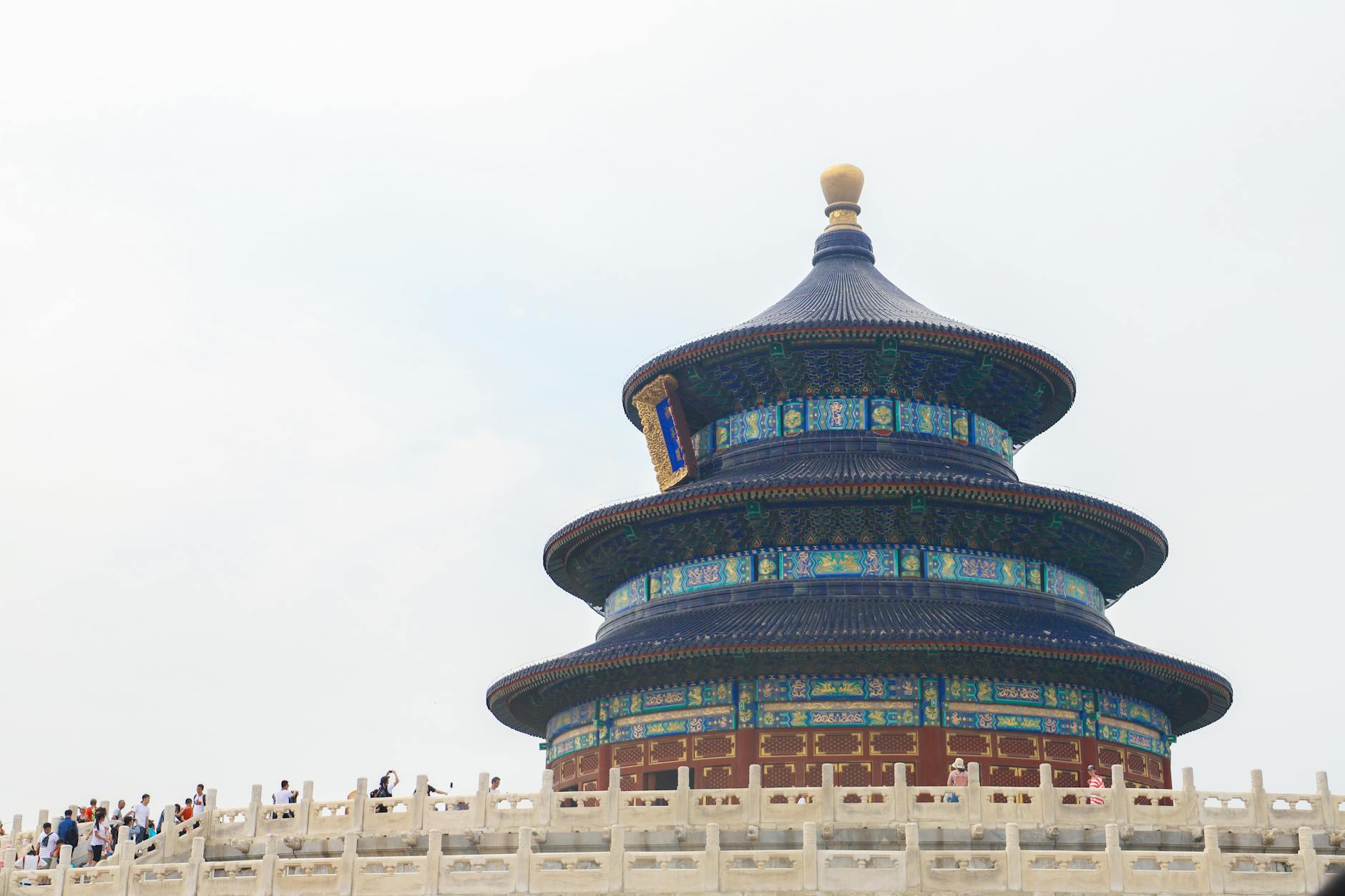
Note what is not on it. The Temple of Heaven and the Summer Palace are both wonderful and both very large, and on a four-day family trip one of them is a stretch and both is a mistake. If you want one, the Temple of Heaven at opening is the better bet — the park is full of people doing tai chi, kicking jianzi, singing and writing water calligraphy on the paving, which is far more interesting to a seven-year-old than another hall. Four days is the length this plan is built for; the main planner sets out what a fifth or sixth adds once the children have found their feet.
Day one — arrive gently
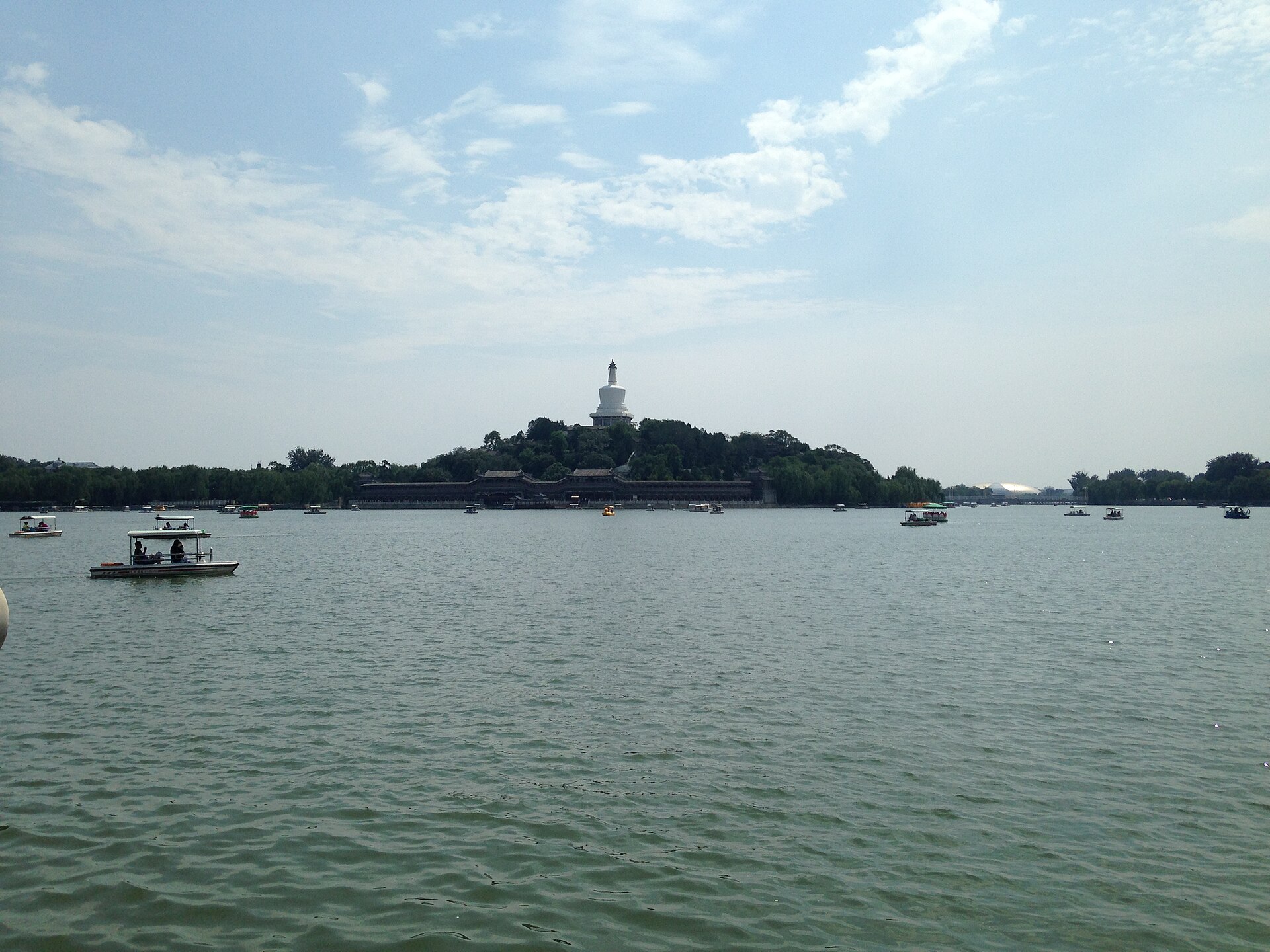
Jet lag with children is a different beast from jet lag alone, and day one should assume it. Get in, drop bags, and go somewhere with water and space.
Beihai Park is that place. The ¥20 through ticket covers the park, Jade Island and the Round City; a pedal or electric boat on the lake is about ¥100–200 an hour plus a refundable deposit, and it will occupy an hour and a half without any effort from you at all. The White Dagoba on the island is a short climb and a good view; skip it if the mood is fragile. Beihai Park.
Then walk fifteen minutes south-east to Jingshan — ¥2, ten minutes up a small artificial hill, and the entire Forbidden City laid out below you. Doing it the day before you go inside is deliberate: children who have seen the shape of the thing from above have something to hang the next morning on. Forty minutes total. Jingshan Park.
Eat early. A first-night duck dinner is tempting and generally a mistake with tired children — Siji Minfu at about ¥259 a whole duck is worth doing on day two or three when everyone has slept. Tonight, noodles at ¥18–25 a bowl and bed. The duck restaurants ranked.
Day two — the Forbidden City, done the short way
Book the Tiananmen Square slot for the morning and the Forbidden City for the same day; both are real-name reservations against passport numbers, both are compulsory, and there are no gate sales for the palace at any price. Tickets release seven days ahead and the palace is closed on Mondays.
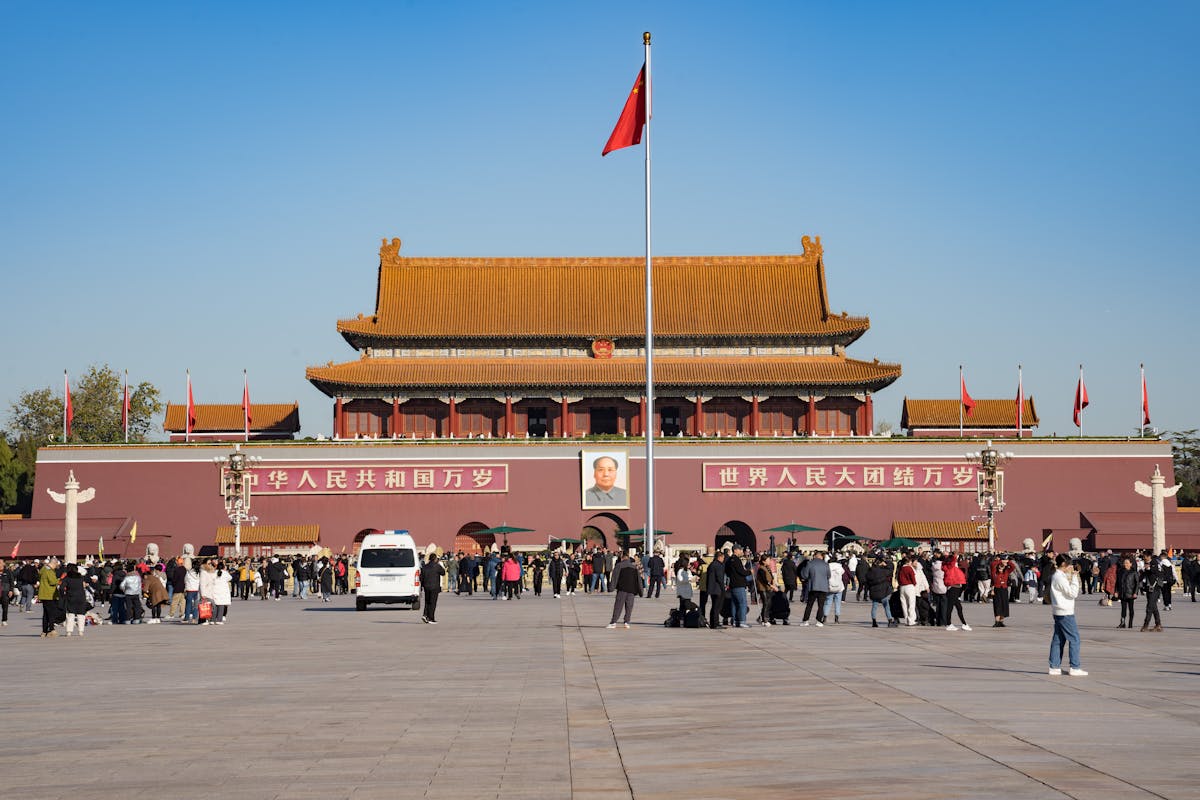
08:30 — Tiananmen Square
Two or three layers of ID and X-ray checks, which with a pushchair and a bag of snacks takes longer than it does without. The square is vast, flat and completely uninteresting to most children, so treat it as a corridor: twenty-five minutes, walk north, done. Tiananmen Square.
09:30 — Inside the palace
¥60 from April to October and ¥40 from November to March, plus ¥10 each for the Treasure Gallery and the Clock Gallery. The route runs one way from the Meridian Gate to the Gate of Divine Prowess, which is helpful — you cannot get lost and you cannot backtrack.
Two hours, not three. Do the three great halls on the central spine, then cut east into the smaller palaces where the courtyards are the size of a house rather than a parade ground and the rooms still have furniture in them. Children who glaze over in the Hall of Supreme Harmony often perk up here, because it is finally somewhere a person could have lived.
The Clock Gallery is the one to pay for if you are paying for one: European automata, birds that move and figures that write, and the only part of the palace that is unambiguously a display of interesting objects rather than of imperial scale. It is ¥10 and worth it with children in a way it is not without them. The Treasure Gallery is jade and gold behind glass, which is a harder sell. Forbidden City guide, the galleries compared.
Come out at the north gate at about half eleven, eat somewhere five minutes off Jingshanqian Street rather than directly opposite it, and go back to the hotel. The afternoon is a rest, and building one in on day two is what makes day three possible.
Late afternoon — Wangfujing
If everyone revives, Wangfujing is fifteen minutes away, pedestrianised, full of shops and completely undemanding. There is a well-known snack street off it selling scorpions on sticks, which is a tourist set piece rather than Beijing food and which children find either thrilling or appalling — either reaction makes for a good evening. Wangfujing, night markets.
Day three — the Great Wall
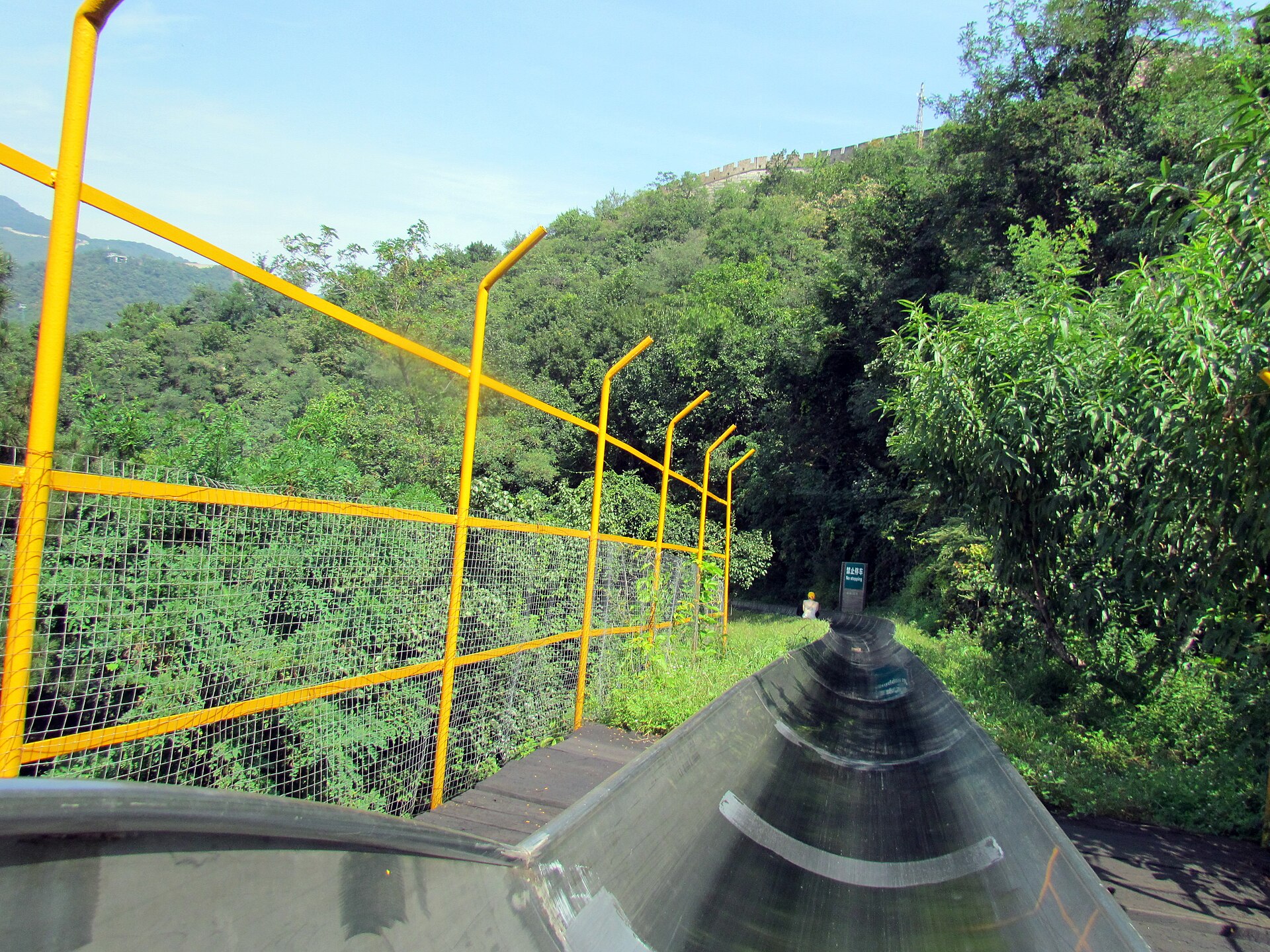
Mutianyu, and there is no real argument. Badaling is closer and its crowds are worse; Jinshanling and Jiankou are better walls and entirely unsuitable for children. Mutianyu has a cable car, a chairlift, a toboggan run and restored ramparts with parapets on both sides.
Getting there
The tourist bus from Dongzhimen leaves at 08:00 and 10:00, ¥80 return, about 90 minutes each way. With young children the 10:00 is defensible — the extra two hours of sleep may be worth more than the thinner crowd. If your budget stretches, a private car at ¥800–1,500 for the day removes the fixed return time entirely, and with a family of four that is the single most useful thing money buys on this trip: you leave when the children are done rather than when the coach is. All the transport options.
On the Wall
Shuttle to the base ¥20, entry ¥45, cable car ¥100 one way or ¥140 return. The toboggan is ¥100 one way or ¥140 combined with the chairlift up.
The family route: cable car to tower 14, walk west along the ramparts as far as tower 6 — an hour or so at a child’s pace, with towers to run in and out of the whole way — then toboggan down. Do not go east towards tower 20, where the restoration stops and the steps get steep and unfenced. That stretch is the best part of the Wall for adults and the wrong part for a six-year-old.
The toboggan has a minimum height and small children ride with an adult; there is a brake lever and the attendants will shout at you if you use it too little or too much. It is the thing they will describe when they get home. Bring water, sun hats and more snacks than you think — the vendors on the ramparts charge accordingly. The Great Wall with children in detail, Mutianyu.
Day four — the day that is for them
| Option | Cost | Ages | Verdict |
|---|---|---|---|
| Universal Studios Beijing | ¥418–748 dynamic | 6+ | A full day and a big win |
| Beijing Zoo and the panda house | ¥15 high season, ¥10 low | 2–8 | Cheap, central, mixed enclosures |
| China Science and Technology Museum | Modest, book ahead | 5–12 | Hands-on, and indoors |
| Olympic Park | Grounds free | All | Space to run; venues charge separately |
| Temple of Heaven park at opening | ¥34 / ¥28 | All | Better with kids than it sounds |
Universal Studios Beijing is the obvious choice if the children are old enough and the budget allows. Tickets are dynamically priced at roughly ¥418–748 for a one day pass depending on the date, with express passes on top — up to about ¥900 for an all-day version. It is a full day and it buys an enormous amount of goodwill after three days of imperial architecture. Universal Studios Beijing.
Beijing Zoo is ¥15 in high season and ¥10 in low, free for children under 1.2 metres, with the panda house sold as a combo add-on. It opens 07:30 and closes at 19:00 from April to October with last entry at 18:00, and 18:00 in winter. Strollers rent for ¥30 a day at the South Gate. Honest verdict: the pandas are the reason to go and some of the other enclosures are dated by the standards of a modern European or American zoo. Go for the pandas, go early, and do not plan a whole day around it.
Olympic Park is 30 minutes from Tiananmen on Line 8 or 15, the grounds are free, and it is simply a lot of open paving and grass to run across — which after three days of queues has real value. The Bird’s Nest and the Water Cube each charge separately, and the Water Cube becomes the Ice Cube in winter.
The practical business
Strollers and the subway
The subway is the best thing about moving around Beijing with children: single rides are ¥3–6, trains are frequent, signage is bilingual, and a foreign contactless Visa, Mastercard, JCB or Amex taps in directly at the gate with no card to buy. Lift access exists at most stations but is not always where you want it, and the security X-ray at every entrance means bags off, pushchair through, every time — budget five minutes per station rather than one. The subway in detail, step-free access.
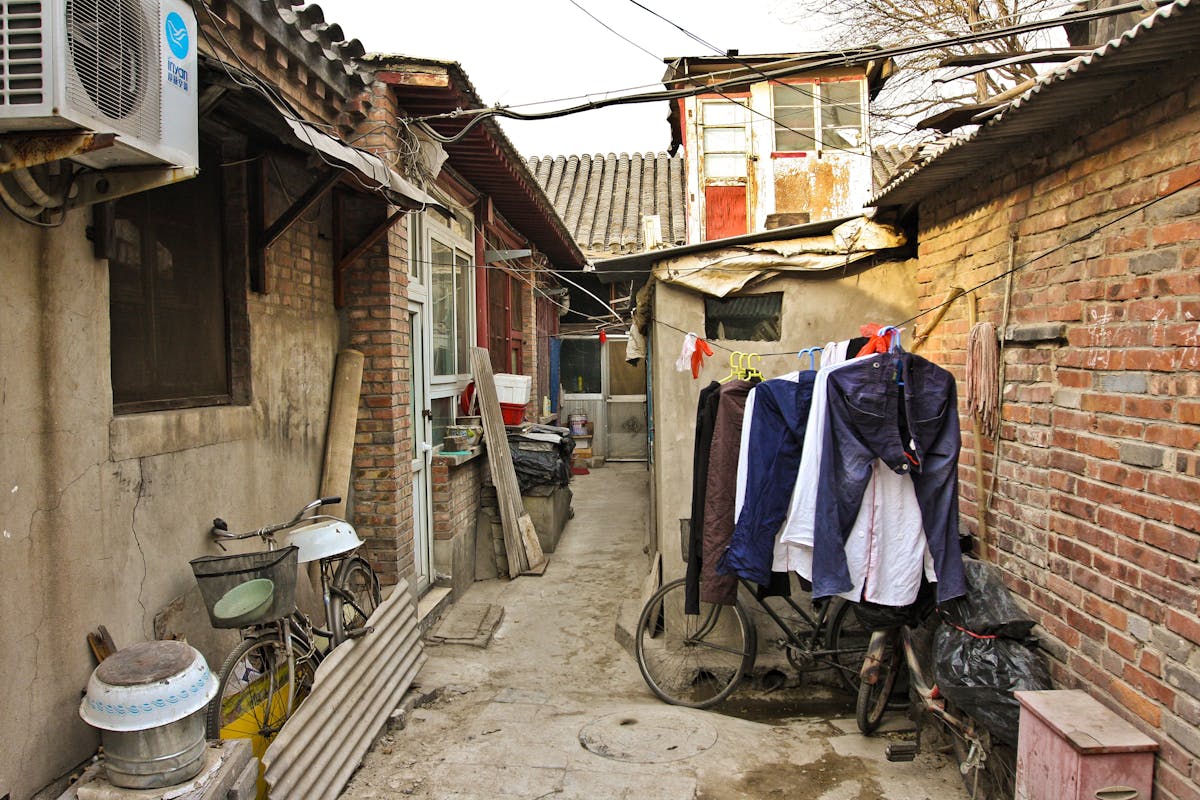
A pushchair is fine on the axis, in the parks and inside the Forbidden City, whose courtyards are broad and mostly paved. It is not fine in the hutongs, where the paving is uneven and the alleys are narrow, and it is useless on the Wall. A carrier for a small child is the better answer for days one and three.
Toilets
Public toilets are everywhere and are free, and they are frequently squat-style with no paper. Carry tissues and hand gel, and in the big sites head for the facilities near the main gates, which are generally the newest. This is the single most common thing families are unprepared for.
Food
Beijing food is more child-friendly than its reputation: plain steamed baozi, jianbing pancakes, hand-pulled noodles, dumplings, rice and egg. A bowl of beef noodles is ¥18–25 in a chain shop, ¥40–60 in a tourist restaurant. Peking duck served in pancakes is essentially a build-your-own wrap and goes down well with children who would refuse it described any other way. Spice is easily avoided — say “bù là” and point. Western chains are everywhere if you need a reset day, and are not halal-certified in mainland China if that matters to you. Our food guide covers the range, with more on street food and vegetarian options.
Weather and air
Beijing summers are hot and humid, winters are properly cold and dry, and the shoulder seasons are the good ones — late September to early November, avoiding 1 to 7 October when Golden Week roughly doubles hotel prices, or April to mid-May. On air quality, the picture is much better than the reputation: 2025 averaged 27 µg/m³ of PM2.5, a record low, with a single heavy-pollution day in the whole year. Above an AQI of 150, move the day indoors — the science museum or the palace galleries. Compare µg/m³ rather than AQI numbers, since Chinese and US scales read the same particulate differently. Air quality, when to visit.
Paying for things
Set up Alipay before you leave home and add WeChat Pay as backup. Both take a foreign Visa or Mastercard after in-app passport verification; Alipay has the better English interface, and the reservation mini-programs for the palace, the square and the museums live inside WeChat. Cash still works but is increasingly awkward — carry ¥200 for the odd stall. Getting by without Chinese.
Adjusting by age
Toddlers and under-fives
Cut day two to the three great halls and the Clock Gallery and be out in ninety minutes. Cut the Wall to the cable car up, one tower, and the cable car back down — the toboggan has a height minimum and a small child riding with an adult is fine but not thrilling. Add the zoo. Expect one park a day and no more, and take the pushchair everywhere except the hutongs.
Five to nine
The itinerary above is written for this range. The toboggan, the Beihai boats and the Clock Gallery are the three highlights; the Forbidden City’s scale means very little to them and the small eastern courtyards mean a lot.
Ten to fourteen
Add the Temple of Heaven at opening, add a cooking class, and consider walking east from tower 14 at Mutianyu rather than west — this is the age at which the wild end of the Wall becomes the best part of the trip rather than a hazard. Acrobatics lands well here; Peking opera generally does not.
Teenagers
Give them 798, Sanlitun and a phone with a working map, and do the imperial sites at adult pace. The main risk with teenagers in Beijing is not exhaustion, it is boredom, and the antidote is the modern city rather than more palaces. 798, Sanlitun.
What to skip with children
- The Summer Palace, mostly. It is three hours minimum, 45 minutes each way, and the walking is relentless. If you must, enter at Beigongmen, do Longevity Hill and the lake shore, and leave.
- The Ming Tombs. A long drive for a stone avenue and an underground chamber that most adults find merely fine.
- Any group day tour. Fixed timings, a lunch you did not choose and a shopping stop are all worse with children than without.
- Peking opera. Ninety minutes of subtitled performance is a lot to ask. Acrobatics or a kung fu show does the same job.
- The hutong rickshaw circuits. A short loop sold as a tour, and children find them less interesting than walking.
What it costs
| Item | Family of four, four days |
|---|---|
| Forbidden City, two adults two children | ¥120–240 plus galleries |
| Beihai, Jingshan, boat hire | ¥200–300 |
| Mutianyu by tourist bus, all in | ¥1,100–1,400 |
| Mutianyu by private car instead | ¥1,500–2,200 |
| Day four — zoo | ¥30–60 |
| Day four — Universal Studios instead | ¥1,700–3,000 |
| Subway, four days | ¥200–300 |
| Food, four days | ¥1,200–2,400 |
Where to stay matters more with children than without it, because every extra transit is a negotiation. Dongcheng around Wangfujing puts days one and two on foot and the Dongzhimen bus one straight ride away; a hutong courtyard hotel is charming and harder work with a pushchair. Look for a family room or an apartment with a kitchen — five nights with a fridge and a kettle is a materially different trip. Where to stay, apartment rentals, Dongcheng hotels. On a shorter visit, the three-day route and the weekend version both work with children if you cut one sight a day.
The adult versions of this trip are worth reading alongside it, mostly to see what is being given up. Four days without children fits the Summer Palace and a second Wall section; five add a day trip, and a week is where rest days stop feeling like a sacrifice.
For the open-space afternoon, our Beijing Olympic Park guide covers what children tend to like best there, from the Water Cube’s pool and water park to skating sessions and the science museum at the north end of the Green, along with which tickets earn their price.
Frequently asked questions
Is Beijing good for children?
Better than most people expect, with the right plan. Chinese attitudes to children in public are warm and accommodating, the subway is cheap and easy, food is more adaptable than its reputation, and there is a toboggan run down the Great Wall. The difficulty is scale — the sights are huge and far apart, so one major thing a day is the working limit.
How many days do I need in Beijing with kids?
Four is the practical minimum for the Forbidden City, the Great Wall and a day that is for the children rather than for you. Three works if you drop day four. Five lets you add the Temple of Heaven at opening and a rest afternoon without cutting anything.
What is the best thing in Beijing for kids?
The toboggan run at Mutianyu, without much competition — a cable car up the Great Wall and a metal luge back down. After that, the boats at Beihai, the Clock Gallery’s automata inside the Forbidden City, and Universal Studios if the budget allows.
Is the Great Wall suitable for young children?
Mutianyu is. Take the cable car up to tower 14 and walk west towards tower 6 along restored ramparts with parapets on both sides, then toboggan down. Avoid the stretch east of tower 14, where the restoration stops and the steps become steep and unprotected, and avoid Jinshanling and Jiankou entirely with small children.
Can I use a pushchair in Beijing?
On the axis, in the parks and inside the Forbidden City, yes. In the hutongs, not really — the paving is uneven and the alleys are narrow. On the Wall, no. Subway lifts exist at most stations but are not always convenient, and every station entrance has a bag X-ray. A carrier for a small child is worth bringing as well.
How much does the Forbidden City cost for children?
The main ticket is ¥60 from April to October and ¥40 from November to March, with reduced and free rates for children depending on height and age — check when you book. The Treasure Gallery and Clock Gallery are ¥10 each on top. Everything must be booked online seven days ahead against a passport number; there are no gate sales.
What should I do on a rainy day in Beijing with kids?
The China Science and Technology Museum, which is hands-on and needs booking ahead. The Clock Gallery and the covered galleries inside the Forbidden City. A cooking class. Or a shopping mall — Beijing has very large ones and they are a legitimate answer to a wet afternoon. Shopping malls.
Is Beijing safe for families?
Very. Violent crime against visitors is rare, the streets are busy and well lit, and the main practical risks are traffic — which does not always stop for pedestrian crossings — and losing each other in a very large crowd. Agree a meeting point at every site and write the hotel’s name and address in Chinese on a card in each child’s pocket. Safety in Beijing.
What about food if my child is a fussy eater?
Plain steamed baozi, hand-pulled noodles, dumplings, rice and fried egg are all everywhere and all cheap — ¥18–25 for a bowl of noodles in a chain shop. Peking duck in pancakes is a build-your-own wrap and usually a success. Spice is easy to avoid by asking. Western chains are widespread if you need a break.
Should I hire a guide with children?
For the Forbidden City, a guide who is used to families is genuinely useful — the halls do not explain themselves and a good guide will pitch it at the children rather than at you. For the Wall, a driver rather than a guide, because the value is in leaving when your children are finished rather than when a coach is. Tip private guides and drivers ¥50–100 a day; tipping is otherwise not customary in China.
Is Universal Studios Beijing worth it?
With children over about six, yes — it is a full day, tickets run roughly ¥418–748 depending on the date, and it resets everyone’s mood after three days of imperial sites. With adults only, it is a theme park like any other and you have probably got one closer to home.
How do I handle jet lag with kids in Beijing?
Build day one around water and open space rather than around a monument — Beihai’s boats and Jingshan’s small hill do the job — and put the two timed-ticket days second and third. Eat early on the first night and skip the big dinner. It costs you half a day and saves the other three.