Beijing Nightlife
Beijing Acrobatics Shows: Best Theaters & Performances
Watch world-class Chinese acrobatics in Beijing. Chaoyang Theatre and other venues with show times, tickets, and reviews.

A Chinese acrobatics show is one of the most crowd-pleasing nights out in Beijing — an hour of jaw-dropping, gravity-defying skill that needs no translation and delights all ages. China has a 2,000-year-old acrobatic tradition, and its performers are routinely among the very best in the world, executing breathtaking feats of contortion, balancing, juggling, plate-spinning, chair-stacking, aerial silks and the famous motorcycle globe of death, all set to music and dramatic lighting. The headline venue is the Chaoyang Theatre — “the acrobatics theatre of Beijing” — which stages spectacular shows nightly, but several other theatres offer their own performances. With tickets from around ¥120–380, hour-long shows, and pure visual spectacle that transcends any language barrier, acrobatics is the easiest and most universally enjoyable performance to add to a Beijing evening. This guide covers the best venues, what to expect, show times, tickets, and tips for a great night.
If you want a show the whole family will love — kids and adults alike gasping at the same impossible feats — acrobatics is the answer. This guide covers where to go (chiefly the famous Chaoyang Theatre), the kinds of acts you’ll see, how to book and when to go, and how it fits into an evening. No subtitles required; just sit back and prepare to be amazed.
Beijing acrobatics shows at a glance
- What
- hour-long shows of world-class Chinese acrobatics — contortion, balancing, aerial, juggling and more.
- Top venue
- Chaoyang Theatre, Beijing’s dedicated acrobatics theatre, with nightly shows.
- Other venues
- Tianqiao Acrobatics Theatre and others around the city.
- Tickets
- roughly ¥120–380 depending on seat; book ahead (2+ hours before) for discounts.
- Show times
- typically early evening, around 5:15pm and 7:15pm; about 1 hour long.
- Best for
- families, all ages, anyone wanting a no-language-barrier spectacle.
- Nearest metro (Chaoyang Theatre)
- Hujialou (Lines 6 & 10), Exit C1.
What to expect
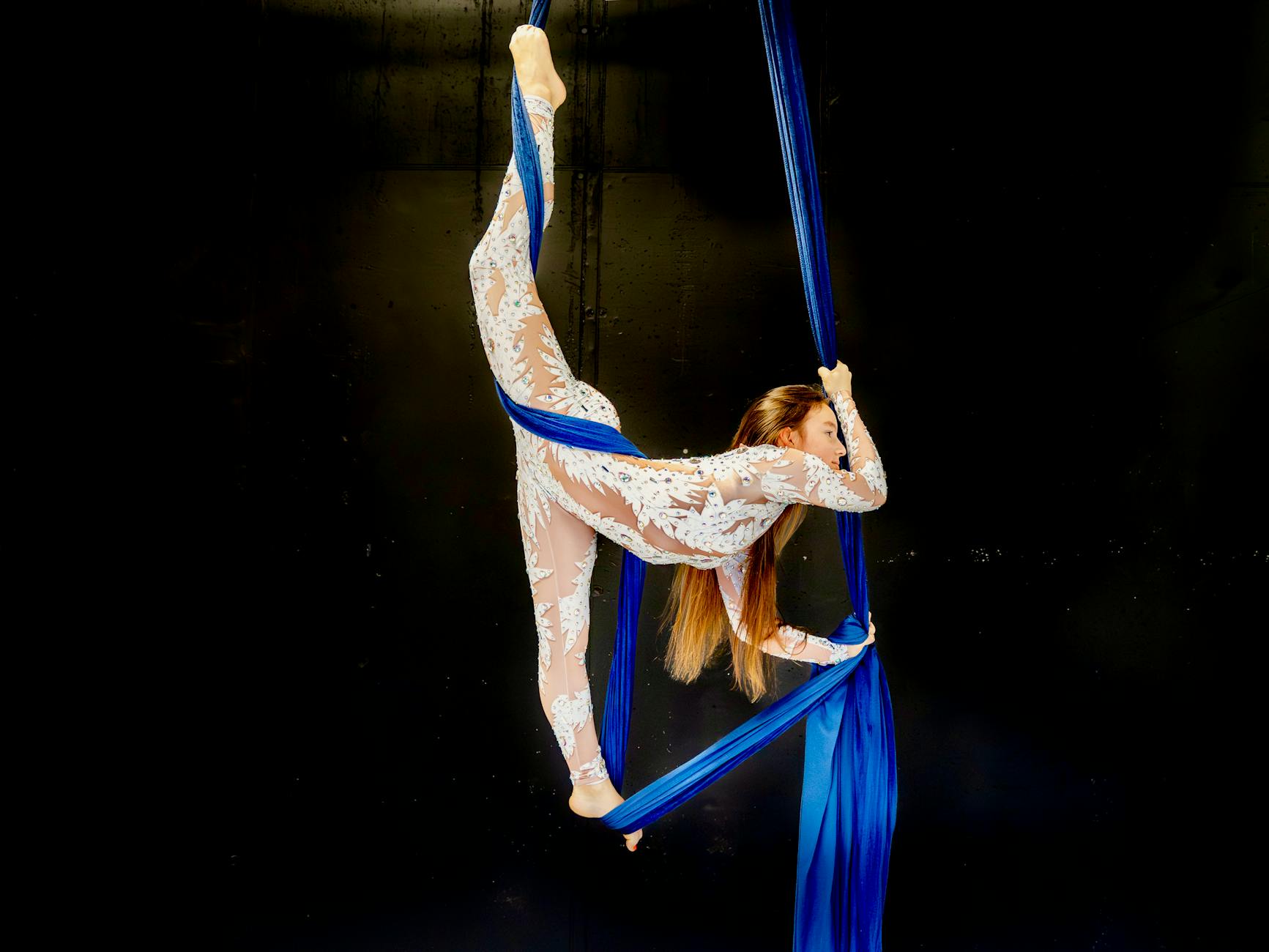
A Beijing acrobatics show is a fast-paced, dazzling variety of acts that follow one after another over about an hour, each more astonishing than the last, performed by superbly trained young athletes in colourful, sparkling costumes under dramatic lighting and a driving musical soundtrack. You’ll typically see: contortionists folding into impossible shapes; plate-spinners twirling spinning dishes on poles while tumbling; jugglers and diabolo (Chinese yo-yo) artists; chair-stacking balancing acts where a performer balances in a one-handed handstand atop a towering, swaying pile of chairs; hoop divers and tumblers; graceful, sometimes hair-raising aerial silk and trapeze performances high above the stage; foot-juggling (performers spinning tables, jars or even people with their feet); group bicycle stunts (a dozen riders on one bike); and often the spine-tingling finale, the “globe of death” where several motorcyclists roar around at once inside a small spherical steel cage, missing each other by inches. It’s pure spectacle — no plot, no dialogue, no language barrier, just relentless human skill and daring — which makes it utterly accessible and genuinely thrilling for everyone from young children to grandparents. Expect to gasp, wince and break into spontaneous applause throughout.
Where to watch
Chaoyang Theatre — the headline venue
The Chaoyang Theatre is Beijing’s premier and most famous acrobatics venue, billed as “the acrobatics theatre of Beijing,” and the default choice for most visitors. It stages spectacular hour-long shows nightly (typically around 5:15pm and 7:15pm), featuring the full range of acts performed by award-winning troupes, complete with slick lighting, a live-feeling soundtrack and the reliably crowd-pleasing globe-of-death finale. It’s centrally located in Chaoyang district at 36 East Third Ring Road, right by Hujialou station (Lines 6 and 10, Exit C1) — handy, as taxis are scarce there at rush hour. The shows are extremely popular, especially at weekends and in peak season, and the best seats sell out, so book in advance (online booking offers discounts and is recommended at least two hours before showtime). Collect tickets at the box office 30 minutes before the show. If you’d rather not cross town twice in one evening, picking a hotel over in Chaoyang puts you within easy reach of the theatre.
Other venues
While Chaoyang is the best known, a few other theatres stage acrobatics. The historic Tianqiao Acrobatics Theatre, in an area that was once Beijing’s traditional folk-performance and street-entertainment district, offers shows with a more old-Beijing flavour. Various other theatres and dinner-show venues around the city also feature acrobatic performances, sometimes combined with other acts. For most visitors, though, Chaoyang Theatre’s combination of quality, reliability, central location and nightly shows makes it the simplest and most rewarding choice. Whichever you pick, the core experience — world-class acrobatics packed into a fast-moving hour-long spectacle — is much the same.
Booking, timing and tips
A few pointers for a smooth night. Book online in advance — it’s cheaper than buying at the door, secures good seats (which sell out for popular shows), and you simply collect your tickets at the box office with your booking reference about 30 minutes before. Show times are early (around 5:15pm and 7:15pm), which is great news: a one-hour show at 7:15 finishes by 8:15, leaving the rest of the evening free for dinner or drinks. Seats range from around ¥120 at the back to ¥380 for premium front rows — the mid-range seats offer an excellent view of the full stage, and front-row seats put you almost within touching distance of the action. The shows are family-friendly and need no Chinese, making them ideal for travellers with kids or anyone wanting guaranteed entertainment. Photography is usually permitted without flash. And take the metro to Chaoyang Theatre rather than a taxi, as cabs are hard to find in the area at peak times. Pair the show with dinner in nearby Sanlitun for a complete evening.
2,000 years of Chinese acrobatics
Chinese acrobatics (zájì) is one of the oldest performing arts in the world, with roots stretching back more than 2,000 years to the Han dynasty and earlier. It began as folk entertainment — village performers showing off feats of strength, balance and agility at festivals and markets, often using everyday objects like jars, tables, chairs and plates, which is why so many classic acts still revolve around such props. Over the centuries it was refined in imperial courts and travelling troupes, absorbing influences and developing the astonishing technical repertoire seen today. In the modern era, China established dedicated acrobatics schools and troupes that train performers from childhood to an elite, almost superhuman standard, and Chinese acrobats now regularly sweep the top prizes at international circus festivals. So when you watch a show in Beijing, you’re not seeing a tourist gimmick but the living continuation of a two-millennia-old tradition, performed by some of the most highly skilled acrobats anywhere on the planet. That heritage is part of what makes the spectacle so impressive — these aren’t party tricks but a deeply rooted art form honed over generations.
It’s also worth knowing that acrobatics, opera and martial arts in China are historically intertwined — Peking Opera includes acrobatic combat, and kung fu shows borrow theatrical staging — so a night of acrobatics complements those other classic Beijing performances nicely, each showing a different facet of the country’s physical performing arts.
A closer look at the signature acts
Part of the fun is recognising the classic acts and appreciating just how hard they are. The chair-stacking balance is a perennial showstopper: a performer slowly builds a tower of chairs — sometimes seven or eight high, swaying near the ceiling — then performs handstands and one-arm balances at the very top, with no safety net. Plate-spinning sees performers keep a dozen dishes whirling on thin poles while simultaneously tumbling, doing the splits or backbends. Foot-juggling (antipodism) has acrobats lying on their backs spinning heavy objects — tables, jars, parasols, even other people — with their feet. The hoop diving act sends tumblers somersaulting through stacked hoops at improbable heights, while contortionists bend their spines into shapes that seem anatomically impossible, often balancing candelabra or stacking their own bodies. Aerial silk and trapeze acts add grace and a touch of danger high above the stage. And the famous finale, the “globe of death,” packs four, five or even six motorcyclists roaring simultaneously around the inside of a small spherical steel cage — a heart-in-mouth crescendo. Each act represents years of training, and seeing them back to back over an hour is genuinely awe-inspiring.
Planning your acrobatics evening
Because acrobatics shows are short (about an hour) and start early (typically 5:15pm or 7:15pm), they slot perfectly into a wider evening rather than dominating it. A great plan: catch the 7:15pm show, which wraps up by around 8:15, then head out for a late dinner — the Chaoyang Theatre is close to Sanlitun, so you can roll straight into the bars and restaurants there afterwards (see our Sanlitun bar guide), or head across to Ghost Street, where the kitchens run into the small hours. Alternatively, the earlier 5:15pm show suits families with young children who want an early night, leaving the evening free. For travellers spreading their entertainment across a trip, it’s well worth seeing the acrobatics on one night and a Peking Opera or kung fu show on another, rather than trying to cram them together — each deserves its own slot, and together they give a wonderfully rounded sense of China’s rich performing-arts traditions. Whatever you choose, the acrobatics show is the safest bet for a guaranteed crowd-pleaser, especially for mixed groups or families where you need something everyone will enjoy.
One practical reassurance: you really can’t go wrong here. The quality at the main venues is consistently high, the format is reliable, the spectacle is universal, and the short running time means even the most restless traveller (or child) stays engaged from start to finish. It’s one of the lowest-risk, highest-reward evening activities in the entire city.
Who acrobatics shows are perfect for
Of all Beijing’s evening entertainment, the acrobatics show is the one I recommend most freely, because it works for almost everyone. Families with children love it — the visual thrills, the short length and the lack of any language barrier make it ideal, and kids are mesmerised by the contortionists and motorcycles. If the whole trip is being built around the children, a day at Universal Studios Beijing is the other obvious fixture. Older travellers appreciate the early start, the comfortable seated venue and the gentle pacing between acts. Groups with mixed tastes find it the safe consensus choice when not everyone fancies a bar crawl or an opera. And even seasoned travellers who think they’ve “seen it all” tend to come away genuinely impressed by the sheer level of skill. It’s also a brilliant rainy-day or first-night option — indoor, reliable, and a great gentle introduction to Chinese performing arts before you tackle the more challenging Peking Opera. About the only people who might skip it are those who actively dislike variety-style spectacle or want something more narratively or culturally deep — for them, opera or a night at one of the city’s live-music venues might resonate more. But for a fun, impressive, fuss-free evening that sends everyone home happy, the acrobatics show is hard to beat, and it remains one of Beijing’s most popular tourist performances for very good reason.
Making a full evening of it
The acrobatics show’s early, hour-long format makes it the perfect anchor for a complete night out. Because the Chaoyang Theatre sits in the buzzing east of the city, you’re ideally placed to build an evening around it: catch the show, then walk or take a short ride to nearby Sanlitun for dinner and drinks, where the restaurants and bars run late. Alternatively, eat an early dinner first and take the 7:15pm show as the grand finale to your evening. Some venues and tour operators also bundle the show with dinner or hotel pick-up, which can be convenient if you’d rather not plan the logistics yourself, though independent booking is cheaper. Either way, the key is to treat the show as one component of the night rather than the whole thing — its brevity is a feature, not a limitation, leaving you time and energy for everything else Beijing offers after dark, whether that’s a night tour of the illuminated city, a few more bars, or an early night. For ideas on where to head afterwards, our run-through of what Beijing does after dark maps out the options across the city.
Beijing acrobatics FAQ
Where is the best acrobatics show in Beijing?
The Chaoyang Theatre is Beijing’s premier acrobatics venue, with spectacular hour-long shows nightly and a central location by Hujialou station. It’s the default and most reliable choice for visitors. The Tianqiao Acrobatics Theatre is a more traditional alternative.
How much are acrobatics show tickets?
Roughly ¥120–380 depending on the seat, with mid-range seats offering an excellent view. Book online in advance (at least two hours before) for discounts and to secure good seats, which sell out for popular shows.
How long is the show and when does it start?
About one hour, with shows typically at around 5:15pm and 7:15pm. The early finish leaves plenty of the evening free for dinner or drinks afterwards.
Is an acrobatics show good for kids?
Excellent — it’s one of the best family activities in Beijing. The visual spectacle needs no language, the hour-long length suits short attention spans, and children are captivated by the contortionists, jugglers and motorcycle finale.
Do I need to understand Chinese?
Not at all — acrobatics is pure visual spectacle with no dialogue or plot to follow, making it the most accessible performance in Beijing for non-Chinese speakers.
How do I get to the Chaoyang Theatre?
Take the metro to Hujialou station (Lines 6 and 10), Exit C1 — the theatre is right there; our walkthrough of riding the Beijing metro covers how the ticketing and lines work if you’re not familiar with the system. Use the subway rather than a taxi, as cabs are hard to find in the area during rush hour.
Can I take photos during the show?
Generally yes, without flash (flash can dangerously distract performers mid-stunt and is not allowed). Check the rules at your venue. The dramatic lighting and costumes make for great photos, but do put the camera down occasionally to enjoy the spectacle with your own eyes.
How does an acrobatics show compare to Peking Opera or a kung fu show?
Acrobatics is the most accessible — pure visual spectacle with no plot or language needed, and the easiest for kids. Peking Opera is the most traditional and culturally rich but takes more openness to enjoy. Kung fu shows blend martial arts with theatrical storytelling. Many visitors see two or three across a trip, as each offers something different.
The bottom line on acrobatics shows
A Chinese acrobatics show is the easiest, most universally enjoyable performance you can see in Beijing — an hour of breathtaking, gravity-defying skill that thrills every age and needs no translation. Book ahead for the famous Chaoyang Theatre, take the metro to Hujialou, choose a mid-range or front seat, and prepare to gasp at the contortionists, chair-stackers, plate-spinners, aerialists and the heart-stopping motorcycle globe of death. With an early finish, it leaves your evening free for dinner and drinks. For a guaranteed, fuss-free crowd-pleaser, especially with kids or a mixed group, nothing in Beijing quite beats it.
Pair it with Beijing’s other classic shows — the traditional art of Peking Opera and the spectacular kung fu shows — and see the full after-dark scene in our Beijing nightlife guide. New to the city? Start with our full walkthrough of planning a Beijing trip.