Beijing Food Guide
Ghost Street (Guijie): Beijing’s Famous Late-Night Food Street
Explore Guijie, Beijing's iconic all-night dining street. Best restaurants, spicy crayfish, and the history behind the red lanterns.
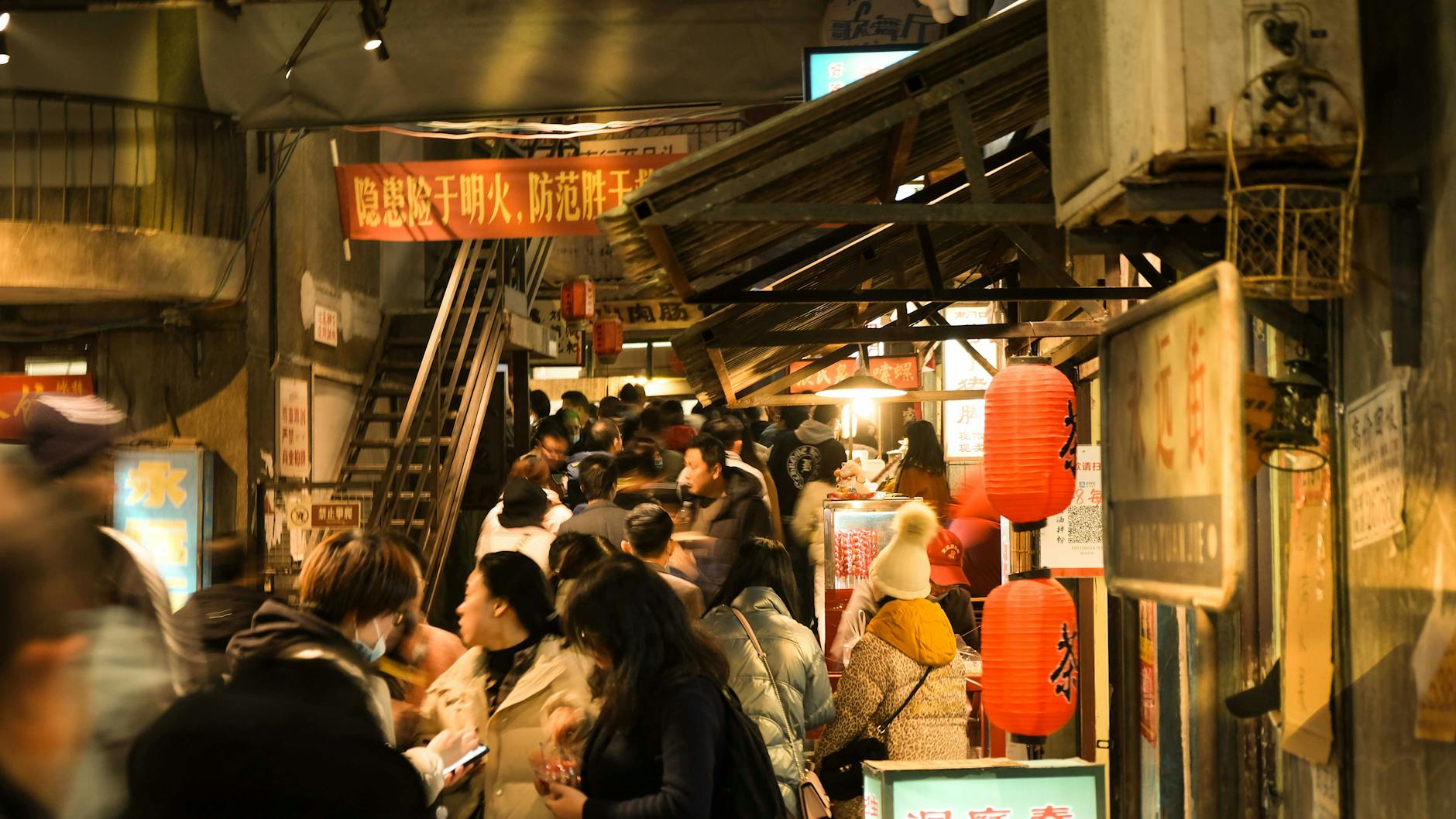
Ghost Street (Guijie, 簋街) is Beijing’s legendary late-night food strip — a kilometre of nearly 220 businesses, about 90 of them dining establishments, blazing with red lanterns and serving spicy crayfish, hot pot, grilled fish and Sichuan classics 24 hours a day. It is, quite simply, the one street in Beijing that truly never sleeps, where locals roll in anytime from noon to 4am for a fiery, boozy, joyful feast that can stretch deep into the night. The signature dish is málà xiǎolóngxiā — spicy crayfish piled high and eaten by hand — but the strip serves everything from numbing Sichuan shuǐzhǔyú to bubbling hot pot and even Peking duck. If you want to experience how Beijing really eats and drinks after dark, this is the place. This guide covers the history, the must-order dishes, the best approach, prices and practical tips for a night on Ghost Street.
Ghost Street is one of my favourite places in Beijing after dark — loud, smoky, lantern-lit and utterly alive. This guide covers the curious history behind the name, what to order (and how to handle the spice), when to go, how much it costs, and how to make the most of a night here. Come hungry, bring friends, and be ready for a bit of mess.
Ghost Street at a glance
- What
- a ~1.5 km strip of 200+ restaurants on Dongzhimennei Dajie, famous for late-night dining.
- Signature dish
- málà spicy crayfish (xiǎolóngxiā), the great summer feast eaten by hand.
- Also famous for
- hot pot, grilled fish, mala frog, Sichuan shuizhuyu, and Peking duck.
- Hours
- many restaurants open 24 hours; the scene peaks from evening into the small hours.
- Atmosphere
- red lanterns, neon, outdoor tables, crowds and a buzzing, boozy energy.
- Cost
- ¥80–150 per person for a crayfish or hot pot feast with drinks.
- Nearest metro
- Beixinqiao (Line 5) sits right on the strip.
The story behind the name
The name “Ghost Street” has a wonderfully atmospheric origin. Back in the Qing dynasty, vendors selling groceries, vegetables and fruit near Dongzhimen Gate would start trading in the dead of night and finish by dawn, working by the dim, flickering light of oil lamps. To anyone passing in the small hours, the scattered glow of those lamps in the darkness looked decidedly ghostly — and so the street earned its eerie nickname. In the 1990s, when restaurants moved in and strung the strip with red lanterns, creating a blaze of light that ran all night, the name stuck. Locals adopted the homophone “Guijie” (簋街), swapping the character for “ghost” (鬼) for “gui” (簋), an ancient bronze food vessel — a more refined and fitting association for the street’s new identity as Beijing’s premier dining destination. The result is a name that nods to both its spooky late-night past and its present as Beijing’s temple of after-dark eating.
What to order on Ghost Street
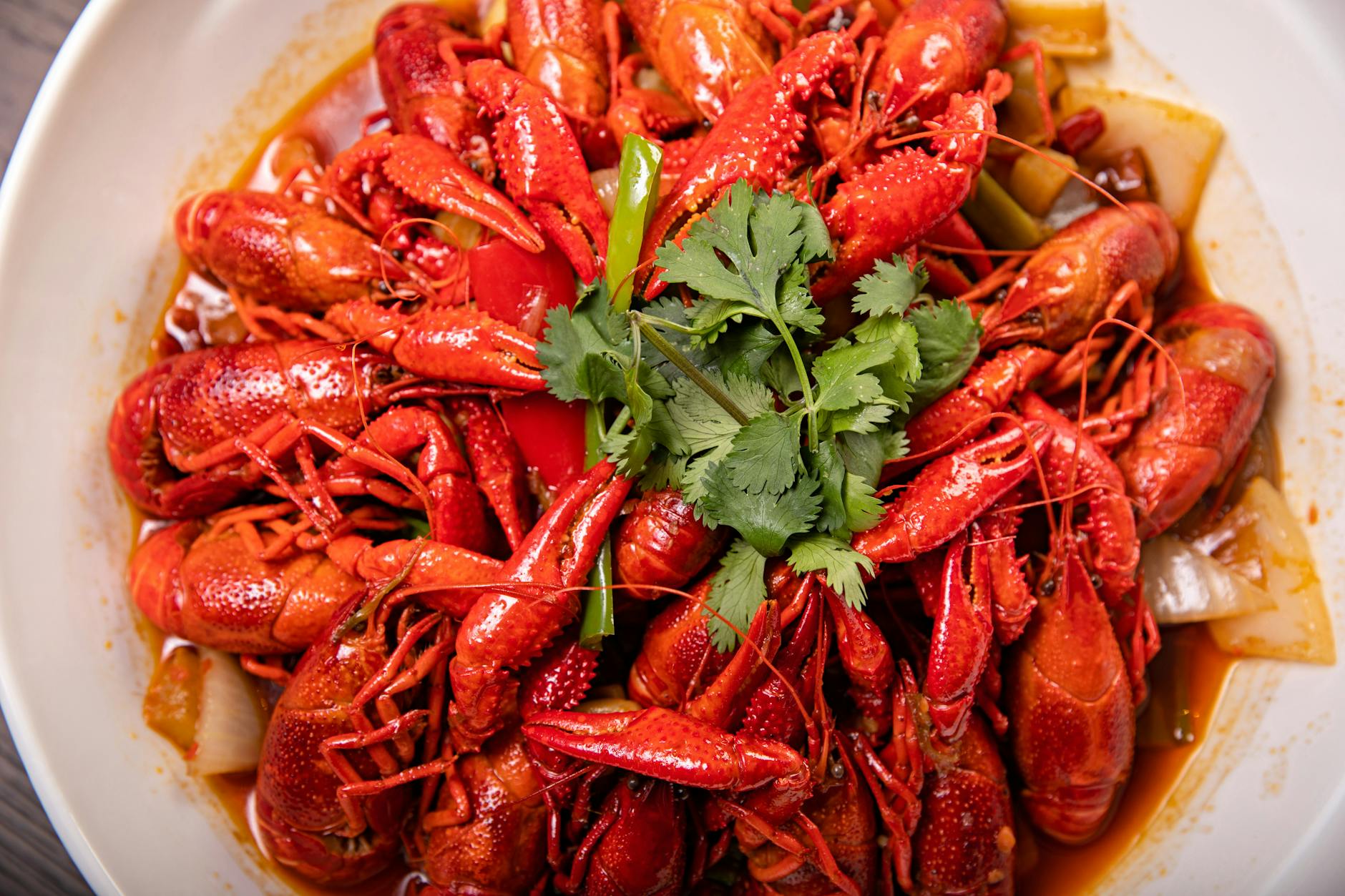
The undisputed king of Ghost Street is spicy crayfish (málà xiǎolóngxiā). From late spring right through summer, this is the dish that everyone on the street comes for: small freshwater crayfish stir-fried or simmered in a fiery, numbing sauce of chilli, Sichuan peppercorn, garlic and spices, served in steaming, glistening heaps. You eat them with your hands (gloves provided), cracking and peeling and sucking the sauce off your fingers — gloriously messy, deeply social, and best tackled with a crowd and crates of ice-cold beer. It’s the quintessential Beijing summer-night experience.
Beyond crayfish, the street serves the full repertoire of spicy, indulgent Chinese food. Mala frog and shuǐzhǔyú (fish in a fiery chilli-oil bath) are Sichuan favourites; grilled fish (kǎoyú) cooked over charcoal and finished in a spicy sauce is a Ghost Street staple; and hot pot restaurants line the strip for those who want to cook their own. You’ll also find Peking duck, barbecue, and regional Chinese restaurants of every stripe. The common thread is bold, spicy, shareable food meant to be eaten slowly over many beers with good company. If you can’t handle heat, don’t worry — many dishes can be ordered mild, and not everything is fiery.
When to go and what to expect
Ghost Street is at its best in the evening and late night, when the red lanterns glow, the outdoor tables fill, and the whole strip hums with energy. Many restaurants are open 24 hours, so there’s no closing time to race against — this is genuinely a place you can eat at 2am. Summer (roughly May–September) is peak crayfish season and the liveliest time, with diners spilling onto the pavements late into balmy nights. The street can get very busy, and popular crayfish restaurants often have waits at peak times — but waiting with a beer amid the lantern-lit buzz is part of the fun. Expect crowds, noise, smoke and a festive, slightly chaotic atmosphere; that’s exactly what you come for. The nearest metro, Beixinqiao on Line 5, is right on the strip, though note the subway stops running around midnight, so have a DiDi ready to order for the small hours.
How to eat spicy crayfish like a local
Spicy crayfish is a hands-on, slightly messy art, and getting the technique right makes the feast far more enjoyable. The restaurant will bring plastic gloves (and often a plastic bib or apron) — put them on; this is not a knife-and-fork affair. To eat a crayfish: twist off the head from the tail (some adventurous diners suck the flavourful, spicy juices from the head — try it if you dare), then pinch the tail and squeeze gently to crack the shell, peel back the first couple of segments, and pull the meat out in one piece. Dunk it back in the sauce if you like, and eat. It’s fiddly at first, but within a few crayfish you’ll have the rhythm, and the communal, slow pace of peeling and chatting is exactly the point. Keep plenty of napkins and cold drinks within reach, and don’t wear your best shirt.
The crayfish come in several flavours beyond the classic málà (spicy-numbing): garlic (suàn xiāng) for a milder, fragrant option, thirteen-spice (shísān xiāng) for a complex, aromatic version, and sometimes a beer or salted-egg-yolk preparation. If your group has mixed spice tolerance, order a couple of different flavours to share. A typical order is by the jin (500g) or by the portion, and one or two portions plus some sides and beer makes a satisfying meal for two or three.
Beyond crayfish: the wider strip
While crayfish is the headliner, Ghost Street is a year-round destination with much more to offer — important to know since crayfish season peaks in the warmer months. In cooler weather, the focus shifts to hot pot, with the strip’s many hot pot restaurants packed with diners warming up over bubbling broths (see our hot pot guide for how to order). Grilled fish, cooked whole over charcoal then simmered in a spicy sauce at your table, is another year-round star. There’s mala frog, Sichuan shuǐzhǔyú, barbecue and skewers, dumplings, noodles and even Peking duck. Some of the restaurants here have become famous institutions in their own right, with queues out the door. The point is that whatever the season or your spice tolerance, Ghost Street has a feast for you — it’s not a one-dish wonder but a full spectrum of indulgent Chinese food served around the clock.
A night out on Ghost Street
Here’s how to do it right. Arrive in the evening, ideally with a group — this is food made for sharing, and a table of four or more lets you order a spread. If the famous crayfish spots have a wait, embrace it: grab a beer, soak up the lantern-lit, neon-soaked atmosphere, and watch the parade of diners. Once seated, order a couple of flavours of crayfish (or a hot pot in winter), some cold dishes and greens to balance the spice, and plenty of cold Yanjing or Tsingtao beer — or bring the heat down with a sweet drink. Eat slowly, peel and chat, and let the meal stretch over a couple of hours the way locals do. Afterwards, the night is young: you’re close to the Dongzhimen transport hub and not far from the bars of Sanlitun if you want to continue, or you can simply roll home happy and full. For more after-dark ideas, see what else the city offers once the restaurants close.
A note on solo or couple dining: while Ghost Street shines for groups, you can absolutely enjoy it as a pair or even alone — order a single portion of crayfish or a small hot pot, sit at the busy counter or an outdoor table, and enjoy the spectacle. The atmosphere is welcoming and the people-watching superb. It’s also a brilliant spot for a late dinner if you’ve spent the evening elsewhere and find yourself hungry at 11pm or later, when most of Beijing’s kitchens have closed but Ghost Street is just hitting its stride.
Tips and etiquette
- Go with a group if you can — the food and the fun are built for sharing.
- Wear the gloves and bib — spicy crayfish is messy by design; lean into it.
- Order mixed flavours and spice levels so everyone at the table is happy.
- Balance the heat with cold beer, a sweet drink, and some non-spicy sides and greens.
- Embrace the wait at popular spots — it’s part of the buzzing experience.
- Pay by phone (WeChat Pay/Alipay); tipping isn’t expected.
- Plan a DiDi home for after midnight, when the subway has stopped.
Above all, come with the right mindset: Ghost Street isn’t about refined dining or a quiet meal — it’s about energy, spice, beer and good company under a canopy of red lanterns. It’s loud, it’s a little chaotic, and your fingers will end up stained with chilli oil. That’s exactly the experience, and it’s one of the most purely fun nights out Beijing offers, at any hour you care to show up.
Combining Ghost Street with the area
Ghost Street sits in the northeast of the old city, running along Dongzhimennei Dajie between the Dongzhimen and Beixinqiao areas, which makes it easy to fold into a day or evening of exploring. It’s a short ride or walk from the twin towers at the top of the old central axis and the Gulou hutong district, so a classic plan is to spend the late afternoon wandering the hutongs and craft-beer taprooms around Gulou, then head to Ghost Street as the lanterns come on for dinner. It’s also close to the Lama Temple and the Confucius Temple, both worth a daytime visit before an evening feast. Because the strip is so central and well connected, it works as the dinner anchor for almost any itinerary in the eastern half of the old city. And since it never closes, it’s the natural fallback whenever hunger strikes late at night and everywhere else has long since shut.
It’s worth understanding where Ghost Street fits in Beijing’s wider after-dark eating landscape, too. Unlike the stall-based night markets or the snack-focused food streets, Ghost Street is a sit-down restaurant destination — you come to settle in at a table for a proper, leisurely meal, not to graze on the move. That makes it the best choice when you want a substantial, sit-down, social dinner late at night, as opposed to a quick street snack. If you’re building a food-focused trip, think of it as one of a handful of essential set-piece meals — alongside a Peking duck dinner, a hot pot night and a hutong food crawl — that together capture the full range of how Beijing eats.
Is it safe and beginner-friendly?
Ghost Street is busy, well-lit and completely safe well into the small hours — Beijing is a remarkably safe city at night, as our safety tips guide explains, and the constant crowds and bright lanterns make the strip feel lively rather than sketchy. It’s also surprisingly beginner-friendly for non-Chinese speakers: many restaurants have picture menus or English menus, staff are used to foreign diners, and you can point at the crayfish heaps in the window or at a neighbouring table to order. Payment is by WeChat Pay or Alipay (foreign cards accepted) or cash. The only real “challenge” is the spice and the mess — both of which are part of the fun. First-timers and solo travellers alike can dive in with confidence; this is one of the easiest and most rewarding ways to experience local Beijing nightlife and food at once.
Ghost Street FAQ
What is Ghost Street famous for?
Late-night dining and spicy crayfish (málà xiǎolóngxiā) above all, plus hot pot, grilled fish and Sichuan classics, served along a kilometre of red-lantern-lit restaurants, many open 24 hours.
Why is it called Ghost Street?
In the Qing dynasty, night vendors traded by the ghostly glow of oil lamps before dawn, earning the name. When lantern-lit restaurants took over in the 1990s, locals adopted the homophone “Guijie,” swapping the “ghost” character for one meaning an ancient food vessel.
How much does a meal cost?
Around ¥80–150 per person for a crayfish or hot pot feast with drinks. It’s great value for a long, social meal, and you can spend less at the simpler grills and noodle spots.
When is the best time to go?
Evening into late night, especially in summer (May–September), which is peak crayfish season and the liveliest atmosphere. Many places are open 24 hours, so you can eat at any hour.
Is Ghost Street good if I can’t eat spicy food?
Yes — while the strip is famous for fiery dishes, many can be ordered mild, and there’s plenty of non-spicy food too, from Peking duck to milder hot pot broths and grilled dishes. Just specify “bù là” (not spicy).
How do I get to Ghost Street?
It runs along Dongzhimennei Dajie; Beixinqiao station on Line 5 sits right on the strip. For late nights after the subway closes around midnight, take a DiDi.
The bottom line on Ghost Street
Ghost Street is Beijing after dark in its purest form — a kilometre of red lanterns, 200-plus restaurants, and a 24-hour appetite for spicy crayfish, hot pot and good times. Go in summer for peak crayfish season, gather a group, order a mountain of málà xiǎolóngxiā and a crate of ice-cold beer, and settle in for a long, messy, joyful night under the red lanterns. It’s loud, it’s gloriously chaotic, and it’s one of the most memorable food experiences the city offers — the place where you’ll feel, more than anywhere, the pulse of Beijing after dark.
Explore more after-dark eating in our Beijing night markets guide, pair it with the city’s best Peking duck, or see the whole scene in our master list of what to eat here. New to the city? Start with our practical primer on the city.