Beijing Food Guide
Best Night Markets in Beijing for Foodies
Explore Beijing's vibrant night markets. Food stalls, exotic snacks, and the best night markets for adventurous eaters.
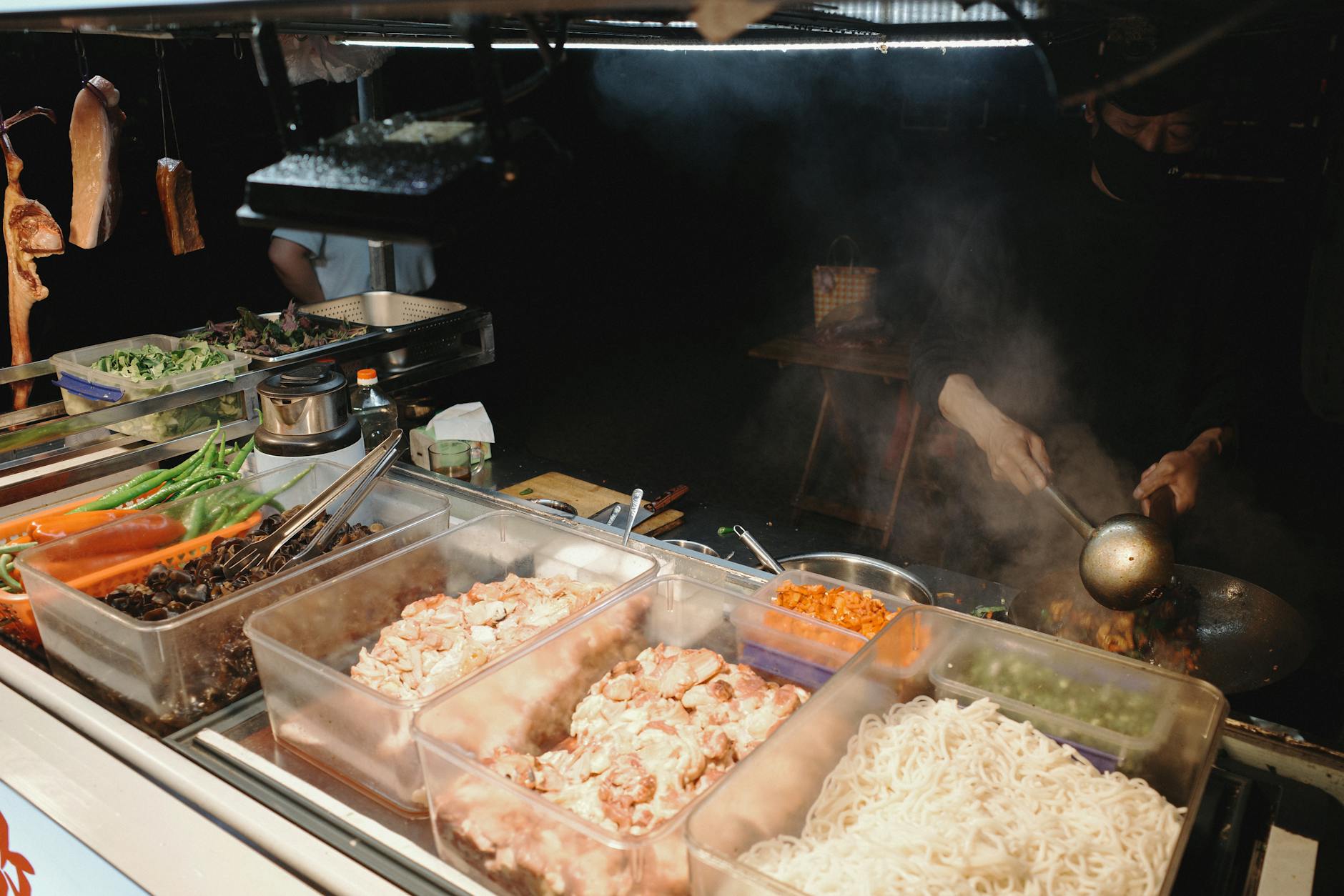
When the sun goes down, Beijing’s food scene shifts into a different gear. Night markets and after-dark food streets fill with sizzling grills, steaming pots, neon and red lanterns, and the irresistible energy of a city eating late. There’s one important thing to know up front, though: the most famous night market of all, Donghuamen, closed permanently in 2016, and the classic “night market” of guidebook legend has largely given way to a network of food streets and late-night dining strips. Good after-dark eating is found at Wangfujing, Qianmen, Ghost Street (Guijie) and the Shichahai zone, each with its own character. This guide maps out where to go, what to eat, and how to do Beijing’s night-food scene like a local rather than a tourist.
This guide covers the current state of the night markets (including what’s closed), the best night food streets one by one, the snacks and dishes to seek out, how payment and hygiene work, safety and etiquette, and the questions visitors ask. Grab your appetite; we’re eating late.
Beijing night markets at a glance
- Donghuamen night market
- permanently closed since 2016 — don’t go looking for it.
- Best all-round
- Wangfujing Snack Street — central, lively, famous (and touristy).
- Best for late-night dining
- Ghost Street (Guijie) — 24-hour restaurants, spicy crayfish, red lanterns.
- Best for tradition
- Qianmen & Dashilan — historic shopfronts and old-Beijing snacks.
- Best for skewers
- Niujie (Muslim quarter) — outstanding halal grills and sweets.
- Best atmosphere
- Shichahai/Houhai — lakeside bars and street snacks.
- Payment
- WeChat Pay / Alipay (foreign cards accepted); carry some cash.
- Typical cost
- snacks are cheap; a sit-down crayfish feast costs considerably more.
The state of Beijing’s night markets in 2026
Let’s clear up the biggest source of confusion first. For decades, Donghuamen Night Market, near the Forbidden City, was the night market every guidebook sent you to — rows of stalls hawking scorpions, starfish and seahorses on sticks. It closed on 24 June 2016 after hygiene and noise complaints. If a dated article points you there, ignore it. The good news: the eating is still excellent in the established food streets and late-night restaurant strips — you just need to know the current spots rather than the legendary ones.
The best night food streets, one by one
Wangfujing Snack Street
The most famous and central night-eating spot, Wangfujing Snack Street took on the night-market mantle after Donghuamen closed. It’s a pedestrian lane of densely packed stalls selling everything from lamb skewers and squid to the infamous scorpions-on-a-stick. Be honest about what it is: a touristy spectacle with prices to match. It’s worth a wander for the sights, sounds and a photo, but it’s not where locals eat, and the exotic skewers are more dare than dinner. Go for the atmosphere, eat lightly, then move on.
Ghost Street (Guijie)
For genuine late-night eating, Ghost Street is the real star — a strip of nearly 220 businesses, around 90 of them dining establishments, blazing with red lanterns. This is where Beijingers come for spicy crayfish, mala frog, grilled fish and hot pot into the small hours. It’s a sit-down-restaurant scene rather than a stall market, and it’s the city’s true after-dark food destination. I cover it in depth in our dedicated Ghost Street guide.
Qianmen and Dashilan
Just south of Tiananmen, the restored Qianmen Street and the warren of Dashilan offer a more traditional flavour — historic shopfronts, old-Beijing snack institutions, roujiamo, candied snacks and time-honoured restaurants. It’s well-lit, easy to navigate, and pairs naturally with a daytime visit to the vast square just to the north. Less raucous than Ghost Street, it’s a good early-evening option.
Niujie Muslim quarter
Niujie, centred on Beijing’s oldest mosque, is the halal restaurant and bakery street, the place to look for halal food and Hui-Muslim sweets. Our guide for Muslim travellers maps the rest of Niujie.
Shichahai / Houhai and Longfusi
The Shichahai (Houhai) lake district blends street snacks with a lively lakeside bar scene — grilled squid and tanghulu in hand, willows and water, and the buzz of Beijing nightlife all around. The revived Longfusi food area near the centre is another spot drawing crowds for old-Beijing snacks in a modern setting. Both are great for combining a stroll with a graze.
What to eat after dark
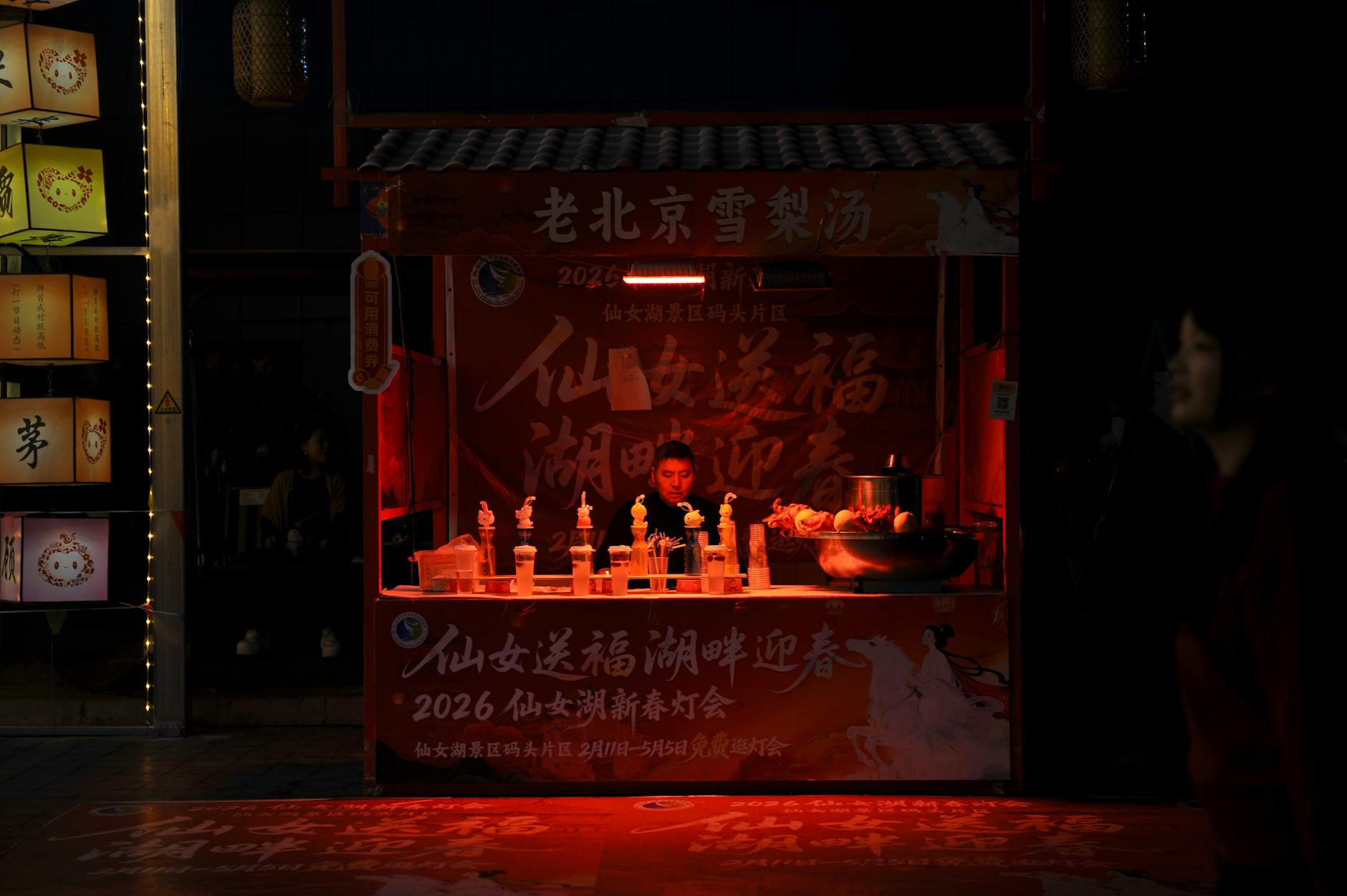
Night food in Beijing has its own repertoire. Lamb skewers (chuan’r) are the undisputed king — smoky, cumin-and-chilli-spiced, eaten by the dozen with a cold beer. Spicy crayfish (mala xiaolongxia) is the great summer night dish, piled high and eaten messily with plastic gloves and friends. Grilled fish and squid, mala tang (DIY skewer hotpot in numbing broth), chuan’r-style grilled vegetables and tofu, and barbecue (shaokao) of all kinds fill the grills. For something lighter, there’s grilled corn, roasted sweet potato, and — for the brave — the famous exotic skewers. Wash it all down with cold Yanjing or Tsingtao beer, or a local craft brew from one of the hutong breweries. The night food scene is about indulgence, sociability and spice, not delicacy — lean into it — this is comfort food and party food rolled into one.
How it works: payment, hygiene and ordering
Ordering at night-food spots is easy. At stalls, point and pay by scanning the vendor’s WeChat Pay or Alipay QR code (both take foreign cards now); at sit-down places on Ghost Street, you’ll get a menu and pay at the end. Carry a little cash as backup. On hygiene: established food streets and busy restaurants are safe, with high turnover keeping things fresh — favour the packed places cooking to order. Skip anything that’s been sitting out, and drink bottled or boiled water only. The crackdown on informal stalls means today’s night-food scene is generally cleaner and more regulated than the old free-for-all. For help ordering, see our advice on getting by with no Mandarin.
Safety, timing and etiquette
Beijing is a remarkably safe city at night — one of the safest big cities anywhere for late-night wandering — and the food streets are busy, well-lit and family-friendly well into the evening — solo travellers and women generally feel comfortable, as our safety tips guide explains. A few practical notes: spicy crayfish is a summer specialty (roughly May–September); skewers and hot pot are year-round, with hot pot especially welcome in winter. Tipping isn’t expected anywhere. Check the last-train times on the Beijing Subway’s website, and get the DiDi app set up for late nights. Dress for the weather — much of this eating is outdoors.
A sample night out for food
Here’s a great after-dark food evening. Early evening: start with a stroll and snacks around the Shichahai lakes — grilled squid, a tanghulu, the lakeside buzz. Dinner: head to Ghost Street as the red lanterns come on and work through a vat of spicy crayfish or a bubbling hot pot with a cold beer. Late: if you’ve still got room and energy, the skewer grills of Niujie or a final beer at a hutong brewery near the Drum Tower round things off. It’s loud, smoky, sociable and quintessentially Beijing — and because the food is cheap, you can do all of it for the price of one fancy meal back home. For a fully indulgent version, fold in a local-led tasting walk through the hutongs earlier in the evening.
A short history of Beijing’s night eating
Night eating has deep roots in Beijing. Even in imperial times, vendors gathered after dark near the city gates to sell to merchants, labourers and night-shift workers — Ghost Street itself takes its name from the ghostly glow of those early-hours oil lamps in the Qing dynasty. Through the 20th century, the city’s night markets became beloved institutions, none more famous than Donghuamen, whose stalls of skewered everything became a fixture of every tourist itinerary. Donghuamen’s closure in 2016 ended that era, but it didn’t end Beijing’s appetite for late-night food. In a sense, the city’s night-food culture has come full circle: less spectacle, more substance, with the focus back on genuinely good eating rather than novelty skewers for the cameras.
That shift is worth understanding because it shapes how you should approach night eating now. The mental model isn’t “find the night market” — it’s “pick the food street that suits your mood.” Want raucous late-night seafood and beer? Ghost Street. Want skewers and tradition? Niujie. Want a stroll-and-snack by the water? Shichahai. Want the famous spectacle for a photo? Wangfujing. Each delivers a different slice of the after-dark city, and the best nights often string two or three together.
Night food beyond the food streets
The food streets are the headline, but Beijing’s late-night eating runs deeper. Shopping-mall food courts and basement dining floors — especially in malls around Sanlitun, Wangfujing and the CBD — serve excellent, affordable regional Chinese food until late in clean, air-conditioned comfort, a great option in extreme weather or with kids. The supper culture of “ye xiao” (夜宵, late-night snacks) means that on a warm evening, neighbourhood barbecue joints spill plastic tables onto the pavement all over the city, not just on the famous strips — wherever you see locals clustered around a charcoal grill with crates of beer, you’ve found the real thing. Don’t feel you have to trek to a named food street; some of the best night eating is whatever’s buzzing near where you’re staying.
For travellers based in the embassy and bar district, the Sanlitun area combines late-night restaurants with Beijing’s densest nightlife, while the hutong districts around the Drum Tower mix small eateries with craft-beer bars for a more low-key evening — both covered in our Beijing nightlife guide and craft beer and coffee guide. The point is that “night food” in Beijing is less a single destination than a whole after-dark layer of the city, available almost everywhere if you know to look for the plastic stools and the smoke.
Tips for the best night-food experience
- Go hungry and go with friends — night food is communal, especially crayfish and hot pot, which are best shared around a big table.
- Embrace the mess — spicy crayfish means plastic gloves, piles of shells and napkins; that’s the fun of it.
- Carry tissues and hand wipes — stalls rarely provide them.
- Pace your spice — order one numbing-spicy dish and one milder one if you’re not used to Sichuan-style heat.
- Plan your ride home — line up a DiDi for the small hours.
- Follow the crowds and the smoke — the busiest grill is almost always the best one.
Above all, treat a night out for food as an experience rather than just a meal. The point isn’t only what’s on the skewer — it’s the lanterns, the noise, the crates of beer, the city refusing to wind down. That atmosphere is something Beijing does as well as anywhere in the world, and it costs almost nothing to be part of it. On a short trip that is the Friday evening in our weekend Beijing plan.
If a stall’s QR code won’t accept your foreign card, hold up your own payment code and let the vendor scan it. How Alipay works for foreign visitors covers the setup and the other snags worth knowing before you queue for skewers.
Beijing night markets FAQ
Is Donghuamen Night Market still open?
No. Donghuamen, once Beijing’s most famous night market, closed permanently in 2016 over hygiene and noise concerns. Head to Wangfujing, Ghost Street, Qianmen or Niujie for night eating instead.
What’s the best night food street in Beijing?
For genuine late-night dining, Ghost Street (Guijie) is the best — 24-hour restaurants and spicy crayfish under red lanterns. Wangfujing is the most famous and central but touristy; Niujie has the best skewers.
Are Beijing night markets safe?
Yes — Beijing is very safe at night, and the food streets are busy and well-lit. Eat at popular stalls cooking to order, drink bottled water, and you’ll be fine. Line up a DiDi for the ride home.
What should I eat at a Beijing night market?
Lamb skewers, spicy crayfish (in summer), grilled fish and squid, mala tang, and barbecue, washed down with cold beer. The exotic scorpion skewers at Wangfujing are more spectacle than meal.
How late does the food go?
Hours vary from street to street and restaurant to restaurant, so check the listing for wherever you are heading. Ghost Street is the place to head for crayfish and hot pot after dark.
How much does a night out for food cost?
Snacks are cheap; a sit-down spicy-crayfish or hot-pot feast costs more per person. It’s excellent value for a memorable night of eating.
Can I find vegetarian food at night markets?
Yes, though it takes a little hunting. Grilled corn, roasted sweet potato, grilled tofu and vegetable skewers, mala tang (choose vegetable skewers), and various sweet snacks are all vegetarian-friendly. Be aware that grills are shared with meat, and broths may not be vegetarian. Our vegetarian and vegan guide has more reliable options for a full meal.
Are night markets good for families with kids?
The food streets are busy, safe and family-friendly in the early evening, and kids usually enjoy the spectacle and the snacks. Go earlier rather than late, stick to milder dishes and grilled items, and the mall food courts are a calmer, air-conditioned alternative. See our family guide to the city.
The bottom line on Beijing night markets
Forget the closed Donghuamen and the dated guidebook image — Beijing’s after-dark food scene has simply moved to its food streets and late-night dining strips, and it’s thriving. Go to Ghost Street for the real late-night feast, Niujie for the best skewers, Qianmen for tradition, and Wangfujing for the spectacle. Eat at the busy spots, pay with your phone, and lean into the smoke, spice and sociability. It’s cheap, safe and one of the most fun things you can do in the city after dark — and a side of Beijing that visitors who turn in early never get to see.
Dive deeper into Ghost Street, learn the snacks in our street food guide, or pair the night with Beijing nightlife. For the whole scene, see our full survey of where to eat.