Beijing Itineraries
A Weekend in Beijing: Friday Night to Sunday Afternoon
A weekend built for its real constraints: a Friday-night arrival, the Great Wall on Saturday, a compressible Sunday on the axis, and what to do when the palace tickets are gone.
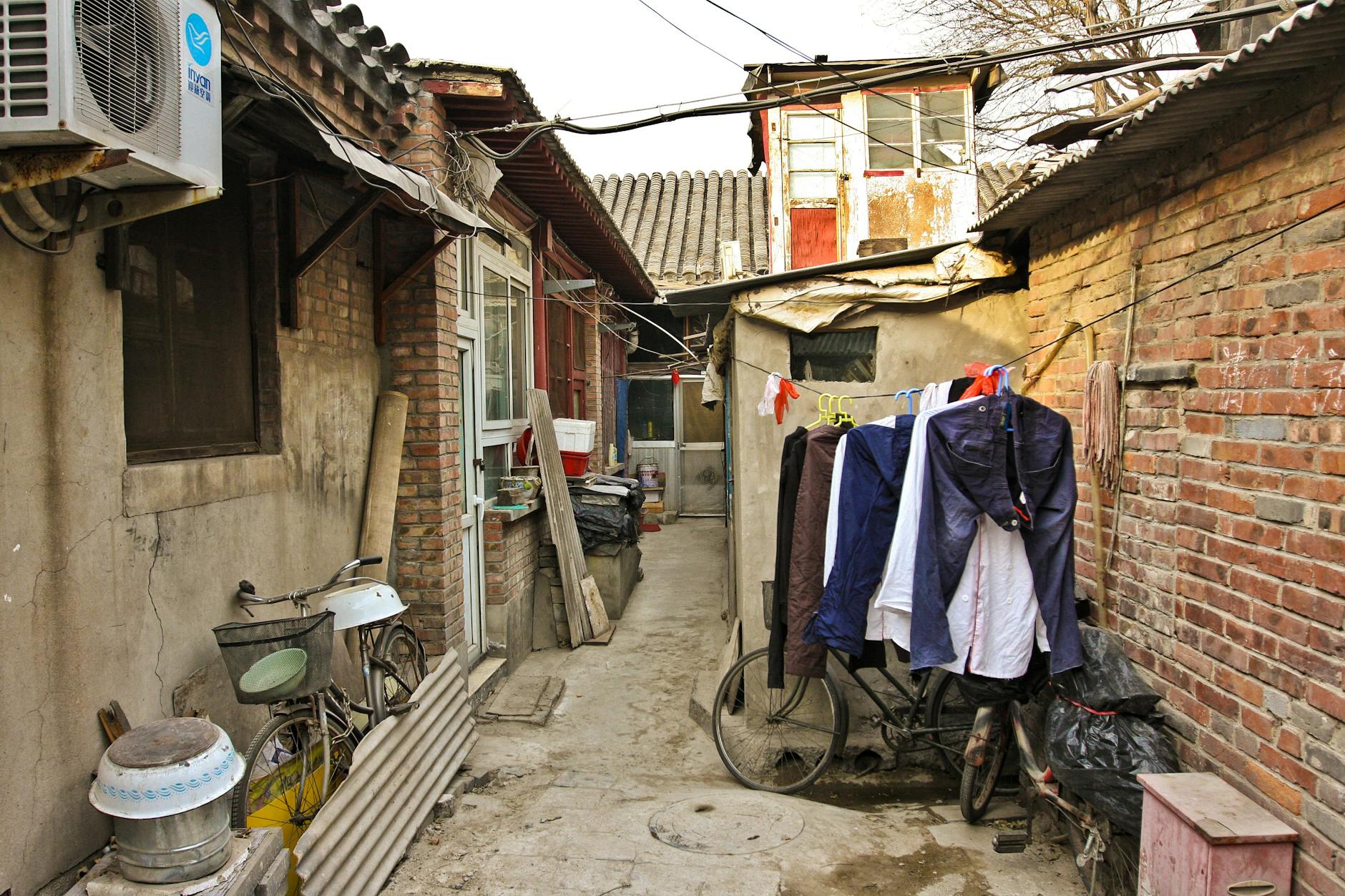
A weekend in Beijing is not the same problem as two days in Beijing. Two days is a length; a weekend is a length plus a set of constraints — you land on Friday night with nothing booked, everything you want to see is at its busiest, and you are back at the airport before Sunday is over. This Beijing weekend itinerary is built for that specific shape: Friday evening, a full Saturday, a Sunday that has to end early, and the weekend-only problems nobody warns you about.
The big one, since it decides everything else: Forbidden City tickets release seven days ahead and Saturday and Sunday slots go faster than any weekday. If you are reading this more than a week before you travel, set an alarm. If you are reading it on the Thursday, skip to the section on what to do when the palace is gone. Prices were checked in September 2026 and are the right order of magnitude rather than a quote.
What makes a weekend different
- Domestic crowds peak. Beijing has a resident population in the tens of millions and most of them are also free on Saturday. The Great Wall, the Summer Palace and the lakes are all noticeably busier than mid-week.
- Tickets are tighter. The Forbidden City’s weekend slots sell out fastest. Tiananmen Square’s free reservation is the same, and it is slot-specific.
- Panjiayuan is at its best. The antique market runs all week now but the weekend mornings are when the real volume of sellers turns up — the one thing a weekend does better than a weekday.
- Sunday afternoon is short. If you have an evening flight, you lose the last three hours of the day to logistics.
- Nothing closes for the weekend. The Monday closure that ruins so many Beijing trips is not your problem. That is the one clean win.
The weekend at a glance
| When | Plan | Roughly |
|---|---|---|
| Friday, 19:00–23:00 | Land, get in, duck dinner, Houhai or Ghost Street | ¥200–350 |
| Saturday, 07:15–17:00 | Mutianyu Great Wall on the 08:00 bus | ¥345 |
| Saturday evening | Lama Temple if you are back early, or Sanlitun | ¥25–200 |
| Sunday, 07:00–15:00 | Tiananmen, Forbidden City, Jingshan, lakes | ¥95 |
| Sunday, 15:00 | Hotel, bags, airport | ¥25–45 |
The order matters and it is the reverse of what most people plan. The instinct is to do the city first and the Wall second, because the city is nearer. Do not: the Wall is a fixed-departure, fixed-return day that cannot be shortened, and putting it on Sunday means either missing the last bus or missing your flight. The axis, by contrast, compresses gracefully — you can cut Beihai, cut the lakes, and still have done the thing you came for.
Friday — the evening you actually have
Getting in is quick. From Capital, immigration typically runs 30–60 minutes and the Airport Express is ¥25 and about 30 minutes to Dongzhimen, changing to Line 2 or Line 13. From Daxing, immigration is 20–40 minutes and the express to Caoqiao is ¥35 and takes about 19 minutes. A DiDi is 30–60 minutes from Capital and 45–75 from Daxing, which on a Friday evening is the slower option in both cases. Airport to city centre.
Have Alipay working before you land. It takes a foreign Visa, Mastercard or Amex after in-app passport verification, and its English interface is better than WeChat Pay’s — but you want WeChat installed too, because the Forbidden City and Tiananmen booking mini-programs live inside it. Public WiFi in China usually demands a Chinese mobile number for SMS verification, so a roaming eSIM sorted before departure saves an unpleasant first hour. The app rundown.
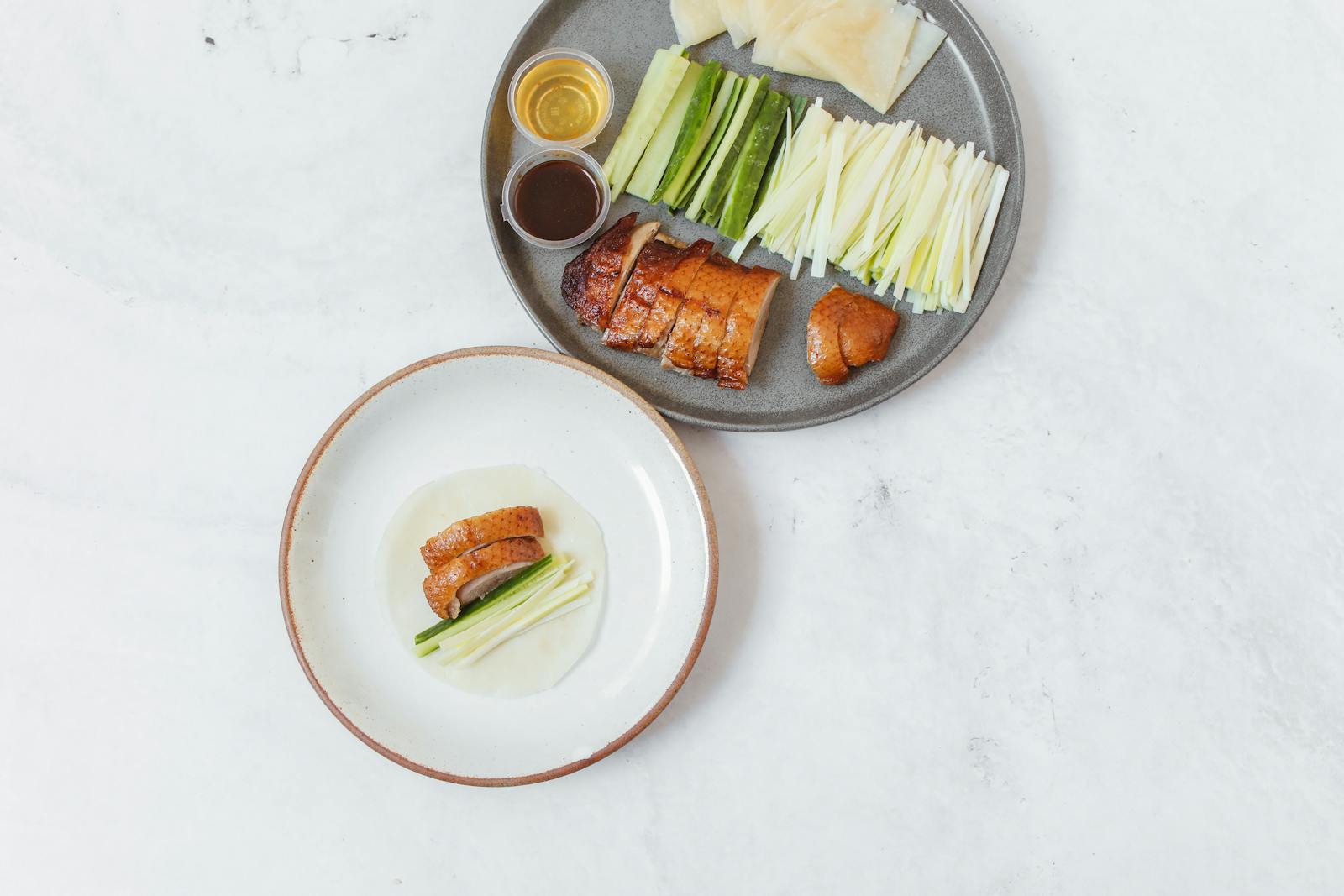
Then eat. You have one duck dinner in a weekend, so use Friday for it rather than saving it for Sunday, when you will be watching the clock. Siji Minfu is about ¥259 a whole duck and ¥159 a half, consistently good and consistently busy; Li Qun is the rougher hutong version at about ¥298. Quanjude is the famous one, runs to about ¥300 a head, and has not matched its reputation for years — your hotel will offer to book it and you should decline. The full ranking.
After that, one of two things depending on how the flight went. Houhai and Shichahai on a Friday evening are willows, lit boats and a bar strip that is loud in a cheerful way, and the hutongs behind them are quiet within a hundred metres. Or Ghost Street — Guijie — on Dongzhimennei, red lanterns and spicy crayfish until very late. Either is a ten-minute walk from a Line 2 station. There is more on the lakes, on Ghost Street, and on the Houhai bars.
Saturday — the Great Wall
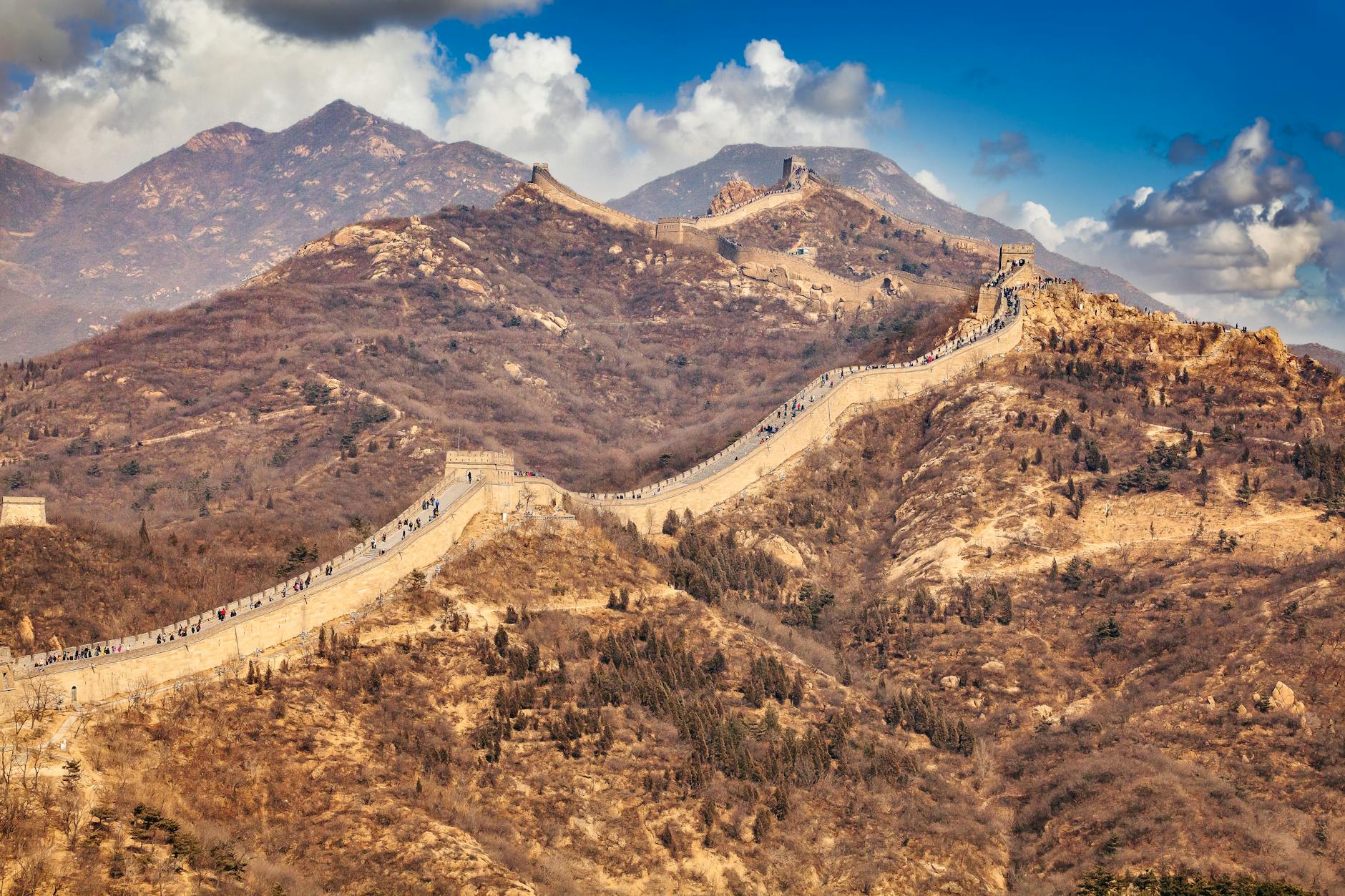
Mutianyu, and on a weekend this is not a close call. Badaling is quicker — the G-train from Beijing North does it in 27 minutes for ¥30–80 — and on a Saturday it takes the full weight of the domestic coach traffic. Mutianyu is 90 minutes each way, restored, wooded, has a cable car and a toboggan run, and even on a busy weekend it thins out past the middle towers.
Getting there
The tourist bus leaves Dongzhimen at 08:00 and 10:00, with a 12:00 added in peak season. On a Saturday, take the 08:00 and book it the day before — this is the departure that beats the crowd, and in summer and over holidays it fills. ¥80 return for transport alone, or ¥220–280 bundled with entrance and cable car. Last bus back 17:00, 16:00 in winter. The DIY route is bus 916 Express from Dongzhimen to Huairou then local bus h23 at ¥35–40 return, which saves ¥40 and costs 45 minutes each way. On a weekend, take the coach. All the options.
On the Wall
Shuttle from the car park to the base ¥20, entry ¥45. Cable car ¥100 one way or ¥140 return to tower 14; chairlift-and-toboggan combo ¥140 to tower 6. Walking up is free and takes forty minutes of steps you will want later.
The route: cable car to tower 14, east to tower 20 where the restoration stops and the wall goes steep and overgrown, back west along the ridge as far as tower 6, toboggan down. Three hours, the best-preserved section, the most dramatic gradients, and a luge at the end. On a busy Saturday, walk east first — the crowd flows west towards tower 6 and the toboggan, so going the other way for the first hour puts you against the traffic. If three hours is too much, tower 14 to tower 20 and back is ninety minutes and still the good part. Mutianyu in detail, avoiding the crowds.
Saturday evening
You are back at Dongzhimen around 16:30 and tired. Three options, in descending order of ambition. The Lama Temple is two stops on Line 2, ¥25, free incense at the gate, and holds an eighteen-metre Maitreya carved from one sandalwood trunk — but last entry is mid-afternoon, so this needs an earlier bus and a check of the closing time that morning. Sanlitun on a Saturday night is the modern city and a complete change of register from the day you have had. Or Nanluoguxiang and the alleys off it, free and open late. Each has its own guide: the Lama Temple, Sanlitun and Nanluoguxiang.
Sunday — the central axis, compressed
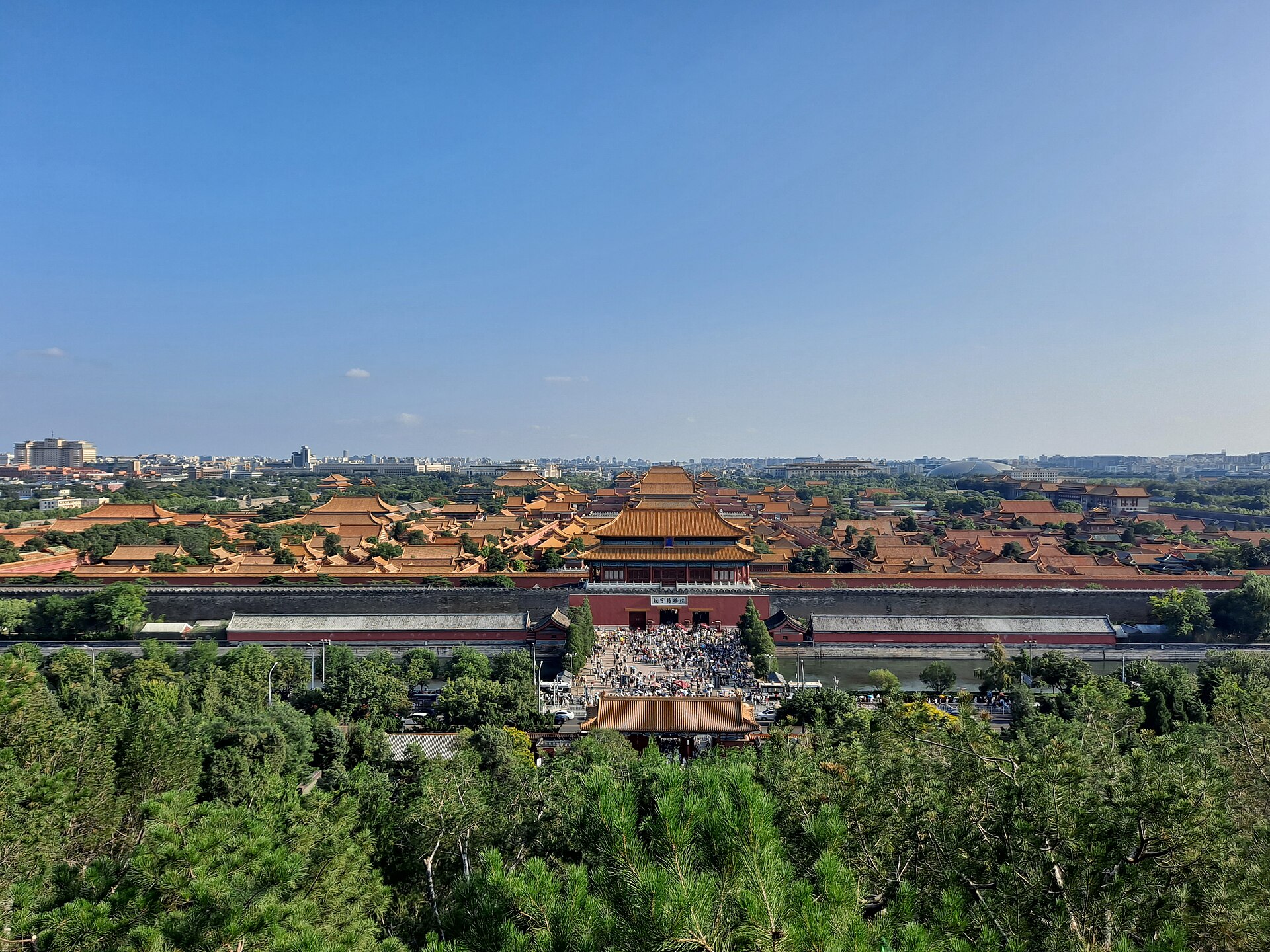
This is the day that has to flex around your flight, so it is written as a spine with two optional joints at the end.
| Time | Stop | Cost | Cuttable? |
|---|---|---|---|
| 07:30 | Breakfast near the square | ¥8–15 | No — eat before the queues |
| 08:30 | Tiananmen Square | Free, booked slot | Shorten to 25 minutes |
| 09:30 | Forbidden City | ¥60 / ¥40 | No |
| 12:30 | Lunch off Jingshanqian Street | ¥30–50 | Grab and walk |
| 13:15 | Jingshan Park | ¥2 | No — this is the view |
| 14:00 | Beihai or Shichahai | ¥20 / free | Yes, first to go |
| 15:30 | Back for bags | — | — |
Tiananmen Square needs the physical passport you booked with and two or three layers of ID and X-ray checks. The square is deliberately enormous and half an hour is enough on a Sunday with a flight to catch. If you are up anyway and the idea appeals, the dawn flag-raising is a separate booked slot and a genuinely striking thing — but it means a 04:30 start after a Wall day, and most people should not. Tiananmen Square.
The Forbidden City runs one way, in at the Meridian Gate and out at the Gate of Divine Prowess, which is exactly what you want on a compressed Sunday: you cannot double back, so you cannot dawdle. Three hours covers the three great halls, one loop through the eastern palaces and the imperial garden. Skip the Clock Gallery — it is remarkable and it is twenty-five minutes you do not have. Forbidden City guide, the galleries ranked.
Jingshan is directly across the road from the north exit: ¥2, ten minutes up an artificial hill built from the earth dug out of the palace moat, and the whole Forbidden City laid out below with the axis running straight through it. This is the non-negotiable part of Sunday. Jingshan.
After that, whatever the clock allows. Beihai’s ¥20 through ticket and the White Dagoba if you have two hours; a walk north to Shichahai if you have one; the subway back to the hotel if you have none. Beihai Park.
If the Forbidden City ticket is gone
It happens, and on a weekend it happens a lot. There are no gate sales, no queue to join and no tout worth talking to. Here is what a Sunday looks like without it.
- Temple of Heaven from opening. ¥34 for the through ticket in peak season, ¥28 off-season, and the first two hours belong to Beijing’s retired population doing tai chi, ballroom dancing, choral singing and water calligraphy on the paving. It is arguably a better morning than the palace and almost nobody plans it. Temple of Heaven.
- Then Panjiayuan. Free to enter, most things ¥10–500 after bargaining, and Sunday morning is when it is fullest. Panjiayuan, bargaining.
- Or the National Museum, which is free but has its own mandatory reservation released seven days ahead at 17:00 Beijing time — so this only helps if you planned ahead enough to book it as a backup. National Museum of China.
- Then Jingshan and the lakes as written. You still get the view; you just get it without having been inside first.
The long-weekend version
If you can add Thursday night or Monday, the trip changes shape more than one extra day usually does.
An extra Monday is the awkward one: the Forbidden City is closed, so that day cannot hold the palace. Use it for the Temple of Heaven at opening and the Summer Palace in the afternoon — ¥60 through ticket, four hours, and enter at Beigongmen so the climb over Longevity Hill comes before the Long Corridor rather than after it. Then fly out in the evening. Summer Palace.
An extra Friday is the better one. It gives you a full weekday before the crowds arrive, which is the day to spend on the axis — leaving Saturday for the Wall and Sunday for the Temple of Heaven, Panjiayuan and a relaxed departure. If your dates are flexible at all, buy the Friday rather than the Monday. The three-day plan works well from a Friday start.
The business-trip weekend
If the weekend is bolted onto work and you are already in Beijing on the Friday, two things change. You will probably be staying in Chaoyang or the CBD rather than Dongcheng, which adds fifteen to twenty minutes at the start of each day — worth checking whether your company will let you move hotels for the Saturday night, because a courtyard place in the hutongs turns a work trip into a trip. And you have a Friday daytime you did not count on: use it for the Forbidden City, which is much better on a weekday, and then run the Wall on Saturday and something soft on Sunday. Chaoyang hotels, courtyard hotels.
Where to stay for a weekend
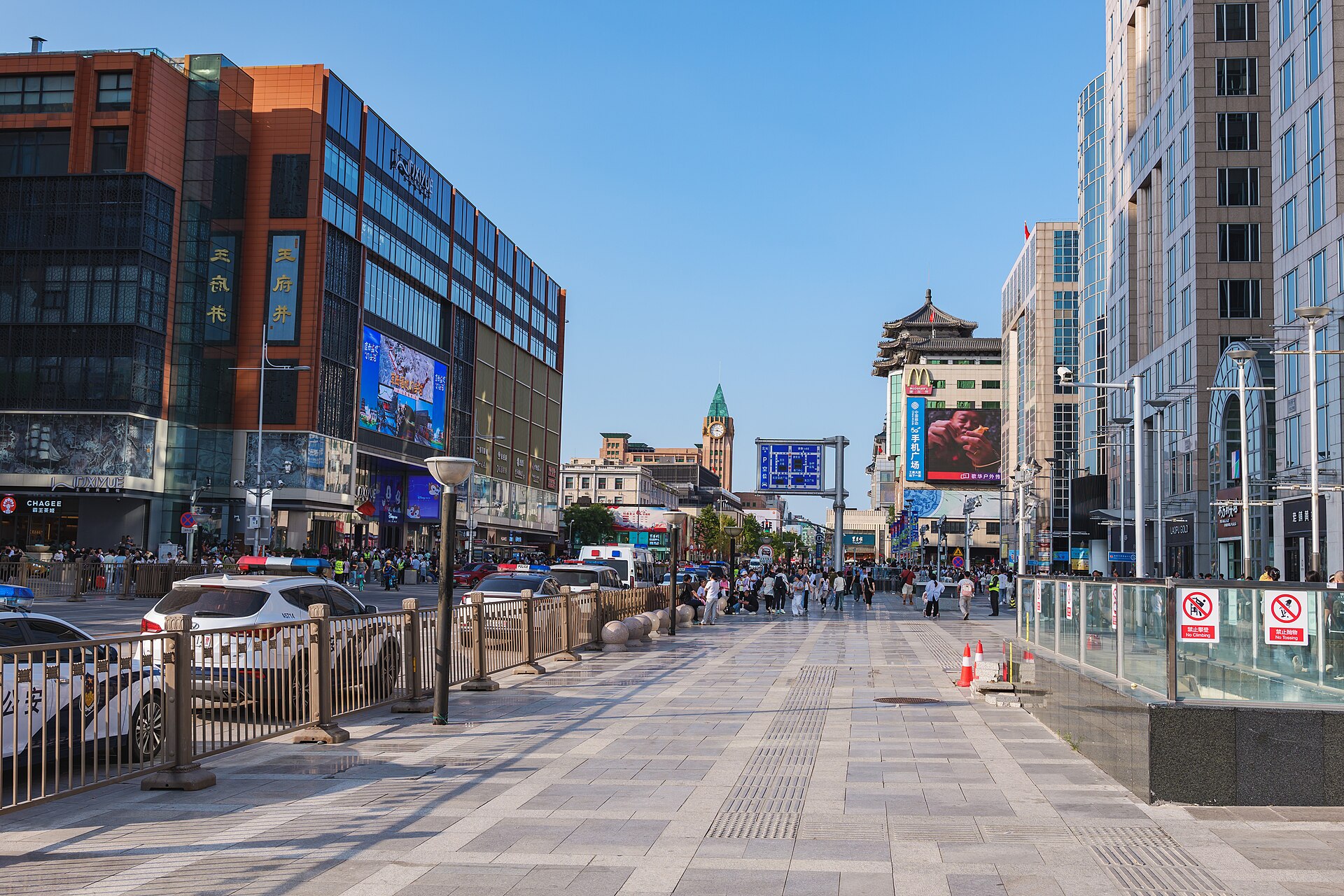
Dongcheng around Wangfujing, and this matters more on a weekend than on a longer trip. Sunday’s whole plan is a walk north from the square, so being able to start it on foot buys you thirty minutes at the sharpest end of the trip. It also puts you a straight Line 2 ride from Dongzhimen for Saturday’s bus. A hutong courtyard hotel near Shichahai is the nicer choice and costs you those thirty minutes; on two nights that is a real trade rather than a rounding error. Dongcheng and Wangfujing are the two that make sense on two nights, and our neighbourhood comparison covers the rest.
What a weekend costs
| Item | Cost per person |
|---|---|
| Airport transfers, both ways | ¥50–90 |
| Mutianyu — bus, shuttle, entry, cable car, toboggan | ¥345 |
| Forbidden City | ¥60 peak / ¥40 off |
| Jingshan, Beihai, Tiananmen | ¥22 |
| Subway across the weekend | ¥25–40 |
| Peking duck dinner | ¥160–400 per duck, plus ¥30–60 a head |
| Other meals | ¥150–300 |
| Total, two nights, excluding hotel | ¥800–1,100 (about US$115–160) |
Foreign contactless Visa, Mastercard, JCB and Amex tap in directly at subway gates — no app, no card to buy. Everything else runs on Alipay or WeChat Pay. Carry ¥200 in notes for the stalls near the Wall. The budget guide, the subway.
What a weekend cannot include
The Summer Palace, unless you take the long-weekend Monday. The Temple of Heaven, unless it replaces the Forbidden City. Yuanmingyuan. 798. The Ming Tombs, Gubei, Chengde or any day trip at all. A second, wilder stretch of Wall. And the hutongs in daylight, which are a different and better thing from the hutongs at night.
That is a lot of nots, and it does not matter much. A weekend that delivers the Great Wall, the Forbidden City, the view from Jingshan and one good duck dinner is a weekend that worked. The way weekends fail is not by omission — it is by trying to add the Summer Palace to Saturday evening and arriving nowhere. The two-day route covers the same ground with a mid-week arrival, and the itinerary hub has the longer plans.
A weekend is about the shortest trip worth taking to Beijing, but it is not the shortest possible. A single day is a different exercise entirely, a long layover shorter still, and the family version trades some of the ground covered here for pace.
Frequently asked questions
Is a weekend enough for Beijing?
Enough for the Great Wall on Saturday and the Forbidden City with Jingshan on Sunday, plus a Friday evening in the hutongs. Not enough for the Summer Palace, the Temple of Heaven or any day trip. As a first taste of the city it works; as a complete visit it does not, and it is not trying to be one.
Should I do the Great Wall on Saturday or Sunday?
Saturday, if you fly out on Sunday. The Wall is a fixed-departure day with a 17:00 last bus and no way to shorten it, whereas the axis day can be trimmed by an hour at either end. Putting the Wall on Sunday is how people miss flights.
How do I get Forbidden City tickets for a weekend?
Set an alarm for the release, seven days ahead, and book the moment it opens. Tickets are online only through bookingticket.dpm.org.cn or the WeChat mini-program, real-name against a passport number, five people maximum per booking, and weekend slots go faster than weekday ones. There are no gate sales in any circumstance.
Is Beijing busier at the weekend?
Yes, noticeably. The city’s own residents are out, so the Wall, the Summer Palace and the lakes all carry more people than mid-week. The compensations are that Panjiayuan is at its fullest and that the Monday closure — which wrecks a lot of Beijing itineraries — is not your problem.
How much does a weekend in Beijing cost?
Roughly ¥800–1,100 per person for two nights excluding your hotel, which is about US$115–160. The Great Wall day is nearly half of it at around ¥345 all in. Prices checked September 2026.
Which airport is better for a short trip?
Capital, marginally, if the fares are similar. Immigration is slower at 30–60 minutes against Daxing’s 20–40, but the Airport Express at ¥25 and 30 minutes puts you at Dongzhimen, which is where Saturday’s Wall bus leaves from. Daxing’s express is faster at ¥35 and 19 minutes but lands you further from the centre. Capital airport, Daxing.
Can I do the Forbidden City and the Great Wall on the same day?
No, and it is worth being blunt about it. The Wall is 90 minutes each way plus three hours on site; the Forbidden City wants three hours and closes its last entry mid-afternoon. Attempting both produces a bad version of each.
What should I book before a weekend trip?
The Forbidden City seven days ahead. Tiananmen Square, free but compulsory and slot-specific, one to nine days ahead. The Mutianyu 08:00 bus the day before. A duck restaurant for Friday. That is the whole list, and it is short enough to do in twenty minutes.
Is it worth a weekend if I am already in China?
Yes — from Shanghai it is 4 hours 18 minutes and ¥553–663 each way by high-speed train, or a short flight, and a Friday-night-to-Sunday-evening weekend delivers the Wall and the palace comfortably. From further afield the travel starts eating the weekend. Beijing to Shanghai by train.
What if it rains, or the air is bad?
Swap Saturday and Sunday — do the axis on the bad day and the Wall on the good one. Beijing’s air is much better than its reputation, with 2025 averaging 27 µg/m³ of PM2.5 and recording one heavy-pollution day in the whole year, but when a poor day lands, ridge visibility is what suffers. Compare µg/m³ rather than AQI, since Chinese and US scales read the same particulate differently. Air quality.
Do I need a visa for a weekend?
Depends on your passport and your route. The 24-hour visa-free transit applies to all nationalities at any Chinese airport provided your onward flight goes to a different country from the one you arrived from — not much use for a weekend. Longer visa-free transit and 30-day visa-free entry cover many nationalities and are the ones to check. Visa requirements, 240-hour transit.
Is a hutong hotel worth it for two nights?
It is a genuine trade rather than an obvious yes. A courtyard hotel near Shichahai is much the nicer place to come back to and costs you fifteen to twenty minutes at each end of both days — which on a weekend, where Sunday is already compressed, is a real amount of your trip. On three nights or more, take the courtyard. On two, take the location.