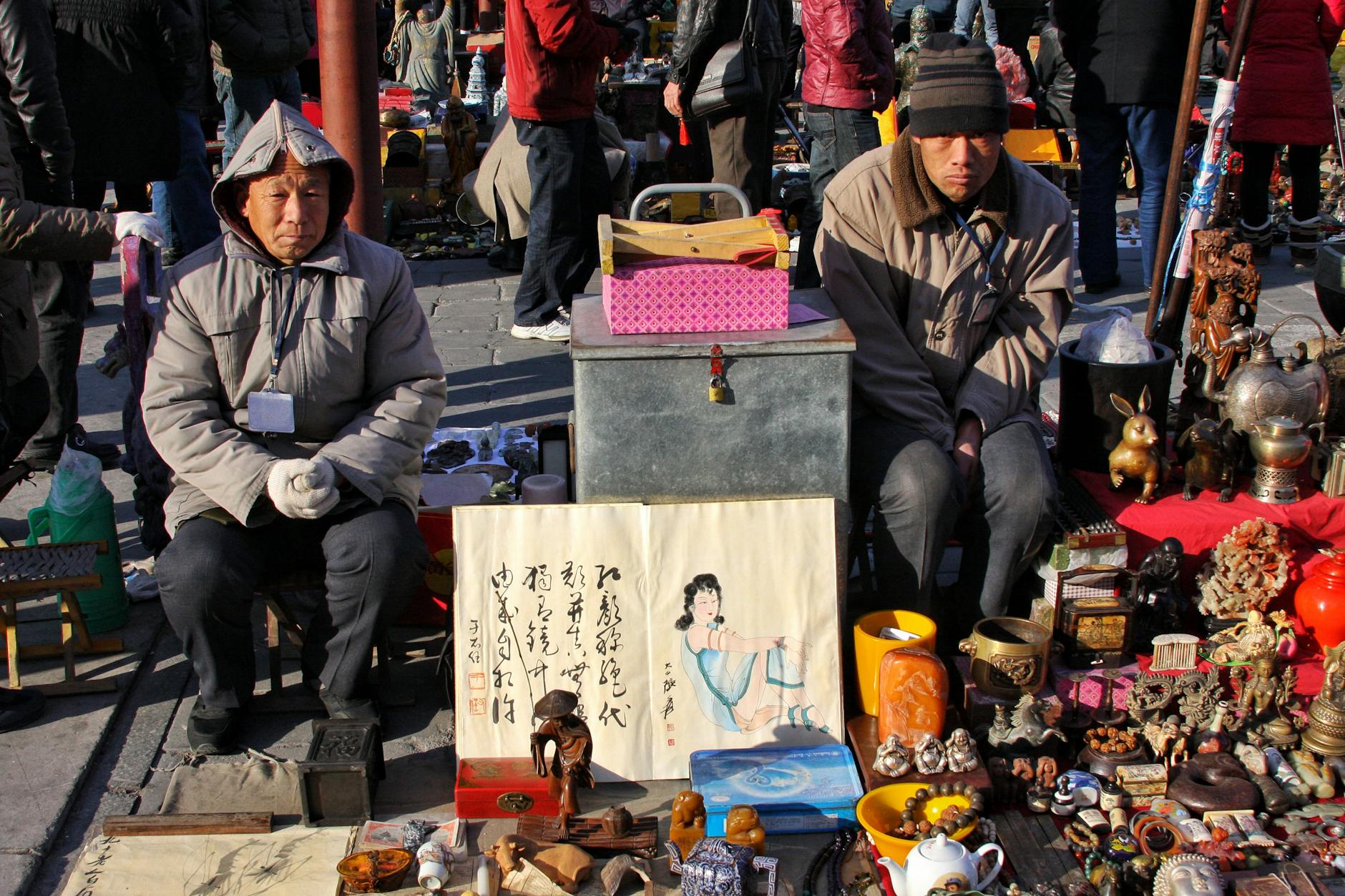
Panjiayuan Antique Market is the largest and most famous flea market in China — a sprawling, treasure-hunting paradise of more than 3,000 stalls spread across nearly five hectares in southeast Beijing. Locals call it the “ghost market” for its old dawn-trading roots, and it’s the single best place in the whole city to hunt for antiques, curios, calligraphy, jade, ceramics, Mao-era memorabilia, beads, and handicrafts of just about every kind imaginable. The catch is that it’s a chaotic, buyer-beware bazaar where reproductions far outnumber genuine antiques and prices are pure negotiation — so it rewards the prepared. As of 2026, it’s open daily (the outdoor stalls are busiest and fullest on weekends), entry is free, and the golden rules are: come early, bring cash, bargain hard, and buy what you love rather than what you hope is “real.” This guide covers what to buy, the best times to go, how to bargain, how to spot fakes, and how to navigate the maze.
Panjiayuan is one of my favourite places in Beijing — not because you’ll find a priceless Ming vase (you won’t), but because it’s an endlessly fascinating, atmospheric hunt, and a brilliant place to pick up genuinely characterful souvenirs and gifts. This guide gives you the honest, practical lowdown: when to go, what’s worth buying, realistic prices, the art of the haggle, and how to enjoy the treasure hunt without getting fleeced. Bring small bills, an empty bag and a sense of adventure.
Panjiayuan at a glance
- What: Asia’s largest antique and flea market — 3,000+ stalls of curios, crafts and collectibles.
- Cost: free entry; most items ¥10–500 after bargaining.
- Best days: weekends (Sat–Sun) when the outdoor stalls are fully open; the Friday-night market is a fun bonus.
- Go early: the best finds are gone by 9am, as serious collectors and dealers arrive right at opening to skim the cream.
- Hours: roughly 8:30am–6pm (earlier start and bigger crowds at weekends).
- Bring cash: many stalls prefer small bills, though mobile pay is increasingly accepted.
- Nearest metro: Panjiayuan station (Line 10), Exit B — the north gate is right there.
- Best for: souvenir hunters, collectors, browsers, and anyone who loves a market.
What to buy at Panjiayuan
The variety is staggering, and that’s the appeal. Among the thousands of stalls you’ll find ceramics and porcelain, jade and stone carvings, calligraphy and ink paintings, writing brushes and the “four treasures of the study,” Buddhist statues and beads, old coins and banknotes, Mao-era posters, badges and memorabilia, wooden carvings and antique furniture, ethnic-minority textiles and silver jewellery, snuff bottles, teapots, and endless curios. Whole sections are devoted to beads, to jade, to furniture, to books and prints. The smartest approach for most visitors is to treat it as a souvenir and handicraft market rather than an antiques investment: buy the beautiful hand-painted scroll, the characterful old-style teapot, the string of beads or the Cultural Revolution poster because you like it and the price is fair — rather than because you believe it’s a genuine, centuries-old antique. On that basis, it’s one of the best and most fun places in Beijing to find distinctive gifts. For ideas on what makes a great keepsake, see our guide to the best Beijing souvenirs.
Best time to visit
Timing makes a big difference at Panjiayuan. The market is open daily now, but the indoor shops run all week while the open-air stalls — the heart of the experience — are fullest at weekends, so aim for a Saturday or Sunday. Crucially, go early: dealers and serious collectors arrive at opening, and the best pieces are snapped up by around 9am, so a morning visit (ideally by 8:30) gives you the widest choice and the liveliest atmosphere. A fun alternative is the Friday-night market, when the place takes on a buzzing, lantern-lit energy and you can hunt for finds after dark. Avoid the midday lull on quiet weekdays, when many outdoor stalls simply aren’t there. Weather matters too — much of the market is open-air, so a clear, mild day is far more pleasant than rain or the height of summer heat.

How to bargain at Panjiayuan
Bargaining isn’t just allowed at Panjiayuan — it’s the entire system, and nothing has a fixed price. The opening quote is aimed squarely at tourists and can be many times the real value, so haggle with confidence, patience and good humour from the very first number. A solid approach: start your counter-offer at around a quarter of the asking price, then negotiate up in small steps toward a middle ground, staying friendly throughout. The single most powerful move is the willingness to walk away — vendors will very frequently call you back with a dramatically lower price as you start to walk away. A few more tips: never show too much obvious enthusiasm for the item you actually want; bundle several pieces from one stall for a better overall price; have small bills ready so you can offer exact cash; and keep it light, patient and respectful — a smile and good humour get you far further than aggression or impatience ever will. For the full strategy, see our dedicated guide to bargaining in Beijing.
Spotting fakes (and making peace with them)
Here’s the honest truth every visitor should internalise: the vast majority of “antiques” at Panjiayuan are reproductions, however convincingly aged. Genuine valuable antiques are rare, often illegal to export, and not going to be sold cheaply at a flea market — so assume anything presented as an ancient treasure is a replica, and price it accordingly. This isn’t a reason to stay away at all; it’s simply a reason to shift your mindset before you go. Buy the item as a well-made craft or decorative piece you love at a price you’re happy with, and you’ll never be disappointed. If you do fancy yourself a hunter, bring a small magnifying glass to inspect ceramics and carvings, learn the basics of what you’re buying beforehand, ask plenty of questions, and never spend serious money expecting genuine authenticity. Keep the big-money purchases off the table entirely — Panjiayuan is for affordable, characterful finds, not high-value investments or serious antiques. Treated that way, with no illusions, it’s pure, low-stakes fun.
Getting there and navigating
Panjiayuan is easy to reach: take Line 10 to Panjiayuan station and use Exit B — the north gate is less than 100 metres away. The market is large and laid out in zones (broadly: outdoor stalls in the central area, with indoor sections and shops around the edges for furniture, jade, ceramics and so on), so give yourself at least two hours to wander, more if you’re a keen browser. Wear comfortable walking shoes, bring water in the summer heat, and carry a sturdy tote for your finds. It’s in the southeast of the city, a bit away from the main sights, so it works best as its own dedicated half-day outing — pair it with the nearby Beijing Curio City or the Hongqiao Pearl Market if you want a full day of shopping. The full network is in our Beijing subway guide.
The history behind the “ghost market”
Panjiayuan’s nickname, the “ghost market” (guǐshì), comes from its origins in the late 20th century, when informal dealers would gather before dawn to trade old objects by the dim light of torches — the flickering shadows in the darkness lending the scene a ghostly air, and the early hour helping sellers of dubious or hastily acquired goods do business discreetly. From those scrappy, semi-clandestine beginnings it grew, through the 1990s and 2000s, into the organised, sprawling, officially sanctioned market of today: officially established and regularly expanded, it became the largest market of its kind in all of China and, indeed, Asia, and a magnet for collectors, dealers, interior decorators and curious tourists from all over the world. Over the decades it has supplied props for films, furnished countless homes and hotels, and served for years as the place where Beijingers, expats and visitors alike came to hunt for a tangible piece of the past. That history is part of its charm — even though the dawn torch-lit trading is long gone, a whiff of the old treasure-hunt spirit survives in the early-morning bustle and the thrill of the find.
It’s worth appreciating, too, what the market reflects about modern China: the sheer volume of Mao-era badges, Little Red Books, propaganda posters and revolutionary memorabilia on the stalls is a reminder of how recent and how turbulent the country’s 20th century was, while the jade, calligraphy and porcelain speak to a far deeper cultural continuity. Wandering Panjiayuan is, in its way, a stroll through the layers of Chinese history — even if most of what’s on offer was made far more recently than it pretends.
Navigating the sections
Panjiayuan is loosely organised into zones, and knowing the lay of the land helps you target your hunt. The central open-air ground is the classic flea-market heart, with rows of stalls and tarps spread with everything from beads and coins to porcelain and curios — this is where the weekend energy and the best browsing are. Around the edges and in covered halls you’ll find more specialised areas: furniture and wood carvings, jade and stone, ceramics and porcelain, calligraphy, paintings and books, and permanent shops (open all week) selling higher-end pieces at higher, though still negotiable, prices. There are whole rows devoted to beads and prayer-bead bracelets, hugely popular with Chinese shoppers, and sections for ethnic-minority crafts, textiles and silver from Tibet, Yunnan and beyond. Don’t try to see it methodically — half the fun is wandering, letting your eye snag on something, and diving in. But if you’re after a specific type of item, ask or look for its cluster, since similar stalls tend to group together.
Practical tips for a great visit
- Arrive at opening on a weekend for the fullest stalls and best finds; the magic fades by midday.
- Bring plenty of small bills — they help with bargaining and many stalls prefer cash, though blue-QR mobile pay is increasingly accepted.
- Carry a tote or backpack for your purchases, and bubble wrap or a scarf to protect anything fragile on the way home.
- Wear comfortable shoes and dress for the weather — much of the market is open-air and you’ll walk a lot.
- Bring a magnifying glass if you want to inspect ceramics, jade or carvings closely.
- Photograph items you’re unsure about and check comparable prices on Chinese apps before committing to a bigger buy.
- Don’t ship “antiques” home expecting value — and be aware that genuine cultural relics can’t legally be exported.
Above all, manage your expectations and you’ll love it: Panjiayuan isn’t an antiques investment opportunity, it’s the most colourful, characterful market in the city, and a brilliant place to find unique, affordable gifts and curiosities while soaking up a thoroughly local, uniquely Beijing scene. Go with curiosity, a sense of humour and a bit of cash, and you’ll have a thoroughly memorable morning whatever you end up carrying home.
Combining with other markets
Because Panjiayuan sits in the southeast of the city, a little away from the main sights, it pairs best with other shopping rather than squeezing it between palaces and temples. A short distance away is Beijing Curio City (Gucheng), a multi-storey indoor antiques mall with a more upmarket, weather-proof selection of jade, furniture and collectibles — a natural follow-on from the open-air chaos of Panjiayuan. Further afield, the Hongqiao (Pearl) Market near the Temple of Heaven is the place for freshwater pearls and jewellery, and Liulichang, a restored old street west of Qianmen, specialises in calligraphy supplies, ink paintings, books and antiques in a more genteel setting. Tea hunters should head to the vast Maliandao Tea Street. Stringing two or three of these together makes a satisfying full day of market-hopping for dedicated shoppers, and gives you a feel for the full range of Beijing’s traditional retail, from dawn flea market to specialist bazaar.
If your time is limited, though, Panjiayuan alone captures the spirit better than any of them — it’s the one market that distills Beijing’s whole shopping culture, from the haggling to the hunt, into a single sprawling morning. For the bigger picture of where to shop across the city, from markets to malls, see our Beijing shopping guide.
Panjiayuan FAQ
What is Panjiayuan market?
It’s Asia’s largest antique and flea market — over 3,000 stalls in southeast Beijing selling curios, crafts, jade, ceramics, calligraphy, Mao-era memorabilia and collectibles. It’s free to enter and a treasure-hunting paradise.
What are the best days and times to go?
Weekends (Saturday and Sunday) when the outdoor stalls are fully open, and as early as possible — the best finds are gone by 9am. The Friday-night market is a fun atmospheric alternative.
Are the antiques real?
Mostly no — the great majority are reproductions, replicas or craft items, however convincingly aged and weathered they look. Buy things you love as decorative pieces at fair prices, not as genuine antiques, and you’ll have a great time.
How much should I pay?
Start your offer around a quarter of the asking price and bargain up to a fair middle. Walking away often triggers a better price. Keep purchases affordable — Panjiayuan is for characterful finds, not big-money buys.
Do I need cash?
Bring small bills — many stalls prefer cash, and exact change helps you bargain. Mobile payment (WeChat Pay/Alipay) is increasingly accepted, but cash remains king at the smaller stalls.
How long should I spend?
At least two hours to wander the zones; keen browsers and collectors can easily spend half a day. It works well as a standalone morning outing in the city’s southeast.
Can I find good souvenirs at Panjiayuan?
Absolutely — it’s one of the best places in Beijing for distinctive, affordable gifts: hand-painted scrolls, characterful teapots, jade and stone trinkets, prayer beads, Mao-era memorabilia, paper-cuts, chops and ethnic-minority crafts. Treat them as well-made keepsakes rather than antiques, bargain for a fair price, and you’ll bring home genuinely unique presents with a great story attached.
The bottom line on Panjiayuan
Panjiayuan is the most fun shopping experience in Beijing — a vast, atmospheric treasure hunt where the joy is in the looking as much as the buying. Go early on a weekend, bring small bills, bargain hard but cheerfully, and buy what genuinely delights you rather than chasing “real” antiques you won’t find here. Approach it as a craft-and-curio market and you’ll come home with characterful gifts and a great story. It’s a Beijing experience like no other, and one of the city’s great free pleasures.
Master the haggle with our bargaining in Beijing guide, decide what to hunt for in our best Beijing souvenirs guide, and see the whole scene in the Beijing shopping guide. New to the city? Start with the complete Beijing travel guide.