Beijing Shopping
Best Beijing Souvenirs: What to Buy & Where to Find Them
Bring home the best Beijing souvenirs. Tea, silk, jade, cloisonne, and more — with where to buy and how to spot quality.
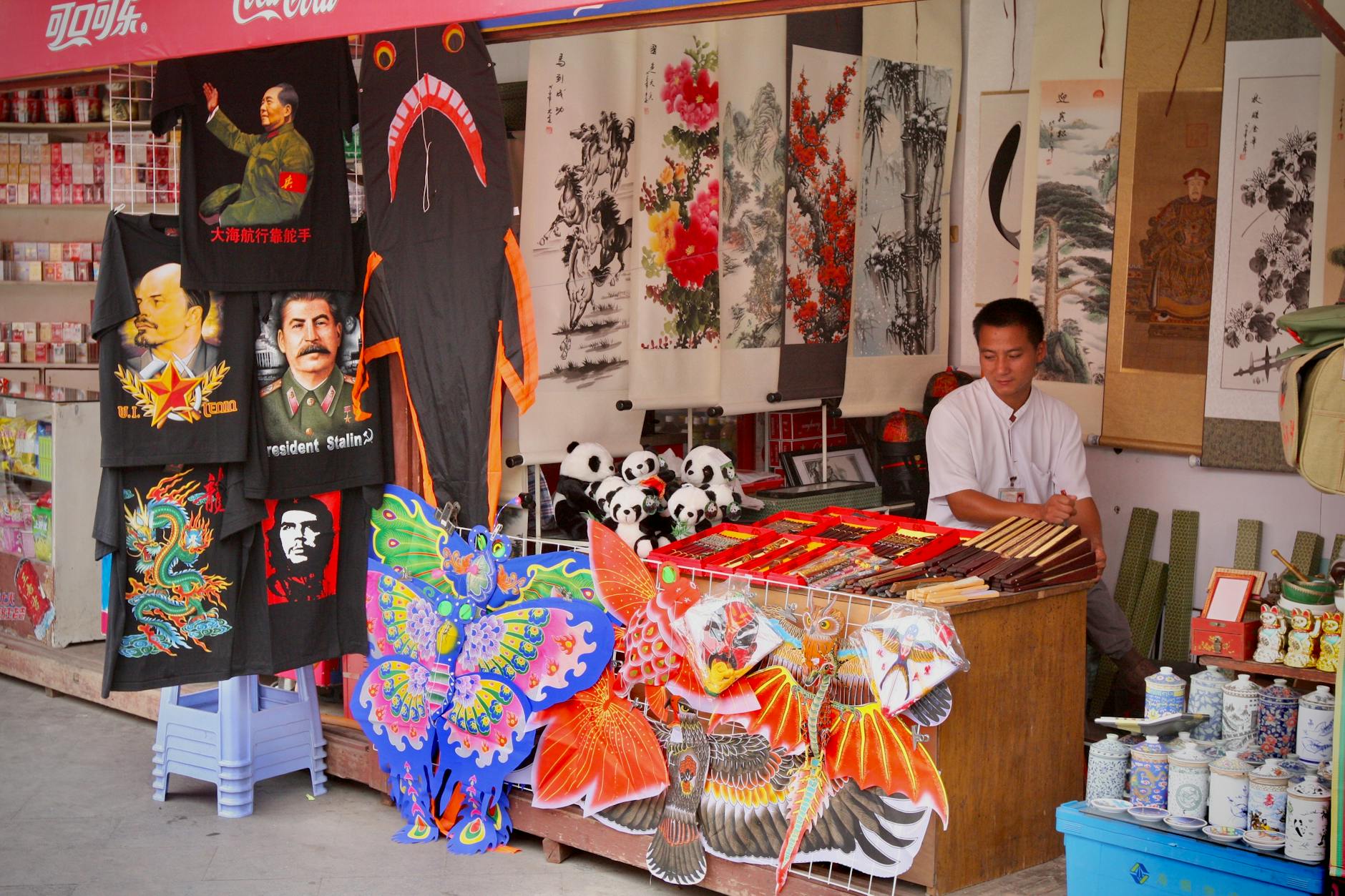
Bringing home the right souvenirs from Beijing is part of the joy of the trip — but with markets full of mass-produced trinkets and convincing fakes, knowing what to buy and where to buy it makes all the difference between forgettable tat and a treasure you’ll keep for years. Beijing, as a former imperial capital, has a rich tradition of fine crafts: silk, tea, jade, cloisonné (Jingtai blue), porcelain, calligraphy and Palace Museum reproductions are among the most distinctive and meaningful gifts you can bring back. The trick is buying quality from the right places — established brands and reputable shops for the things that matter, markets for affordable character pieces — and knowing how to spot the real thing. This guide runs through the best Beijing souvenirs, what makes a good one, where to buy each, and how to avoid coming home with a suitcase of regret.
I’ve helped plenty of visitors choose gifts that actually mean something, and the secret is matching the item to the right source: a famous silk house for a scarf, a tea market for good leaves, a certified workshop for cloisonné. This guide covers the fifteen best souvenirs, how to judge quality, where to find each, and the practical tips — bargaining, authenticity, customs — that keep your shopping smart. Let’s fill your suitcase with the good stuff, not the junk.
Best Beijing souvenirs at a glance
- Tea
- jasmine, pu’er, oolong and fine greens, with a teapot or gaiwan — buy at Maliandao Tea Street or a reputable tea house.
- Silk
- scarves, robes, ties and tailored pieces — buy from established brands like Ruifuxiang.
- Jade
- pendants, bangles and carvings — buy carefully; quality and price vary hugely.
- Cloisonné (Jingtai blue)
- vases, bowls and jewellery — look for the GRA certification seal.
- Porcelain & Palace Museum reproductions
- elegant, authentic, well-made gifts.
- Calligraphy, paper-cuts, chops, kites, opera masks
- distinctive, affordable, lightweight.
- Where
- Panjiayuan and the markets for character; brand shops and the Palace Museum store for quality.
The best souvenirs to buy
Tea and tea ware
Tea is the quintessential Chinese gift — lightweight, affordable, endlessly varied and culturally rich. Look for jasmine (the classic Beijing favourite), pu’er (earthy, aged, collectible), oolong like tieguanyin, and fine greens like longjing. Pair it with a Yixing clay teapot (best for dark teas like pu’er) or a porcelain gaiwan for a complete, ready-to-use gift. Buy at the vast Maliandao Tea Street, where you can taste before buying and haggle, or at a reputable tea house — see our Beijing tea houses guide.
Silk
Beijing has a deep silk heritage, and silk scarves, ties, robes and tailored garments are beautiful, packable gifts. For quality you can trust, buy from an established silk house like Ruifuxiang (in Dashilar, trading since the 1890s and the house that supplied the silk for the very first PRC flag raised in 1949) rather than chancing it at a market. Real silk has a soft pearly sheen, feels cool and smooth, and holds up to washing. The Silk Market is a cheaper option if you bargain hard and check the quality carefully; see our Silk Market guide.
Cloisonné (Jingtai blue)
One of Beijing’s signature crafts, cloisonné (景泰蓝, Jingtai blue) is a dazzling enamelwork of copper wire and coloured glaze, dating to the Ming dynasty, worked into vases, bowls, plates, jewellery and ornaments. Its deep blues and intricate patterns make it a distinctive, luxurious-looking gift. When buying, look for the GRA certification seal that verifies authenticity and quality, and buy from a reputable shop or the historic Beijing Enamel Factory rather than an anonymous tourist stall.
Jade and porcelain
Jade — pendants, bangles, beads and carvings of Buddhas, animals and symbols — is hugely meaningful in Chinese culture, but quality and price vary enormously and fakes — dyed stone, lesser minerals, even dressed-up glass — abound, so buy carefully and don’t overspend unless you genuinely know your jade. Porcelain, from delicate tea sets to decorative pieces, is another classic; the Palace Museum (Forbidden City) gift shops sell lovely, authentic reproductions of imperial treasures that make superb, guaranteed-genuine and meaningful gifts.

Affordable character pieces
Not every souvenir needs to be precious. Beijing excels at distinctive, affordable, lightweight gifts that travel well and capture the city’s character: calligraphy scrolls and ink paintings, paper-cuts (jianzhi), a carved name chop (seal) personalised with your name, traditional kites, Peking Opera face masks, clay or dough figurines, snuff bottles, Mao-era memorabilia, fans, cloth shoes and chopstick sets. These are perfect for friends and family, and you’ll find them at the market grounds at Panjiayuan, in the hutong craft shops, and along Dashilar and Liulichang. A personalised chop, carved with your name while you wait for a few yuan, is one of the most charming and personal gifts of all.
Where to buy (matching item to source)
The single biggest factor in souvenir success is buying the right thing in the right place. Here’s the cheat sheet: for tea, the Maliandao Tea Market or a tea house; for quality silk, established brands like Ruifuxiang in Dashilar; for certified cloisonné, a reputable enamel shop; for authentic reproductions and porcelain, the Palace Museum gift shops; for pearls and jewellery, the Hongqiao (Pearl) Market; for affordable crafts, curios and character pieces, Panjiayuan, Liulichang and the hutong shops; and for fun, cheap bargaining buys (and knowing fakes), the Silk Market; for a one-stop, air-conditioned browse near the Forbidden City, Wangfujing. Match item to source like this and you’ll get both quality and a fair price. For the full lay of the land, see our map of the city’s markets, streets and malls.
The meaning behind the gifts
Part of what makes a Beijing souvenir special is the cultural meaning woven into it — and knowing the symbolism makes for a more thoughtful gift. Jade is far more than a pretty stone in Chinese culture: it symbolises purity, virtue and protection, and is traditionally given for luck and good health. Tea carries connotations of hospitality, harmony and respect — offering tea is a gesture of welcome, so a fine tea is a gift of goodwill. Cloisonné and porcelain evoke the refinement of the imperial court. Many motifs you’ll see carry specific blessings: the dragon for power and good fortune, the peony for wealth and honour, the bat (a homophone for “fortune”) for happiness, fish for abundance, and the colour red for luck and joy. A name chop carved with your name in Chinese characters is a uniquely personal keepsake rooted in centuries of scholarly tradition. Choosing a souvenir with its meaning in mind — jade for a loved one’s health, a peony painting for a friend’s prosperity — turns a simple purchase into a gift with real thought and meaning behind it.
This is also why the Palace Museum’s reproductions make such satisfying gifts: each is a faithful copy of an imperial treasure, complete with its history and symbolism, and guaranteed authentic. For anyone who has just walked through the old imperial palace, a Palace Museum scarf, notebook or porcelain piece carries the memory of the place as well as its imperial pedigree.
More distinctive Beijing buys
Beyond the headline crafts, Beijing offers a wealth of smaller, characterful gifts worth seeking out. Inside-painted snuff bottles, painted in reverse on the inside of tiny glass bottles with impossibly fine brushes, are a Beijing speciality and a marvel of craft. Lacquerware — carved cinnabar boxes and trays — is another traditional art. Inkstones, brushes and seal paste (the calligrapher’s tools) make lovely gifts for the artistically inclined, especially paired with a name chop. Traditional kites, often beautifully painted with swallows or butterflies, fold flat for packing and delight children. Dough figurines and sugar paintings, Chinese knots, embroidery, cricket gourds, and old propaganda posters and Little Red Books all capture different facets of the city. For the kids back home, panda-themed everything, shadow-puppets and Peking Opera masks are reliable winners. The hutong craft shops, Panjiayuan, Liulichang (for art supplies and antiques) and the Palace Museum store are the best hunting grounds for these. Half the fun is the discovery, so leave a little room in both your bag and your schedule for unhurried browsing.
Practical tips for souvenir shopping
- Buy quality from quality sources — established brands, certified shops and the Palace Museum store for silk, cloisonné, jade and porcelain.
- Treat markets as the place for character, not authenticity — buy curios and crafts you love at fair, bargained prices.
- Bargain at markets and stalls, but expect fixed prices at brand shops, the Palace Museum store and malls — see our bargaining guide.
- Check authenticity seals (GRA for cloisonné) and learn the basic feel of real silk and jade.
- Pack smart — favour light, flat, unbreakable items (tea, silk, paper-cuts, kites) for easy transport; wrap fragile porcelain well.
- Mind customs and ethics — never buy ivory or genuine antiques (export-restricted); check your home country’s rules on tea, seeds and certain materials.
- Keep receipts for higher-value purchases in case of customs questions.
Above all, buy what genuinely delights you or suits the person you’re buying for, rather than grabbing generic trinkets out of obligation. A single well-chosen gift — a fine tea, a real silk scarf, a personalised chop — beats a dozen forgettable fridge magnets, and will carry the memory of your Beijing trip for years.
A souvenir-shopping plan
If gifts are a priority, it’s worth being a little strategic rather than buying piecemeal. A good approach is to browse early, buy late: in your first days, note prices and quality across a few different sources so you steadily develop a feel for what’s fair and what’s inflated, then make your purchases toward the end of the trip (this also means less to carry around, and less to wrestle aboard if you’re continuing to Shanghai on the high-speed line). Group your shopping by area to save time: do tea at Maliandao on the same outing; combine silk and traditional brands with a visit to Dashilar and Qianmen; pick up character pieces and curios on a morning at Panjiayuan; and grab authentic reproductions at the Palace Museum store while you’re at the Forbidden City. A name chop can be carved while you wait at many craft shops and the markets, so factor in a little time for the carving and to choose the characters for your name. Spreading your shopping across these natural stops means you see more of the city while you shop, and avoid the classic trap of panic-buying everything at the last minute in one overpriced tourist store.
One more strategic tip: buy the consumables and lightweight items (tea, silk, paper-cuts) freely, since they’re easy to carry and make great multiple gifts, but be more selective and considered with the bigger, fragile or expensive pieces (porcelain, cloisonné vases, jade), buying just one or two genuinely special items rather than several lesser ones. This keeps your luggage manageable, your spending focused on quality over quantity, and the risk of breakage low.
Avoiding the tourist-trap shops
A word of warning that can save you money and disappointment: be wary of the “government” or “official” craft and tea shops that tour guides and drivers sometimes steer groups toward, and of pushy operations near major sights. These often charge inflated prices for ordinary goods, and the hard-sell tea tastings in particular can lead to wildly overpriced purchases, and occasionally to the outright tea-ceremony scam, one of the classic set-ups aimed at visitors. The same caution applies to anyone who approaches you offering to take you to a “special” shop. Stick to the sources recommended here — reputable brands, the Palace Museum store, the established markets where you set the price by bargaining — and you’ll get far better value. If a shop’s prices aren’t marked, treat that as a sign to bargain hard or walk on. And remember that the best souvenirs aren’t always the most expensive: a ¥30 bag of good jasmine tea or a few yuan’s worth of hand-cut paper designs can be a more authentic and welcome gift than a costly “antique” of dubious origin. Shop with a little knowledge and a healthy scepticism, and Beijing rewards you with genuinely lovely things to bring home.
Beijing souvenirs FAQ
What are the best souvenirs to buy in Beijing?
Tea and tea ware, silk, jade, cloisonné (Jingtai blue), porcelain and Palace Museum reproductions are the most distinctive. Affordable options include calligraphy, paper-cuts, name chops, kites, opera masks and Mao-era memorabilia.
Where should I buy souvenirs in Beijing?
Match the item to the source: tea at Maliandao, silk from Ruifuxiang, certified cloisonné from a reputable shop, reproductions from the Palace Museum store, pearls at Hongqiao, and affordable crafts at Panjiayuan and the hutong shops.
How do I avoid buying fakes?
Buy quality items (silk, cloisonné, jade) from established brands and certified shops rather than tourist stalls; look for certification seals (like the GRA for cloisonné); and treat market goods as affordable character pieces rather than guaranteed antiques or genuine designer brands.
What’s a good cheap souvenir?
Tea is the best-value gift — light, affordable and varied. A personalised name chop, paper-cuts, a silk scarf, a kite or a Peking Opera mask are also inexpensive, distinctive and easy to pack.
Can I bring antiques or these items through customs?
Genuine antiques (pre-1949) are restricted from export from China and need certification, but the reproductions and crafts you’ll mostly buy are fine. Check your home country’s customs rules on items like certain woods, ivory (avoid entirely) and food/tea quantities.
Should I bargain for souvenirs?
At markets and stalls, yes — bargaining is expected (see our bargaining guide). At fixed-price brand shops, the Palace Museum store and malls, prices are set. Match your approach to the venue.
What’s the most meaningful souvenir to bring home?
A personalised name chop (seal) carved with your name in Chinese is among the most personal and distinctive, rooted in centuries of scholarly tradition. Beyond that, a fine tea, a real silk scarf, a piece of jade chosen for its symbolism, or an authentic Palace Museum reproduction all carry genuine cultural meaning and make memorable, thoughtful gifts.
The bottom line on Beijing souvenirs
The best Beijing souvenirs are the ones with real character and quality — tea, silk, cloisonné, jade, porcelain and the city’s distinctive crafts — bought from the right source. Buy quality items from established brands and certified shops, treat the markets as the place for affordable, characterful pieces, and use a few simple checks to avoid fakes. Get a name chop carved, pick up good tea and a silk scarf, and you’ll come home with gifts that genuinely capture the spirit of Beijing rather than a bag of forgettable, generic trinkets.
Hunt for character pieces at Panjiayuan, bargain for silk and gifts at the Silk Market, and see the whole scene in the Beijing shopping guide. New to the city? Start with our guide to getting a first Beijing trip right.