Wangfujing is Beijing’s most famous shopping street — a 1.6-kilometre pedestrian boulevard running north from Chang’an Avenue, lined with giant malls, department stores, flagship brand outlets, historic shops and a famous (if undeniably touristy) snack street. Just a short walk east of the Forbidden City and Tiananmen, it’s the city’s commercial heart and an almost unavoidable stop, blending modern malls like Oriental Plaza and Beijing APM with centuries-old institutions like the Tongrentang medicine hall, founded in 1669, and the cavernous Wangfujing Bookstore. It’s not where bargain-hunters or seekers of authentic old Beijing should focus their energy — prices are fixed and high, and parts are firmly aimed at tourists — but as a one-stop hit of shopping, snacks, people-watching and unbeatably convenient location near the sights, it’s genuinely hard to beat. This guide covers the malls and shops, the snack street, what’s worth your time, and how to enjoy Wangfujing without falling into the tourist traps.
I’ll be honest: Wangfujing is more about convenience and spectacle than hidden gems, but it has its place — especially if you want air-conditioned malls near the big sights, a hit of street-food theatre, or a handful of historic shops gathered in one easy, walkable strip. This guide covers the shopping, the famous snack street, the time-honoured brands worth seeking out, the night atmosphere, and how to make the most of Beijing’s flagship shopping street. Let’s take a stroll up the so-called Golden Street.
Wangfujing Street at a glance
- What: Beijing’s most famous shopping street — 1.6 km of malls, brand stores, historic shops and a snack street.
- Where: just east of the Forbidden City and Tiananmen; very central.
- Main malls: Oriental Plaza, Beijing APM, Intime Lotte — global brands, electronics, fashion, dining.
- Historic shops: Tongrentang (1669 medicine hall), Wangfujing Bookstore, Shengxifu hats and more.
- Snack street: the “Golden Street” food court — touristy, with everything from skewers to scorpions.
- Prices: fixed and mid-to-high; this is mall shopping, not bargaining territory.
- Nearest metro: Wangfujing station (Line 1), right on the street.
- Best for: convenient mall shopping, snacks, evening atmosphere, combining with the Forbidden City.
The malls and department stores
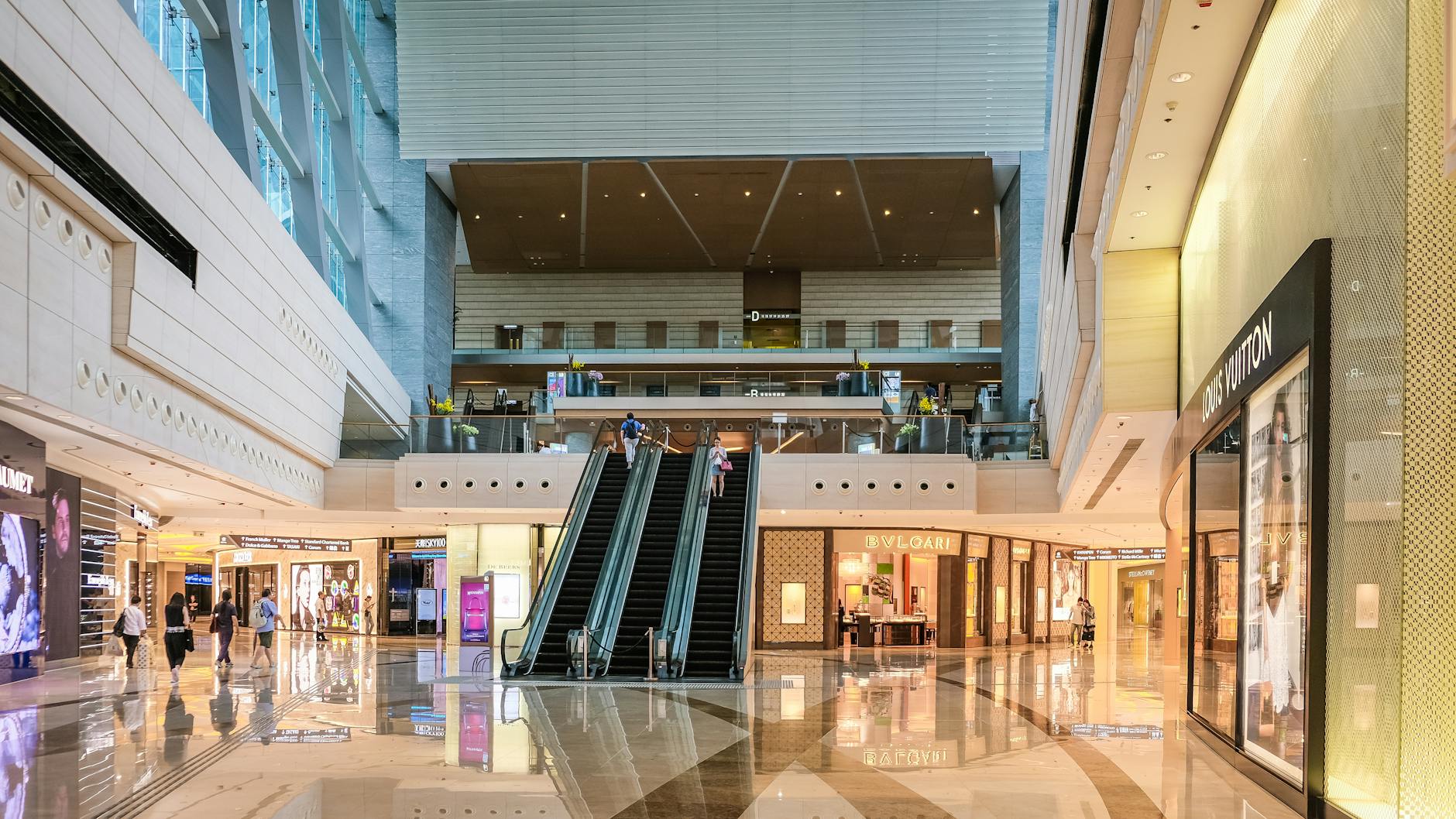
Wangfujing is anchored by several large, modern shopping malls that between them cover most international and Chinese brands. Oriental Plaza, at the southern (Chang’an Avenue) end, is a vast complex of seven themed zones with everything from Apple, Zara and Gap to watch and fashion boutiques, plus a big food court and restaurants. Beijing APM, mid-street, is a large youth-oriented mall built on the site of Beijing’s first department store, packed with high-street fashion, beauty and dining. Intime Lotte and the venerable Beijing Department Store add yet more options, and you’ll find flagship and chain stores for brands like Apple, Adidas, Uniqlo, H&M, Zara, Sephora and many more dotted along the strip. It’s all fixed-price mall shopping — no bargaining whatsoever — and prices are broadly similar to, or higher than, what you’d pay back home, so this isn’t the place for cheap deals. But if you want a comfortable, air-conditioned hit of familiar shopping near the sights, or you need to pick up something specific from a known brand, it delivers reliably. For serious luxury and the world’s top brands, though, the SKP and CBD malls are far better; see our Beijing shopping malls guide.
The historic shops
Amid the modern malls, Wangfujing hides some wonderful time-honoured shops that are worth seeking out for character and gifts. The most famous is Tongrentang (同仁堂), the celebrated traditional Chinese medicine hall founded in 1669, where the polished wooden shelves are lined with herbs, dried ingredients, tonics and remedies and the air is thick with a heady, earthy medicinal fragrance — fascinating to browse even if you buy nothing at all. The enormous Wangfujing Bookstore is a Beijing institution, with floors of books (including some English titles and lovely stationery). Look too for old brands selling traditional hats, silk and crafts. These shops offer a real glimpse of old commercial Beijing amid the global chains, and they’re good for distinctive, very Beijing souvenirs like tea, herbal tonics, traditional cloth shoes, hats and crafts that you simply won’t find in the malls. For the best keepsakes across the city, see our best Beijing souvenirs guide.
The Wangfujing Snack Street
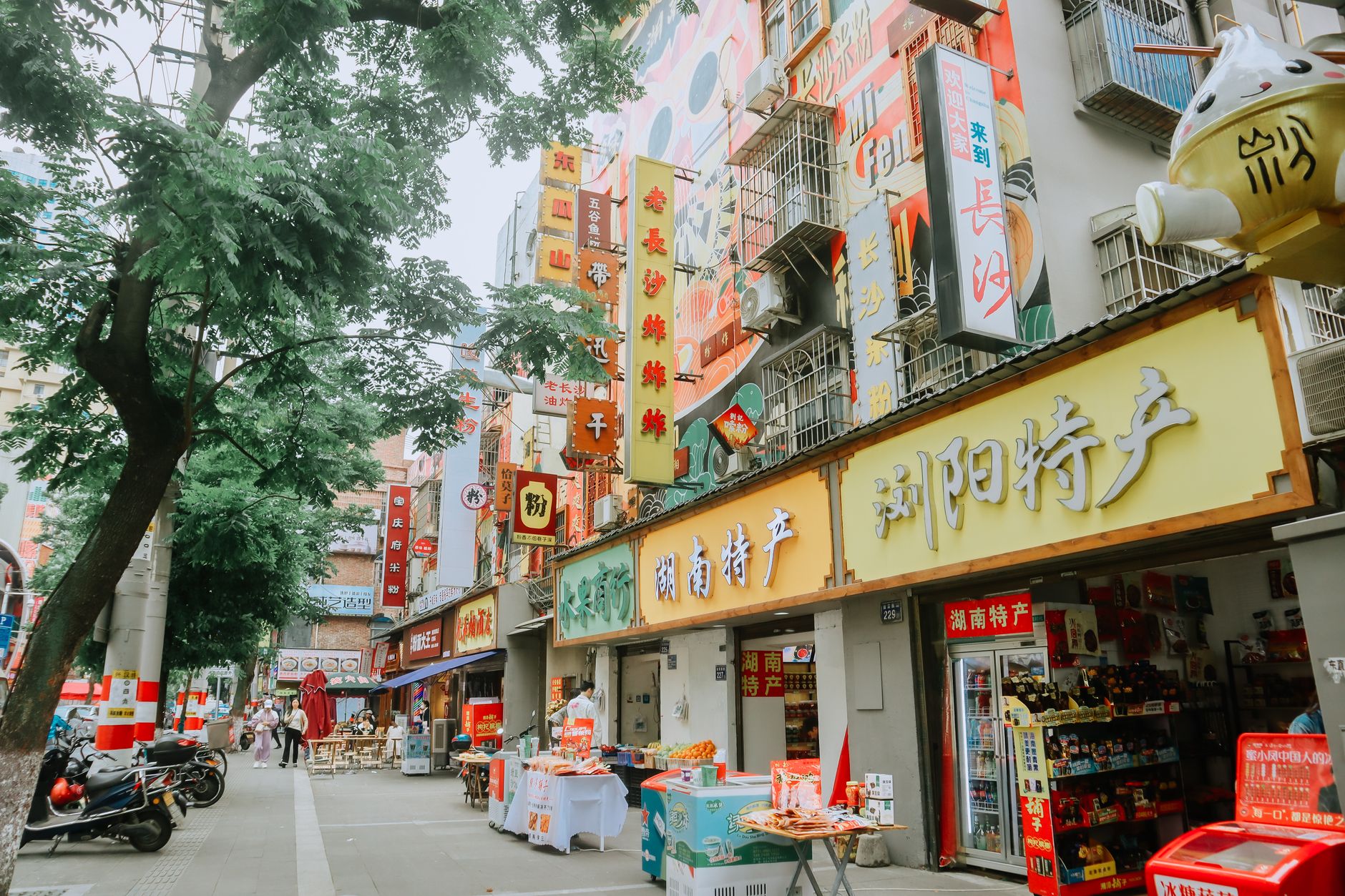
Just off the main drag, the Wangfujing Snack Street (officially the Golden Street food court, near the Wangfujing McDonald’s) is the street’s most famous — and most divisive — attraction. It’s a narrow, lantern-strung lane of food stalls hawking everything from lamb skewers, jianbing, noodles and candied hawthorns to the notorious scorpions, starfish and silkworms on sticks. Be clear-eyed about it: this is a tourist spectacle, the exotic skewers are more dare-photo than dinner, hygiene is variable, and prices are heavily inflated for tourists. It’s worth a quick wander for the sights, the smells and an obligatory photo of the wriggling scorpion skewers, but it’s not where Beijingers eat, and the food is mediocre and overpriced. For genuine street food, head to the hutongs or Niujie instead, as covered in our Beijing street food guide. Treat the snack street as free street theatre rather than a serious meal.
Wangfujing in the evening
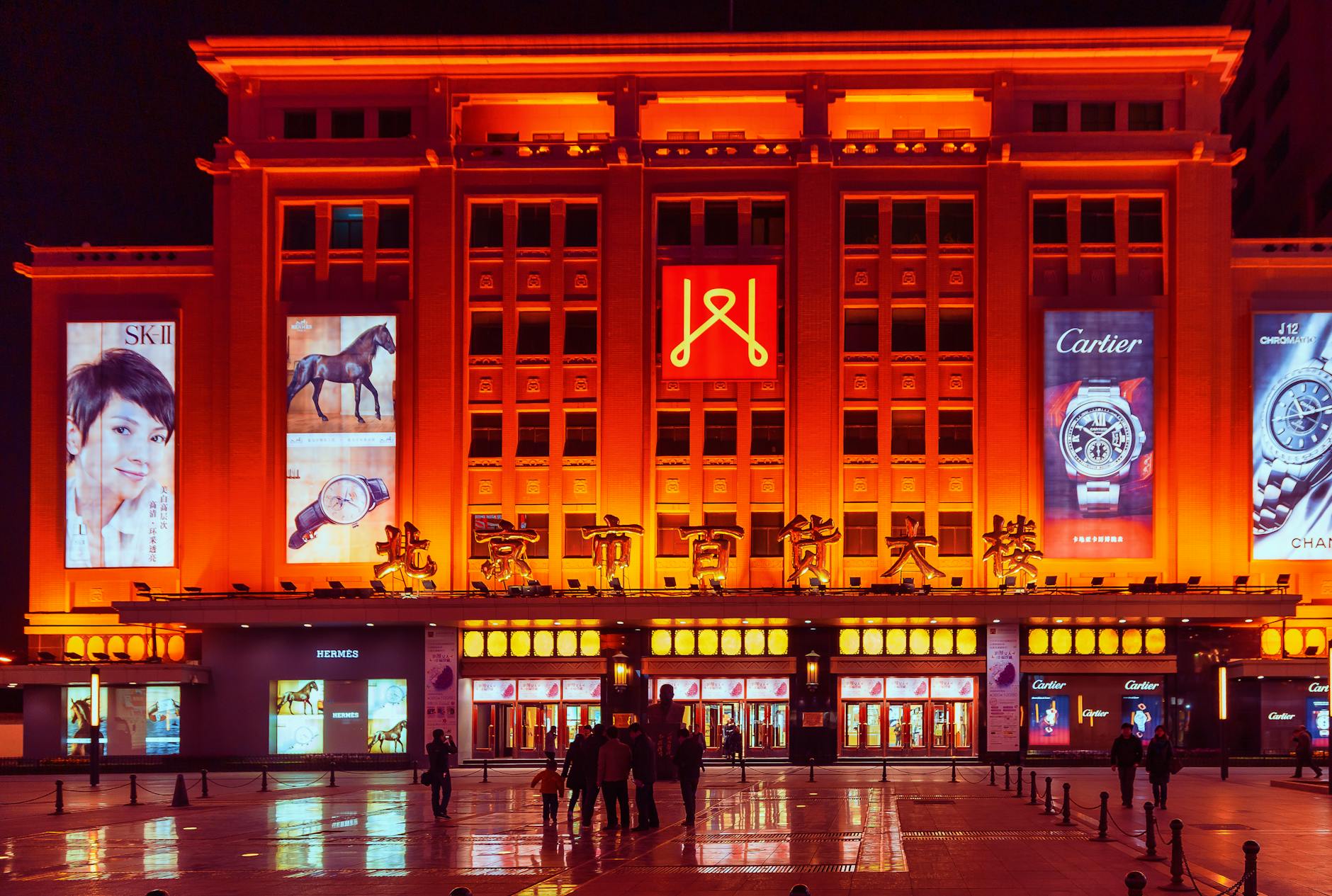
Wangfujing is at its most appealing after dark, when the malls and shopfronts light up, the crowds come out, and the pedestrian street takes on a buzzing, almost festival-like energy. It’s a pleasant, safe, well-lit and thoroughly pedestrian-friendly place for a relaxed evening stroll, especially if you’ve spent the day at the nearby Forbidden City or Tiananmen Square — the area is a natural place to wind down, grab an early dinner in one of the many mall restaurants, and watch the city light up at night. Street performers, seasonal decorations, big digital billboards and the neon of the malls all add to the after-dark spectacle. If you’re staying nearby, it’s a convenient base; see our Wangfujing hotels guide. For livelier after-dark food and drink, though, the night markets and bar districts elsewhere have more soul — see our night markets guide.
Getting there and making the most of it
Wangfujing has its own metro station (Wangfujing, Line 1) right in the middle of the street, and it’s an easy walk from the Forbidden City and Tiananmen, so it slots naturally into a day exploring the city centre. The street is fully pedestrianised and easy to stroll end to end in well under an hour, longer with mall browsing, the historic shops and snack stops. A sensible plan: visit the Forbidden City in the morning, then walk to Wangfujing for an air-conditioned mall lunch, a browse of Tongrentang and the bookstore, and a wander up the snack street, before deciding whether to shop, rest or move on. Carry a little small cash for the snack stalls and a translation app for browsing the historic shops, where English may be limited. The full network is in our Beijing subway guide.
The history of the “Golden Street”
Wangfujing’s name — “Prince’s Mansion Well” — reaches back to the Ming and Yuan dynasties, when aristocratic mansions clustered here around a famous sweet-water well (a replica well marker is set into the pavement today, easy to miss among the crowds). Its life as a commercial street took off in the late 19th and early 20th centuries, and by the Republican era it had become Beijing’s premier shopping district, nicknamed the “Golden Street” for its prosperity. It was here that Beijing’s first modern department store opened its doors, and the street drew the city’s well-to-do to its silk shops, tailors, bookstores, teahouses and emporia. Through the 20th century it remained the capital’s retail showpiece, and in 1999 it was pedestrianised and redeveloped into the mall-lined boulevard you see now. So while Wangfujing today feels modern and global, it sits on more than a century of commercial history — and the surviving time-honoured shops like Tongrentang are living links to that past. Knowing the street’s heritage adds a little depth to what can otherwise feel like a generic shopping strip.
That long history also explains the street’s slightly split character: it’s simultaneously a showcase of contemporary Chinese consumer culture — gleaming malls, global flagships, digital billboards — and a repository of old Beijing commerce in its historic shops and the well marker underfoot. Walking it with both layers in mind makes for a more interesting stroll than treating it purely as a place to shop.
What’s nearby
One of Wangfujing’s greatest assets is its location, right at the heart of tourist Beijing. The Forbidden City and Tiananmen Square are a short walk west, making the street the obvious place for lunch, a rest or some air-conditioned downtime after a morning at the palace. At the northern end stands the National Art Museum of China (NAMOC), well worth a visit for Chinese modern and traditional art. The St Joseph’s Church (the East Cathedral), a striking 19th-century Catholic church with a grand stone facade, sits just off the street and is a popular photo spot, its plaza often busy with skateboarders, wedding photographers and locals. And the National Museum of China and the hotels of the Wangfujing area are all close by. This rare concentration of sights, shops, museums and food within easy walking distance is exactly why Wangfujing is so convenient — even if it’s not the most characterful corner of the city, it’s superbly placed to anchor a central day.
Tips for visiting Wangfujing
- Use it for convenience — air-conditioned malls, food and toilets near the Forbidden City make it a handy midday base.
- Go in the evening for the best atmosphere, when the street lights up and the crowds come out.
- Seek out the historic shops — Tongrentang and the Wangfujing Bookstore are the most characterful stops.
- Treat the snack street as a photo op, not a meal — eat real street food in the hutongs instead.
- Don’t expect bargains — it’s fixed-price; save haggling for the markets and serious luxury for the CBD malls.
- Carry small cash for the snack stalls, though malls and shops take cards and mobile pay.
- Combine it with the Forbidden City, Tiananmen or the National Art Museum for an efficient central day.
Manage your expectations and Wangfujing is a useful, enjoyable part of a Beijing trip rather than a disappointment. It’s not where you’ll find the soul of the city or the best deals — but as a convenient, lively, central strip for shopping, snacks and an evening wander between the major sights, it does its job very well indeed. Treat it as a useful crossroads rather than a destination in its own right, and it comfortably earns its place on a Beijing itinerary.
Who Wangfujing is for
Whether Wangfujing belongs on your itinerary depends on what kind of shopper and traveller you are. It’s a great fit if you want convenient, comfortable, fixed-price shopping near the main sights, if you need to buy something specific from a familiar brand, if you enjoy a lively evening street scene, or if you’re staying in the area and want shops, food and amenities on your doorstep. It’s also handy for families, and for anyone who wants reliable mall food, clean toilets and welcome air-conditioning between long bouts of sightseeing. It’s less suited to bargain-hunters (head to the markets), luxury shoppers (the CBD malls and SKP are far better), foodies seeking authentic eats (try the hutongs), or travellers chasing the atmosphere of old Beijing (the hutong districts deliver that). In other words, Wangfujing is a practical, central, crowd-pleasing strip rather than a hidden gem — and judged on those terms, it’s a useful and enjoyable stop, especially slotted around a Forbidden City visit. Knowing what it is, and isn’t, is the key to enjoying it.
Wangfujing FAQ
What is Wangfujing Street?
It’s Beijing’s most famous shopping street — a 1.6 km pedestrian boulevard near the Forbidden City lined with malls, department stores, brand flagships, historic shops and a famous snack street. It’s the city’s commercial heart.
Is Wangfujing worth visiting?
For convenient mall shopping near the sights, an evening stroll, and a few historic shops, yes. But it’s touristy and prices are fixed and high, so it’s not for bargain-hunters or those seeking authentic old Beijing — head to the markets or hutongs for that.
Should I eat at the Wangfujing snack street?
Go for the spectacle and a photo of the scorpion skewers, but don’t expect great food — it’s touristy and overpriced. For authentic street food, head to the hutongs or Niujie. Treat the snack street as theatre.
Can I bargain at Wangfujing?
No — the malls and shops are fixed-price. For bargaining, head to the Silk Market or Panjiayuan. Wangfujing is mall-and-brand shopping, not haggling territory.
What are the best shops on Wangfujing?
Oriental Plaza and Beijing APM for malls; Tongrentang (the historic medicine hall) and the Wangfujing Bookstore for character; plus flagship brand stores along the street. The historic shops are the most distinctive.
How do I get to Wangfujing?
Take Line 1 to Wangfujing station, right on the street. It’s also a short walk from the Forbidden City and Tiananmen, making it easy to combine with a day at the main sights.
Is Wangfujing good for families?
Yes — it’s flat, pedestrianised, safe and full of amenities: air-conditioned malls, reliable food courts, clean toilets, toy and book shops, and the spectacle of the snack street. It makes an easy, low-stress break between sightseeing with kids, and its central location means you’re never far from the major sights. See our Beijing with kids guide for more family-friendly planning.
When is the best time to visit Wangfujing?
Evening is the most atmospheric, when the street lights up and the crowds and performers come out. Midday is handy as an air-conditioned escape from the heat or a lunch stop after the Forbidden City. It’s busy at weekends, so a weekday visit is calmer if you want to browse the shops in peace.
The bottom line on Wangfujing
Wangfujing is Beijing’s flagship shopping street — convenient, central and full of malls, brands and a famous snack-street spectacle, but firmly on the tourist trail and not the place for bargains or authentic finds. Use it for what it does well: air-conditioned mall shopping near the Forbidden City, a few characterful historic shops like Tongrentang, and a buzzing evening stroll. Skip the overpriced scorpion skewers as anything more than a photo, save your serious shopping for the markets or the luxury malls, and enjoy Wangfujing for what it genuinely is: the convenient, lively, central crossroads of tourist Beijing.
Find better deals at the Silk Market and Panjiayuan, real street food in our street food guide, and the full overview in the Beijing shopping guide. Staying nearby? See our Wangfujing hotels guide.