Beijing Imperial Landmarks & Historical Sites
National Museum of China: Collections & Visitor Guide
Explore China's largest museum. Highlights of the collection, free admission tips, and how to plan your National Museum visit.
The National Museum of China is the largest museum in the country and one of the most-visited in the world — a colossal building on the eastern edge of Tiananmen Square holding more than 1.4 million objects that tell the story of Chinese civilisation from prehistory to the present. It’s the single best place in Beijing to make sense of the history you see written across the city’s palaces and temples, and the best part is that admission is completely free. The catch, as of 2026, is that entry requires a mandatory advance reservation made with your passport — walk-ins are not admitted — and tickets are released exactly 7 days ahead at 5:00pm Beijing time. Get the booking right and you have a world-class museum at no cost.
The museum is vast — too vast to “do” in one visit — so the key to enjoying it is knowing what to prioritise. This guide explains exactly how to reserve, the opening hours and time slots, the unmissable highlights (the ones I steer everyone toward), the brilliant chronological “Ancient China” galleries, and the practical questions visitors ask. Treat it as the historical companion to your day on Tiananmen Square and the Forbidden City, and it will deepen everything else you see in Beijing. For a day trip rich in imperial history, the mountain valley where 13 Ming emperors lie buried, 50km north, pairs naturally with the Great Wall at Badaling and rounds out any visit to Beijing’s historical landmarks.
National Museum of China at a glance
- Admission
- free — but advance reservation is mandatory.
- Booking
- real-name with passport, released 7 days ahead at 5:00pm Beijing time, via the official WeChat mini-program (国家博物馆).
- Hours
- 9:00am–5:00pm (last admission 4:00pm); closed Mondays except public holidays.
- Time slots
- typically 09:00–11:00, 11:00–13:30, 13:30–16:00 — enter within your slot.
- Entry requirement
- bring the exact physical passport used to book; photos and digital copies aren’t accepted.
- Location
- east side of Tiananmen Square (Tiananmen East, Line 1).
- Time needed
- 2–3 hours for highlights; a full day for enthusiasts.
- Don’t miss
- the Ancient China galleries on level B1, the bronzes, the jade burial suit, and Along the River During the Qingming Festival.
How to reserve (it’s mandatory and free)
This is the part that catches people out. The museum is free, but you cannot walk in — every visitor needs an advance, real-name reservation tied to a passport. Tickets are released seven days in advance at 5:00pm Beijing time, and because the museum is so popular and free, the most desirable slots disappear quickly, especially in summer and around holidays. Book the moment your date opens.
You reserve through the official WeChat mini-program: open WeChat, go to Discover → Mini Programs, search the museum’s Chinese name 国家博物馆, and look for the official program. Enter each visitor’s passport details and choose a time slot. On the day, you must bring the physical passport you booked with — it’s checked against your reservation at the security entrance, and digital copies won’t do. Arrive within your booked time slot; miss it and the ticket is void. If you can’t navigate the Chinese-language booking, a guide or agency can arrange it, and our language tips for getting around without Mandarin have more workarounds.
The highlights you shouldn’t miss
With 1.4 million objects across dozens of galleries, the museum can overwhelm. Here are the pieces I always make sure to see — the ones that reward the trip on their own.

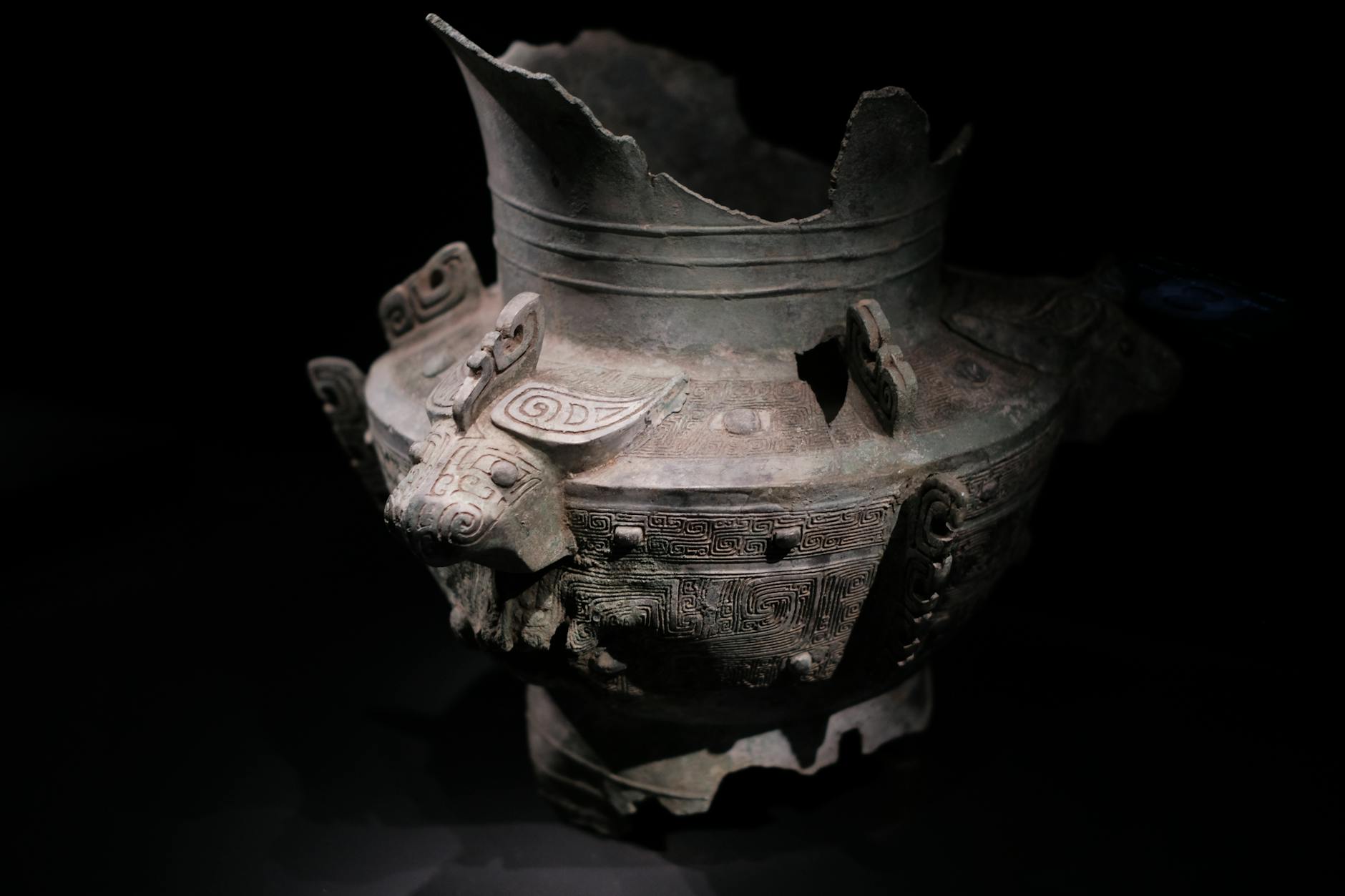
- The Simuwu Ding — a colossal Shang-dynasty bronze ritual cauldron weighing around 830 kg, the largest ancient bronze ever unearthed and a symbol of Bronze Age China.
- The jade burial suit of Liu Sheng — a Han-dynasty prince’s body encased in over 2,000 plaques of jade sewn with gold thread, meant to preserve the body for eternity.
- Along the River During the Qingming Festival — often called “China’s Mona Lisa,” this celebrated handscroll depicts teeming Song-dynasty city life in extraordinary detail (note: the fragile original is shown only periodically; a reproduction or digital version is usually on view).
- The bronze galleries — ranks of ritual vessels, bells and wine containers covered in intricate taotie masks, among the finest collections of ancient bronzes anywhere.
- Tang-dynasty ceramics and tomb figures — the lively glazed horses, camels and court figures of the cosmopolitan Tang.

Start with “Ancient China”
If you do only one thing here, spend your time in the Ancient China permanent exhibition, which occupies the entire basement level (B1). It’s a single, beautifully arranged chronological walk through Chinese history — from prehistoric Yuanmou Man and Neolithic pottery, through the Bronze Age, the first emperor’s unification, the Han, Tang, Song, Yuan, Ming and Qing, right up to the fall of the imperial system in 1912. Walking it in order gives you the whole arc of Chinese civilisation in one continuous narrative, and it makes everything else in Beijing — the palaces, the tombs, the ritual precinct at the Temple of Heaven — click into place.
Many of the top treasures, including the great bronzes and the jade burial suit, sit within these galleries, so you tick off the highlights and the history together. The upper floors host rotating special exhibitions and themed collections (ceramics, ancient money, Buddhist sculpture, modern history), which are worth dipping into if you have time after the basement.
Planning your visit
The museum sits on the east side of Tiananmen Square, with Tiananmen East station (Line 1) the closest metro. Because it shares the square’s security environment, entry involves passport checks and bag screening, so allow a little extra time. The full network is in our primer on the city’s metro.
Plan around two to three hours for the highlights and the Ancient China galleries; serious history buffs could spend the whole day. There are cafés and a shop inside, and you can’t bring large bags or liquids through security. The obvious pairing is with the great public square right outside the door and the palace compound just to the north — a single, well-booked day can take in all three, though you’ll need separate reservations for each. The museum is the ideal “why” behind the “what” you see at those sites; for the wider context, see our tour of the sites that tell the city’s story.
Visitor tips
- Book exactly 7 days ahead at 5:00pm Beijing time — free slots go fast.
- Bring the exact passport you booked with; it’s checked at the door.
- Head straight to B1 (Ancient China) for the highlights and the historical narrative.
- Rent the audio guide or use the official app — labelling is bilingual but brief.
- Don’t try to see everything; pick the basement plus one or two special exhibitions.
- Avoid Mondays (closed) and combine with Tiananmen Square next door.
- Go on a hot or rainy day — it’s a perfect indoor escape from Beijing’s weather extremes.
The building and its history
The museum is a monument in its own right. The vast building on the square’s eastern side dates from 1959, one of the “Ten Great Buildings” raised to mark the tenth anniversary of the People’s Republic, and originally housed two separate institutions — the Museum of the Chinese Revolution and the National Museum of Chinese History. They merged in 2003, and a sweeping reconstruction completed in 2011 turned it into the largest museum building in the world by floor area, nearly 200,000 square metres. The scale is deliberately overwhelming: a soaring central hall, broad galleries, and enough exhibition space that no visitor sees it all. Knowing the building’s own story — a Soviet-influenced monument from the founding decade of modern China, now holding the deep history of the whole civilisation — adds a layer to the visit. It sits on the eastern axis directly opposite the Great Hall of the People, the two framing Tiananmen Square in perfect symmetry.
The upper floors and special exhibitions
If the basement’s Ancient China galleries are the backbone, the upper floors are where you follow your own interests. Permanent and long-running exhibitions cover ancient Chinese bronzes, jade, Buddhist sculpture, classical furniture, ancient coinage and porcelain, each a focused deep-dive for enthusiasts. The museum also hosts some of the most ambitious temporary exhibitions in the country — major loans, themed shows and international collaborations — and these are frequently the highlight of a repeat visit, so it’s always worth checking what’s on for your dates on the official site or mini-program. A “Road to Rejuvenation” exhibition on modern Chinese history occupies a large permanent space too, reflecting the museum’s origins. Because there’s far more here than anyone can absorb in a day, the trick is to choose two or three galleries beyond Ancient China rather than trying to march through everything.
Facilities, food and accessibility
The museum is well equipped for visitors: there are cafés and a restaurant inside, a couple of good gift shops (strong on books and replicas), cloakrooms, and plenty of seating to rest tired legs. Audio guides are available to rent, and the official app offers English content — useful, since the wall labelling, though bilingual, is often brief. The building is fully accessible, with lifts between floors and wheelchairs available to borrow, making it one of the easier major sights for visitors with limited mobility. Remember that large bags and liquids won’t pass the security screening shared with the square, so travel light. With its climate control and sheer scale, the museum is also the perfect refuge on a scorching summer afternoon or a rainy day — a genuinely strategic stop when Beijing’s weather turns extreme.
How to tackle a museum this big
With nearly 200,000 square metres of galleries, the National Museum of China defeats anyone who tries to see it all, so a strategy matters more here than at almost any other sight. My advice is to pick a spine and two branches. The spine is the Ancient China exhibition on level B1 — walk it in chronological order and you get the whole arc of Chinese civilisation, plus most of the headline treasures, in one coherent two-hour journey. The branches are two upper-floor galleries chosen by your own interest: ceramics, ancient bronzes, jade, Buddhist sculpture, ancient coinage, or whatever current special exhibition is on. Resist the urge to power through every hall; museum fatigue is real, and you’ll remember three galleries seen properly far better than thirty skimmed.
A few tactics help. Go early in your time slot to beat the crowds at the most popular galleries, and head to B1 first while you’re fresh. Use the cloakroom to ditch coats and bags so you can move freely. Pace yourself with a break at one of the cafés — the museum is exhausting precisely because it’s so rich. And read ahead: knowing the three or four objects you most want to see (the Simuwu Ding, the jade burial suit, the Tang figures) gives your visit a backbone and ensures you don’t leave having missed the masterpieces. Treat it less like a checklist and more like a guided walk through 5,000 years, and it becomes one of the most rewarding half-days in Beijing.
Finally, think about timing within your trip. Because the museum sits right on Tiananmen Square and is fully indoors and climate-controlled, it’s the ideal anchor for a day that also takes in the square and the Forbidden City — and a perfect refuge when Beijing’s summer heat or winter cold (or a rare rainy day) makes outdoor sightseeing miserable. Booking it for such a day means you always have a world-class, weatherproof option in your back pocket.
A few more treasures to look for
Beyond the headline objects, keep an eye out for some quieter masterpieces as you move through the galleries. The Neolithic painted pottery and the eerie jade and bone artefacts of China’s earliest cultures open the Ancient China exhibition and reward a slow look. The oracle bones — turtle shells and ox scapulae inscribed with the earliest known Chinese writing — are a genuine thrill for anyone interested in language and history. Among the bronzes, look for the intricate wine vessels and bells whose surfaces swarm with the stylised animal-mask taotie motif. From later eras, the Tang tomb figures — plump court ladies, foreign merchants, prancing glazed horses and camels — capture the cosmopolitan confidence of China’s most outward-looking dynasty, while the Song and Ming ceramics trace the road to the perfect porcelain that would conquer the world.
Part of the pleasure of the National Museum is that it rewards repeat visits and changing interests. Because so much rotates and so many special exhibitions pass through, no two visits are quite the same, and the free admission means you can drop in for an hour to see one show without feeling you must do the whole place. For history lovers, it’s the single most enriching stop in the city — the context that makes every palace, tomb and temple you visit elsewhere in Beijing suddenly make sense.
There is a practical reason this museum comes up so often in Beijing itineraries beyond the collection itself: it is four hours of world-class indoor time on Tiananmen Square, free with advance booking, and it is where a great many visitors end up when the morning’s readings rule out the Great Wall. Our guide to reading Beijing’s air and planning around it explains when that swap is worth making and lists the other indoor days that hold up.
The reservation itself lives in a WeChat mini-program, which means WeChat has to be installed, working and trusted before you can book, ideally a week or two before you travel. Setting up WeChat and WeChat Pay as a visitor explains the account checks, the Chinese words you will meet on the booking form, and what to do if the form asks for a Chinese phone number.
The National Museum is the biggest of a long list. Our guide to museums in Beijing sets it beside the Capital Museum, the Palace Museum’s galleries, the Military Museum and the city’s art districts, with what each costs, how each books, and which are worth a half-day.
If the morning slots are gone by the time you look, there are ways round it. The museum booking guide explains how to be ready for the 17:00 release seven days ahead, how cancellations come back into the system, and the mistakes with names and passports that get visitors turned away at the door.
National Museum of China FAQ
Is the National Museum of China free?
Yes, admission is free — but you must make a mandatory advance reservation with your passport. There are no walk-in tickets.
How do I book a ticket?
Through the official WeChat mini-program (search 国家博物馆), entering your passport details. Tickets release 7 days in advance at 5:00pm Beijing time and sell out fast, so book promptly.
How much time do I need?
Two to three hours covers the highlights and the Ancient China galleries. Enthusiasts can easily spend a full day among the special exhibitions on the upper floors.
Which exhibits are worth your time?
The Simuwu Ding bronze cauldron, the jade burial suit of Liu Sheng, the ancient bronze galleries, Tang ceramics, and (when displayed) Along the River During the Qingming Festival — most of them within the Ancient China exhibition on level B1.
Can I visit the museum and Tiananmen Square together?
Yes — the museum is on the square’s east side. They require separate reservations, but doing both (plus the Forbidden City) in one well-planned day is very common.
Is it good for kids?
The bronzes, jade suit and Tang tomb figures appeal to many children, and it’s a great indoor option in bad weather. Keep visits focused and short for younger ones — see our guide to Beijing for families.
The bottom line on the National Museum of China
The National Museum of China is the best free attraction in Beijing and the key that unlocks everything else you’ll see in the city — provided you book ahead. Reserve your free slot exactly seven days out at 5:00pm, bring the passport you booked with, and head straight for the Ancient China galleries on level B1, where the great bronzes, the jade burial suit and 5,000 years of history are laid out in one continuous walk. Pair it with Tiananmen Square at the door and the Forbidden City to the north for a day that connects the objects to the places they came from.
Step outside to Tiananmen Square, continue to the Forbidden City, and for the imperial art that complements the museum’s collection, see our guide to the Palace Museum treasures. For the full overview, our pillar on Beijing’s historical attractions ties it together, and new visitors should start with our orientation guide to the city.