Beijing Museums & Galleries
Beijing Museums and Galleries: Complete Visitor Guide
Most of Beijing's museums are free and almost none let you walk in. Which deserve a half-day, how passport booking works, what costs money, which have good English, and the best for children.

At five o’clock every afternoon, thousands of phones across Beijing refresh the same booking page at the same moment. That is when the National Museum of China releases its free tickets for the day a week ahead, and on a busy week the popular dates are gone within minutes. It is a useful introduction to how museums in Beijing work: most of them are free, almost none of them let you walk in, and the visitors who get the most out of them are the ones who plan a few days ahead and bring the right passport.
This guide is the overview. It covers the big museums and what each is best for, how the free real-name booking system works with a foreign passport, which museums charge and how much, which have good English, the specialist and offbeat collections worth a detour, the art galleries, the best museums for children, and how to build a museum day around a subway line. Prices, opening hours and booking rules were checked in September and October 2026; treat them as the right order of magnitude, since museums adjust their closing days around big exhibitions.
Museums in Beijing at a glance
| Museum | Best for | Cost | Booking | Allow |
|---|---|---|---|---|
| National Museum of China | Ancient China: bronzes, jades, ceramics | Free | Real-name, released 7 days ahead at 17:00 | Half a day |
| Palace Museum galleries | Imperial treasures inside the Forbidden City | Within the ¥60 / ¥40 palace ticket; Treasure Gallery and Clock Gallery +¥10 each | Online only, 7 days ahead | 1–2 hours on top of the palace |
| Capital Museum | Beijing’s own history; porcelain and bronzes | Free | No reservation needed; register with a valid ID | 3 hours |
| Military Museum | Tanks, aircraft and missiles | Free | Real-name, up to 8 days ahead; passports accepted | 2 hours |
| National Natural History Museum | Dinosaurs and the natural world | Free | Through its official account | 2 hours |
| China Science and Technology Museum | Hands-on science for children | ¥30 main hall; ¥20 under-18s and full-time undergraduates; free at 8 and under | WeChat, 7 days ahead, released at 18:00 | Half a day |
| National Art Museum of China | Rotating exhibitions of Chinese art | Free | Real-name booking | 1–2 hours |
| Ancient Observatory | Ming and Qing astronomical instruments on a city tower | Ticketed | Buy via the Beijing Planetarium WeChat account | A short visit |
| 798 Art District | Contemporary art in old factory halls | Free to walk; exhibition prices vary by venue and show | Rarely needed | Half a day |
If you only have time for one, make it the National Museum’s ancient galleries. If you have time for two, add the Capital Museum, which is easier to get into and tells the story of the city you are standing in. Everything after that depends on what you care about, and the rest of this guide is about matching the museum to the person.
Matching the museum to the visitor
Beijing has well over a hundred museums, and the right ones depend far more on what you are interested in than on any ranking. A rough guide:
| If you are interested in… | Go to | Why |
|---|---|---|
| Ancient Chinese art | National Museum of China | The bronzes, jades and ceramics of the Ancient China galleries are the finest overview in the country |
| Imperial life | Palace Museum galleries | The objects are shown in the palace they were made for |
| Beijing itself | Capital Museum | The city’s history and customs, with superb porcelain and bronze galleries |
| Modern China and the military | Military Museum; the War of Resistance museum at Wanping | How the state tells its own story, with the hardware to match |
| Science, with children | China Science and Technology Museum; National Natural History Museum | Hands-on halls and dinosaurs |
| Contemporary art | 798 and Caochangdi; the National Art Museum | The centre of the Chinese art world, from the experimental to the official |
| Astronomy, science history, oddities | The Ancient Observatory | Bronze instruments on a Ming city tower, in 45 minutes |
| Old Beijing streets and buildings | The museums around Qianmen and the old Legation Quarter | Small collections in historic buildings, close to Tiananmen |
How booking works: free, but check the entry policy
China made its state museums free in the late 2000s, and the trade-off since then has been control of numbers. Nearly every major museum in Beijing now runs real-name reservation: you book a free ticket for a specific day, often a specific time slot, with an identity document, and you show that same document at the door. For foreign visitors the document is your passport. At the National Museum and the other heavily booked museums, walk-ins are refused however empty the hall looks. The Capital Museum is an exception: it has offered reservation-free visits since 20 December 2025, and you register at the north entrance with a valid identity document.
The mechanics vary by museum, but the pattern is consistent:
- Booking is through WeChat. Most museums sell or allocate tickets through an official WeChat account or mini-program, a few through their own websites. Set up WeChat before you travel; the apps guide covers which ones to install.
- Tickets are released on a rolling window. The National Museum releases each day’s tickets seven days ahead at 17:00 Beijing time; the Military Museum lets you book up to eight days ahead; the China Science and Technology Museum releases seven days ahead at 18:00. Popular museums go quickly at weekends and in the school holidays, so book the moment the window opens.
- Bring the exact passport you booked with. Not a photocopy, not a photo on your phone. The National Museum in particular checks the physical passport against the booking.
- Most museums close one day a week, usually Monday. Exceptions happen: in 2026 the Capital Museum switched its closing day to Tuesday from 18 May to 18 October while a major exhibition was on. Public holidays generally override the closing day.
- Last entry is usually an hour before closing. Security checks can take a while at weekends, so arrive early in your slot.
Be wary of anyone selling “reservations” for free museums. Third-party booking services exist, some legitimate and some not, and they charge for something that costs nothing. The only time paying a service makes sense is when you cannot get the official mini-program to work and the date matters; even then, a hotel concierge can usually do it for you for free.
If you cannot get a ticket
It happens, especially for the National Museum on a summer weekend. Before you give up, try these in order. First, check again the evening before and on the morning itself: bookings are cancelled all the time and the slots go back into the system. Second, look at a different day; a Tuesday or Wednesday is far easier than a Saturday. Third, switch museums. The Capital Museum is the natural substitute for the National Museum, with comparable bronze and porcelain galleries and a fraction of the competition for tickets, and for families the Natural History Museum and the Science and Technology Museum are rarely as tight as the big national museum. Finally, ask your hotel: many front desks will make the booking in the mini-program for you, which removes the language problem if not the shortage.
When to go
The museums are at their busiest on weekends, in the Chinese school summer holidays from early July to the end of August, in the winter holiday around Spring Festival, and above all during the Golden Weeks at the start of May and October, when the National Museum and the Palace Museum are booked out days ahead. The quietest times are weekday mornings from Tuesday to Thursday, outside the holidays, in the first hour after opening.
Within the day, the pattern is the same everywhere: a queue at security when the doors open, a lull while the first wave disperses into the galleries, a peak from late morning to mid-afternoon when the tour groups arrive, and a quieter last hour or two. If you cannot be there at opening, the late afternoon is the next best time, but watch the last-entry time, which is usually an hour before closing. In 2026 the Capital Museum stayed open until 20:00, with only the ground floor and the basement open after 17:00, which made it a good evening option in summer.
The big three
National Museum of China
On the east side of Tiananmen Square, the National Museum is one of the largest museums in the world by floor area, and it can feel like it. The reason most foreign visitors come is the Ancient China exhibition, a long chronological walk from Neolithic painted pottery through Shang and Zhou bronzes, Han jades and tomb figures, Tang glazed ceramics and on to the Ming and Qing. Its centrepiece is the Houmuwu ding, a Shang dynasty ritual cauldron weighing over 830 kilograms, the heaviest ancient bronze vessel ever found. Allow at least two hours for that gallery alone.
The museum’s other permanent exhibition, The Road to Rejuvenation, tells China’s modern history from the Opium Wars to the present in the government’s own terms. It is interesting as a document of how the state presents itself, but it is not what most visitors come for, and on a tight schedule you can skip it. Temporary exhibitions vary from superb to propagandistic; check what is on. The National Museum guide covers the galleries floor by floor and the booking in detail, and the museum pairs naturally with a visit to Tiananmen Square, which needs its own reservation.
The Palace Museum’s galleries
The Forbidden City is itself a museum, officially the Palace Museum, and inside it are galleries that many visitors walk straight past on their way north along the central axis. The Treasure Gallery and the Clock Gallery each cost ¥10 on top of the palace ticket, and both are worth it: the clocks in particular, a collection of mechanical marvels made in Europe and in the palace workshops for the Qing emperors, are the surprise hit of many visits. Other halls host rotating exhibitions of ceramics, painting and calligraphy from what is one of the greatest collections of Chinese art anywhere. The Palace Museum treasures guide explains which galleries to prioritise, and the Forbidden City guide covers the palace itself.
Capital Museum
West along Chang’an Avenue, near Muxidi station on Line 1, the Capital Museum is Beijing’s own museum, and for many visitors it is the better museum experience: calmer, easier to book, and about the city rather than the nation. Its history galleries tell the story of Beijing from the earliest settlements to the last emperors, with a lively gallery on old Beijing customs, and the art galleries of bronzes, porcelain, jade, Buddhist sculpture and painting are excellent. The building is striking too, a great bronze-clad cylinder tilting out of a glass box. Since late 2023 the museum has had a second site, the Beijing Grand Canal Museum in Tongzhou, in the city’s eastern sub-centre, devoted to the canal that fed the capital for centuries.
Specialist and offbeat museums
Military Museum
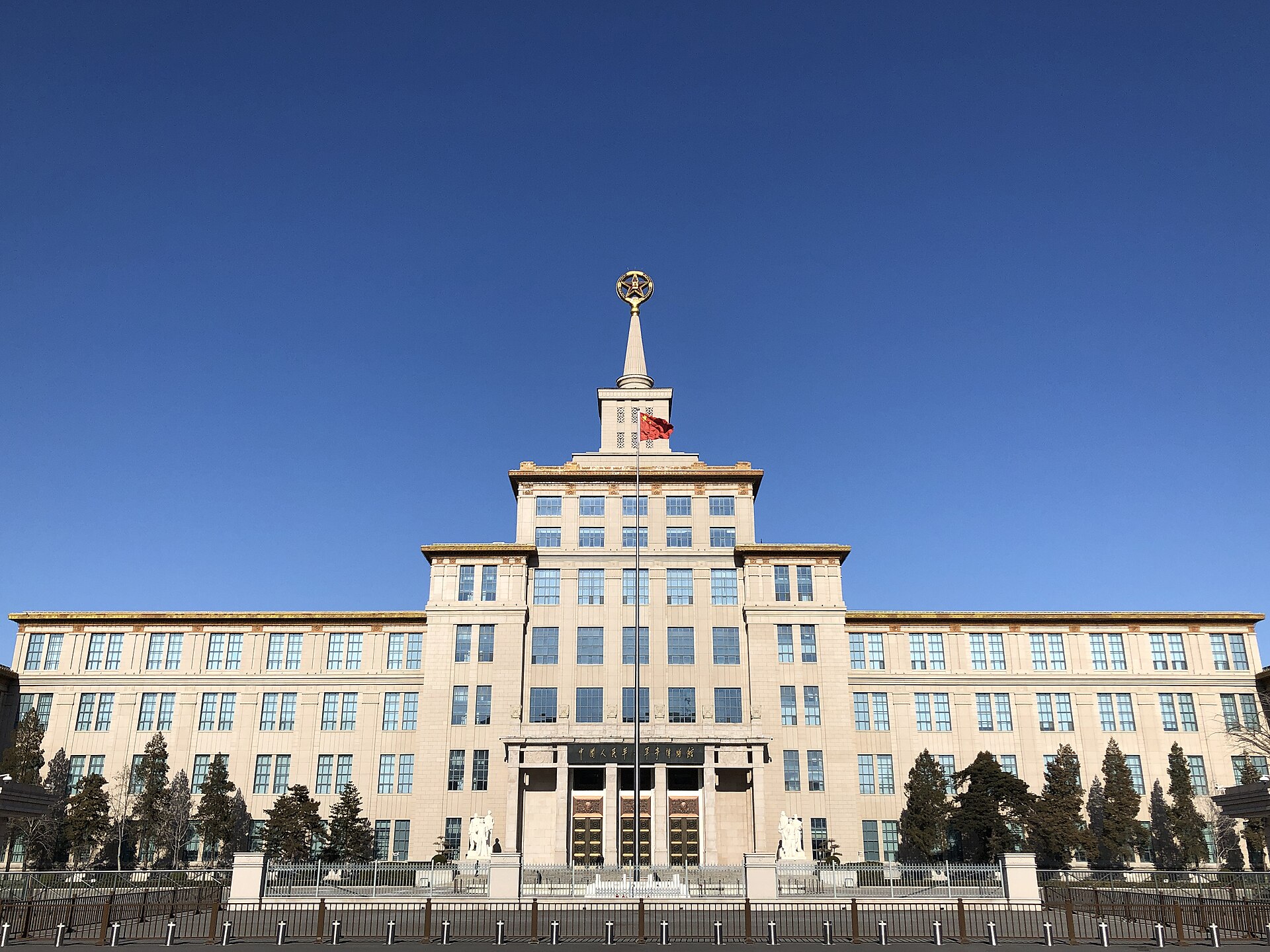
The Military Museum of the Chinese People’s Revolution, at the Military Museum station on Lines 1 and 9, is a monumental 1950s building topped with a gilded star, and inside its great halls are rows of tanks, artillery, fighter jets and missiles, from the revolutionary wars to the present. Entry is free with a real-name booking through the museum’s WeChat account or mini-program, which accepts passports and opens up to eight days ahead. The hardware is the draw, and it is impressive; the narrative is the People’s Liberation Army’s own, so read it as such. It is one stop west of the Capital Museum, which makes the two an easy pair.
The Ancient Observatory
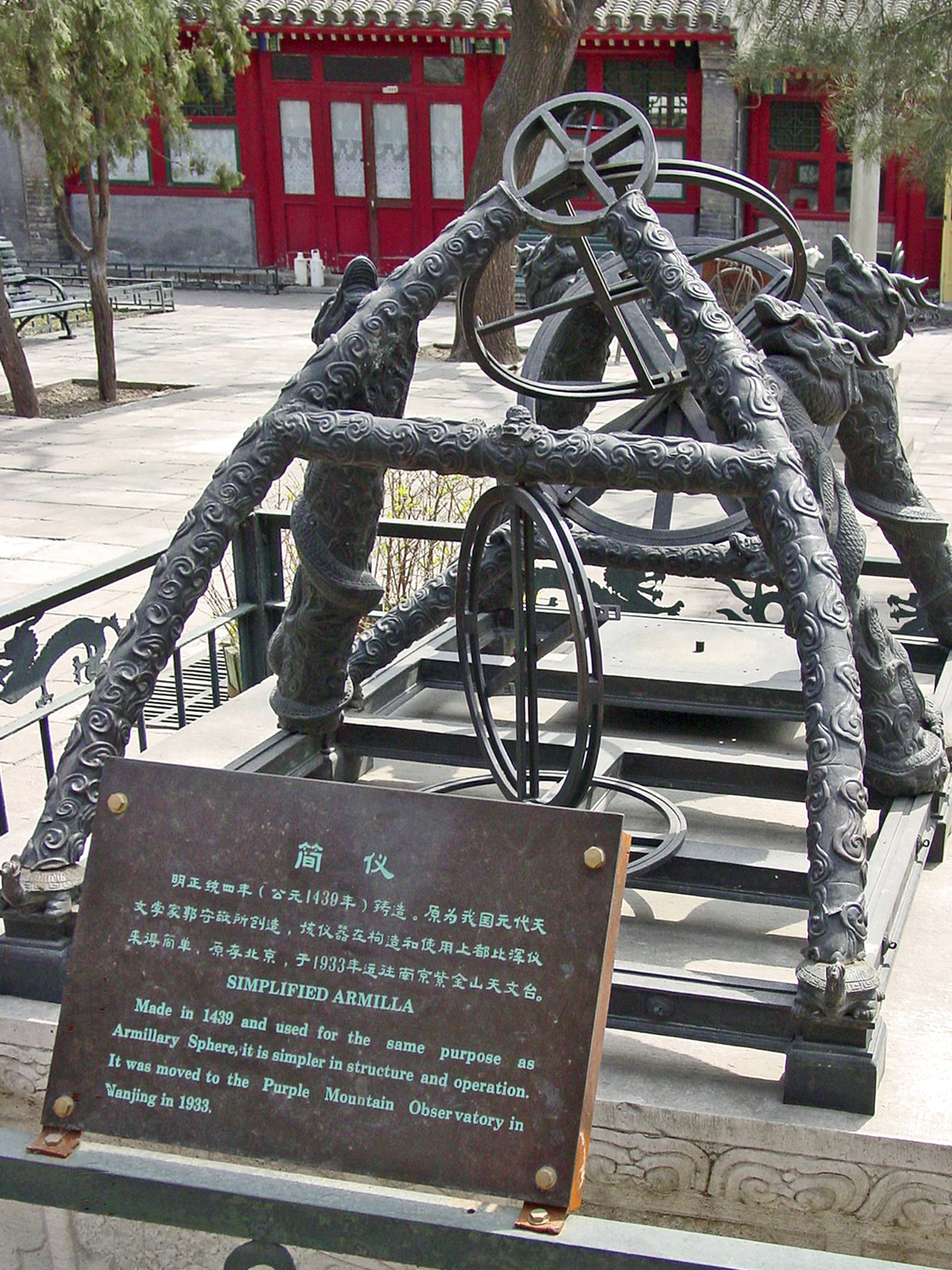
On a surviving watchtower of the Ming city wall at Jianguomen, by the station of the same name on Lines 1 and 2, the Ancient Observatory is one of the most unexpected sights in Beijing. Astronomers have watched the sky from this platform since the fifteenth century, and the great bronze instruments on its roof, armillary spheres and celestial globes on writhing dragon supports, were cast in the seventeenth and eighteenth centuries, several of them under the direction of the Flemish Jesuit Ferdinand Verbiest. Some were carried off by French and German troops in 1900; the French returned theirs within two years, the Germans only after the First World War. The courtyard below has replicas of earlier instruments whose originals are now in Nanjing. It makes an easy stop on a day in the east of the city, and tickets are bought through the Beijing Planetarium’s WeChat account.
National Natural History Museum
Just west of the Temple of Heaven, on Tianqiao South Street, the museum formerly known as the Beijing Museum of Natural History has been renamed the National Natural History Museum. Its dinosaur hall is the main event for children, and the rest covers evolution, animals and plants in a building that shows its age in places. Entry is free with a booking through the museum’s official account; it opens 09:00–17:00, with last entry at 16:30, and closes on Mondays except on public holidays. It combines neatly with a morning at the Temple of Heaven.
China Science and Technology Museum
North of the Olympic Green, the China Science and Technology Museum is a huge hands-on science centre, and one of the best rainy-day options in the city for families. The main hall costs ¥30, or ¥20 for under-18s and full-time undergraduates, and children aged eight and under, or 1.3 metres and under, go free; the dome cinema and some special zones charge extra. Book through the official WeChat account, where tickets open seven days ahead at 18:00. The main hall is open 09:30–17:00 and closed on Mondays. Adults without children can safely skip it. It fits well with an afternoon at the Olympic Park.
Around Qianmen and the old Legation Quarter
Some of the city’s most enjoyable small museums sit within a few minutes’ walk of Tiananmen Square, in buildings that are as interesting as the collections. The China Railway Museum has an exhibition hall in the old Qianmen railway station, built in the first years of the twentieth century just east of the Zhengyangmen arrow tower, with a second, much larger hall of locomotives out in the eastern suburbs. In the old Legation Quarter on Dongjiaominxiang, where the foreign embassies stood before 1949, the Beijing Police Museum occupies a former foreign bank building, and on the other side of the square, on Xijiaominxiang, the China Numismatic Museum tells the story of Chinese money in buildings that once housed the Commercial Guarantee Bank of China and the Central Bank of China’s Peking branch. Further south, the Beijing Ancient Architecture Museum fills the halls of the Temple of Agriculture, where the emperors once ploughed a ceremonial furrow each spring, with models and fragments of the city’s traditional buildings. All are small, inexpensive or free, and worth an hour; opening days and booking rules vary, so check each before you go.
Collections with a story
- Poly Art Museum. A small private museum run by the Poly Group, known for ancient bronzes and for four of the twelve bronze zodiac heads looted from the Old Summer Palace in 1860. Check opening days and booking before you go.
- Beijing Stone Carving Art Museum. Housed in the Five Pagoda Temple, a Ming temple north of the zoo built around an Indian-style pagoda platform. Quiet and rarely visited; the Beijing Zoo guide covers how to combine the two.
- The Beijing Grand Canal Museum. The Capital Museum’s eastern branch in Tongzhou, a long trip from the centre but a fine modern museum on the Grand Canal.
- The Museum of the War of Chinese People’s Resistance Against Japanese Aggression. At Wanping, by the Marco Polo Bridge in the south-west, where the full-scale war with Japan began in 1937. Sobering, nationalistic and important to understand how China remembers the war.
- Former residences. The writer Lu Xun’s house, the painter Xu Beihong’s memorial hall and the courtyard home of the opera star Mei Lanfang near Shichahai are small, personal museums. Mei Lanfang’s house is a good companion to an evening at the opera; the Peking opera guide explains why he matters.
- Temples run as museums. The Confucius Temple and Imperial Academy operate as a museum complex, with stone tablets naming the graduates of the imperial examinations, and they sit across the road from the Lama Temple.
Further afield
A few museums are worth the journey out of the city for the right visitor. The Zhoukoudian Peking Man Site, about 50 kilometres south-west in Fangshan District, is a UNESCO World Heritage Site: the limestone caves where the fossils of Peking Man were excavated in the 1920s and 1930s, with a museum beside them. The original fossils famously vanished in 1941, while being packed for safekeeping during the war with Japan, and have never been found; what you see are casts, the caves and the story. It is a half-day trip for people with a real interest in human origins, and not one to squeeze in. In the northern suburbs, the China Aviation Museum at Datangshan keeps a large part of its collection in a hangar cut into a hillside, with rows of aircraft outside; aviation enthusiasts rate it highly. And if you are visiting the Ming Tombs, the exhibition halls at Dingling show what came out of the only tomb that has been excavated. Check opening days and booking for all three before you set out, since they are a long way to go to find a locked gate.
Art galleries
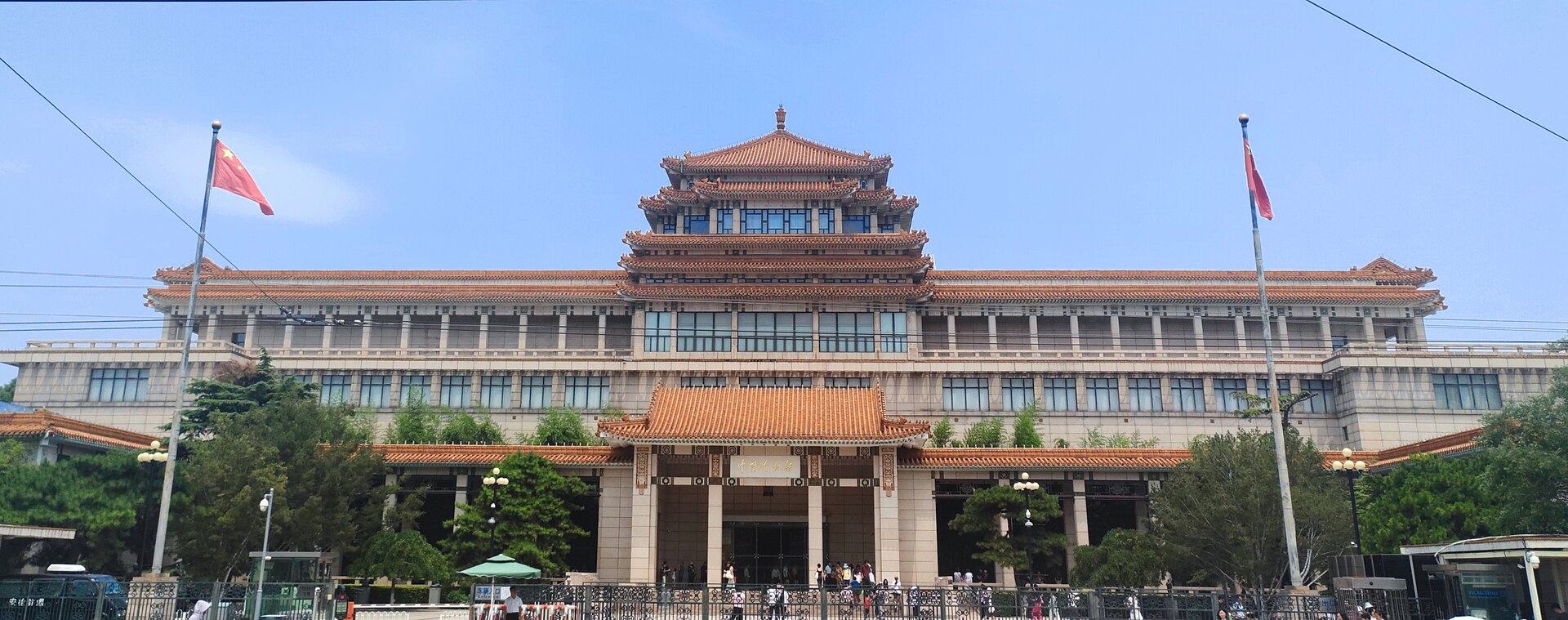
Beijing is the centre of the Chinese art world, and its galleries range from the national to the experimental. The National Art Museum of China, on Wusi Street by the National Art Museum station on Line 8, is a 1960s building with glazed-tile roofs that hosts changing exhibitions of Chinese painting, calligraphy, sculpture and photography, often very good and occasionally official in tone. Entry is free with a booking. Its location, a short walk from the north-east corner of the Forbidden City and from the hutongs around Dongsi, makes it easy to drop into.
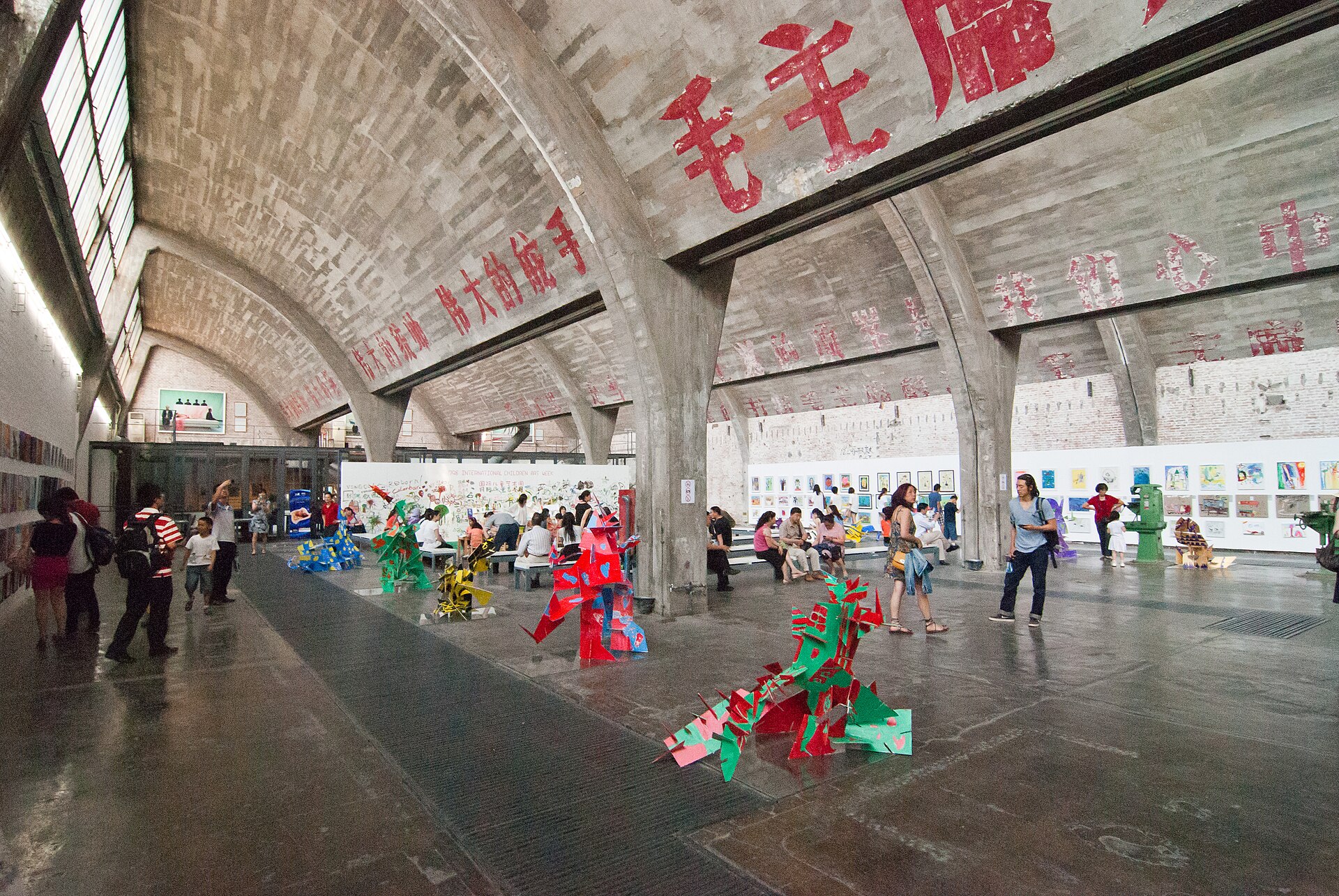
For contemporary art, the place to start is the 798 Art District in the north-east, a former military electronics complex built with East German help in the 1950s and now full of galleries, studios and cafés in its old factory halls. It is free to wander, though exhibitions at the bigger spaces are ticketed and prices vary by venue and show. The anchor institution is the UCCA Center for Contemporary Art, whose exhibitions are among the most ambitious in the country, and the 798 Art District guide covers the galleries worth paying for. Beyond 798, the gallery village of Caochangdi lies a short taxi ride further out, and the artists’ village of Songzhuang, in Tongzhou, is a long trip for the committed.
Gallery shows change constantly, and the best way to know what is on is to check the gallery’s own WeChat account in the week you are travelling. Opening days vary from gallery to gallery, so check before you set out.
Which museums have good English?
This makes more difference to a visit than most guides admit. As a rule, the big national and city museums label their permanent galleries in both Chinese and English, and the labels are generally competent: the National Museum’s ancient galleries, the Capital Museum and the Palace Museum’s main galleries are all perfectly manageable for an English speaker. Temporary exhibitions are more variable, and small, specialist and district museums often have little or no English at all.
Where the English runs out, a translation app with a camera function fills most of the gap; point it at a label and it will do a serviceable job. Audio guides are available at the bigger museums, sometimes in English, for a fee and a deposit. And for the National Museum’s ancient galleries in particular, a little reading before you go pays off, because the labels tell you what an object is far better than they tell you why it matters.
Museums for children
Beijing’s museums can be hard going for children, with long galleries of bronzes behind glass and crowds at every case, but a few are made for them. The China Science and Technology Museum is the best, with a children’s science area and enough buttons to press for a whole morning. The National Natural History Museum’s dinosaurs are a reliable success. The Military Museum’s halls of tanks and jets go down well with a certain kind of child of any age. And the Palace Museum’s Clock Gallery can hold the attention of children who have long since given up on the palace, especially if one of the clock demonstrations is on.
Book everything ahead, because the family-friendly museums are exactly the ones that sell out in the school holidays, and remember that children need their own passports for real-name booking. The Beijing with kids guide covers the rest of a family trip.
Planning a museum day
Line 1 is Beijing’s museum line. It runs under Chang’an Avenue past the National Museum (Tiananmen East), the Capital Museum (Muxidi) and the Military Museum (one stop further west), and a good museum day simply follows it: the National Museum’s ancient galleries from opening, lunch, then west for the Capital Museum in the afternoon, with the Military Museum as an option if you still have the energy. That is a lot of museum for one day, and most people will be happier choosing two of the three.
Museums are also the obvious plan for the days that do not go to plan. A hot July afternoon, a cold, windy January day, or a rare day when the air quality is poor are all good reasons to spend the day indoors, and the more of your museum bookings you have made in advance, the easier it is to switch. A good habit on a Beijing trip is to hold a free museum booking for most days of your visit; it costs nothing and gives you a fallback.
Some natural pairings:
- Tiananmen Square and the National Museum, both on the square and both needing real-name bookings.
- The Temple of Heaven and the National Natural History Museum, a few minutes apart on the west side of the park.
- The Forbidden City and the National Art Museum, linked by a walk past the palace moat and Jingshan.
- The Olympic Park and the Science and Technology Museum, for families.
- Beijing Zoo and the Five Pagoda Temple, then the boat to the Summer Palace.
- 798 and Caochangdi, for a full day of contemporary art.
Is the Beijing Museum Pass worth it?
The city sells an annual Beijing Museum Pass, which for 2026 costs ¥120 and covers 140 museums and sites in six categories, from history and technology to art, former residences and scenic areas, with free or discounted entry at each. It is good value for residents and long-stay visitors who will use it repeatedly. For a short trip it rarely pays back, because the museums most visitors want to see are free already, and the pass does not replace the real-name bookings at the big ones.
Rules and practical tips
- Security at the big museums is airport-style: bags through an X-ray, sometimes a body scan. Lighters, knives and large bags may be refused, and liquids are sometimes checked. Pack light.
- Photography without flash is allowed in most permanent galleries. Some temporary exhibitions ban it entirely; look for the signs.
- Lockers and cloakrooms exist at the big museums but fill up at weekends.
- Arrive early. Galleries are quietest in the first hour, and the security queue is shortest.
- Eat before or after. Museum cafés are improving but are rarely the best food nearby.
- Check closing days the week you travel. Mondays are the norm, but big exhibitions and holidays move them.
- Getting around: almost all the museums in this guide are near a subway station; the Beijing subway guide covers paying at the gates with a foreign card.
The honest verdict
Beijing’s museums are better than their reputation among foreign visitors, who tend to spend all their time on palaces and the Wall and leave the city without having seen its greatest collections. The National Museum’s ancient galleries alone are worth a morning of any trip, and the Capital Museum is the best single introduction to Beijing as a city.
The weaknesses are real, though. Booking is a chore, the big museums are crowded at weekends, and some galleries present history in a way that is more about the present than the past. The answer is to be selective: book two or three museums that match your interests, go early in the day, and skip the rest without guilt. There will always be another hall of bronzes.
For how the museums fit alongside the palaces, temples and tombs, the guide to Beijing’s historical attractions is the place to start.
Of the big three, the Capital Museum is the one most visitors skip and most regret skipping. Our Capital Museum guide covers the passport booking, the history, folk customs, porcelain and bronze galleries, and how its eastern branch on the Grand Canal fits in.
The booking itself is where most first-time visitors come unstuck. Our step-by-step guide to booking Beijing’s museums walks through the National Museum’s mini-program with a passport, the Chinese words on the forms, the release times for each museum, and what changed when the rules loosened in 2026.
Frequently asked questions
Are museums in Beijing free?
Most of the major state museums are free, including the National Museum of China, the Capital Museum, the Military Museum, the National Natural History Museum and the National Art Museum of China. The Palace Museum charges as part of the Forbidden City ticket, the China Science and Technology Museum charges ¥30 for its main hall, and smaller and private museums usually charge a modest fee.
Do I need to book museums in Beijing in advance?
Usually. The National Museum and the other popular museums run real-name reservation and refuse walk-ins, even though entry is free. The Capital Museum has offered reservation-free visits since 20 December 2025: bring a valid identity document and register at the north entrance. Elsewhere, passport holders should still book wherever booking exists. Tickets are released on a rolling window, typically seven or eight days ahead, and popular dates go quickly at weekends and in the school holidays.
Can foreigners book Beijing museums with a passport?
Yes. The booking systems accept passports as the identity document, though most run through Chinese-language WeChat accounts or mini-programs. Bring the same physical passport you booked with; photocopies and phone photos are not accepted.
Which is the best museum in Beijing?
The National Museum of China, for its Ancient China galleries, is the one to see if you see only one. The Capital Museum is the best for understanding Beijing itself, and it is easier to visit.
Are Beijing museums closed on Mondays?
Most are, though public holidays usually override the closing day, and some museums move it during big exhibitions; in 2026 the Capital Museum closed on Tuesdays instead from mid-May to mid-October. Check the week you travel.
Which Beijing museums are best for children?
The China Science and Technology Museum, the National Natural History Museum for its dinosaurs, and the Military Museum for its tanks and aircraft. The Palace Museum’s Clock Gallery is a good choice inside the Forbidden City.
Is the Beijing Museum Pass worth it?
For residents and long stays, yes: the 2026 pass costs ¥120 and covers 140 venues. For a short visit, rarely, because the main museums are free and the pass does not replace their real-name bookings.
Do Beijing museums have English labels?
The big national and city museums label their permanent galleries in English, and the labels are generally good. Temporary exhibitions and smaller museums are more variable, so carry a translation app with a camera function.