Beijing Nightlife
Peking Opera: Where to Watch, What to Expect & Complete Guide
Experience the art of Peking Opera. Best theaters, what to expect, understanding the performance, and how to book tickets.
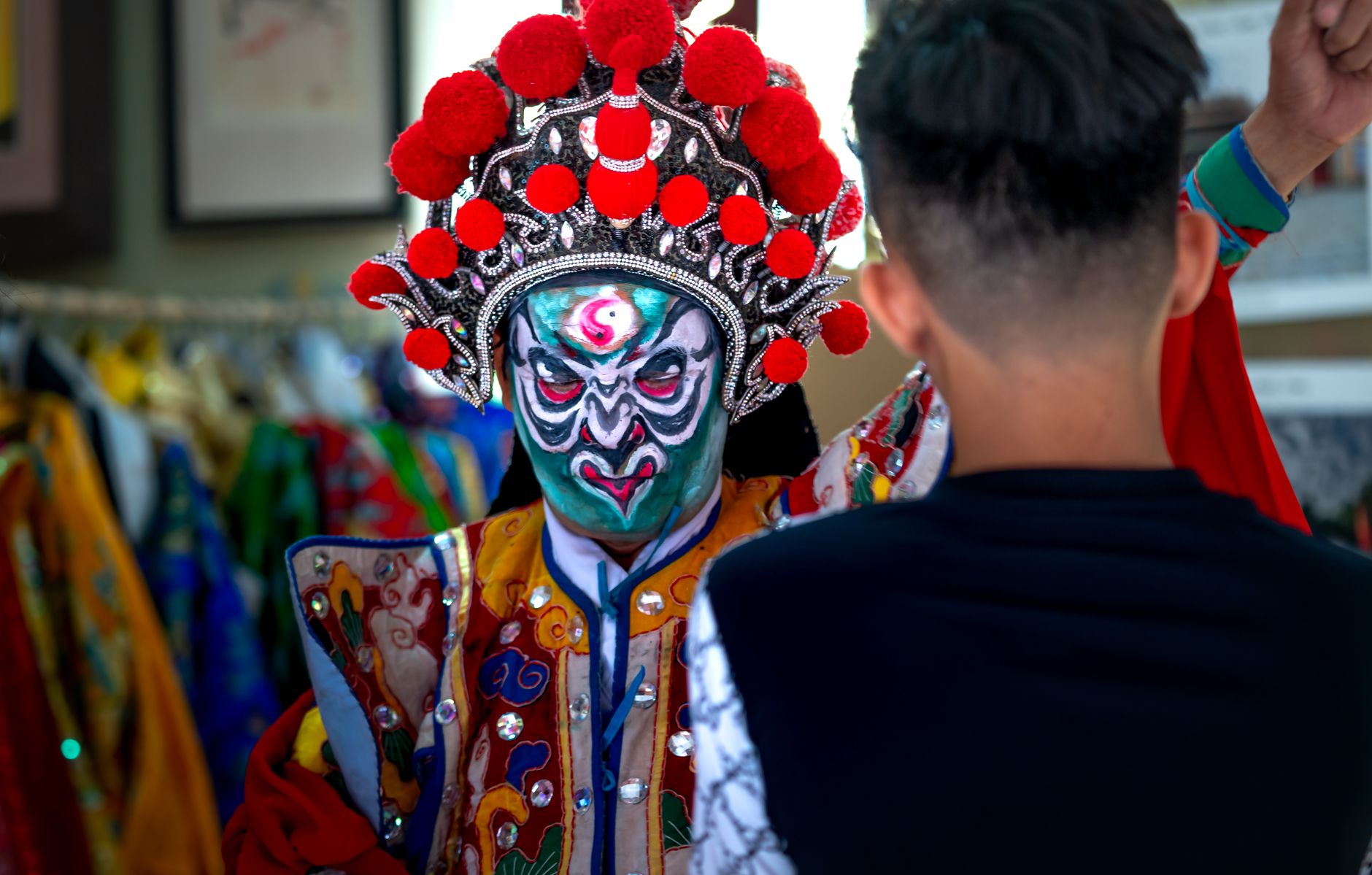
Peking Opera (jīngjù) is China’s most celebrated traditional art form — a dazzling 200-year-old fusion of song, mime, dance, acrobatics, elaborate costumes and symbolic painted faces that’s unlike any Western theatre. Developed for the Qing emperors, it tells classic tales of heroes, generals, scholars and beauties through stylised gestures, soaring (and, to first-timers, startling) vocals, and spectacular martial-arts sequences. Watching a performance in Beijing — the city where it was born — is one of the most rewarding cultural experiences a visitor can have, provided you know what to expect. The best venues for tourists offer English subtitles and accessible 70–90 minute highlight shows; tickets run roughly ¥120–380. This guide covers where to watch (the famous Liyuan Theatre and the historic Huguang Guild Hall), what to expect, how to “read” the performance, and how to book — so you can appreciate this extraordinary art rather than be baffled by it.
Peking Opera can be bewildering if you go in cold — the singing is high and piercing, the conventions unfamiliar — but with a little context it becomes mesmerising. This guide gives you that context: the best beginner-friendly theatres, what the makeup, costumes and gestures actually mean, the practicalities of tickets and timing, and tips to get the most from the show. Approach it with an open and curious mind, and you’ll witness a living masterpiece of world theatre in its true home. Dongcheng’s hotels put you within walking distance of Qianmen’s theatres and hutongs.
Peking Opera at a glance
- What
- China’s classic theatre — song, mime, acrobatics, painted faces and lavish costumes, ~200 years old.
- Best for beginners
- Liyuan Theatre — 70-minute highlight shows with English subtitles, daily.
- Best for atmosphere
- Huguang Guild Hall — a beautifully preserved 1807 theatre.
- Tickets
- roughly ¥120–380; premium seats often include tea and snacks.
- Don’t miss
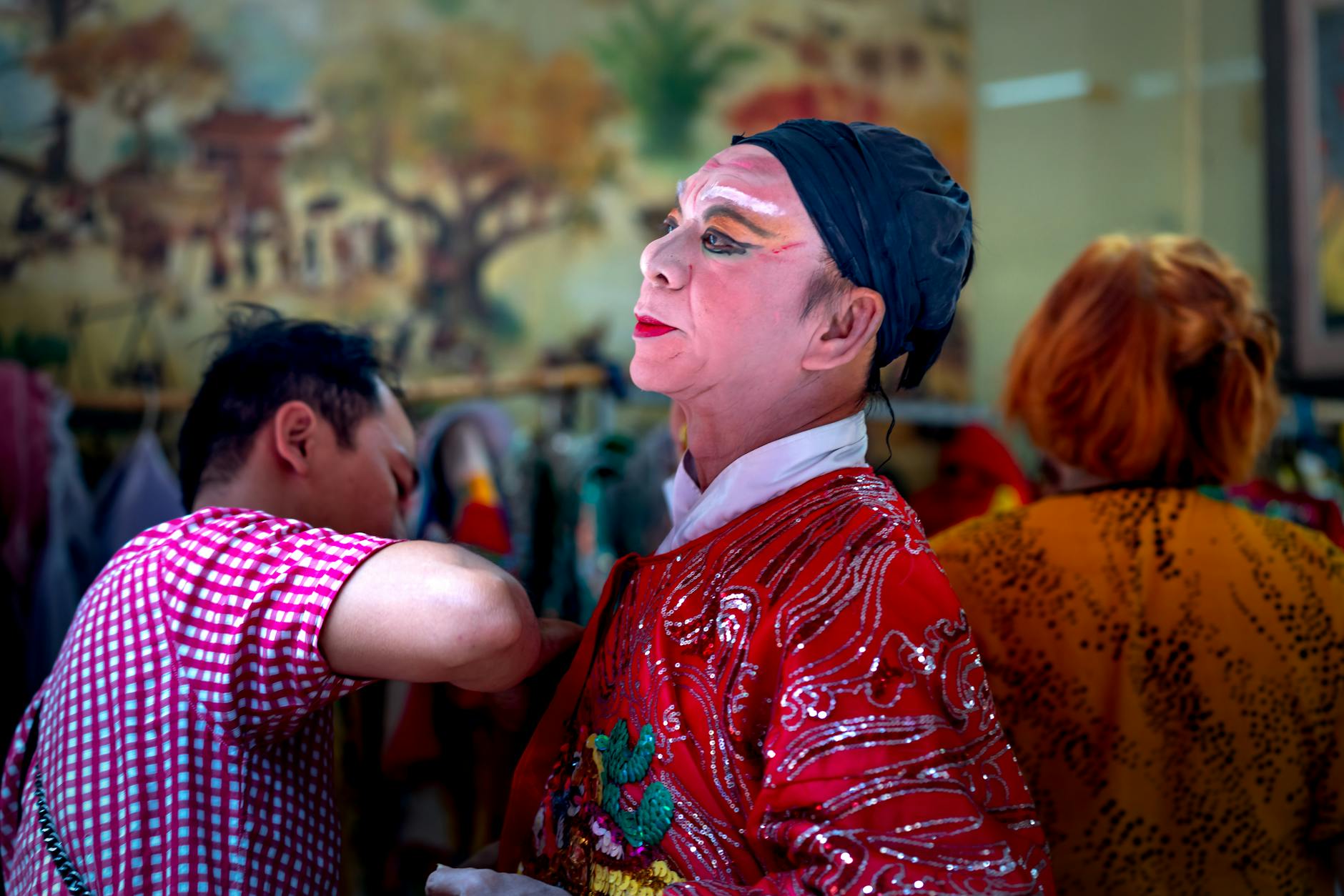
- arriving early to watch the performers apply their face paint (around 7:00–7:30pm at Liyuan).
- Duration
- 70–90 minutes for tourist highlight shows.
- Tip
- book online for discounts; choose a show with English subtitles.
What is Peking Opera?
Peking Opera emerged in the late 18th and early 19th centuries, refined in the imperial court, and became China’s pre-eminent stage art — a total spectacle combining four core skills: song (chàng), speech (niàn), acting/mime (zuò) and martial/acrobatic movement (dǎ). Performances draw on a repertoire of classic stories from Chinese history, legend and literature — tales of loyal generals, cunning strategists, star-crossed lovers and the mischievous Monkey King. What makes it so distinctive is its stylisation: nothing is realistic. A flick of a tasselled whip means riding a horse, a single circuit of the stage means a long journey, and an oar in hand means a whole boat. The staging is minimal, so the storytelling rests entirely on the performers’ codified gestures, the symbolic costumes and makeup, and the music. It demands a lifetime of training — singers, acrobats and actors begin as young children in specialist schools — and a great performer is revered in China much like a star opera singer or ballet principal in the West. Mei Lanfang, the most famous of all, became a national icon. Seeing it in Beijing connects you to a deep seam of Chinese culture; for the wider context, see our pillar Beijing nightlife and entertainment guide.
Where to watch in Beijing
Liyuan Theatre — best for first-timers
The Liyuan Theatre, inside the Qianmen Jianguo Hotel (near Hufangqiao subway station), is the most popular and the most beginner-friendly venue in the city. It has staged traditional Peking Opera daily since 1990, presenting accessible 70-minute highlight shows — excerpts from longer operas chosen to showcase the singing, costumes, acrobatics and drama — with English subtitles on side screens so you can follow the story. Tickets range from around ¥120 (rear seats) to ¥380 (VIP), with higher tiers including Chinese tea and snacks served at traditional tea-table seating. A lovely bonus: arrive early (around 7:00–7:30pm) and you can watch the performers applying their elaborate makeup backstage-style before the 7:30pm show — a fascinating window into the art. It’s the easiest, most reliable introduction. Book online for discounts.
Huguang Guild Hall — best for history
For atmosphere and authenticity, the Huguang Guild Hall is special. Built in 1807, it’s one of Beijing’s historic “Great Theatres” and the only guild hall that retains its original opera-theatre layout — a beautiful traditional space with a small museum that adds rich context. Performances (often Sunday afternoons, around 90 minutes, roughly ¥150–380) feel more authentic and intimate than the tourist circuit, set in a genuine antique courtyard theatre rather than a modern hotel auditorium. If you care about the setting and history as much as the show, this is the choice. Other venues around the city, including the grand Mei Lanfang Grand Theatre and the Chang’an Grand Theatre, stage fuller, full-length productions for those wanting a deeper experience — hailing a car through DiDi is usually easiest, since they’re scattered across different districts.
How to “read” a performance
A little knowledge transforms Peking Opera from baffling to riveting. The key is understanding its symbolic language:
- The painted faces (liǎnpǔ): the colours of a character’s makeup tell you their nature at a glance — red for loyalty and courage, black for integrity and boldness, white for cunning and treachery, blue/green for fierce or rebellious, gold/silver for gods and spirits.
- The role types: characters fall into four main types — sheng (dignified male roles), dan (female roles), jing (the painted-face, larger-than-life characters), and chou (the clown, marked by a white patch on the nose).
- Water sleeves: the long white silk extensions on some costumes are flicked, thrown and swirled to express emotion — anger, grief, grace or confusion.
- The music: melodic “civil” scenes are led by the high-pitched jinghu fiddle; action and battle “martial” scenes are driven by loud, dramatic percussion (gongs, drums and clashing cymbals).
- Stylised movement: every gesture is codified — mimed actions stand in for props and scenery, so watch the hands and feet to follow what’s happening.
Knowing even this much means you’ll grasp who’s the hero and who’s the villain, follow the story through the subtitles, and appreciate the skill on display. The famously high, nasal singing of the female roles is an acquired taste — but it’s central to the art, so lean into it rather than resisting it.
Booking and practical tips
A few pointers for a smooth visit. Book online in advance — it’s cheaper than the door (discounts often available up to a few hours before), and guarantees a seat at the popular Liyuan shows. Choose a venue with English subtitles (Liyuan has them) unless you specifically want a deeper, untranslated experience. Arrive 30+ minutes early, both to collect tickets and, at Liyuan, to catch the makeup demonstration. Consider the tea-table seats at Liyuan for the full traditional experience with tea and snacks. Shows are short (70–90 minutes), so they slot easily into an evening — pair one with a Peking duck dinner nearby, or add a night tour to see the city lit up afterwards. Performances are family-friendly and a good cultural option for all ages, though very young children may find the singing hard going. And go in with the right mindset: this is not Western opera or a slick stage musical — it’s a stylised, symbolic, ancient art, and that’s exactly what makes it remarkable.
A short history of the art
Peking Opera’s origins are usually traced to 1790, when opera troupes from Anhui province travelled to Beijing to perform for the Qianlong Emperor’s 80th birthday. Over the following decades these troupes blended their styles with others — Hubei’s tunes, Kunqu opera’s refinement, regional folk traditions — and, nurtured in the imperial capital, gradually crystallised into the distinct art form of jingju (“capital drama”). It enjoyed enormous popularity through the 19th and early 20th centuries, becoming the mass entertainment of its day, with star performers idolised much as film stars are now. The towering figure is Mei Lanfang (1894–1961), the greatest dan (female-role) performer in history, who refined the art, toured it internationally to acclaim in the 1920s and 30s, and made Peking Opera known around the world; Beijing’s grand modern opera house, the Mei Lanfang Grand Theatre, is named in his honour, and his former residence is preserved as a museum. The art suffered during the Cultural Revolution, when traditional operas were banned in favour of “model” revolutionary works, but it revived afterwards and is now cherished as a national treasure and a piece of intangible cultural heritage. Watching it today, you’re experiencing a tradition that has entertained emperors, commoners and world audiences for over two centuries.
Understanding the four roles
One of the most rewarding things to know before a show is the four role types (hangdang), since every character belongs to one and each has its own style of singing, movement and makeup. The sheng are the dignified male roles — the laosheng (older, bearded men of wisdom and virtue), the xiaosheng (young men), and the wusheng (martial heroes and warriors, who perform the acrobatic combat). The dan are the female roles (all traditionally played by men, as Mei Lanfang famously did), ranging from the graceful, demure qingyi to the vivacious huadan and the sword-wielding martial wudan. The jing are the bold, “painted-face” characters — generals, warriors, gods and demons — with the most elaborate and colourful facial makeup and big, forceful personalities. And the chou is the clown, instantly recognisable by the white patch around the nose and eyes, providing comic relief with witty improvisation and physical comedy. Spotting which role each character is the moment they walk on — by their costume, makeup, gait and voice — is a large part of the pleasure, and it makes the stories far easier to follow.
What an evening at the opera is like
Here’s what to expect on the night, using the popular Liyuan Theatre as the model. You’ll arrive around 7:00pm, half an hour before the show, and if you’re keen you can watch a performer applying the intricate face paint — a meditative, fascinating process that can take an hour for the most elaborate designs. The theatre has traditional tea-table seating at the front (where staff serve Chinese tea and small snacks, much as they would in one of the city’s old tea houses) and regular theatre seats behind. The 7:30pm show runs about 70 minutes and presents several short excerpts rather than one long opera — typically a mix of a graceful singing piece, a comic scene, and a spectacular martial/acrobatic number to finish, giving you the full range of the art in an easily digestible format. Side screens display English subtitles so you can follow each story. The orchestra sits to the side, the staging is deliberately sparse, and the focus rests entirely on the performers and their skill. It’s an intimate, vivid and slightly otherworldly experience — and at 70 minutes, it never outstays its welcome. Afterwards, you’re well placed for a late dinner or a drink at the Houhai lake bars, a short ride north, to round off the evening.
Because the tourist shows are short and early-evening, Peking Opera pairs beautifully with other entertainment for a fuller night — many visitors combine it with dinner and then a stroll or a drink, or see it on a different evening from an acrobatics show or kung fu show to sample the range of Beijing’s classic performances across a trip.
Tips to enjoy it more
- Read a one-line synopsis of the evening’s excerpts beforehand if you can — knowing the basic story frees you to enjoy the spectacle.
- Arrive early for the makeup demonstration at Liyuan; it’s genuinely illuminating and sets up the symbolism.
- Watch the gestures, not just the singing — the mimed actions carry the plot, so following the hands and feet is key.
- Don’t fight the vocals — the high, stylised singing is the heart of the art; accept it as you would an unfamiliar musical scale.
- Pick the martial pieces if you’re nervous about the singing — the acrobatic battle scenes are pure, accessible spectacle.
- Choose tea-table seats for the full traditional experience, or rear seats to save money.
- Photography is usually allowed without flash — check at your venue.
- End the night with karaoke — some visitors follow the opera with a very different performance at a KTV bar.
Go in curious rather than expecting Western-style theatre and you’ll be richly rewarded. Peking Opera is one of those experiences that divides visitors — some find the singing challenging — but almost everyone is captivated by the costumes, the painted faces, the acrobatics and the sheer otherness of it. Even sceptics tend to leave glad they went, having seen something genuinely unique that they couldn’t experience anywhere else on earth — and all the richer for understanding a little of what they were watching.
Peking Opera FAQ
Where is the best place to see Peking Opera in Beijing?
For first-timers, the Liyuan Theatre — daily 70-minute highlight shows with English subtitles, plus a pre-show makeup demonstration. For historic atmosphere, the beautifully preserved 1807 Huguang Guild Hall. Both are well suited to visitors.
How much are Peking Opera tickets?
Roughly ¥120–380 depending on venue and seat. At Liyuan, rear seats start around ¥120 and VIP tea-table seats (with tea and snacks) run to about ¥380. Book online for discounts.
Will I understand it without speaking Chinese?
Yes — beginner-friendly venues like Liyuan show English subtitles, and once you understand the symbolism of the makeup colours, role types and gestures, the stories are easy to follow. A little context goes a long way.
How long is a Peking Opera show?
Tourist highlight shows run about 70–90 minutes — short and accessible. Full traditional productions at venues like the Mei Lanfang Grand Theatre can be longer.
What do the face-paint colours mean?
Red signals loyalty and courage, black integrity and boldness, white cunning and treachery, blue or green a fierce or rebellious nature, and gold or silver gods and spirits. The makeup tells you a character’s personality the moment they appear.
Is Peking Opera worth seeing?
Absolutely, if you come with an open mind. It’s a unique, centuries-old art unlike anything in the West, and seeing it in its home city — with the costumes, acrobatics and symbolism — is a memorable cultural highlight. The piercing singing is an acquired taste, but the spectacle is extraordinary.
The bottom line on Peking Opera
Peking Opera is one of Beijing’s great cultural experiences — a 200-year-old spectacle of song, acrobatics, symbolic painted faces and lavish costume that rewards a little preparation. Book a beginner-friendly show with English subtitles at the Liyuan Theatre (and arrive early for the makeup demonstration), or seek out the historic Huguang Guild Hall for atmosphere. Learn what the face-paint colours and gestures mean, embrace the unfamiliar singing, and you’ll come away having witnessed a living masterpiece of world theatre in the very city that created it.
Pair it with other classic Beijing performances — gravity-defying acrobatics shows and spectacular kung fu shows — and see the full after-dark scene in our Beijing nightlife guide. New to the city? Start with our city-wide guide for first-time visitors.