Beijing Imperial Landmarks & Historical Sites
Palace Museum Art & Treasures: What Not to Miss Inside the Forbidden City
Don't miss these Palace Museum masterpieces. Guide to the most important galleries, seasonal exhibitions, and hidden gems.
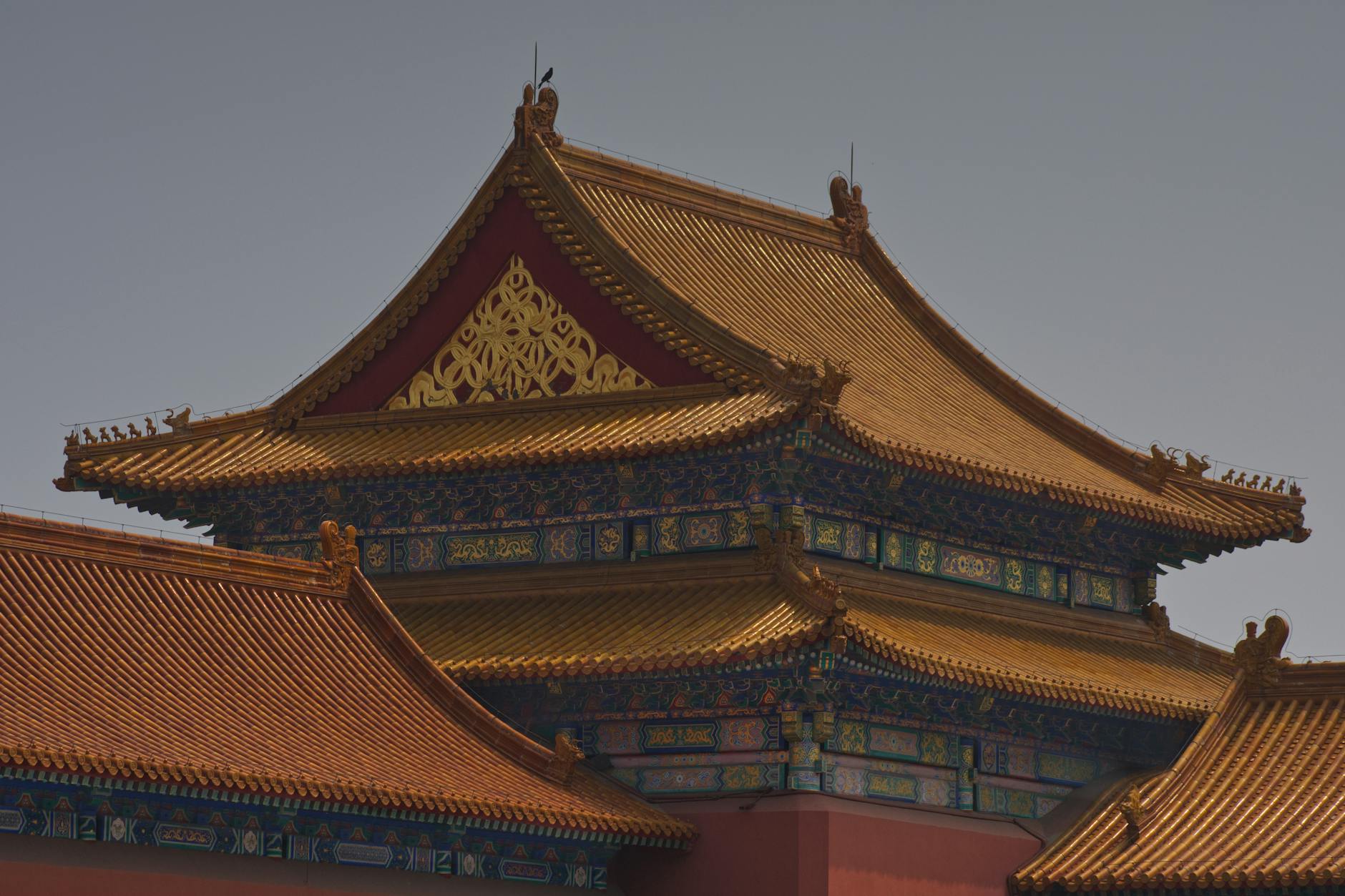
Most visitors walk the central axis of the Forbidden City, photograph the great halls, and leave — never realising that the palace is also one of the world’s greatest art museums, home to more than 1.8 million imperial artefacts. The Palace Museum holds the accumulated treasures of the Ming and Qing courts: jade and gold, jewelled crowns, European clockwork marvels, porcelain, paintings and calligraphy. The very best of it is gathered in two ticketed galleries in the quieter eastern palaces — the Treasure Gallery and the Gallery of Clocks — each just ¥10 on top of your main admission. Add them when you book, and you turn a sightseeing visit into something far richer.
This guide is the companion to our complete Forbidden City guide: where that one handles tickets, routes and logistics, this one tells you what to actually look at once you’re inside — the galleries worth your ¥10, the individual masterpieces, the seasonal exhibitions, and the quieter corners most visitors miss. If you have any love for art and craftsmanship, the eastern palaces are where the Forbidden City rewards you most. For imperial history on a bigger canvas, the tomb complex the Ming built for themselves — 50km north and home to 13 Ming emperors in a mountain valley — makes a superb full-day trip, especially combined with the Great Wall.
Palace Museum treasures at a glance
- Treasure Gallery
- ¥10 add-on, in the Palace of Tranquil Longevity (northeast). Jade, gold, jewellery and the Nine-Dragon Screen.
- Gallery of Clocks
- ¥10 add-on, south of the Hall for Ancestral Worship. 82 elaborate 18th–19th-century timepieces.
- Book the galleries with your main ticket
- — far easier than adding them on the day.
- Also worth seeing
- the Ceramics Gallery, the Hall of Paintings, and the Qianlong Garden (when open).
- Where
- mostly the quieter eastern palaces — a welcome escape from the crowded central axis.
- Time needed
- add 1–1.5 hours to your Forbidden City visit for both galleries.
- Best for
- art lovers, anyone wanting depth beyond the architecture, and crowd-avoiders.
The Treasure Gallery
The Treasure Gallery has been one of the Palace Museum’s flagship exhibitions since 1958, and it’s the one I’d choose if you only have time for a single add-on. Housed in the Palace of Tranquil Longevity — the luxurious complex the Qianlong Emperor built for his own retirement in the northeast corner — it spreads across six halls filled with the most precious objects of the imperial collection. Everything here is made of jade, jadeite, gold, silver, pearls and precious stones: ceremonial seals, jewelled headdresses and phoenix crowns, gold Buddhist stupas, ruyi sceptres, and carved jade so fine it seems impossible.
The single most celebrated piece is the “Da Yu Controls the Waters” jade mountain — an enormous boulder of jade, over five tonnes, carved into a mountain landscape depicting the legendary emperor Yu taming a flood. It’s the largest jade carving in China and a staggering feat of craftsmanship. Buying into the Treasure Gallery also gives you access to the gorgeous glazed Nine-Dragon Screen at its entrance and the intimate Qianlong Garden beyond — among the loveliest and least-visited corners of the entire palace.
The Gallery of Clocks
The Gallery of Clocks is the surprise favourite — even visitors who think they don’t care about timepieces come out delighted. Located south of the Hall for Ancestral Worship, it displays 82 elaborate clocks from the imperial collection: 61 made in Europe (chiefly 18th-century England) and 21 in China, often imitating the European style. These aren’t ordinary clocks. They’re mechanical marvels — gilt-bronze towers and pavilions studded with paste jewels, automaton figures that move, birds that flap, water that appears to flow, flowers that bloom on the hour. The Qing emperors, especially Qianlong, were passionate collectors of these “sing-song” clocks, gifts and purchases that flowed in through the Canton trade.

If you can, time your visit to one of the daily winding demonstrations, when staff set selected clocks in motion and the automata perform — it’s genuinely magical and the best moment in the gallery, one that tends to delight children as much as adults — see our guide to keeping children entertained in Beijing for more family-friendly picks. Twenty of the pieces now on display were brought out of storage only recently, so there’s more to see than ever.

Beyond the two galleries
The Treasure and Clock galleries are the headline acts, but the Palace Museum’s collection runs far deeper, and several other galleries are included in your standard admission (no extra ticket):
- The Ceramics Gallery — a chronological survey of Chinese porcelain, from early celadons to the perfect blue-and-white and famille-rose of the Ming and Qing imperial kilns. Essential for anyone interested in ceramics, and useful grounding before you go rummaging through the stalls at Panjiayuan antique market.
- The Hall of Paintings and Calligraphy — rotating selections of the museum’s extraordinary holdings of classical scrolls. Because paper and silk are light-sensitive, displays change regularly, so what’s on show is always a fresh draw. If the brushwork gets under your skin, several workshops around the city teach the basics.
- The Bronze Gallery — ancient ritual vessels spanning China’s Bronze Age.
- The Hall of Mental Cultivation and restored residential palaces — periodically reopened after conservation, giving an intimate look at how the later emperors actually lived.
- Special seasonal exhibitions — the museum mounts world-class temporary shows; check what’s on for your dates, as these are often the highlight of a repeat visit.
A note for the curious: the Palace Museum’s collection is so vast partly because it represents what remained after a turbulent century. Many of the finest paintings and treasures were evacuated during the war with Japan and ultimately taken to Taiwan, where they form the core of the National Palace Museum in Taipei — which is why serious collectors often visit both. What stayed in Beijing is still, by any measure, one of the great cultural collections on Earth.
How to see the treasures: a practical plan
The galleries sit in the eastern palaces, off the main south-to-north axis, which is a blessing: this side of the Forbidden City is noticeably quieter than the central halls, so you swap crowds for calm as well as for art. My recommended approach: walk the central axis first (the three great halls and the Inner Court), then detour east into the Treasure Gallery and Clock Gallery on your way toward the north exit, which leaves you right at the foot of the park directly opposite the north gate if you want the classic view back over the roofs. Budget an extra hour to ninety minutes for both.
The one thing to get right is the booking. The two galleries are paid add-ons (¥10 each), and they are far easier to reserve at the same time as your main ticket than to add on the day, when on-site availability can be limited, though at ¥10 each they barely register against a typical Beijing travel budget. So when you book your Forbidden City entry — seven days ahead, on a real-name passport basis — tick the Treasure Gallery and Clock Gallery too. The full booking process is covered step-by-step in our Forbidden City guide.
Visitor tips
- Add both galleries when you book — ¥10 each, far easier upfront than on the day.
- Save them for the eastern detour after the central axis; they’re quieter and beautifully cool in summer.
- Time the Clock Gallery to a winding demonstration if you can — that’s when the automata come alive.
- Don’t miss the jade mountain in the Treasure Gallery — the largest jade carving in China.
- Check the special exhibitions for your dates; rotating shows are often the highlight.
- The painting hall changes regularly due to light sensitivity, so it’s worth a look every visit.
Qianlong the collector
Much of what makes the Palace Museum’s collection so extraordinary traces back to one man: the Qianlong Emperor (r. 1735–1796), one of history’s most voracious art collectors. He amassed paintings, bronzes, jades and curiosities on a colossal scale, catalogued them obsessively, and — to the dismay of later connoisseurs — stamped his favourite works with dozens of his own seals and inscriptions. He commissioned the European clocks, built the jewel-box retirement palace that now houses the Treasure Gallery, and shaped the imperial taste that fills these halls, the same eye he later turned on expanding the lakes and gardens at his summer estate northwest of the city. Seeing the collection with Qianlong in mind helps it cohere: you’re walking through the assembled passions of an 18th-century emperor who saw collecting as an expression of imperial virtue and cosmic order. His presence is everywhere in the eastern palaces, from the jade mountains to the intricate interior of his private opera house.
The Qianlong Garden and hidden interiors
Tucked behind the Treasure Gallery in the northeast corner lies the Qianlong Garden, a sequence of intimate courtyards, rockeries and pavilions the emperor designed for his retirement — one of the most exquisite and least-crowded spaces in the entire palace. Its jewel is the Juanqinzhai (Studio of Exhausted Diligence), a private theatre with astonishing trompe-l’œil ceiling paintings and bamboo-thread marquetry, restored in a celebrated international conservation project (access is sometimes limited, so check on the day). Even when individual rooms are closed, the garden courtyards themselves are a serene reward, and far fewer visitors find their way here than to the main axis. Pairing the Treasure Gallery with a wander through this garden is, for me, the most atmospheric way to end a Forbidden City visit before the north exit.
Seeing it well: a deeper plan
To get the most from the art without exhausting yourself, treat the treasures as the second half of your palace visit. Walk the central axis first while it’s fresh and the morning light is good, then cross into the eastern palaces for the Treasure Gallery, the Nine-Dragon Screen, the Qianlong Garden and the Clock Gallery, timing the latter to a winding demonstration. If ceramics or painting are your passion, fold in the free Ceramics Gallery or the Hall of Paintings on the way. Rent the audio guide or use the official Palace Museum app for context, since gallery labelling is concise. Most of all, slow down here — the eastern wing is where the crowds thin and the objects reward close, unhurried looking. The booking and route logistics are all in our complete Forbidden City guide.
The ceramics and painting collections in depth
Two of the free galleries deserve more attention than most visitors give them. The Ceramics Gallery is a chronological journey through the supreme achievement of Chinese craft — from the muted elegance of Song-dynasty celadons and the perfect Ru wares (among the rarest ceramics on earth) to the cobalt-blue brilliance of Ming blue-and-white and the jewel-like enamels of Qing famille-rose. Because the imperial kilns produced exclusively for the court, the palace collection represents the very pinnacle of each period’s output. Even if you think you don’t care about pots, the gallery shows you how porcelain became China’s signature art and its greatest export, prized in palaces from Istanbul to London.
The Hall of Paintings and Calligraphy is more elusive but no less rewarding. Classical Chinese painting on silk and paper is acutely sensitive to light, so the museum rotates its displays every few months, meaning what’s on show is always changing and you can never quite predict the masterpiece you’ll encounter. On any given visit you might find a Song landscape handscroll, a Ming flower-and-bird painting, or examples of the brushwork and seal-stamping that made calligraphy the most esteemed of all Chinese arts. Because the rotation is constant, this gallery alone is a reason to return on a second trip — and a reminder that the Palace Museum’s collection is so deep that only a fraction can ever be on view at once.
Taken together with the ticketed Treasure and Clock galleries, these free halls turn the Forbidden City from a procession of courtyards into one of the world’s great encyclopaedic art museums. The lesson is simple: budget time for the galleries, not just the architecture. Most visitors walk the axis and leave; the ones who step into the eastern palaces and the exhibition halls come away having seen the real soul of the place.
Why the treasures matter
It’s easy to think of the Forbidden City purely as a set of buildings, but for five centuries it was first and foremost a home and a treasury — the place where the wealth, artistry and refinement of the Chinese empire were concentrated. The objects in the Treasure and Clock galleries weren’t museum pieces in their day; they were the working luxuries of court life, the gifts exchanged between rulers, the symbols of imperial authority, and the personal passions of emperors like Qianlong. Seeing them in the very palace where they were used — rather than in a glass case far away — gives them a context no other museum can match. The jade sceptre was held in these halls; the clock chimed for an emperor in these rooms.
That’s the real argument for spending the extra ¥10 and the extra hour. The architecture tells you how the emperors lived; the treasures tell you what they valued, how they saw the world, and the astonishing level of craft their patronage commanded. Skip them and you’ve seen the stage but not the players. Add them and the Forbidden City becomes not just the world’s largest palace but one of its greatest collections — experienced exactly where it belongs.
The palace collection is only one of Beijing’s great museums. The Beijing museums guide covers the rest, from the National Museum’s ancient bronzes across the square to the Capital Museum’s porcelain, along with the booking rules that apply to almost all of them.
Palace Museum treasures FAQ
Are the Treasure and Clock galleries worth the extra ¥10?
Absolutely. For ¥10 each they hold the finest objects in the palace, and they’re in the quieter eastern wing. If you have any interest in art or craftsmanship, both are well worth adding.
Do I need a separate ticket for the galleries?
Yes — they’re paid add-ons on top of your main Forbidden City admission, ¥10 each. Book them at the same time as your main ticket, seven days ahead, as on-the-day availability can be limited.
What’s the single object not to miss?
The “Da Yu Controls the Waters” jade mountain in the Treasure Gallery — a five-tonne carved jade boulder, the largest in China. In the Clock Gallery, catch a winding demonstration to see the automaton clocks in motion.
How much extra time should I allow?
About an hour to ninety minutes for both galleries, on top of the three hours or so for the Forbidden City’s main axis.
Are there free galleries too?
Yes — the Ceramics Gallery, the Hall of Paintings and Calligraphy, the Bronze Gallery and various restored palaces are included in standard admission. Special seasonal exhibitions are usually free with entry as well.
How does this compare to the National Museum of China?
The Palace Museum shows imperial treasures in the palace where they were used; the National Museum of China tells the broad story of Chinese civilisation. They complement each other beautifully — see both if you can.
The bottom line on the Palace Museum treasures
The Forbidden City isn’t just architecture — it’s one of the world’s great art collections, and the Treasure Gallery and Gallery of Clocks are where you see the best of it. For ¥10 each (book them with your main ticket), you escape the crowded axis for the quiet eastern palaces and stand before five-tonne jade mountains, jewelled imperial crowns and clockwork marvels that still come to life on the hour. Don’t leave the palace having seen only the courtyards — step east for the treasures.
Plan the whole visit with our complete Forbidden City guide, pair it with the broader story at the National Museum of China, and see the full set of imperial sights in our guide to what the dynasties left behind. New to the city? Start with our practical introduction to Beijing.