Beijing Food Guide
Beijing Breakfast Guide: What Locals Eat in the Morning
Start your day like a Beijinger. Guide to jianbing, doujiang, baozi, and the best breakfast spots across the city.
Breakfast might be the most underrated meal for visitors to Beijing — and one of the most rewarding. While many tourists default to their hotel buffet, the city’s real morning food happens on the street and in tiny breakfast shops, where locals grab a hot jianbing crepe, a bag of baozi, or a cup of warm doujiang (soy milk) with a crispy youtiao on their way to work. It’s fast, cheap, and a window into everyday Beijing life you simply can’t get any other way — the meal where students, office workers, retirees and labourers all eat shoulder to shoulder. This guide covers what locals actually eat in the morning, where to find the best of it, how to order, and how to build your own Beijing breakfast crawl.
Eating breakfast like a Beijinger is one of the best ways to start a day in the city — you’re up with the locals, the food is fresh off the griddle, and the whole thing costs next to nothing. This guide covers the morning dishes worth seeking out, where to find them, how ordering and payment work, regional and healthy options, and a ready-made breakfast route. Set your alarm and head out hungry; the earlier you go, the more there is to choose from.
Beijing breakfast at a glance
- When
- early in the morning; go early, because popular stalls can sell out.
- Cost
- low — a street breakfast is some of the best-value eating in the city.
- The icons
- jianbing (savoury crepe), doujiang + youtiao (soy milk + fried dough), baozi (steamed buns), zhou (congee), chaogan (liver stew).
- Where
- street carts, hole-in-the-wall breakfast shops (look for 早点 / 早餐), and chains like Yonghe King.
- Payment
- WeChat Pay / Alipay (foreign cards accepted); small cash backup.
- Pro tip
- follow the morning queue of office workers — it leads to the best jianbing.
Beijing’s breakfast culture
Breakfast (zǎocān, 早餐) in Beijing is a grab-and-go affair built around warmth, carbs and convenience — fuel for the working day rather than a leisurely sit-down. The classic format is something hot and portable in one hand and a warm drink in the other, eaten on the move or perched on a low stool. It’s deeply democratic: students, office workers, retirees and labourers all eat the same street breakfasts, and the best vendors build loyal followings over decades. For a visitor, joining that morning ritual — pointing at a steaming basket, scanning a QR code, walking off with a hot parcel of food — is one of the simplest and most authentic experiences Beijing offers. And because it all happens early and fast, it slots perfectly into a sightseeing day: eat breakfast like a local, then be first in line when the Forbidden City opens for the day.
The essential Beijing breakfast dishes
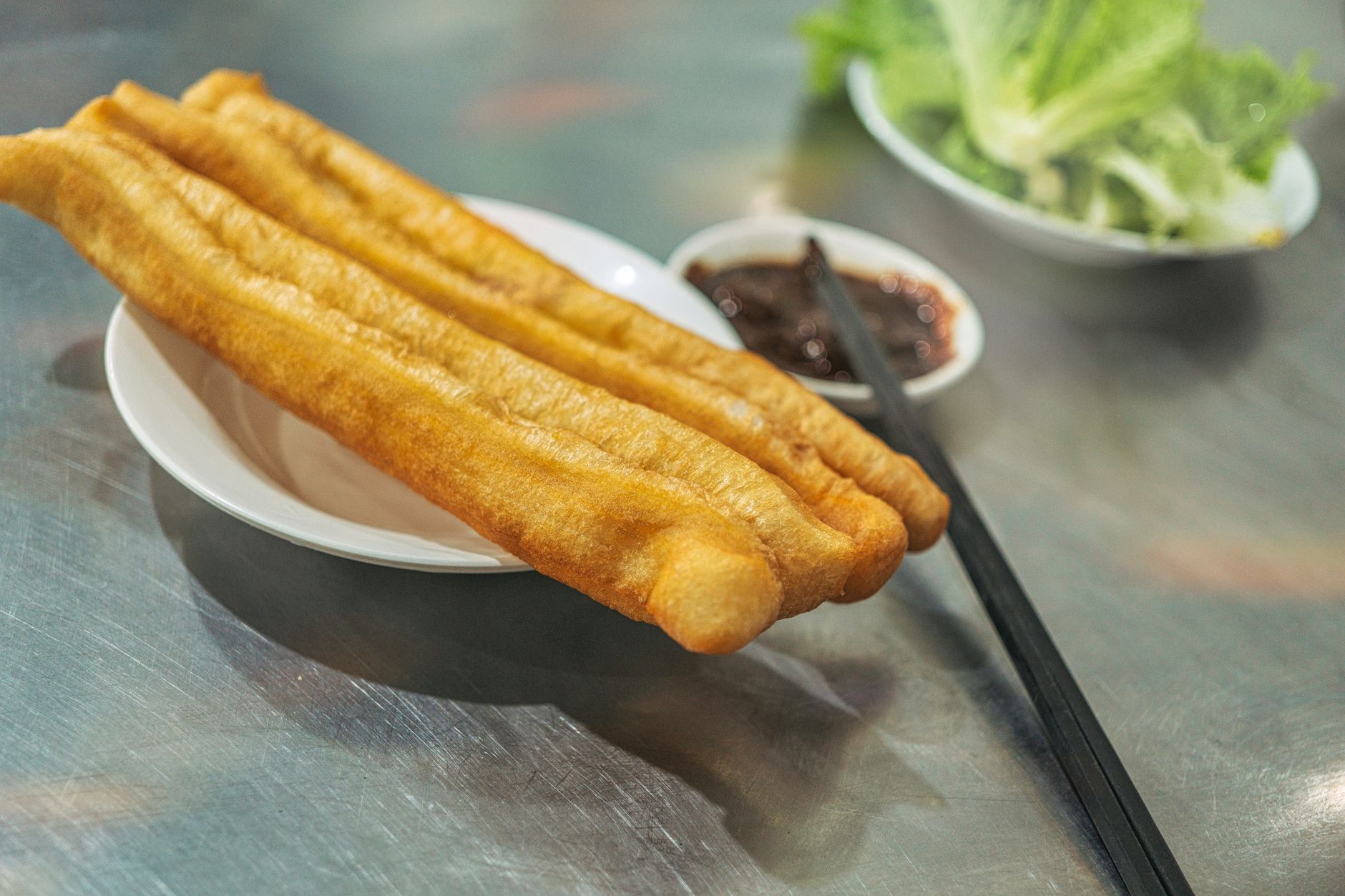
Jianbing (煎饼) is the breakfast champion: a thin mung-bean crepe griddled to order, topped with egg, sauce, chilli, scallion and a sheet of crispy cracker, then folded into a hot savoury parcel. It’s the perfect walking breakfast and the first thing you should try. Doujiang and youtiao (豆浆油条) is the other classic pairing — fresh, warm soy milk (sweet or savoury) with a crispy golden stick of fried dough for dipping. It’s cheap, comforting and found everywhere.
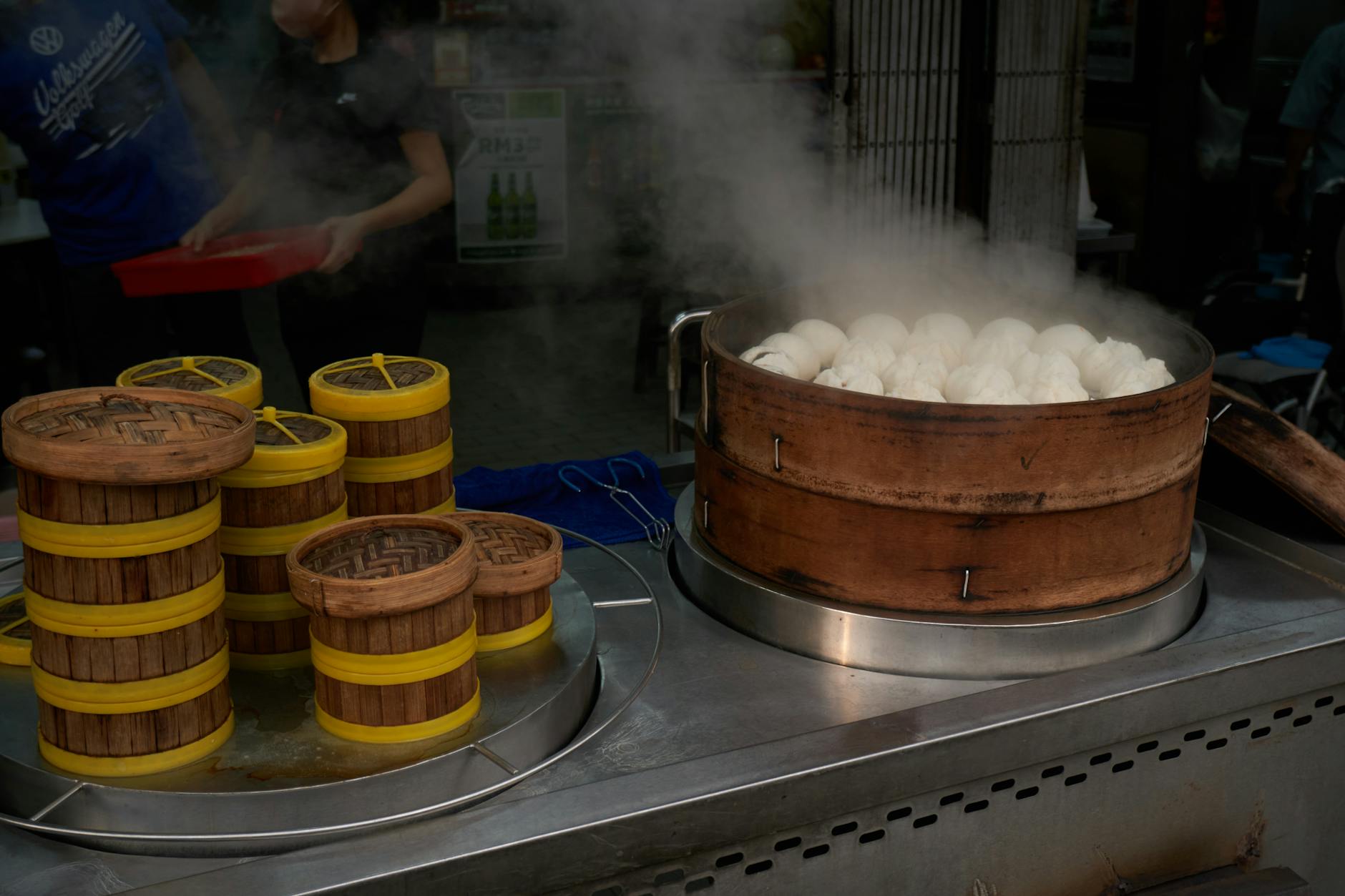
Baozi (包子), fluffy steamed buns stuffed with pork, vegetables or pork-and-chive, are sold from steaming stalls — grab a few and go, or learn to fold and steam your own at one of Beijing’s cooking classes. Mantou (馒头) are their plain, unfilled cousins. Zhou (粥), rice congee, is the gentle, soothing option, often served with pickles and a side of fried dough; millet congee (xiaomi zhou) is a northern favourite, mild and nourishing. For the adventurous, chaogan (炒肝) — a thick, garlicky stew of pork liver and intestine — is a beloved old-Beijing breakfast, traditionally eaten with baozi and a real taste of the city’s working-class roots, while mian cha (面茶) is a savoury millet porridge drizzled with sesame paste and eaten without a spoon, sipped straight from the bowl in the traditional way. Other morning staples include huntun (馄饨), delicate wontons in a clear, comforting broth, and doufunao (豆腐脑), silky tofu pudding in a savoury sauce.
Where to find the best breakfast
Beijing breakfast is everywhere in the early morning, but here’s where to look. Street carts and hole-in-the-wall shops in residential areas and the hutongs are the heart of it — look for storefronts marked 早点 (zǎodiǎn) or 早餐 (zǎocān), and for the carts with a morning queue. The hutongs around the Drum Tower and Dongsi are especially good hunting grounds, with generations-old jianbing and baozi spots tucked into the lanes. If you want a sit-down option, the chain Yonghe King (永和大王) serves reliable soy milk, youtiao, congee and buns in clean, comfortable surroundings — a useful fallback, especially with kids or in bad weather. Many traditional snack shops like the Huguosi institutions also serve breakfast classics. The golden rule, as ever: the busy local spot beats the quiet tourist one every time.
How to order and pay
Breakfast ordering is wonderfully low-stress. Point at what you want, indicate quantity with your fingers, and pay by scanning the vendor’s WeChat Pay or Alipay QR code — both now take foreign cards — or with a few small coins and notes. Baozi are often sold by weight (per liang) or by the basket; jianbing and youtiao are per piece. A couple of handy phrases: yí ge (one), liǎng ge (two), bù là (not spicy), dǎbāo (to take away). Most breakfast is grab-and-go, so don’t expect seating at a cart; sit-down shops and chains have tables. For more on bridging the gap, see our tips for getting around when you don’t speak the language.
Regional and healthier options
Beijing’s breakfast scene reflects China’s diversity. You’ll find northern wheat-based staples (buns, crepes, fried dough) alongside southern imports like rice congee, rice noodles and shengjianbao (pan-fried soup buns). The Muslim quarter and halal breakfast shops add lamb-filled pastries and beef soups. If you’re after something lighter or healthier, congee with pickles, plain soy milk, steamed (rather than fried) buns, doufunao tofu pudding, and fresh fruit are all gentle, wholesome ways to start the day — a welcome balance to the fried-dough indulgence. Vegetarians do well at breakfast: plain jianbing, vegetable baozi, congee, soy milk and tofu pudding are all meat-free (see our vegetarian and vegan guide). Coffee drinkers, note that breakfast here is traditionally tea- and soy-milk-based; for a flat white you’ll want one of the city’s specialty cafés.
A Beijing breakfast crawl
Want to do it properly? Here’s a morning crawl through the Drum Tower hutongs. 7:00am: start with a jianbing folded fresh off the griddle from a busy cart — eat it hot, on the spot. 7:30am: find a doujiang-youtiao shop for a cup of warm soy milk and a crispy dough stick to dip. 8:00am: grab a couple of pork-and-chive baozi from a steaming basket, and if you’re brave, a small bowl of garlicky chaogan to go with them. 8:30am: finish with a soothing bowl of congee or silky doufunao tofu pudding. The whole crawl is cheap, fills you up for a morning of sightseeing, and shows you the city waking up. Pair it with an early visit to a nearby sight like the pair of old timekeeping towers north of the lakes while the crowds are still thin.
Tips for breakfast like a local
- Go early — the best vendors sell out and pack up by mid-morning. Aim for before 9am.
- Follow the office-worker queue — it reliably leads to the best jianbing and baozi.
- Carry small change and your phone for payment; many carts are cash-or-QR only.
- Bring tissues — street breakfast is hands-on and napkins are scarce.
- Eat it hot and on the move — jianbing especially is best the moment it’s made.
- Skip the hotel buffet at least once — the street is cheaper, fresher and far more fun.
A little history of the morning meal
Many of Beijing’s breakfast staples carry surprising history. Youtiao, the fried dough stick, comes with a famous legend: it’s said to represent a hated, treacherous official of the Song dynasty and his wife, fried in oil by furious citizens — which is why the two strips of dough are traditionally twisted together before frying. Jianbing, though now Beijing’s signature street breakfast, actually originated in neighbouring Tianjin and spread across northern China, evolving countless local variations along the way. Doujiang (soy milk) has been a Chinese staple for some two thousand years, predating dairy milk in the diet by millennia. Even humble congee has imperial associations, having been served in the palace and prescribed by traditional medicine as a gentle, restorative food. Knowing these stories adds a little flavour to your morning — you’re not just grabbing a quick bite, you’re eating dishes with centuries of history behind them.
The morning meal also reflects Beijing’s position as a northern, wheat-growing capital. Southern China often leans on rice for breakfast — rice noodles, rice congee, rice rolls — while Beijing’s traditional breakfasts are built largely on wheat: the crepes, the buns, the fried dough, the pancakes. As the city has grown and drawn migrants from across the country, southern and regional breakfasts have arrived too, so today you can eat a Cantonese rice roll, a Shaanxi flatbread, a Muslim-quarter lamb soup and a classic Beijing jianbing all within a few streets. That diversity is part of what makes breakfast such a rewarding meal to explore here.
Breakfast and your sightseeing day
There’s a practical reason to take Beijing breakfast seriously beyond the food itself: it’s the key to beating the crowds. The city’s headline sights — the Forbidden City, the great circular altar complex at Tiantan, the parks — are dramatically calmer in the first hour after opening. A quick street breakfast at 7am gets you fed and out the door early, so you can be at the gates as they open rather than queuing behind the tour buses at 10am. Eating like a local in the morning isn’t just culturally rewarding; it’s strategically smart. Grab a jianbing near your hotel, eat it on the walk to the metro, and you’ve turned breakfast into a head start on the day.
This is especially worth doing at the Temple of Heaven and at the lakeside imperial gardens in the northwest, where the park opens at dawn and fills with locals exercising, singing and dancing before the tour groups arrive — a perfect pairing of an early street breakfast with the city’s most atmospheric morning sight. Across the city, the rhythm is the same: the early riser eats better, walks into emptier courtyards, and gets the best light for photos. Beijing rewards the morning person, and a great cheap breakfast is the fuel that makes early starts painless.
A few cultural notes
Breakfast culture comes with its own small customs. It’s perfectly normal to eat while walking or standing — breakfast is fuel, not a sit-down ceremony, and no one will look twice at you eating a jianbing on the move. At sit-down congee and bun shops, you’ll often share tables with strangers at busy times, which is completely routine. Slurping congee or soy milk is fine. Tipping, as everywhere in Beijing, is neither expected nor practised. And don’t be shy about pointing at what looks good on someone else’s tray — it’s the easiest way to order, and vendors are used to curious newcomers. The whole experience is informal, friendly and forgiving, which makes it one of the easiest ways for a first-time visitor to get a feel for local life.
Breakfast through the seasons
Like everything in Beijing’s food calendar, breakfast shifts with the weather. In winter, the morning streets fill with steam — hot soy milk, bowls of congee, freshly steamed buns and warming millet porridge are exactly what the bitter northern cold calls for, and the sight of a vendor’s bamboo steamers billowing in the frosty air is one of the season’s small pleasures. In summer, lighter and cooler options come to the fore: chilled soy milk, doufunao tofu pudding, and fresh fruit alongside the year-round jianbing. Spring and autumn, with their mild mornings, are the most pleasant times to wander between breakfast stops, eating as you go. Whatever the season, the early-morning window is the same — get out before 9am for the freshest food and the liveliest scene. For more on timing your trip, see our month-by-month breakdown of the weather and seasons. A street breakfast is also the opening move in our one-day Beijing route, where the early start does most of the work.
Beijing breakfast FAQ
What do Beijing locals eat for breakfast?
The classics are jianbing (savoury crepe), doujiang and youtiao (soy milk with fried dough), baozi (steamed buns), congee, and for some, chaogan (liver stew). Most are eaten on the go and cost just a few yuan.
Where can I find authentic Beijing breakfast?
At street carts and hole-in-the-wall shops marked 早点 or 早餐, especially in the hutongs around the Drum Tower and Dongsi. The Yonghe King chain is a clean, reliable sit-down option. Follow the morning local queues.
What time is breakfast served?
Early in the morning. Hours vary by vendor, so go early: popular items can sell out and stalls close once the rush is over.
How much does breakfast cost?
Very little. Prices vary by seller and by what you add, but a street breakfast is some of the best-value eating in Beijing.
Is there vegetarian breakfast?
Yes — plain jianbing (no meat), vegetable baozi, congee, soy milk, youtiao and tofu pudding are all vegetarian. Just specify no meat in your jianbing. See our vegetarian and vegan guide.
Can I get coffee with breakfast?
Traditional Beijing breakfast is tea- and soy-milk-based, not coffee. For a proper coffee, head to one of the city’s growing number of specialty cafés — see our craft beer and coffee guide.
The bottom line on Beijing breakfast
Skip the hotel buffet — at least once — and eat breakfast the way Beijing does: a hot jianbing in one hand, a cup of warm soy milk in the other, bought for a few yuan from a busy street cart as the city wakes up. Go early, follow the local queues, pay with your phone, and work through jianbing, baozi, congee and the rest. It’s the cheapest, freshest and most authentic meal of your day by some distance, and a perfect prelude to beating the crowds at the morning’s first sight. Once you’ve eaten breakfast like a Beijinger, the hotel buffet will never look the same again.
Keep eating with our street food guide, explore the lanes on a guided eating walk through the old alleys, and see the whole picture in our city-wide guide to what and where to eat. New to the city? Start with everything involved in planning a first trip here.