The siheyuan — literally “a courtyard enclosed by four buildings” — is the traditional Beijing courtyard house, and the building block from which the entire old city was made. For over 700 years, these elegant grey-brick quadrangles, ranged around a central courtyard and hidden behind ornate gates along the hutongs, housed everyone from emperors’ relatives and high officials to ordinary working families. The same north-south, courtyard-centred logic governs everything from the humblest family home right up to the Forbidden City itself. Understanding the siheyuan — its feng shui, its strict hierarchy, its symbolic gates — transforms a walk through the hutongs from a stroll past anonymous walls into a reading of Chinese cosmology and social order. This guide covers the architecture and history, the feng shui principles, how to “read” a courtyard gate, and exactly where you can visit (or even stay in) a siheyuan today.
I find the siheyuan endlessly fascinating — it’s where Chinese ideas about family, hierarchy and harmony with nature are written into bricks and timber. This guide explains what you’re looking at as you explore the hutongs: the layout and its meaning, the feng-shui thinking behind it, the details that signalled a family’s rank, and the best museums, former celebrity residences and courtyard hotels where you can actually step inside one. By the end, every gateway you pass in the hutongs will tell you a story about the family who once lived behind it, and the walls will no longer be anonymous.
Siheyuan at a glance
- What: the traditional Beijing courtyard house — four buildings around a central courtyard.
- Age: the form dates back over 2,000 years; Beijing’s classic siheyuan developed over the last 700+ years.
- Key features: south-facing main hall, symmetrical wings, ornate gate, spirit wall, enclosed courtyard.
- Design logic: strict feng shui and Confucian hierarchy — orientation and position signalled status.
- Where to visit: Mei Lanfang & Lu Xun memorials, Shijia Hutong Museum, Prince Gong’s Mansion, courtyard hotels.
- Where to stay: restored courtyard hotels and guesthouses in the hutongs.
- Best paired with: a hutong walk, where you’ll see hundreds of siheyuan gates.
The architecture: four halls around a courtyard
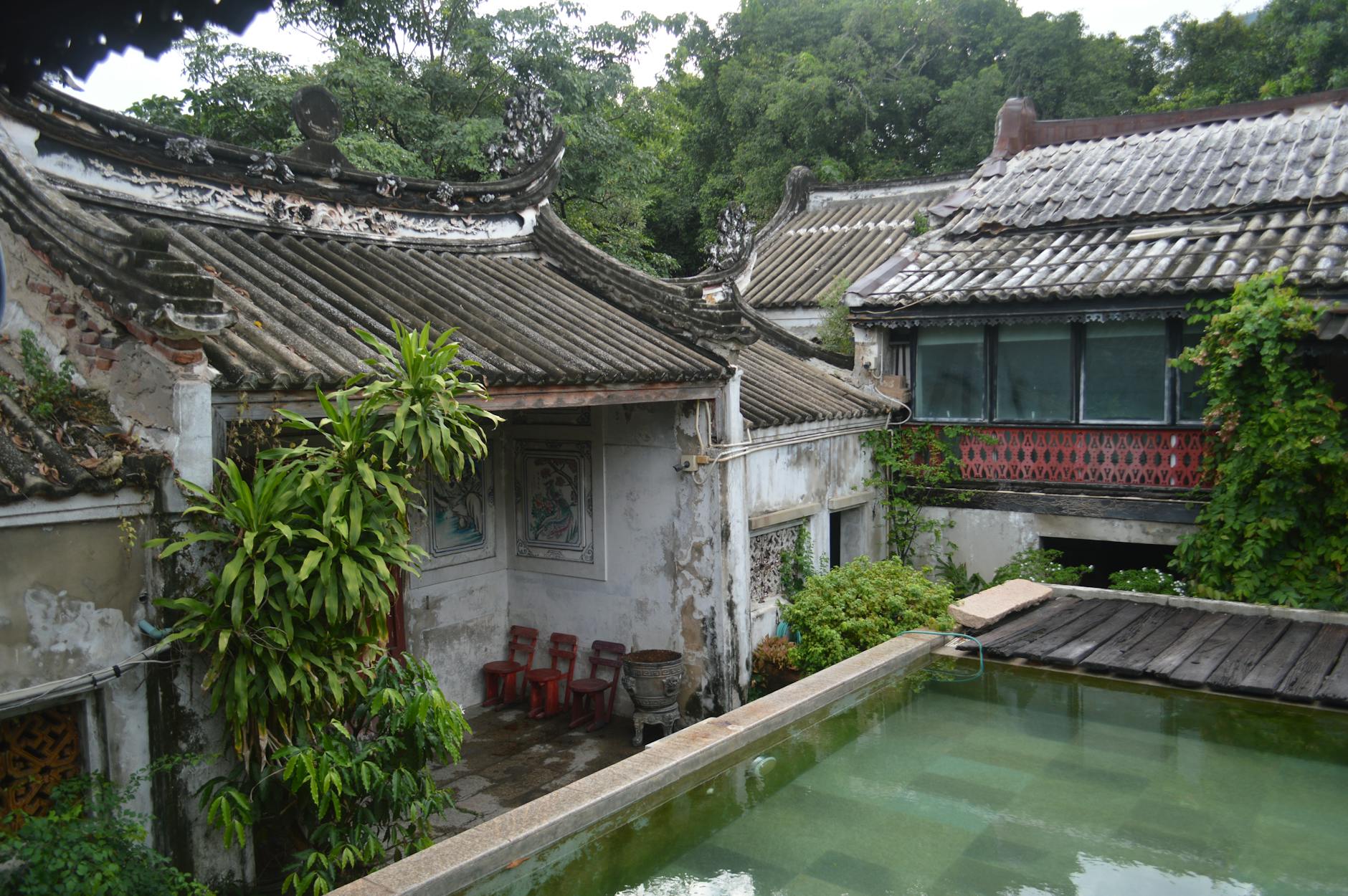
The classic siheyuan is a model of balance and enclosure. Four single-storey buildings face inward around a central courtyard, presenting blank grey walls to the alley outside and opening only to the private space within — a layout that gave families peace, privacy, security and a sheltered private world at the heart of a crowded city. The main hall, the largest and most important building, sits on the north side facing south to catch the sun and the auspicious southern aspect; it was reserved for the head of the household and the elders. The east and west wings, slightly lower in status, housed the younger generations, while the south building, facing north and getting the least light, was for servants, storage or studies. Larger, grander homes strung several courtyards together front to back along the central axis, with corridors and “flower gates” linking them. Everything is symmetrical, hierarchical and oriented — the architecture itself quietly enforced the Confucian social order of the family living inside, with elders above juniors and the centre above the edges.
Feng shui and Chinese cosmology
The siheyuan is built according to deep feng shui (geomancy) principles, aiming for auspicious energy flow and harmony with nature. The north-south orientation isn’t just practical sun-catching; in Chinese cosmology, the north (the Kan trigram of the Bagua) signifies stability and protection, which is why the main hall and the head of the family belong there, facing south. The gate is traditionally placed in the southeast corner (the Xun, or “wind,” trigram position), considered the most auspicious entry point for positive energy. The enclosed courtyard, open to the sky, was thought to gather qi (vital energy) and rainwater (a symbol of wealth) while connecting the household to the heavens, the weather and the turning seasons. This same cosmological logic — the elevated, south-facing seat of authority to the north, the symmetrical arrangement, the enclosing walls — scales all the way up to the Forbidden City, which is, in essence, the grandest and most elaborate siheyuan of them all. To see the principle at every scale is one of the quiet revelations of understanding Beijing.

How to read a courtyard gate
The gate (damen) was the face a family showed the world, and its every feature encoded status. As you walk the hutongs, look for these clues. The type and size of the gate indicated rank — the grandest “wangfu” gates belonged to princes, while officials, merchants and commoners each had progressively simpler permitted styles. Flanking the entrance, the door piers (mendun) reveal the family’s background: drum-shaped piers traditionally marked a military family, rectangular box-shaped ones a civil-official or scholarly family. Above the gate, the mendang — short decorative cylinders or blocks — came in pairs whose number (two, four or more) again signalled rank. Step through and you’ll often meet a spirit wall (yingbi), a free-standing screen that blocked evil spirits (believed to move only in straight lines) and shielded the courtyard from outside eyes. Even the door knockers, lintel carvings and the colour of the paint carried meaning. Once you can read these signs, every gate in the hutongs becomes a small historical document waiting to be read.
A short history
The courtyard-house form is ancient — versions appear as far back as the Han dynasty over 2,000 years ago — but Beijing’s classic siheyuan took shape after the city became the imperial capital, especially from the Yuan dynasty (13th century) onward, when the hutong grid was laid out. For centuries the siheyuan was simply how Beijing lived, from grand multi-courtyard aristocratic compounds to modest single-courtyard family homes. The 20th century was hard on them: war, overcrowding, and the subdivision of single-family courtyards into cramped multi-family “dazayuan” eroded many, and decades of redevelopment demolished countless others. Today, the city now protects over 500 historic courtyards in designated conservation areas, and a growing appreciation for their value has spurred careful restoration. The surviving siheyuan are precious links to old Beijing — and, increasingly, sought-after (and very expensive) homes. For the wider story, see our Beijing hutongs guide.
Where to visit a siheyuan
You don’t need an invitation to step inside a courtyard house — several are open as museums and former residences:
- Prince Gong’s Mansion (Gong Wang Fu) — the grandest surviving princely compound, with multiple courtyards and a famous garden, near the Shichahai lakes.
- Mei Lanfang Memorial — the elegant former home of the legendary Peking Opera master, a classic single-family siheyuan near Huguosi.
- Lu Xun, Guo Moruo, Mao Dun and Soong Ching-ling former residences — preserved courtyards of famous 20th-century figures, each a window into siheyuan life.
- Shijia Hutong Museum — a free, beautifully restored courtyard in the Dongsi area documenting hutong and courtyard life through models, photos and oral histories.
- Courtyard restaurants and cafés — many hutong eateries occupy restored siheyuan, letting you enjoy the architecture over a meal or coffee.
Staying in a siheyuan
The most immersive way to experience a courtyard house is to sleep in one. A number of beautifully restored siheyuan have been converted into boutique courtyard hotels and guesthouses in the hutongs, blending traditional architecture — grey brick, timber beams, a peaceful, plant-filled central courtyard — with modern comforts like good heating and en-suite bathrooms. Waking up in a quiet courtyard in the heart of old Beijing, with the sounds of the lane drifting gently over the wall and the morning light filling the open courtyard, is a genuinely special experience and a world away from a generic high-rise chain hotel. They range from simple, affordable family-run guesthouses to genuinely luxurious design hotels. For options and booking advice, see our guide to Beijing hutong hotels.
Architectural details to spot
Beyond the gate and the overall layout, the siheyuan rewards an eye for detail. Inside the courtyard, look for the “flower gate” (chuihua men), an ornate inner gateway with carved, painted, downward-hanging “flower” pendants that separated the public outer courtyard from the private inner one — only family and invited guests passed through it. Notice the raised stone thresholds at doorways, traditionally meant to keep out both water and wandering spirits (and to make you bow your head slightly in respect as you stepped over). Roofs are topped with grey tiles and sometimes small roof charms or animal figures; eaves and beams in grander homes carry intricate painted decoration. The courtyard itself was often planted with symbolic trees — a jujube and a pomegranate for fertility and many children, a crabapple or a persimmon tree for good fortune — and furnished with fish tanks or large ceramic jars. Even the paving and the placement of a screen wall followed convention. These details turn a simple grey quadrangle into a richly coded environment where almost nothing is accidental, and spotting them is a real part of the pleasure of visiting a preserved courtyard.
From family home to crowded compound
It’s worth knowing the more complicated recent history of the siheyuan, because it explains what you’ll actually see in the hutongs today. Originally, a single siheyuan housed one extended family, with the generations arranged by seniority around the courtyard. But in the turbulent mid-20th century, as Beijing’s population swelled and housing was reallocated, many single-family courtyards were carved up and packed with multiple unrelated families — becoming crowded “dazayuan” (大杂院, “big messy courtyards”), their once-open courtyards filled with makeshift kitchens and lean-to extensions. This is the reality for many hutong residents still: cramped shared courtyards, often without private bathrooms, which is why you’ll see public toilets dotted through the lanes. So while restored show-courtyards present the elegant ideal, the living hutongs reveal a more crowded, improvised reality. Both are true, and understanding the difference helps you see the neighbourhoods with clearer, more sympathetic eyes — these are homes shaped by history, not film sets.
In recent decades the pendulum has swung again: as Beijing has prospered, intact siheyuan have become some of the most coveted and expensive real estate in China, and careful restorations — some into private homes, others into hotels, galleries and restaurants — have brought many courtyards back to their former elegance. The result is a patchwork: grand restored compounds, humble crowded dazayuan, and everything in between, often side by side on the same lane.
The courtyard and the rhythm of life
What makes the siheyuan more than just an architectural form is the way of life it created. The enclosed courtyard was the heart of the home — a private outdoor room where the family ate on summer evenings, where children played, where elders sat in the sun, where the seasons were marked by the blossom and fruit of the courtyard trees and the changing angle of the light. Open to the sky yet sheltered from the street, it fostered a close, multi-generational family life lived partly outdoors, in tune with nature. Even today, in the surviving courtyards and the lanes around them, you can sense that rhythm: neighbours greeting each other, plants and birdcages by the doors, the communal sociability of people who share a courtyard and a lane. To step into a quiet siheyuan from the bustle of the city is to feel why this design endured for so many centuries — it is, at its best, a small, ordered world of calm carved out of the noise and crowds of the great city.
Siheyuan FAQ
What is a siheyuan?
A siheyuan is the traditional Beijing courtyard house: four single-storey buildings arranged around a central courtyard, enclosed by walls and entered through an ornate gate. It’s the basic building block of the old city’s hutongs.
Why do siheyuan face south?
For both practical and feng-shui reasons. A south-facing main hall catches sunlight and warmth, and in Chinese cosmology the north is the position of stability and authority, so the head of the family occupies the south-facing northern hall. The gate is traditionally in the auspicious southeast corner.
Where can I see a siheyuan in Beijing?
Visit Prince Gong’s Mansion, the Mei Lanfang Memorial, the free Shijia Hutong Museum, or the former residences of figures like Lu Xun. Many courtyard restaurants and hotels also occupy restored siheyuan you can step inside.
Can I stay in a courtyard house?
Yes — many restored siheyuan are now boutique courtyard hotels and guesthouses in the hutongs, offering an atmospheric alternative to standard hotels. See our hutong hotels guide.
What do the door piers and gates mean?
They signalled the family’s rank and background. Drum-shaped door piers marked military families, rectangular ones civil officials; the size of the gate and number of mendang ornaments above it denoted status. A spirit wall inside the gate blocked evil spirits and prying eyes.
What’s the difference between a siheyuan and a dazayuan?
A siheyuan is the original single-family courtyard house. A dazayuan (“big messy courtyard”) is what many became in the 20th century when one family’s home was subdivided among several families, filling the open courtyard with makeshift structures. Most lived-in hutong courtyards today are dazayuan; the elegant single-family ideal survives mainly in restored homes, museums and hotels.
Are siheyuan expensive to buy?
Extremely — intact, well-located courtyard houses are among the most coveted and costly properties in China, often selling for many millions of dollars. Their scarcity, central location and cultural cachet make them a rare luxury. For most visitors, the accessible way to experience one is via a museum, restaurant or courtyard hotel.
How does the siheyuan relate to the Forbidden City?
The Forbidden City follows the same fundamental principles as a humble siheyuan, just on a vast, imperial scale: a strict north-south axis, symmetrical halls arranged around a series of courtyards, the most important buildings to the north facing south, and walls enclosing the whole. Seeing this connection is one of the joys of understanding Beijing — the emperor’s palace and the commoner’s courtyard share the same cosmological blueprint.
The bottom line on siheyuan
The siheyuan is the key to understanding old Beijing — a courtyard house whose feng shui, hierarchy and symbolic gates encode centuries of Chinese ideas about family, status and harmony with nature. Learn to read its orientation and gates, and a hutong walk becomes infinitely richer. Better still, visit one of the preserved courtyard residences or museums, or spend a night in a restored courtyard hotel, and you’ll experience first-hand the peace, privacy and quiet elegance that made this humble grey-brick quadrangle the beating heart of the city for more than 700 years.
See siheyuan in context on a hutong walking tour, explore the lanes of Nanluoguxiang and authentic Dongsi, or stay in one via our hutong hotels guide. For the full picture, see the Beijing hutongs guide.