The best way to experience Beijing’s hutongs — the grey-brick alleys and courtyard neighbourhoods that are the soul of the old city — is on foot, at your own pace, for free. While guided tours and rickshaws have their place, a self-guided hutong walk lets you wander, pause, snack and get lost on your own terms, which is exactly how these lanes are meant to be explored. This guide gives you five self-guided walking routes, from the polished and easy to the deeply authentic, each with its highlights, a rough route, timing and the nearest metro. Whether you want shops and cafés or pure residential old Beijing, there’s a walk here for you — and they’re among the most rewarding — and cheapest — things you can do in the entire city.
I’ve walked these lanes in every season and at every hour, and I’m convinced the hutongs reward the independent wanderer more than any tour ever could. This guide lays out five routes covering the best of old Beijing, plus practical tips on timing, bikes, etiquette and how to navigate without getting (too) lost. Lace up a comfortable pair of shoes, pick a route to match your mood, and set off into the lanes.
Hutong walking tours at a glance
- Cost: free (self-guided); shared bikes ¥1.50 per 15 min if you want to cover more ground.
- Best easy route: Yonghegong → Guozijian → Wudaoying (balanced, first-timer friendly).
- Best classic route: Drum Tower → Yandai Xiejie → Houhai → Nanluoguxiang.
- Most authentic route: Dongsi Santiao to Batiao (pure residential, zero tourist infrastructure).
- Duration: 2–4 hours per route.
- Best time: early morning or late afternoon for light and fewer crowds.
- Navigation: download an offline map; the lanes are a maze, and getting a little lost is part of the fun.
Why walk the hutongs?
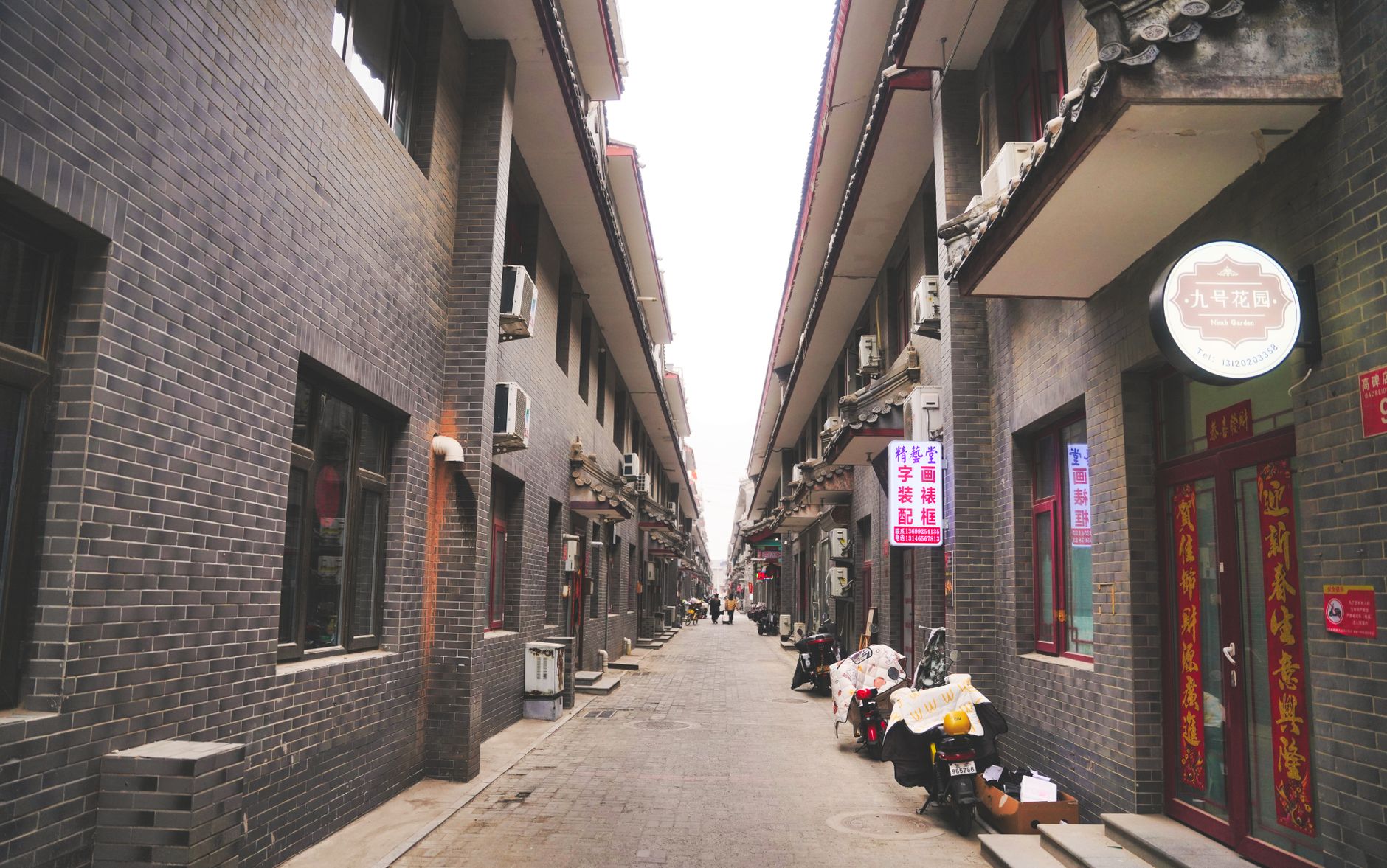
The hutongs are not a museum — they’re living neighbourhoods, 700-plus years old, where ordinary Beijing life unfolds in the open air: neighbours playing chess on upturned crates, songbirds singing in bamboo cages, vendors griddling breakfast, old men sunning themselves in doorways. You can’t really experience that from a rickshaw whizzing past or a tour bus window. Walking lets you slow to the pace of the lanes, follow your curiosity down a promising side alley, stop for a jianbing or a courtyard coffee, and simply absorb the texture of the place — the carved gates, the grey-tiled roofs, the play of light through the trees. It costs nothing, it’s available any time, and it’s the single most rewarding way to connect with the real Beijing. For the full background on hutong culture, see our pillar Beijing hutongs guide.
Route 1: Drum Tower → Houhai → Nanluoguxiang (the classic)
The best all-round introduction. Start at the Drum Tower, climb it for panoramic views over the hutong rooftops, then walk south through Yandai Xiejie, the crooked little lane of teahouses and antique shops, to the Silver Ingot Bridge and the Houhai lakeside. Stroll the willow-lined shore, then cut east through quiet residential lanes to Nanluoguxiang, exploring its side alleys (Mao’er, Ju’er) before finishing at Nanluoguxiang station. This route blends rooftop views, lakeside water, shops, snacks and genuinely authentic side lanes in one half-day, and it’s the one I’d recommend to almost anyone first. Allow 3–4 hours with stops. Pair it with our Drum & Bell Towers, Shichahai and Nanluoguxiang guides.
Route 2: Yonghegong → Guozijian → Wudaoying (easy & balanced)
The most balanced route for first-timers. Start at the Lama Temple (Yonghegong), Beijing’s most important Tibetan Buddhist temple, then walk west along Guozijian Street — one of the few surviving streets with traditional pailou archways, lined with ancient trees. Visit the Confucius Temple and the Imperial Academy (Guozijian), China’s highest seat of learning for more than 700 years, then continue west into Wudaoying Hutong, a trendy, leafy lane of cafés, vegetarian restaurants, tea shops and small boutiques. It’s a gentle, culture-rich walk with temples, deep history and good coffee, ideal if you want real substance without the tourist crush of Nanluoguxiang. Allow 2–3 hours.
Route 3: Dongsi Santiao to Batiao (most authentic)
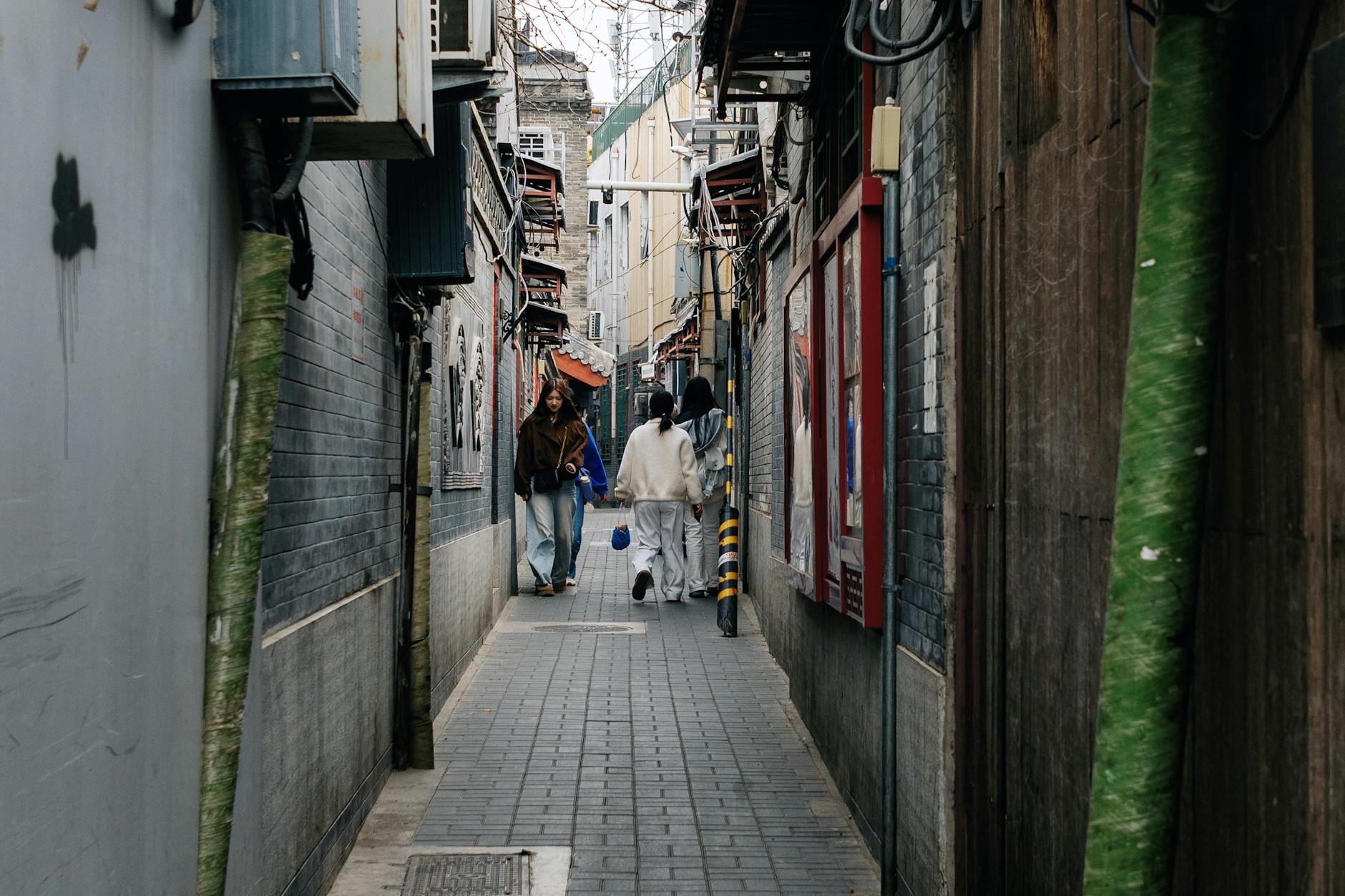
For the real, unhurried old Beijing with zero tourist infrastructure, head to the Dongsi hutongs. Start at Dongsi station and walk east into the parallel numbered alleys — Dongsi Santiao (Third) through Batiao (Eighth) — zigzagging between them to admire the best-preserved Qing-dynasty courtyard gates and spirit walls in the city. There are almost no shops or cafés here, just genuine, unfiltered neighbourhood life going on all around you. Don’t miss the free Shijia Hutong Museum, a beautifully restored courtyard documenting hutong life through photos, models and an audio installation of recorded hutong sounds. End at Chaoyangmen station. This is the route for travellers who want authenticity over amenities. Allow 1–2 hours; see our full Dongsi hutongs guide.
Route 4: Shichahai & Xihai loop (lakeside)
A gentler, water-focused walk. Loop the shores of Houhai and the quieter Xihai (West Lake), weaving in and out of the lakeside hutongs. This route takes in Prince Gong’s Mansion and the most authentic residential lanes west of the water, where locals fish, swim in summer and exercise along the shore. Xihai in particular is calm and little-visited, with a lovely wetland park feel. It’s flat, scenic and relaxed — perfect for a slower day, for older walkers, or for combining with a boat ride on the lake. Allow 2–3 hours, more with the mansion.
Route 5: Dashilan & Qianmen (southern old Beijing)
South of Tiananmen lies a different, often-overlooked hutong world. Start at Qianmen and explore the warren of Dashilan (Dazhalan) — historic commercial lanes home to centuries-old shops, traditional pharmacies, silk merchants, a famous old opera theatre and old-Beijing snack institutions. The area has been partly restored and is rich with history, and draws noticeably fewer foreign tourists than the northern hutongs around the Drum Tower. This route pairs naturally with a daytime visit to Tiananmen Square and the Temple of Heaven. Allow 2 hours.
Practical tips for walking the hutongs
- Go early or late — morning and late afternoon offer the best light, fewest crowds, and most local life.
- Download an offline map — the lanes are a genuine maze; a map saves frustration, though getting mildly lost is half the joy.
- Wear comfortable shoes — surfaces are uneven and you’ll cover a lot of ground.
- Consider a shared bike for the bigger areas (Shichahai, Dongsi, Wudaoying) — flat lanes make cycling a pleasure; see our cycling in Beijing guide.
- Respect residents’ privacy — these are real homes; ask before photographing people.
- Carry water and snacks, or graze as you go; pay by phone (WeChat Pay/Alipay).
What the hutongs are, and why they matter
To get the most from a walk, it helps to understand what you’re looking at. The word hutong dates to the Yuan dynasty and is thought to derive from a Mongolian word for a water well — communities grew up around wells, and the lanes between them became the hutongs. For some 700 years these alleys, and the siheyuan courtyard houses lining them, were the basic building blocks of Beijing, housing everyone from princes to labourers in a dense, low-rise grid that spread out around the Forbidden City. At their peak there were several thousand named hutongs (and countless unnamed ones); a famous saying held there were “3,600 named hutongs and as many nameless as the hairs on an ox.” Today, after a century of upheaval and decades of redevelopment, far fewer survive — which makes the preserved districts you’ll walk through precious fragments of a vanishing city. Walking them isn’t just sightseeing; it’s witnessing a living heritage that is quietly disappearing.
That fragility is worth bearing in mind as you explore. The lanes you wander are home to real families, many of whom have lived there for generations, often in shared courtyards without the comforts of modern apartments. The hutongs are romantic to visit but complicated to live in, and the tension between preservation and modernisation is part of their present-day story. Approaching them with curiosity and respect — rather than treating them as a stage set — is the right way to walk.
How to read a hutong as you walk
Once you know what to look for, a hutong walk becomes a kind of treasure hunt. The gateways are the richest source of clues: the grander the gate, the higher the rank of the family that lived behind it. Look for the door piers (mendun) flanking the entrance — drum-shaped piers traditionally signalled a military family, rectangular ones a civil-official family — and count the mendang, the decorative wooden cylinders above the gate, whose number also denoted rank. Just inside many gates stands a spirit wall (yingbi), a screen designed to block both evil spirits (believed to travel only in straight lines) and the prying eyes of passers-by. Notice the grey bricks and tiles — grey was the colour permitted to commoners, with yellow and red reserved for the imperial palace and temples. Spotting these details transforms a stroll past anonymous walls into a reading of old Beijing’s social code. Our guide to siheyuan courtyard houses explains the architecture in full.
Beyond the gates, keep an eye out for the small things that make the hutongs feel alive: caged songbirds hung out for their morning airing, ornate door knockers, faded Cultural Revolution slogans on some walls, communal public toilets (a reminder that many courtyards lack private plumbing), and the ubiquitous bicycles and potted plants. These everyday details are the texture of the place, and noticing them is what separates a memorable walk from a forgettable one.
Combining walks into a full day
The routes above can be stitched together for a fuller day. A classic combination runs the Drum Tower–Houhai–Nanluoguxiang route in the morning and early afternoon, then loops up to Yonghegong, Guozijian and Wudaoying for temples and coffee in the late afternoon — the two areas are close and connect via pleasant lanes. Another option pairs the authentic Dongsi walk with nearby Nanluoguxiang, contrasting raw residential old Beijing with the polished tourist lane. Throughout, build in food stops — the hutongs are full of brilliant local eateries — and consider a regulated rickshaw ride to rest your legs and cover more ground in the Shichahai area. With an early start, you can comfortably walk two routes and still have energy for a lakeside drink at sunset.
Walking the hutongs by season
The hutongs are a year-round pleasure, but each season changes the experience. Spring brings blossom and new green, and mild temperatures perfect for long walks. Summer is hot and humid but lively, with residents spilling out into the cooler evening lanes — go early to beat the heat. Autumn is the connoisseur’s choice: crisp, clear days and golden ginkgo and scholar trees lighting up the grey lanes, especially around Guozijian Street and the lakes. Winter is cold and stark but atmospheric and crowd-free, with the bonus of frozen-lake skating at Houhai; bundle up and the bare-branch lanes have a quiet beauty. For the best walking weather overall, aim for spring or autumn — see the best time to visit Beijing for details.
When a guided tour makes sense
Self-guided walking is my default recommendation, but a guided tour earns its place in a few situations. If it’s your first day in Beijing and you want orientation and context, a knowledgeable local guide brings the lanes to life with history and stories you’d never glean on your own, and gets you into courtyards and family homes that aren’t open to casual walkers. Guides are also invaluable if you’re short on time and want a curated highlights reel, or if the language barrier feels daunting and you’d like help ordering food or chatting with residents. Small-group and private hutong tours are widely available, often combined with food tastings or a rickshaw segment, and many travellers do a guided tour early in their trip and then strike out independently afterwards, armed with new confidence. There’s no wrong choice — the lanes reward both the guided and the self-guided — but for most able walkers with a free afternoon, the freedom, flexibility and intimacy of going it alone is genuinely hard to beat.
Whichever you choose, the golden rule holds: slow down. The hutongs don’t reveal themselves to people in a hurry. Their pleasures are small and cumulative — a quiet courtyard glimpsed through an open gate, an old man’s caged bird singing, the smell of someone’s lunch drifting from a courtyard, the geometry of grey roofs against a blue sky. Give the lanes your time and attention, and they’ll give you the truest Beijing there is.
Hutong walking tour FAQ
Are self-guided hutong walks safe?
Yes — the central hutongs are very safe, well-lit and walkable, day and evening. Beijing has low crime, and the lanes are full of residents going about daily life. Just stay alert for the occasional silent electric bike or scooter slipping through the narrow alleys.
Which hutong walk is best for first-timers?
The Yonghegong → Guozijian → Wudaoying route is the most balanced and easy, mixing temples, history and cafés. The Drum Tower → Houhai → Nanluoguxiang classic is the best all-round introduction with views, water and shops.
Do I need a guide?
No — the hutongs are made for independent wandering, and self-guided walks are free and flexible. A guide or rickshaw can add context and cover more ground, but it isn’t necessary to enjoy the lanes.
How long do the walks take?
Each route takes roughly 2–4 hours at a relaxed pace with stops. You can easily combine shorter routes or extend a walk into a full day with sights, food and a boat ride.
Can I cycle the hutongs instead?
Yes — shared bikes (Meituan, Hello) are everywhere and cheap, and the flat lanes are great for cycling, especially in the larger Shichahai, Dongsi and Wudaoying areas. Walking is better for the narrowest, busiest alleys.
The bottom line on hutong walking tours
Self-guided walking is the best, cheapest and most authentic way to experience Beijing’s hutongs. Pick a route to match your mood — the classic Drum Tower–Houhai–Nanluoguxiang loop for variety, Yonghegong–Wudaoying for an easy culture-rich stroll, or Dongsi for pure residential old Beijing — go early or late, and let yourself wander. A good pair of shoes, an offline map, and an open, unhurried afternoon are honestly all you really need to discover the side of the city that visitors who stick only to the big-ticket sights never get to see.
Explore specific areas with our Nanluoguxiang, Shichahai and Dongsi guides, or take it easy with a hutong rickshaw ride. For the full picture, see the Beijing hutongs guide.