Day Trips & Excursions From Beijing
Ming Tombs & Sacred Way: Half-Day Trip From Beijing
Visit the Ming Tombs and Sacred Way on a half-day trip from Beijing, easily combined with the Great Wall for a full day out.
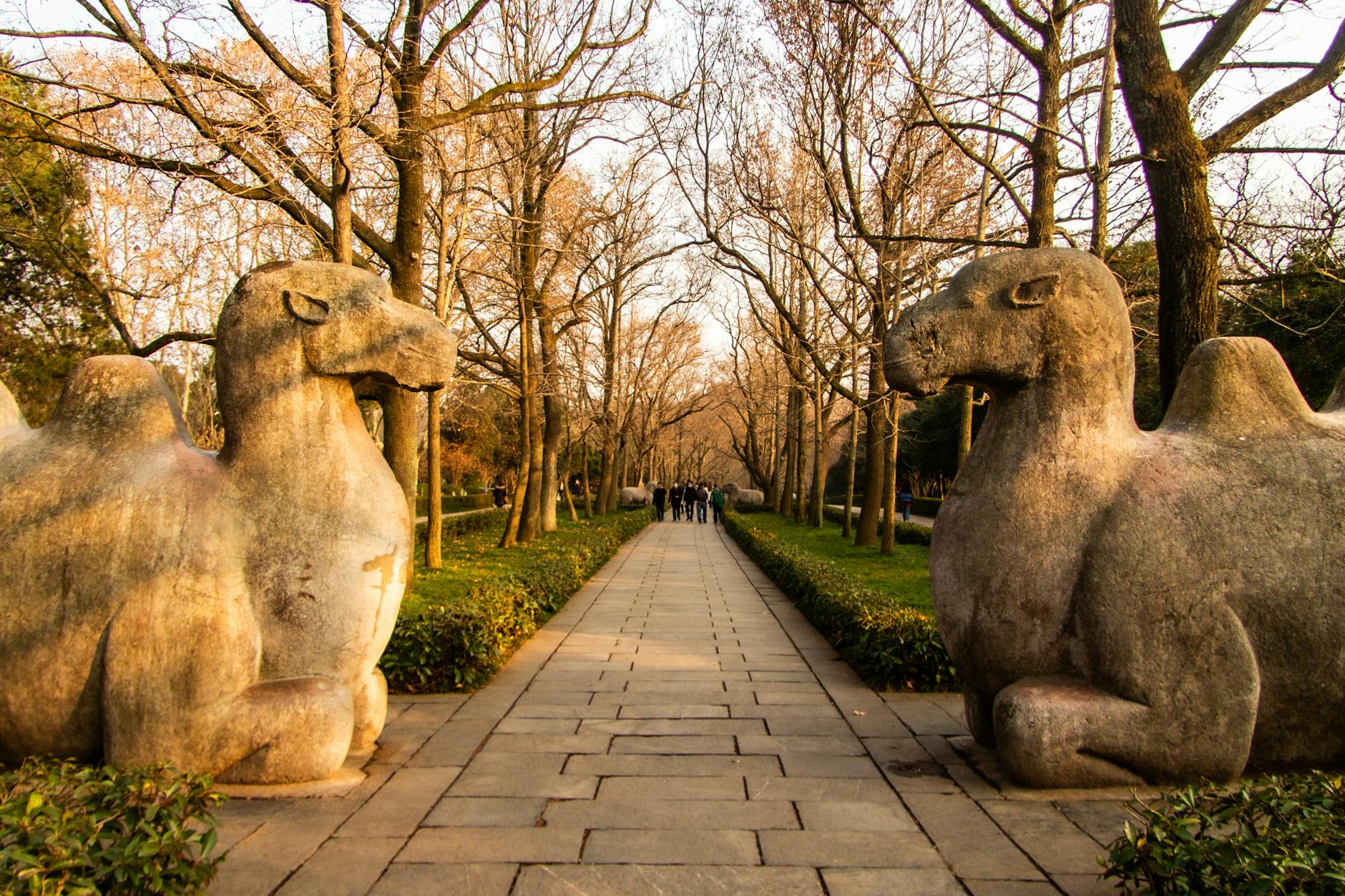
The Ming Tombs make one of the best half-day trips from Beijing — and, crucially, they sit on the same northwest highway as the Badaling Great Wall, so the two combine into what is, by some margin, the single most popular full-day excursion in the whole region. The burial ground of 13 Ming emperors, set in a beautiful, feng-shui-perfect valley ringed by mountains, the site’s highlights are the majestic Sacred Way — a 7-km avenue lined with giant stone guardian statues — and Dingling, the only imperial tomb whose underground palace has been excavated and opened. Refreshingly, and unlike almost all of Beijing’s central sights, the Ming Tombs need no advance reservation whatsoever; you simply turn up and buy a ticket. This guide focuses on visiting the tombs as a half-day or as part of a Great Wall combo: how to get there, what to prioritise, the famous Sacred Way and Dingling, realistic timings, and how to build the perfect full-day itinerary with the Wall.
I always tell first-time visitors that the Ming Tombs are at their best paired with the Great Wall — the two are close together, complement each other perfectly, and together make a richer day than the Wall alone. This guide covers the practicalities of the trip, what to see and skip, and exactly how to combine the tombs with Badaling for a classic Beijing day out. For the full deep-dive on the tombs’ history, the emperors buried here, and the architecture, see also our dedicated Ming Tombs guide.
Ming Tombs day trip at a glance
- What
- the burial ground of 13 Ming emperors, ~42 km north-northwest of central Beijing in Changping District.
- Highlights
- the Sacred Way (stone-statue avenue), Dingling (the excavated underground palace), Changling (the grandest above-ground tomb).
- Reservation
- none needed — buy on-site or via WeChat. Refreshingly hassle-free.
- Cost
- admission varies by site; Dingling is ¥60 in peak season and ¥40 off-season; combined tickets available.
- Time
- a half-day on its own; a full day combined with the Great Wall.
- Best combo
- Badaling Great Wall + Ming Tombs — they’re on the same road, ~40 minutes apart.
- Best for
- history lovers, and anyone visiting Badaling who wants to add depth to the day.
Getting there
The Ming Tombs lie about 42 km north-northwest of central Beijing, in Changping District, and the sites are spread across a wide valley, so plan for some shuttle-hopping once there. There are three main ways to visit:
- Organised tour (most popular): almost always packaged with the Badaling Great Wall as a full-day trip, since the two are on the same highway. This is the easiest option and handles all the transport and logistics.
- Private car / DiDi: the most flexible, letting you visit the Sacred Way and tombs in your own order and continue to the Wall. Expect ¥600–1,200 for a half- or full-day car.
- Public transport: take the Changping Line subway to Changping Dongguan, then a local bus (878 or similar) toward the tombs — cheap but slower and requiring some navigation.
Once at the site, an internal shuttle bus connects the spread-out sections (the Sacred Way, Changling and Dingling) for about ¥10 a ride or ¥30 for a day pass — useful, as walking between them is impractical. The big advantage over Beijing’s central sights: there’s no timed reservation system, so you can simply arrive and buy tickets. For getting between the tombs and the Wall, see which buses, trains and tours cover that stretch.
The Sacred Way
The Sacred Way (Shenlu) is the highlight of the Ming Tombs and the part you shouldn’t miss. This grand ceremonial approach to the whole necropolis begins at a great marble archway and the Great Red Gate, then runs through an avenue lined with 36 stone statues — pairs of court officials, military generals and twelve animals, including elephants, camels, horses, lions and mythical qilin and xiezhi, some standing and some kneeling. Carved in the 15th century, they stand in silent, weathered guard over the very road along which the emperors’ grand funeral processions once passed. Walking the full avenue takes around 30–45 minutes at an easy pace; it’s flat, atmospheric, and especially beautiful in autumn when the trees turn. Many rushed tours stop only briefly for photos at the statues, but if you have your own transport, walk the whole length — it’s easily the most memorable part of the whole visit. Note it’s a one-way walk, so arrange for your driver to meet you at the far end.
Dingling and Changling
Two tombs anchor the rest of the visit. Dingling, the tomb of the Wanli Emperor, is the one unmissable highlight: it’s the only imperial underground palace excavated and opened to the public in China. You descend a long staircase 27 metres below ground into a series of cold marble chambers, where you’ll see the great stone “self-closing” doors, the marble thrones, and the platforms where the emperor and his two empresses were laid to rest. Bring a layer — it’s cold underground year-round — and don’t skip the excellent on-site museum, which displays the gold, jade, crowns and silk treasures recovered from the tomb. Changling, the largest and best-preserved tomb (of the Yongle Emperor, who built the Forbidden City), is the grandest above-ground complex, centred on the colossal Hall of Eminent Favour, one of the largest surviving wooden halls in China, supported by 60 immense, single-trunk pillars of fragrant golden-grained nanmu wood. If time is tight, prioritise the Sacred Way and Dingling; add Changling if you have a full day. The deeper history of all three is covered in our Ming Tombs guide.
The perfect Great Wall combo day
This is the way most people visit, and for good reason: the Ming Tombs and the Badaling Great Wall sit on the same northwest highway, about 40 minutes apart, so they slot together into one superb full-day excursion that pairs China’s most famous monument with its imperial burial ground. The ideal plan: leave Beijing early (by 7:30am) and visit the Great Wall at Badaling first, while it’s cooler and clearer and before the worst of the crowds; spend two to three hours on the Wall; then drive to the Ming Tombs for the afternoon, walking the Sacred Way and descending into Dingling, before heading back to the city by early evening. Doing the Wall first and the tombs second works best, as the tombs are closer to the city for the return. It’s a full, varied and rewarding day combining scenery, history and imperial grandeur. See our Badaling guide for the Wall half, and browse the rest of the excursions worth making from the city.
Why this valley?
Part of what makes the Ming Tombs so atmospheric is understanding why they’re here. The site was chosen by the Yongle Emperor in 1409 according to strict feng shui principles: a south-facing valley cradled by mountains on three sides, with Tianshou Mountain rising protectively to the north and water flowing through — an auspicious resting place believed to shelter the dynasty and ensure its fortunes. Over the next two centuries, 13 of the 16 Ming emperors were buried here, each tomb a self-contained complex echoing the layout of the Forbidden City, with its own gates, halls and burial mound. The whole valley was conceived as a single sacred landscape, which is why the Sacred Way leads not to one tomb but to the entire necropolis. UNESCO inscribed the tombs in 2003 as part of the Imperial Tombs of the Ming and Qing Dynasties. Knowing that you’re walking through a carefully composed, feng-shui-perfect valley of the imperial dead — rather than just a collection of old buildings — gives the visit real resonance, and helps explain the scale and ceremony of the Sacred Way and the tombs themselves.
There’s a sobering footnote at Dingling, too. The 1950s excavation of the Wanli Emperor’s tomb — the only one ever deliberately opened — was a disaster by modern standards: exposed silks and artefacts rapidly disintegrated, and the original remains and coffins were later lost in political turmoil. The episode so alarmed Chinese archaeologists that it became national policy never to deliberately excavate an intact imperial tomb again, which is precisely why Dingling remains the only underground palace you can enter. That cautionary tale adds a poignant layer to the experience of descending into the chambers.
The quieter corners
Beyond the headline trio of the Sacred Way, Dingling and Changling, a fourth tomb — Zhaoling (of the Longqing Emperor) — is open and sees far fewer visitors, making it a peaceful, contemplative stop if you want to escape the tour groups. It’s been carefully restored, complete with its surrounding wall and courtyard halls, giving a complete sense of a Ming tomb complex in tranquillity. The other nine tombs in the valley aren’t open to the public, but they contribute to the landscape: the careful placement of each, scattered across the broad, mountain-ringed basin, means the whole valley reads as one grand composition. If you’re visiting independently with your own car and have the time, simply driving slowly through the valley, taking in the setting and the distant, unopened tombs against the hills, is rewarding in itself — it conveys the scale of the imperial ambition far better than any single building. Most visitors, though, will be content with the Sacred Way and Dingling, which capture the essence of the place — and for a similarly unhurried full day, try the hillside village of Cuandixia or the boat trip through the cliffs at Longqing.
Practical tips and best time
- No reservation needed — a refreshing change from central Beijing; just turn up and buy tickets on-site or via WeChat.
- Prioritise the Sacred Way and Dingling if time is short; add Changling and Zhaoling with a full day.
- Bring a layer for Dingling — the underground palace is cold year-round, even in summer.
- Use the internal shuttle (¥10 a ride / ¥30 day pass) — the sites are too far apart to walk between.
- Combine with Badaling for the classic full-day trip; do the Wall first, the tombs second.
- Go in spring or autumn for the best weather and foliage — the Sacred Way is glorious under autumn leaves. See how the seasons compare month by month.
- Consider a guide or audio guide — the tombs reward context far more than a silent wander.
Give the valley the time it deserves rather than treating it as a quick photo stop bolted onto the Wall, and the Ming Tombs reward you with one of the most atmospheric and least-crowded historical experiences around Beijing.
Half-day alone, or full day with the Wall?
Worth deciding before you go: the Ming Tombs work as a standalone half-day, but they truly come into their own combined with the Great Wall. On their own, the tombs are a calm, history-rich morning or afternoon — ideal if you’ve already done the Wall, or want a gentler day with less driving. Fragrant Hills and Western Hills is the region’s other genuine half-day option. Combined with Badaling, they make the region’s classic full-day trip, giving you the iconic Wall and the imperial tombs in one efficient outing, since the two share a highway. The combo is more tiring (an early start and a long day) but maximises your time, which is why nearly every organised tour pairs them. A third option for the energetic: some itineraries link the tombs with the Mutianyu Great Wall instead, though Badaling is the closest and most natural pairing. For a full day without the Wall, Gubei Water Town is worth a look; for a spare night, weigh the Qing summer palaces at Chengde instead. Whichever you choose, the tombs add genuine historical depth to a Great Wall day — the Wall shows you Ming military might, the tombs show you the dynasty’s emperors at rest, two complementary faces of the same era. Our four-day plan weighs them against four other ways to spend the spare day.
Ming Tombs day trip FAQ
How do I get to the Ming Tombs from Beijing?
Most people go on an organised tour combined with the Badaling Great Wall, since they’re on the same road. Alternatively, take a private car/DiDi (flexible, ¥600–1,200) or public transport via the Changping Line subway plus a local bus. No timed reservation is needed.
Do I need to book the Ming Tombs in advance?
No — unlike Beijing’s central sights, the Ming Tombs require no advance reservation. You can buy tickets on-site or via the WeChat mini-program. Carry your passport anyway, as it may be checked.
Can I combine the Ming Tombs with the Great Wall?
Yes — it’s the classic full-day trip. The Ming Tombs and Badaling Great Wall are on the same highway, about 40 minutes apart. Do the Wall in the morning and the tombs in the afternoon for the ideal day.
What should I prioritise at the Ming Tombs?
The Sacred Way (the statue avenue) and Dingling (the excavated underground palace) are the two absolute essentials. Add the grand above-ground tomb of Changling, and the quiet Zhaoling, if you have a full day. Use the internal shuttle to move between the spread-out sites, which are too far apart to walk between.
How long does the Ming Tombs visit take?
A half-day on its own: around 45 minutes to walk the Sacred Way, plus an hour or so each for Dingling and Changling, with shuttle time between them. Combined with the Great Wall, the tombs comfortably fill out a long but rewarding full day.
Is the underground palace worth it?
Definitely — Dingling is the only excavated imperial underground palace open in all of China, and descending the long staircase into the cold marble chambers 27 metres down is a unique, slightly eerie and very memorable experience. Bring a warm layer, as it’s chilly below ground year-round, and don’t miss the on-site museum of recovered gold, jade and silk treasures.
Are the Ming Tombs worth visiting on their own?
Yes, especially for history lovers — the Sacred Way and the Dingling underground palace are genuinely memorable, and the valley is calm and far less crowded than central Beijing. But for most visitors the tombs are best paired with the Great Wall, which sits on the same road, to make a fuller and more varied full-day excursion. On their own they make a relaxed half-day.
The bottom line on a Ming Tombs day trip
The Ming Tombs are the perfect half-day trip, and they shine brightest paired with the Great Wall in the region’s classic full-day excursion. Walk the Sacred Way’s avenue of silent stone guardians, descend into the only excavated imperial underground palace at Dingling, and — best of all — combine it with a morning on the Wall at Badaling. With no reservation needed and the two sights on the same road, it’s one of the easiest and most rewarding days out from Beijing, blending dramatic scenery, deep imperial history and a touch of the macabre.
Read the full history in our Ming Tombs guide, plan the Wall half with the Badaling guide, and see more escapes in day trips from Beijing. New to the city? Start with our start-to-finish guide to visiting Beijing.