Day Trips & Excursions From Beijing
Skiing Near Beijing: Resorts, Season and Costs
The 2026–27 ski season near Beijing: which city resorts suit beginners, how to ski the Olympic runs at Yanqing, getting to Chongli by train, and what to budget.
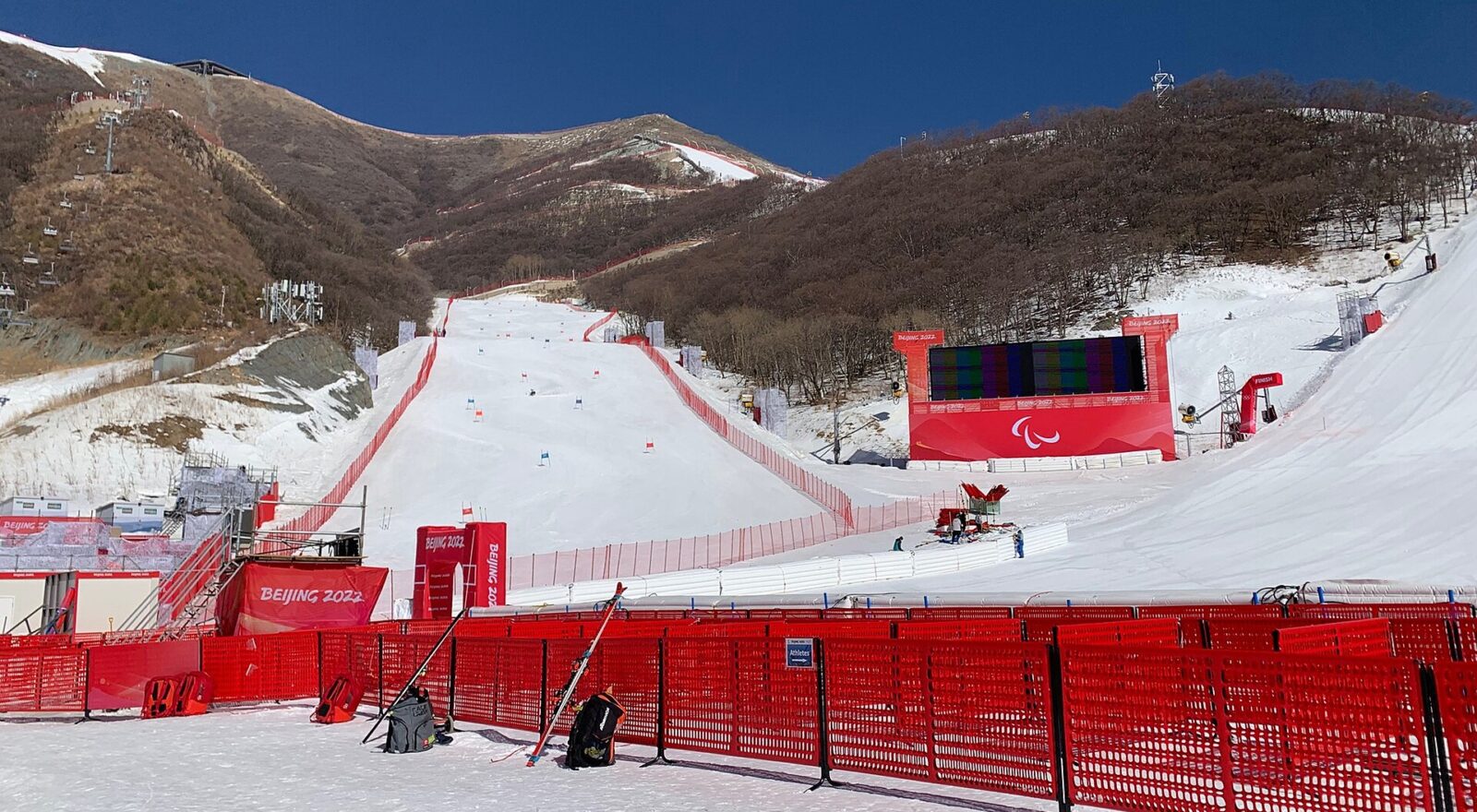
From the top of Xiaohaituo Mountain in Yanqing in late autumn, the view is of brown hills, bare trees and, running down through them, a set of perfectly white ribbons. That is skiing near Beijing in one picture. The mountains are real and the Olympic runs are steep, but almost all the snow is made by machine, because Beijing’s winters are cold and very dry. Once you accept that, skiing near Beijing is surprisingly good: dozens of groomed runs within an hour or two of the city, a high-speed railway built for the 2022 Winter Olympics, and a ski region at Chongli that would hold its own in many countries.
This guide covers the 2026–27 season, the resorts inside Beijing municipality and what each one suits, the Olympic venue at Yanqing, the bigger resorts at Chongli in Hebei, how to get to each, what to budget, and the honest verdict on snow, crowds and whether it is worth giving up a sightseeing day for. Season details were checked in November 2026; resorts set each winter’s prices and hours as the season opens, so where last season’s figures appear they are labelled as such; check the current ones on each resort’s WeChat account before you go.
The short answer
- Beginner, one free day, no car: Nanshan in Miyun. It is the best set up for visitors, with ski buses from the city, a free shuttle from the high-speed station and 30 runs.
- A few hours, staying in the northwest of the city: Xishan in Haidian, about 2 km from Wenyanglu station on the metro, with night skiing. Small, but handy for the city centre.
- Intermediate or better, want something memorable: the National Alpine Ski Centre at Yanqing, the 2022 Olympic alpine venue, if public skiing is open on your dates.
- Serious skier, two or more days: Chongli, reached by high-speed train. This is where the long runs, the big lift systems and the ski hotels are.
If you have skied in the Alps or the Rockies, set your expectations around artificial snow and short Beijing runs, and treat Chongli as the real ski trip. If you have never skied, Beijing is one of the easier places in the world to try it for a day.
The 2026–27 season
The season near Beijing depends on cold nights, not snowfall. Resorts start making snow as soon as temperatures allow and open runs in stages as the cover builds.
- Chongli opened its 2026–27 season on 31 October 2026, after snowmaking started on 12 October. Individual resorts open as conditions allow, and Chongli’s official WeChat accounts, 雪国崇礼 and 崇礼体文旅, post the latest opening news.
- The National Alpine Ski Centre at Yanqing began snowmaking on 26 October 2026, about ten days earlier than usual, and expected to open for the season in mid-to-late November with 6 km of runs. It plans to open 13 runs in stages over the winter.
- The resorts inside Beijing open from late November into early December. Last season, Shijinglong and the National Alpine Ski Centre opened first, on 22 November 2025, and all thirteen Beijing resorts were open by 8 December 2025. Expect a similar pattern this winter, and check each resort’s WeChat account for its exact date.
How long the season lasts depends on the spring thaw. Last winter Nanshan ran from 4 December 2025 to 8 March 2026, which is a fair guide to a typical Beijing season: roughly December to early March, with the best cover from late December to mid-February. Chongli, higher and colder, opens earlier.
Holidays to avoid
New Year’s Day and the Spring Festival holiday are the busiest times on the slopes. School winter holidays, which run from mid-January into February, fill the beginner areas with ski schools and family groups. Weekdays outside those periods are noticeably quieter, and Nanshan prices its ski bus lower on Mondays and Tuesdays.
About the snow
Beijing gets very little precipitation in winter, with most of the year’s rain falling in summer, so a natural snowfall is an event rather than a base. Every resort near the city depends on snowmaking. The National Alpine Ski Centre, for example, began the 2026–27 season with 88 snow guns running across more than 150,000 square metres of its first runs, around the clock on the summit and at night lower down.
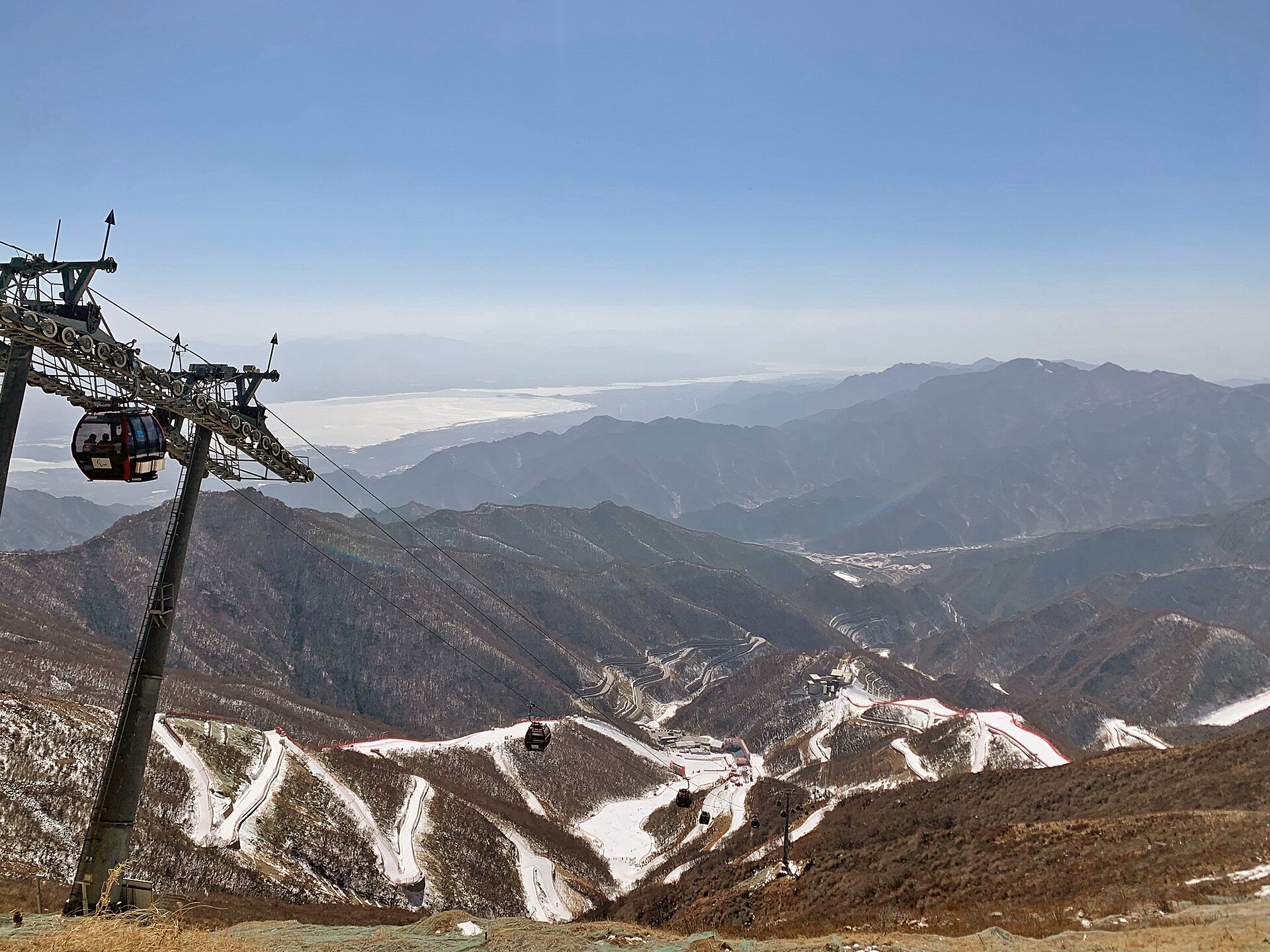
What that means on the ground:
- Expect firm, groomed pistes. Machine-made snow is dense and fast. It is excellent for learning and for carving, less so for anyone hoping for soft powder.
- Off-piste is not a thing. The ground between runs is usually bare hillside. Stay on the marked runs.
- Afternoons can get icy or slushy. On sunny, south-facing slopes the snow softens in the middle of the day and refreezes in the late afternoon. Morning is the best time to ski.
- Cold and wind are the real hardship. Beijing’s January nights are well below freezing, and the mountain resorts are colder and windier than the city. Dress for it.
Beijing’s official tourism site describes Shijinglong in Yanqing as the first resort in China to use artificial snow, when it opened in 1999 — a reminder that snowmaking has been the basis of skiing here from the start.
What a ski day costs
Most Beijing resorts sell packages rather than a simple lift pass: a block of time on the slopes (two hours, four hours, a full day or a night session) bundled with rental skis, boots and poles, with clothing, helmets, lockers and lessons extra. Prices change between weekdays, weekends, holidays and the early-booking period, and resorts post them on their WeChat accounts and mini-programs, and on Meituan and Trip.com, rather than on a fixed price page. These are the figures you can plan around now.
| Item | Price | Notes |
|---|---|---|
| Nanshan ski bus, day return | ¥58 | From Sanyuanqiao or Wudaokou; ¥33 on Mondays and Tuesdays except the New Year and Spring Festival holidays; book a day ahead |
| Ski-time packages, rental, lessons | Check with the resort | Weekday packages are cheapest; booking a day or more ahead online usually costs less than buying at the counter |
| Ski equipment on Beijing–Zhangjiakou trains | ¥68 per set | Last winter’s service; book through 12306 and check it runs this season |
| High-speed train to Taizicheng (Chongli) | Check 12306 | Fares vary by train and class |
A sensible way to budget: book the package for your date on the resort’s own mini-program or Trip.com the day before, add clothing rental if you have not packed for it, and add a lesson if you are a beginner. Weekday packages at the city resorts are where the value is.
Ski resorts inside Beijing
Beijing municipality has more than a dozen ski areas. Most are small by international standards, but several have proper lift systems, intermediate runs and night skiing. Opening times below are last season’s (2025–26) and give a good idea of each resort’s pattern; check this season’s before you travel.
| Resort | District | Size | Last season’s hours | Best for |
|---|---|---|---|---|
| Nanshan | Miyun | 30 runs | Day 09:00–17:00; night 18:30–22:00 | First-timers, a full day, getting there without a car |
| Huaibei | Huairou | 11 runs | Day 08:30–16:30 | Skiing with the Great Wall around you |
| Shijinglong | Yanqing | Sunny-side slopes | 08:30–17:00; night skiing from mid-December | Early-season skiing |
| Jundushan | Changping | 150,000 m² of skiing | Day 08:00–18:00; night 17:00–22:00 | A short trip from the city; pairing with hot springs |
| Yunju | Fangshan | 800,000 m² site | Day 08:30–16:20; night 18:00–21:50 | Southwest Beijing |
| Xishan | Haidian | Small | Day 09:00–17:00; night from 18:00 | A few hours on skis near the city, by metro |
| Yunfo | Miyun | 7 runs | Day 08:30–16:30 | Quiet beginner skiing by Miyun Reservoir |
Nanshan (Miyun)
Nanshan is the resort most visitors end up at, and for good reason. It has 30 graded runs, three four-person chairlifts, 17 magic carpets and six drag lifts, plus a separate learning area for small children, a children’s ski school, mogul and wave runs and a terrain park. It runs day and night sessions.
Getting there is the easiest of any Beijing resort. Last season the resort ran ski buses from Sanyuanqiao (08:15) and Wudaokou (08:30), returning from Nanshan at 17:30, for ¥58 return, or ¥33 on Mondays and Tuesdays outside the New Year and Spring Festival holidays, booked a day in advance. A second bus ran from Ciqikou at noon for the afternoon and night sessions, returning at 21:30. Alternatively, take a high-speed train from Beijing Chaoyang to Miyun station, about 30 minutes, and catch the resort’s free shuttle bus for the last 3 km; the shuttle timetable is in the resort’s WeChat account (北京南山滑雪场). By car it is about an hour up the Beijing–Chengde Expressway.
- Address: Shengshuitou Village, Henanzhai Town, Miyun District
- Phone: 010-8909 1909
- Verdict: the best all-round day on skis from Beijing for a beginner or improving skier, and the one to choose if you are relying on public transport.
Huaibei (Huairou)
Huaibei International Ski Resort, north of Huairou and about 60 km from Sanyuanqiao, is the place to ski with the Great Wall in view: the resort is bounded on three sides by the Ming Wall, and the well-known Jiabian watchtower is part of the scenery. It has been running for more than two decades and has 11 runs — two beginner, seven intermediate, including 800-metre runs for improvers, and two advanced. It is a good choice for intermediates who want a little character with their skiing, and the views are better than anything at the bigger city resorts.
Shijinglong (Yanqing)
Shijinglong, run under the Vanke name, opened in 1999 and is usually among the first Beijing resorts to open; last season it was skiing from 22 November. Its runs face the sun, which makes it one of the more comfortable places in Beijing to ski on a cold day, and it added night skiing from mid-December last winter. It is a sensible stop if you are already heading out to Yanqing for the Olympic venue or the Badaling Great Wall.
Jundushan (Changping)
Jundushan sits at the foot of the Jundu Mountains in Changping, a little over 30 km from the city centre, with the Ming Tombs to the west and the Xiaotangshan hot spring area to the east. It opened in 2003, has about 150,000 square metres of skiing on beginner, intermediate and advanced runs, and stays open into the evening. Last season it also introduced pet-friendly services, with a dedicated snow-play area. Its location makes for an excellent winter day: ski in the morning, then spend the afternoon in a spring at Xiaotangshan — our guide to hot springs near Beijing covers the resorts there.
Xishan (Haidian)
Xishan, in Wenquan Town in Haidian District, is one of the closest ski slopes to central Beijing: about 15 km from Zhongguancun and roughly 2 km from Wenyanglu station on the metro. It is small, but it runs night sessions every evening, which makes it possible to fit in two hours of skiing after a day of sightseeing. Think of it as a practice hill rather than a day out.
Yunju and Yunfo
Yunju, in Zhangfang Town in Fangshan District, is the main choice in the southwest: about 60 km from the city and roughly 50 minutes by road via the Lianshi Road and Sixth Ring Road, with day and night sessions. Yunfo is on the south shore of Miyun Reservoir, ringed by hills on three sides, with seven runs and a quieter, more resort-hotel feel. Both are pleasant local hills; neither is worth a long trip in preference to Nanshan unless it is nearer to where you are staying.
The Olympic runs at Yanqing
The National Alpine Ski Centre on Xiaohaituo Mountain in Yanqing hosted the alpine skiing at the 2022 Winter Olympics and Paralympics. According to Beijing’s tourism bureau, 41 Olympic and Paralympic gold medals were decided here, and it is the only venue in China to have staged Olympic alpine racing. Since the Games it has opened to the public as part of Yanqing Olympic Park.
For the 2026–27 season the park expected to open in mid-to-late November with 6 km of runs, and to open 13 runs in stages through the winter. The first snowmaking was concentrated on the Haituo crossing race section and the runs known as Rainbow, Rosy Clouds, Cloud, Forest and Silk Road. Last season it opened on 22 November 2025 and ran from 09:00 to 17:00.
- Who it suits: confident intermediates and better. These are race runs built for the world’s best; there is far more challenge here than at the city resorts.
- Who should skip it: beginners, who will get more from a day at Nanshan or Huaibei.
- Booking: public skiing is sold through the Yanqing Olympic Park official account and its booking partners. Check which runs are open, the session times and the price for your date before you travel.
- Getting there: the Yanqing branch of the Beijing–Zhangjiakou high-speed railway serves Yanqing station, from where it is a further road journey into the mountains. Check the park’s own transport advice for this season’s shuttle arrangements.
Chongli: the serious ski trip
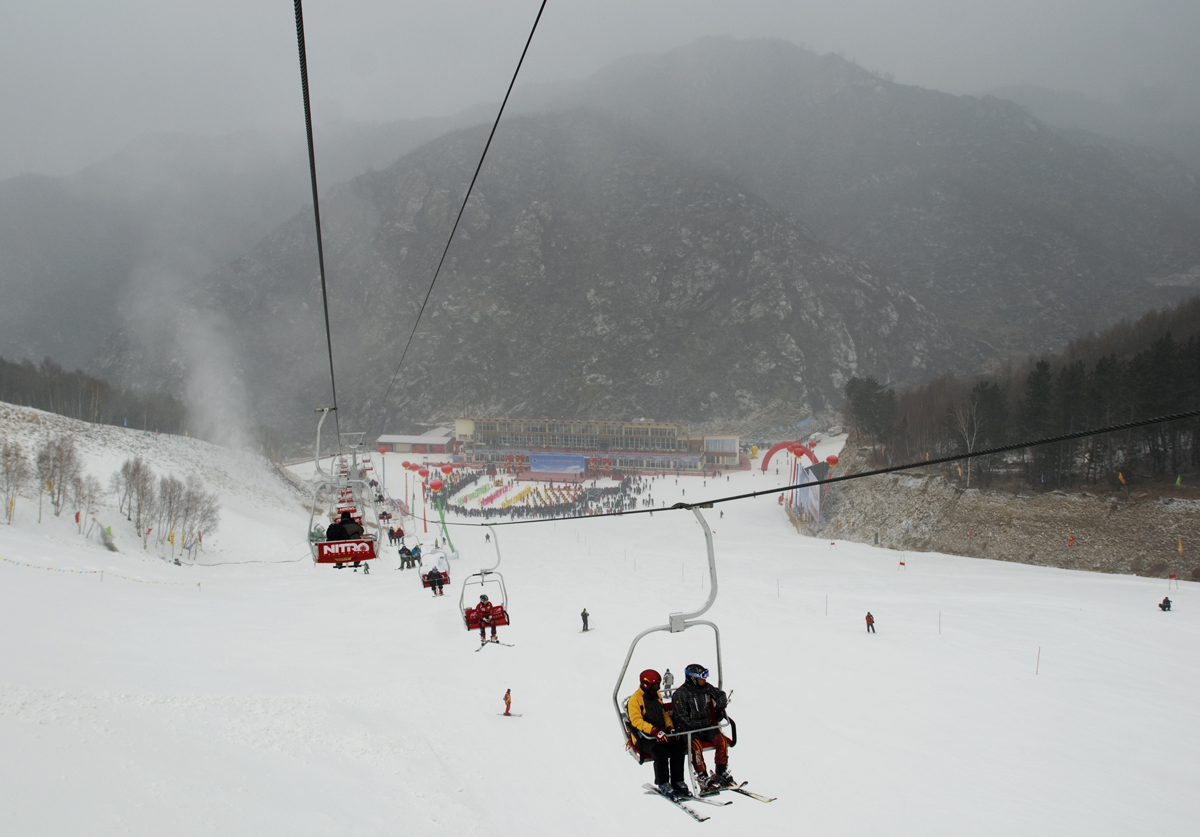
Chongli District, in Zhangjiakou in neighbouring Hebei, hosted the snowboard, freestyle, cross-country, ski jumping and biathlon events at the 2022 Games, and is one of China’s largest ski areas. Zhangjiakou’s government counts nine resorts in Chongli’s public winter events programme, including well-known names such as Genting Snow Park (云顶), Thaiwoo (太舞), Wanlong (万龙) and Fulong (富龙). Compared with the Beijing hills, they are higher and colder, with longer runs, more terrain and proper ski villages with hotels at the lifts.
Getting to Chongli
- By high-speed train: the Beijing–Zhangjiakou railway runs from Beijing North and Qinghe stations to Taizicheng and Chongli stations. Trains run from Beijing in roughly an hour. Check 12306 for this season’s timetable, journey times and fares, and book early for Friday evenings and weekend mornings in the season.
- From the station to the slopes: Zhangjiakou says shuttle buses run regularly from Taizicheng and Chongli stations to the resorts in the season. Some resort hotels arrange their own transfers.
- From the airports: direct buses from Beijing Capital and Daxing airports to the Chongli resorts are due to resume in mid-November 2026.
- Your skis: last winter the railway ran a ski-equipment service on peak Chongli-direction trains, at ¥68 a set, booked through 12306; check whether it is running this season.
Is Chongli worth it from Beijing?
For a beginner on a short trip, no: the city resorts do the job for a fraction of the time and cost. For an intermediate or advanced skier with two or three days, yes. A day trip is technically possible by early train, but the real value is in staying at least one night, skiing two full days and avoiding the weekend rush on the trains. Chongli is also a sensible base if you want to watch international competition: the region was due to host 21 professional snow-sports events in the 2026–27 season, eleven of them international.
Booking, rental and lessons
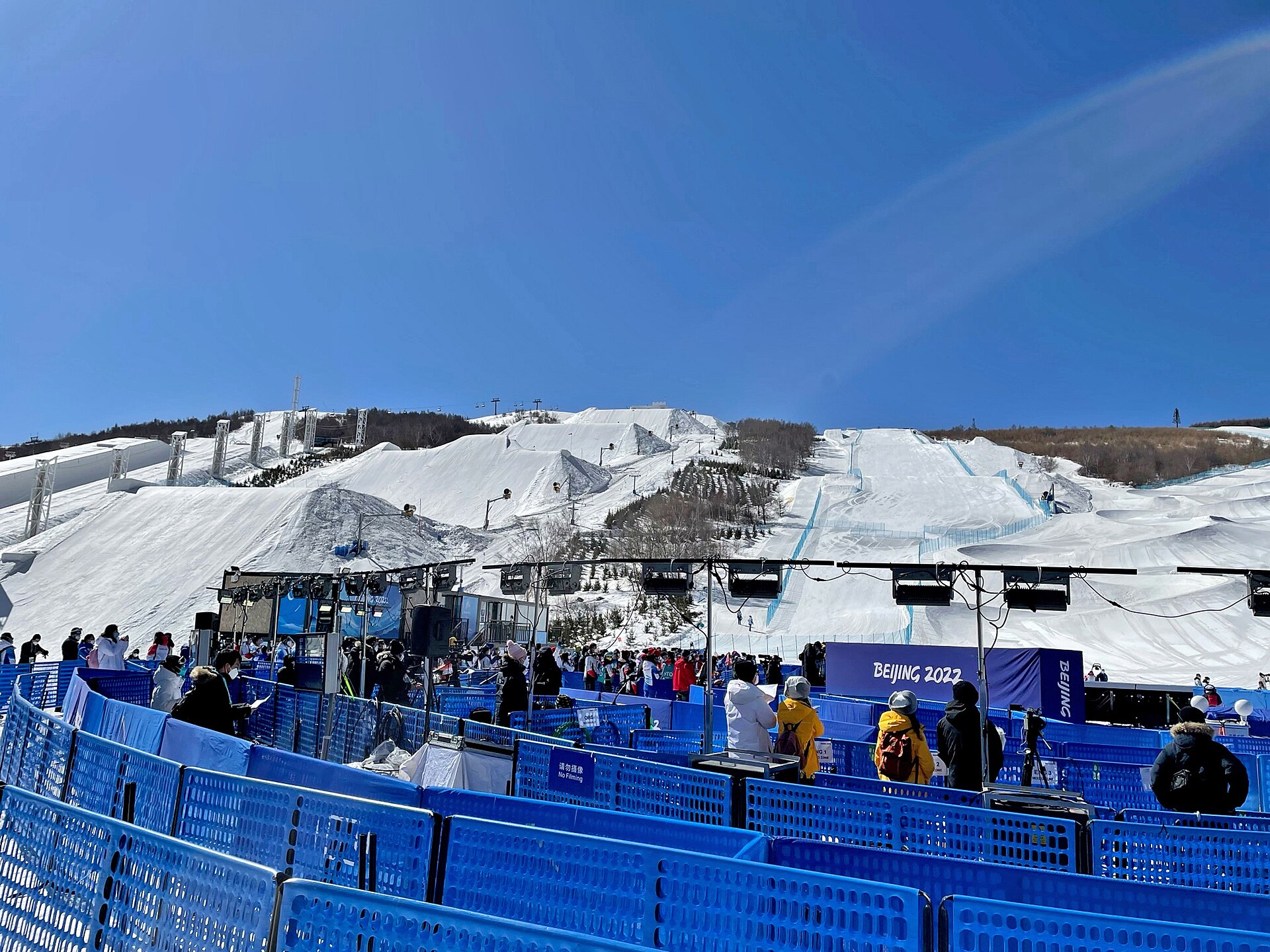
- Book online, a day ahead. Resort mini-programs on WeChat, Meituan and Trip.com sell time-based packages for a specific date, usually cheaper than the counter price. Bring the passport you booked with: real-name booking is normal across Beijing’s attractions.
- Rental is standard. Skis, boots and poles come with most packages. Snowboards, helmets, clothing, goggles and gloves are often extra. Larger resorts rent full ski suits; smaller ones may not have every size.
- Lessons are worth it for beginners. Resorts run instructor booking through their mini-programs; Nanshan upgraded its instructor booking system last season. English-speaking instructors are limited, so ask for one when you book and expect to pay more, or bring a translation app.
- Know the time-ticket system. Your package starts when you pass the gate with your card and ends when you return it. Overrunning is charged by the hour or part-hour, so keep an eye on the clock at the end of the day.
- Deposits and lockers. Expect a deposit for your ski card and a charge for lockers; both are usually paid by Alipay or WeChat Pay.
What to wear and pack
The cold at a Beijing ski hill is dry, sharp and often windy. Even if you rent a ski suit, bring your own base layers.
- Thermal top and leggings, plus a fleece or light down mid-layer
- Ski socks — the one thing it pays not to rent
- Waterproof gloves, a neck gaiter and a hat or helmet liner
- Goggles or sunglasses; the glare off machine-made snow under a clear winter sky is strong
- High-factor sun cream and lip balm
- A power bank, because phone batteries drain fast in the cold and you will need your phone to pay for everything
Our Beijing packing list covers winter clothing in more detail, and the Beijing winter guide covers the rest of the season, from frozen-lake skating to snowy palaces.
When skiing near Beijing is not worth it
- On a short first visit. With three or four days, the city’s headline sights and a section of the Great Wall come first. A ski day costs a whole day once you count the travel.
- At weekends and holidays, if you can avoid them. Lift queues, crowded beginner areas and sold-out buses make a Saturday at a city resort a different experience from a Tuesday.
- If you want powder. You will not find it near Beijing. Chongli is higher and colder, but the experience is still mostly groomed piste.
- On a day of bad air. The resorts are outside the city but not always outside the pollution. Check the AQI; above 150 is a poor day for hard exercise outdoors. See our air quality guide for what the numbers mean.
Where it shines: as a first ski day for someone who has never tried it, as a break for families after several days of museums and temples, and for experienced skiers who want to tick off an Olympic run or spend a few days at Chongli.
Combining skiing with other winter days out
- Ski and soak: Jundushan in Changping is close to the Xiaotangshan hot spring area. Ski in the morning, soak in the afternoon.
- Ski with the Wall: Huaibei is surrounded on three sides by the Ming Great Wall. For a walk on the Wall itself, Mutianyu is also in Huairou District; our Great Wall hiking guide compares the sections.
- Yanqing in a day: Badaling and the Olympic ski venue are both in Yanqing District, but either one fills a day in winter. Do one well rather than both in a rush.
- Ming Tombs and a city hill: the Ming Tombs are just west of Jundushan, which makes a culture-and-skiing day possible without a long drive.
For more ideas beyond the slopes, our hub of day trips from Beijing lists every excursion worth the journey, and the hiking guide covers the mountains once the snow melts.
Frequently Asked Questions
When is ski season near Beijing?
Roughly December to early March at the resorts inside Beijing, which open from late November as snowmaking allows. Chongli in Hebei opened its 2026–27 season on 31 October 2026. Check each resort’s WeChat account for its exact dates.
Can I go skiing as a day trip from Beijing?
Yes. Nanshan in Miyun runs ski buses from Sanyuanqiao and Wudaokou and a free shuttle from Miyun high-speed station, and several other resorts are within about an hour of the city by car. Chongli can be done as a long day by high-speed train, but it is better with an overnight stay.
How much does a day of skiing near Beijing cost?
Resorts sell time-based packages that usually include rental skis, boots and poles, with clothing, helmets and lessons extra. Prices vary between weekdays, weekends and holidays, so compare the resort’s own mini-program with Trip.com or Meituan the day before. Nanshan’s ski bus costs ¥58 return, or ¥33 on Mondays and Tuesdays outside the New Year and Spring Festival holidays.
Is the snow real?
Mostly not. Beijing’s winters are very dry, so every resort relies on snowmaking. Expect firm, well-groomed runs rather than powder.
Is skiing near Beijing good for beginners?
Very. The city resorts have plenty of gentle runs, magic carpets and ski schools, and Nanshan has a dedicated children’s learning area. Book a lesson, ask for an English-speaking instructor in advance, and go on a weekday.
Can I ski on the Olympic runs?
Yes, when the National Alpine Ski Centre at Yanqing is open to the public. For 2026–27 it expected to open in mid-to-late November and to open 13 runs in stages. The runs are demanding, so it suits confident intermediates and better.
Do I need to bring my own equipment?
No. Rental skis, boots and poles are standard, and larger resorts rent ski suits. Bring your own base layers, ski socks, gloves and goggles for comfort.