Day Trips & Excursions From Beijing
Hot Springs Near Beijing: Where to Soak in Winter
Where Beijing's hot springs really are, which Xiaotangshan resorts are worth a day, how Gubei pairs a soak with the Simatai Wall, and how the resorts work.
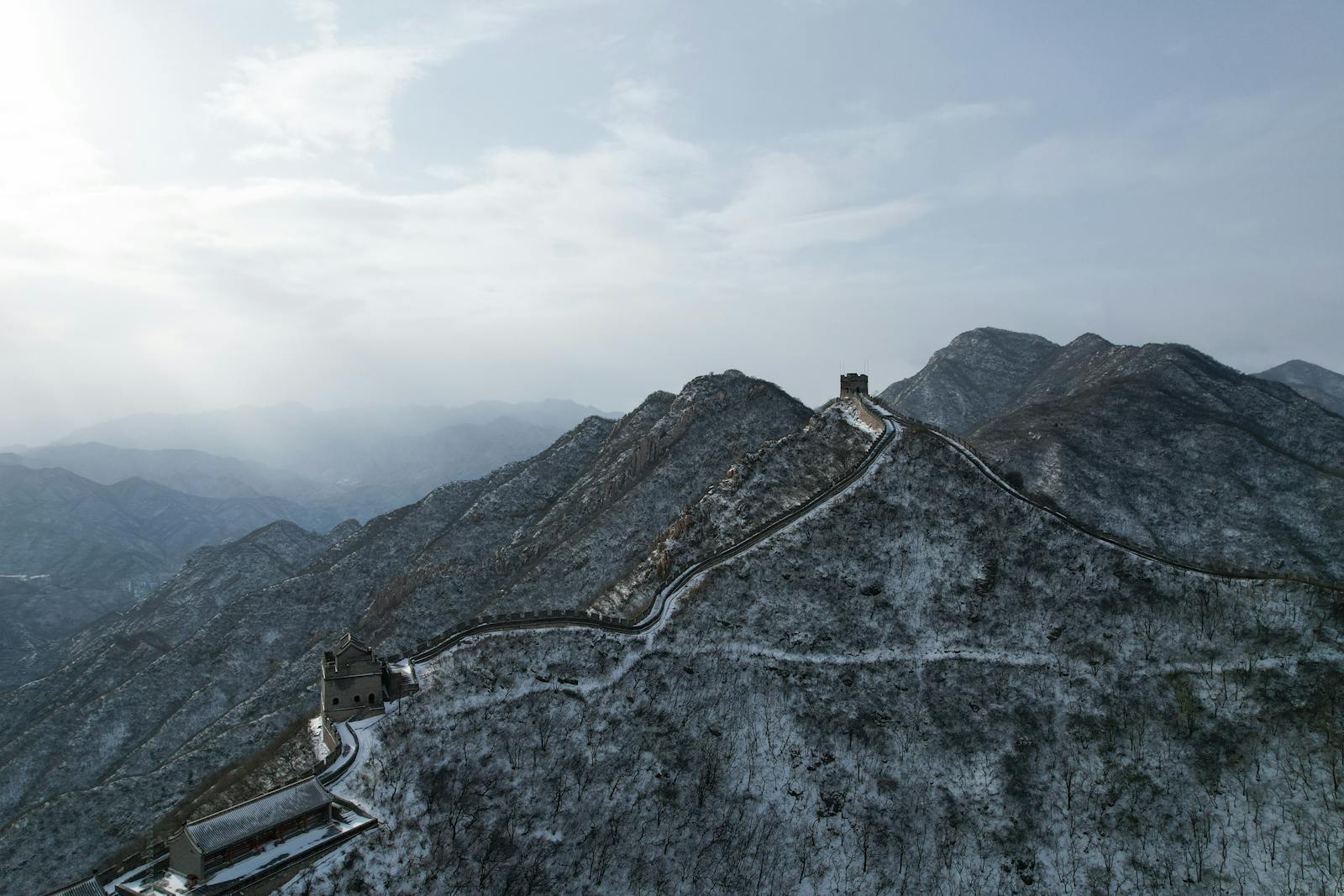
On a January afternoon, when the wind off the Yan Mountains makes a walk across Tiananmen feel like a punishment, a surprising number of Beijingers simply leave. They head north into Changping, change into swimsuits, and spend the rest of the day sitting in steaming water with their eyes half closed. The capital sits on top of a large geothermal field, and the hot springs near Beijing have been used for bathing for well over a thousand years — by Liao empresses, Ming and Qing emperors, a generation of Communist leaders and, now, families with inflatable rings and a bag of sunflower seeds.
This guide covers where the springs actually are, which resorts are worth your day, what a soak costs and how to check it, the history that makes Xiaotangshan more than a spa town, and how to pair a session in the water with a cold morning on the Great Wall. Ticket prices were checked in November 2026; resort prices change by season, day of the week and package, so treat the advice on checking them as part of the plan rather than an afterthought.
The short answer
If you only have one day, go to Xiaotangshan in Changping District. It is the historic hot spring town of Beijing, the city’s own tourism bureau calls it the place Beijing residents love most for a winter soak, and it has a large cluster of resorts. Jiuhua is the one-stop resort with everything under one roof; Longmai has the better outdoor pools, set among bamboo. Either makes a good afternoon after a morning at the Ming Tombs, which are in the same district.
If you have two days and want the Great Wall in the same trip, go to Gubei Water Town under the Simatai Wall instead. It is further out and more expensive, but you get a winter hot spring, a canal town lit up at night and a night tour on the Simatai Wall, all within a short walk or cable-car ride of your bed.
Skip the idea of a “natural” hot spring in a wild valley. Near Beijing the water is piped into resorts and hotels, and the experience is a leisure complex rather than a steaming pool in the woods. That is not a criticism — it is warm, clean and well run — but it helps to know what you are booking.
What a hot spring day costs
Resort entry is the figure that moves most. Every resort near Beijing sells several products — daytime entry, an evening card, weekend and holiday prices, private rooms and overnight packages with breakfast and unlimited bathing — and online platforms run their own discounts. The fixed costs around the soak are easier to pin down.
| Item | Price | Notes |
|---|---|---|
| Xiaotangshan resort entry (Jiuhua, Longmai) | Check with the resort | Varies by day, time of day and package; weekend and holiday prices are higher |
| Private-spring room or courtyard | Check with the resort | Priced as accommodation; often the quietest way to soak |
| Gubei Water Town entry | ¥150 | Town admission; hot spring use is separate |
| Simatai Great Wall, day | ¥40 | Or ¥170 for town plus day Wall |
| Simatai Great Wall, night tour | ¥160 | Includes the return cable car; town ticket also needed |
| Mutianyu Great Wall | ¥40 | Regular adult ticket; cable car ¥100 one way, ¥140 return |
| Huanghuacheng Lakeside Great Wall | ¥60 | Adult admission |
| Beijing taxi | ¥13 flag fall | Covers the first 3 km; Xiaotangshan is a long metered ride north |
The practical approach: open the resort on Meituan, Trip.com or Dianping the day before, compare the day ticket with the evening card, and look at the weekday price if you have the flexibility. A Tuesday afternoon is a different experience from a Saturday — cheaper, and with far fewer children doing cannonballs into the warm pool.
Why Xiaotangshan: a thousand years of bathing
Xiaotangshan means, more or less, “small soup mountain”, and the soup in question is the hot water that comes out of the ground here. The earliest written mention of the springs goes back to the Northern Wei period, in the Commentary on the Water Classic, and a Yuan-dynasty geography already notes that bathing in them was good for you. The name stuck because the water never went away.
The site’s royal history is long and well documented. During the Liao dynasty the Empress Dowager Xiao came here to bathe; Beijing’s tourism bureau notes a “dressing table” among the historic sites she left behind. The Ming emperor Zhu Houzhao — better known by his reign name, Zhengde — was moved to exclaim in verse after bathing here, according to the bureau, and by the Ming the area had become a royal garden.
The Qing went further. In the 54th year of the Kangxi reign, 1715, the emperor built a travelling palace at the springs, the Tangquan Xinggong, with a lotus pond at the source for bathing, and came back repeatedly to rest. His grandson Qianlong extended the palace northwards and added a garden of temples and pavilions, and an inscription in his hand, “Jiu Hua Xi Xiu”, was carved on the north cliff. The road that runs past the Longmai resort today is still called Xinggong Road, Palace Road, after it.
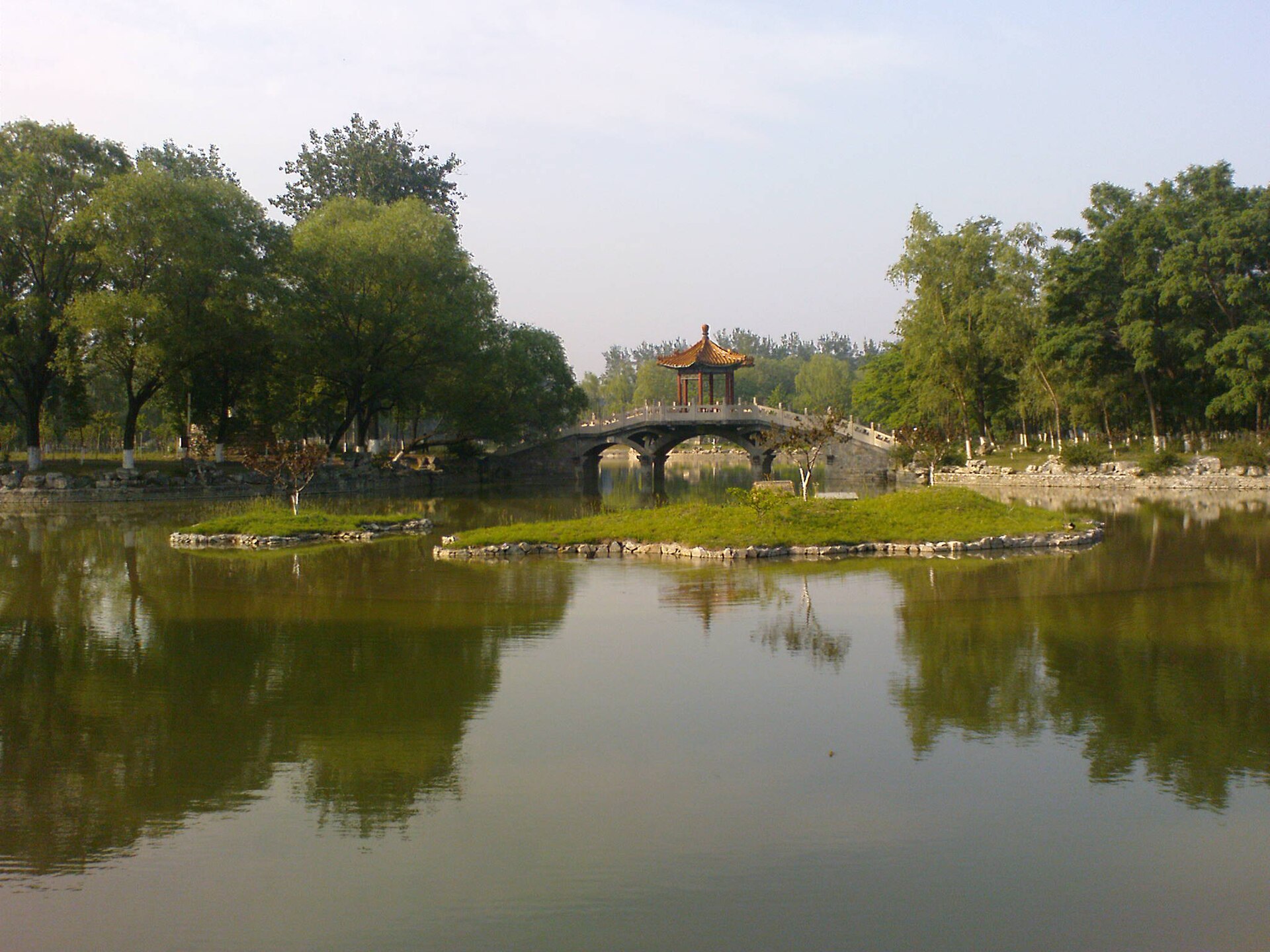
The palace did not survive the twentieth century. It was demolished by troops of the Eight-Nation Alliance, and the springs were damaged again in the war against Japan in the 1930s and 1940s. In the Republican years the site had briefly been opened to the public as Tangshan Park. After 1949 it became the Xiaotangshan sanatorium, a health resort that Mao Zedong, Zhou Enlai and other leaders visited often, and the reputation for medicinal bathing carried straight on into the resort era. The name is also attached to Xiaotangshan Hospital, which is a working hospital and not somewhere to visit.
The original palace is not a sight in its own right, and the resorts do not offer a heritage trail. What you get is the sense — reinforced by the street names and the old stories on resort walls — that people have been coming to this exact patch of ground to get warm for a very long time.
The water itself
According to Beijing’s tourism bureau, the geothermal field around Xiaotangshan is unusually rich: hot water lies under an area roughly 30 km in radius around the town, at depths ranging from about 150 to 1,400 metres. Across the wider area the water mostly comes up at 40–50°C, and in the centre of the Xiaotangshan belt it reaches 55–64°C — too hot to sit in straight from the ground, which is why the resorts mix and cool it into pools of different temperatures.
The resorts all talk about minerals and trace elements, and the bureau’s account credits the water with benefits for skin, joints and fatigue. Take the health claims with as much salt as the water contains. The real benefit, as anyone who has walked the Wall in January will tell you, is simply being properly warm for a few hours.
The pools are graded. Most resorts have a range from comfortably warm to properly hot, plus a cold plunge, herbal or “medicinal” pools tinted with tea, ginger or flowers, and a lap pool. Each is usually signed with its temperature. Start in the cooler ones, keep sessions in the hottest pools short, drink water between them, and get out if you feel light-headed — particularly if you have been drinking at lunch.
The Xiaotangshan resorts
Xiaotangshan has more hot spring businesses than any visitor could use, from large family resorts to villa hotels and small private-spring guesthouses. These are the ones Beijing’s tourism bureau puts forward for visitors, and the two big ones are the obvious places to start.
Jiuhua Resort Hot Spring
Jiuhua (九华) is the big all-rounder. The resort describes its water by an old nickname, the “golden soup pot”, and puts hot spring pools, medicinal baths, a swimming hall, saunas, massage, restaurants and entertainment on one site, so you can arrive late morning and not leave until dinner. It is a full-scale leisure park, which means a lot of families at weekends; if that is not your idea of relaxation, go on a weekday or in the evening.
Its most distinctive product is the “18 Hutongs” private hot spring: eighteen courtyard rooms built in the style of a Beijing siheyuan, each named after an old city street — Gulou Street and Nanluogu Alley among them — with its own private spring. It is the closest thing near Beijing to a quiet onsen-style soak, and it is priced as a room rather than an entry ticket.
- Address: No. 75 Shunsha Road, Xiaotangshan Town, Changping District
- Phone: 010-6178 2288
- Hours: the city’s tourism listing gives 08:30–21:00 for an October–December season; confirm by phone for your date, since hours shift with the season and evening cards run later than day tickets
- Best for: a long, easy day with everything on site; families; first-timers
Longmai Hot Spring Resort
Longmai (龙脉) sits in the middle of the Xiaotangshan hot spring belt on Xinggong Road. It was built in 1993, covers 280 mu (about 19 hectares) and holds the national AAAA scenic-area rating. As well as a hotel, apartments and villas, it has two bathing areas that make it the better choice for anyone who likes being outside in the cold.
- The Tropical Rainforest Pavilion: an indoor hall with more than ten pools — hot springs, swimming and children’s water play — under heavy tropical planting. This is the family zone.
- The Bamboo Forest Hot Spring Pavilion: more than ten outdoor pools of different sizes and shapes spread through a bamboo grove. On a sub-zero evening with steam rising off the water, this is the experience most people imagine when they think of a winter hot spring.
Longmai’s published prices and hours differ between listings, so call or check the resort’s booking page for your date before you set off. As a rule of thumb, weekend and public holiday prices are higher than weekday ones.
Private-spring guesthouses
At the other end of the scale, Xiaotangshan has small guesthouses where each room has its own spring-fed tub. The tourism bureau has highlighted Xiaotang Yipiao, a private-spring guesthouse built in a three-courtyard old mansion in Changping and designed in a pared-back, Japanese-influenced style. Places like this suit couples who want privacy more than water slides; check that any guesthouse you find is taking bookings, since small operators open and change hands more often than the big resorts.
Which one?
| If you want… | Choose | Why |
|---|---|---|
| Everything on one site, all day | Jiuhua | Pools, medicinal baths, sauna, massage and restaurants together |
| Outdoor pools in the cold | Longmai | The Bamboo Forest pavilion’s open-air pools |
| Children’s water play | Longmai or Jiuhua | Longmai’s Rainforest Pavilion is built for it |
| Privacy and quiet | Jiuhua’s 18 Hutongs, or a private-spring guesthouse | Your own spring, no crowds |
| Hot spring plus the Great Wall | Gubei Water Town | Simatai Wall above the town; see below |
Gubei Water Town: a soak under the Simatai Wall
Gubei Water Town is a purpose-built canal town in Miyun District, about 120 km northeast of central Beijing, laid out beneath the Simatai section of the Great Wall. It gets dismissed as fake by people who have not been, and admired by almost everyone who has. In winter it adds a hot spring to everything else: Beijing Daily reported the seasonal Gubei Royal Hot Spring (古北御汤泉) among the town’s winter offerings in 2025–26, alongside its lantern show and ice-and-snow activities; check the town’s site for whether it returns this winter.
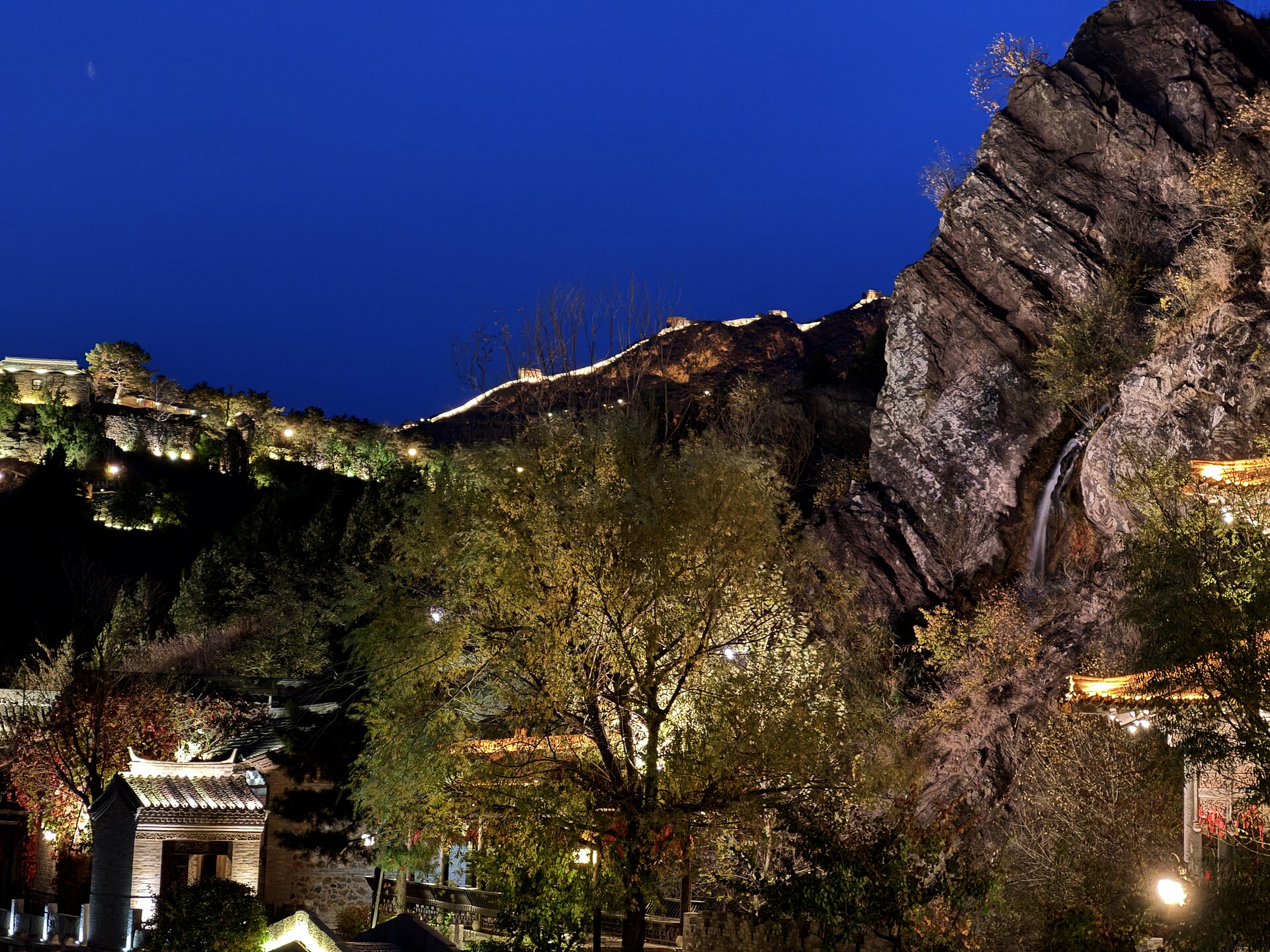
The reason to choose Gubei over Xiaotangshan is the combination. You can walk the Simatai Wall in the morning, soak in the afternoon, eat by the canal, and then go back up for the night tour — an evening experience few Wall sections offer. In practice that makes it an overnight trip, and an expensive one by Beijing standards, but it is one of the most complete winter days available within reach of the city.
- Town entry: ¥150. You need it to visit the town and for the night Wall.
- Simatai, day: ¥40, or ¥170 as a town-plus-Wall combination. Towers 2 to 10 on the east section are open; it is about 1.4 km and roughly 45 minutes on foot from the Wall entrance to Tower 2.
- Simatai, night tour: ¥160 with the return cable car, plus town entry. Only the stretch between Towers 5 and 6 is open at night.
- The hot spring: check whether the winter spring is running and what it costs when you book, and ask your hotel whether it has hot spring facilities for guests and whether they are included in the room rate.
Our full Gubei Water Town guide covers the journey, the hotels and the night Wall in detail, and the Simatai Great Wall guide covers the walk itself.
Building a winter day around a soak
A hot spring is best as the second half of a cold day. Spend the morning outside, arrive at the pools stiff and chilled, and the water does what it is supposed to do. Three combinations work well.
Ming Tombs and Xiaotangshan (one day, Changping)
The Ming Tombs and Xiaotangshan are both in Changping District, which makes this the most efficient pairing. Do the tombs and the Sacred Way in the morning while the light is low and the paths are empty, eat lunch, and take a car across to the springs for the afternoon and early evening. Avoid weekends if you can. If you would rather swap the tombs for something indoors, the China Aviation Museum is nearby at Datangshan in Changping, with a large collection of military and civil aircraft.
Simatai and Gubei (overnight)
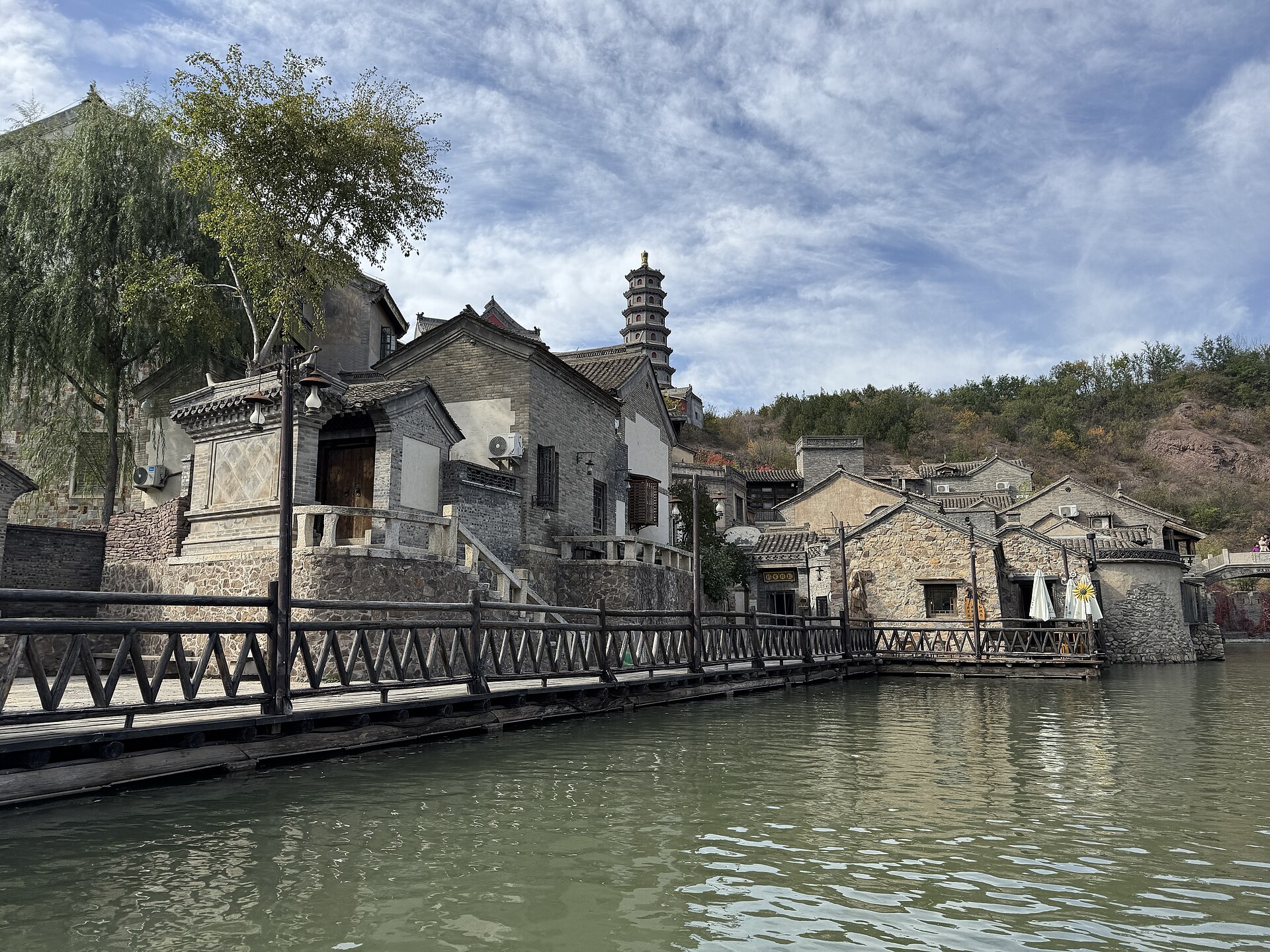
Leave Beijing in the morning, walk the Simatai Wall in daylight, soak in the afternoon, and do the night tour after dinner. The next morning is yours for a slow breakfast and a wander round the canals before the day visitors arrive. This is the trip to book if you are travelling as a couple and want one memorable night outside the city.
Mutianyu or Huanghuacheng, then the springs (a long day, with a driver)
Mutianyu (¥40, opening at 08:00 from 16 November) and Huanghuacheng (¥60, winter hours 08:30–16:30) are both north of the city, and both look wonderful after snow. With a hired car you can walk a section in the morning and finish in the water. Huanghuacheng’s main sight is the stretch of Wall running into Haoming Lake; in a hard winter the reservoir freezes, which makes for a strange, quiet scene. This only works with your own transport; public buses will leave you short of time. See the Great Wall hiking guide for which section suits your fitness.
How Chinese hot spring resorts work
If your reference point is a Japanese onsen or an Icelandic lagoon, the big resorts near Beijing will surprise you. The main halls are mixed-sex and family-oriented, so swimwear is worn throughout. Expect something closer to a heated water park with good food than a contemplative bath.
Arriving
- Book ahead for weekends and holidays. Most resorts sell tickets through their own WeChat accounts and through Meituan, Trip.com and Dianping. Bring the passport you booked with; real-name booking is now normal across Beijing’s attractions.
- Collect a wristband. At most large resorts it opens your locker and acts as your wallet: food, drinks, massage and extras go on it, and you settle up when you leave.
- Shower first. Separate changing rooms and showers come before the mixed pools; use them.
What to pack
- A swimsuit. Resorts usually sell them, at resort prices.
- Flip-flops, if you dislike the communal ones.
- A swimming cap if you plan to use a lap pool — ask the resort whether it requires one.
- A water bottle, a hair tie, and a waterproof phone pouch if you want photographs.
- Warm layers for the walk between outdoor pools and the changing rooms. The air may be well below zero; the Beijing January average low is around −7°C.
Towels, robes and toiletries are normally provided. Our Beijing packing list has the full winter kit list.
Etiquette and practicalities
- Keep voices down in the outdoor and medicinal pools; save the noise for the play areas.
- Photographs of other bathers are not welcome. Point the camera at the scenery or at yourself.
- Tattoos are generally less of an issue than in Japan, but policies are each resort’s own; ask when you book if you are concerned.
- Alcohol and very hot water are a poor mix. Keep the beer for after.
- Pregnant visitors, and anyone with a heart condition or high blood pressure, should check with a doctor before using the hottest pools.
When a hot spring is not worth it
The honest verdict: a hot spring resort near Beijing is a good half-day for the right traveller and a poor use of time for the wrong one.
- On a short first trip, skip it. If you have three or four days in the city, the Forbidden City, the Temple of Heaven, the hutongs and a section of the Wall come first. A soak costs half a day once you count the drive.
- In summer, skip it. The resorts stay open, but the reason to go — getting properly warm — has disappeared. Beijing’s average July maximum is around 32°C.
- At weekends, think twice. Saturdays and Sundays fill the big resorts with families, and the quiet outdoor pools become busy ones.
- If you expect wilderness, skip it. There are no wild hot springs to hike to near the city. If that is what you want, the experience is elsewhere in China.
Where it earns its place: a longer winter trip, a family that has done the big sights, a rest day after several days of walking, or a stopover between a Great Wall hike and the city. It also makes a sensible plan B on a day when the air quality is too poor for hiking — an AQI over 150 is a day to be indoors, and an indoor spring hall counts.
Getting there
Xiaotangshan is in Changping District, north of the city. There is no convenient metro station at the resorts, so the realistic options are a taxi or DiDi for the whole trip, or a ride to the edge of the city by metro followed by a car. Check the journey time in Amap or Baidu Maps for your starting point; traffic on the routes north is heavy on Friday evenings and Sunday afternoons. The DiDi guide explains how to set the app up with a foreign card.
Gubei Water Town is a longer run into Miyun District. Most visitors use a private transfer, a tour, or a car booked for the day; the Gubei guide sets out the bus options too. For any combination of Wall and spring, hiring a car and driver for the day is the least stressful way to do it; our day trips from Beijing hub compares the options for the main destinations north of the city.
For the rest of the season — ice rinks, snowy palaces, hot pot and the realities of Beijing’s cold — read the Beijing winter guide, and if you are tempted to spend a day on skis rather than in the water, the hills north of the city cover that too.
A hot spring is even better after a morning on skis. Jundushan ski resort sits in Changping with the Xiaotangshan hot spring area to its east, so a few hours on the slopes followed by a long soak makes one of the most satisfying winter days around Beijing. Our guide to skiing around Beijing covers Jundushan and the other resorts, with season dates and booking tips.
Frequently Asked Questions
Are there natural hot springs near Beijing?
Yes. Beijing sits on a geothermal field, and the springs at Xiaotangshan in Changping have been used for bathing since at least the Liao dynasty. Today the water is piped into resorts and hotels rather than used in wild pools, so expect a resort experience rather than a spring in the woods.
Which hot spring area is best for a day trip?
Xiaotangshan, in Changping District. It has a large cluster of resorts, including Jiuhua and Longmai, and pairs easily with the Ming Tombs in the same district. Gubei Water Town is better treated as an overnight trip with the Simatai Great Wall.
Can I go without staying overnight?
Yes. The big Xiaotangshan resorts sell day and evening entry to non-residents. Private-spring rooms and courtyard suites are sold as accommodation. At Gubei, ask your hotel about hot spring access and check the winter spring’s own tickets on the town’s site when you book.
Do I need a swimsuit?
Yes. The main pools at Chinese hot spring resorts are mixed-sex and swimwear is worn, unlike a Japanese onsen. Resorts sell swimsuits if you forget, but you will pay more for them.
How much does a hot spring day pass cost?
It depends on the resort, the day and the time. Weekday daytime entry is the cheapest, evening cards and weekend or holiday tickets cost more, and private rooms are priced like hotel rooms. Compare the resort’s own booking channel with Meituan or Trip.com the day before you go.
Can foreigners book Beijing hot spring resorts?
Yes. Book through the resort, Trip.com or Meituan, and bring the passport the booking was made with. Staff at the big resorts are used to foreign visitors, although English is limited, so a translation app helps with the wristband and locker system.
When is the best time to go?
From December to February, ideally on a weekday afternoon after a cold morning outdoors. The outdoor pools are at their best when the air is below freezing and steam is pouring off the water.