Beijing Tours & Tickets
Booking Beijing Attractions With a Foreign Passport
Nearly every major Beijing sight now runs real-name advance booking. How the system treats foreign passports, which sights need booking, the platforms that work, and when each one releases.

Hand over your passport at the Lama Temple, the Summer Palace, the Great Wall at Badaling, the gates of Beijing South railway station and the front desk of your hotel, and the same thing happens every time: someone scans it against a booking made in your name. This is the China real-name reservation system at work, and for a foreign visitor it is the single biggest difference between sightseeing in Beijing and almost anywhere else. Many major sights tie their tickets to an identity document and sell them in advance, and each venue has its own booking and entry instructions for foreign visitors. Mutianyu and the National Museum, for example, take passport bookings.
This guide explains how the system works for passport holders across Beijing’s attractions: why it exists, which sights need booking and how far ahead, the platforms that accept a passport, how to fill in the forms, what happens at the gate, and what to do when it goes wrong. The two sights with the most demanding systems have guides of their own, on Forbidden City tickets and on booking Beijing’s museums. Rules and release times were checked in September and October 2026; they change often, so check each sight’s official channel the week you travel.
What the real-name system is
Two ideas sit behind it. The first is real-name ticketing, 实名制 (shímíngzhì): a ticket belongs to a named person and is checked against their identity document. China’s railways adopted it in the early 2010s, and it has spread to hotels, SIM cards, ferries, exhibitions and attractions. The second is timed reservation, 分时预约 (fēnshí yùyuē): rather than selling unlimited tickets at the gate, a site releases a fixed number for each day, and often each part of the day, in advance.
In 2020 the tourism ministry promoted visitor limits, reservations and staggered visits, and in March 2021 it called for all state-owned scenic areas to offer online reservations by the end of that year. Reservation caps crowds at the most popular sights, smooths arrivals through the day, and at the most sensitive locations, such as Tiananmen Square, it fits with the security arrangements. For a visitor with a Chinese identity card, the system is almost invisible: book on your phone, tap your card at the gate. For a visitor with a passport, it is a series of small hurdles, most of which are easy once you know they are coming.
Is it loosening?
In part. In July 2026 the National Cultural Heritage Administration told museums with enough capacity to drop reservation limits, and to keep a staffed window and telephone booking where they kept reservations at all; the Capital Museum had already gone further, admitting visitors without a reservation since 20 December 2025 once they register a valid identity document at its north entrance. But that change applies to museums, not to the busiest sites. The Lama Temple, for one, has run real-name online booking since 2021. For planning purposes, assume that any major Beijing sight needs a booking until its official channel says otherwise.
Beijing’s main attractions: what each needs
| Attraction | Booking | How far ahead | Channel |
|---|---|---|---|
| Forbidden City | Required; no gate sales | 7 days; released 20:00 Beijing time | Official website (English version), WeChat mini-program, app |
| Tiananmen Square | Required, free | 1–9 days | Official WeChat mini-program |
| National Museum | Required, free | 7 days; released 17:00 | Official WeChat mini-program |
| Temple of Heaven, Summer Palace, Beihai, Jingshan and other city parks | Varies by park; booking ahead is sensible at weekends and holidays | 1–7 days | Visiting Beijing Parks (English website and WeChat); the Summer Palace’s own mini-program |
| Lama Temple | Real-name online booking | Check the official account for available dates | Official WeChat account (雍和宫游客信众服务) |
| Mutianyu Great Wall | Real-name timed tickets | Book ahead for weekends | Official WeChat account or website; morning and afternoon sessions |
| Badaling Great Wall | Real-name booking | Check the official site for the booking window | Official website or WeChat |
| Old Summer Palace (Yuanmingyuan) | Booking available | Any date in the current month | Official mini-program or website |
| Universal Studios Beijing | Dated tickets, dynamic pricing | As early as you can commit | Official app or website |
| High-speed trains | Real-name; passport is the ticket | 15-day sales window including the day you buy | 12306 (English website) |
The sights, one by one
The Forbidden City and the museums
The hardest bookings in Beijing. The Forbidden City releases each day’s tickets at 20:00 Beijing time a week ahead and sells nothing at the gate; the National Museum releases its free tickets at 17:00, also a week ahead. Both can sell out within the hour on busy dates. The details, including the refund rules and the no-show penalty at the palace, are in the dedicated guides linked above.
Tiananmen Square
Entering the square itself needs a free real-name reservation, made between one and nine days ahead through the official WeChat mini-program, with separate time slots for the dawn flag-raising, the morning, the afternoon and the evening. Expect two or three layers of identity checks and an X-ray on the way in. Note that you do not need the square booking simply to reach the Forbidden City from Tiananmen East station. The Tiananmen Square guide explains which slot to choose.
The city parks
The big municipal parks, including the Temple of Heaven, the Summer Palace, Beihai, Jingshan and Beijing Zoo, sell through an official platform called Visiting Beijing Parks (畅游公园, Chàngyóu Gōngyuán), with an English website and a WeChat account. Tickets go on sale one to seven days ahead, so book early for weekends, holidays and the April–October peak. Whether you can buy on the day varies by park. The Summer Palace also sells through its own official mini-program. At the gate you show the booking’s QR code and your passport.
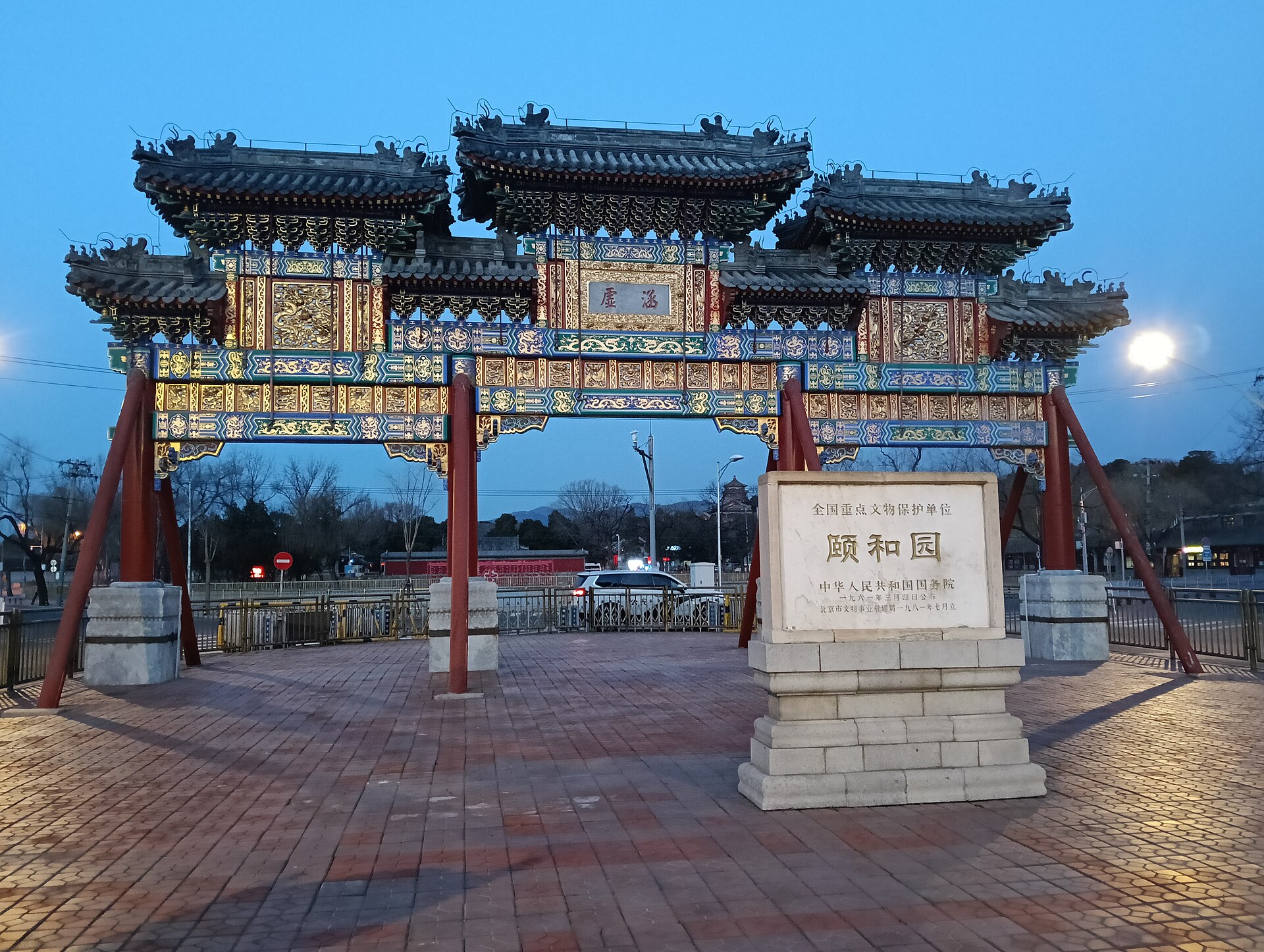
The guide to Beijing’s parks covers the platform in more detail, including the annual park pass, which is restricted to residents.
The Lama Temple
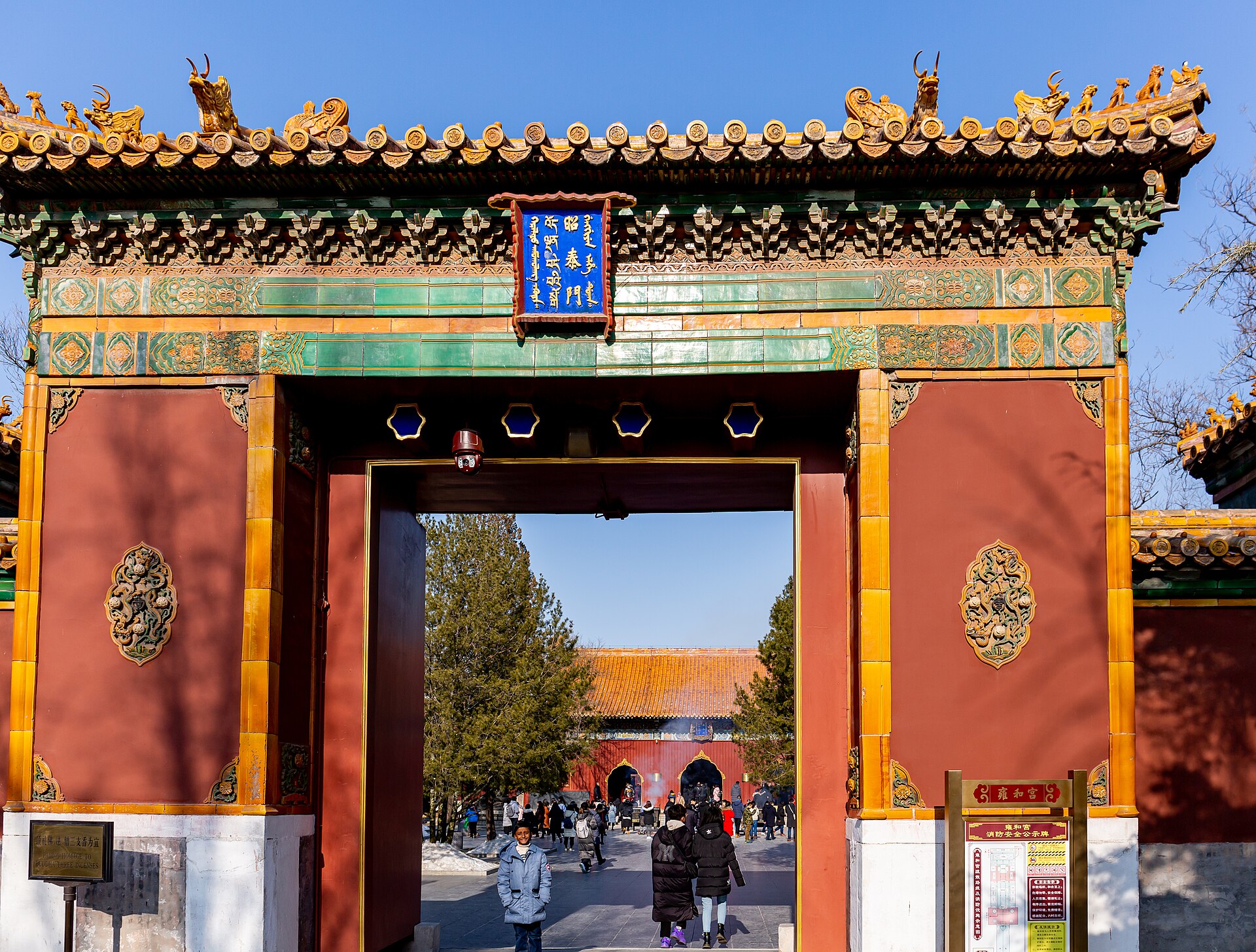
The Lama Temple has run real-name online booking since 2021, through its official WeChat account, so check there for current dates and entry rules before you go. Visitors without WeChat have been helped at the ticket desk with a passport, but on a busy day that is not something to rely on. It is popular with young Chinese visitors, who come to pray for exams, jobs and love, which is one more reason to book ahead. The Lama Temple guide covers the visit itself.
The Great Wall
The two most visited sections both run real-name tickets. At Mutianyu, tickets are sold through the official website for a morning session (08:30–12:00) or an afternoon one (12:00–17:00), alone or in combinations with the shuttle bus and the cable car; you then scan in with your passport. At Badaling, tickets are also booked in advance under real names, and even visitors who go free, such as over-60s and children under six, are asked to book; check the official site for the current booking window. Both sections can be busy enough at weekends and in the holidays to make an advance booking worthwhile. If you are travelling with a tour or a private driver, check who is booking the tickets, and with whose passport details.
Other sights
The Old Summer Palace lets you book any date in the current month through its official channels, and rarely sells out. Universal Studios sells dated tickets with dynamic pricing through its own app and website. Smaller temples and museums vary: some sell at the gate, some through WeChat, some both. When in doubt, search for the sight’s name in WeChat and look for its official account.
Many of the smaller sights on a typical itinerary still sell on the day, either at a ticket window or through a QR code posted at the gate that opens a payment page in WeChat or Alipay, and most will still ask to see your passport. These are rarely a problem. The time to worry is when a sight is both famous and small: a temple or a former residence with a strict daily cap can sell out at a weekend in a way that a large park never will.
Trains
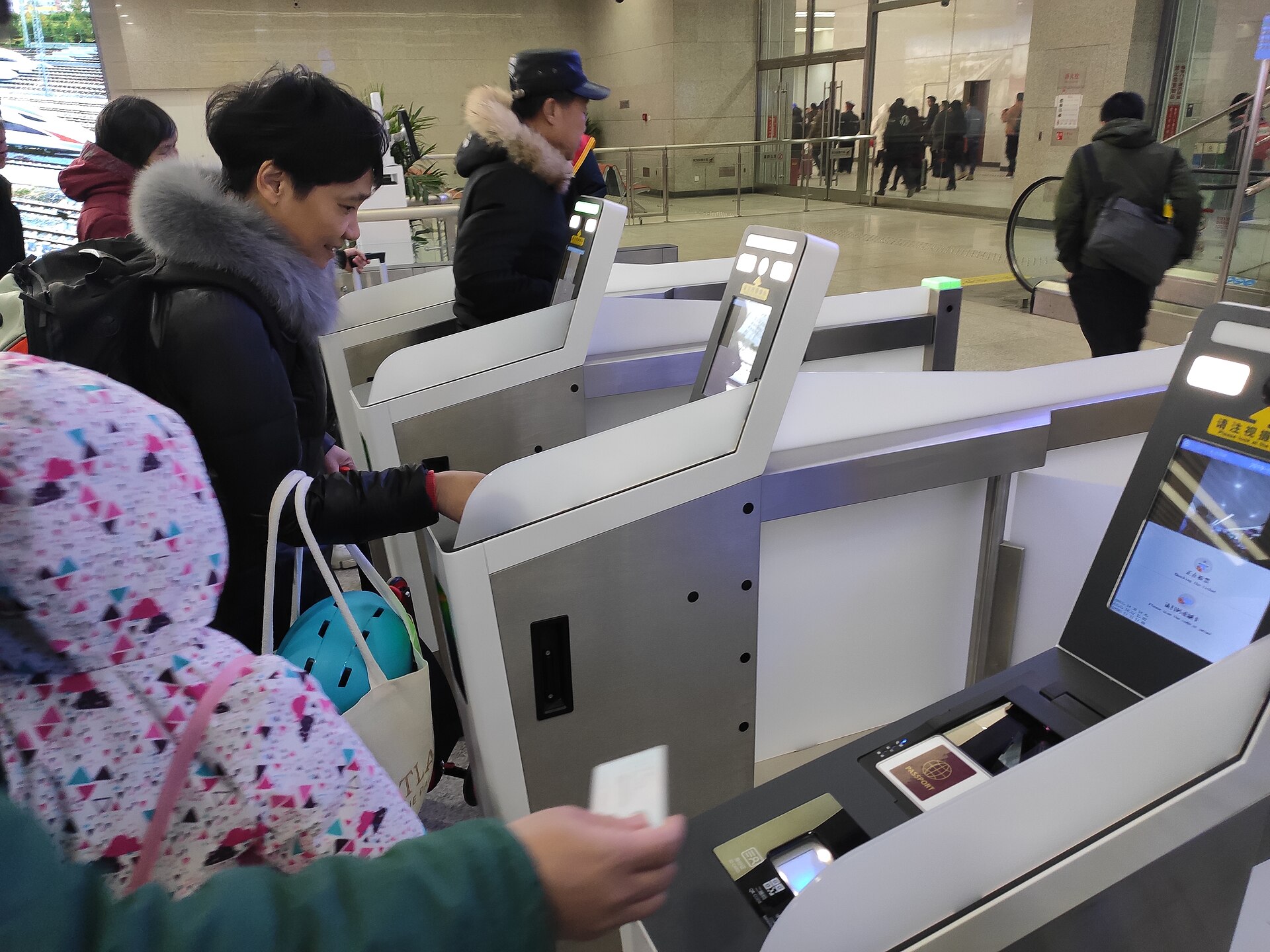
High-speed rail is real-name too, and for a visitor it is one of the best-designed parts of the system. Tickets can be booked up to 14 days before departure (a 15-day sales window that includes the day you buy) through 12306, the official railway app and website, whose English website accepts foreign passports. Your passport is the ticket: there is nothing to print, and at the station you go through the gate by scanning it, or through a staffed lane. The high-speed train guide covers the routes from Beijing.
Platforms that work with a passport
- WeChat mini-programs and official accounts. The main channel for almost everything. Most have a passport option on their forms, although they are often in Chinese only. You need a working WeChat account, which can be registered with a foreign phone number; the WeChat guide for tourists covers setting it up.
- Official websites with English versions. The Forbidden City’s ticket site, the Visiting Beijing Parks platform and 12306 all have English versions, which makes them the easiest places to start.
- Trip.com. Sells many attraction tickets, shows and train tickets in English with passport details, sometimes with a small service fee. For the Forbidden City, note that the Palace Museum says it has authorised no third-party sellers.
- Your hotel. Many front desks will book attractions for you in the official mini-programs, which removes the language problem.
- Staffed windows and telephone booking. Museums that keep reservations are now supposed to offer them; some parks and temples have help desks for visitors who cannot book online.
Filling in the forms
The forms look different from site to site, but the fields are the same. Choose the passport (护照, hùzhào) as your document type rather than the default Chinese identity card (身份证); enter your name exactly as it appears on the passport’s photo page; enter the passport number with no spaces; and choose your nationality. Some forms ask for a phone number, and a foreign number usually works. Many systems let you save travellers to a visitor list, which is worth doing in advance for the sights that sell out.
Two rules catch people out. First, most systems allow one ticket per identity document per day for the same site, so you cannot buy a family’s tickets on one passport: every traveller, children included, needs their own entry. Second, the name and number must match the document you bring, with no flexibility at the gate, so book with the passport you will carry. The museum booking guide has a fuller list of the Chinese words you will meet on the forms.
Release times: a planning calendar
The bookings for a trip are spread over the fortnight before you fly, each at a particular hour of Beijing time:
- Up to 14 days ahead: high-speed trains, through 12306 (a 15-day sales window that includes the day you buy).
- Up to 9 days ahead: Tiananmen Square.
- Up to 8 days ahead: the Military Museum.
- 7 days ahead at 17:00: the National Museum.
- 7 days ahead at 18:00: the China Science and Technology Museum.
- 7 days ahead at 20:00: the Forbidden City.
- Up to 7 days ahead: the city parks on Visiting Beijing Parks.
- Within the month: the Old Summer Palace.
For a day built around Tiananmen Square, that means three bookings on the same evening a week before: the National Museum at 17:00, the Forbidden City at 20:00 and, at any point that week, the square itself. Beijing is eight hours ahead of UTC all year, which puts these releases in the early morning in North America and around the middle of the day in Europe.
A worked example
Say you are flying in for a week and finishing with a train to Xi’an. The bookings fall like this:
| When | What to book |
|---|---|
| About two weeks before departure | The high-speed train to Xi’an for the last day, on 12306 or Trip.com |
| Ten days before your Wall day | Badaling tickets, if you are going by train; or confirm your driver or tour for Mutianyu |
| A week or so before your Tiananmen day | The Tiananmen Square slot |
| Seven days before, at 17:00 and 20:00 Beijing time | The National Museum, then the Forbidden City, for the same day |
| A day or more before | The Lama Temple |
| The night before or on the day | The Temple of Heaven, the Summer Palace and the other parks, unless it is a weekend or a holiday |
Three or four short sessions on your phone, most of them before you leave home, and the week runs itself.
At the gate
Gates vary by venue. At the Temple of Heaven, for example, Chinese visitors scan an identity card, while foreign visitors go in on the booking’s QR code and show their passport. Some newer gates, particularly at railway stations, also read passports, but at many attractions a passport holder goes to a staffed lane, where someone checks the passport against the booking by scanning it or by eye. It takes a minute longer and is entirely routine. Have the passport out, not buried in a bag, and the booking’s QR code on your phone if the site issued one.
Expect a security check too: at the big sites, bags go through an X-ray and lighters and knives are refused. At Tiananmen and the Forbidden City there may be more than one check. Arrive within your booked time slot, and a little early for the popular ones.
Real names beyond the sights
The same principle runs through much of daily life in China, and a visitor meets it in a few other places:
- Hotels scan your passport at check-in and register your stay with the police, as the law requires for foreign guests. If you stay in a private home rather than a hotel, the registration is supposed to be made at the local police station within 24 hours, and a good host will help.
- SIM cards are sold on a real-name basis, with your passport and a face scan at the counter; the SIM card guide covers the process. A roaming eSIM bought at home avoids it entirely.
- Trains and domestic flights are ticketed to your passport, as above.
- The subway and buses are not: you simply tap a contactless bank card at the gate, with no name attached.
- Payment apps verify your passport when you link a card, which is why Alipay and WeChat Pay ask for a photo of the passport page.
None of this is unusual for a Chinese resident, and none of it should worry a visitor. It is simply worth carrying your passport every day, not leaving it in the hotel safe, because so much of the city expects to see it.
Tours, guides and who does the booking
If you are travelling with a tour or a private guide, agree early who is booking which tickets. Licensed travel agencies book group tickets through separate channels, which is why a tour can sometimes get you into a sold-out Forbidden City. A private guide booking individual tickets on your behalf needs each traveller’s passport name and number, and needs them before the release, not on the morning. Send the details through a secure channel, ask for confirmation of each booking, and check that the names and numbers are exactly right. And remember that whoever books, you still need your own passport at the gate.
A word on your passport details
Real-name booking means handing your passport details to a lot of systems, and it is worth being sensible about where they go. The official channels, the big platforms such as Trip.com and reputable hotels and agencies are the normal way of doing things. What to avoid is sending passport photos or numbers to individuals who contact you on social media or approach you on the street offering to “get tickets”, a trade the Beijing authorities spent much of 2026 trying to stamp out. If a sight is sold out through the official channels, the answer is a different day, a legitimate tour or a different sight, not a stranger with a phone.
When it goes wrong
- The sight is sold out. Check again later, since cancellations return to the system; try another time slot or day; or look for a licensed tour that includes entry, which for the Forbidden City is the most reliable fallback.
- The form will not accept your passport. Check the document type is set to passport, and that the number has no spaces.
- You cannot use WeChat. Use an official English website where there is one, Trip.com where it sells the ticket, or your hotel.
- The payment fails. Approve the alert from your bank and try once more; repeated attempts can trip the payment app’s risk controls. The Alipay guide covers paying with a foreign card.
- You lose your passport. Bookings tied to the old passport number will not match your replacement document. Report the loss to the police and your embassy first; then rebook the sights that matter with the new document, and explain at the gate for any that cannot be rebooked.
- You booked with the wrong passport. If you carry two, cancel and rebook with the one you will bring, if there is still time.
The honest verdict
The real-name system is the most bureaucratic part of a Beijing trip, and the most rewarding to get right. It is not hard: a working WeChat account, your passport details to hand and a calendar of release times will get you into almost everything. What it punishes is improvisation. The visitor who arrives on a Saturday in July planning to buy Forbidden City and Lama Temple tickets at the gate will spend the morning outside both; the visitor who spent three evenings on their phone the week before will walk straight in.
Book the hard ones first, keep the easy ones for the day, and carry your passport everywhere. The guide to Beijing tours and tickets covers what each of these sights costs and which are worth paying a guide for.
For the Great Wall in particular, how you travel decides who handles the tickets. Our Great Wall tour comparison sets the public bus, group tours and private cars side by side, including what each costs in 2026 and which ones book the real-name tickets for you.
Frequently asked questions
What is the China real-name reservation system?
It is the combination of real-name ticketing, where every ticket is tied to the buyer’s identity document, and timed advance reservations, where sites release a fixed number of tickets per day or time slot. It covers trains, many museums and most major attractions. Foreign visitors use their passport as the identity document.
Can foreigners book Beijing attractions with a passport?
Yes. Booking forms for sights such as Mutianyu and the National Museum take a passport, and several key platforms, including the Forbidden City’s ticket website, the Visiting Beijing Parks platform and the 12306 railway site, have English versions. Bring the same passport you booked with.
Which Beijing attractions need booking in advance?
The Forbidden City, Tiananmen Square and the National Museum must be booked in advance. The Lama Temple runs real-name online booking too. The Great Wall sections, the city parks and Universal Studios are best booked ahead at weekends and in holidays; on ordinary weekdays many parks can be bought on the day.
How far ahead can I book?
It varies: a 15-day sales window including the day you buy for trains, 9 days for Tiananmen Square, and 7 days for the Forbidden City, the National Museum and the city parks, each released at a set time of day in Beijing time.
Do I need WeChat to book Beijing attractions?
Not always, but it helps a great deal. The Forbidden City, the city parks and the railways all have English websites, and Trip.com sells many tickets, but most other sights book through WeChat mini-programs.
Can I book tickets for my whole family on one passport?
No. Most systems allow one ticket per identity document per day, so each traveller, including children, needs their own entry under their own passport.
Do I need a Tiananmen Square reservation to visit the Forbidden City?
No. You can reach the Forbidden City’s Meridian Gate from Tiananmen East station without the square reservation. You need the square booking only to enter Tiananmen Square itself.
Is the real-name system being relaxed?
Partly. From summer 2026 museums with enough capacity were told to drop unnecessary reservations, and some now let visitors walk in. The busiest sights, including the Forbidden City and the National Museum, still require booking, and some, like the Lama Temple, have recently tightened.