Beijing Parks & Gardens
Beijing Zoo and the Pandas: Tickets, Timing and Honest Expectations
Beijing's pandas moved into a new house in July 2026. Which ticket to buy, when the pandas are actually awake, an honest note on the rest of the zoo, and the boat to the Summer Palace.
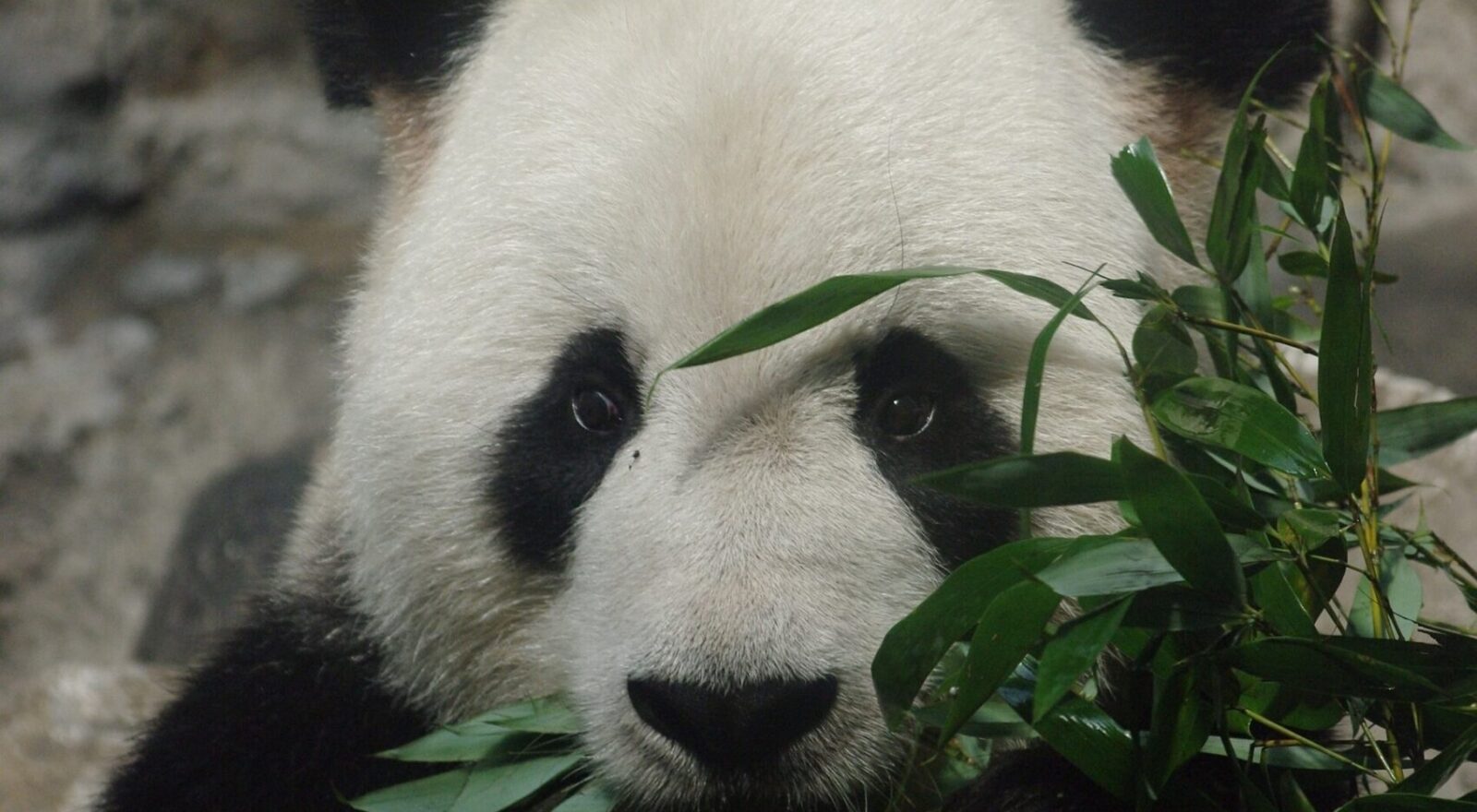
The most useful thing to know about a giant panda is that it spends up to fourteen hours a day eating bamboo and a good part of the rest asleep, often in a black-and-white heap with its back to the glass. Plan your visit around the eating. The Beijing Zoo pandas moved into a new home in July 2026, a garden of courtyards, covered walkways and rocky bamboo yards built for the zoo’s 120th anniversary, and they are the reason nearly every foreign visitor comes through the gates. Go early, go to them first, and the morning is very likely to be a delight.
This guide covers what the new panda house is like, which ticket to buy (and what the combined ticket covers), when the animals are actually awake, how to book, an honest note on the rest of the zoo, and how to turn the visit into a full day by taking the old imperial boat route up the river to the Summer Palace. Prices and opening hours were checked in September and October 2026; treat them as the right order of magnitude, since the zoo adjusts prices by season and the panda house’s entry rules have been changing since it opened.
Beijing Zoo at a glance
| What | Detail |
|---|---|
| Zoo entry | ¥15 (1 April–31 October); ¥10 (1 November–31 March) |
| Combined ticket with the panda house | ¥19 peak; ¥14 off-peak — the one to buy |
| Concessions | Half price for students and older children; small children under 1.2 metres free |
| Hours | Zoo 07:30–18:00; panda house 08:00–18:00 |
| Best time for the pandas | Arrive early; the panda house opens at 08:00 |
| Time needed | Around an hour at the panda house; a few hours for the whole zoo |
| Subway | Line 4, Beijing Zoo station, for the South Gate |
| Booking | Visiting Beijing Parks (畅游公园) website or WeChat mini-program, or Trip.com; bring your passport |
| Pushchairs | Hire at the South Gate for ¥30 a day |
About that combined ticket. For years the panda house was a small paid add-on to the zoo ticket, and the zoo’s own fare list still shows a combined zoo-and-pandas ticket at ¥19 in peak season and ¥14 off-peak. Since the new house opened, some reports say the ordinary ticket now covers it. Rather than gamble on which rule the gate is applying, buy the combined ticket. It costs four yuan more and settles the question.
The new panda house
The old panda house, built for the 1990 Asian Games, was serviceable and little more: stone-walled outdoor yards, viewing windows into indoor rooms, and crowds three deep at the glass. Its replacement, opened on 16 July 2026, was built on an expanded site just to the east of the old one and is a different kind of place. It covers about 13,000 square metres, with four indoor exhibition halls, five dens and five outdoor yards, and it is laid out like a classical Chinese garden, with covered walkways linking courtyards and planted gardens, so that the visit becomes a walk rather than a queue.
The yards are themed on the mountain landscapes where wild pandas live, with names that nod to real reserves: one evokes the Baishui River in Gansu, another the Wanglang reserve in Sichuan, and the others an orchid valley and a range of forested peaks. Each has rockwork, climbing frames, bamboo and pools, and a misting system that switches on in summer to cool the animals down, which matters in a city where July afternoons regularly pass 30°C. Behind the scenes the house runs a smart monitoring system that tracks the animals’ health and controls temperature and humidity. None of that is visible to you, but it is a sign of how seriously the zoo has taken the rebuild.
Meet the pandas
Five pandas moved into the new house, and they are shown in rotation, so you will not necessarily see all five on one visit. The star is Meng Lan, who became an internet celebrity after he was filmed scaling the wall of his yard in the old house; his Chinese fans call him the Third Prince of Xizhimen, after the neighbourhood around the zoo. Whichever pandas are out when you arrive, the staff and the regulars among the visitors usually know who is who, and the information boards outside each yard name the animal on display.
If you are wondering about the difference between the pandas here and the giant pandas you may have seen in zoos abroad: there is none, except that these are on home ground. All giant pandas outside China are on loan from China, and the arrangements are long and closely watched. Beijing’s pandas mostly come from the breeding programmes in Sichuan, where the great majority of captive pandas are born.
When the pandas are actually awake
This is the part of the visit you can control, and it makes more difference than anything else. Pandas are most active in the early morning, when the keepers bring the day’s fresh bamboo and the animals eat, wander and sometimes climb. By late morning many have eaten their fill and fallen asleep, and in summer they retreat indoors to the cooler halls. There is often a second, shorter burst of activity in the late afternoon, when the day cools and more food arrives.
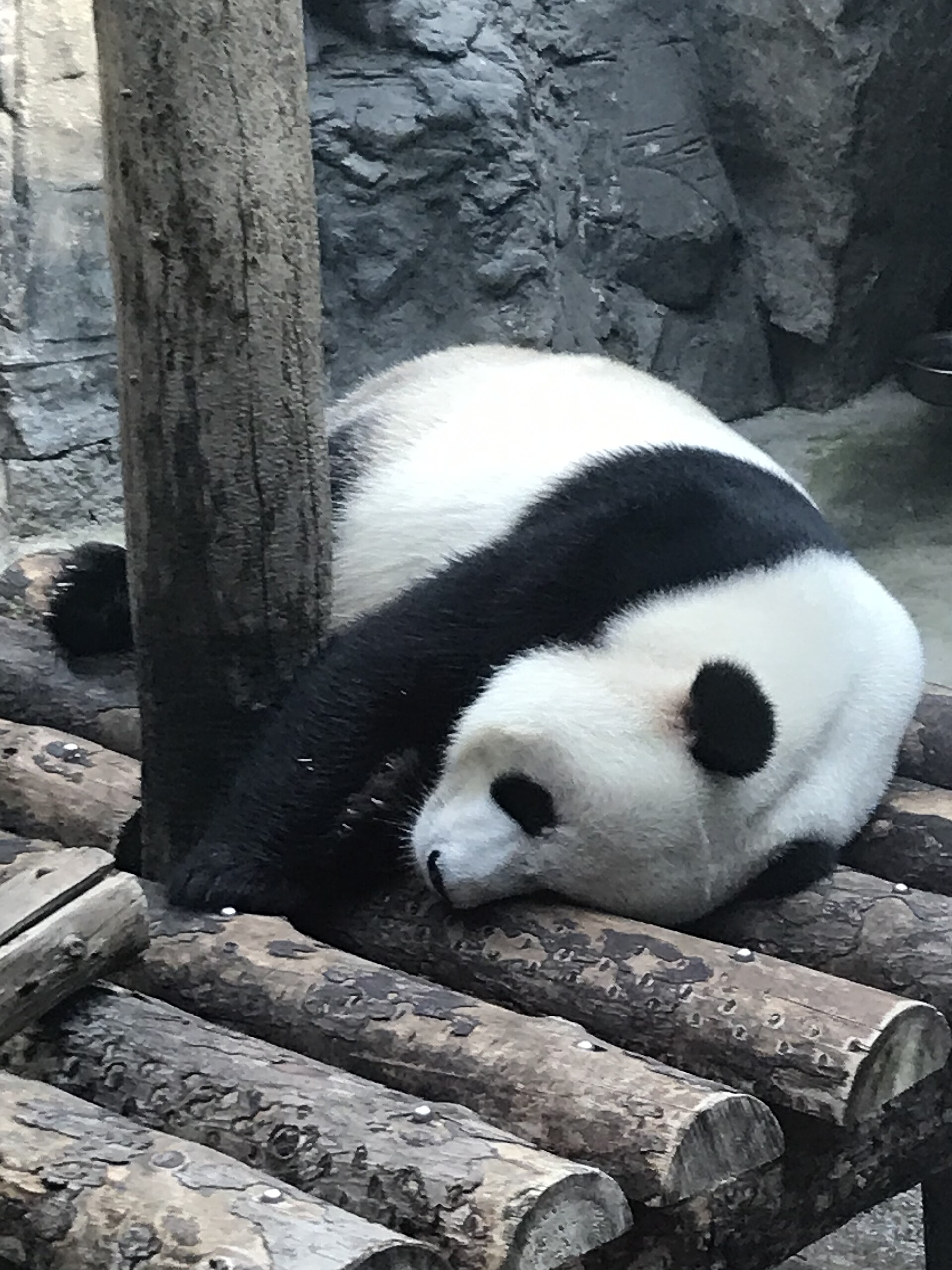
So the plan is simple. Be at the South Gate for the 07:30 opening, and walk straight to the panda house before doing anything else. On a weekday morning you may have the yards almost to yourself for the first half-hour; by ten o’clock on a weekend you will be watching over other people’s phones. If you cannot make the morning, come back after 16:00, when the tour groups have gone and the animals stir again.
Season matters too, though not in the way most people expect. Pandas are built for cold mountain forests, and they are at their liveliest in cool weather. A crisp morning from late October to March, or best of all a snowy one, is when you are most likely to see pandas rolling, climbing and playing; on a hot afternoon in July they will be sensibly asleep in the air conditioning. The winter guide has more on Beijing in the cold months, when the zoo is quiet and the pandas are at their best.
A few things to adjust your expectations. You are watching through glass or across a moat, and the yards are designed for the pandas rather than for your photographs, so the animal you came to see may be at the far end behind a rock. Flash photography is not allowed and only bounces off the glass anyway; put the lens right against the window to cut out reflections. And tapping on the glass, shouting or waving to wake a sleeping panda is unkind and, in front of a crowd of Chinese parents who will tell you so, embarrassing.
Tickets and booking
Beijing Zoo is one of the nine municipal parks that sell tickets through the official Visiting Beijing Parks platform (畅游公园, Chàngyóu Gōngyuán), which has an English website at bjgyol.com.cn as well as a WeChat mini-program. Choose Beijing Zoo, pick the combined ticket and your date, enter your passport details and pay; at the gate you show the booking or scan your passport. Trip.com sells the same tickets in English if you would rather use an app you already have, and the guide to Beijing’s parks explains the platform in more detail, since the same booking works for the Temple of Heaven, the Summer Palace and Beihai.
On an ordinary weekday you can book the night before or even on the morning itself. Weekends, the school summer holidays in July and August, and the national holidays are different: book a few days ahead, and expect the panda house to admit visitors in timed batches when the crowds build. The new house drew big crowds when it opened, and the advice holds however busy it is: the earlier in the day, the better.
The rest of the zoo: an honest note
Beijing Zoo is one of the oldest zoos in China. It began in 1906, in the last years of the Qing dynasty, as the Wanshengyuan, the Garden of Ten Thousand Animals, part of an agricultural experiment station, and it opened to the public in 1908. Some of that history survives. The grounds, about 86 hectares, are full of old trees, canals and pavilions, and in the grounds stands Changguanlou, a Baroque-style two-storey pavilion built in 1908 as a resting place for the Empress Dowager Cixi on her way to the Summer Palace. It is an odd and rather charming survivor, and worth the short walk.
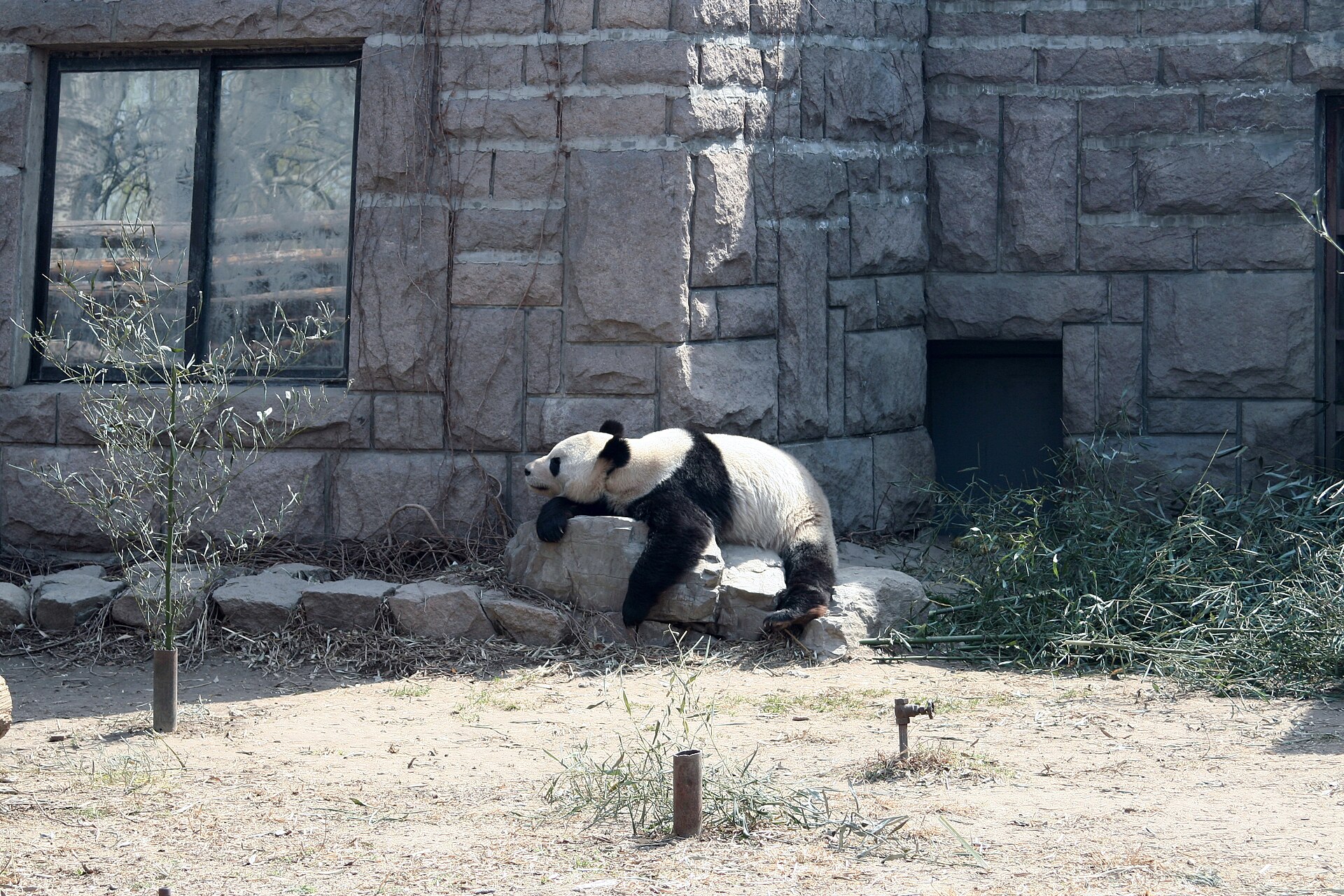
The animals beyond the pandas are a more mixed experience, and it would be dishonest to pretend otherwise. The zoo has the cast you would expect of a big city zoo, from big cats and bears to elephants, giraffes, primates and a large collection of birds, and some of the newer houses are decent. Others are older, smaller and barer than modern standards would accept, with animals behind glass or bars in enclosures that give them little to do, and you may see animals pacing, which is a sign of a cramped and unstimulating space. Visitor behaviour can be part of the problem, with glass-banging and food thrown into enclosures despite the signs.
How you handle that is up to you. Many visitors do exactly what the parks guide suggests: see the pandas properly, walk the old grounds, look in at Changguanlou, and leave the older houses alone. If animal welfare is a strong concern, you lose very little by doing the pandas and leaving. The zoo has been investing, and the new panda house is evidence of where it would like to go; it is not there yet across the whole site.
The Beijing Aquarium, inside the zoo grounds, is run separately and needs its own, much pricier ticket. Check that it is open and what is on before you pay for it, and do not confuse its price with the zoo’s.
Getting there
Take Line 4 to Beijing Zoo station, which brings you out on Xizhimenwai Street by the South Gate, the main entrance. From Xidan it is six stops; from the Tiananmen area it is a little longer, with a change. Xizhimen, one stop south, is an interchange with Lines 2 and 13, so the zoo is easy to reach from most of the city. The Beijing subway guide covers tapping in with a foreign contactless card.
By taxi or DiDi, ask for 北京动物园 (Běijīng Dòngwùyuán) and the South Gate. At 07:30 on a weekday the traffic is light; on a weekend afternoon the roads round Xizhimen are some of the slowest in the west of the city, and the subway is quicker.
Make a day of it: the imperial boat to the Summer Palace
Behind the zoo runs the Changhe, a canalised river that has carried water from the Western Hills into Beijing since the Jin dynasty. Under the Qianlong emperor it became a royal waterway, and in the 1890s the Empress Dowager Cixi travelled along it by boat every summer from the city to the Summer Palace. Today the same route is run as the Royal River boat (皇家御河游船), and it is one of the nicest ways to get from the zoo to the Summer Palace.
Boats leave from the zoo’s own dock and take about an hour to cover the 9.5 kilometres upriver, past the Five Pagoda Temple, the National Library and Zizhuyuan Park, through the Ziyuwan stop and past Wanshou Temple, to the South Ruyi Gate dock at the Summer Palace. Single tickets were listed from about ¥60, with commentary on board, and sailings between 10:00 and 16:00. The river freezes in a hard winter and the service is affected by maintenance and the season, so check that the boats are running on your day before you build a plan around them.
That makes for an excellent day. Pandas at opening, the Five Pagoda Temple at ten, a late-morning boat up the river, lunch, and the afternoon at the Summer Palace, which you reach by water exactly as Cixi did. If you have more energy than that, the Old Summer Palace ruins are two stops from the Summer Palace on Line 4.
The Five Pagoda Temple
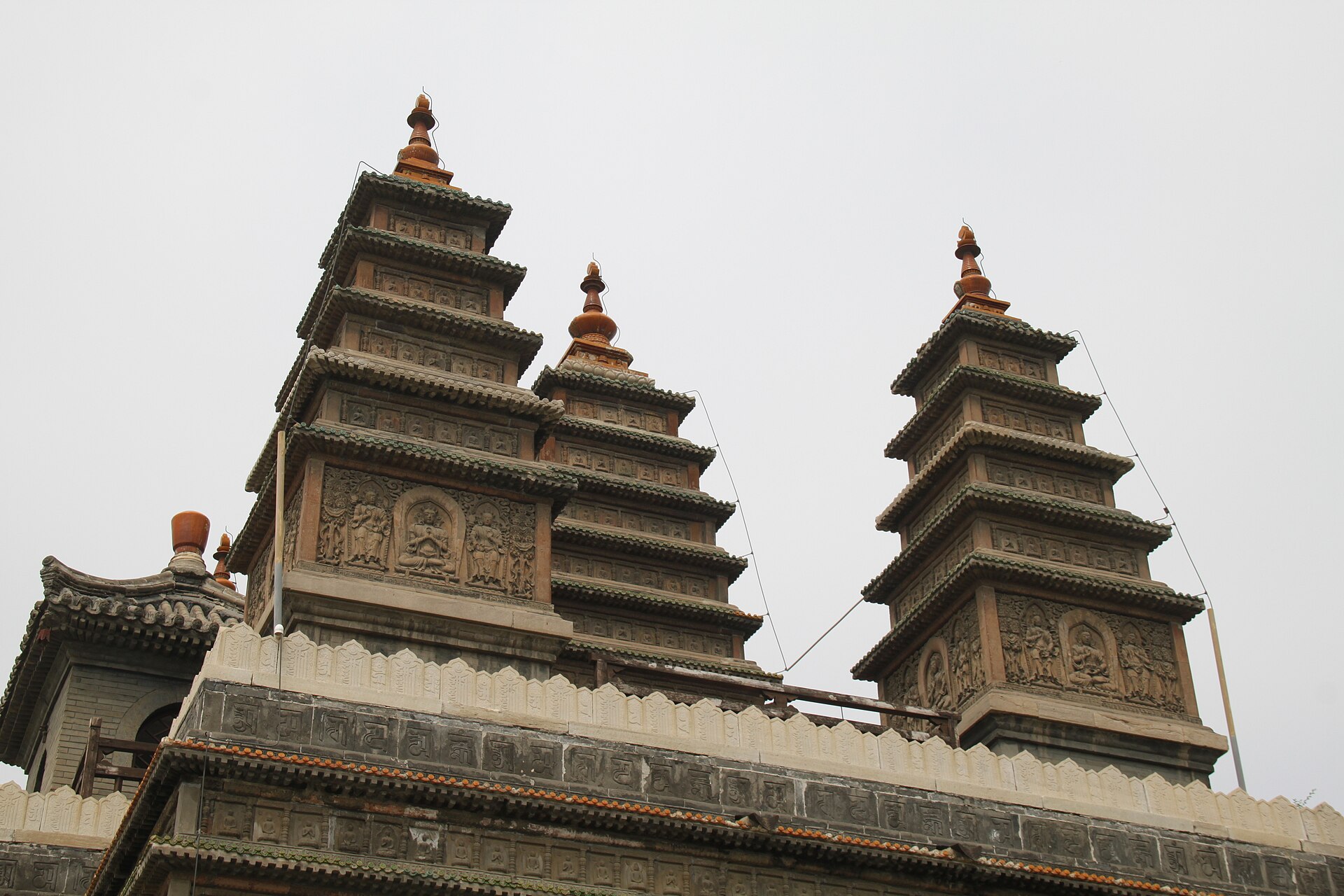
A short walk north of the zoo, across the river, stands one of the most unusual buildings in Beijing. The Five Pagoda Temple (五塔寺, Wǔtǎ Sì), properly Zhenjue Temple, was completed in 1473 under the Ming and is built around a “diamond throne” pagoda in an Indian style: a massive stone platform carved all over with Buddhas, lions, elephants and Sanskrit lettering, with five small pagodas on top. The temple buildings now house the Beijing Stone Carving Art Museum, with steles and carvings collected from around the city. It is quiet, rarely visited by foreigners, and a perfect half-hour after the crowds at the pandas. Check the current entry arrangements before you go.
Lunch next door
Immediately east of the zoo is the Beijing Exhibition Center, a Soviet-style palace from 1954 with a gilded spire, and inside it the Moscow Restaurant, known to generations of Beijingers as Lao Mo. It has served Russian food under chandeliers since the 1950s and is as much a period piece as a restaurant; it is not cheap, and you go for the room as much as the borscht. For something quicker, the shopping centres around Xizhimen have every kind of chain restaurant.
Visiting with children
The zoo is an easy win with children, and the pandas are usually the highlight of a family trip to Beijing. Small children under 1.2 metres go free, pushchairs can be hired at the South Gate for ¥30 a day, and the paths are flat. The thing to watch is scale: the grounds are large, and a child who walks from one end to the other will not have much left for the afternoon. Do the panda house first, pick two or three other animals your children care about, and save energy for the boat. The Beijing with kids guide and the four-day family itinerary show how the zoo fits into a longer trip.
For children, the new house’s covered walkways and courtyards are much easier going than the old one’s crush at the glass. And if your children are of an age to care, it is worth explaining before you go that pandas sleep a great deal. A child who has been promised a panda doing somersaults and finds one fast asleep can take it badly.
Beijing Zoo or Chengdu?
If giant pandas are one of the main reasons you are going to China, the honest answer is that Beijing is not the best place to see them. Chengdu, in Sichuan, has the Research Base of Giant Panda Breeding, with many times more pandas, including cubs in season, in larger and more natural enclosures, and a whole morning built around them. Beijing’s new house narrows the gap considerably, and it is a far better place to see pandas than it was a year ago, but five pandas are five pandas.
If you are not going to Sichuan, though, Beijing Zoo is a very good second best, it costs less than a coffee, and it is on the subway. For most visitors on a Beijing trip, an early morning at the panda house is one of the easiest pleasures the city offers.
Is Beijing Zoo worth it? The honest verdict
For the pandas, yes, provided you go early. For the zoo as a whole, it depends on your tolerance for older enclosures. The ideal visit is short and focused: the panda house at opening, the old grounds and Changguanlou, and out by mid-morning to the Five Pagoda Temple and the boat. Done that way, it is one of the best mornings in western Beijing.
It is not worth building a day around in the heat of a July afternoon, when the pandas are asleep indoors and the crowds are at their worst, and it is not worth paying the aquarium’s prices unless you have children set on it. And if pandas are the point of your whole China trip, save your enthusiasm for Chengdu.
Practical tips
- Buy the combined ticket (¥19 peak, ¥14 off-peak) so the panda house is covered whatever the current rule.
- Arrive at 07:30 and go to the pandas first. The difference between eight o’clock and eleven is the difference between active pandas and sleeping ones.
- Bring your passport. Tickets are booked in your name, and the gate can scan it.
- Visit on a weekday if you can. Weekends and school holidays are much busier at the panda house.
- Come in cool weather. Pandas are livelier from late October to March, and a snowy morning is the best of all.
- No flash, and do not tap the glass.
- Water and snacks are on sale inside, but bring water in summer; the grounds are large.
- Check the boat is running before you plan to leave by the river.
Frequently asked questions
How much is a Beijing Zoo ticket with the pandas?
The combined ticket covering the zoo and the panda house is ¥19 from April to October and ¥14 from November to March. The zoo-only ticket is ¥15 and ¥10. Students and older children pay half, and small children under 1.2 metres go free.
What time are the pandas most active at Beijing Zoo?
Go early: the panda house opens at 08:00, and morning is a sensible time to arrive. Pandas keep their own schedule, so no hour is guaranteed. In summer the pandas spend the hottest part of the day asleep indoors.
How many pandas does Beijing Zoo have?
Five pandas moved into the new panda house when it opened in July 2026, including Meng Lan, the zoo’s best-known resident. They are displayed in rotation, so not all of them are on view at once.
Do I need to book Beijing Zoo tickets in advance?
On a weekday you can book the night before or on the day through the Visiting Beijing Parks website or mini-program, or Trip.com. On weekends, in the summer holidays and during national holidays, book a few days ahead, and expect timed entry to the panda house at busy times.
How long should I spend at Beijing Zoo?
Allow around an hour at the panda house, and a few hours if you want to see the rest of the zoo and the old pavilions. Add an hour for the boat to the Summer Palace if you are leaving by river.
How do I get to Beijing Zoo by subway?
Take Line 4 to Beijing Zoo station, which comes out by the South Gate. It is six stops from Xidan, and one stop from Xizhimen, where Lines 2 and 13 meet Line 4.
Is Beijing Zoo worth visiting?
Yes, for the pandas, especially since the new panda house opened in 2026; go first thing in the morning. The rest of the zoo is mixed, with some older enclosures well below modern standards, so a short, focused visit works best.
Can I take a boat from Beijing Zoo to the Summer Palace?
Yes. The Royal River boat runs from the zoo’s dock up the old imperial waterway to the Summer Palace’s South Ruyi Gate in about an hour, with single tickets from about ¥60. Check that it is running before you go, since the service depends on the season.