Beijing Weather by Month
Beijing in January: Weather, Crowds, Costs and What to Do
What January in Beijing is really like: the coldest weather of the year and what to wear, 2027 holiday and school dates, low-season prices, frozen-lake rinks and Laba.
On a still January afternoon at Shichahai, the lake that was a boating pond in summer is a sheet of grey-white ice, and on it half of Beijing seems to be sliding about: children on ice bikes, grandparents pushing themselves along on wooden chair sleds with metal poles, teenagers in hired skates clinging to each other. The air is −5°C and bone dry, the sky is a hard pale blue, and steam rises from a stall selling roasted sweet potatoes on the bank. Beijing in January is the city at its coldest, and for many people at its most characterful: frozen lakes, empty palaces, the build-up to Spring Festival, and a food culture built for exactly this weather.
This guide covers January’s weather and what to wear, the holidays and school dates that shape crowds in 2027, what the month costs, and what January does best, from the ice rinks to Laba congee. Climate figures are the China Meteorological Administration’s 1991–2020 averages as reproduced by Wikipedia; holiday dates come from the State Council’s 2027 notice, and ticket prices from the sights’ own pages, checked in November 2026.
January at a glance
| January | |
|---|---|
| Average high | 2.3°C |
| Average low | −6.9°C |
| Rain or snow | 2.2 mm in total, on about 1.6 days |
| Days with snow | About 2.8 |
| Sunshine | About 188 hours |
| Average humidity | 43% |
| Public holidays | New Year, 1–3 January 2027 |
| Ticket prices | Low season (1 November to 31 March) |
| Crowds | Low early in the month, building towards Spring Festival |
For how January compares with the other months, see our guide to Beijing weather by month.
The weather in January
January is Beijing’s coldest month. On the 1991–2020 averages, daytime highs reach just 2.3°C and nights fall to −6.9°C, and the daily mean sits below freezing. Those are averages: a cold wave from the north can keep the city below freezing all day for a week, and the coldest January night on record at the Beijing observatory reached −22.8°C. The traditional Chinese calendar marks this as the depth of winter, with the solar terms Minor Cold on 5 January and Major Cold on 20 January in 2027.
Cold, but bright and dry
What makes January bearable is that it is dry and sunny. Precipitation averages just 2.2 mm for the whole month, tied with December as the driest of the year, and there are about 188 hours of sunshine, about the same as in July. A typical January day is clear, cold and windless in the morning, with the wind picking up in the afternoon. On the days after a cold front, when a strong northerly has swept through, the air is at its cleanest and the views from Jingshan or the Wall stretch for miles.
Wind chill
The thermometer tells only half the story. A northerly wind at −5°C feels far colder, and the places visitors spend most time — Tiananmen Square, the open courtyards of the Forbidden City, the ridges of the Great Wall — are exactly where the wind bites hardest. Plan to warm up indoors every hour or two, and check the wind as well as the temperature in the forecast.
Snow
Snow is more likely in January than in any other month bar December, but still far from guaranteed. The averages count about 2.8 days with snow, and many bring only a dusting. When a proper snowfall does settle on the palace roofs, it is one of the great sights of the city, and everyone with a camera heads to Jingshan Park.
Air quality
January falls in the heating season, which normally runs from mid-November to mid-March, and still, cold spells are when pollution is most likely to build. It is far less of a problem than it was: Beijing’s average PM2.5 in 2025 was 27.0 micrograms per cubic metre, against 89.5 in 2013, with one day of heavy pollution all year. Check the AQI each morning and keep an indoor plan for any day above 150. Our air quality guide explains how to read the numbers.
What to wear in Beijing in January
Dress for a day outdoors at −7°C with wind, then make sure you can shed layers in heated buildings. Beijingers swear by a long down coat, and so should you.
- A knee-length down coat with a hood. Shorter jackets leave your thighs exposed to the wind; a hood is better than a hat in a gale.
- Two thermal layers — base layer top and leggings — plus a fleece or wool mid-layer.
- Insulated boots with good grip. Pavements, palace courtyards and the steps of the Wall can all be icy, and the ice on the lakes is hard on cold feet.
- Hat, scarf or neck gaiter, and warm gloves, ideally touchscreen-compatible or with a thin liner pair so you can use your phone.
- Thick socks, and a spare pair if you plan to skate.
- Lip balm, moisturiser and hand cream. At 43% average humidity outdoors and far less in heated rooms, skin dries fast.
- Heat packs. The disposable stick-on warmers sold in every convenience store are cheap and effective.
- A power bank, because cold drains phone batteries and your phone is your ticket, map and wallet.
See our Beijing packing list for the full kit.
Early or late January?
Which half of the month you choose changes the trip more than the weather does.
- 4 to 15 January is the sweet spot for sightseeing. The New Year weekend is over, schools and offices are back, and the big sights are at their emptiest. The catch: the lake rinks may not all be open yet. In 2026 the Summer Palace, Houhai and Beihai rinks did not open until 17, 20 and 24 January.
- 16 to 31 January is better for the ice, with more rinks usually open, and for atmosphere, as red lanterns and New Year decorations go up across the city. It is also busier: Beijing’s schools break up from 18 January, family groups fill the museums and rinks, and long-distance trains get harder to book as the Spring Festival rush approaches.
If the ice matters most, aim for the last ten days of the month; if empty palaces matter most, aim for the second week.
Crowds, holidays and school dates in 2027
January has two distinct halves. The first is one of the quietest stretches of the year at the big sights; the second builds towards Spring Festival, the biggest holiday in the Chinese calendar.
| Dates (2027) | What happens | Effect on a visit |
|---|---|---|
| 1–3 January | New Year holiday | A busy long weekend at the main sights and on transport |
| 4 January to mid-month | Normal working weeks, schools in term | The quietest window of the winter |
| 15 January (Friday) | Laba Festival | Congee at temples and restaurants; the traditional start of the New Year build-up |
| 18 January | Beijing primary and junior secondary schools break up (until 21 February) | More families at museums, parks and rinks |
| 25 January | Beijing upper secondary schools break up | Family crowds grow |
| Sunday 31 January | Make-up working day for the Spring Festival holiday | Offices work as normal |
| 5–13 February | Spring Festival holiday (Chinese New Year’s Day is 6 February) | Peak travel; see our Chinese New Year guide |
Spring Festival’s travel rush, chunyun, moves hundreds of millions of people in the weeks around the holiday. In 2026 it ran for 40 days, from 2 February to 13 March. The 2027 dates are set by the transport authorities, so check the Ministry of Transport and the 12306 railway announcements, and if you plan to travel on from Beijing by train in late January or February, book the moment tickets go on sale — 15 days ahead, including the day of purchase. Our guide to high-speed trains from Beijing explains how.
For the festival itself, see Chinese New Year in Beijing. With the 2027 holiday starting on 5 February, the temple fairs at Ditan and Longtan parks should fall in February rather than January; in 2026 they ran from 17 to 23 February.
What January costs
January is in the low-season pricing period at Beijing’s main sights.
| Sight | January price | April–October price |
|---|---|---|
| Forbidden City (Palace Museum) | ¥40 | ¥60 |
| Summer Palace, entry | ¥20 | ¥30 |
| Summer Palace, combined ticket | ¥50 | ¥60 |
| Temple of Heaven, through ticket | ¥28 | ¥34 |
| Dingling, Ming Tombs | ¥40 | ¥60 |
Ice rinks charge their own admission and skate or ice-chair hire, set by each park for the season; expect to pay on the day by Alipay or WeChat Pay. The New Year weekend and the days just before Spring Festival are the times when demand, and prices for travel and accommodation, pick up. Our Beijing travel budget guide covers daily costs in more detail.
Winter opening hours
- Forbidden City: 08:30–16:30, last entry 15:30; closed on Mondays except public holidays. Tickets go on sale seven days ahead; see our Forbidden City booking guide.
- Summer Palace: park 06:30–19:00, last entry 18:00; the inner sights 08:30–17:00, closed on Mondays except major holidays.
- Temple of Heaven: the park opens at 06:30, and the ticketed halls are open 08:00–17:00, closed on Mondays except public holidays.
- Badaling Great Wall: 07:30–16:00 from 1 November to 31 March.
- Mutianyu Great Wall: opens at 08:00 in winter.
Check each sight’s official page for any change before you go, particularly around the New Year and Spring Festival holidays.
What to do in Beijing in January
Skate on the frozen lakes
This is the reason to choose January over December. Beijing’s park lakes need weeks of hard frost before the ice is thick enough to open, and January is when it happens. In 2026 the natural rinks opened in sequence: Yuanmingyuan on 1 January 2026, Qianhai at Shichahai on 10 January, the Summer Palace’s Kunming Lake on 17 January, Houhai on 20 January and Beihai on 24 January. Every opening depends on the ice, and the rinks close again as the weather warms around the start of February, so watch each park’s own notices.
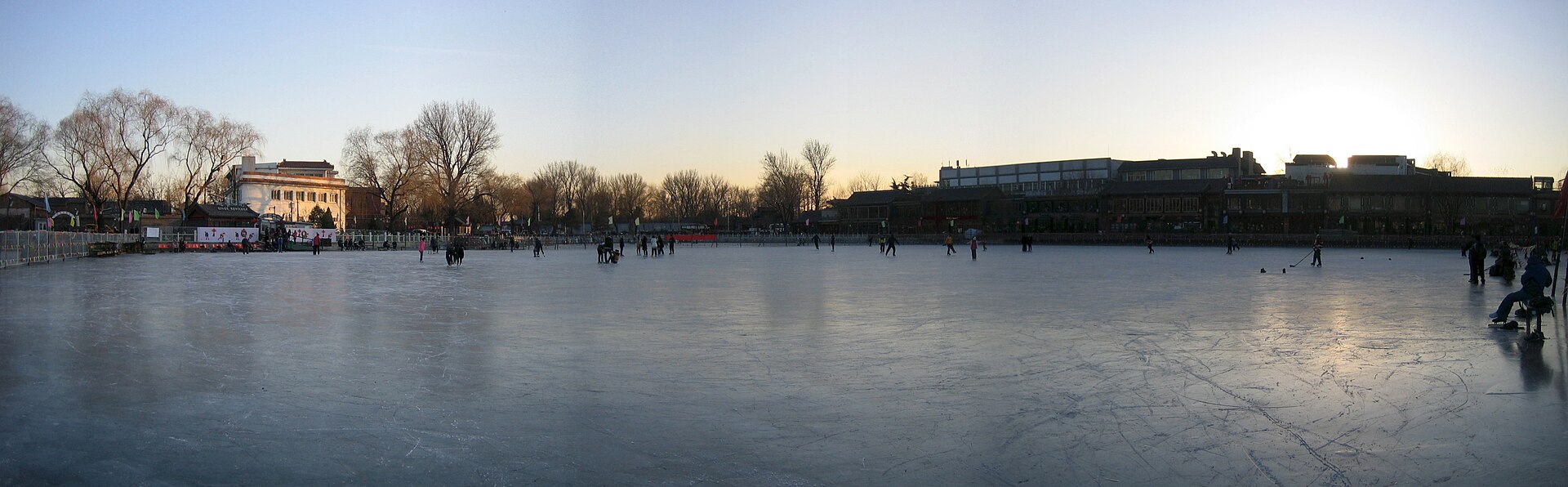
You don’t need to be able to skate. The rinks hire out skates, but most visitors, local and foreign, opt for ice chairs — wooden seats on runners that you push along with two metal poles — or ice bikes, and the atmosphere is closer to a winter fair than a sports centre. Shichahai, with its hutong surroundings and bars along the bank, is the most atmospheric; the Summer Palace’s Kunming Lake has the grandest setting. Stay off any frozen water that is not an official, open rink: parks patrol the lakes and ask visitors not to walk on the ice outside the managed areas.
Eat Laba congee
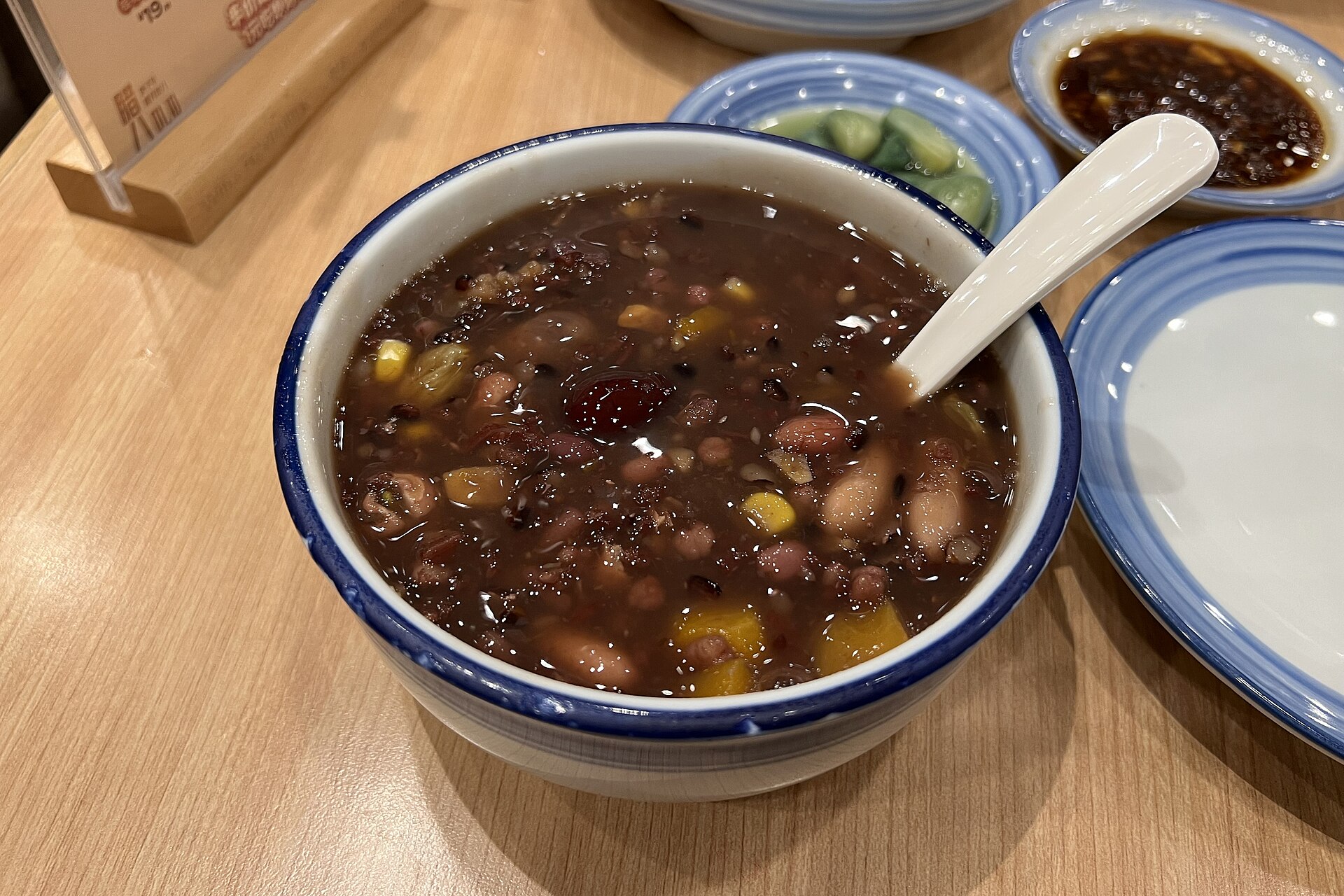
The Laba Festival, on the eighth day of the twelfth lunar month, falls on Friday 15 January in 2027. Traditionally it marks the start of the long run-up to the New Year, and the custom is to eat Laba congee, a thick, sweet porridge of rice, beans, nuts and dried fruit. The Lama Temple is known for keeping the custom alive, and Dongyue Temple handed out more than 1,000 free bowls of congee on Laba in 2026. Arrangements vary from year to year, so check the temples’ official WeChat accounts in the days before. Many Beijing restaurants and bakeries sell their own versions too.
Our guide to the Lama Temple covers visiting the temple at any time of year.
See the palaces at their emptiest
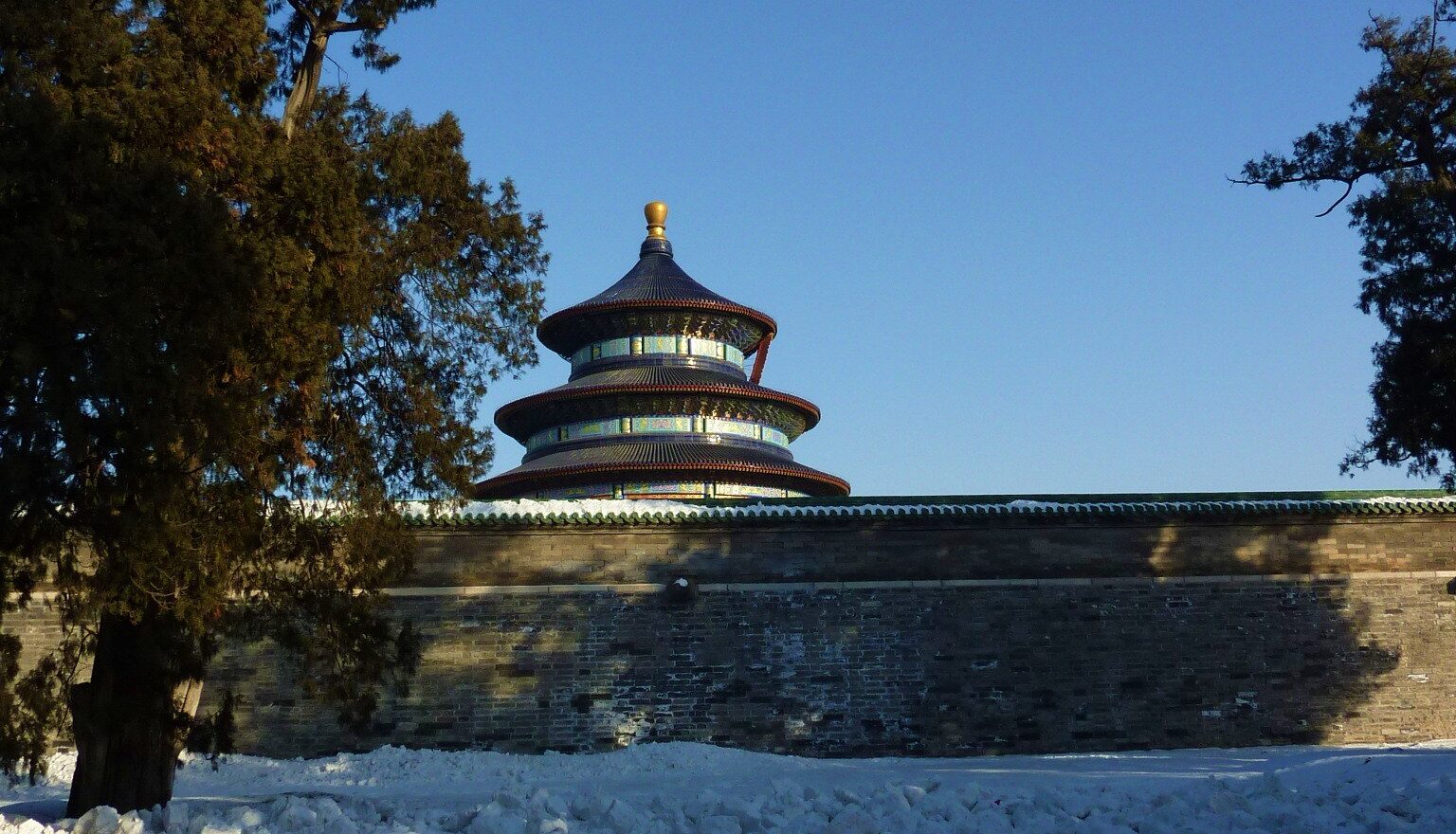
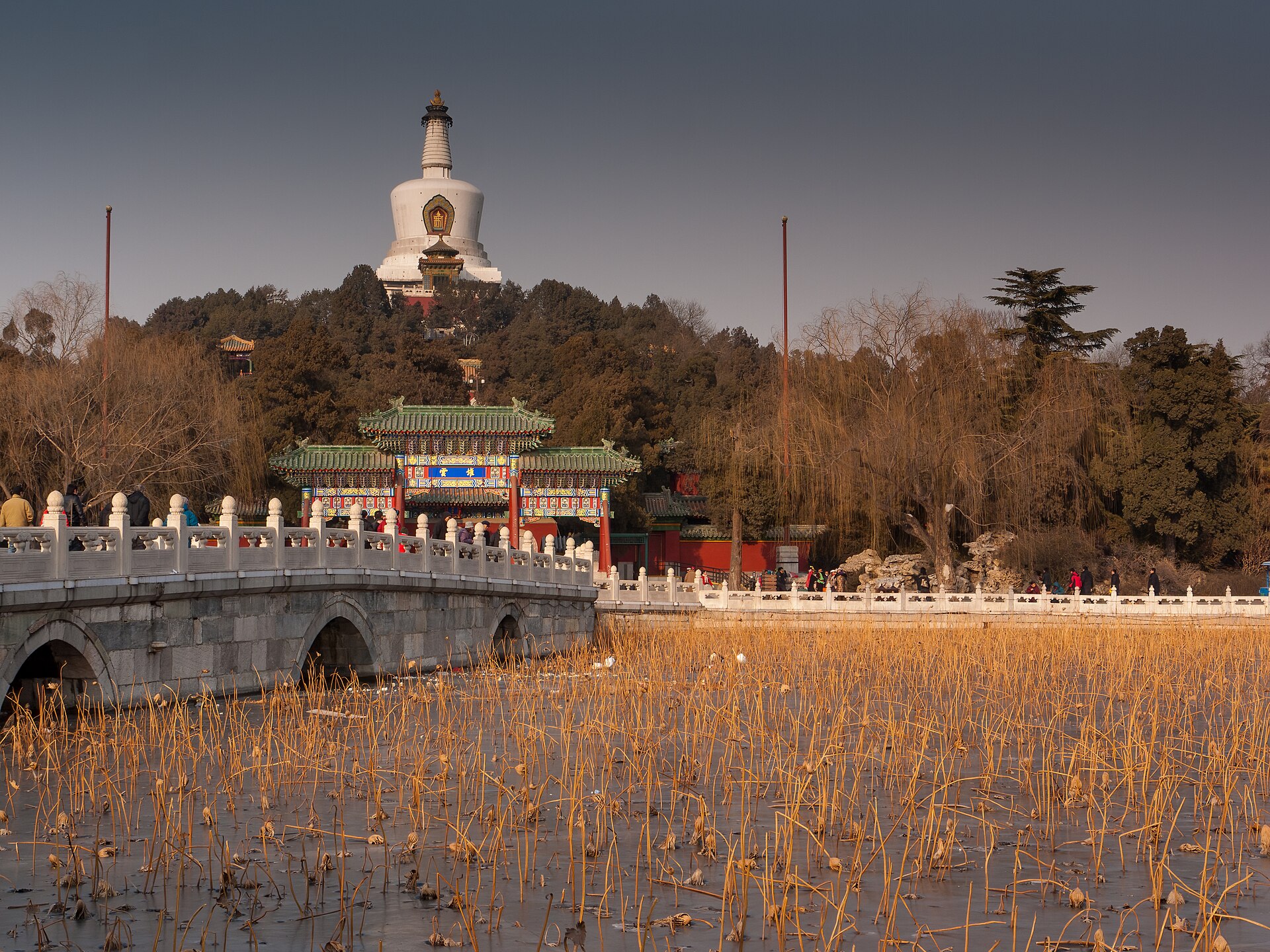
The first two weeks of January, after the New Year weekend and before the school holidays, are among the quietest times of the year at the Forbidden City and the Temple of Heaven. Arrive at opening time, when the low sun turns the palace walls a deep red and your breath hangs in the air. Afterwards, climb Jingshan for the view back over the roofs, and walk on to Beihai Park, where the White Dagoba stands over a frozen lake.
The Longqing Gorge ice festival
Out in Yanqing District, the Longqing Gorge Ice Lantern Festival turns the frozen gorge into a park of illuminated ice sculptures. The 2026 edition, the 40th, opened on 15 January 2026 and ran into early March. It makes a long but memorable evening trip from the city; check the scenic area’s official channels for the festival’s dates and tickets, and see our Longqing Gorge guide for getting there.
Ski, or thaw out in a hot spring
January is the heart of the ski season, with the resorts around Beijing normally open. School holidays fill the beginner slopes from the middle of the month, so ski on a weekday early in January if you can; our guide to skiing near Beijing covers the resorts. For the opposite of exertion, the hot spring resorts at Xiaotangshan are where Beijing goes to warm up — see hot springs near Beijing.
The Great Wall in deep winter
The Wall in January is empty, silent and, on the ridges, seriously cold. On a still, clear day it is magnificent, especially after snow; on a windy one it is miserable. Pick your day from the forecast, choose a section with a cable car such as Mutianyu, and wear boots with grip, since the steps can be icy. Be back down well before the early dusk.
Eat your way through the cold
January is the season for copper-pot lamb hot pot, for long Peking duck dinners, and for street food that warms your hands as much as your stomach: roasted sweet potatoes, chestnuts roasted in sand, and tanghulu, the candied hawthorn skewers sold all over the city in winter. As the New Year approaches, markets and supermarkets fill with festive foods and red decorations.
When it is too cold or too grey to be outside
Most January trips include a day when the wind is savage or the AQI is high. Have a plan for it.
- Museums. The National Museum on Tiananmen Square and the Capital Museum are warm, vast and easily fill a day. Booking rules vary, so check the day before in our Beijing museums guide.
- The Forbidden City’s indoor galleries. The Treasure Gallery and the clock exhibitions give you warm stops between the courtyards; our guide to the Palace Museum’s treasures explains what is where.
- Temples. The Lama Temple and the Confucius Temple sit side by side in the hutongs of the northeast, compact enough to see in a morning, with teahouses and cafés nearby to warm up.
- Performances. An evening of acrobatics or Peking opera is a warm end to a cold day.
- A long lunch. Hot pot is as much a way of spending two hours in the warm as it is a meal.
A three-day January plan
- Day 1: the Forbidden City from the 08:30 opening, then Jingshan Park for the view and Beihai Park for the White Dagoba. Late afternoon at a lake rink — Qianhai or Houhai at Shichahai if they are open — then hot pot in the hutongs nearby.
- Day 2: the Great Wall at Mutianyu on the clearest, stillest day of your trip, leaving early and coming back by mid-afternoon. A warm museum or an acrobatics show in the evening.
- Day 3: the Temple of Heaven in the early morning, the Lama Temple late morning (with congee if your visit falls on Laba), and the Summer Palace in the afternoon, with Kunming Lake’s rink if it is open.
Swap days around the Forbidden City’s Monday closure and the weather. With a fourth day, add skiing, a hot spring afternoon or an evening at the Longqing Gorge ice festival. Planning a winter trip that spans the two months? Our guide to Beijing in December explains what changes from one to the other.
Is January a good time to visit Beijing?
Yes, if you can take the cold. January gives you the frozen lakes at their best, palaces as empty as they ever get in the first half of the month, low-season prices, the build-up to Spring Festival and some of the clearest skies of the year. It is a fine month for a short city break built around the imperial sights, food and the ice.
It is a poor choice if you hate the cold, if you want long days outdoors, or if you need to travel onwards around China in the second half of the month, when the Spring Festival rush begins to take over the trains. In that case, early December or the second half of February gives you winter Beijing with fewer complications.
January is also the heart of the ice festival season in Harbin, in China’s far north-east. The festival’s opening ceremony falls early in the month, and the high-speed train from Beijing Chaoyang makes it a realistic two- or three-night add-on; the page on getting to the Harbin Ice Festival has the details.
Frequently Asked Questions
How cold is Beijing in January?
January is the coldest month. On the 1991–2020 averages, the daytime high is 2.3°C and the night-time low −6.9°C, and wind can make it feel much colder. The coldest January night recorded at the Beijing observatory was −22.8°C.
Does it snow in Beijing in January?
Sometimes. The averages count about 2.8 days with snow, often light. January is very dry, with just 2.2 mm of precipitation in an average month.
Can you ice skate in Beijing in January?
Yes, usually. The natural lake rinks open once the ice is thick enough. In 2026 Yuanmingyuan opened on 1 January, followed by Shichahai, the Summer Palace and Beihai later in the month. Check each park’s notices, and never go on ice outside an official rink.
When is Chinese New Year in 2027?
Chinese New Year’s Day is 6 February 2027, and the official holiday runs from 5 to 13 February. Sunday 31 January is a make-up working day. The travel rush builds through late January.
What is Laba and when is it?
Laba is the eighth day of the twelfth lunar month, Friday 15 January in 2027. People eat Laba congee, a sweet porridge of grains, beans and nuts, and some Beijing temples hand it out; check the temples’ official accounts for that year’s arrangements.
Is January a good time to see the Forbidden City?
The first half of January is one of the quietest times of the year. The low-season ticket costs ¥40, hours are 08:30–16:30 with last entry at 15:30, and it is closed on Mondays except public holidays.
What should I pack for Beijing in January?
A long down coat with a hood, thermal base layers, a warm hat, scarf and gloves, insulated boots with grip, thick socks, heat packs, lip balm and moisturiser, and a power bank.