Beijing Tours & Tickets
Great Wall Tours From Beijing Compared
Public bus, group tour, small group, private car or guided hike: what each Great Wall option really costs in 2026, which sections tours actually reach, and the shopping-stop tours to avoid.

The cheapest Great Wall tours advertised in Beijing cost less than the cable car on the Wall itself. They make their money somewhere else: in the jade showroom where the coach stops for an hour on the way out, the tea house where you are invited to a tasting, the silk factory, the “traditional medicine clinic” offering free consultations. By the time you reach the Wall it is early afternoon, the light is flat and you have ninety minutes before the coach leaves. Choosing a Great Wall tour from Beijing is mostly about avoiding that day, and it is easy once you know what each kind of tour costs, which sections it reaches and what it should include.
This guide compares the options honestly: public buses and trains, group coach tours, small-group tours, private cars with and without a guide, hiking tours and the evening tours to Simatai, with what each costs, which sections it reaches, who it suits, and the red flags in a listing. Prices were checked in September and October 2026 against official prices, operators’ listings and booking platforms; treat them as the right order of magnitude, since tour prices move with the season and the exchange rate. For the sections themselves, the Great Wall guide compares them in detail.
The options at a glance
| Option | Typical cost per person | Sections | Best for |
|---|---|---|---|
| Public tourist bus | Budget, plus tickets | Mutianyu | Independent travellers on a budget |
| Train | Budget (S2 or high-speed), plus tickets | Badaling | An easy independent trip; time and cost depend on where you board |
| Chinese-language group tour, no shopping | Around ¥230 for Badaling | Badaling, sometimes Mutianyu | Visitors who read Chinese and want a cheap, organised day |
| English-language group tour | From ¥180 with entry (MuBus), ¥240 with lunch | Mutianyu, Badaling | First-timers who want everything arranged |
| Small-group tour (8–10 people) | Roughly US$110–220 | Mutianyu, sometimes Jinshanling | A guided day without the coach-tour pace |
| Private car, no guide | Mid-range; priced per car per day | Any | Families and groups of three or four |
| Private car and guide | Splurge; one day rate for car and guide | Any | Context, flexibility and an early start |
| Hiking tour | ¥400–1,200 | Jiankou, Gubeikou, Jinshanling | Fit walkers who want the wild Wall |
| Evening tour to Simatai | Night Wall ¥160 with return cable car; Gubei Water Town about ¥150 extra; plus transport | Simatai with Gubei Water Town | The Wall lit at night, ideally with an overnight |
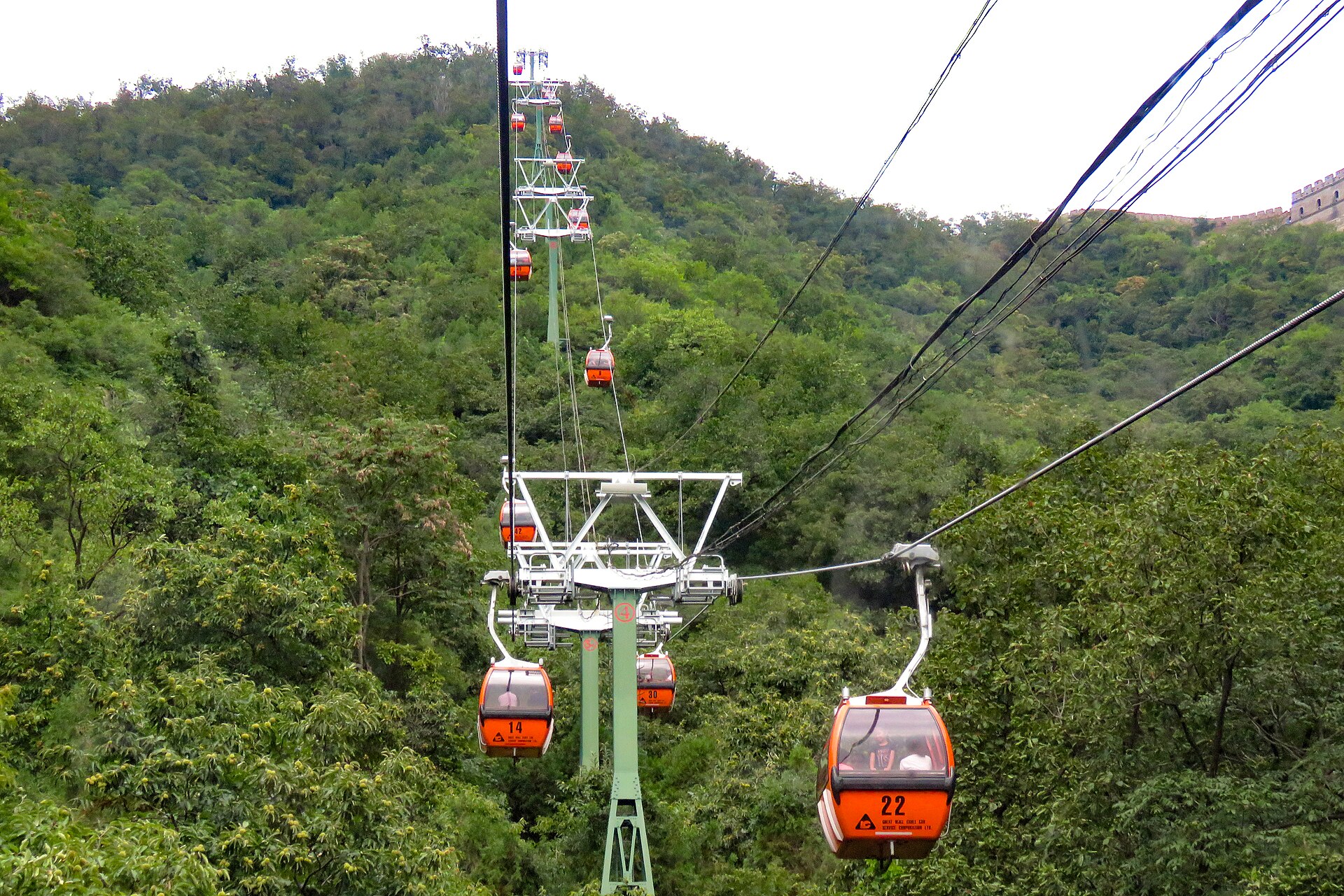
Entry tickets are extra unless a tour says otherwise: Mutianyu ¥40, Badaling ¥40, Jinshanling ¥65, Simatai ¥40 by day. The cable cars, chairlifts and the Mutianyu toboggan cost extra, and the price varies by section; at Mutianyu, a ride on the cable car or toboggan adds ¥140. A tour that looks cheap may simply have left them out.
Which sections tours actually go to
Beijing is surrounded by the Wall, but tours concentrate on a handful of sections, and the one you choose shapes the day far more than the kind of tour:
| Section | From central Beijing | Entry | Character | Who goes |
|---|---|---|---|---|
| Badaling | About 70 km, an hour or so | ¥40 peak, ¥35 off season | Restored, the most visited of all | Most Chinese coach tours; train travellers |
| Mutianyu | About 70 km, 90 minutes | ¥40 | Restored, green, a cable car and a toboggan | Most English-language tours, the public bus |
| Huanghuacheng | 60–70 km, 90 minutes | ¥60 | Wall running into a lake | Private cars, a few specialist tours |
| Jiankou | About 70 km, about 2 hours | Check locally | Wild, unrestored and dangerous in places | Hiking tours only |
| Jinshanling | 130 km, 2–2.5 hours | ¥65 | Partly restored ridgeline, superb views | Photographers, hikers, private cars |
| Simatai | About 120 km; drive time depends on traffic | ¥40 day; night ¥160 with return cable car, plus town entry | Steep, with night opening | Evening tours, Gubei Water Town visitors |
| Gubeikou | 130 km, about 2 hours | ¥25 | Raw, barely restored | Hikers, often to Jinshanling |
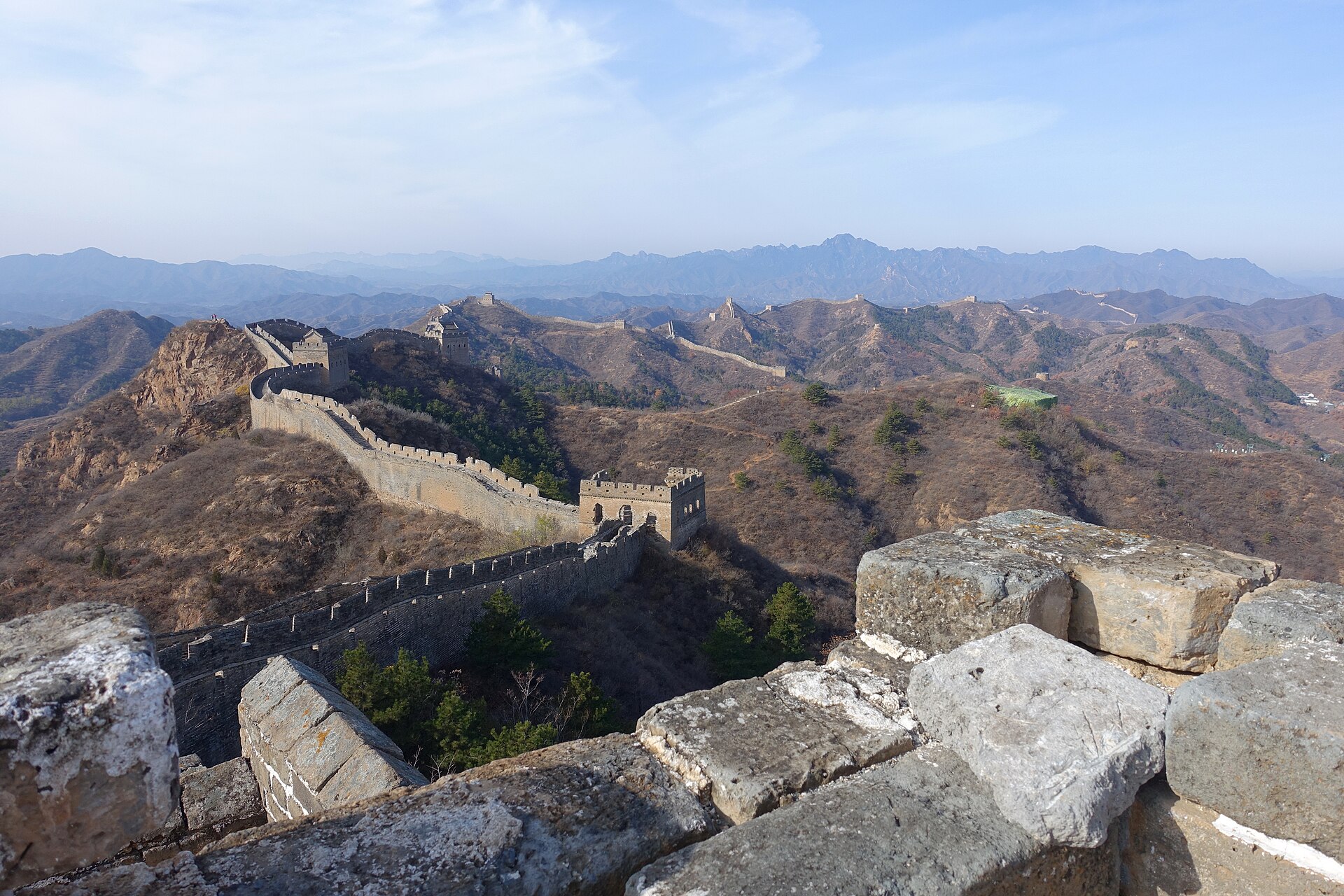
Badaling and Mutianyu are where nearly all group tours go, for good reason: they are the closest, the best equipped and the easiest to manage with a coach. Mutianyu is the better of the two for most visitors, greener, a little quieter and with the toboggan. Jinshanling is the finest day out on the Wall for anyone who can manage a longer drive and some steep steps, and it is where a private car really earns its money. The section guides for Mutianyu, Badaling and Jinshanling have the detail.
Doing it yourself: the bus and the train
Before paying for any tour, it is worth knowing how easy the independent options are.
The public tourist bus to Mutianyu runs from the Qianmen tourist distribution centre in central Beijing, with departures in the morning; check the current fare and timetable on bjbus.com, the Beijing Public Transport site, before you go. It drops you at the visitor centre, from where a shuttle bus runs to the cable car. If you would rather have it bundled, MuBus charges ¥180 for the return bus, entry and the internal shuttle; add ¥140 for the cable car or toboggan and the day comes to ¥320 before lunch. For budget hunters, the 916 Express bus to Huairou and a local bus on to Mutianyu costs ¥35–40 return but takes longer and needs more confidence.
The train to Badaling is a cheap way to reach the Wall: S2 suburban trains now leave from Nankou, as Huangtudian closed to the line on 25 October 2025, and the high-speed train from Beijing North runs to Badaling Great Wall station. Check the current timetable and fare before you go. Badaling is the most crowded section, but the train makes it a very easy half-day.
The verdict: for independent travellers who are comfortable with a little navigation, the bus to Mutianyu is the best-value Great Wall day there is, and a tour adds little but company. For a family with young children, a group of four or anyone short of time or confidence, a private car is worth the money. The guide to getting to the Great Wall covers every route in detail.
Group coach tours
The classic Great Wall tour is a full day on a coach with a guide, and what you get for the price varies, so read the inclusions. MuBus, for example, charges ¥180 for transport, an English-speaking guide on the bus, entry and the internal shuttle, or ¥240 with a buffet lunch; the cable car or toboggan is extra. Many combine the Wall with the Ming Tombs, which are on the way to Badaling. Chinese-language tours that advertise themselves as 纯玩 (chún wán, “pure sightseeing”, meaning no shopping stops) cost around ¥230 for a Badaling day and are perfectly good if you can follow a Chinese guide or do not mind not following one.
A good group tour is a reasonable day out. You are picked up early, you reach the Wall by mid-morning, you get three hours or more on it, lunch is decent and you are back by late afternoon. The downsides are the pace, which is set by the slowest member of a group of thirty, the fixed itinerary and the lack of choice about when to arrive. Some operators, MuBus among them, run early departures for visitors who want to arrive ahead of the later groups.
A bad group tour is the one this guide began with. The tell-tale signs are an itinerary that mentions a “jade museum”, “silk factory”, “tea culture experience” or “traditional Chinese medicine” visit, a vague description of the Wall section, and a short or unspecified time on the Wall. A low price on its own proves nothing: MuBus runs an English-guided trip from ¥180 with no shopping pressure, so judge a tour by its itinerary and inclusions. In 2026 Beijing’s authorities ran a long campaign against exactly these “unreasonably low-price” tours and the forced shopping that pays for them, opening hundreds of cases, but they have not disappeared, especially in tours sold on the street near Tiananmen and Qianmen.
Combining the Wall with the Ming Tombs
The Badaling-and-Ming-Tombs day is the most common combination tour, and it can work well, since the tombs lie roughly on the way. The catch is time: a day that includes two tomb sites and the Wall, plus a long lunch, leaves little time at either. If the tombs matter to you, the Ming Tombs day trip guide explains how to give them the time they deserve.
Small-group tours
A step up from the coach tour, small-group tours cap the numbers at around eight to ten and charge accordingly: in 2026, roughly US$110 for a half-day small-group trip to Mutianyu, and around US$220 for a full day that adds the Summer Palace. The guide usually walks the Wall with you rather than waiting at the bus, the pace is gentler, and the start is often earlier. For solo travellers and couples who want a guide but cannot justify a private car, this is often the best balance.
Read the inclusions carefully. Some small-group prices include the cable car and lunch; others do not. Check the meeting point, which may be a central hotel rather than your own, and the cancellation policy, which matters more for an outdoor day that can be spoiled by rain or bad air.
Private cars, with or without a guide
A private car with a driver is priced by the day, depending on the section, the size of the vehicle and the season, and it changes the day completely. You choose when to leave, which means you can be at Mutianyu or Jinshanling when the gates open and have the Wall almost to yourself for an hour. You choose how long to stay. You can stop where you want, and leave out anything you do not.
Add an English-speaking guide and the price rises, so ask for a single quote that covers the car and the guide together. The guide is worth having if you want the history explained, if you are heading to a less developed section, or if you simply prefer not to deal with tickets and logistics. The driver alone is enough for Mutianyu if you are happy to explore on your own.
For a family or a group of three or four, a private car splits its cost several ways and comes with none of the group-tour compromises. It is also the answer for anyone with limited mobility, since a driver can drop you at the right place and wait. Book through your hotel or a reputable agency, agree the price, the hours and the section in advance, and check who is buying the Wall tickets and with whose passports.
Hiking tours
The wild sections of the Wall are where a specialist tour is not a luxury but the sensible choice. Jiankou is wild, unrestored, steep and crumbling. The old through-hike from Jiankou to Mutianyu is no longer an option: the trail is blocked at Mutianyu’s Tower 23, and Beijing Hikers has dropped it from its programme. Gubeikou to Jinshanling is about 12 kilometres across two very different stretches of Wall. Established clubs such as Beijing Hikers run scheduled Wall hikes; its Gubeikou-to-Jinshanling day costs ¥510 (¥460 for members) and you bring a packed lunch, while its Gubeikou hike, at ¥470, ends with a restaurant lunch.
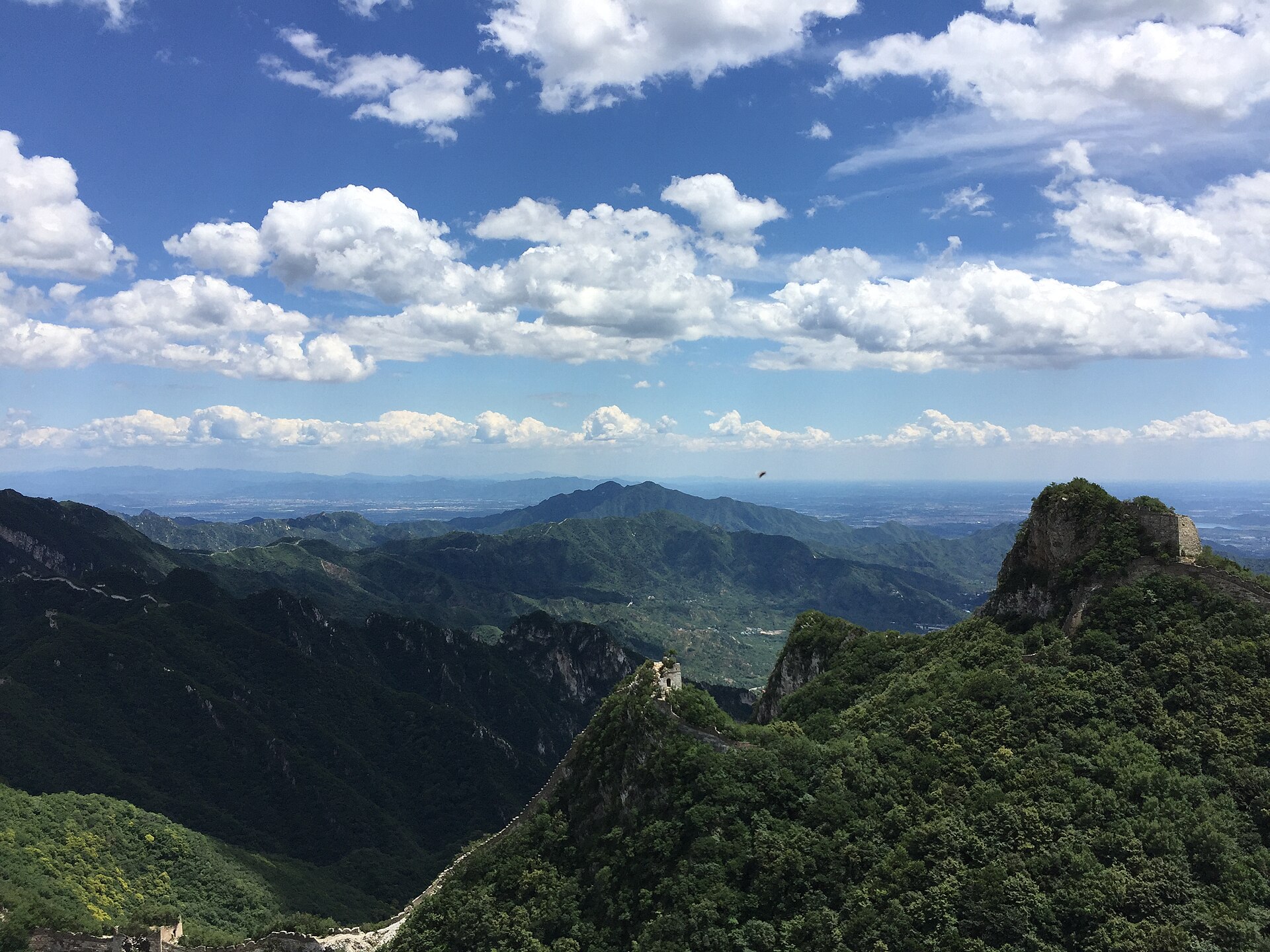
The honest advice: do not attempt Jiankou on your own unless you are an experienced hiker with a good map and the right footwear, and treat its reputation for danger seriously. With a guide who knows the route, it is one of the great walks in China. The Great Wall hiking guide grades the routes, and the Jiankou guide covers the risks.
Evening tours to Simatai
Simatai is the one section of the Wall you can walk after dark, lit along its ridge above Gubei Water Town, a recreated canal town about two hours north-east of Beijing. The night Wall ticket costs ¥160 with the return cable car and needs booking at least a day ahead; Gubei Water Town admission, about ¥150, is bought separately. Day entry to Simatai is ¥40.
Doing the night Wall as a round trip from Beijing makes for a very long day and a late return to the city. The better plan is an overnight in Gubei, with the Wall at dusk and the town in the evening. Gubei is about a two-hour drive from the city, so a private car is the easiest way to arrange the overnight stay; agree the fare before you set off. The Simatai guide and the Gubei Water Town guide have the detail.
What a fair price looks like
As a worked comparison for a day at Mutianyu with the return cable car (entry ¥40, cable car ¥140), the costs for different group sizes come out roughly like this:
| Option | One person | Two people | Four people |
|---|---|---|---|
| Public bus and tickets | Budget | Budget | Budget |
| MuBus English-guided tour with lunch, plus cable car | ¥380 | ¥760 | ¥1,520 |
| Private car, no guide, plus tickets | Mid-range | Mid-range | Mid-range |
| Private car and guide, plus tickets | Splurge | Splurge | Splurge |
The pattern is clear. Alone, the bus wins by a mile and a group tour is the sensible paid option. As a couple, a group tour and a private car start to converge. As a family of four, the private car costs about the same per head as the group tour and is a much better day. Add a guide when the history or the logistics matter more than the money.
What a good day looks like
The difference between tour types is easiest to see in the timetable. A well-run private day to Mutianyu goes something like this: pick-up at your hotel at 07:00; on the road out of the city before the worst of the traffic; at the gate as it opens (07:30 from mid-March to mid-November, 08:00 in winter); up by cable car and onto the Wall while the first coach groups are still on the motorway; two or three hours walking east or west along the ramparts, with the towers to yourselves for the first hour; down by toboggan or cable car around midday; lunch in one of the restaurants near the car park, where trout from the local farms is a speciality; and back in Beijing by mid-afternoon, in time for a rest before dinner.
A typical coach tour starts later, collects passengers from several hotels, and often arrives at the Wall between 10:00 and 11:00, just as the crowds peak; it may add a lunch stop or a second sight that eats into the afternoon, and it returns in the rush hour. A bad one adds a shopping stop on the way out and another on the way back. Neither the coach nor the car changes the Wall itself, but the first timetable puts you on it at its best and the second at its busiest.
Agreeing a private car
If you book a car and driver, settle these before the day: the section and the route, the pick-up time and place, how many hours are included and what an extra hour costs, whether tolls, parking and fuel are included, whether the driver speaks any English, and whether the price is per car or per person. Ask for the driver’s phone number and agree how you will contact each other at the Wall, since phone signal is fine but finding each other in a busy car park is not. A short written confirmation, even a message in a chat app, avoids most misunderstandings.
Tipping
Tipping is not customary in China, but private guides and drivers are the exception; how much is your call, and the agency that arranged the day can tell you what is normal. On a group coach tour a tip for the guide is appreciated but not expected. Never feel obliged to buy anything in a shop a guide takes you to; a tip is the right way to thank a good guide, a purchase is not.
Reading a tour listing: red flags and green flags
Before you book, look for these:
- The section, named. A listing that says only “Great Wall” may mean Badaling on a crowded Saturday. Good operators name the section and explain why they chose it.
- Time on the Wall. Three hours is a reasonable minimum. Be wary of itineraries that list the Wall alongside three or four other stops.
- Inclusions. Entry, cable car or chairlift, toboggan, lunch, water and hotel pick-up. Each missing item adds to the bill; at Mutianyu the cable car or toboggan alone is ¥140.
- No shopping. The listing should say so explicitly; in Chinese, look for 纯玩 or 无购物 (no shopping). Any mention of jade, silk, tea, pearls or medicine is a warning.
- Pick-up time. Early is good: before 07:30 means arriving ahead of the crowds.
- Group size and the guide’s role. Does the guide walk the Wall with you, or wait at the coach?
- Licensing and reviews. A licensed agency, recent reviews from travellers like you, and a clear cancellation policy, especially for bad weather.
- Price sanity. A cheap tour is not a red flag on its own; a jade, silk or tea stop in the itinerary is.
And never buy a Wall tour from someone who approaches you on the street. The guide to Beijing tours and tickets covers the wider picture of what is worth paying for in the city.
Which tour suits which traveller
First-timers on a short trip. Mutianyu, by public bus if you are confident or by a good group or small-group tour if you are not. Go early, take the cable car up and the toboggan down if you like, and give yourself three hours on the Wall.
Families. Mutianyu by private car. The toboggan is a highlight for children, the cable car saves small legs, and a car lets you leave when the children have had enough rather than when the coach does. The Great Wall with kids guide covers the rest.
Photographers. Jinshanling by private car, arriving at opening or staying for the late-afternoon light. The photography guide covers the best positions.
Hikers. A guided hike along the wild Wall, such as Gubeikou to Jinshanling.
Budget travellers. The S2 train to Badaling, or the public bus to Mutianyu.
Travellers with limited mobility. A private car to Mutianyu or Badaling, both of which have cable cars, with the driver waiting at the bottom.
Crowd-averse visitors. A private car at opening time on a weekday, to Mutianyu or Jinshanling. The guide to avoiding the crowds has the timing.
Layover passengers. A private car from the airport to Mutianyu or Badaling can fit into a long layover with visa-free transit, provided you leave a generous margin; the layover itinerary sets out what is realistic.
Tickets and passports
Both Badaling and Mutianyu now sell real-name tickets tied to a passport. At Mutianyu you book an entry session (08:30–12:00 or 12:00–17:00; check which are offered for your date) through the official WeChat account or website; at Badaling you can book up to ten days ahead, one ticket per passport per day. If a tour includes entry, the operator will need each traveller’s passport name and number in advance; if you are travelling by private car, agree who is buying the tickets. Either way, every traveller needs their own passport on the day. The guide to booking Beijing attractions with a passport explains the system.
When to go
The Wall is at its best in spring and autumn, with clear air and mild days; late October brings the autumn colour. Summer is hot and hazy on the exposed sections, winter cold and occasionally beautiful under snow, with far fewer people. Whatever the season, avoid weekends and the Golden Week holidays if you can, when Badaling in particular is overwhelmed, and check the air quality the day before: on a hazy day the views vanish, and it may be worth swapping the Wall for a museum and coming back later in the week. A good tour operator will move your day for weather; ask about it when you book.
The honest verdict
The best Great Wall tour from Beijing is often not a tour at all. For independent travellers, the public bus to Mutianyu or the train to Badaling gives you the Wall for a fraction of the price of any tour, and the logistics are easy. A tour earns its price in three situations: when you want a guide’s story of the Wall, when a private car makes an early start and a quiet section possible, and when a wild section like Jiankou needs someone who knows the way.
The tour to avoid is the cheap coach day with shopping stops, which costs you the best hours of the day in a showroom. Spend a little more, or a lot less, and the Wall will be one of the great days of your trip.
Frequently asked questions
What is the best Great Wall tour from Beijing?
For most visitors, a day at Mutianyu, either by public bus or with a small-group tour or private car arriving early. For photographers and keen walkers, a private car or guided hike to Jinshanling. Avoid cheap group tours that include shopping stops.
How much does a Great Wall tour from Beijing cost?
An English-guided group tour can be cheap: MuBus charges ¥180 per adult for its Mutianyu trip with entry, or ¥240 with lunch, with the cable car or toboggan extra. Small-group tours cost roughly US$110–220, and a private car is quoted per day, with a guide adding to the price. The public bus to Mutianyu and the S2 train to Badaling are the budget options, plus entry tickets.
Is it better to take a tour or go to the Great Wall on my own?
Going on your own is easy and much cheaper, by public bus to Mutianyu or train to Badaling. A tour or private car is better for families, for groups of three or four, for remote sections like Jinshanling and Jiankou, and for anyone who wants a guide.
Which section of the Great Wall do tours go to?
Most group tours go to Badaling or Mutianyu, the two closest and best-equipped sections. Small-group and private tours also go to Jinshanling, Huanghuacheng and Simatai, and hiking tours to Jiankou and Gubeikou.
How do I avoid shopping stops on a Great Wall tour?
Choose a tour that names its section, states the time on the Wall and says explicitly that there is no shopping (纯玩 or 无购物 in Chinese). Be wary of any itinerary mentioning jade, silk, tea or medicine, whatever the price, and never buy a tour on the street.
Is a private car to the Great Wall worth it?
For families and groups of three or four, usually yes: it costs about the same per person as a group tour, lets you arrive at opening and avoid the crowds, and goes at your pace. For solo travellers the public bus or a small-group tour is better value.
Can I visit the Great Wall at night?
Yes, at Simatai, which opens in the evening with the Wall lit along its ridge. It is sold as a package with Gubei Water Town, about two hours from Beijing, and is best done with an overnight stay.
Do I need my passport for a Great Wall tour?
Yes. Badaling and Mutianyu sell real-name tickets tied to a passport, so a tour that includes entry needs your passport details in advance, and every traveller must carry their passport on the day.