Beijing Weather by Month
Beijing Weather Month by Month: When to Visit and What to Expect
Beijing's climate month by month from the official averages, with air quality through the year, the 2027 holidays that drive crowds, seasonal ticket prices and what to pack.
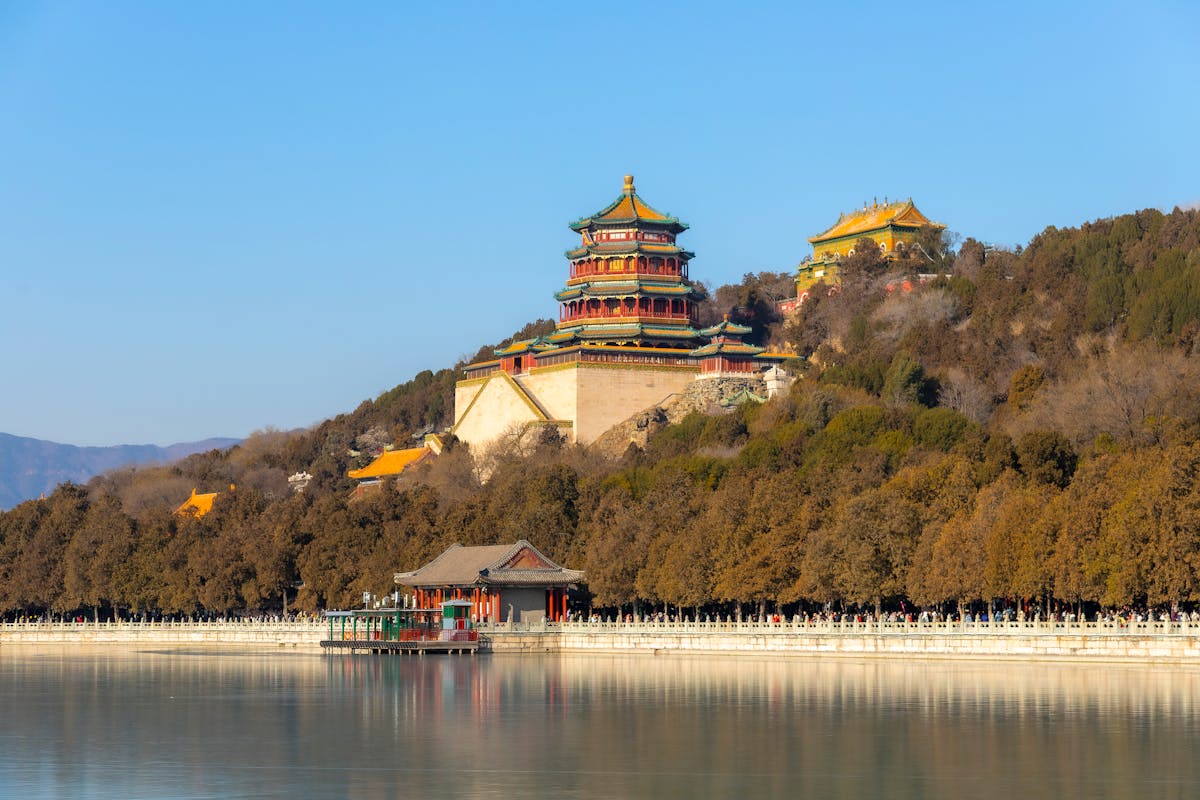
Beijing does not do mild. In January the wind off the Mongolian plateau can make a bright, cloudless afternoon feel like a walk-in freezer; in July the same streets are close to 32°C, damp and heavy, with thunderstorms building over the Western Hills by mid-afternoon. In between come two short, glorious seasons that everyone who lives here plans around. Understanding Beijing weather by month is less about avoiding bad months — there are good reasons to come in every one of them — and more about knowing what each month will ask of you: what to wear, how crowded it will be, what it will cost, and which sights it flatters.
This page sets out the climate month by month with the official long-term averages, then covers air quality through the year, the 2027 public holidays that shape crowds and prices, seasonal ticket prices at the big sights, what to pack for each season, and a short guide to every month. Climate figures are the China Meteorological Administration’s 1991–2020 averages for the Beijing observatory, as reproduced by Wikipedia; holiday dates are from the State Council’s notice of 5 November 2026; ticket prices are from the sights’ own pages and Beijing’s municipal government, checked in November 2026.
Beijing’s climate in brief
Beijing has a monsoon-influenced continental climate with four sharply different seasons. Winters are long, cold and very dry; summers are hot, humid and wet; spring and autumn are short, sunny and changeable. The year’s averages hide how extreme the swing is: a mean daily maximum of 2.3°C in January against 31.8°C in July.
- Rain is concentrated in summer. The city receives about 528 mm in an average year, and roughly two-thirds of it — about 355 mm — falls in June, July and August. July alone averages 169.7 mm. January and December average just 2.2 mm each.
- It is sunny. Beijing averages about 2,490 hours of sunshine a year, and even midwinter months see at least 170 hours. Grey days are as often haze as cloud.
- It is dry for most of the year. Average relative humidity sits around 40–47% from December to May, rising to about 70% in July and August.
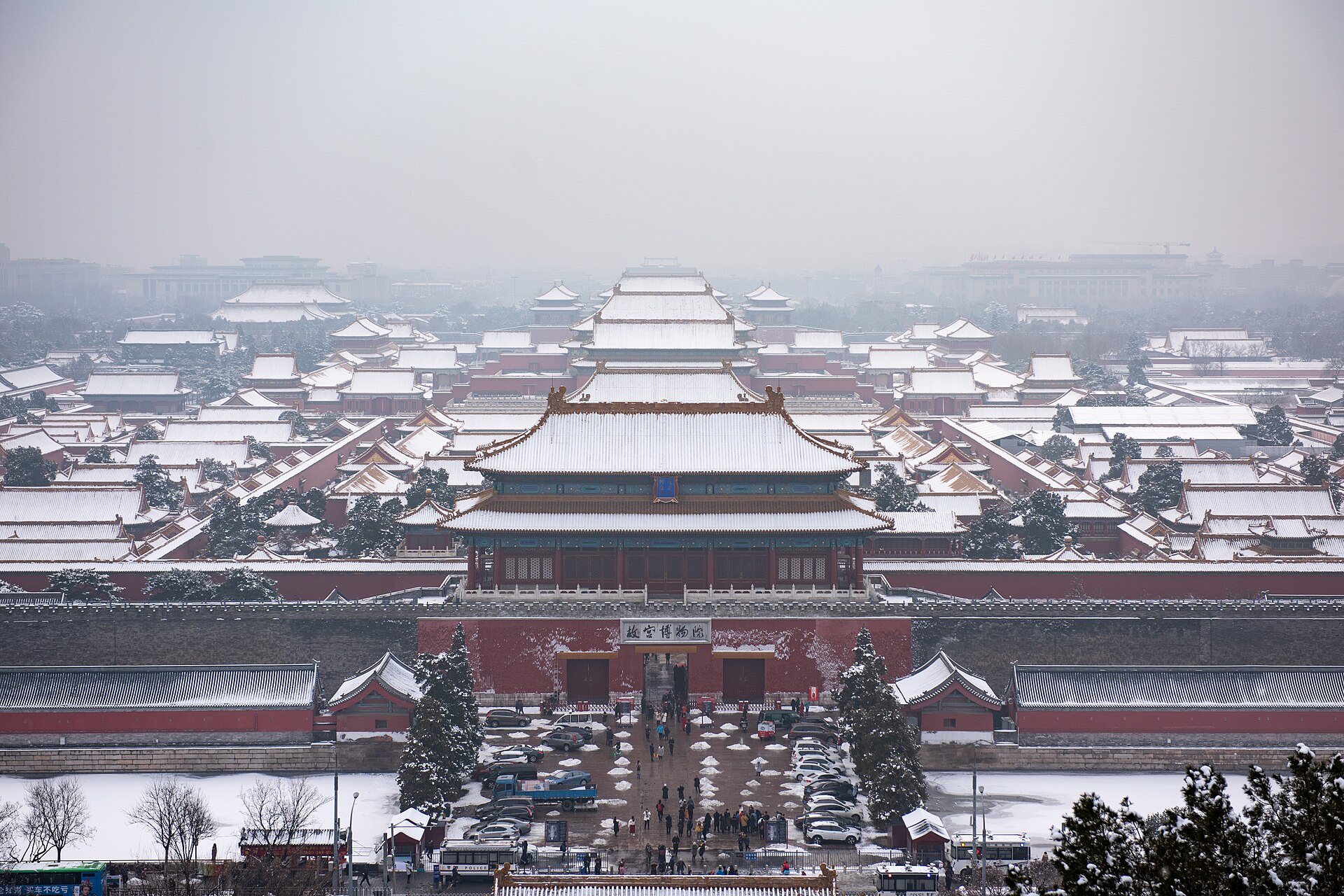
- Snow is rare and light. The averages count fewer than three snowy days in each of December and January. A proper snowfall that settles on the Forbidden City’s roofs is an event, and photographers drop everything when it happens.
For a broader view of when to come and why, our guide to the best time to visit Beijing weighs the seasons against each other. This page sticks to what each month is actually like.
Beijing weather month by month: the numbers
| Month | Avg high | Avg low | Rain (mm) | Rain days | Sunshine (hours) | Humidity |
|---|---|---|---|---|---|---|
| January | 2.3°C | −6.9°C | 2.2 | 1.6 | 188 | 43% |
| February | 6.1°C | −4.2°C | 5.8 | 2.3 | 189 | 42% |
| March | 13.2°C | 1.9°C | 8.6 | 3.0 | 231 | 40% |
| April | 21.0°C | 9.0°C | 21.7 | 4.7 | 243 | 43% |
| May | 27.2°C | 15.1°C | 36.1 | 6.0 | 265 | 47% |
| June | 30.8°C | 20.0°C | 72.4 | 10.0 | 222 | 58% |
| July | 31.8°C | 23.0°C | 169.7 | 11.9 | 191 | 69% |
| August | 30.7°C | 22.0°C | 113.4 | 10.5 | 205 | 71% |
| September | 26.5°C | 16.3°C | 53.7 | 7.1 | 206 | 64% |
| October | 19.3°C | 8.8°C | 28.7 | 5.2 | 200 | 58% |
| November | 10.3°C | 0.7°C | 13.5 | 2.9 | 173 | 54% |
| December | 3.7°C | −5.0°C | 2.2 | 1.6 | 177 | 46% |
Rain days are days with at least 0.1 mm. Averages are averages: a cold snap in January can push night-time temperatures well below −10°C, and summer heatwaves can top 35°C. The highest temperature on record at the observatory is 41.9°C, set in July; the lowest is −27.4°C, set in February.
Each month at a glance
| Month | In a word | Crowds | Good for |
|---|---|---|---|
| January | Freezing, dry, clear | Low, until the Spring Festival run-up | Empty palaces, frozen lakes, hot pot |
| February | Cold, festive | Very high over Spring Festival, then quiet | Temple fairs, lanterns, skiing |
| March | Cool, windy, dusty at times | Low to moderate | Early blossom, quiet Great Wall |
| April | Mild, blossoming | Moderate, busy at weekends | Parks in flower, walking the Wall |
| May | Warm, sunny | Very high on 1–5 May, then moderate | Long outdoor days, hiking |
| June | Hot, getting humid | Moderate | Early mornings, evening hutong walks |
| July | Hot, humid, stormy | High (school holidays) | Museums, lakes, night markets |
| August | Hot, humid, wet | High (school holidays) | Same as July, with clearer days after storms |
| September | Warm, settling, clear | Moderate; busy late in the month | Everything outdoors |
| October | Crisp, golden | Extreme on 1–7 October, then high | Autumn colour, the Great Wall |
| November | Cold, bright | Low | Last autumn leaves, value |
| December | Freezing, very dry | Low | Quiet sightseeing, hot springs, skiing |
Air quality through the year
Beijing’s air is far cleaner than its reputation, and anyone who last visited in the early 2010s will notice. At the city government’s briefing on 4 January 2026, the Ecology and Environment Bureau reported that the average PM2.5 concentration in 2025 was 27.0 micrograms per cubic metre — the first year below 30, and down from 89.5 in 2013. The city recorded 311 days of good air in 2025, the most since monitoring began, and a single day of heavy pollution, against 58 in 2013.
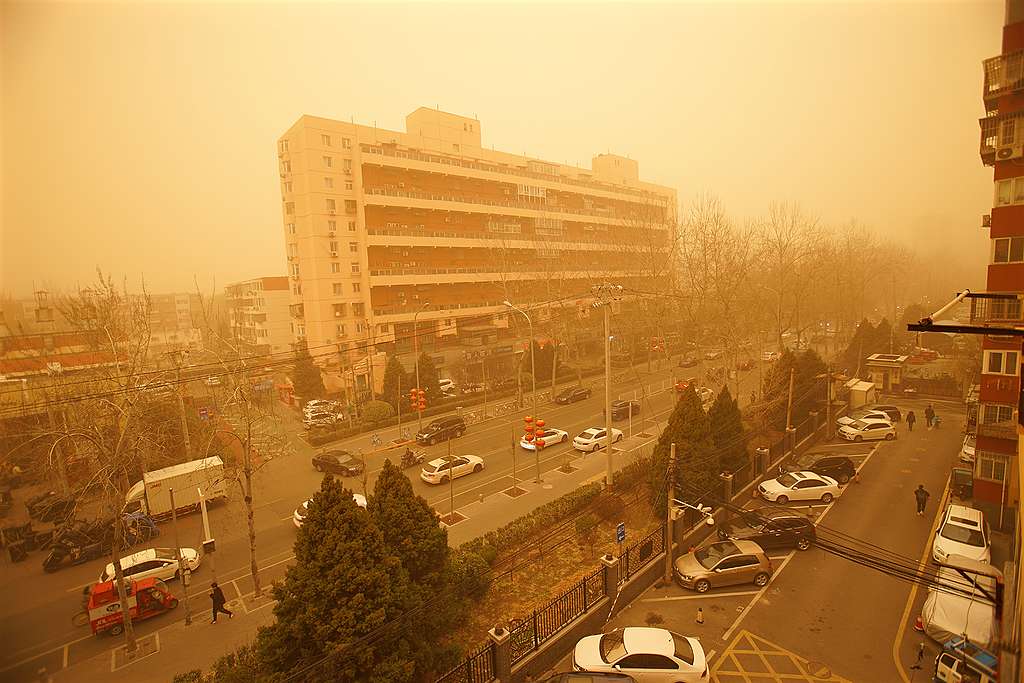
That still leaves patterns worth knowing:
- Winter is the season to watch. Central heating normally runs from 15 November to 15 March, with the exact start set each year by the city’s Urban Management Commission, and still, cold weather can trap pollution for a day or two at a time. The wind that follows usually clears it overnight.
- Spring brings dust. Strong northerly winds in March and April occasionally carry sand from the deserts to the north. A full sandstorm is uncommon, but on those days the sky turns yellow and you will want a mask.
- The warm months are the cleanest stretch. In 2025, PM2.5 levels stayed in the “good” band for 227 consecutive days between March and October.
Check the AQI each morning on a weather app. Under 100, the air is fine for hiking and sightseeing; above 150, plan an indoor day. Only properly fitted N95-type masks help. Our Beijing air quality guide explains the numbers and the apps.
Crowds and the 2027 public holidays
Weather decides how comfortable you are; the holiday calendar decides how crowded everything is. China’s public holidays move hundreds of millions of people at once, and Beijing is one of their main destinations. The State Council published the 2027 schedule on 5 November 2026.
| Holiday | 2027 dates off | Make-up working days | What it means in Beijing |
|---|---|---|---|
| New Year | 1–3 January | None | Busy at major sights for a long weekend |
| Spring Festival | 5–13 February (Chinese New Year’s Day is 6 February) | Sunday 31 January, Sunday 14 February | Migrants leave the city, domestic tourists arrive; temple fairs; some small restaurants close |
| Qingming | 3–5 April | None | A busy spring long weekend |
| Labour Day | 1–5 May | Saturday 8 May | One of the year’s peak travel periods; book everything early |
| Dragon Boat Festival | 9 June | None | A single day; little effect |
| Mid-Autumn Festival | 15 September | None | A single day; parks busy in the evening |
| National Day (Golden Week) | 1–7 October | Sunday 26 September, Saturday 9 October | One of the busiest weeks of the year; Tiananmen and the Forbidden City very crowded |
The make-up working days matter: on those weekend dates, offices and schools work as normal. The other big crowd-driver is the school calendar. Chinese summer holidays run through July and August, when family groups fill the museums, the Forbidden City and the Great Wall, and the winter holiday runs around Spring Festival.
If you can choose, the quietest windows for sightseeing are November, December, early January, March and early June, avoiding weekends where possible. For the festivals themselves, see our guides to Chinese New Year in Beijing and the Beijing festivals and events calendar.
What the seasons cost
Beijing’s main sights charge less in the off-season, and the switch dates are fixed. For most, high season runs from 1 April to 31 October and low season from 1 November to 31 March.
| Sight | April–October | November–March |
|---|---|---|
| Forbidden City (Palace Museum) | ¥60 | ¥40 |
| Summer Palace, entry | ¥30 | ¥20 |
| Summer Palace, combined ticket | ¥60 | ¥50 |
| Temple of Heaven, through ticket | ¥34 | ¥28 |
| Dingling, Ming Tombs | ¥60 | ¥40 |
Some Great Wall sections switch on different dates: Mutianyu opens at 07:30 from 16 March to 15 November and at 08:00 for the rest of the year. Hotel rates follow demand rather than a timetable — they climb around the Golden Weeks and other holidays and soften in the cold months — so the real saving in winter comes from accommodation and space rather than tickets. Our Beijing travel budget guide puts the numbers together for a whole trip.
What to pack, season by season
| Season | Clothing | Also bring |
|---|---|---|
| Winter (Dec–Feb) | Down coat, thermal base layers, hat, gloves, scarf, insulated boots | Lip balm and moisturiser for the dry air; a power bank, as batteries drain fast in the cold |
| Spring (Mar–May) | Layers: a warm jacket for March, a light jacket for April, short sleeves by May | Sunglasses, a mask for dusty days, sun cream |
| Summer (Jun–Aug) | Light, breathable clothes; a cover-up for temples | Compact umbrella, sun hat, refillable water bottle, mosquito repellent |
| Autumn (Sep–Nov) | Light layers in September, a warm jacket by late October, a winter coat in November | Comfortable walking shoes for hills and the Wall |
Two things catch visitors out in every season: how much walking a day of Beijing sightseeing involves, and how strong the sun is on clear days. The full checklist is in our Beijing packing list.
A guide to each month
January
The coldest month: average highs of 2.3°C and lows of −6.9°C, with dry, frequently clear skies and almost no rain or snow — 2.2 mm in the average January. The light is beautiful, the wind is brutal, and the big sights are at their emptiest early in the month. Frozen lakes at Houhai and the Summer Palace turn into skating rinks when conditions allow. In 2027 the Spring Festival holiday begins on 5 February, so the run-up fills trains and sights late in the month. It suits travellers who dress properly and want the Forbidden City with space to breathe. The averages count 2.8 days with snow in January, so a white Forbidden City is possible but never something to count on. Our Beijing winter guide covers the season in full.
February
Still cold — 6.1°C by day, −4.2°C at night — and very dry air, at about 42% humidity. In 2027 the month is dominated by Spring Festival: the official holiday runs from 5 to 13 February, with Chinese New Year’s Day on 6 February and the Lantern Festival two weeks later. Temple fairs, red lanterns and fireworks make it a memorable time to be here, but the holiday itself is crowded at the major sights and some small family restaurants close. The second half of the month is quiet and good value. It is also the heart of the ski season; see our guide to skiing near Beijing.
March
The thaw. Average highs climb to 13.2°C, but nights hover just above freezing at 1.9°C and the wind can be sharp. Central heating normally switches off in mid-March, which can make hotel rooms and older buildings feel chilly. March is the month most likely to bring dust, so keep an eye on the forecast. The first blossoms appear in the second half of the month: in 2026 the Yuyuantan Park cherry blossom event opened on 18 March. With few tour groups about, it is a good month for a quiet Great Wall hike if you dress for the wind. Sunshine jumps to around 231 hours, and humidity, at about 40%, is the lowest of the year: bring moisturiser and plenty of water. Low-season ticket prices last until 31 March.
April
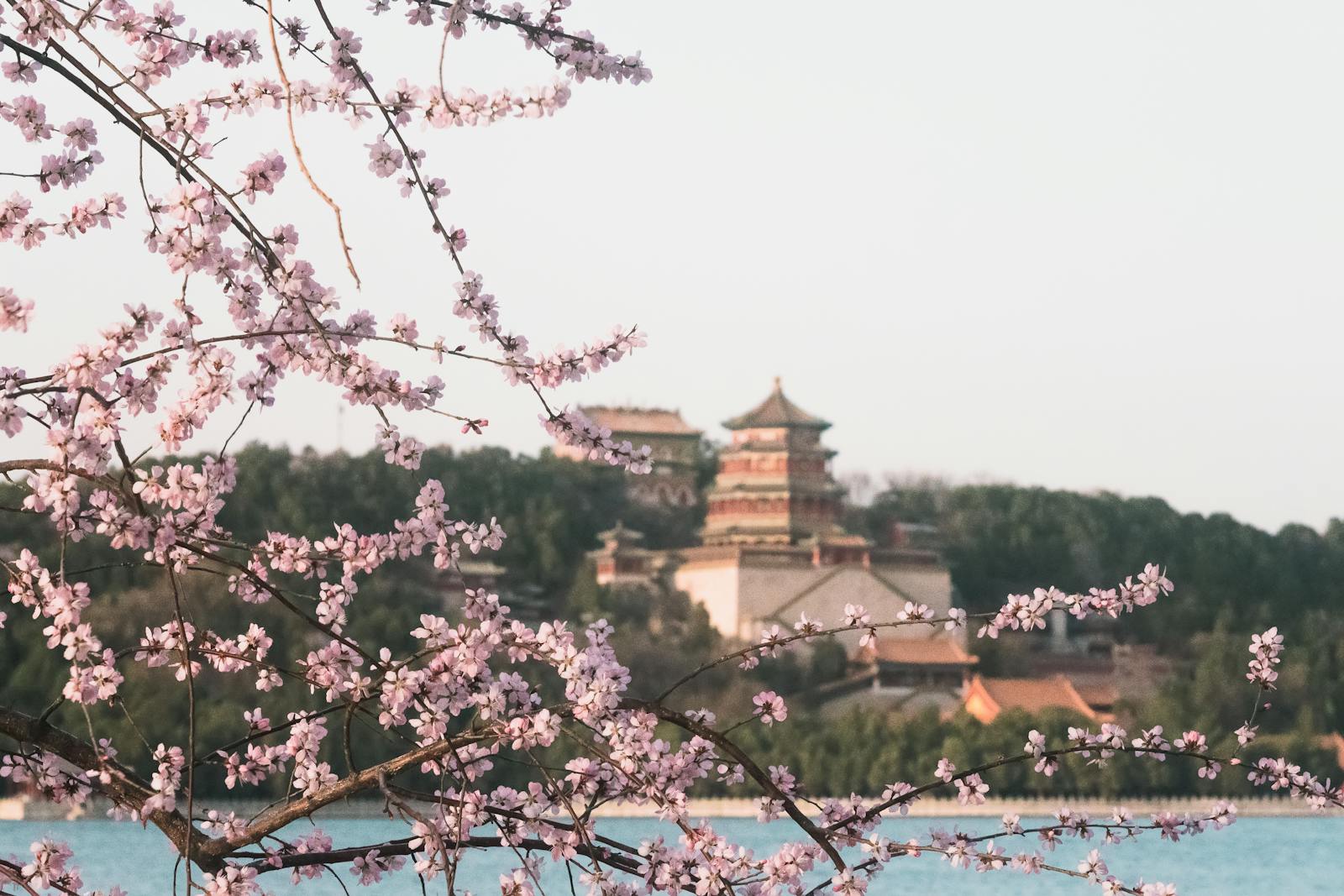
Spring proper, and one of the city’s best months. Highs average 21.0°C and lows 9.0°C, rain is still light at 21.7 mm, and the parks are full of blossom — magnolia, peach, cherry, crabapple. The Qingming holiday (3–5 April in 2027) brings a busy long weekend. Bring layers: mornings can be cool and afternoons warm, and average highs sit 12 degrees above the lows. Our Beijing cherry blossom guide covers where and when to see the flowers.
May
Warm, long and sunny: highs of 27.2°C, lows of 15.1°C and the most sunshine of the year, around 265 hours. Humidity is still low, so even hot afternoons are comfortable in the shade. The one thing to avoid is the Labour Day holiday, which in 2027 runs from 1 to 5 May and is one of the peak travel periods of the year. Outside that week, May is excellent for hiking, cycling and long days on the Wall. Rainfall rises to 36.1 mm over about six days, and the evenings are warm enough for rooftop bars and lakeside dinners. It is also a good month for the Summer Palace, before the summer heat and school-holiday crowds arrive.
June
Summer arrives. Highs average 30.8°C and lows 20.0°C; rainfall doubles to 72.4 mm, and humidity rises through the month. Early June can still feel pleasant, especially in the mornings and evenings; by late June the city is hot and muggy. The Dragon Boat Festival falls on 9 June in 2027. Crowds are moderate until the school holidays begin. Plan outdoor sightseeing early, and spend the afternoon in a museum. Rain falls on about ten days in an average June, and the long evenings make it a fine month for exploring the hutongs after dark.
July
The hottest and wettest month: average highs of 31.8°C and lows of 23.0°C, 169.7 mm of rain over about 12 days, and humidity close to 70%. Rain usually comes as heavy afternoon or evening thunderstorms rather than all-day drizzle, and the heaviest-rain stretch of the summer — known locally as “qixia bashang”, late July into early August — brings the greatest risk of flash flooding; in 2026 the city’s met service said it began on 20 July. The school holidays put families at every major sight. It is not a bad month to visit, but it rewards early starts, a flexible plan and an umbrella.
August
Much like July, a shade cooler at 30.7°C by day and 22.0°C at night, with 113.4 mm of rain and the highest average humidity of the year at 71%. After a storm the air often clears to a sparkling blue, which can make for the best views of the summer from Jingshan or the Wall. School holiday crowds continue all month. As in July, keep afternoons for museums and save outdoor walking for the early morning and evening.
September
The summer breaks, usually in the first half of the month, and Beijing settles into what many residents consider its best weather: highs of 26.5°C, lows of 16.3°C, falling humidity and clearer skies. Rain drops to 53.7 mm. The Mid-Autumn Festival falls on 15 September in 2027. Crowds build late in the month ahead of the National Day holiday, and in 2027 Sunday 26 September is a make-up working day. If you can choose any month for a first visit, September is hard to beat. See our Mid-Autumn Festival guide for the festival itself.
October
Crisp, clear and golden: highs of 19.3°C falling through the month, lows of 8.8°C, and just 28.7 mm of rain. The first week is National Day Golden Week (1–7 October in 2027), one of the busiest weeks of the year, when Tiananmen, the Forbidden City and Badaling are packed and hotel rates rise sharply. Once the holiday ends, the rest of the month is superb. Autumn colour arrives in the hills from mid-October; in 2026 the Fragrant Hills Red Leaf Festival ran from 16 October to 15 November. Our Beijing autumn leaves guide covers the best spots.
November
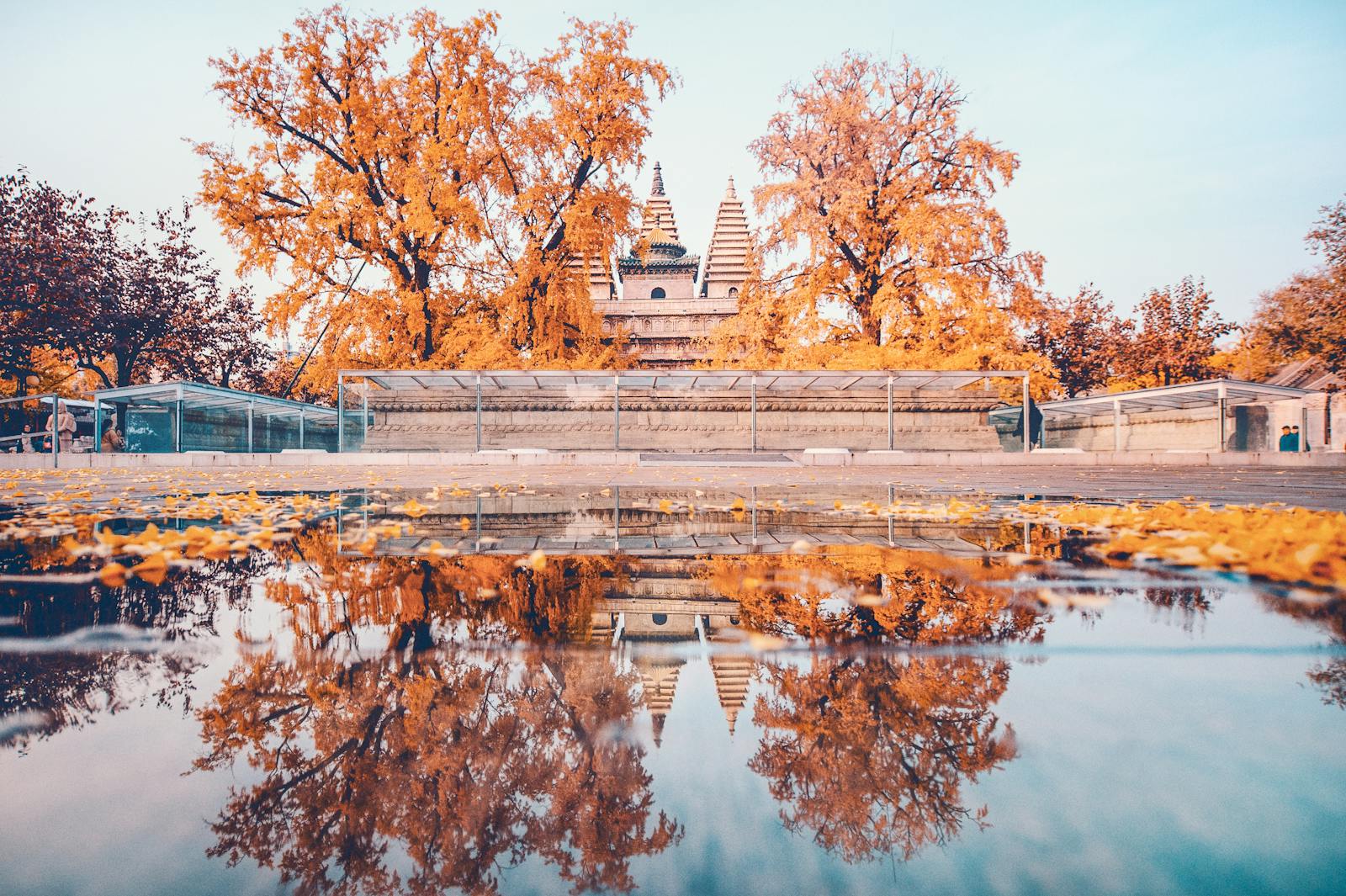
The temperature drops quickly. Highs average 10.3°C and lows 0.7°C, and by the end of the month you will want a winter coat. The first days can still catch the last of the autumn leaves, especially the ginkgos in temple courtyards. Central heating normally starts on 15 November, and November 1 marks the switch to low-season ticket prices at the Forbidden City, the Summer Palace and the Temple of Heaven. Crowds are thin. It is a good-value month for travellers who don’t mind the cold. Rainfall is low at 13.5 mm, the averages count 1.7 snowy days, and the clear, cold days after a front passes are some of the sharpest of the year for views from Jingshan or the Wall.
December
Freezing and very dry: highs of 3.7°C, lows of −5.0°C and only 2.2 mm of rain or snow in an average December. Skies are often clear and deep blue after a cold front, and the city is quiet. It suits travellers who want the big sights without the queues and are happy to spend the afternoons in a teahouse, a museum or a hot pot restaurant. Ski resorts open, and the hot spring resorts north of the city come into their own; see hot springs near Beijing.
How the weather shapes a sightseeing day
Knowing the averages is one thing; knowing how to arrange a day around them is what makes a trip comfortable. Beijing’s big sights are mostly outdoors — palace courtyards, temple compounds, parks and the Wall — so the season should decide the order in which you do things, not just what you wear.
A winter day (December to February)
- Morning: the coldest part of the day is also often the clearest. Go to the Forbidden City or the Temple of Heaven at opening time, when the light is low and gold and the courtyards are at their emptiest. Low-season hours are shorter at many sights, so check closing times.
- Midday: eat something hot and long. Hot pot, a bowl of noodles or a Peking duck lunch is as much about warming up as eating.
- Afternoon: the sun is weak and sets early. Spend it indoors — the National Museum, the Capital Museum, a teahouse — or on a frozen lake if the rinks are open.
- Evening: the temperature falls sharply after dark. Wrap up properly for any evening hutong walk.
A summer day (June to August)
- Early morning: the coolest and least crowded hours. Do your walking now: the Summer Palace, Jingshan, a Great Wall section.
- Midday to mid-afternoon: the heat, the strongest sun of the year and, often, the thunderstorms. Museums, shopping streets with air conditioning and a long lunch.
- Late afternoon and evening: the city comes back to life. Lakeside walks at Houhai, night markets and rooftop bars are at their best after a storm has cleared the air.
Spring and autumn days
These are the easy seasons, and the temptation is to cram too much in. The main thing to plan for is the swing between morning and afternoon: in April, average lows of 9.0°C sit against highs of 21.0°C, and October is much the same in reverse. Dress in layers you can carry, start early for the popular parks at blossom and leaf time, and keep weekends for less famous places, because domestic visitors pick exactly the same weeks.
The weather on the Great Wall
The Great Wall sections near Beijing are in the mountains north of the city, and the weather up there is harsher than in town. Expect it to be colder and windier than the city forecast, especially on exposed ridges and in winter, and expect the sun to feel stronger on clear days, with almost no shade on the Wall itself.
- Winter: beautiful and empty, particularly after snow, but steps can be icy and the wind is relentless. Choose a section with a cable car, such as Mutianyu, and wear boots with grip.
- Spring: blossom on the hillsides in April, and the risk of dusty, hazy days in March and April.
- Summer: hot and humid, with afternoon storms. Start early, carry plenty of water, and get off exposed ridges if thunder starts.
- Autumn: the favourite season on the Wall for many visitors, with clear air and red and gold hillsides from mid-October.
Our Great Wall hiking guide matches sections to fitness and season, and the guide to avoiding Great Wall crowds explains which days and sections stay quiet.
Rainy, hot and cold-day alternatives
Every month has a few days when the weather wins — a July downpour, a scorching afternoon, a January day of wind and haze. Have a list ready:
- Museums: the National Museum on Tiananmen Square, the Capital Museum and the city’s art districts. Some require advance booking with a passport, so check and reserve the day before rather than on the morning itself. See our Beijing museums guide.
- The indoor galleries at the big sights: the Forbidden City’s exhibition halls, such as the Treasure Gallery, give you somewhere to duck into between courtyards.
- Food: a long hot pot dinner, a cooking class or a slow Peking duck meal fills an evening whatever the weather.
- Performances: acrobatics, Peking opera and kung fu shows are staged indoors.
- Out of the city: in winter, a hot spring resort; in summer, the air-conditioned malls and food courts of Sanlitun and Wangfujing.
Heating, air conditioning and indoor comfort
Beijing’s heating season shapes winter life indoors as much as the weather does outdoors. Central heating normally runs from 15 November to 15 March, and once it is on, hotels, restaurants, museums and the metro can be very warm. Dress in layers you can take off, rather than one thick jumper.
The flip side is dryness. With average outdoor humidity in the low to mid 40s from December to April and the heating on, indoor air becomes very dry. Moisturiser, lip balm, a refillable water bottle and, for some travellers, saline nasal spray make a real difference. Some hotels can supply a humidifier on request; it is worth asking.
Just before the heating comes on in mid-November and just after it goes off in mid-March, rooms in older buildings can feel chilly. If you are travelling in early November or late March, check that your room has an air-conditioning unit that can heat.
In summer, air conditioning is everywhere and often set low. Carry a light layer for long metro rides, museums and restaurants; the jump from a humid 30°C-plus street to a chilly interior catches many summer visitors out.
Forecasts and weather warnings
The phone in your pocket is the best weather tool you have in Beijing, as long as it is set up before you arrive. The official source is the China Meteorological Administration’s public weather service, weather.com.cn, which publishes forecasts and warnings in Chinese.
China uses a four-colour warning system for severe weather — blue, yellow, orange and red, in rising order of severity — for rainstorms, heat, cold waves, strong wind, sand and dust, and fog. Two matter most to visitors:
- Rainstorm warnings, mostly in July and August. Heavy summer storms can flood underpasses and low-lying roads quickly, and mountain scenic areas, including Great Wall sections and hiking trails, can close at short notice when warnings are high. If an orange or red rainstorm warning is issued, stay in the city, keep clear of underpasses and riverbanks, and expect taxis to be scarce.
- Cold wave and strong wind warnings, mostly from November to March. A cold front can drop temperatures by ten degrees or more in a day and bring gales. The upside is that it usually blows the air clean.
Heat warnings in summer are a cue to rearrange the day rather than to cancel it: do the outdoor sights early, retreat indoors at midday and drink more water than feels necessary.
Which month should you choose?
- For the best all-round weather: September and the second half of October, then late April and May outside the Labour Day holiday.
- For the fewest crowds: November, December and early January, accepting the cold.
- For a festival: Spring Festival in February for temple fairs and lanterns; Mid-Autumn in September for mooncakes and evening parks.
- For photographs: October for autumn colour, April for blossom, and a winter morning after snow for the Forbidden City.
- For families on the school calendar: July and August are workable with early starts, afternoon museums and a hotel with a pool.
- To avoid: 1–7 October and 1–5 May, unless the festive crowds are part of what you want.
December deserves a closer look than a table row can give it. It is cold and very dry, with low crowds and low-season ticket prices, but the frozen-lake rinks that define a Beijing winter opened only in January in winter 2025–26. Our guide to Beijing in December covers the weather, what to wear, winter opening hours and what the month does best.
January is the coldest month on the averages and, for many visitors, the most characterful: the park lakes freeze into rinks, the first half of the month is among the quietest times of year at the palaces, and Laba congee marks the start of the Spring Festival build-up. Our guide to Beijing in January has the 2027 holiday and school dates, what to wear and what to do.
Frequently Asked Questions
What is the best month to visit Beijing for weather?
September is usually the best, with average highs of 26.5°C, falling humidity and clear skies. Mid-to-late October and May are close behind, as long as you avoid the National Day (1–7 October) and Labour Day (1–5 May) holidays.
What is the coldest month in Beijing?
January, with an average high of 2.3°C and an average low of −6.9°C on the 1991–2020 averages. December is almost as cold. The lowest temperature recorded at the Beijing observatory is −27.4°C, in February.
What is the hottest month in Beijing?
July, with an average high of 31.8°C. It is also the wettest month, with 169.7 mm of rain on average, mostly in afternoon and evening thunderstorms.
When is the rainy season in Beijing?
June to August. About two-thirds of Beijing’s 528 mm of annual rainfall arrives in those three months, and the heaviest rain usually falls between late July and early August.
Does it snow in Beijing?
Occasionally. Winters are very dry, and the averages count only two or three snowy days in each of December, January and February. When snow does settle, the Forbidden City and the Great Wall look spectacular.
Is the air quality in Beijing still bad?
It has improved dramatically. Average PM2.5 fell to 27.0 micrograms per cubic metre in 2025, down from 89.5 in 2013, and the city had 311 good-air days. Winter still brings occasional polluted days, so check the AQI before a day outdoors.
When are the crowds worst in Beijing?
During National Day Golden Week (1–7 October), the Labour Day holiday (1–5 May in 2027) and Spring Festival (5–13 February in 2027), and through the school summer holidays in July and August.
Are tickets cheaper in winter?
Yes, at many of the main sights. The Forbidden City costs ¥40 from 1 November to 31 March, against ¥60 from April to October, and the Summer Palace, Temple of Heaven and Ming Tombs also cut prices in the low season.