The Great Wall Near Beijing
Great Wall With Kids: Which Section, and How to Survive the Day
Why Mutianyu beats Badaling for families, what children actually pay, how the cable car and toboggan work, and the timing that decides whether the day goes well.
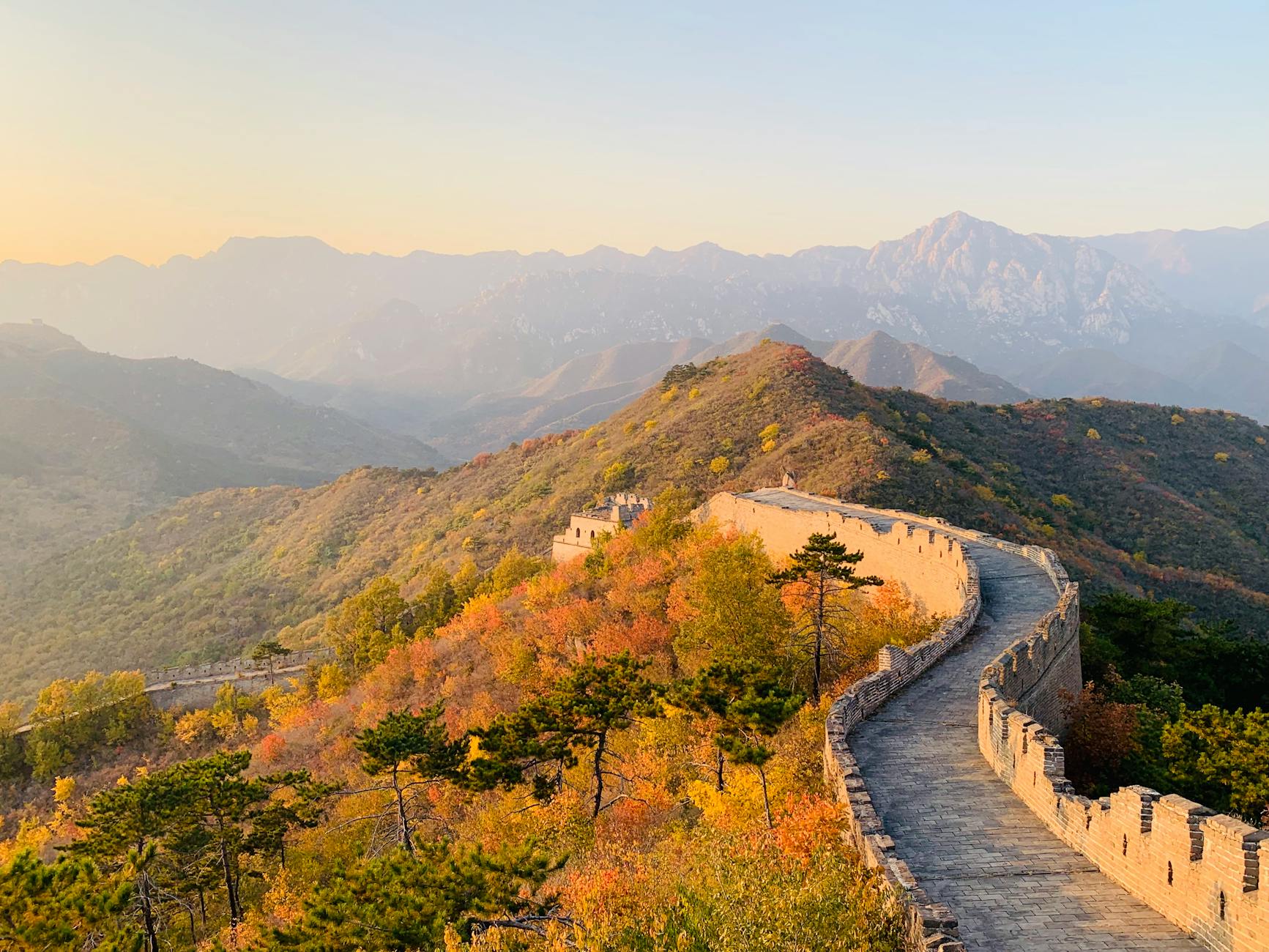
At the top of the toboggan run at Mutianyu there is a Chinese attendant whose entire job is to stop people bunching up, and on a busy morning he says the same two words several hundred times. Behind him, a queue of children is doing arithmetic about whether they can persuade their parents into a second run. That is the honest reason Mutianyu works: an eight-year-old will remember the metal chute down the mountain far more vividly than the sixteenth-century military engineering, and there is nothing wrong with that. Doing the Great Wall with kids is mostly a question of picking a section that gives them something to do besides walk uphill in the sun.
This guide compares the sections by what they actually offer a family, gets specific about cable cars, toboggans, heights and child ticket rules, and covers the practical business of toilets, food, prams and the timing that decides whether the day goes well or badly. Prices were checked in September 2026; treat them as the right order of magnitude rather than a quotation.
The short answer: go to Mutianyu
For almost every family, almost every time, Mutianyu is the answer. It is fully restored, so the walkway is wide, paved and walled on both sides at a height that means a small child cannot fall off. It has an enclosed cable car, so nobody has to climb 500 steps in order to see anything. It has a toboggan run down, which converts the descent from a grind into the highlight of the trip. It is about ninety minutes from central Beijing. And it is significantly less crowded than Badaling.
The other sections have their arguments, and a couple are genuinely better for particular ages, but if you have one Wall day and children under about twelve, Mutianyu removes more variables than anywhere else. The wider overview of the sections compares them for adults; this page reorders that ranking around what families actually need.
What a family day costs
The table below is a family of four — two adults, two children over 1.2 metres — at Mutianyu. Children at or under 1.2 metres are free for entry, the shuttle bus and the enclosed cable car, which makes a day with toddlers substantially cheaper than one with ten-year-olds.
| Item | Per person | Family of four |
|---|---|---|
| Mutianyu entry | ¥45 | ¥180 |
| Shuttle bus, car park to gate | ¥20 | ¥80 |
| Cable car, return | ¥140 | ¥560 |
| Cable car up + toboggan down | ¥140 combo | ¥560 |
| Toboggan, single ride | ¥100 | ¥400 |
| Public bus 916快 + 916支, each way | ¥12–20 | ¥100–160 return |
| Private car and driver, whole day | — | ¥900–1,400 |
| Lunch at the base village | ¥50–90 | ¥250–350 |
Doing it independently by public bus, a family of four with two paying children lands around ¥1,100–1,300 for the day. With a private car it is ¥1,900–2,400. With small children the car is usually worth it, not for comfort but for the 6.30am departure that gets you onto the Wall before anyone else — and for the fact that a sleeping four-year-old can be carried to a waiting vehicle rather than a bus stop. The transport comparison sets out every option properly.
Which section suits which age
| Section | Best for | Cable car | Verdict for families |
|---|---|---|---|
| Mutianyu | All ages, 2–14 especially | Enclosed gondola + open chairlift | The default. Toboggan, wide walls, manageable gradients. |
| Badaling | Older children only | Cable car and pulley car | Crowded to the point of being unpleasant. Weekdays early, or skip. |
| Huanghuacheng | 7+, families who want quiet | None | Lakeside setting, partly unrestored. Beautiful and much emptier. |
| Juyongguan | 10+ | None | Closest to the city and very steep. Hard work with short legs. |
| Simatai / Gubei Water Town | All ages, if staying over | Cable car and boat | Night-lit Wall, a resort village to sleep in. A different kind of day. |
| Jinshanling | 12+ and keen | Cable car | The best walking on the Wall, but it is walking, for hours. |
| Jiankou | Nobody under 16 | None | Unrestored, crumbling, genuinely dangerous. Not a family outing. |
Mutianyu, in detail
Getting there
Mutianyu is in Huairou District, roughly 70km from the centre and 90 minutes’ drive without traffic. The independent route is bus 916快 from Dongzhimen to Huairou North Avenue, then the H23, H24 or H36 local bus, or a short taxi, to the Mutianyu car park — about ¥12–20 a head each way and around two and a half hours door to door. It is entirely doable with school-age children and quite hard work with a toddler.
From the car park you take a ¥20 shuttle to the ticket gates. This is not optional and it is not a scam; the car park is genuinely a couple of kilometres below the base village.
Cable car, chairlift or walking
Three ways up, and the choice matters more with children than anything else on the day.
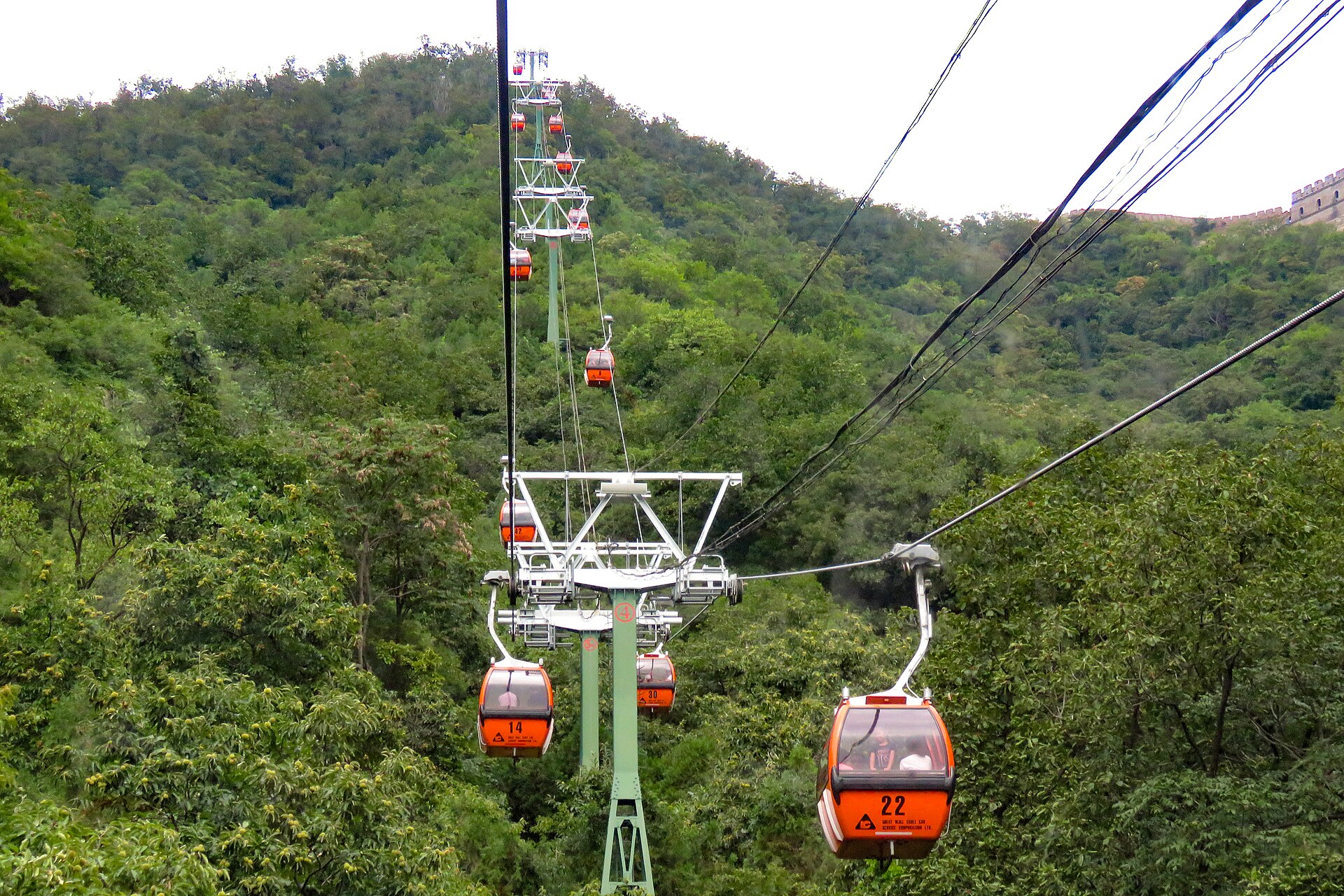
- The enclosed gondola — six-person cabins with doors, lands you at tower 14. This is the one for families. Under-1.2m children ride free. ¥100 one way, ¥140 return.
- The open chairlift — a ski-style bar chair to tower 6, and the departure point for the toboggan. Great fun for confident children, alarming for small ones and not sensible for under-fives. Same price.
- The steps — free, and there are somewhere north of 800 of them. Fit teenagers manage it in half an hour. Do not attempt it with a child you might end up carrying.
The toboggan
The metal chute runs from tower 6 down to the base and takes about six minutes if you use the brake sensibly. ¥100 for a single ride, or ¥140 as a combination with the chairlift up. It is the single most popular thing on the Chinese Great Wall with anyone under fifteen.
Rules on the day are set by the operator and are worth checking at the gate rather than assuming: small children generally ride tandem on an adult’s sled rather than alone, and there is a lower height limit for solo riders. If it is raining or the chute is wet, it closes. Wear closed shoes; the sled has a hand brake and your feet are close to the metal.
Which stretch of wall to walk
From the gondola at tower 14, walk east towards towers 15 to 20. The gradient is gentle, the walkway is wide, and the crowd falls away quickly. Towers 20 to 23 are the emptiest stretch that is still comfortable walking, and tower 23 makes a natural turning point — beyond it the restoration ends and the going gets serious.
Going west from tower 14 towards tower 1 is steeper, with long staircases and, at the far end, the notorious near-vertical flight up to tower 20. Fine for teenagers who want a challenge. Not the direction to take a six-year-old at 11am in July.
Budget two to three hours on the Wall itself. Most families run out of enthusiasm before they run out of Wall, and that is a perfectly good outcome.
Badaling: the honest verdict
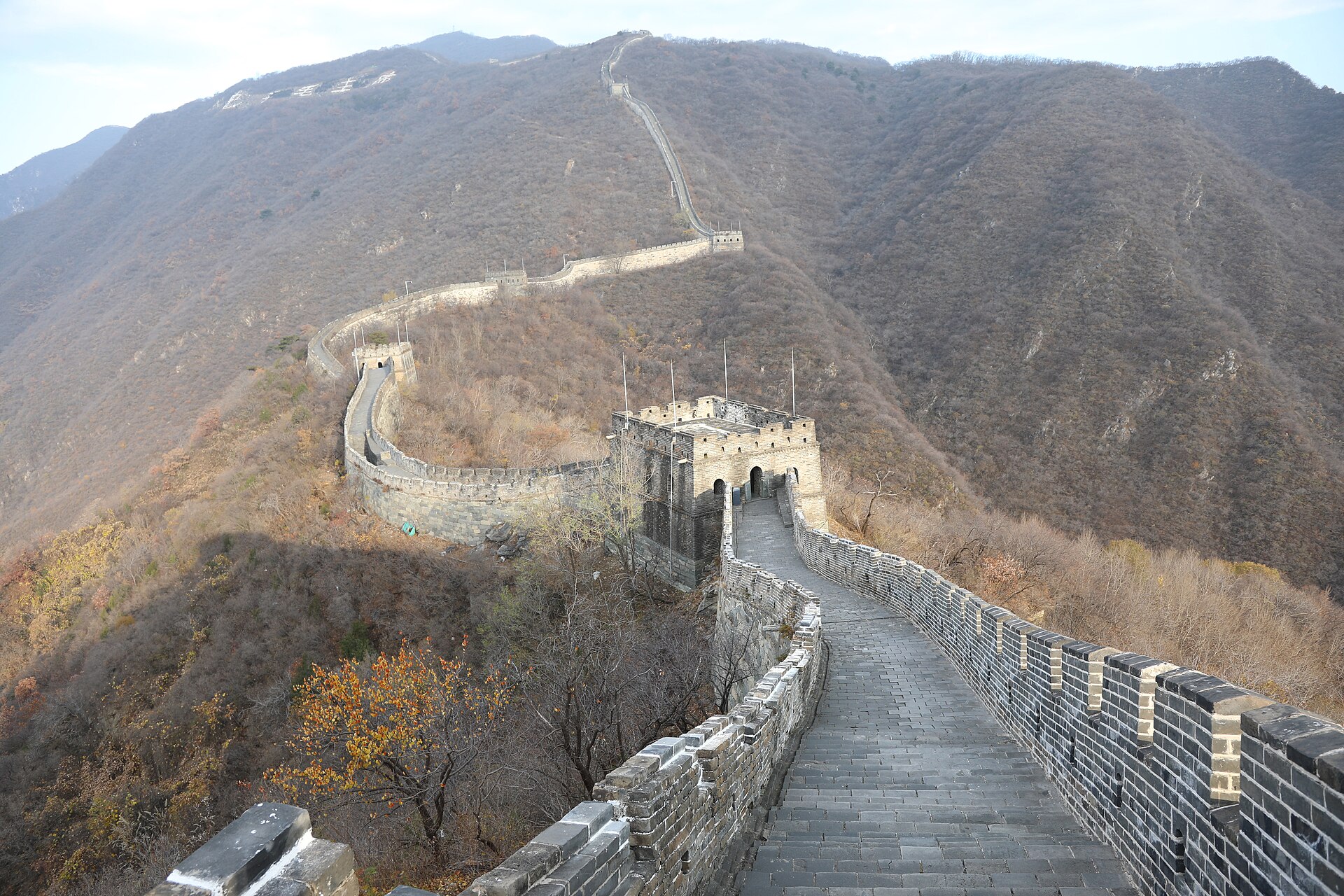
Badaling is the most accessible section, the one every coach tour goes to, and on a weekend or a public holiday it is among the most crowded places in China. Families report shuffling along the walkway shoulder to shoulder, queueing forty minutes for a cable car, and reaching the end of the day having seen more people than Wall.
It has real advantages — a direct train from Beijing North to Badaling Changcheng station, a cable car and a pulley car, good facilities, and the gentlest access of any section. If you are travelling with a grandparent as well as children, or if someone in the party has limited mobility, it is a defensible choice. Go on a weekday, arrive for opening, and turn left rather than right at the top, which is where most of the crowd does not go.
On a Saturday in October, though, take the extra forty minutes and drive to Mutianyu instead.
The alternatives worth considering
Huanghuacheng
Huanghuacheng is the one where the Wall runs down into a reservoir and disappears under the water. There is no cable car and parts of it are unrestored, so it suits children who are already confident walkers — call it seven and up. What you get in return is space: on a weekday you may share the whole section with a couple of dozen people. There are boat trips on the reservoir in summer, and a chestnut grove that is pleasant to sit in when everyone has had enough.
Gubei Water Town and Simatai
Gubei Water Town is a purpose-built resort village beneath Simatai, and it is unashamedly artificial. For families it is also a rather good idea. You stay overnight, which removes the two-hour drive from both ends of the day, the children get canals, boats and food streets to run about in, and Simatai is the only section lit at night — a genuinely memorable thing to see from below even if you never climb it. Simatai itself requires timed tickets and the upper towers have age and safety restrictions.
Camping on the Wall
Sleeping on the Wall with an operator, usually at Gubeikou, is superb with teenagers and a poor idea with anyone younger — it is cold, there is a long walk in with kit, and the toilet situation is a hedge. For a fourteen-year-old it will be the story they tell about the whole trip.
What not to do with children
- Jiankou. Unrestored, unlit, no handrails, loose masonry and genuine drops. Adults get hurt there. It is not a family destination at any age below late teens, and the section guide is explicit about why.
- Full-day bus tours that bundle the Ming Tombs. A ten-hour day with two long coach legs and a compulsory jade or silk “factory” stop. Children hate it, and so will you.
- Any tour with a shopping stop. Forty minutes in a jade showroom is forty minutes not on the Wall. Ask before booking and walk away if the answer is evasive.
- The long walk west at Mutianyu in summer. Steep, exposed, and no shade. The eastern towers give you the same views for a fraction of the effort.
- Two Wall sections in one day. Occasionally offered. Nobody enjoys it.
Timing the day
Leave early. Aim to be at the ticket gate for the 7.30 or 8am opening. The first ninety minutes on the Wall are quiet, cool and the light is good; by eleven the coaches have arrived. With children this is worth more than any other single decision, because it means you are walking back down as everyone else is walking up, rather than the reverse.
Check the air. A hazy day removes the ridgeline views that are the point of the trip, and hard walking in poor air is unpleasant for small lungs. Anything under AQI 100 is fine; over 150, move the Wall to another day. The air quality guide explains the readings and the seasonal pattern.
Pick the season carefully. Late September and October are ideal — clear, 15–22°C, autumn colour on the hillsides. April and May are the other good window. July and August are hot, humid and shadeless on the Wall itself, which is genuinely hard on children; if you must go in summer, go at opening and be off by eleven. Winter is cold and often icy underfoot on the steps, and the toboggan may be closed. The seasonal guide has the full picture.
Build in a nap. The drive back is ninety minutes and every small child asleep in the car is a small child not melting down at 4pm. Plan a quiet evening; do not book a duck dinner across town.
What to bring
- Proper shoes for everyone. The stone is uneven and worn smooth in places. Trainers, not sandals.
- More water than you think. There are vendors at the base and a few on the Wall at inflated prices. Two litres for a family of four, minimum, in summer.
- Sun protection. The Wall has almost no shade. Hats, sunscreen, and long sleeves for pale children.
- Snacks. The base village restaurants are fine but they are at the bottom, and hunger arrives at tower 19.
- A carrier, not a pram. More on this below.
- Layers. It is several degrees cooler on the ridge than in the city and windier than you expect.
- Tissues. Toilets on the Wall may not have paper.
The wider packing list covers the rest of the trip.
Prams, carriers and toilets
A pushchair is close to useless on the Wall itself — the walkway between towers is stepped almost everywhere and each tower has a threshold to lift over. It is manageable in the base village and the car park. If your child cannot walk a couple of hours, bring a back carrier; if they are too big for a carrier and too small to walk, this is a difficult day and Gubei Water Town may be the better plan.
Toilets exist at the car park, at the base village, at the cable car stations and in a handful of towers. They are squat pans more often than not, they are variably clean, and paper is not guaranteed. Take the children before you get on the cable car — the gap between facilities on the Wall itself can be twenty minutes’ walk.
Nappy changing is not provided for anywhere. The base village restaurants are the least bad option.
Keeping them interested
The Wall is enormous, repetitive and, to a seven-year-old, quite abstract. A few things that work:
- Count the towers. They are numbered. Set a target — “we’re going to tower 20 and then turning round” — and children walk considerably further than they otherwise would.
- The arrow slits and the drop holes. Every tower has them. Explaining what boiling liquid was for holds attention in a way that dynastic chronology does not.
- The signal-fire story. Beacon towers relayed warnings along the Wall faster than a horse could carry them. Children like the idea of a message crossing a mountain range in an afternoon.
- The toboggan as the reward. Announce it at the start, and the walk back becomes a countdown rather than a slog.
- Let them stop. Sitting in a tower doorway for ten minutes eating a snack is not lost time. It is the part they will remember as pleasant.
Safety
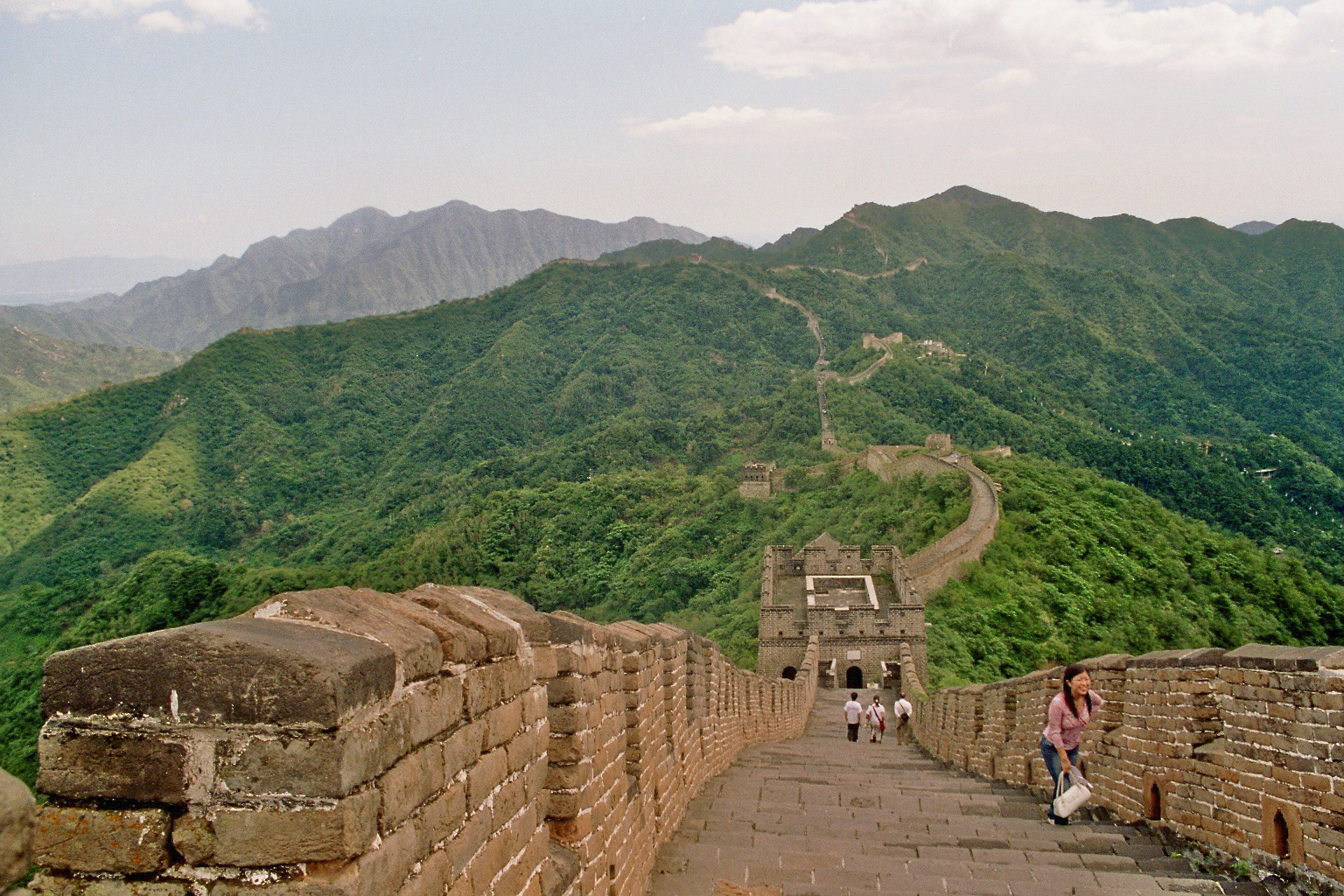
Restored sections are safe in the ordinary sense: the parapets at Mutianyu are chest height on an adult and there is nowhere a child can simply walk off the edge. The real risks are more mundane.
Steps are the main one. They are irregular — some deep, some shallow, some worn slippery — and the descent is where people fall. Hold hands on staircases, take them one at a time with small children, and do not let anyone run down.
Heat is the second. There is no shade and the brickwork radiates. Children overheat faster than adults and complain later. Watch for flushed faces and stop before it becomes a problem.
Third, do not step over a barrier. Where the restoration ends there are usually signs and sometimes a fence; beyond it the masonry is genuinely unstable and there is no rescue infrastructure to speak of. Check that your travel insurance covers hiking, since some policies exclude it.
A Wall day like this needs the two days either side of it planned to match — a gentle arrival before, a rest afternoon after — or the toboggan gets ridden by four exhausted people. Our four-day itinerary for families shows where it fits and what to drop to make room.
Frequently asked questions
Which Great Wall section is best with children?
Mutianyu, for almost every family. It is fully restored with wide walled walkways, has an enclosed cable car so nobody has to climb, has a toboggan run down that children love, and is far less crowded than Badaling. Huanghuacheng is a good quieter alternative for confident walkers aged about seven and up.
Do children pay for tickets?
At Mutianyu, children at or under 1.2 metres go free for entry, the shuttle bus and the cable car. Between 1.2 and 1.4 metres there is a discounted entrance ticket, but the cable car charges the full adult fare above 1.2 metres. Adult entry is ¥45 and the cable car ¥140 return.
What age can a child do the toboggan?
Small children ride tandem with an adult rather than alone, and there is a minimum height for solo riders set by the operator. Check at the top station on the day rather than assuming — the rules are applied strictly and the run closes altogether in wet weather.
Can I take a pushchair on the Great Wall?
Not usefully. The walkway is stepped almost everywhere and every tower has a threshold. Bring a back carrier for a child who cannot walk two hours, and leave the pushchair in the car.
How long does a Great Wall day take with kids?
Eight to ten hours door to door from central Beijing, of which two to three are actually on the Wall. Ninety minutes each way in a car, longer by public bus. Leave by 6.30am if you can and plan a very quiet evening afterwards.
Is Badaling worth it with a family?
Only on a weekday, early, or if someone in the party needs the easier access and the direct train. On weekends and holidays the crowds are severe enough to ruin the day. Mutianyu is forty minutes further and much better.
Are there toilets and food on the Wall?
Toilets at the car park, base village, cable car stations and some towers — mostly squat pans, often without paper. Food and water are sold at the base and by a few vendors on the Wall at marked-up prices. Take your own water and snacks, and use the toilets before boarding the cable car.
Is the Great Wall safe for young children?
On restored sections, yes. Parapets are high, the walkway is wide, and the hazards are steps rather than drops. Hold hands on staircases, watch for overheating in summer, and never cross a barrier where the restoration ends.
What if the weather or air is bad?
Move the day. Haze removes the ridgeline views entirely and hard walking in poor air is unpleasant for children. Under AQI 100 go; over 150 do something indoors instead. Rain also closes the toboggan, which removes a good part of the appeal.
Is a private driver worth it?
With children, usually. ¥900–1,400 for the day buys a 6.30am departure that gets you onto the Wall before the coaches, a boot for the bags, and a car a tired child can sleep in on the way back. Split across a family it is not much more per head than the bus once you count the taxi legs.